
Reviewed · RIO DE JANEIRO TOURS
By Night – Ginga Tropical Show
Feel the rhythm after dark. The Ginga Tropical Show gives you a lively introduction to Brazil through samba, percussion, costumes, and dances linked to several regions of the country. I especially like the nearly two-hour performance and the fact that transport and a show ticket are included, which makes a late-night outing easier to manage in Rio.
The main caution is pickup timing. Two published accounts describe hotel collection arriving about 30 minutes late, with arrival at the show roughly 32 minutes after the scheduled start. The show itself was still praised as good and engaging, but I would keep this risk in mind if you care about seeing every minute.
In This Review
- Key Things to Know Before You Book
- What the Ginga Tropical Show Is Trying to Do
- The 9:30 pm Pickup From Rio’s South Zone and Center
- Inside the Plataforma Venue
- The First Half: Music, Movement, and Cultural Roots
- Samba, Dancers, and Costumes From Rio’s Schools
- The Closing Parade in Brazil’s National Colors
- How the $163.94 Price Holds Up
- The Pickup Problem You Should Take Seriously
- Who Will Enjoy This Saturday Night Out
- Practical Advice for a Better Evening
- Should You Book Ginga Tropical Show?
- FAQ
- Where does the Ginga Tropical Show take place?
- How much does the experience cost?
- How long does the tour last?
- What time does pickup begin?
- Where is hotel pickup available?
- On which day does the experience operate?
- What is included in the price?
- Are dinner and drinks included?
- How many people can join the activity?
Key Things to Know Before You Book
- A Saturday night show at 9:30 pm: Pickup begins from hotels in Rio’s South Zone and Center.
- A broad picture of Brazil: Samba shares the stage with music, dances, and costumes connected to Portuguese, Indigenous, and African roots.
- Almost two hours of performance: The program moves from cultural origins to a colorful closing parade.
- Transport is included: An air-conditioned vehicle and tour guide service are part of the package.
- Food costs extra: Dinner, drinks, and desserts are not included in the $163.94 price.
- A small-group format: The maximum group size is 30 people, and most people can participate.
What the Ginga Tropical Show Is Trying to Do
The Plataforma venue has been operating for almost 50 years with a clear purpose: present Rio de Janeiro and Brazil through a large stage show. This is not a quiet folk music recital or a small neighborhood performance. It is a polished, tourist-facing production built around samba, dancers, percussion, costumes, and a fast-moving presentation of national culture.
The current program is called Vai Brasil 500 Anos. Its central idea is the development of Brazilian popular culture through the meeting of Portuguese, Indigenous, and African influences. That gives the production a useful framework. Instead of presenting samba as an isolated dance, the show places it within a larger story about Brazil’s cultural roots.
I would set your expectations correctly. This is a theatrical overview rather than a detailed cultural lecture. The point is the sound, movement, color, and energy of the stage. If you want a compact introduction to several Brazilian rhythms and visual traditions in one evening, the format makes sense. If you prefer an informal local roda de samba, this will feel more arranged and theatrical.
More things to do in Rio de Janeiro:
- Rio de Janeiro: 6-Stop Highlights of Rio with Lunch
★ 4.4 · 5,157 reviews - Christ the Redeemer Entry Ticket by Corcovado Train
★ 4.4 · 4,476 reviews - Rio’s City Tour – Tickets for Christ, Sugar Loaf & Lunch included
★ 5.0 · 4,389 reviews
The 9:30 pm Pickup From Rio’s South Zone and Center
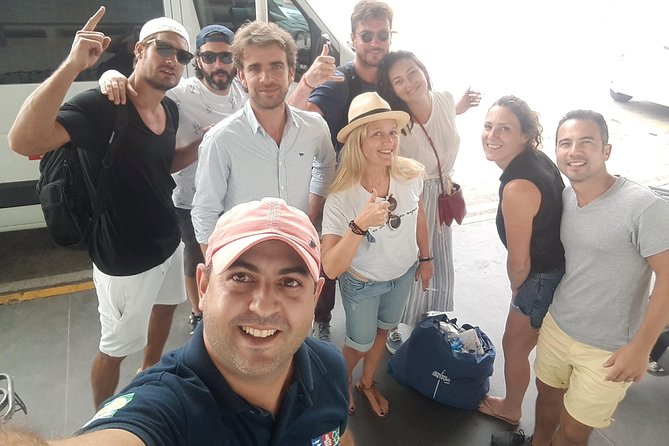
The evening begins late. Boarding is scheduled for 9:30 pm, with pickup offered from hotels in the South Zone and Center of Rio de Janeiro. That is useful if you are staying in one of those areas and do not want to arrange a separate late-night taxi or rideshare.
The included vehicle is air-conditioned, a practical detail in Rio. Transport is also paired with tour guide service, so this is more than a bare admission ticket. You are paying for a planned evening with hotel collection and group movement to the venue.
Still, I would build some patience into your plans. A 30-minute pickup delay was reported, followed by arrival about 32 minutes late for the show. The guide apologized, and the show was still described as good, but a delay matters when the performance has a fixed start and lasts only about two hours.
Do not schedule an important early-morning activity immediately afterward. The entire outing is listed at approximately six hours, and the late start means you are likely returning well after midnight. The exact return time and sequence of hotel drop-offs are not specified, so allow room for traffic and group transfers.
Inside the Plataforma Venue
The venue’s long history gives the evening a sense of purpose. For close to five decades, Plataforma has presented Brazilian music and dance to people from Brazil and abroad. Its format is designed to make a strong first impression, with a large cast, bright clothing, and percussion that carries across the room.
I like this kind of show as an easy first-night choice in Rio. You do not need prior knowledge of every dance or costume to follow the performance. The stage gives you a visual route through the country, moving between styles and regions without asking you to decode a complicated plot.
The tradeoff is that the production presents Brazil in broad strokes. A two-hour show cannot explain every region or tradition in detail. You will get a sweeping stage version of Brazilian culture, not a specialist’s seminar. That is not a flaw, as long as you know what you are buying.
The First Half: Music, Movement, and Cultural Roots

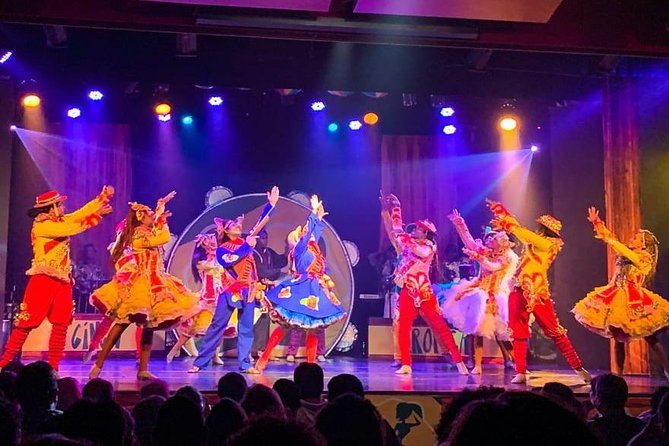
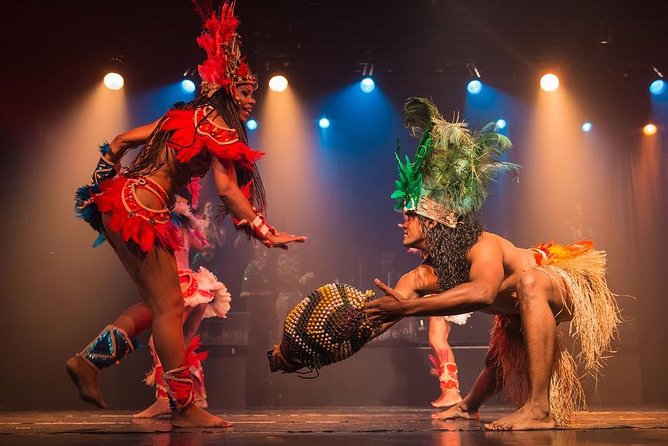
For almost two hours, dancers and percussionists present the origins of Brazilian popular music through movement and sound. The production draws on the mixture of Portuguese, Indigenous, and African traditions described in the program.
That combination is important. Samba is often the first thing visitors associate with Rio, but Brazilian music grew from several cultural sources. The show uses rhythm and choreography to make that blend visible, rather than treating samba as the whole story.
You can expect a high-energy sequence of dances, songs, melodies, and changing costumes. The performance is aimed at a broad audience, so it favors clear visual cues and strong stage pictures. This makes it accessible for first-time visitors and for families or mixed-age groups who may not share the same musical background.
I would not expect a slow, highly detailed explanation before each section. The meaning comes mainly through the performance itself. Watch the percussionists as much as the dancers. The drums and rhythmic patterns are a key part of how the show connects different styles.
A completely different kind of day:
- Full Day: Christ Redeemer, Sugarloaf, City Tour & Barbecue Lunch
★ 4.5 · 3,142 reviews - Rio de Janeiro: Rocinha Favela Walking Tour with Local Guide
★ 4.8 · 3,052 reviews - Rio’s Full Day: Selarón Steps, Christ & Sugarloaf – Tickets & Lunch Included
★ 5.0 · 2,724 reviews - Rio: Christ the Redeemer, Sugarloaf, Selaron & BBQ Lunch
★ 4.5 · 2,428 reviews
Samba, Dancers, and Costumes From Rio’s Schools
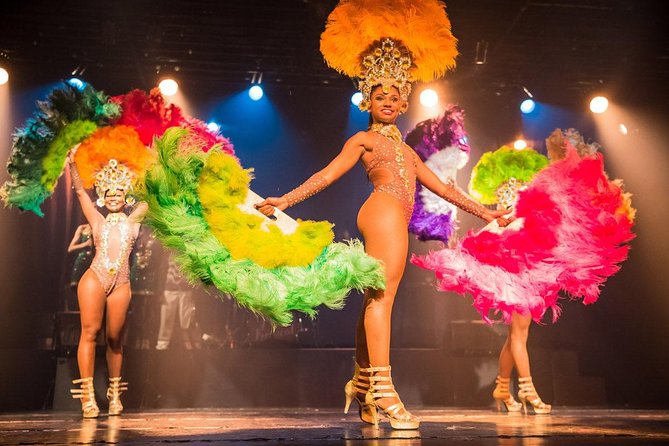
The samba portion is the heart of the evening. The dancers wear costumes based on those associated with Rio’s samba schools, bringing the look of Carnival to the stage without requiring you to attend Carnival itself.
The show uses graceful dancers, large costume changes, and choreography to create the sense of a parade. This is where the production is most obviously built for spectacle. The costumes catch your eye, while the percussion gives the scenes their force and forward motion.
I like this section for the same reason I like a good introductory museum: it gives you a set of images you can carry with you after the evening ends. You see how much samba depends on coordinated movement, costume design, group rhythm, and public celebration.
The possible drawback is that the performance may feel familiar if your main goal is an intimate or spontaneous samba experience. The show is controlled and rehearsed. Its appeal comes from presentation and scale, not from the unpredictability of a small local gathering.
The Closing Parade in Brazil’s National Colors
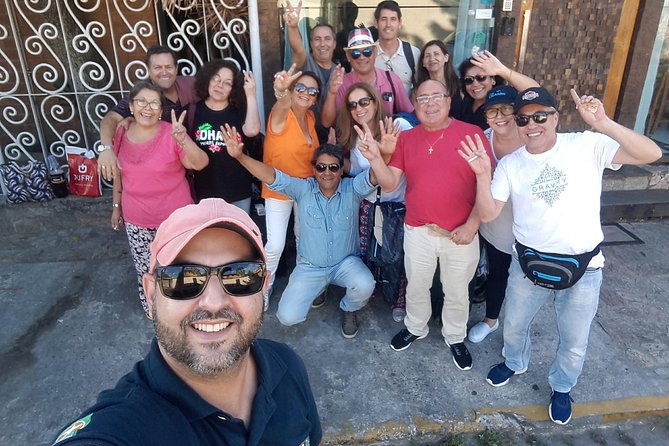
The final section brings the show to its most colorful point. Dancers appear in costumes using green, yellow, blue, and white, the colors of the Brazilian flag.
Each color is given symbolic meaning in the presentation. Green refers to the country’s forests and woods. Yellow points to gold and national riches. Blue represents the sky and the constellation Cruzeiro do Sul. White represents peace.
The closing parade also highlights important characters from Brazil’s national history. This gives the finale a clear visual shape and sends the audience out on a high note.
If you are choosing this experience mainly for photos and costume spectacle, the finale is likely to be one of the strongest parts. If you are more interested in detailed historical accuracy, keep in mind that the information is delivered through a stage production rather than a museum-style presentation.
How the $163.94 Price Holds Up
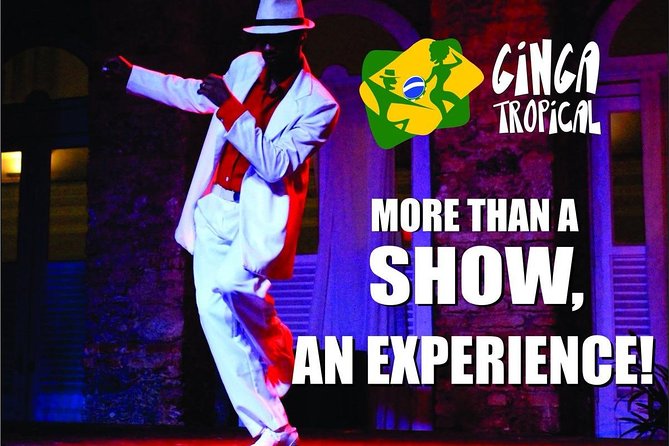
At $163.94 per person, this is not a cheap night out. The value depends on how much convenience you want and how you would otherwise arrange the evening.
The price includes transport, a show ticket, an air-conditioned vehicle, and tour guide service. For someone staying in the South Zone or Center, that package removes the need to organize late-night transport to and from the venue. It also gives you a structured plan for a Saturday night.
Dinner, drinks, and dessert are not included. That matters because the tour starts at 9:30 pm, close to normal dinner hours for many visitors. You should eat before pickup or budget separately for food. The supplied information does not state that a meal is available at the venue, so do not assume dinner is part of the evening.
I see the price as easier to justify for a first visit, a birthday outing, or anyone who values transportation and a ready-made cultural program. It is harder to justify if you are comfortable arranging your own ride and only want a performance ticket. In that case, compare the cost of admission and local transport before booking.
The Pickup Problem You Should Take Seriously
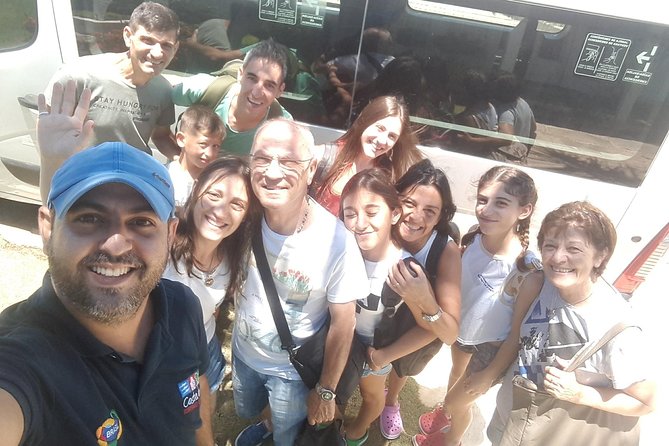
The strongest negative point is not the show. It is the schedule.
Two published accounts describe the pickup arriving 30 minutes late, followed by an arrival at the performance about 32 minutes late. In both cases, the overall impression of the show remained positive, and the guide apologized. Still, arriving late can mean missing the opening portion, and you have no control over the pace of a shared vehicle.
I would handle this in three ways. First, confirm your hotel and pickup details carefully. Second, do not plan a tight dinner reservation immediately before collection. Third, avoid booking anything early the next morning that depends on returning at a precise hour.
The group limit is 30 people. That is not a private tour, but it is also not an enormous coach group. A group of that size can still take time to collect from several hotels, which may help explain why the schedule needs flexibility.
Who Will Enjoy This Saturday Night Out
I think this show suits you best if you want a straightforward cultural introduction to Rio. It works particularly well for:
- First-time visitors who want to see samba in a polished setting
- People who prefer organized transport at night
- Families and mixed-age groups
- Visitors who enjoy music, costumes, and stage spectacle
- Anyone staying in the South Zone or Center
- People marking a birthday or another special evening
I would be more cautious if you dislike choreographed shows or want a small, informal music venue. The program presents a broad version of Brazil, so it will not replace local exploration, neighborhood samba, or a visit to cultural museums.
The show is also a reasonable option if you have limited time in Rio. You can see samba, Brazilian folklore, percussion, regional dances, and a national-themed finale in one night. It gives you a useful overview, even if you later decide to explore those traditions in more depth.
Practical Advice for a Better Evening
Eat before pickup, since dinner, drinks, and desserts are not included. A late start combined with possible pickup delays can make it difficult to rely on a normal restaurant schedule.
Wear something comfortable for a long evening. The listed duration is approximately six hours, and the performance itself lasts almost two hours. The rest of the time covers pickup, transport, and the group schedule.
Keep your evening open. The official boarding time is 9:30 pm, but the reported delays show why you should not treat that time as a guarantee of reaching the venue immediately.
If seeing the entire performance matters to you, ask about pickup timing before the day of the show. A late arrival was the one clear weakness in the available feedback, while the performance itself received positive comments for being engaging and very good.
The experience is scheduled for Saturdays only. Check that this fits your Rio itinerary before paying. Confirmation is provided at booking, and the activity may be canceled if its minimum number of participants is not reached. In that case, you are offered another date or experience, or a full refund.
Should You Book Ginga Tropical Show?
I would book it if you want an easy, organized Saturday night centered on samba and Brazilian cultural performance. The included transport, guide service, and nearly two-hour show add real convenience, especially for a first visit to Rio.
I would pause if $163.94 feels high for a stage show, or if you want an informal local music experience. The pickup delays also mean you should accept some schedule uncertainty.
For the right audience, Ginga Tropical is a colorful introduction to Brazil’s music and dance traditions. Just eat beforehand, leave room for a late return, and treat the show as theatrical cultural entertainment rather than a complete picture of the country.
FAQ
Where does the Ginga Tropical Show take place?
The show takes place at the Plataforma show house in Rio de Janeiro.
How much does the experience cost?
The listed price is $163.94 per person.
How long does the tour last?
The approximate total duration is six hours. The show itself lasts almost two hours.
What time does pickup begin?
The scheduled boarding time is 9:30 pm.
Where is hotel pickup available?
Pickup is offered from hotels in Rio’s South Zone and Center.
On which day does the experience operate?
The experience operates on Saturdays.
What is included in the price?
Transport, an air-conditioned vehicle, tour guide service, and the Ginga Tropical Show ticket are included.
Are dinner and drinks included?
No. Dinner, drinks, and desserts are not included.
How many people can join the activity?
The maximum group size is 30 people, and most people can participate.
Just added in Rio de Janeiro
- Full Day Tour in Rio de Janeiro★ 5.0 · 8 reviews
- Garganta do Ceu Cave Hiking Private Tour on Pedra da Gavea★ 4.5 · 3 reviews
- Gastronomic Tour at the Municipal Market in Rio de Janeiro★ 5.0 · 4 reviews
- Rio de Janeiro private Full day Custom Tours★ 5.0 · 35 reviews
- GIG Airport Transfer x Rio de Janeiro Hotels★ 4.5 · 11 reviews
- Christ the Redeemer – Complete Morning Tour with Ticket and Transport at the Hotel★ 3.5 · 4 reviews
- AquaRio, Museum, Boulevard Olimpico, Ferris Wheel, Transport and Tourism Guide.★ 4.0 · 6 reviews
- Personalized and Private Full-Day Tour in Rio de Janeiro★ 5.0 · 6 reviews
Rio de Janeiro Tours, compared.

Christ the Redeemer Entry Ticket by Corcovado Train
Read our review →
Rio’s City Tour – Tickets for Christ, Sugar Loaf & Lunch included
Read our review →
Full Day: Christ Redeemer, Sugarloaf, City Tour & Barbecue Lunch
Read our review →

Rio’s Full Day: Selarón Steps, Christ & Sugarloaf – Tickets & Lunch Included
Read our review →
Christ the Redeemer, Sugarloaf, Selaron & BBQ Lunch
Read our review →
Browse the lists this tour appears in