
Reviewed · AMAZON JUNGLE TOURS
Dinner and Overnight in the Jungle in Manaus
The rainforest gets louder after dark. This Manaus overnight pairs a speedboat ride from Marina do David with hands-on lessons in traps, shelters, fire-making, plants, and jungle safety. I like the practical focus, and I also like the warm, family-style care led by Jeffson Araujo, known as Jeff. The main caution is that the camp is rustic, hot, and humid, with some questions about environmentally careful practices.
At $330 per person for about 18 hours, this is not a cheap night out. Still, you receive transport into the forest, a guided hike, survival demonstrations, dinner, an overnight camp, and close attention from a small team. You should book this for real contact with the Amazon, not for polished cabins or a soft bed.
In This Review
- Key points to know before you book
- Leaving Manaus by boat at 2 p.m.
- A walk built around survival skills
- Learning from Jeffson Araujo and his team
- A rustic Amazon dinner over the fire
- Sleeping in the jungle for one night
- Choosing the season and judging the physical effort
- The important conservation questions
- Is $330 a fair price?
- Who should book this Amazon overnight?
- Booking details and cancellation advice
- Should you book Dinner and Overnight in the Jungle in Manaus?
- FAQ
- Where does the tour begin?
- What time does the tour start?
- How long does the experience last?
- How do I reach the jungle area?
- What activities are included?
- What food is served for dinner?
- How many people can join the tour?
- Can I cancel for a full refund?
Key points to know before you book
- A 2 p.m. speedboat departure takes you from Marina do David, just beyond Ponta Negra, into the jungle area.
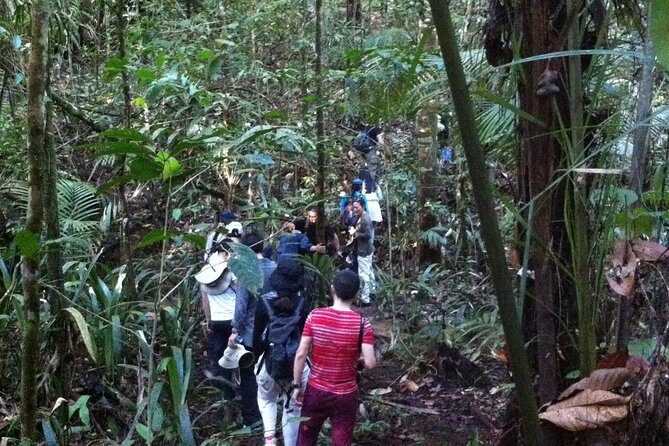
- Survival skills are the heart of the trip, including trap construction, shelters, fire, tree climbing with peconha, and safe movement through the forest.
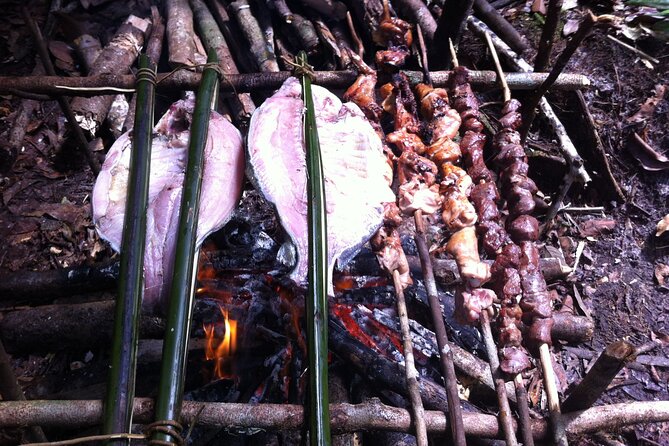
- Dinner is cooked in the jungle, with roasted fish or chicken, rice, flour, and fruit.
- Jeffson Araujo and his team receive the strongest praise for personal care, safety, food, and family warmth.
- The overnight is rustic, and heat, humidity, insects, and a basic camp are part of the bargain.
- Ask about conservation practices before paying, especially waste disposal and contact with wild animals.
Leaving Manaus by boat at 2 p.m.
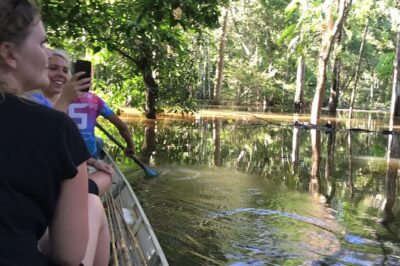
The afternoon begins at Marina do David, in Manaus’s West Zone just beyond Ponta Negra. The group heads out by speedboat, which gives the trip a proper sense of departure. You are not simply being driven to a lodge on a road. The river is your route into the forest.
That boat transfer also matters for timing. The tour lasts about 18 hours, so the 2 p.m. start gives you daylight for the first walk and demonstrations before night settles in. You should arrive ready to spend the rest of the day outdoors, with your essentials easy to reach rather than buried in a large bag.
Pickup is offered, but the stated meeting point is Marina do David. Confirm the exact pickup arrangement after booking, since confirmation is subject to availability and is sent within 48 hours.
The group can include up to 20 people. That is large enough for a social outing, but small enough for the guides to keep an eye on the group in the forest. One family traveling with children aged 5, 8, and 12 had several team members with them and felt closely watched and safe. That does not mean every departure has the same guide-to-person ratio, so families should ask about staffing for their date.
More Amazon jungle trips:
- From Manaus: One-Day Amazon Jungle Experience
★ 4.8 · 408 reviews - Manaus: Full-Day Tour on the Amazon River
★ 4.2 · 362 reviews - Indian Village and Meeting of the Waters Tour
★ 4.5 · 241 reviews
A walk built around survival skills
The walk is more than a nature stroll. The team uses custom trails and teaches basic methods for living safely in the forest. You may see how to build traps, put together a simple shelter, start a fire, find useful plants, and follow general jungle rules.
This practical teaching is the strongest reason to choose this trip. A standard sightseeing outing might show you trees and waterways, then return you to a lodge. Here, the forest becomes a classroom. The lessons help explain how local people have adapted to a place that can look generous one minute and demanding the next.
The trap demonstrations are especially memorable. They show how Indigenous people have used the forest’s materials and animal behavior to obtain food. This is not simply a display for entertainment. It gives you a clearer idea of the thought, patience, and care required to move through the Amazon without modern equipment.
The guides also explain fauna and flora, along with medicinal uses and safety rules. Plant knowledge should be treated as information, not an invitation to pick or eat something on your own. Follow the team’s instructions closely, since a plant that is useful in one way may be harmful in another.
You may also get to climb trees using peconha, a traditional foot loop or climbing aid. This is one of the more unusual parts of the program, but it is also the sort of activity where you should listen carefully and move only with the guide’s approval.
Learning from Jeffson Araujo and his team
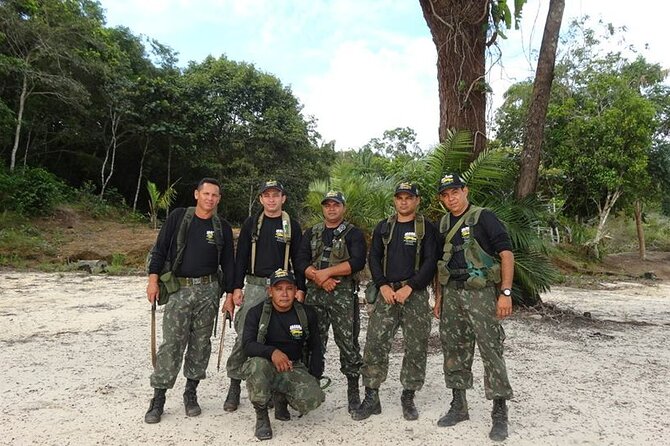
Jeffson Araujo, usually called Jeff, is the named contact for Jaguar Sobrevivência na Selva. The most consistent praise centers on his personal attention and the team’s efforts to keep people calm, fed, and safe.
That matters in the jungle. A confident guide can make the difference between an exciting night and an uncomfortable one. The team positions people at the front and back during hikes, which helps the group stay together. You should still expect uneven ground, dense vegetation, and a need to pay attention.
The tone appears personal rather than corporate. Families have been welcomed warmly, and the team has been praised for including everyone in the experience. Food is prepared with care, and the guides make an effort to show local fruits, traditions, and customs.
English is listed as the operating language, but communication can still vary. One extended account described language difficulties in Manaus and a heavy reliance on Google Translate outside areas with phone service. Keep this in mind if you need detailed explanations about allergies, medication, or physical limits. Send important questions to Jeff before the trip, using WhatsApp if needed, at +55 92 99128-3852.
A rustic Amazon dinner over the fire
Dinner is cooked in the jungle rather than served from a dining room. The planned meal includes roasted fish, chicken, rice, flour, and fruit for dessert. That menu is simple, filling, and well suited to a camp setting.
The cooking itself is part of the experience. You can watch food being prepared while the forest changes around you. The sound of insects and night animals becomes the evening’s background music. There is no promise of fine dining here, but the meal helps turn the camp into a shared event instead of just a place to sleep.
Food received strong praise, including from a family with children. That is useful if you are traveling with young eaters, although you should still tell the company about allergies or dietary needs before departure. The available information does not promise special menus.
The evening atmosphere is a major draw. Once the light fades, the jungle becomes less visual and more a matter of sound, smell, and touch. You may hear activity all around the camp while seeing very little. For many people, that is the moment the trip becomes memorable.
More places to eat in Manaus:
- Manaus: Folklore Amazonian Dinner Show
★ 3.3 · 3 reviews - Rio DE Janeiro : Official Roxy Dinner Show – Dinner + Show
★ 5.0 · 240 reviews - Roxy Show – Brazilian Rhythms with optional Barbecue Dinner
★ 3.5 · 196 reviews - Rio de Janeiro: Rio Scenarium Entrance, Dinner, and Open Bar
★ 4.2 · 126 reviews
Sleeping in the jungle for one night
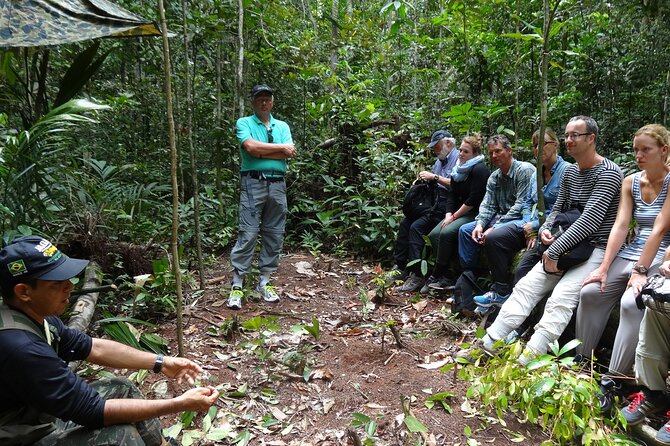
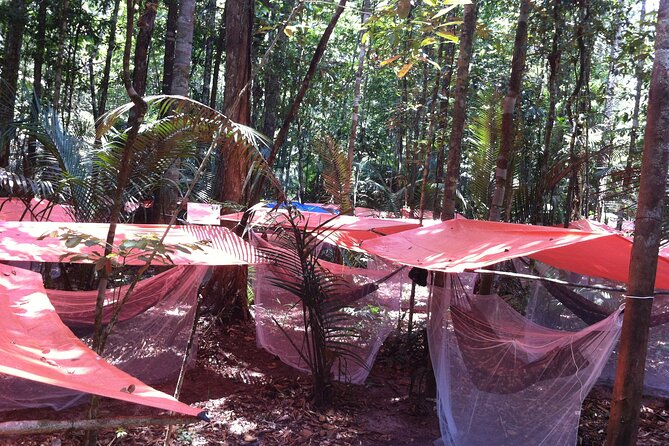
The overnight stay is designed to be rustic. The available details do not describe a hotel room, private cabin, air conditioning, or a standard mattress. You should prepare for a basic camp and ask exactly what sleeping gear is supplied before you go.
The camp has been praised for its organization and structure, but that should not be confused with luxury. Conditions near Manaus are hot and humid throughout the year. Rain can be heavier in May and June, and wet conditions are part of the Amazon experience.
Mosquito levels vary. One June departure had very few mosquitoes, and a small amount of repellent was enough. That is encouraging, but it is not a guarantee for your date. Bring repellent anyway, along with light long sleeves and clothing that dries quickly.
The night can be peaceful, but it may not be restful in the usual sense. You are sleeping in a forest filled with unfamiliar sounds, humidity, and possible rain. If you need firm climate control and uninterrupted sleep, this is not the right overnight.
Choosing the season and judging the physical effort
May and June may offer higher water levels and heavier rain. That can make river travel easier and provide a different view of the forest. The tradeoff is wetter weather and more moisture around camp.
In the dry season, river levels can fall sharply. A longer jungle trip in September required a difficult hike to reach water deep enough for a boat. That account involved five days and four nights rather than this roughly 18-hour program, so conditions will not be identical. Still, it shows why water levels can affect both transport and walking distances.
For this overnight, ask about current river conditions before departure. A lower river may mean more time on foot. That can be rewarding if you want a demanding forest experience, but it is worth knowing before you arrive.
Most people can take part, according to the tour information, but the program includes hiking, tree climbing demonstrations, and outdoor camping. If you have concerns about balance, stamina, or young children, explain them when booking. The maximum group size is 20, and group discounts are available.
The important conservation questions
The forest setting gives this trip its value, but it also creates a responsibility. Before booking, I would ask how the team handles rubbish, soap, food scraps, and fire remains. A long volunteer account raised concerns about inconsistent leave-no-trace habits, including washing soap near streams and burning plastic.
That does not erase the good parts of the experience. It does mean you should not assume every jungle operator follows the same conservation standards used by organized camping programs in North America or Europe. Ask direct questions, and bring reusable containers where practical.
Wildlife contact deserves special care. The wider activities connected with the company have included encounters with pink dolphins, and concerns were raised about people getting too close to wild animals. You can help by keeping your distance, refusing unnecessary touching, and asking the guide to explain the rules before any wildlife encounter.
The Amazon is not a stage set. Plants, animals, rivers, and village communities are part of a living system. A good visit should leave you with more respect for that system, not just a collection of photographs.
Is $330 a fair price?
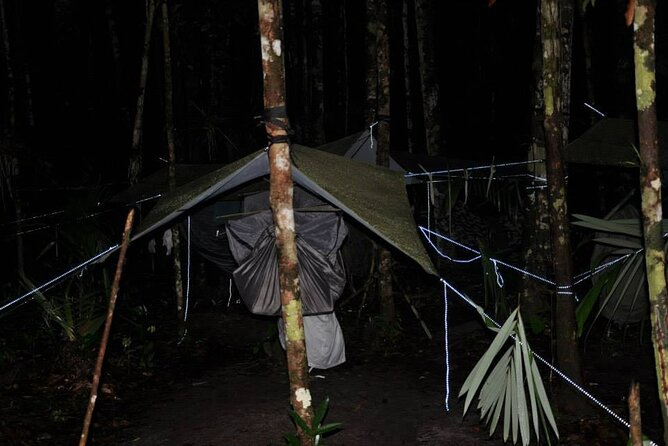
At $330 per person, the cost makes more sense if you value instruction and personal guidance. You are paying for a boat transfer, a full afternoon and evening program, food, an overnight camp, and a team that aims to stay close to the group.
The price is less attractive if you mainly want a bed in the forest. This is not a luxury lodge stay, and the listing does not promise private rooms, air conditioning, or elaborate facilities. You are paying for access and teaching, not comfort.
Group discounts could improve the value for families or friends. The small maximum group size also helps, although a full group of 20 will feel different from a nearly private departure. Ask how many people are booked and how many guides will attend.
I would compare this cost with the price of a standard lodge excursion, but not on room quality. Compare the amount of guided time, the transport, the meal, the survival instruction, and the chance to spend the night in a basic camp. On those terms, the trip can be worthwhile for an active visitor who wants more than a short river ride.
Who should book this Amazon overnight?
You should consider it if you want:
- Practical jungle skills instead of a simple sightseeing route
- A personal guide team and a family-style atmosphere
- A rustic night with forest sounds all around you
- A hands-on look at food, plants, shelters, and traps
- An active experience that fits into less than a full day and night
You may want another option if you need polished accommodation, a quiet sleep, fixed English communication, or strong written guarantees about conservation methods. Families can take part, but parents should confirm the day’s walking and the sleeping arrangements.
I would also recommend this for people who are comfortable being flexible. River conditions, rain, heat, and the pace of a group can shape the day. The reward is a more direct connection with the forest, but the experience asks you to accept a little uncertainty.
Booking details and cancellation advice
The tour is offered in English, with mobile tickets and pickup available. Confirmation arrives within 48 hours, subject to availability, so do not assume your place is final until you receive it.
You can cancel for a full refund up to 24 hours before the local start time. Cancellations or changes made less than 24 hours before departure are not accepted for a refund.
The company lists most people as able to participate, and the maximum group size is 20. Ask about children, food needs, physical limits, sleeping equipment, and current river conditions before committing.
Should you book Dinner and Overnight in the Jungle in Manaus?
I would book this if your priority is a realistic, active Amazon night with survival lessons, a rustic meal, and close contact with a local team. Jeff and his staff receive especially strong praise for safety, kindness, food, and their effort to make people feel at home.
I would not book it expecting a comfortable lodge or a fully polished eco-tour. Ask clear questions about camp equipment, group size, language support, waste handling, and wildlife rules. If the answers suit you, $330 buys a memorable piece of the Amazon that feels far more personal than a short forest walk.
FAQ
Where does the tour begin?
The tour begins at Marina do David, just after Ponta Negra in the West Zone of Manaus.
What time does the tour start?
The stated start time is 2 p.m.
How long does the experience last?
The experience lasts approximately 18 hours, including the jungle dinner and overnight stay.
How do I reach the jungle area?
The group leaves Marina do David by speedboat toward the jungle area.
What activities are included?
Activities include custom trails, trap construction, shelter demonstrations, fire-making, jungle guidance and safety rules, learning about plants and animals, and climbing trees with peconha.
What food is served for dinner?
The planned rustic dinner includes roasted fish, chicken, rice, flour, and fruit for dessert.
How many people can join the tour?
The maximum group size is 20 people. Group discounts are available.
Can I cancel for a full refund?
Yes. You can cancel at least 24 hours before the local start time for a full refund. Cancellations or changes made less than 24 hours before the start are not accepted for a refund.
Just added in Manaus
- Tree Climbing in the Amazon★ 4.5 · 6 reviews
- Tucandeira Ants Indigenous Ritual★ 4.5 · 4 reviews
- 4-day Amazon River Boat Tour From Manaus★ 5.0 · 10 reviews
- Walking Tours in Manaus★ 3.5 · 16 reviews
- Transfer service from Porto to Manaus Airport★ 5.0 · 2 reviews
- Amazon Safari Tour in Manaus (Shared)★ 5.0 · 3 reviews
- Transfer service from Iberostar (Port) to Manaus Airport★ 5.0 · 1 review
- Private Tour Waterfalls Iracema & Asframa President Figueiredo★ 5.0 · 3 reviews
Amazon Jungle Tours, compared.
Rio de Janeiro Tijuca Rainforest Hike with Waterfalls and Caves
Read our review →
Jungle Waterfalls and Cachaça Distillery Jeep Tour
Read our review →

Browse the lists this tour appears in