
Reviewed · RIO DE JANEIRO TOURS
Rio de Janeiro: Flamengo Museum Ticket Entrance
Flamengo turns club history into a full-body experience. At the club’s Gávea headquarters, I like the mix of four floors of trophies and 14 themed sections, which gives you far more than a room of old shirts and dusty cups. I also like that the story begins in 1895, when Flamengo was a sailing club, then follows its rise into one of Brazil’s biggest football names.
The main consideration is simple: this is a club museum, not a tour of Rio or even a tour of Gávea. If you do not care much about Flamengo, some displays may feel less meaningful, and food, drinks, and a Gávea grounds tour are not included. For supporters, though, the interactive technology and sensory rooms should make the visit feel personal rather than purely historical.
In This Review
- Key points before you go
- Why Flamengo’s 1895 beginning matters
- Entering the Gávea headquarters
- Four floors of trophies and sporting memory
- Fourteen sections built for participation
- The emotional side of the Rubro-Negro identity
- What the visit does not include
- Is $18 a fair price?
- Who will enjoy this museum most?
- My practical verdict
- FAQ
- Where is the Flamengo Museum located?
- How much does admission cost?
- How long is the ticket valid?
- Which languages are available?
- What does the ticket include?
- Are food and drinks included?
- Is a tour of Gávea included?
- Can I cancel my booking?
- Can I take photos inside?
Key points before you go
- Four floors of trophies: The collection gives Flamengo’s sporting success plenty of room, instead of squeezing its biggest moments into one small gallery.
- A story that begins in 1895: You see how a sailing club developed into a giant of Brazilian sport and football.
- Fourteen themed sections: Screens, sensory settings, and interactive areas place you inside the club’s major moments.
- More than football: Idols and objects from several sports help explain Flamengo as a wider sporting institution.
- Digital guide in three languages: English, Spanish, and Portuguese support are included.
- A focused Gávea visit: The ticket covers the museum, not food, drinks, or a separate tour of the headquarters.
Why Flamengo’s 1895 beginning matters
The museum’s most useful idea is that Flamengo was not born as a football club. Its story reaches back to 1895, when Clube de Regatas do Flamengo began as a sailing club. That opening gives you a better frame for everything that follows.
You are not simply looking at a football team’s trophies. You are following the growth of a sporting institution that became closely tied to Rio de Janeiro and to a huge national following. The change from water sports to football powerhouse helps explain why the museum includes figures from several sports, not just famous football players.
I like this wider angle because it keeps the visit from becoming a narrow parade of match results. The club’s identity is presented through its symbols, athletes, objects, and supporters. Even if you arrive mainly for football, the early sailing chapter adds useful context.
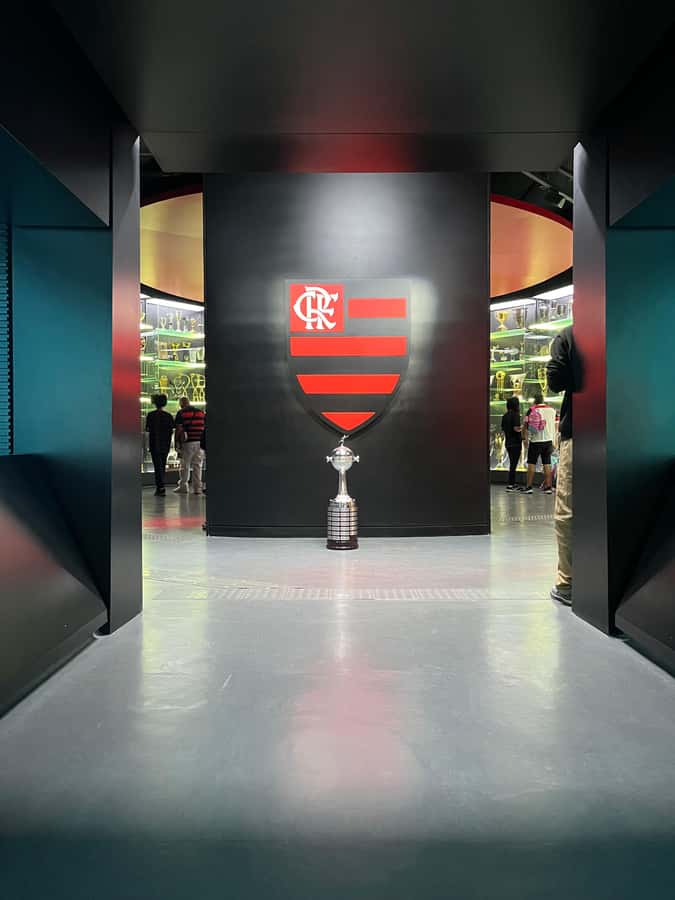
The museum also offers a chance to see how a club builds its public identity over time. Logos, colors, sporting objects, and major victories all play a part. A brief comment praising the display of logos and history points to one of the quieter strengths of the visit: small design details can matter as much as the famous names.
More museums in Rio De Janeiro:
- Petrópolis Day Trip from Rio de Janeiro including Imperial Museum and Crystal Palace
★ 4.0 · 101 reviews - Museum of Tomorrow, AquaRio & Olympic Boulevard in Rio de Janeiro
★ 4.5 · 69 reviews - Olympic Boulevard, Museum of Tomorrow & Historical Rio
★ 4.5 · 66 reviews
Entering the Gávea headquarters
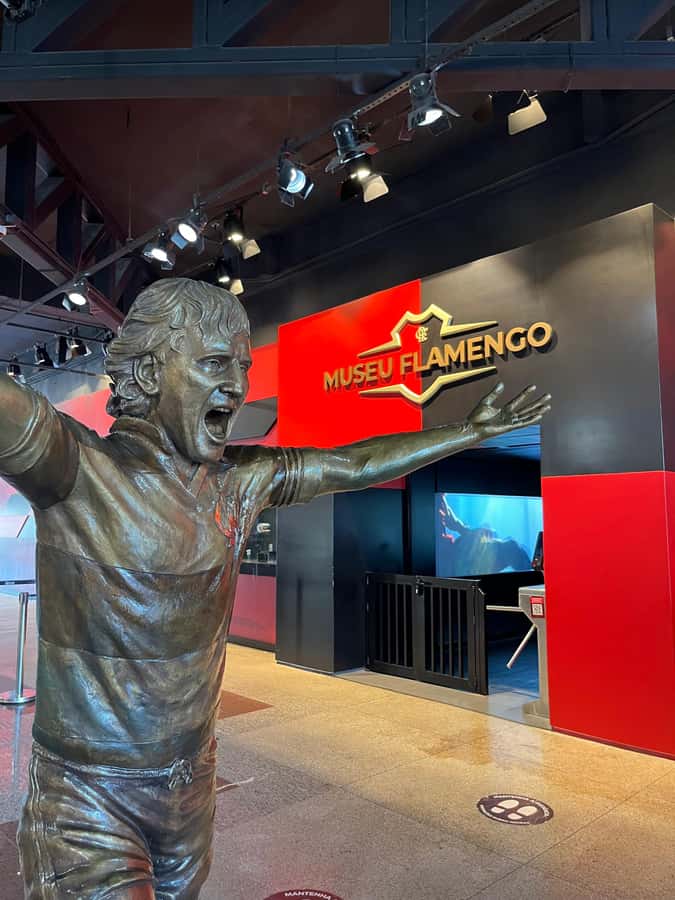
The museum is located at Flamengo’s headquarters in the Gávea neighborhood, in the southern part of Rio de Janeiro. That location matters. You are visiting the club in its own home rather than seeing Flamengo as a detached exhibition in a general city museum.
The meeting point is the headquarters of Clube de Regatas do Flamengo. You should plan your route around reaching Gávea, since the ticket does not include transport, a city tour, or a separate exploration of the neighborhood. The supplied details do not give a precise visit length or a fixed starting time, so check the available time when booking.
This is a one-day admission, not a multi-day pass. In practical terms, that gives you the freedom to fit the museum into a day of sightseeing in southern Rio, but you should not read the one-day validity as a promise of an all-day guided program. It is an entrance ticket to the museum.
The setting also helps set expectations. This is a club-focused stop. If your plan is to see Rio’s wider sights, you will need to arrange those separately. If you are already in Gávea or want a change from beaches and viewpoints, the museum provides a more focused indoor activity.
Four floors of trophies and sporting memory
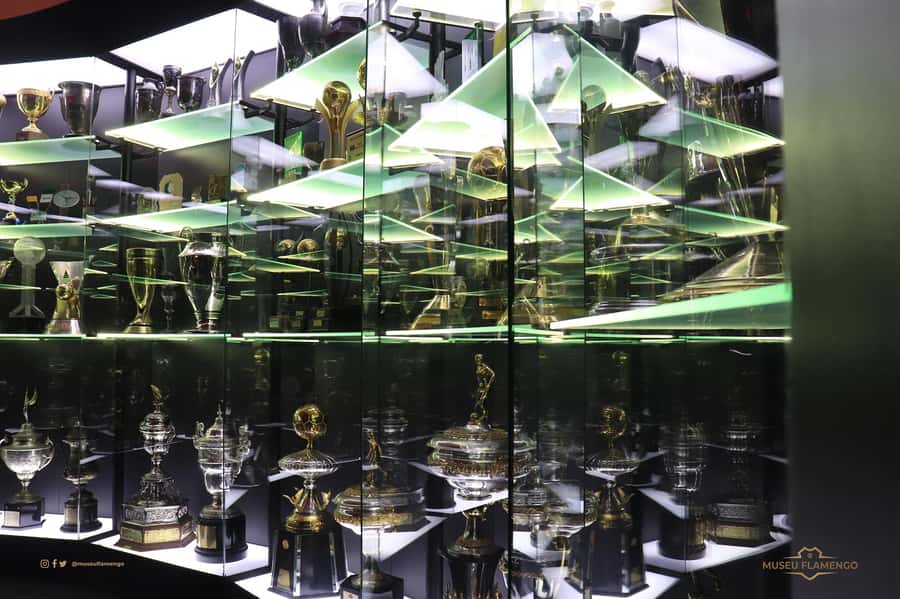
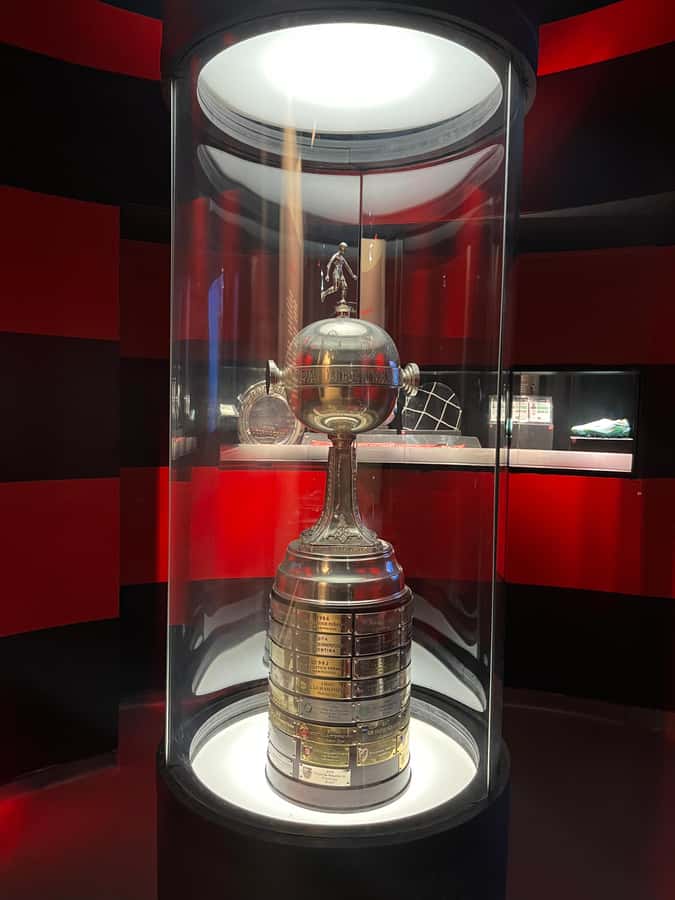
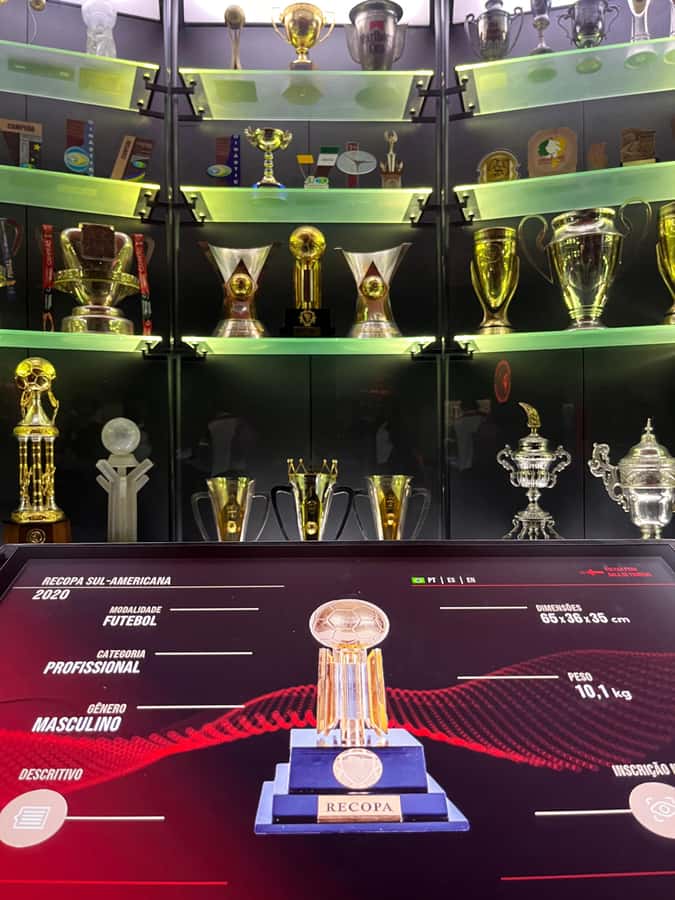
The trophy room is spread across four floors, which is one of the clearest reasons the admission can offer good value to supporters. You are not likely to finish the central collection in a few minutes simply by walking past one cabinet. The vertical layout gives the club’s successes room to build.
A trophy room can easily become repetitive. Cup after cup may blur together, especially if you do not know the difference between competitions. The museum’s themed sections and digital elements appear designed to solve that problem by adding stories, images, and atmosphere around the objects.
I would approach the trophies as a visual record rather than try to identify every piece. Notice how the collection moves from the club’s earlier sporting roots toward its football era. The trophy displays work best when you connect them with the people, symbols, and moments presented elsewhere in the museum.
The collection also includes historic objects and idols from several sports. That makes the visit more useful for families or groups with different interests. One person can focus on football stars, while another can pay attention to the club’s sailing and other sporting chapters.
For serious Flamengo supporters, this is likely the emotional core of the museum. For a casual visitor, it may be the point where the digital sections become especially important, since the screens and guided material help explain why each object matters.
Fourteen sections built for participation

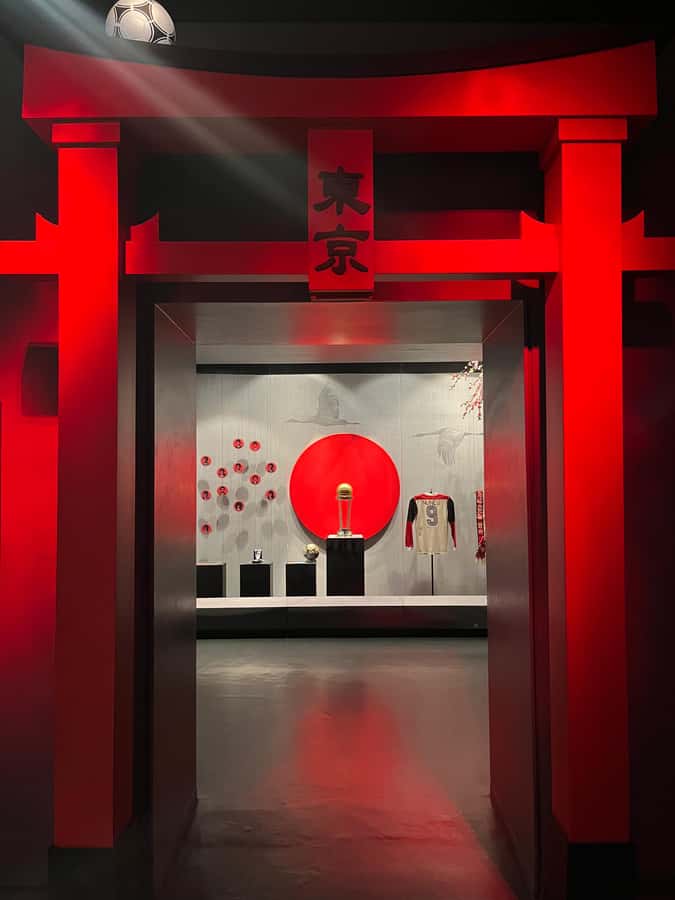
The museum has 14 themed areas combining technology, interactivity, and emotional storytelling. Those terms can sound vague, but the practical point is clear: you should expect more than static labels beside objects.
Giant screens are used to bring major moments to life. Sensory settings and special rooms are intended to put you at the center of the club’s most memorable episodes. This approach suits Flamengo because the club’s meaning is tied not only to results, but also to crowd feeling, visual symbols, and repeated memories.
I like the fact that the museum seems designed around emotion without leaving the historical record behind. A supporter may recognize a match, player, logo, or celebration immediately. Someone with less Flamengo knowledge can still follow the story through images and a clear timeline.
The trade-off is that interactive exhibits can make a museum feel busy. If you prefer quiet galleries and long written explanations, the large screens and sensory rooms may not be your ideal format. The available information does not specify how much text each section contains, so do not assume this is a research archive with every detail explained in depth.
Use the digital guide to fill in the gaps. It is available in English, Spanish, and Portuguese, and the activity also lists instructor support in those three languages. That language range is a real advantage for international visitors, especially when the club’s history includes names, competitions, and cultural references that may not be obvious at first.
More things to do in Rio de Janeiro:
- Rio de Janeiro: 6-Stop Highlights of Rio with Lunch
★ 4.4 · 5,157 reviews - Christ the Redeemer Entry Ticket by Corcovado Train
★ 4.4 · 4,476 reviews - Rio’s City Tour – Tickets for Christ, Sugar Loaf & Lunch included
★ 5.0 · 4,389 reviews - Full Day: Christ Redeemer, Sugarloaf, City Tour & Barbecue Lunch
★ 4.5 · 3,142 reviews
The emotional side of the Rubro-Negro identity
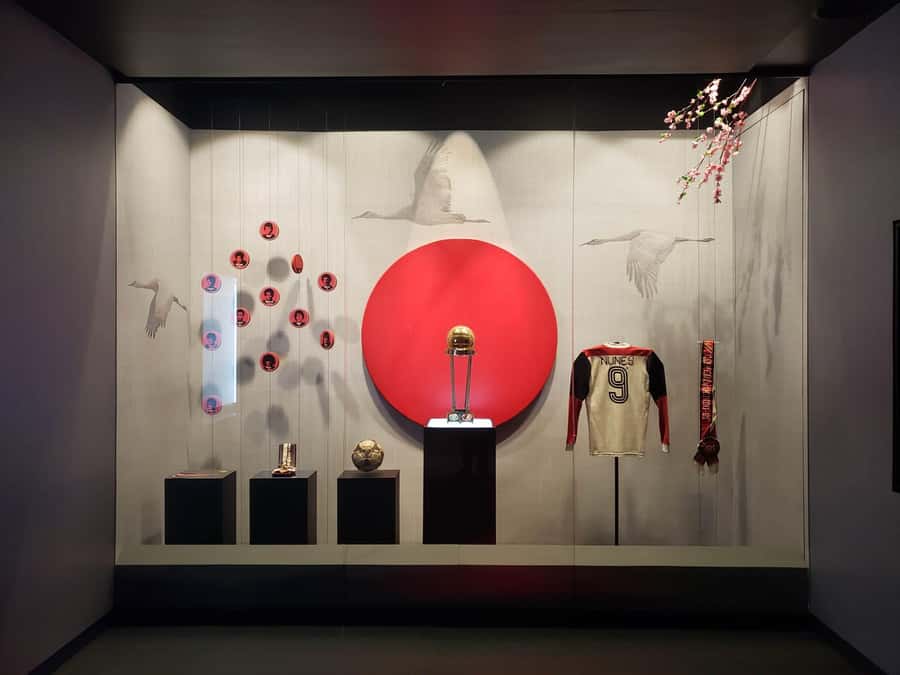
Flamengo is known by its red-and-black colors, and the museum leans into that identity. A dedicated Rubro-Negro experience is one of the features that helps move the visit beyond a standard sports display.
The strongest parts are likely to be the spaces that connect a club symbol with a personal memory. You may see the colors, logos, historic objects, and major moments presented together, giving you a sense of how Flamengo became more than a list of sporting results.
I would pay close attention to the details around the logos. One of the short comments about the museum specifically singled out logos and history, which suggests that the visual story is worth taking seriously. A club’s badge changes, uniforms, and graphic style can show shifts in identity just as clearly as a trophy can show success.
The museum also aims to make you feel part of the country’s large Flamengo following. That is an ambitious goal, but the use of giant screens and sensory areas gives it a better chance than a conventional display case would. You do not need to be a lifelong supporter to understand the power of a shared club identity, though the emotional effect will naturally be strongest if Flamengo already means something to you.
What the visit does not include
This ticket is deliberately limited. Food and drinks are not included, and the museum does not include a tour of Gávea. If you want a guided look at the broader headquarters, you will need to treat that as a separate plan rather than expecting it to follow automatically from museum admission.
The restrictions are also firm. Food, drinks, alcohol, drugs, plastic bags, glass items, weapons, sharp objects, scooters, and fire are not allowed. Smoking and vaping are forbidden, and pets cannot enter, with assistance dogs permitted.
You should keep your phone on silent or airplane mode. Photography and filming with flash are not allowed. These rules protect the displays and help preserve the atmosphere, but they may disappoint you if your main goal is to record every screen or trophy.
Sportswear is also listed among the prohibited items. That is an unusual rule for a sports museum, so check your clothing before setting out. Unaccompanied minors are not allowed, which means children must visit with an accompanying adult.
These rules are worth reading before you arrive. A little preparation prevents an awkward pause at the entrance and lets you focus on the museum rather than on what you had to leave behind.
Is $18 a fair price?
At $18 per person, the ticket is reasonably priced if you have a real interest in Flamengo or Brazilian football. The four-floor trophy display, 14 themed sections, digital guide, and technology-heavy presentation give you several kinds of content for one admission fee.
The value is less certain for someone who knows little about the club and has only a spare hour in Rio. A football museum can be fascinating even to outsiders, but this one is built around Flamengo’s own achievements and emotional world. You will get more from it if you recognize some of the players, sports, colors, or major moments.
The price also does not cover extras. There is no food or drink included, and no tour of Gávea. That is not a flaw in the ticket itself, but it matters when you compare the museum with a broader guided attraction.
A flexible booking policy helps reduce the risk. You can reserve now and pay later, and cancellation is allowed up to 24 hours before the visit for a full refund. Check availability for the starting times that apply to your chosen date, since the general information does not provide a single daily schedule.
Who will enjoy this museum most?
I would put Flamengo supporters at the top of the list. The combination of club symbols, idols, trophies, and famous moments is designed to stir recognition and pride. A short reaction describing the experience as emotional fits the museum’s purpose, especially in the Rubro-Negro areas.
Football fans who do not support Flamengo can also find value here. The museum traces the growth of one of Brazil’s major clubs and shows how a sports organization creates a powerful public identity. You may not feel the same personal connection, but the structure of the story remains interesting.
Families can benefit from the interactive format, provided children are accompanied by an adult and follow the entry rules. The giant screens and sensory rooms may hold attention better than long blocks of text. Still, the prohibition on food, drinks, and unaccompanied minors calls for a little planning.
I would be more cautious about recommending it to someone who wants a general Rio attraction. This is not a broad survey of Brazilian football, and it is not a tour of the Gávea neighborhood. It is a focused visit for people willing to give Flamengo’s story their attention.
My practical verdict
I like the museum’s clear sense of purpose. It takes a club founded in 1895, gives its sporting story four floors, and uses 14 themed sections to connect objects with atmosphere. The digital guide in English, Spanish, and Portuguese also makes the visit easier for international visitors.
The main weakness is the narrow subject. If you are indifferent to Flamengo, the emotional sections and trophy displays may not justify the $18 price. You also need to remember that the ticket covers museum entry only, with food, drinks, and a Gávea tour left out.
Book it if you want a close look at one of Brazil’s most important club identities, especially if you already follow football or want to understand why Flamengo inspires such devotion. Skip it if your Rio schedule is tight and you are looking for a general cultural attraction rather than a very specific sports story.
FAQ
Where is the Flamengo Museum located?
The museum is at the headquarters of Clube de Regatas do Flamengo in the Gávea neighborhood, south of Rio de Janeiro.
How much does admission cost?
The listed price is $18 per person.
How long is the ticket valid?
The ticket is valid for one day. You should check availability for the starting times offered on your selected date.
Which languages are available?
The digital guide is available in English, Spanish, and Portuguese. Instructor support is also listed in English, Spanish, and Portuguese.
What does the ticket include?
It includes entrance to the Flamengo Museum and the digital guide experience.
Are food and drinks included?
No. Food and drinks are not included, and food and drinks are not allowed inside the museum.
Is a tour of Gávea included?
No. The ticket does not include a tour of Gávea.
Can I cancel my booking?
Yes. You can cancel up to 24 hours in advance for a full refund. You can also reserve now and pay later.
Can I take photos inside?
Photography and filming with flash are not allowed. Your cell phone should be on silent or airplane mode, and smoking and vaping are forbidden inside the museum.
Just added in Rio De Janeiro
- Full Day Tour in Rio de Janeiro★ 5.0 · 8 reviews
- Garganta do Ceu Cave Hiking Private Tour on Pedra da Gavea★ 4.5 · 3 reviews
- Gastronomic Tour at the Municipal Market in Rio de Janeiro★ 5.0 · 4 reviews
- GIG Airport Transfer x Rio de Janeiro Hotels★ 4.5 · 11 reviews
- Rio de Janeiro private Full day Custom Tours★ 5.0 · 35 reviews
- Christ the Redeemer – Complete Morning Tour with Ticket and Transport at the Hotel★ 3.5 · 4 reviews
- AquaRio, Museum, Boulevard Olimpico, Ferris Wheel, Transport and Tourism Guide.★ 4.0 · 6 reviews
- Personalized and Private Full-Day Tour in Rio de Janeiro★ 5.0 · 6 reviews
Rio de Janeiro Tours, compared.

Christ the Redeemer Entry Ticket by Corcovado Train
Read our review →
Rio’s City Tour – Tickets for Christ, Sugar Loaf & Lunch included
Read our review →
Full Day: Christ Redeemer, Sugarloaf, City Tour & Barbecue Lunch
Read our review →

Rio’s Full Day: Selarón Steps, Christ & Sugarloaf – Tickets & Lunch Included
Read our review →
Christ the Redeemer, Sugarloaf, Selaron & BBQ Lunch
Read our review →
Browse the lists this tour appears in