
Reviewed · HISTORICAL TOURS
Rio de Janeiro: Little Africa Heritage Walking Tour
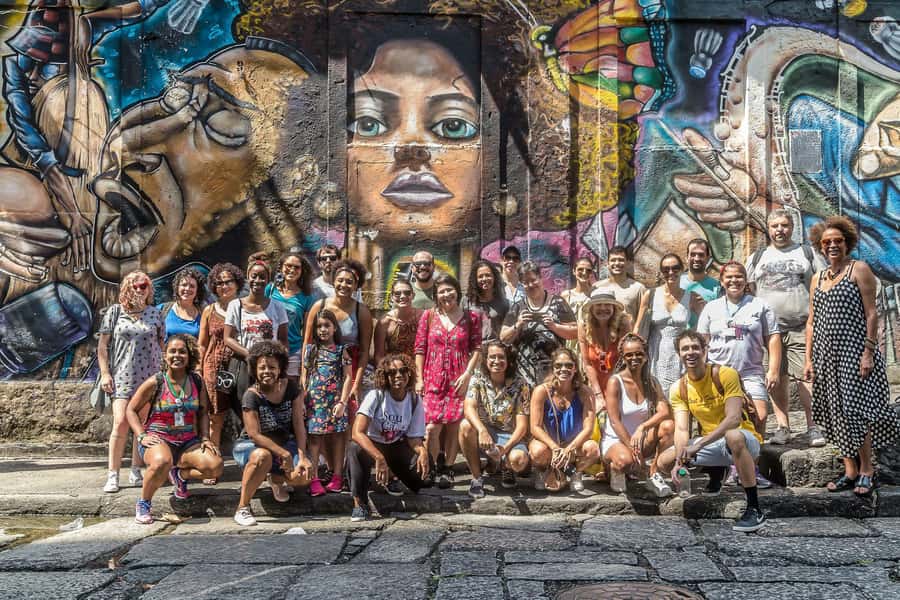
Rio’s past is written in its port streets. This 150-minute walking tour gives you a clear way into Rio’s African heritage, from the colonial era and slavery to samba, food, dance, and life today. I especially like the rooftop view of Mauá Square and Guanabara Bay, followed by the chance to walk through places tied directly to Afro-Brazilian culture. The guides also bring real warmth to difficult subjects, with names such as Luana, Nathalia, Larissa, Eddie, Ryane, and Marina repeatedly praised for their care and skill.
I also like that this is not just a stop-and-snap sightseeing walk. You hear why Largo da Prainha matters for food, why Pedra do Sal is linked to samba, and why Cais do Valongo carries such painful importance. The main drawback is simple: you are outside for two and a half hours, often in heat or rain, and the subject matter includes slavery, racism, and exploitation. Comfortable shoes, water, sunscreen, and emotional readiness matter.
In This Review
- Key points to know before you book
- Why Little Africa belongs on your Rio itinerary
- Starting at the Rio Art Museum
- Morro da Conceição and the port’s old neighborhoods
- Largo de São Francisco da Prainha and Afro-Brazilian food
- Mercedes Baptista and the role of Afro dance
- Pedra do Sal, where samba comes alive
- The Hanging Garden of Valongo
- Cais do Valongo and the hardest history
- What the guides add to the walk
- Heat, rain, pace, and practical comfort
- Is $40 a fair price?
- Who should book this Little Africa tour?
- Should you book it?
- FAQ
- Where does the Little Africa Heritage Walking Tour start?
- How long does the tour last?
- What language is the tour offered in?
- Is hotel pickup included?
- Does the tour include food or drinks?
- Does the tour visit Pedra do Sal?
- Will I see Cais do Valongo?
- Does the tour run in bad weather?
- What should I bring?
- Are young children allowed?
- How much does the tour cost?
- Can I cancel for a refund?
- Do I have to pay when I reserve?
Key points to know before you book
- The rooftop opening gives you your bearings: You look across Mauá Square and Guanabara Bay while learning the basic story of colonial Brazil.
- Little Africa is best understood on foot: The route links Morro da Conceição, Largo da Prainha, Pedra do Sal, Valongo, and nearby historic sites.
- Pedra do Sal connects history with music: The stop is tied to the birth of samba and to Rio’s oldest continuously inhabited black neighborhood.
- The guides are the heart of the experience: Luana, Nathalia, Larissa, Eddie, Ryane, Marina, Raquel, and others are praised for clear English, passion, humor, and thoughtful answers.
- The tour takes place in all weather: Rain does not automatically cancel the walk, so dress for the forecast.
- The $40 price buys interpretation, not transportation: Hotel pickup, drop-off, food, and drinks are not included.
Why Little Africa belongs on your Rio itinerary
Rio is often sold through beaches, viewpoints, carnival, and colonial churches. Those are worthwhile, but they do not tell the whole story. The port district adds a crucial chapter: the presence, suffering, work, religion, creativity, and cultural influence of Africans and Afro-Brazilians.
The neighborhoods around Rio’s port became known as Little Africa around the turn of the 20th century. After Brazil ended the slave trade, freed people remained in the area and worked there. That detail helps explain why this is not a theme park version of African culture. You are walking through an urban district shaped by real communities and painful events.
The opening explanation about colonial Brazil is important. Without it, the later sites can feel disconnected. With it, you can better understand how slavery shaped Brazil, how African traditions survived, and how those traditions influenced music, dance, cooking, and everyday life.
I would book this early in your Rio stay if you want cultural context for the rest of your trip. One participant said the experience helped make sense of Brazil and sparked interest in visiting Bahia. That is a fair measure of the tour’s value: it can change what you notice after you leave.
More History Tours in Rio de Janeiro
- Rio de Janeiro Historical Center Walking Tour
★ 4.5 · 336 reviews - Private Walking and Cultural Tour Rocinha-Rio de Janeiro
★ 5.0 · 239 reviews - Discover Rio Little Africa: A Cultural and Historical Journey
★ 5.0 · 238 reviews
Starting at the Rio Art Museum
Meet your guide in front of the Museu de Arte do Rio, usually called MAR. Arrive five minutes early. The guide can wait only 15 minutes for late arrivals, so this is not the time to rely on a delayed ride.
The first portion introduces Brazil during the colonial period. Expect a spoken explanation rather than a museum visit. The tour is about the streets and landmarks outside, so you should not expect admission to the museum itself.
A short break of about 10 minutes includes the rooftop view. From here, you can take in Mauá Square and Guanabara Bay while the guide sets the port district in context. It is a practical start because you can see the area before walking through it.
The view is also a welcome pause before the more serious material begins. Bring water, especially during Rio’s hotter months. The tour description calls for comfortable clothes, and that advice is worth taking seriously.
Morro da Conceição and the port’s old neighborhoods
The group then walks around Morro da Conceição for roughly 20 minutes. This is where the tour begins to connect broad historical events with the shape of Rio itself.
The walk is not only about looking at buildings. Your guide explains how the port neighborhoods became associated with Little Africa and how freed people continued living and working there after the slave trade was made illegal.
This stop may suit you if you prefer history attached to real places. A classroom can explain dates and laws, but a guide on the street can show how those forces affected a neighborhood.
The pace is designed to cover several sites in a limited time. That makes the route manageable, but it also means the guide has to keep moving. If you want long museum visits or extended time at every landmark, this experience may feel brisk.
Largo de São Francisco da Prainha and Afro-Brazilian food
At Largo de São Francisco da Prainha, the discussion turns toward African influence on Brazilian gastronomy. This is one of the tour’s most appealing shifts because food gives you a familiar way to understand cultural exchange.
The stop lasts about 20 minutes. You learn how African traditions helped shape Brazilian cooking, rather than treating food as a separate subject from history. The square also offers a natural place to think about what you might eat after the walk.
Several guides have recommended food and places to spend time in Rio after the tour. One group continued to lunch together and tried bobô de camarão, a shrimp stew. Another participant wished the tour included lunch at the square, which is useful advice for your own planning: keep time available afterward if you want to eat nearby.
Food is not included in the $40 price. That is not a major flaw, but you should budget separately if you want to turn the stop into a meal.
More Walking Tours in Rio de Janeiro
- Rio de Janeiro: Rocinha Favela Walking Tour with Local Guide
★ 4.8 · 3,052 reviews - Rio De Janeiro: Half-Day Rocinha Favela Walking Tour
★ 4.7 · 2,272 reviews - 3 Hour Rocinha Favela Walking Tour with a Local Guide
★ 5.0 · 833 reviews - Favela Tour Rio de Janeiro – Vidigal Walking Tour by Russo Guide
★ 5.0 · 377 reviews
Mercedes Baptista and the role of Afro dance
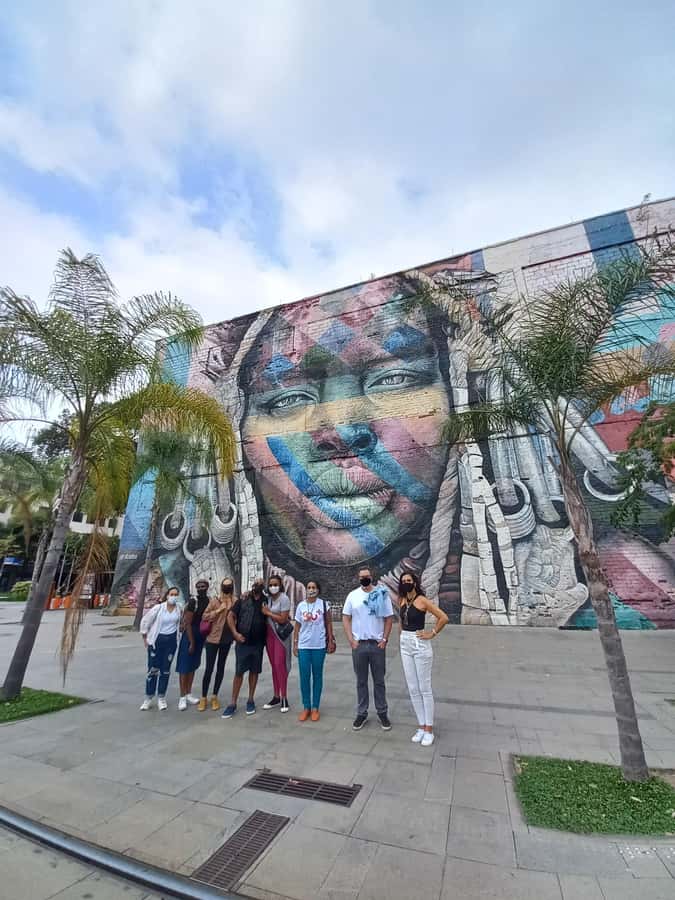
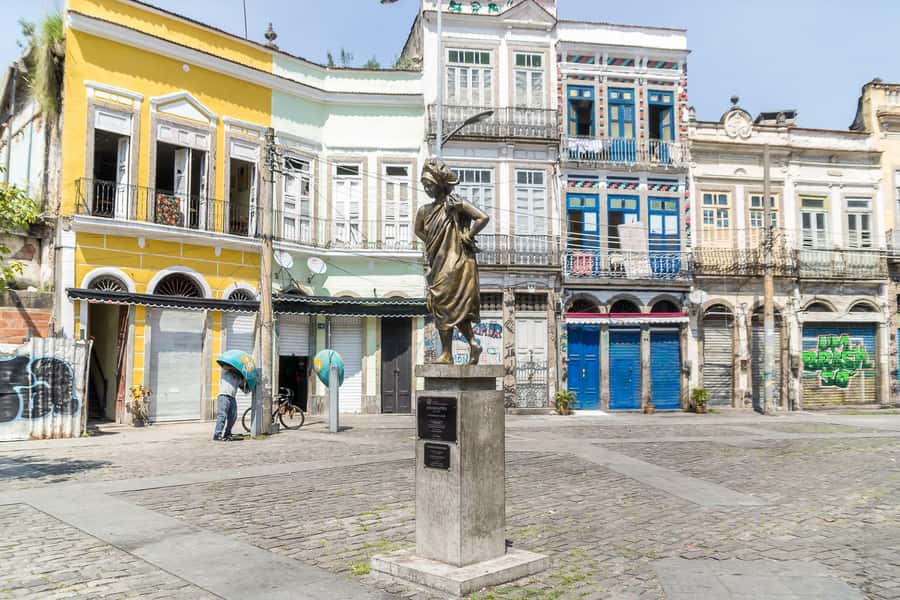
The route includes a statue honoring Mercedes Baptista. She was a pioneer of Afro dance in Brazil and the first Black dancer at Rio’s Municipal Theater.
This brief stop gives the tour a person-centered focus. Instead of hearing only about anonymous groups or broad social forces, you encounter an individual whose career challenged barriers in Brazilian dance.
It also broadens the tour beyond slavery and samba. You see how Afro-Brazilian influence continued into professional performance and public culture. Guides have been praised for explaining serious themes with humor and expressive storytelling, and this is the kind of subject that benefits from a lively presentation.
The stop is relatively short, so you should think of it as one piece of a wider story. The value comes from how your guide links Mercedes Baptista to questions of race, gender, opportunity, and representation.
Pedra do Sal, where samba comes alive
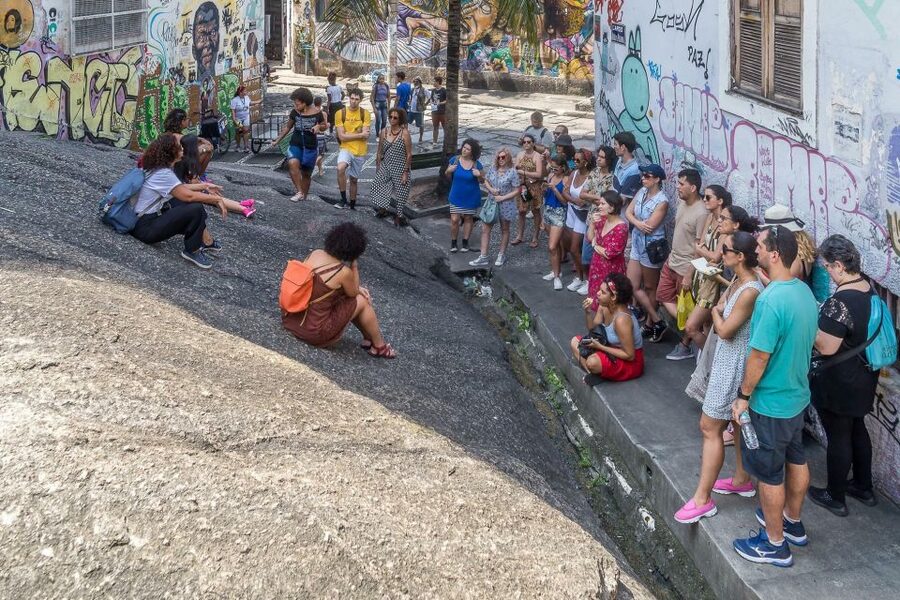
Pedra do Sal is one of the main reasons to choose this walk. It is widely considered the place where samba was born, and it is also described as the oldest continuously inhabited Black neighborhood in Brazil.
Here, music becomes a way to understand community. Samba is not presented simply as a soundtrack for carnival. It is tied to people, place, memory, and the social life of Little Africa.
You stop in front of Pedra do Sal for around 20 minutes. Since this is an outdoor walking tour, you do not need specialist music knowledge. A good guide can make the connection clear even if your experience of samba begins and ends with carnival footage.
This is also a useful point for travelers who want more than famous Rio attractions. Pedra do Sal has a cultural meaning that is easy to miss if you walk through the port district alone. One participant noted that Little Africa is not huge in size, but it is full of culture and history. That sums up the route well: the distances are modest, yet the subject matter is large.
The Hanging Garden of Valongo
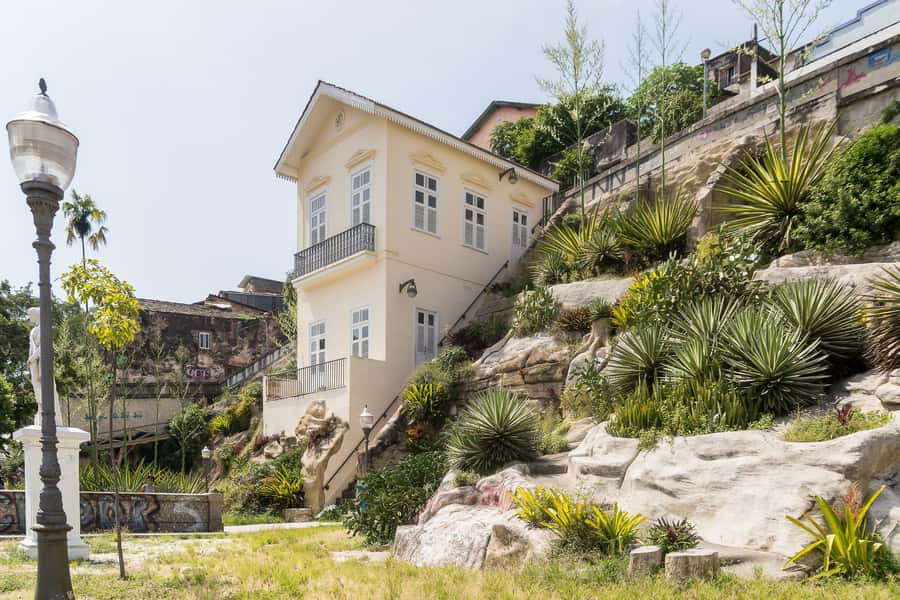
The Jardim Suspenso do Valongo, or Hanging Garden of Valongo, is another short guided stop. The garden is near the Valongo area and adds a different physical setting to the route.
By this point, you have heard about colonial Brazil, freed people, food, dance, and samba. The garden helps the guide continue the story through the port’s historic structures and public spaces.
Do not expect a long period of quiet sightseeing here. The listed visit lasts about 20 minutes, and the whole tour must fit into 150 minutes. The strength is the guide’s explanation, not a large amount of free time.
I would listen closely and take notes if the subject matters to you. The information comes quickly, and the themes connect across several sites.
Cais do Valongo and the hardest history
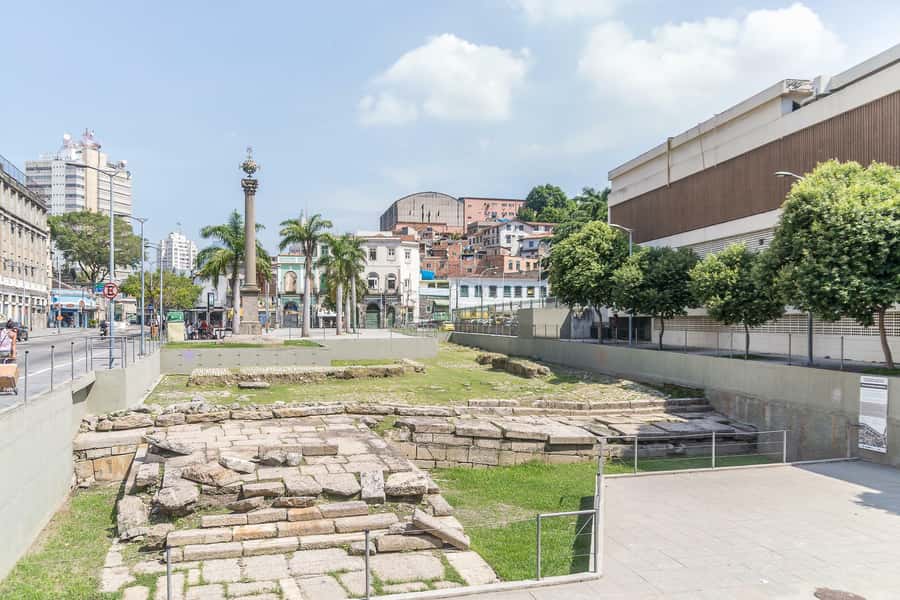
The walk ends at Cais do Valongo, or Valongo Wharf. This is the most difficult part of the route emotionally because it connects the modern city with the history of the transatlantic slave trade.
The tour does not treat slavery as a footnote. Guides explain the port’s role and connect past events to present-day racial dynamics. Several participants praised the way guides handled structural racism, sexism, and slavery with care, while still inviting questions and discussion.
That approach matters. You may hear facts that are painful, upsetting, or unfamiliar. One guide, Nathalia, was praised for answering sensitive questions with both good sense and feeling. Another, Marina, brought family experience and study of Afro-Brazilian history to the discussion. Those personal connections can make the material more direct, but the experience remains educational rather than theatrical.
The listed route says you arrive back at the Museu de Arte do Rio, while the final historic point is Cais do Valongo. Confirm the exact end point with your guide on the day, especially if you have a timed reservation afterward. The supplied details identify MAR as both the starting location and return point, but the final listed visit is Valongo.
What the guides add to the walk
The strongest feature of this experience is the guide. Across the available feedback, the praise is unusually consistent.
Luana is described as kind, enthusiastic, and caring. She even waited while one participant arranged an Uber. Nathalia is praised for strong historical detail, humor, sensitivity, and restaurant suggestions. Larissa is noted for making the walk feel like a conversation with a friend, while also asking questions that encouraged serious reflection.
Eddie is repeatedly described as passionate, gracious, and able to connect Little Africa to wider world history. Ryane is praised for her energy and personal commitment to the subject. Marina brings a background in history and tourism, along with a personal connection to Rio. Raquel, Natalia, Mariana, Razel, and other guides also receive praise for clear English and engaging delivery.
Guide assignments can change, so you cannot book a specific person based on these names. Still, the pattern tells you something useful. This is not a script read in a flat voice. The experience depends heavily on who leads it, and the guide team appears strongly invested in the subject.
Some guides use acting, facial expression, current examples, graffiti, and questions to keep the walk active. That can make serious content easier to follow. If you prefer a quiet, purely academic tour, the conversational style may feel more animated than expected.
Heat, rain, pace, and practical comfort
This is a genuine outdoor walk. The tour operates rain or shine, and one participant completed it in heavy rain. Another noted being outside in the heat for the full two and a half hours.
Wear shoes you can walk in without complaint. Use sunscreen, carry water, and choose light, comfortable clothing. A rain jacket or umbrella may be wise when the forecast is uncertain, but the basic rule is simple: do not book this expecting air conditioning.
Children under five are not suited to this activity. Older children may or may not enjoy the subject matter, depending on their interest and attention span. The tour includes difficult discussion of slavery and racism, so families should decide based on maturity, not just walking ability.
The tour is offered in English only, despite the mention of an English or Portuguese-speaking guide in the general inclusions. The practical information identifies English as the available language, so you should book with that expectation.
Is $40 a fair price?
At $40 per person, I see reasonable value if you want an informed cultural walk rather than a simple neighborhood stroll. You receive 150 minutes with a live English-speaking guide, several important sites, a rooftop view, and an explanation that ties the locations together.
You are not paying for transport, meals, museum admission, or hotel pickup. That keeps the comparison clear. If you only want photographs of Pedra do Sal and Mauá Square, $40 may feel high. If you want the meaning behind those places, the price is easier to justify.
The tour can also save you time. You could visit parts of the port area independently, but you might miss the connections between the sites. The guide supplies the context that turns separate stops into one story.
Free cancellation up to 24 hours before the start and reserve-now, pay-later booking add useful flexibility. Keep those terms in mind if your Rio plans are still shifting.
Who should book this Little Africa tour?
I would recommend it most strongly to you if you want to understand Rio beyond postcard attractions, especially if Afro-Brazilian culture, samba, food, dance, or the history of slavery matters to your trip.
It also suits first-time visitors because the colonial introduction gives you a framework for the city. Returning visitors may find it even more rewarding if they have already seen Rio’s better-known sights and want a different side of the city.
You may want to skip it if you dislike walking outdoors in heat or rain, need a gentle sightseeing pace, or want an activity designed mainly for small children. The discussion is serious, and the route is not built around entertainment alone.
Plan a meal afterward if food interests you. Guides have offered useful recommendations, and nearby restaurants can extend the experience beyond the formal two and a half hours.
Should you book it?
Yes, if you want Rio’s African heritage treated as a central part of the city’s story rather than a quick aside. The rooftop view is pleasant, Pedra do Sal gives samba a real sense of place, and Cais do Valongo brings the difficult history into focus.
Book it early, wear practical clothes, arrive five minutes ahead, and leave room for lunch afterward. At $40, this is good value for a thoughtful, guide-led walk that may change how you see Rio for the rest of your trip.
FAQ
Where does the Little Africa Heritage Walking Tour start?
The tour starts in front of the Museu de Arte do Rio, also known as the Rio Art Museum.
How long does the tour last?
The tour lasts 150 minutes, or two and a half hours.
What language is the tour offered in?
The practical tour information lists English as the available language.
Is hotel pickup included?
No. Hotel pickup and drop-off are not included.
Does the tour include food or drinks?
No. Food and drinks are not included in the price.
Does the tour visit Pedra do Sal?
Yes. The route includes a guided visit to Pedra do Sal, a place associated with the birth of samba.
Will I see Cais do Valongo?
Yes. Cais do Valongo is the final historic site listed on the route.
Does the tour run in bad weather?
Yes. The tour takes place rain or shine.
What should I bring?
Bring comfortable shoes, sunscreen, water, and comfortable clothing.
Are young children allowed?
Children under five are not suitable for this activity.
How much does the tour cost?
The listed price is $40 per person.
Can I cancel for a refund?
Yes. You can cancel up to 24 hours before the activity for a full refund.
Do I have to pay when I reserve?
No. A reserve-now, pay-later option is available, allowing you to book without paying immediately.
Just added in Rio De Janeiro
- Full Day Tour in Rio de Janeiro★ 5.0 · 8 reviews
- Garganta do Ceu Cave Hiking Private Tour on Pedra da Gavea★ 4.5 · 3 reviews
- Gastronomic Tour at the Municipal Market in Rio de Janeiro★ 5.0 · 4 reviews
- GIG Airport Transfer x Rio de Janeiro Hotels★ 4.5 · 11 reviews
- Rio de Janeiro private Full day Custom Tours★ 5.0 · 35 reviews
- Christ the Redeemer – Complete Morning Tour with Ticket and Transport at the Hotel★ 3.5 · 4 reviews
- AquaRio, Museum, Boulevard Olimpico, Ferris Wheel, Transport and Tourism Guide.★ 4.0 · 6 reviews
- Personalized and Private Full-Day Tour in Rio de Janeiro★ 5.0 · 6 reviews
Historical Tours, compared.


Private Walking and Cultural Tour Rocinha-Rio de Janeiro
Read our review →
Discover Rio Little Africa: A Cultural and Historical Journey
Read our review →


Scenic Train ride to historical cities of Morretes and Antonina
Read our review →
Rio Gastronomy: Culture & History Through The Art Of Food – Walking Group Tour
Read our review →Browse the lists this tour appears in