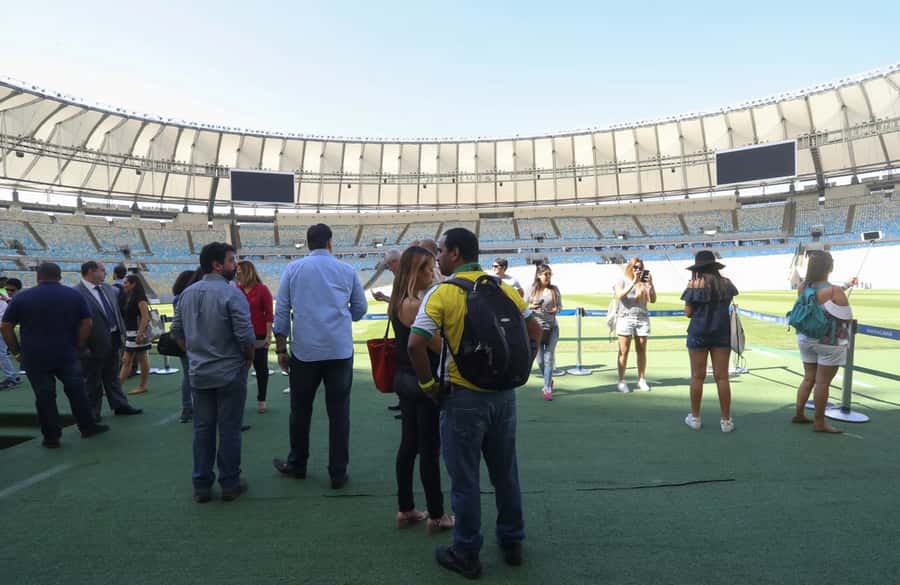
Reviewed · TICKETS
Rio: Maracanã Stadium Official Entrance Ticket
Maracanã still carries the roar. I like this 40-minute stadium visit for its access to the players’ tunnel and pitch, plus the small museum packed with Brazilian football memorabilia. You can also sit in the dugout, visit the changing rooms, and see the press conference room where post-match stars face the cameras.
The main drawback is simple: this is not really a guided tour. After a short introduction, you follow the marked route at your own pace, with signs in Portuguese and English. That suits independent visitors, but anyone expecting a guide filled with stories may find the $24 price a little high.
In This Review
- Maracanã Stadium visit at a glance
- Why Maracanã matters in Brazilian football
- Finding Gate A without wasting time
- The museum sets the tone
- The changing rooms and warm-up room
- Walking through the tunnel to the pitch
- The press conference room and match-day imagination
- A self-guided route, not a traditional tour
- How much time should you allow?
- Is $24 good value?
- Who will enjoy this most?
- Practical tips for a smoother visit
- Should you book the Maracanã Stadium visit?
- FAQ
- How long does the Maracanã Stadium visit last?
- What does the ticket include?
- Is the visit guided?
- Can I visit the pitch?
- Can I walk through the players’ tunnel?
- Can I see the changing rooms?
- Where do I enter?
- What should I show at the entrance?
- Does the ticket include photos, food, or drinks?
- What happens on match days?
Maracanã Stadium visit at a glance

- Walk through the players’ tunnel and come out beside the pitch, the same field used for major World Cup and Olympic events.
- See the changing rooms, warm-up room, dugout, and press conference room in a compact behind-the-scenes route.
- Visit the football museum for jerseys, trophies, photographs, footprints, and other pieces tied to Brazil’s great players.
- Plan for about 40 minutes, though the self-guided format lets you move more slowly if the stadium schedule allows.
- Go to Gate A, near the Rampa da UERJ, rather than searching for a separate tour office around the stadium.
- Check match-day hours carefully, since the final visit ends before the stadium opens its gates for a game.
Why Maracanã matters in Brazilian football

Maracanã is not just a large sports venue. It is one of the places where Brazil’s football story has been played out in front of enormous crowds.
Built in 1950, the stadium hosted the World Cup final that year and later welcomed matches during the 2014 World Cup. Its pitch has also been used during the 2016 Olympic and Paralympic Games, the 2013 Confederations Cup, and the 2007 Pan American Games.
The stadium has changed several times since opening. Modern renovations altered parts of the building, but the name still carries enormous weight. For many football fans, simply being inside Maracanã matters as much as the exhibits.
That history is not limited to sport. Madonna, the Rolling Stones, Paul McCartney, and Tina Turner have performed here. Pope John Paul II held large religious gatherings at the stadium in 1980 and 1997. You may come for football, but the building has hosted a much wider slice of Rio’s public life.
A few more options to weigh up in Brazil
- Christ the Redeemer Entry Ticket by Corcovado Train
★ 4.4 · 4,476 reviews - Rio’s City Tour – Tickets for Christ, Sugar Loaf & Lunch included
★ 5.0 · 4,389 reviews - Rio de Janeiro: Sugarloaf Cable Car Official Ticket
★ 4.6 · 2,873 reviews
Finding Gate A without wasting time
Your meeting point is Gate A for pedestrians at Av. Rei Pelé, 2, close to the Rampa da UERJ. The important practical tip is to go directly to Gate A and show your mobile or printed voucher at the box office.
The meeting instructions have caused confusion for some visitors. One description of the location can sound as if you need to find a separate meeting point, while the useful instruction is much simpler: enter at Gate A and continue toward the tour entrance. The entrance is around the corner to the right after you go in.
Allow extra time to locate the gate, especially if you are arriving for a timed visit. A large stadium is not the place to discover that you have misunderstood the entrance directions five minutes before closing.
The stadium is accessible to wheelchair users. Hotel transport is not included, and neither are food or drinks, so arrange your own way to Maracanã and plan refreshments separately.
The museum sets the tone
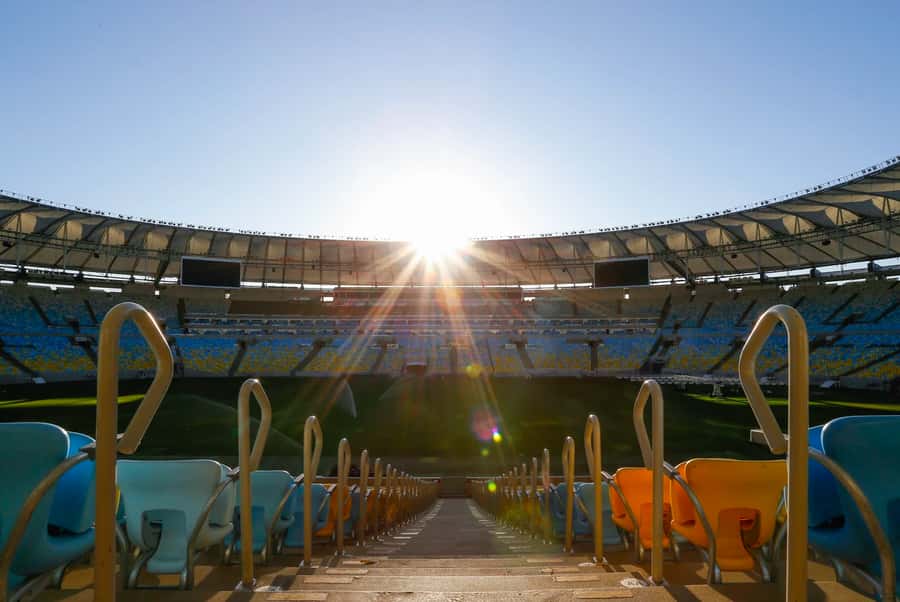
The museum is usually the first part that gives the visit its emotional pull. It brings together football shirts, trophies, photographs, and memorabilia connected with important Brazilian players and matches.
You might also see footprints and other displays that help connect famous names with the stadium. This is not a huge football museum, so I would not plan the visit as a full afternoon museum outing. Its value comes from the setting. You are seeing these objects inside Maracanã, rather than in a detached exhibition hall.
If you know Brazilian football, the displays will mean more to you. If you do not, the bilingual signs help explain what you are seeing, though the information can feel limited in places. One useful approach is to slow down at the items that catch your eye instead of rushing straight toward the pitch.
The museum also helps families and casual sports fans. You do not need to know every championship or player to understand the basic appeal of shirts, trophies, crowd images, and the scale of the stadium’s past.
The changing rooms and warm-up room
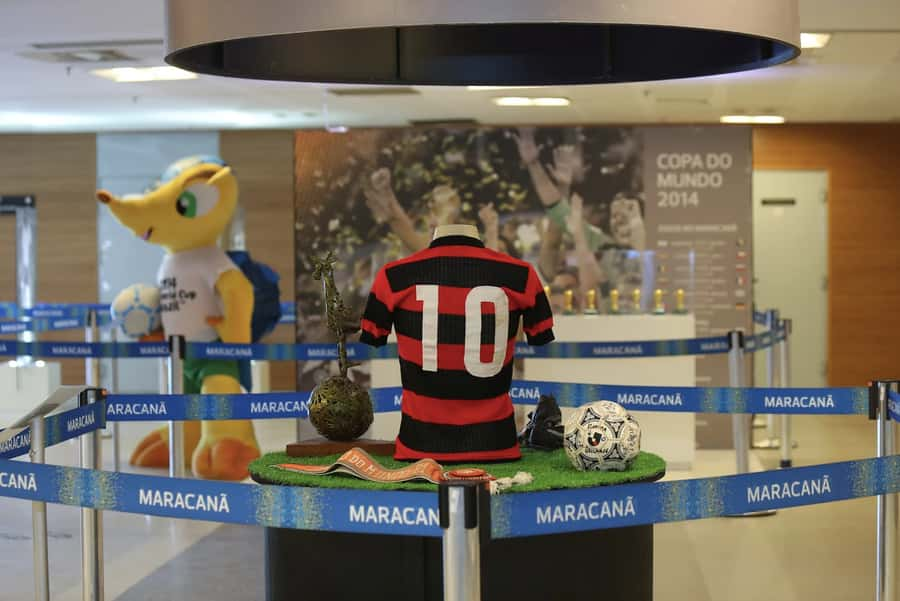
The route continues into areas normally hidden from ordinary match spectators. You can see the changing rooms and the warm-up room, places where players prepare before facing thousands of people.
These rooms are not presented as a grand theatrical attraction. Their appeal is more direct. You are seeing the practical spaces used before the public drama begins. For a football fan, that change of setting is important: first the museum shows the public record, then the changing rooms show the quiet preparation behind it.
The visit also gives you time to take photographs. Some professional photo packages are offered for an extra charge, so the $24 admission is not the end of your possible spending. One visitor paid an additional amount for photos and still found the experience worthwhile, but you should decide in advance if those extras interest you.
There are also optional activities such as a kick simulator and a video experience involving shooting goals on Copacabana. These are not part of the basic ticket. You can skip them and still see the main stadium route.
A completely different kind of day:
- Rio de Janeiro: 6-Stop Highlights of Rio with Lunch
★ 4.4 · 5,157 reviews - Rafting – Brotas – Rio Jacaré Pepira
★ 5.0 · 3,814 reviews - Full Day: Christ Redeemer, Sugarloaf, City Tour & Barbecue Lunch
★ 4.5 · 3,142 reviews - Rio de Janeiro: Rocinha Favela Walking Tour with Local Guide
★ 4.8 · 3,052 reviews
Walking through the tunnel to the pitch
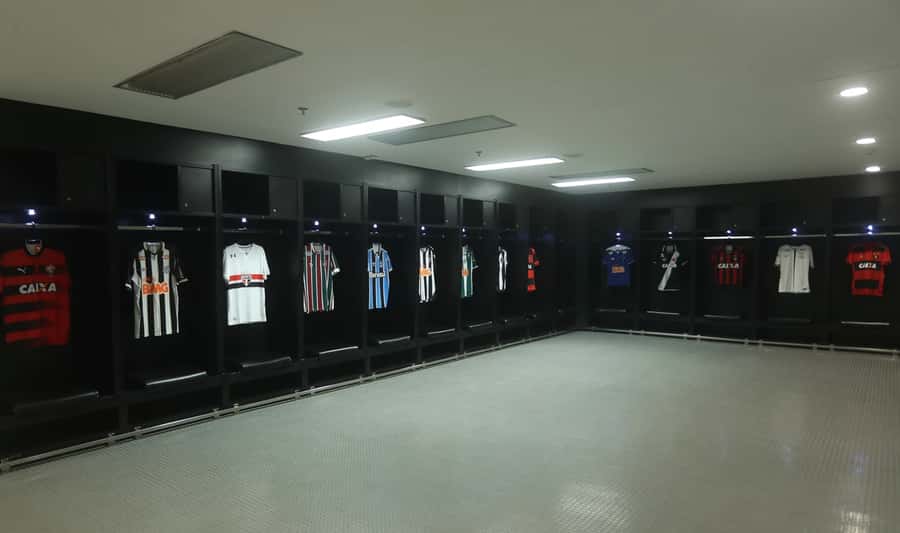
This is the moment most likely to stay with you. You walk down the players’ tunnel and emerge beside the field, imagining the noise of nearly 80,000 supporters.
The wording matters here: you get pitch-side access, not a free run across the playing surface. Barriers guide the route, and the visit lets you stand near the field, view the seating, and take photographs. There may also be a chance to kick a ball at a goal from the side of the pitch.
I like this part because it turns Maracanã from a name into a physical place. Photos of the stadium cannot tell you how the tunnel frames the field or how different the building feels from ground level. Even people who are not serious football fans often find this section worthwhile because the route makes the stadium’s scale easier to understand.
The dugout provides another good photo stop. Sitting where players and staff sit gives you a small taste of match-day routine, though you should not expect access to every part of the stadium.
The press conference room and match-day imagination

The press conference room offers a different view of football. Instead of the crowd and the action, you see where players and coaches explain what happened after the match.
You can sit at the table and picture the familiar scene: tired players, bright lights, rows of microphones, and questions after a major result. It is a simple stop, but it works well for photographs.
The stadium’s connection with major matches adds meaning here. Germany’s 2014 World Cup victory at Maracanã gives some football fans a personal reason to visit, especially those who remember Mario Götze’s winning goal. The 1950 World Cup also hangs over the site, giving the pitch a place in football history far beyond its current fixtures.
At the same time, the displays do not explain every major event in great detail. If you want a full historical account, you may need to read the signs closely or arrange a separate guide. The basic admission focuses more on access than on long storytelling.
A self-guided route, not a traditional tour

Set your expectations correctly and the format is easy to enjoy. There is an introduction, staff can help with questions, and the route is marked. After that, you move through the museum, changing rooms, tunnel, pitch-side area, seating, dugout, and press room on your own.
Some people prefer this. You can stop for photos, read the displays, and spend less time in areas that interest you. English-language signs make the route manageable, and you do not have to keep up with a group.
I would be disappointed if I arrived expecting a guide to explain every major match as I walked. The activity is better described as a self-guided stadium experience with staff assistance, not a fully led tour.
One past visitor praised a guide named Liz, while another specifically enjoyed help from Mili. Those comments suggest that staff support can vary by day and that some employees are willing to answer questions. Still, do not book this expecting Liz, Mili, or another named guide to lead your entire visit.
How much time should you allow?
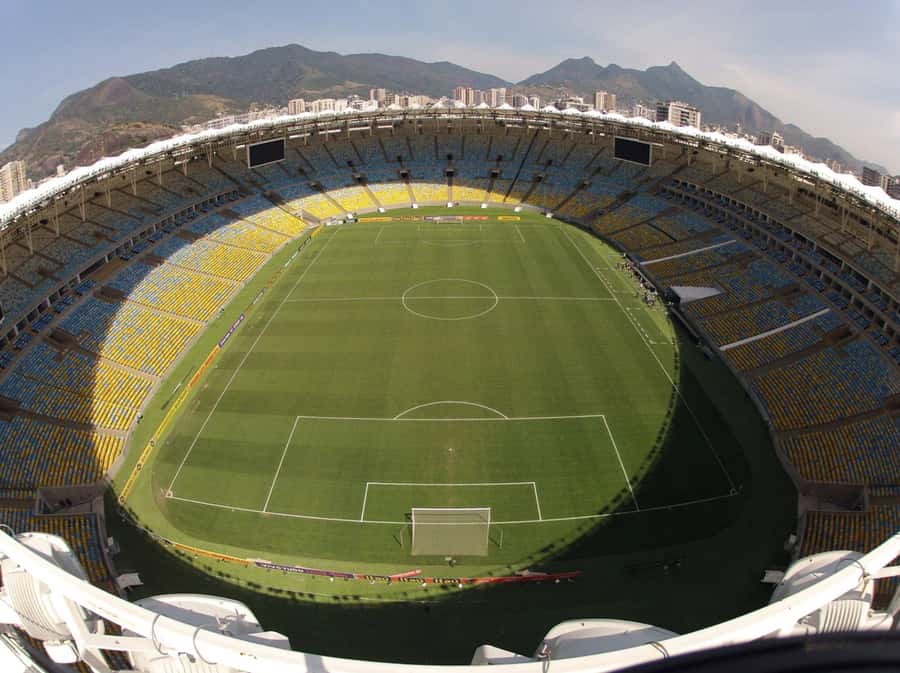
The advertised visit lasts about 40 minutes. That is enough to see the main spaces if you keep moving, and one visitor managed the full route in roughly that time before a match-day closure.
I would allow extra time around the visit for finding Gate A, collecting or presenting your voucher, and taking photos. The route itself may be short, but stadium access can be less predictable on match days.
The activity is shown with a duration of one day because you select an available starting time, but that does not mean you spend a full day inside Maracanã. Check the available entry times when booking.
On match days, the final visit is supposed to end three hours before the gates open. In practice, an early closure can leave you with much less time if the match schedule changes. Contact the provider if the date or time shifts, since you may need to select another available time or request a refund.
Is $24 good value?

At $24 per person, the ticket is reasonably priced for football fans who value access more than a long guided presentation. You get the stadium route, museum admission, and behind-the-scenes areas, including the tunnel, changing rooms, pitch-side space, dugout, and press room.
The value is strongest if you cannot attend a match. One visitor booked the visit after a scheduled game was moved and found it a worthwhile replacement. Another combined the stadium visit with buying match tickets separately, which can cost less than a packaged stadium-and-game experience.
The value is weaker if you want a large museum or detailed expert commentary. The exhibits are described as interesting and memorable, but some parts can feel thin for the price. Professional photos and football activities cost extra, so keep the basic ticket separate from optional purchases.
I would also compare the price with direct stadium admission before booking. The voucher is useful, but some visitors felt that communication from the booking company and joining instructions were unclear. The ticket is not necessarily the cheapest possible route if the stadium sells direct entry at a similar rate.
Who will enjoy this most?
This visit suits dedicated football fans, especially anyone with a connection to Brazil, Germany’s 2014 victory, the World Cup, or Rio’s major sporting events.
It also works for casual fans who want a strong Rio landmark without committing to a long guided program. The tunnel, pitch, dugout, and press room provide enough variety to make the visit more than a quick look at empty seats.
Families may appreciate the short length and free-flowing pace. You can move on when children lose interest, then spend more time with the photo stops or museum displays that catch their attention.
I would be more cautious if your main goal is to attend a live match. A game offers the noise, tension, and local feeling that a quiet stadium tour cannot reproduce. The best use of this ticket may be as a backup for a moved fixture or as a separate visit when no game fits your schedule.
Practical tips for a smoother visit
- Go straight to Gate A, near the Rampa da UERJ, and continue toward the entrance around the corner to the right.
- Keep your voucher ready on your phone or printed. You receive it in a separate email from the activity provider after booking.
- Check match dates before choosing a time. The final visit may end three hours before the gates open, and actual closure times can change.
- Expect a self-guided route. Staff can help, and signs are available in Portuguese and English, but this is not normally a continuous guided walk.
- Budget for optional extras only if you want them. Professional photos, a kick simulator, and other activities cost more.
- Do not count on food or drinks being included. They are not part of the ticket.
- Use the cancellation window wisely. You can cancel up to 24 hours before the activity for a full refund.
Should you book the Maracanã Stadium visit?
I would book it if Maracanã is on your Rio must-see list and you want to stand beside the pitch, walk the players’ tunnel, and see the stadium’s working spaces. The museum and memorabilia add context, while the short route makes this an easy fit between other Rio plans.
I would skip it if you expect a detailed guided lecture or if you already have a match ticket and limited time. A live game is the stronger experience, but the official visit is a good substitute when a fixture is unavailable or changes unexpectedly.
For most football fans, $24 is fair. Just treat it as a self-guided stadium entrance with behind-the-scenes access, not as a full tour led by a football historian.
FAQ
How long does the Maracanã Stadium visit last?
The visit takes about 40 minutes. The activity may show a one-day duration because entry times vary, but you should not expect to spend a full day inside the stadium.
What does the ticket include?
The ticket includes the stadium tour route, museum admission, and behind-the-scenes access.
Is the visit guided?
It is mainly self-guided. There is an introduction, staff can help with questions, and signs are available in Portuguese and English, but there is not normally a continuous guided tour.
Can I visit the pitch?
You can stand near the pitch and view the field from the designated area. The route also includes seating and a possible chance to kick a ball at a goal from the side of the pitch.
Can I walk through the players’ tunnel?
Yes. Walking through the players’ tunnel to the pitch-side area is one of the main parts of the visit.
Can I see the changing rooms?
Yes. The changing rooms and warm-up room are included in the stadium route.
Where do I enter?
Go to Gate A for pedestrians at Av. Rei Pelé, 2, near the Rampa da UERJ. After entering, continue toward the tour entrance around the corner to the right.
What should I show at the entrance?
Show the voucher sent by the activity provider. You can use a mobile voucher or a printed copy.
Does the ticket include photos, food, or drinks?
No. Food and drinks are not included. Professional photos and activities such as a kick simulator are optional extras with additional charges.
What happens on match days?
The last visit is scheduled to end three hours before the stadium gates open. If the date or time changes, contact the provider to choose another available time or request a refund.
Just added in Brazil
- Full Day Tour in Rio de Janeiro★ 5.0 · 8 reviews
- Garganta do Ceu Cave Hiking Private Tour on Pedra da Gavea★ 4.5 · 3 reviews
- Gastronomic Tour at the Municipal Market in Rio de Janeiro★ 5.0 · 4 reviews
- Rio de Janeiro private Full day Custom Tours★ 5.0 · 35 reviews
- GIG Airport Transfer x Rio de Janeiro Hotels★ 4.5 · 11 reviews
- Christ the Redeemer – Complete Morning Tour with Ticket and Transport at the Hotel★ 3.5 · 4 reviews
- AquaRio, Museum, Boulevard Olimpico, Ferris Wheel, Transport and Tourism Guide.★ 4.0 · 6 reviews
- Personalized and Private Full-Day Tour in Rio de Janeiro★ 5.0 · 6 reviews
Tickets, compared.

Christ the Redeemer Entry Ticket by Corcovado Train
Read our review →
Rio’s City Tour – Tickets for Christ, Sugar Loaf & Lunch included
Read our review →

Rio’s Full Day: Selarón Steps, Christ & Sugarloaf – Tickets & Lunch Included
Read our review →
Skip the Line:Recanto Ecologico Rio da Prata Ticket including Trail & Snorkeling
Read our review →

Rio Formoso Ecological Park Admission Ticket with Optional Act
Read our review →