
Reviewed · AMAZON JUNGLE TOURS
Rubber Museum from Manaus
History travels by boat here. This half-day outing from Manaus takes you to Vila Paraíso, a recreated rubber plantation where you can see how latex was collected, smoked, stored, and shipped. I like the English-speaking guide, praised for explaining the plantation clearly, and I like the mix of museum rooms, jungle trail, worker homes, and a possible swim at Tupé Beach. The main drawback is the travel time: the museum can only be reached by boat, and one visitor felt the distance was hard to justify for the museum alone.
This is not a polished attraction built around quick photographs. It is a compact look at the rubber boom and the harsh labor system behind it. I find the contrast between the Rubber Master’s grand house and the small homes of plantation workers especially useful. At $89.99 per person, the tour makes the most sense if you want history and transport handled together, not if you are seeking a long beach outing.
In This Review
- Key points before you book
- Why Vila Paraíso matters to Manaus
- The boat ride from Manaus sets the pace
- Inside the large tent and working areas
- A short jungle trail to the rubber trees
- The Rubber Master’s house and the workers’ homes
- Tupé Beach: a bonus, not a guarantee
- Is $89.99 a fair price?
- Who should take this tour?
- Practical details for a smoother morning
- My verdict: book it for the history
- FAQ
- Where does the Rubber Museum tour begin?
- How long does the tour last?
- Is hotel transportation included?
- How do you reach Vila Paraíso?
- Is the tour offered in English?
- What is included in the $89.99 price?
- Are drinks included?
- Can you swim at Tupé Beach?
- Is the tour suitable for children?
- How many people can join the tour?
- Can you cancel for a full refund?
Key points before you book
- Boat access is part of the experience: Vila Paraíso is reached only by boat, so the journey takes a real bite out of the morning.
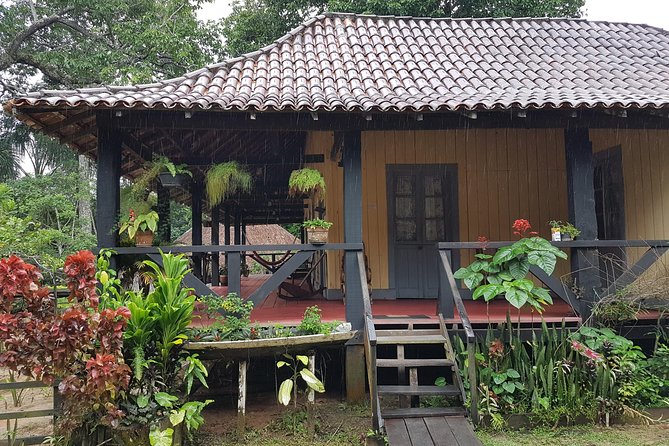
- The plantation is a reconstruction: You visit workshops, warehouses, a chapel, a flour warehouse, worker homes, and the Rubber Master’s house.
- The jungle trail shows the work itself: A short walk leads to rubber trees and the places where latex was collected and smoked.
- The social history is the strongest reason to go: The setting helps explain how rubber workers were controlled and treated during the rubber rush.
- Tupé Beach is only a possible stop: You may have time for a swim, but it is not the main promise of the tour.
- The group is limited to 15 people: That is small enough for a more personal guide-led visit.
Why Vila Paraíso matters to Manaus
Manaus grew wealthy during Brazil’s rubber boom, when latex from the Amazon was shipped abroad for use in industry. The money created grand buildings and lavish homes in Manaus, but the plantation system depended on workers who lived and labored far from that wealth.
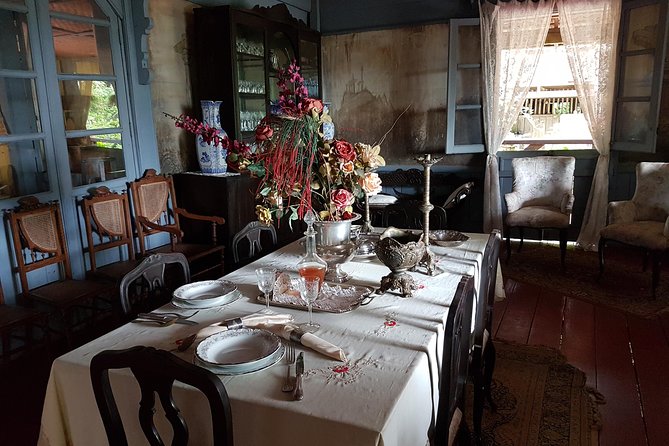
Vila Paraíso gives you a physical way to understand that gap. You are not simply looking at objects behind glass. You move through the buildings where rubber was collected, processed, stored, and prepared for transport. The contrast is direct: one house represents the plantation owner’s comfort, while nearby homes show the modest conditions of the employees.
I find that contrast more effective than a short museum lecture alone. The rooms help you connect the rubber trade to daily life. You can see where people worked, where supplies were kept, and how the plantation was organized. A good guide can turn those spaces into a clear story, and the English-speaking guide on this experience has received praise for explaining the site well.
Still, keep the setting in perspective. This is a recreation of a rubber plantation, not an untouched settlement preserved exactly as it was. Its value comes from the way the site presents the old system and its working conditions.
More Amazon jungle trips:
- From Manaus: One-Day Amazon Jungle Experience
★ 4.8 · 408 reviews - Manaus: Full-Day Tour on the Amazon River
★ 4.2 · 362 reviews - Indian Village and Meeting of the Waters Tour
★ 4.5 · 241 reviews
The boat ride from Manaus sets the pace
Pickup begins at 9:00 am, with hotel pickup and drop-off included. You need to tell the operator which hotel you want to use for pickup. The return is expected around 1:00 pm, although the published duration also appears as approximately three hours in one place and four hours in the detailed schedule.
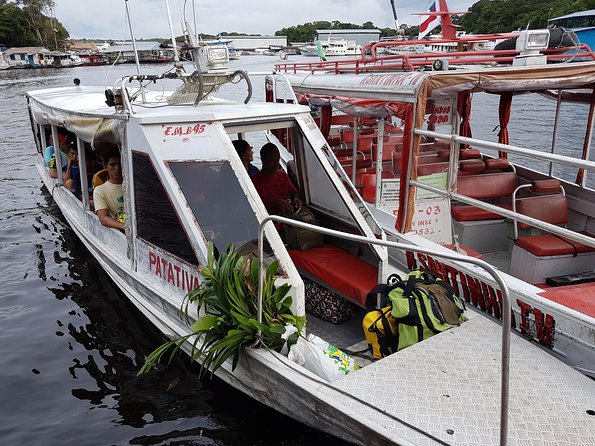
That timing matters. Since Vila Paraíso can only be reached by boat, this is not a quick ride across town. You should think of the outing as a half-day excursion, even if time at the plantation itself is fairly focused.
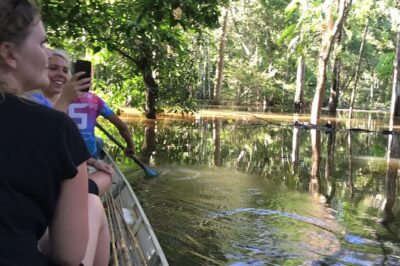
The boat access gives the visit a useful sense of place. Rubber was not moved by modern highways from remote forest sites. It was carried by water, loaded onto boats, and sent toward markets around the world. The route therefore fits the subject: you are using the same kind of transport network that made the rubber trade possible.
The tradeoff is simple. You spend time getting there and back, and one person considered that distance too great for the museum by itself. I would agree with that concern if you have only a short stay in Manaus or if your main goal is swimming. If you want a guided history stop with boat transport included, the journey feels more worthwhile.
Inside the large tent and working areas
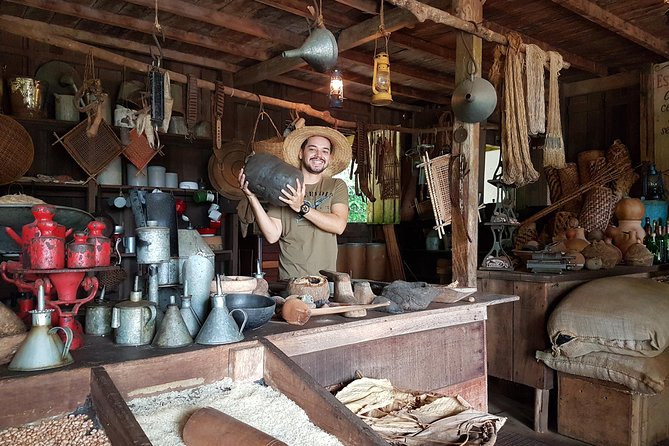
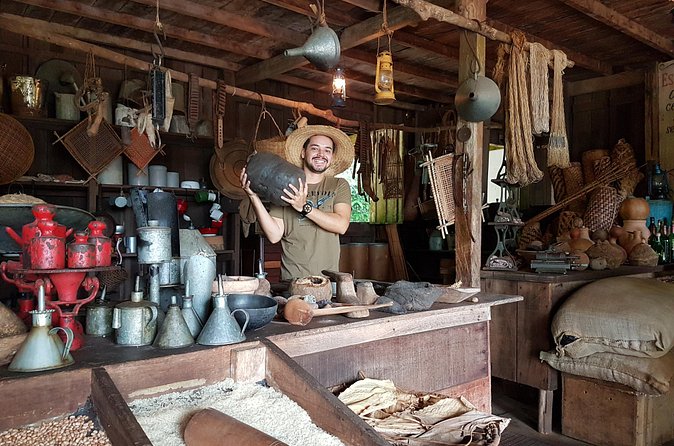
The first major stop is Museu do Seringal Vila Paraíso. The visit includes the large tent where rubber-making tools were kept. This is one of the practical spaces that helps you understand the work beyond the finished product.
You also visit the workshops and warehouses connected with collection, processing, and storage. Rubber did not simply appear as a useful ball ready for export. It had to be gathered from trees, handled, shaped, dried or smoked, and kept in condition before shipment.
The flour warehouse adds another detail about plantation life. A remote rubber site needed supplies as well as equipment. Food storage was part of the system, and the warehouse helps show how workers lived within a controlled economic world rather than an isolated work camp with no organization.
The chapel is another stop. Its presence hints at the structure of plantation life, where work, supplies, housing, and religion were all gathered in one place. I would pay attention to how close these buildings are to one another. The layout matters because it shows that Vila Paraíso was a working community, not just a single exhibition room.
A short jungle trail to the rubber trees
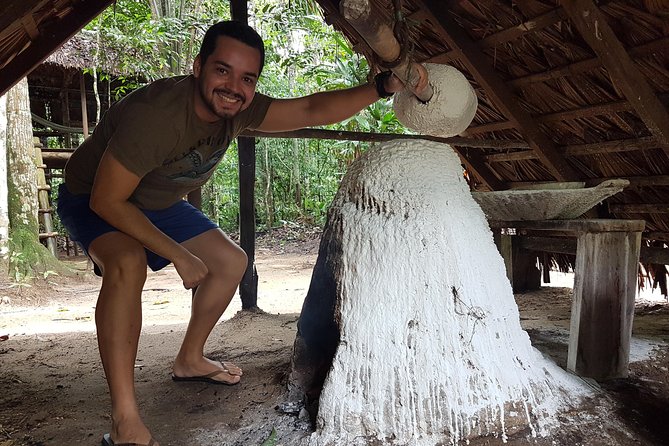
The tour then follows a short trail into the jungle to see rubber trees and learn how latex was collected. The walk is not presented as a long hike. Its purpose is to connect the museum buildings with the source of the material.
You can witness the collection process and see the place where rubber balls were put to begin smoking. That step gives the tour its most useful hands-on context. The rubber trade depended on repeated, physical labor carried out tree by tree, not on a single dramatic moment of discovery.
This section should be especially helpful if you know little about latex production. The tools and storage rooms explain the work from the human side, while the trees show where the process began. Together, they make the supply chain easier to picture.
The trail is short, but you should still wear practical shoes and expect an outdoor walk. The provided information does not give a detailed list of terrain or facilities, so I would not treat this as a fully accessible museum visit without asking the operator first. Most people can participate, but the tour does include walking outside.
More museums in Manaus:
- Manaus: MUSA and INPA Museums with Observation Tower Tour
★ 3.4 · 26 reviews - Tour at the MUSA – Museum of the Amazon in Manaus
★ 5.0 · 5 reviews - Amazon Natural Museums Combo (INPA and MUSA)
★ 5.0 · 5 reviews - MUSA Amazonian Museum Transportation
★ 5.0 · 4 reviews
The Rubber Master’s house and the workers’ homes
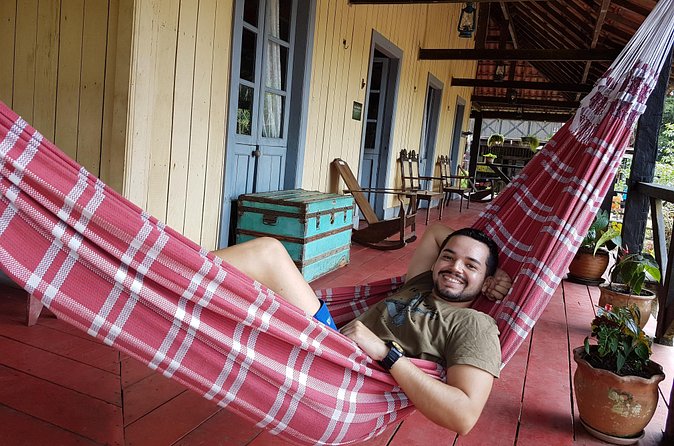
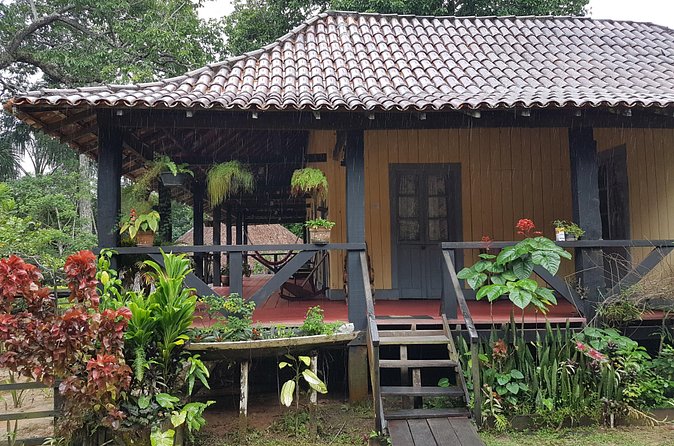
The strongest part of the visit is the contrast between the Rubber Master’s opulent house and the modest homes of ordinary plantation employees. One building shows the wealth created by rubber. The others show who did the work and how little of that wealth reached them.
The worker homes portray the life and habits of the old rubber extraction era. You can use these rooms to think about space, possessions, privacy, and daily routines. The comparison with the owner’s house is not subtle, and that is exactly why it works.
The story also needs a moral frame. The rubber rush depended on severe exploitation, and the plantation system subjected rubber workers to conditions that have been compared with slavery. This is not just a story about trade, business, or Manaus becoming prosperous. It is also a story about coercion and unequal power.
I appreciate that the site can make this difficult subject visible without requiring you to read a long history book before arriving. The buildings do part of the explaining. Still, the guide matters greatly here. Ask questions if the presentation moves too quickly, especially about how workers were paid, housed, supplied, and controlled. The information provided does not promise a particular guide by name, but the English-language guidance is an important feature.
Tupé Beach: a bonus, not a guarantee
On the return to Manaus, the boat makes a brief stop at Tupé Beach, with a possible swim if time permits. This is a pleasant idea after a history-focused morning, especially in the heat.
The wording matters: swimming is not guaranteed. The beach stop is brief and depends on the schedule, so you should not book this tour as a dedicated beach excursion. You may have time to cool off, or you may simply stop without a long stay.
Drinks are not included, although alcoholic drinks can be purchased. Other drinks are also excluded, so bring or buy what you need through the available arrangements. Since the tour ends around 1:00 pm, the beach stop is best treated as a small extra rather than the centerpiece.
I like the balance of the stop. The plantation visit is serious and sometimes sobering. A short pause by the water can make the return journey feel less rushed. Just keep your expectations modest.
Is $89.99 a fair price?
The $89.99 price includes a local guide, hotel pickup, hotel drop-off, boat access to the site, and admission to the museum. That package is easier to assess than the museum ticket alone because transport is central to the outing.
I see fair value here if you are staying in Manaus and want a guided visit without arranging the boat and transfers yourself. The group maximum of 15 people also helps. You are not being placed in a huge crowd where every explanation gets lost.
The value drops if you are mainly interested in a quick museum visit. The boat journey takes time, and the site itself is a recreated plantation rather than a large complex filled with many separate exhibits. One short review judged the trip not worth the time needed to reach the museum. That criticism is worth taking seriously.
I would compare the price with your other Manaus plans. If you are already booking a river excursion that includes transport near Vila Paraíso, adding the museum to that day could make better use of your time. The tour information itself suggests that combining it with another experience may be sensible, though this specific outing is sold as its own half-day trip.
The booking pattern gives you one practical clue: it is booked about 11 days ahead on average. That does not mean you must reserve that early, but you should avoid leaving it until the last minute if your dates in Manaus are fixed.
Who should take this tour?
I would recommend it most strongly to you if:
- You want to understand how the rubber trade affected Manaus and plantation workers.
- You prefer a guide-led visit to arranging boat transport yourself.
- You enjoy seeing historical spaces rather than only reading displays.
- You can spare a half-day for a site outside Manaus.
- You are comfortable with a short outdoor trail and a possible, not certain, swim.
Families can take part, but children must be accompanied by an adult. A child rate applies only when the child shares the tour with two paying adults. That rule is worth checking before you book.
You may want to skip it if your Manaus schedule is tight, if you dislike boat-dependent outings, or if you expect a long beach break. You should also think twice if a recreated site will disappoint you. The visit works through atmosphere, layout, and explanation, not through a huge collection of original objects.
Practical details for a smoother morning
Set your pickup hotel when booking, and be ready for the 9:00 am start. Hotel pickup and drop-off are included, but the operator needs the hotel information in advance.
Wear clothing suited to warm outdoor conditions and a short jungle walk. The provided details do not specify a dress code or equipment list, so simple practical clothing is the safest choice. If you hope to swim at Tupé Beach, bring what you need, but remember that the stop depends on time.
Plan for about three to four hours from pickup through return. The stated arrival at your hotel is around 1:00 pm. The difference between the approximate three-hour duration and the detailed four-hour schedule suggests that exact timing can vary, so avoid booking a tight early afternoon appointment.
The tour is offered in English and uses a mobile ticket. Confirmation is sent when you book. Free cancellation is available until 24 hours before the local start time. After that point, refunds are not provided, and changes made within 24 hours are not accepted.
My verdict: book it for the history
I would book this tour if you want a clear, physical introduction to the rubber economy and the lives behind it. The best moments are not flashy: the rubber trees, the smoking area, the supply buildings, and the sharp contrast between the owner’s house and the workers’ homes.
I would not book it solely for Tupé Beach or a quick museum stop. The boat ride makes the excursion feel like a real outing from Manaus, but it also creates the main weakness. At $89.99, the price is reasonable when you value the guide, transport, admission, and small group, but less attractive if you only want a short look at the exhibits.
For a first visit to Manaus, this is a useful choice for understanding how the city’s rubber wealth was connected to remote forest labor. Go with enough time, listen closely to the guide, and treat the beach as a bonus. That is the fairest way to judge the experience.
FAQ
Where does the Rubber Museum tour begin?
The tour begins with hotel pickup in Manaus at 9:00 am. You must tell the operator which hotel you want to use for pickup.
How long does the tour last?
The experience is listed as approximately three hours in one description and four hours in the detailed schedule. The expected arrival back at your hotel is around 1:00 pm.
Is hotel transportation included?
Yes. Local hotel pickup and drop-off are included in the tour price.
How do you reach Vila Paraíso?
Vila Paraíso can only be reached by boat. The boat journey is part of the route from Manaus to the museum.
Is the tour offered in English?
Yes. The tour is offered in English, and an English-speaking guide is provided.
What is included in the $89.99 price?
The price includes a local guide, hotel pickup and drop-off, and admission to the Rubber Museum.
Are drinks included?
No. Drinks are not included. Alcoholic drinks are available to purchase.
Can you swim at Tupé Beach?
You may have the chance to swim at Tupé Beach on the return journey, but the stop and swimming time depend on the schedule.
Is the tour suitable for children?
Children can participate, but they must be accompanied by an adult. The child rate applies only when sharing with two paying adults.
How many people can join the tour?
The tour has a maximum group size of 15 people.
Can you cancel for a full refund?
Yes, if you cancel at least 24 hours before the experience begins. Cancellations made less than 24 hours in advance are not refunded, and changes within that period are not accepted.
Just added in Manaus
- Tree Climbing in the Amazon★ 4.5 · 6 reviews
- Tucandeira Ants Indigenous Ritual★ 4.5 · 4 reviews
- Walking Tours in Manaus★ 3.5 · 16 reviews
- 4-day Amazon River Boat Tour From Manaus★ 5.0 · 10 reviews
- Transfer service from Porto to Manaus Airport★ 5.0 · 2 reviews
- Amazon Safari Tour in Manaus (Shared)★ 5.0 · 3 reviews
- Transfer service from Iberostar (Port) to Manaus Airport★ 5.0 · 1 review
- Private Tour Waterfalls Iracema & Asframa President Figueiredo★ 5.0 · 3 reviews
Amazon Jungle Tours, compared.
Rio de Janeiro Tijuca Rainforest Hike with Waterfalls and Caves
Read our review →
Jungle Waterfalls and Cachaça Distillery Jeep Tour
Read our review →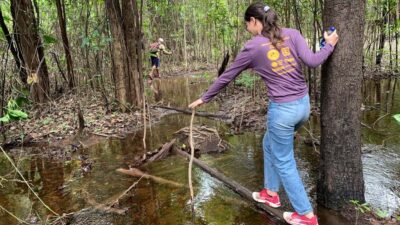


Browse the lists this tour appears in