
Reviewed · SÃO PAULO CITY TOURS
Sao Paulo: Downtown-Center History Walking Tour – in English
São Paulo reveals itself on foot. This two-hour English walk links major landmarks with the city’s less polished, more revealing corners, from Oscar Niemeyer’s Copan Building to the Japanese streets of Liberdade. I especially like the small group limit of 10 people and the guide’s focus on stories that do not fit neatly into a guidebook. The main drawback is the strict 10:00 a.m. start, so even a short delay can mean missing the group.
I also like the way the route moves through several versions of São Paulo in only about 3 kilometers: colonial beginnings, coffee wealth, modernist ambition, immigration, religion, protest, and street commerce. Giuliano, the usual guide named in the feedback, receives repeated praise for making complicated history easy to follow and for offering useful food, coffee, and evening suggestions. Still, this is a city-center walk, not a polished sightseeing circuit, and you need to stay alert in a large urban area.
In This Review
- Key points at a glance
- Why this short walk works so well in São Paulo
- Starting beneath Edifício Itália
- Copan and the scale of modern São Paulo
- Records, manga, and the Gallery of Rock
- Theatro Municipal and Brazil’s artistic break
- Coffee money at Centro Cultural Banco do Brasil
- Pátio do Colégio and the city’s difficult beginning
- Sé Cathedral and symbolic ground zero
- Ending among the lanterns of Liberdade
- What the guide adds to the experience
- Pace, safety, weather, and practical comfort
- Who should book this São Paulo history walk?
- Should you book it?
- FAQ
- How long is the São Paulo Downtown-Center History Walking Tour?
- What time does the tour begin?
- Where does the tour start?
- Where does the tour finish?
- How many people can join the tour?
- Can I cancel for a full refund?
Key points at a glance
- Eight major stops in two hours: See Edifício Itália, Copan, the Municipal Theatre, Pátio do Colégio, Sé Cathedral, and Liberdade.
- A compact 3-kilometer route: The walk covers a lot without requiring a full day or a long transfer across town.
- Small groups of no more than 10: You get more room for questions and a better chance to hear the guide.
- Liberdade adds food and immigration history: The ending includes the street market area, produce, and authentic foods connected with the neighborhood.
- Giuliano brings local context: His explanations cover social and economic change, political themes, architecture, art, and city life.
- Arrive early: The tour begins exactly at 10:00 a.m., and late arrivals cannot be accommodated once the group has left.
Why this short walk works so well in São Paulo
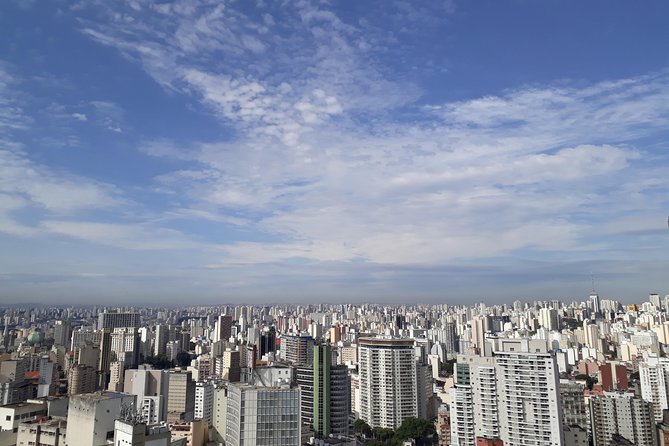
São Paulo can feel hard to read at first. Its center mixes grand old façades, enormous apartment blocks, churches, office towers, street commerce, cultural venues, and neglected-looking spaces. A walk like this gives you a useful framework before you try to explore the city alone.
The route is not only a parade of buildings. Each stop connects architecture to a larger change in Brazilian society. Coffee money helped build grand institutions. Modernism challenged European artistic models. Immigration reshaped entire neighborhoods. Colonial foundations involved both Jesuit missionaries and Tupi-Guarani peoples. That approach gives you more than dates and names.
I would recommend taking this near the beginning of your stay. One person who joined early in a visit said the walk helped with later decisions about what to see, where to eat, and how to get around. The guide has also suggested places for coffee, food, performances, and evening plans, including El Pablo Juan and Teatro Oficina.
The tour costs $31.24 per person. For two hours with a maximum group size of 10, that is a fair price if you want interpretation rather than a self-guided stroll. You could see many of the buildings from the street without paying for a tour, but you would miss the connections between them. You also would not have someone on hand to answer questions about São Paulo’s social changes or point out less obvious details.
More History Tours in Sao Paulo
- São Paulo: Downtown Historical Bike Tour
★ 4.9 · 191 reviews - Full Day Private Beach Tour Santos – Culture, History & Beach (Pickup São Paulo)
★ 5.0 · 47 reviews - Full Day Private Beach Tour Santos & Guarujá – Combine Culture, History & Beach
★ 5.0 · 37 reviews
Starting beneath Edifício Itália
The meeting point is at Av. Ipiranga, 344, beside Edifício Itália in the Centro Histórico de São Paulo. The building was once the tallest in the city and remains one of its best-known markers. Beginning here places you in Centro Novo, the newer central district, and immediately introduces São Paulo’s taste for height, scale, and ambition.
The first stop lasts about 15 minutes, with no separate admission fee. Expect an introduction to the city rather than an interior visit. The value is the setting: you begin among the high-rises and central streets that show how quickly São Paulo grew upward.
Arrive before 10:00 a.m. The start time is firm. A difficult experience occurred when a participant arrived late and missed the group, even after trying to make contact. The guide explains that the phone is switched off during the walk so attention stays with the people who arrived on time. Plan extra time for traffic and public transport, and treat 10:00 as the departure time, not the time to reach the meeting point.
Copan and the scale of modern São Paulo
From Edifício Itália, the route reaches Edifício Copan, designed by Oscar Niemeyer. Its broad, curved form is one of the clearest visual signs of Brazilian modernism in the city center. The building reflects the optimism of mid-century vertical growth, but also the disorder and pressure that came with a city expanding at remarkable speed.
You spend about 15 minutes here. That may sound brief, but the Copan stop works best as a focused explanation of shape, scale, and urban change. You can take photographs and ask questions without turning the tour into a long architectural lecture.
I like this part because it gives you a better way to look at São Paulo’s high-rises. The city is not simply full of tall buildings. Its towers reflect different periods, ideas, and social pressures. A guide who can explain that difference adds real value.
Records, manga, and the Gallery of Rock
The Gallery of Rock changes the mood. Instead of grand civic architecture, you move through galleries and underground shopping corridors associated with vinyl records, antiques, manga, and other pop-culture objects. The area offers a look at São Paulo’s collector culture and the subcultures that give the center much of its character.
This stop also helps prevent the tour from becoming a procession of official monuments. You see a more contemporary side of the city, shaped by music, commerce, style, and groups that have made their own spaces in the center.
The stop is listed at about 15 minutes, so it is not a dedicated shopping visit. If you collect records or enjoy manga and vintage objects, you may wish you had more time to browse. Still, the brief visit gives you a useful change of pace and may help you decide if you want to return later.
More Walking Tours in Sao Paulo
- Sao Paulo: Downtown-Center Walking Tour | 2 Hours – English
★ 4.9 · 84 reviews - Ecological walk in sao paulo
★ 5.0 · 61 reviews - Night Walking Tour through the Bars of São Paulo
★ 5.0 · 51 reviews - São Paulo : Must-See Sites Walking Tour With A Guide
★ 4.4 · 25 reviews
Theatro Municipal and Brazil’s artistic break
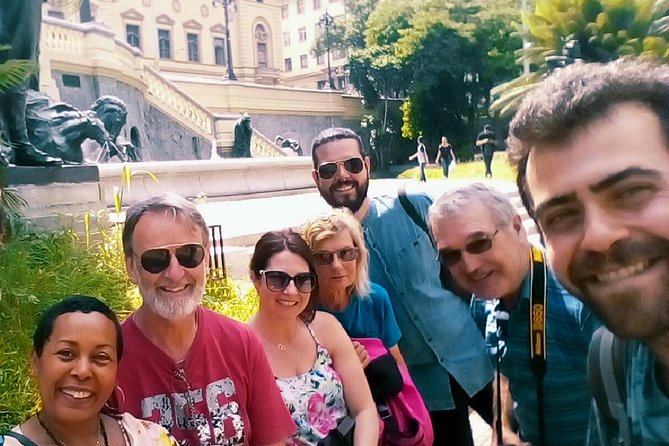
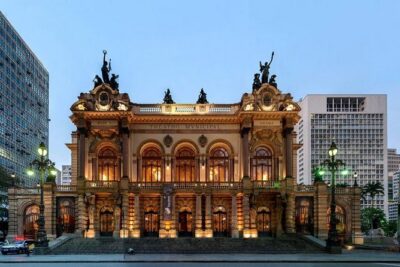
At Theatro Municipal de São Paulo, the route turns to culture and national identity. The theatre’s European-inspired appearance reflects the city’s coffee-era wealth and its desire to present itself as a modern international center.
The important story here is the 1922 Week of Modern Art. Artists used the event to push against older European models and search for forms that felt more distinctly Brazilian. The stop links the theatre’s formal architecture with a moment of artistic rebellion.
That contrast is one of the walk’s best teaching tools. The building looks traditional, but the ideas associated with it include experimentation and a break from tradition. You do not need a specialist interest in art to appreciate the point. The guide places the building within the arguments about what Brazilian culture should look and sound like.
Coffee money at Centro Cultural Banco do Brasil
The next section brings you through art déco buildings and grand façades associated with São Paulo’s coffee boom. Coffee financed infrastructure, public institutions, culture, and the city’s growing sense of importance. It also helped create serious social differences, which remain part of the city’s story.
Centro Cultural Banco do Brasil is a useful stop because it lets you examine both the beauty and the cost of urban progress. Ornate façades can suggest prosperity, but they do not tell the whole story by themselves. The guide’s explanations about economic and social change add the missing context.
Again, the planned time is about 15 minutes, with no admission charge included or required for the walking stop. If you want to enter cultural buildings or see an exhibition, this tour does not promise that. Think of the visit as an introduction from the street, with suggestions for further exploration afterward.
Pátio do Colégio and the city’s difficult beginning
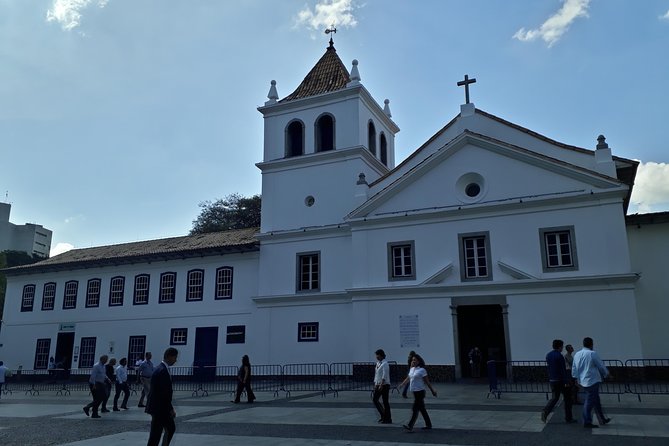
At Pátio do Colégio, you reach the place where São Paulo was officially founded in 1554. Jesuit missionaries established the settlement, while Tupi-Guarani peoples were already central to the region and its culture. This is where the tour asks you to consider not only the official founding story, but also the power relationships behind colonization.
That makes this stop more useful than a simple statement of the city’s birth date. São Paulo’s origins involve religion, land, language, authority, and resistance. A good explanation should leave you aware that the neat version of a founding story is never the whole story.
The plaza also gives the walk a strong chronological turn. You have moved from skyscrapers and modernist architecture back to the city’s earliest institutional roots. At around 15 minutes, the visit remains concise, but the subject has enough weight that you may want to continue thinking about it afterward.
Sé Cathedral and symbolic ground zero
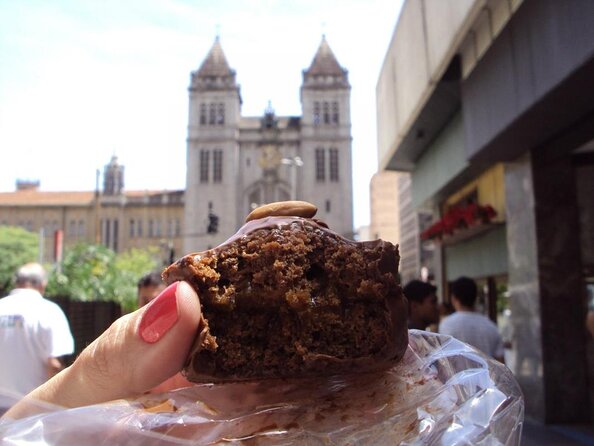
Sé Cathedral is one of the world’s largest neo-Gothic churches and sits at São Paulo’s symbolic ground zero. Its size makes an immediate impression, but the tour treats it as more than a religious building.
The cathedral and the surrounding square have been spaces for gatherings, protests, public events, and expressions of identity. That wider role matters in a city where public places often carry political and social meaning. The guide explains how the architecture fits into the symbolism of the center.
You have about 15 minutes here, enough for photographs, questions, and an explanation of the cathedral’s place in São Paulo. The route does not promise an extended interior visit, so check your expectations. If your main goal is to study church architecture indoors, you may need a separate visit.
Ending among the lanterns of Liberdade
The walk finishes at Praça da Liberdade, near the Base da PM at Praça da Liberdade, 125. This is a practical ending because Liberdade offers food, shops, public transport, and a clear change in atmosphere from the earlier central districts.
Liberdade is widely known as the largest Japanese neighborhood outside Japan, but the area also reflects São Paulo’s wider pattern of immigration and cultural change. Lanterns, markets, produce, and prepared foods give the district a strong street presence. The guide uses the neighborhood to show how São Paulo keeps redefining itself through migration.
This is one of the tour’s most useful stops for anyone interested in eating locally. The walk introduces authentic foods and market products, but it is not described as a food tour, so do not expect a full tasting program. Instead, use the information to choose where to return for lunch or a later market visit.
Finishing here also gives you a chance to continue on your own. You can ask for food and coffee suggestions before the tour ends, then use Liberdade as your next stop rather than heading straight back to your hotel.
What the guide adds to the experience
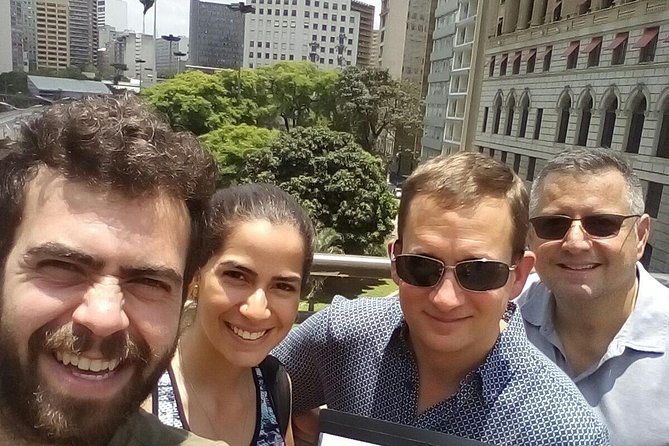
The strongest praise centers on Giuliano’s delivery. He is described as friendly, attentive, and able to handle a large range of questions. His style appears to combine serious information with humor, which matters during a fast-moving history walk.
He also connects the past to present-day São Paulo. The discussion can include architecture, economic change, social divisions, political conditions, street art, music, and food. One especially memorable detail involved the influence of AC/DC on street art in the city, an example of the unexpected connections that can make a walk stick in your mind.
The small group helps here. With no more than 10 people, you should have a better chance to hear clearly and ask questions than on a large coach-style tour. Several participants described groups of around eight people, with time for introductions, photographs, coffee conversation, and a comfortable walking pace.
The tour can include people from different language backgrounds, and Giuliano has been praised for speaking several languages fluently. The experience is advertised in English, so confirm that English is your needed language when booking, but the feedback suggests the guide is comfortable communicating across a mixed group.
Pace, safety, weather, and practical comfort
The walk covers about 3 kilometers in two hours. That is a moderate pace, with roughly 15 minutes assigned to each of the eight stops. You should wear comfortable shoes and expect to be on city streets for most of the experience.
The route is described as manageable for most people, and one participant praised the pace, shade-seeking, photo opportunities, and access to toilets at two stops. Still, this is not a seated sightseeing experience. São Paulo can be hot, and weather affects the tour. If poor weather causes cancellation, you are offered another date or a full refund.
The city center deserves normal big-city awareness. One participant found the area more comfortable than expected after being warned about safety, but also stressed the need to remain vigilant. The safest advice is simple: keep your attention on your belongings, follow the guide’s lead, and avoid wandering away from the group.
The route is near public transportation, which makes both the start and finish practical. Since the endpoint is in Liberdade rather than back at Edifício Itália, you should plan your next activity from there.
Who should book this São Paulo history walk?
I would choose this tour if you are visiting São Paulo for the first time, have only one morning, or want a strong orientation before exploring independently. It suits people who prefer stories and context over a long list of photo stops.
It is also a good fit if you want to understand how architecture connects to power, money, art, immigration, and public life. The route offers enough variety to keep the morning moving, and the small group should feel more personal than a standard city tour.
You may want something else if you dislike walking, need a flexible start time, or want long interior visits at churches, theatres, and cultural buildings. The 15-minute stops are introductions, not full museum visits. You should also skip it if you cannot reliably reach the meeting point before 10:00 a.m.
Cancellation is free up to 24 hours before the start time. Changes or cancellations made less than 24 hours ahead are not refunded, and the experience is subject to weather conditions.
Should you book it?
Book this walk if you want São Paulo explained, not merely photographed. For $31.24, you get a compact route through the city’s central districts, a maximum group of 10, and a guide who appears to care about the links between architecture, society, and everyday life.
I would make it one of your first activities in São Paulo. Arrive early, wear good shoes, keep an eye on your belongings, and save time afterward for food or browsing in Liberdade. If you want a quick, thoughtful introduction with practical local suggestions, this is a solid choice.
FAQ
How long is the São Paulo Downtown-Center History Walking Tour?
The tour lasts approximately two hours and covers about 3 kilometers on foot.
What time does the tour begin?
The tour starts at 10:00 a.m. The group leaves promptly, and late arrivals cannot be accommodated.
Where does the tour start?
The meeting point is Edifício Itália at Av. Ipiranga, 344, Centro Histórico de São Paulo, São Paulo, SP 01046-010, Brazil.
Where does the tour finish?
The walk ends at the Base da PM near Praça da Liberdade, 125, Liberdade, São Paulo, SP 01503-010, Brazil.
How many people can join the tour?
The group has a maximum of 10 participants.
Can I cancel for a full refund?
Yes. You can cancel at least 24 hours before the local start time for a full refund. Cancellations or changes made less than 24 hours before the tour are not refunded.
More Sao Paulo City Tours
- Skydive Tandem – São Paulo – Brazil
★ 5.0 · 1,840 reviews - São Paulo’s Full Day City Tour: Main City Sights in 7 Hours – (Shared Group)
★ 5.0 · 1,691 reviews - 5-hour Private Tour Of São Paulo With Its Main Sights – Optional Airport Pickup
★ 5.0 · 643 reviews - São Paulo: Main City Sights in 7 Hours – Shared Group Tour
★ 4.9 · 587 reviews
Just added in Sao Paulo
- Private Transfer: GRU Airport to Sao Paulo City up to 15 People★ 5.0 · 12 reviews
- Private Transportation to Campos do Jordão – Premium Experience★ 5.0 · 1 review
- Translate Airports SP★ 5.0 · 1 review
- 5-hour tour in the main points of São Paulo.★ 5.0 · 12 reviews
- São Paulo Layover Tour from GRU AIRPORT | 06 hours of private tour★ 5.0 · 1 review
- Private Transfer from Sao Paulo (GRU) Airport to Aparecida Do Norte★ 5.0 · 1 review
- Private Transfer from Sao Paulo (GRU) Airport to Campos do Jordão★ 5.0 · 1 review
- (Sedan VIP Class) Transfer GRU Airport • São Paulo★ 5.0 · 6 reviews
São Paulo City Tours, compared.

São Paulo’s Full Day City Tour: Main City Sights in 7 Hours – (Shared Group)
Read our review →
5-hour Private Tour Of São Paulo With Its Main Sights – Optional Airport Pickup
Read our review →
Main City Sights in 7 Hours – Shared Group Tour
Read our review →
6-Hour Classic Half-Day Private Tour of São Paulo – Optional Airport Pickup
Read our review →
Amazing São Paulo overview in 4 or 5 hours with a private guide
Read our review →
Browse the lists this tour appears in