
Reviewed · WALKING TOURS
Walking Tour Alleys of Tiradentes
Tiradentes rewards slow wandering. This three-hour walking tour gives you a useful first look at the town’s churches, lanes, chapels, museums, fountains, and public squares without leaving you to guess which turn matters. I like the wide-ranging route and the strong value at $16 per person.
I also like the way the guide handles museum and church visits. You get historical, artistic, and architectural context from the outside, then practical advice about the best times to return inside. The main thing to consider is the large maximum group of 40 people, which may feel less personal than a small private walk.
In This Review
- Key points to know before booking
- Why Tiradentes works so well on foot
- Starting at Largo das Mercês and the Bridge of Forras
- Chapels, Quarry Alley, and Padre Toledo Museum
- Saint John, Matrix Alley, and the town’s central religious sights
- Chamber Street, Town Hall, and the Chapel of the Rosary
- Right Street, the old jail, and four corners
- Museum of Liturgy, fountains, and Alto São Francisco
- What the tour does and does not include
- Who will get the most from this walk
- Timing, weather, and cancellation
- Should you book the Walking Tour Alleys of Tiradentes?
- FAQ
- Where does the Walking Tour Alleys of Tiradentes begin?
- What time does the tour start?
- How long does the walking tour last?
- Are museum and church admission fees included?
- Can you go inside any chapels during the tour?
- What is the cancellation policy?
Key points to know before booking
- Almost the entire historic center fits into one walk: The route links more than 20 sights in and around central Tiradentes.
- The tour begins at 9:30 a.m.: Meet at Rua Custódio Gomes, 13, in the Centro area, and return there at the end.
- Church and museum interiors are not generally included: The guide explains what you are seeing from outside and shares advice for later visits.
- Some chapels may be visited inside: This applies when a chapel is open and does not charge an entry fee.
- The route lasts about three hours: The listed walk is roughly three hours, with the town’s compact size making it possible to cover a lot on foot.
- The price is modest for the coverage: At $16, you are paying mainly for orientation, interpretation, and a carefully connected route, not a bundle of admission tickets.
Why Tiradentes works so well on foot
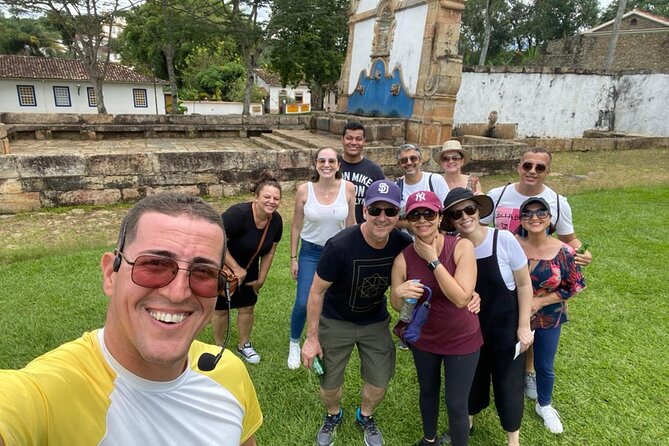
Tiradentes is a small town, and that is the key to this experience. You are not spending half the morning in a vehicle moving between sights. Instead, the route threads through squares, narrow alleys, church fronts, museums, fountains, and old civic buildings in one continuous walk.
That makes this a good opening activity for a stay in town. You can get your bearings quickly, note the places you want to revisit, and return later at your own pace. The guide’s job is less about rushing you through isolated monuments and more about showing how the streets and buildings fit together.
The route includes a long list of stops, but it does not promise a full interior visit to every church and museum. That distinction matters. If you want a museum-heavy morning with time inside every collection, you will need to add independent visits after the walk.
Still, the outside explanation has real value. A church facade, a lane, or a small chapel can be easy to pass without context. With the guide explaining its role and setting, you get a clearer sense of why each place belongs on the route.
More Walking Tours in Brazil:
- Rio de Janeiro: Rocinha Favela Walking Tour with Local Guide
★ 4.8 · 3,052 reviews - Rio De Janeiro: Half-Day Rocinha Favela Walking Tour
★ 4.7 · 2,272 reviews - 3 Hour Rocinha Favela Walking Tour with a Local Guide
★ 5.0 · 833 reviews
Starting at Largo das Mercês and the Bridge of Forras
The morning begins near Rua Custódio Gomes, 13, in central Tiradentes. From there, the walk moves toward the Church and Largo das Mercês, a useful introduction to the town’s religious architecture and public spaces.
The Largo gives you more than a church facade. It shows how religious buildings shaped the town’s layout, with open space around them for movement, gathering, and ceremony. I appreciate that the tour does not treat each church as a stand-alone photo stop. The surrounding square is part of the story.
Next comes the Bridge of Forras and Largo das Forras. These stops help you read Tiradentes as a lived-in town rather than a row of monuments. The bridge and square connect the old center’s lanes and provide a change from the tighter streets.
You should wear comfortable shoes with good grip. The exact walking surface is not described, so I would plan for a town-center route that may include uneven or sloped sections. The tour is not presented as a strenuous hike, and most people can participate, but a three-hour walk still calls for sensible footwear.
Chapels, Quarry Alley, and Padre Toledo Museum
The route continues to the Bom Jesus da Poverty Chapel and the Chapels of the Passinhos. These smaller religious sites are important precisely because they are not grand cathedral-style attractions. They add scale to the town’s religious life and show how devotional buildings appear in ordinary streets.
Quarry Alley brings the walk into one of the more distinctive lane names on the route. A place such as this is best understood on foot, where the name, walls, turns, and nearby buildings can be taken in together. This is one reason a guided route can be more useful than simply collecting locations on a map.
The Padre Toledo Museum follows. The museum is part of the route, but the internal visit is not included in the walking experience. The guide provides historical, artistic, and architectural context from outside and gives advice on the collection and on suitable times for an interior visit.
The supplied timing lists five minutes for this museum stop. That suggests you should not expect a long gallery visit during the walk. Think of it as an orientation stop, with the option to return later if the museum interests you. Admission is not included in the tour price.
Saint John, Matrix Alley, and the town’s central religious sights
The Chapel of Saint John the Evangelist and Matrix Alley continue the religious and architectural thread. The alley setting matters here. You are not only looking at a building, but also seeing how chapels and churches were placed within the compact town plan.
The Matrix Well is another small but useful point of interest. Wells and fountains can seem minor beside churches and museums, yet they help explain daily life and the practical infrastructure of an older settlement. I like routes that include these details because they keep the walk from becoming a parade of grand facades.
Saint Anthony’s Headquarters and Pacu Alley follow. The names alone give the route a strong local character, and the guide’s explanation helps you connect these less familiar places to the wider town.
The Sun Watch is another brief stop along the way. Since the route contains many points, the pace may be steady. You will want to listen as you walk rather than expect a long pause at every location.
A completely different kind of day:
- Rio de Janeiro: 6-Stop Highlights of Rio with Lunch
★ 4.4 · 5,157 reviews - Christ the Redeemer Entry Ticket by Corcovado Train
★ 4.4 · 4,476 reviews - Rio’s City Tour – Tickets for Christ, Sugar Loaf & Lunch included
★ 5.0 · 4,389 reviews - Rafting – Brotas – Rio Jacaré Pepira
★ 5.0 · 3,814 reviews
Chamber Street, Town Hall, and the Chapel of the Rosary
Chamber Street and the Town Hall shift attention toward civic life. The walk is not limited to churches, and that balance is important. Tiradentes is presented through its public buildings and streets as well as its religious art.
The Alley of the Rosary leads toward the Chapel of the Rosary. This section gives you another chance to see how narrow passages and small chapels shape the town’s character. The chapels are especially useful for understanding the variety within Tiradentes. Not every meaningful building is large or famous.
Some chapels that are open during the tour and do not charge a fee may be visited inside. That is a helpful benefit, but it depends on opening conditions. You should not treat interior access as guaranteed for every stop.
If you want to return to a church or museum after the tour, the morning walk helps you decide where your time is best spent. That is a better arrangement than paying for a rushed interior circuit that leaves no room for independent exploration.
Right Street, the old jail, and four corners

Right Street and the former jail, now the Museum of Santana, add another layer to the route. Again, the museum interior is not generally part of the tour. You receive outside context and can choose to return for a separate visit.
The Ramalho townhouse and the Four Corners area continue the look at domestic and urban architecture. These are the kinds of places that can disappear into the background if you walk alone without preparation. A guide can point out why an ordinary-looking townhouse or intersection deserves attention.
This part of the route also shows the value of the town’s compact scale. You are moving between religious, civic, and residential points without long transfers. The experience feels like a connected reading of Tiradentes rather than a checklist of unrelated attractions.
The group limit is 40 people. That is not a tiny group, and it may affect how easily you can hear or ask questions, especially in narrow lanes. On the other hand, the route’s central setting and free-access format keep the price low.
Museum of Liturgy, fountains, and Alto São Francisco
The Museum of Liturgy appears later in the walk. Its subject fits naturally with the churches and chapels already seen, but the internal admission is not included. The guide can help you understand why the museum belongs in the town’s cultural picture, then you can decide if you want to pay for entry separately.
Street Ball Game brings the route back to the life of public streets. This type of stop adds welcome variety after several religious buildings and museums. It reminds you that Tiradentes is not only a preserved historic center. It is also a town shaped by ordinary movement and local use.
The walk then reaches the San Jose Fountain and the Mother Water Forest. Fountains offer another look at practical town life, while the forest gives the route a different setting from the built-up central lanes.
The Chapel and Alto São Francisco are listed as optional. That word is worth noting. You should ask the guide how this portion fits the day’s pace and whether it is included in the route you are taking. The supplied details do not promise that every participant will complete this optional part.
What the tour does and does not include
The $16 price is appealing because it covers a long guided route through the town. You are paying for a structured introduction, explanations at the sights, and advice that can save you time later. Since the town is small, a good orientation walk can help you make better choices with the rest of your visit.
The price does not include museum admission. The tour also does not generally include interior visits to churches and museums. That is not necessarily a weakness, but you need to budget separately if your main aim is to see collections and church interiors.
The guide explains the exteriors and suggests the best times for returning inside. This approach gives you flexibility. You can listen during the walk, then visit the places that interest you most rather than being pushed through every interior on a fixed schedule.
The walk begins at 9:30 a.m. and ends back at the starting point after about three hours. The activity information gives a total duration of approximately three hours and five minutes, while the itinerary describes about three hours of walking. In practice, plan your morning around a three-hour commitment, with a little extra room.
Who will get the most from this walk
I would choose this tour if you are visiting Tiradentes for the first time and want a clear introduction before exploring alone. It also suits anyone interested in architecture, religious art, public squares, and the small details of an old town.
It is useful for people who prefer a guided framework but still want free time afterward. The route gives you a map in your head, and the advice about museum and church interiors helps you set your own priorities.
You may want something else if you dislike group walks or prefer to spend a long time inside each museum. A maximum of 40 participants means the group can be substantial, and the pace has to serve many people.
The activity is described as suitable for most people. Service animals are allowed, and the meeting point is near public transportation. No special physical requirements are stated, but you should still be comfortable walking for around three hours.
Timing, weather, and cancellation
Good weather is required for the experience. If poor weather causes cancellation, you are offered another date or a full refund. That makes a morning booking sensible if the forecast is unsettled, since you can adjust your plans if needed.
Free cancellation is available when you cancel at least 24 hours before the start time. Cancellations made less than 24 hours before the start time are not refunded, and late changes are not accepted.
The tour is often booked about 11 days ahead. That is a useful planning signal, especially if your visit falls during a busy period. The activity has a five-star rating and is recommended by 100 percent of customers, so securing a place in advance is sensible if the date matters to you.
Should you book the Walking Tour Alleys of Tiradentes?
Book it if you want broad coverage at a low price and understand that the tour is mainly an outdoor orientation. In three hours, you will see a remarkable number of streets, alleys, chapels, churches, museums, civic buildings, fountains, and squares.
I would especially recommend it for a first morning in Tiradentes. You can learn the shape of the center, mark the interiors you want to visit, and then spend the rest of your time with better direction.
Skip it if you need a small private group or a full museum-and-church interior program. For most people, though, $16 is a fair price for a well-planned introduction to a compact and rewarding town.
FAQ
Where does the Walking Tour Alleys of Tiradentes begin?
The meeting point is Rua Custódio Gomes, 13, Centro, Tiradentes, Minas Gerais, Brazil. The tour ends back at the same meeting point.
What time does the tour start?
The tour starts at 9:30 a.m.
How long does the walking tour last?
The experience lasts approximately three hours and five minutes. The main walking itinerary is described as taking about three hours.
Are museum and church admission fees included?
No. Museum admission is not included. The guide explains the exteriors of museums and churches and provides advice for later interior visits.
Can you go inside any chapels during the tour?
Chapels that are open during the walk and do not charge an admission fee may be visited inside. Interior access is not guaranteed for every chapel.
What is the cancellation policy?
You can cancel at least 24 hours before the start time for a full refund. Cancellations or changes made less than 24 hours before the start time are not accepted for a refund.
Just added in Brazil
- Full Day Tour in Rio de Janeiro★ 5.0 · 8 reviews
- Garganta do Ceu Cave Hiking Private Tour on Pedra da Gavea★ 4.5 · 3 reviews
- Gastronomic Tour at the Municipal Market in Rio de Janeiro★ 5.0 · 4 reviews
- GIG Airport Transfer x Rio de Janeiro Hotels★ 4.5 · 11 reviews
- Rio de Janeiro private Full day Custom Tours★ 5.0 · 35 reviews
- Christ the Redeemer – Complete Morning Tour with Ticket and Transport at the Hotel★ 3.5 · 4 reviews
- AquaRio, Museum, Boulevard Olimpico, Ferris Wheel, Transport and Tourism Guide.★ 4.0 · 6 reviews
- Personalized and Private Full-Day Tour in Rio de Janeiro★ 5.0 · 6 reviews
Walking Tours, compared.



3 Hour Rocinha Favela Walking Tour with a Local Guide
Read our review →
Favela Tour Rio de Janeiro – Vidigal Walking Tour by Russo Guide
Read our review →

Private Walking and Cultural Tour Rocinha-Rio de Janeiro
Read our review →

Sunrise and Sunrise Walk Two Brothers with Local Guide
Read our review →Browse the lists this tour appears in