
Reviewed · HISTORICAL TOURS
African Heritage and Docks Walking Tour
Rio’s port tells a story many tours skip. This 2-hour-30-minute walk connects Praça XV with the old port, Afro-Brazilian culture, Pedra do Sal, and Cais do Valongo. You see parts of central Rio that can feel far removed from the usual beach-and-mountain circuit.
I like the focus on places that reveal how African heritage shaped Rio, and I like the private format, which keeps the experience limited to your own group. The main drawback is that this is a walking tour with no transportation, food, or drinks included, so you need comfortable shoes and a bit of planning before you start.
In This Review
- Five details that shape the experience
- Why Rio’s port deserves two and a half hours
- Starting at Praça XV and moving toward the Olympic Boulevard
- Mauá Square and two major cultural institutions
- Igreja de São Francisco da Prainha and the buried beach
- Pedra do Sal, where music and faith meet
- Cais do Valongo and the difficult final stop
- The private guide makes the difference
- Is $49.05 a fair price?
- Who will get the most from this walk?
- Practical tips for a thoughtful visit
- Should you book the African Heritage and Docks Walking Tour?
- FAQ
- Where does the tour begin?
- Where does the tour end?
- How long does the tour last?
- Is the tour offered in English?
- Is this a private tour?
- What is included in the price?
- Are transportation, food, and drinks included?
- Is admission to Instituto dos Pretos Novos included?
- Can I cancel for a full refund?
Five details that shape the experience
- The route links Praça XV to Cais do Valongo, moving through Rio’s former port district rather than staying in the postcard center.
- Pedra do Sal connects music, Carnaval, and African religious traditions in a short but meaningful stop.
- The English-language tour is private, so your group receives the guide’s attention instead of joining a large crowd.
- Romulo receives especially warm praise for his pride in Rio and his presentation style.
- The optional Instituto dos Pretos Novos visit costs extra, so budget separately if you want to add it.
- The walk costs $49.05 per person and is usually booked well ahead, around 36 days before the date.
Why Rio’s port deserves two and a half hours
Rio’s famous sights often tell a story of beaches, viewpoints, samba, and colonial churches. This walk gives you another lens. The route focuses on the port area and the people whose labor, traditions, faith, and music helped shape Brazilian society.
You begin at the Estátua do General Osorio in Praça XV de Novembro. From there, you walk toward the Olympic Boulevard and the old port district. The route ends at Cais do Valongo, the former wharf where enslaved Africans arrived in Rio during the 1800s.
I like the order of the route. It gives you time to move from broad city history toward more specific sites tied to African heritage. The walk is not simply a list of old buildings. It places public squares, buried shoreline, religious sites, and former docks in the same story.
The scheduled stops add up to about 105 minutes, leaving roughly 45 minutes for walking and explanation between locations. That pace should feel manageable for most people, though you are still on your feet for the full outing. There is no included vehicle transfer, so this is not a bus tour with short photo stops.
More History Tours in Rio de Janeiro
- Rio de Janeiro Historical Center Walking Tour
★ 4.5 · 336 reviews - Private Walking and Cultural Tour Rocinha-Rio de Janeiro
★ 5.0 · 239 reviews - Discover Rio Little Africa: A Cultural and Historical Journey
★ 5.0 · 238 reviews
Starting at Praça XV and moving toward the Olympic Boulevard
Praça XV is the meeting point near the Estátua do General Osorio. It is a practical place to begin because the tour starts in central Rio and then follows the portward route on foot.
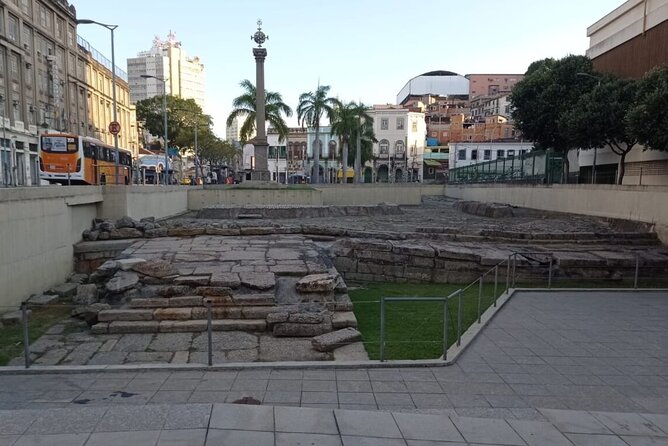
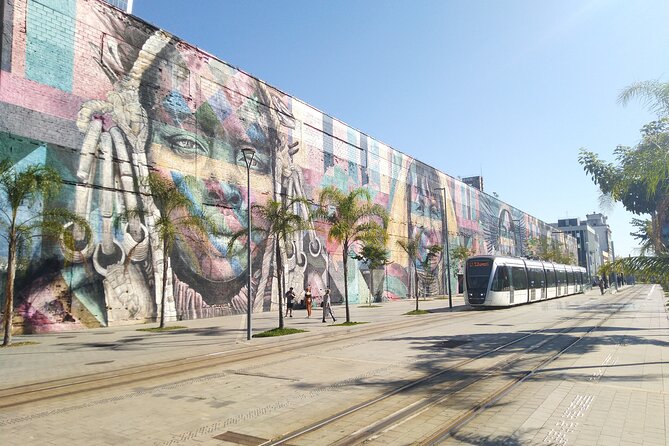
Your first major stop is Boulevard Olímpico, a corridor created for the Olympics in the area where Rio’s old port once operated during colonial times. The guide uses about 30 minutes here, making it the longest stop on the tour.
That timing matters. You should have space to understand how a modern public corridor sits on top of an older port district. The setting helps you see Rio as a city that keeps rebuilding itself while leaving earlier layers beneath the new ones.
The boulevard is also likely to be one of the easier places for orientation. You are not being rushed through a tiny monument or a single plaque. Instead, the guide can connect the broad port area to the later stops.
I would pay close attention here if you want context before reaching the more emotionally difficult parts of the route. The tour’s value comes partly from understanding the port as a working place, not just a renovated public zone.
Mauá Square and two major cultural institutions
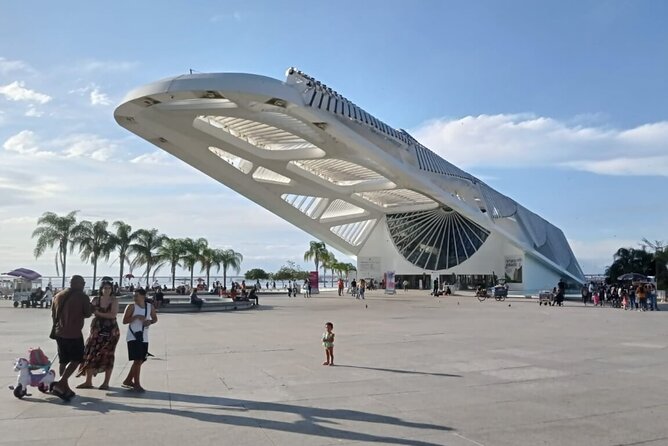
The next stop is Mauá Square, beside the port and close to the Museum of Tomorrow and the Rio Art Museum. The planned visit lasts about 20 minutes.
This stop gives you a useful contrast. On one side is a modern cultural district shaped by recent redevelopment. On the other is the older port area, where the tour turns toward Brazil’s African heritage and the history of forced arrival.
The two museums are mentioned as landmarks beside the square, but admission to either one is not included in the tour. The experience is built as a walking visit, not a museum tour, so you should not assume that your guide will take you inside.
If you want to visit one of the museums, plan it for another part of your day. Trying to fit a full museum visit into this walk could make the schedule tight. The square itself is the important part of the route because it helps you understand the physical relationship between the modern port redevelopment and the older sites ahead.
Igreja de São Francisco da Prainha and the buried beach
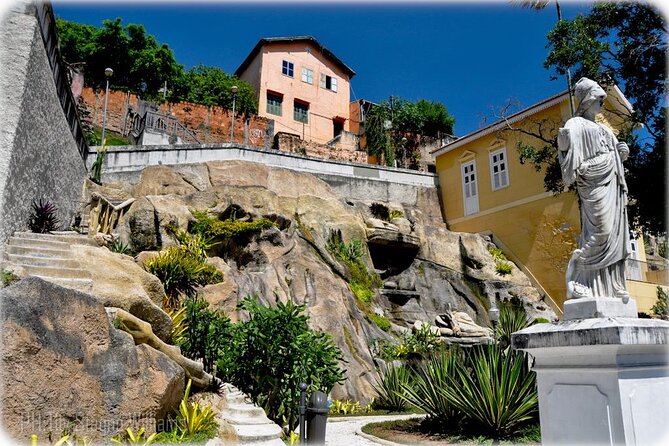
The walk continues to Igreja de São Francisco da Prainha, with about 20 minutes here. The name points to a former beach area that was later buried, and the surrounding zone is now known for local bars.
This stop adds a different kind of detail. Instead of focusing only on major monuments, the tour shows how Rio’s shoreline and neighborhoods changed over time. A former beach becoming part of the built city is a small fact, but it helps explain why the port district can feel layered and a little surprising.
The church also gives the guide a chance to discuss religion and local community life. Since this tour focuses on African heritage and Afro-Brazilian culture, the stop works best as part of the wider route rather than as an isolated church visit.
You should not expect a long church interior tour based on the information provided. The scheduled time is short, and the stop is free to enter. The surrounding bars may also give the area a more local, everyday character than the grand public spaces earlier in the walk.
More Walking Tours in Rio de Janeiro
- Rio de Janeiro: Rocinha Favela Walking Tour with Local Guide
★ 4.8 · 3,052 reviews - Rio De Janeiro: Half-Day Rocinha Favela Walking Tour
★ 4.7 · 2,272 reviews - 3 Hour Rocinha Favela Walking Tour with a Local Guide
★ 5.0 · 833 reviews - Favela Tour Rio de Janeiro – Vidigal Walking Tour by Russo Guide
★ 5.0 · 377 reviews
Pedra do Sal, where music and faith meet
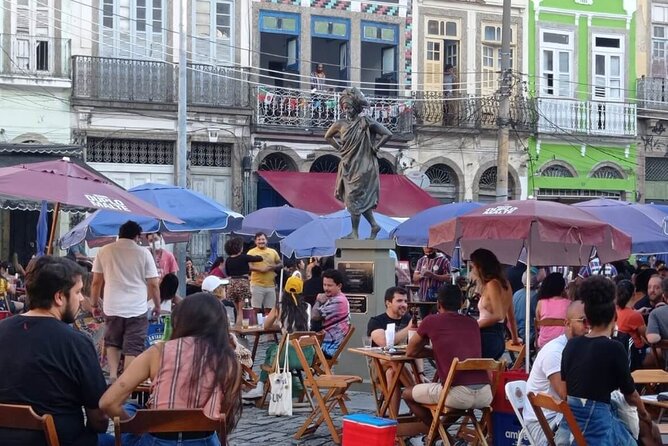
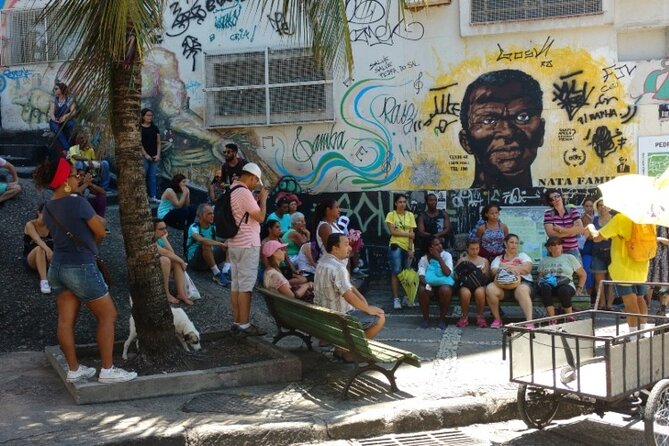
Pedra do Sal is the route’s shortest scheduled stop, at about 15 minutes, but it may be one of the most memorable. The site is connected with the spread of Carnaval and some African religions.
That combination makes Pedra do Sal important beyond its physical appearance. You are being shown a place where culture developed through community, music, celebration, and faith. It helps move the discussion away from slavery as an abstract chapter and toward the living traditions that grew from African presence in Brazil.
Because only 15 minutes are planned here, I would listen closely and ask questions while you have the guide’s attention. The private format should help. Your group can focus on the parts of Afro-Brazilian culture that interest you most rather than following a fixed speech meant for a large crowd.
I also appreciate that the tour does not treat Carnaval as a separate entertainment topic. Here, it appears within a broader story about African cultural influence. That gives the stop more weight and helps you connect Rio’s famous celebrations with the communities and traditions behind them.
Cais do Valongo and the difficult final stop
The tour ends at Cais do Valongo, the last wharf of disembarkation for enslaved Africans in Rio. The scheduled stop lasts about 20 minutes, and the end point is on Avenida Barão de Tefé in Saúde.
This is the most serious part of the route. The site is not simply another old dock. It represents the forced arrival of African people in Rio and the human cost behind the city’s development.
Ending here gives the walk a clear direction. You begin with the city’s public spaces and port redevelopment, then finish at a place that demands a more direct look at the past. I find that structure more effective than scattering difficult subjects among unrelated sightseeing stops.
The tour also offers an optional visit to Instituto dos Pretos Novos. Tickets are not included, so you need to pay separately if you choose to add it. The information provided does not give the extra ticket price or confirm how the optional visit fits into the two-and-a-half-hour schedule, so ask before booking if that addition matters to you.
Cais do Valongo has stated opening hours from Monday through Saturday, 9:30 a.m. to 1:30 p.m., for the listed operating period from January 8, 2025, through July 31, 2026. Since the walk ends there, check that your selected tour time works with those hours.
The private guide makes the difference
The experience is private, meaning only your group participates. That is a real advantage for a subject that can raise questions and require careful explanation. You can pause, ask for context, or spend a little longer on a site without a large group waiting impatiently.
The tour is offered in English. Only a guide is included, so transportation, food, and drinks are your responsibility.
One guide named in the feedback is Romulo. He receives strong praise for his information, pride in Rio, and presentation. One particularly enthusiastic assessment describes the experience as life changing and calls for Romulo to receive the highest pay from the company. That is unusually strong praise for a short walking tour, and it suggests that the guide’s personality may shape the experience as much as the stops themselves.
Of course, a private tour can vary with the assigned guide and the questions your group asks. Still, the structure gives the guide room to make the subject personal instead of delivering a rushed overview.
Is $49.05 a fair price?

At $49.05 per person, this tour costs more than a casual self-guided walk through the port district. The price makes more sense if you want interpretation, historical connections, and a private English-speaking guide.
You are paying for about two and a half hours of guiding, not admission to attractions or transportation. Every listed stop has free admission, and the optional Instituto dos Pretos Novos visit costs extra. If you plan to enter museums, eat at the local bars, or use public transportation before or after the walk, add those expenses yourself.
For a couple or small group, the private setup can be good value. You are not paying for a large sightseeing circuit that gives only a few minutes to each person. The listed group discounts may also help if you are booking for a larger party.
The tour is often booked about 36 days in advance. That does not guarantee that every date sells out, but it is a useful planning signal. If you want a particular day or hope to have a guide such as Romulo, booking early is sensible.
Who will get the most from this walk?
I would recommend this experience to you if you want more than Rio’s familiar scenic highlights. It suits people who care about social history, African heritage, public memory, religion, music, and the forces that shaped Brazilian culture.
It is also a good choice for a first visit if you want to understand the city before spending time in other neighborhoods. The route covers several central sites in one continuous walk and ends at a place with major historical importance.
You may want to skip it if you dislike walking, prefer a relaxed food-focused outing, or want a tour built around entering museums. The route is also not a light sightseeing stroll. Cais do Valongo and the story of enslaved Africans require attention and respect.
Families and older participants should consider the 2-hour-30-minute duration and the lack of included transportation. The information says most people can participate, and service animals are allowed. The meeting point is near public transportation, which helps with arrival and departure.
Practical tips for a thoughtful visit
Arrive at Praça XV with enough time to locate the Estátua do General Osorio. The official starting point is Praça Quinze de Novembro in Centro, Rio de Janeiro.
Wear shoes suited to a sustained city walk. There is no included transport, and the route covers several stops between Praça XV and Saúde.
Bring water and plan any meal separately. Food and drinks are not included, and the tour itself is built around walking and guiding rather than refreshment stops.
If you want to visit the Museum of Tomorrow, the Rio Art Museum, or Instituto dos Pretos Novos, treat those as separate planning decisions. The walk only gives limited time at each stop, and only the guide is included.
The cancellation terms are straightforward: you can receive a full refund if you cancel at least 24 hours before the local start time. Changes or cancellations inside that window are not accepted for a refund.
Should you book the African Heritage and Docks Walking Tour?
Book it if you want Rio to make sense beyond beaches and viewpoints. The route brings together the old port, Afro-Brazilian culture, Pedra do Sal, and Cais do Valongo in a compact private walk.
The strongest reason to book is the guide-led interpretation, especially if Romulo is available. The main caution is practical: you pay for guiding, not transport or attraction entry, and the subject matter deserves your full attention.
At $49.05, I consider it a fair choice for a small group that wants a personal, serious look at Rio’s African heritage. It is less suitable if you want a casual photo walk or a broad list of famous sights.
FAQ
Where does the tour begin?
The tour begins at Praça Quinze de Novembro in Centro, Rio de Janeiro, near the Estátua do General Osorio.
Where does the tour end?
The walk ends at Cais do Valongo on Avenida Barão de Tefé in Saúde, Rio de Janeiro.
How long does the tour last?
The tour lasts approximately 2 hours and 30 minutes.
Is the tour offered in English?
Yes. The experience is offered in English.
Is this a private tour?
Yes. Only your group participates in the activity.
What is included in the price?
A tour guide is included.
Are transportation, food, and drinks included?
No. Transportation, food, and drinks are not included.
Is admission to Instituto dos Pretos Novos included?
No. The visit to Instituto dos Pretos Novos is optional, and its ticket is not included.
Can I cancel for a full refund?
Yes. You can cancel at least 24 hours before the local start time for a full refund. Cancellations or changes made less than 24 hours before the start are not accepted for a refund.
Just added in Rio de Janeiro
- Full Day Tour in Rio de Janeiro★ 5.0 · 8 reviews
- Garganta do Ceu Cave Hiking Private Tour on Pedra da Gavea★ 4.5 · 3 reviews
- Gastronomic Tour at the Municipal Market in Rio de Janeiro★ 5.0 · 4 reviews
- GIG Airport Transfer x Rio de Janeiro Hotels★ 4.5 · 11 reviews
- Rio de Janeiro private Full day Custom Tours★ 5.0 · 35 reviews
- Christ the Redeemer – Complete Morning Tour with Ticket and Transport at the Hotel★ 3.5 · 4 reviews
- AquaRio, Museum, Boulevard Olimpico, Ferris Wheel, Transport and Tourism Guide.★ 4.0 · 6 reviews
- Personalized and Private Full-Day Tour in Rio de Janeiro★ 5.0 · 6 reviews
Historical Tours, compared.


Private Walking and Cultural Tour Rocinha-Rio de Janeiro
Read our review →
Discover Rio Little Africa: A Cultural and Historical Journey
Read our review →


Scenic Train ride to historical cities of Morretes and Antonina
Read our review →
Browse the lists this tour appears in