
Reviewed · HISTORICAL TOURS
African Heritage: Gastronomy and Musicality Experience
Rio’s African story is heard as much as seen. This five-hour private tour connects art, difficult history, food, and music across Rio’s port district, giving you a fuller view of Brazil than a standard sightseeing route. I especially like the careful use of the Morrinho model at MAR and the time set aside for food and percussion at Pedra do Sal. The main consideration is that the experience deals directly with slavery, death, and racism, so it is not light sightseeing.
I also like that the tour is led by guides such as Isabella and Jaíse, whose approach combines personal passion with clear explanations of Afro-Brazilian life. At $110 per person, the price is fair for a private five-hour experience with food tasting and IPN admission, though drinks cost extra and the tour is not suitable for people with food restrictions.
In This Review
- Key points to know before you book
- A thoughtful start at MAR and the Kobra mural
- IPN puts Brazil’s past in physical form
- Cais do Valongo and the Little Africa district
- Three hours at Pedra do Sal: food, stories, and percussion
- Largo de São Francisco da Prainha brings the afternoon together
- What $110 buys you
- Who will get the most from this Rio tour?
- Should you book African Heritage: Gastronomy and Musicality?
- FAQ
- Where does the tour begin?
- Where does the tour end?
- How long does the experience last?
- Is this a private tour?
- Is food included?
- Are drinks included?
- Can I cancel for a full refund?
Key points to know before you book
- A private look at Afro-Brazilian Rio: Your group alone takes part, allowing the guide to adjust explanations and conversation to your interests.
- Morrinho challenges favela stereotypes: The detailed model at MAR presents community life, creativity, and daily routines rather than reducing favelas to crime stories.
- The IPN visit is emotionally serious: Archaeological remains found at the site make Brazil’s enslavement system painfully concrete.
- Three hours are reserved for Pedra do Sal: This is the heart of the food and music program, with Afro-Brazilian and Yoruba dishes plus a percussion workshop.
- The route ends in a social square: Largo de São Francisco da Prainha brings together samba, funk, jazz, chorinho, bars, and old Portuguese buildings.
- Plan around the food policy: Gastronomy is part of the experience, but drinks are not included and food restrictions may prevent participation.
A thoughtful start at MAR and the Kobra mural
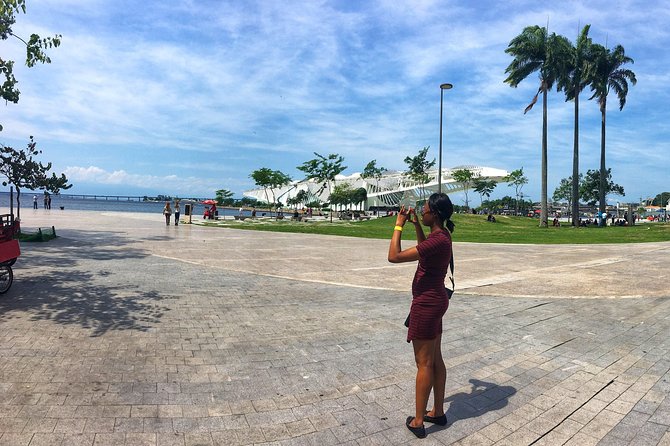
The tour begins at 10 a.m. outside Museu do Amanhã in Praça Mauá. That meeting point places you in Rio’s port district, an area closely tied to the city’s African past and its current cultural renewal.
Your first stop is Museu de Arte do Rio, known as MAR. The Morrinho Project is displayed permanently here, and it gives you a useful first lesson in how Rio is represented. The installation recreates the Pereira da Silva favela in miniature, including streets, residents, and scenes from daily life.
I find this an effective opening because it asks you to examine an image many outsiders carry about favelas. Instead of presenting these communities only through danger or poverty, the model shows their social life, imagination, and ability to create something expressive from limited resources.
You have about 25 minutes at MAR. That is enough for an introduction and focused discussion, but not enough for a full museum visit. You should think of this as a specific art and social-history stop, not general admission to every gallery.
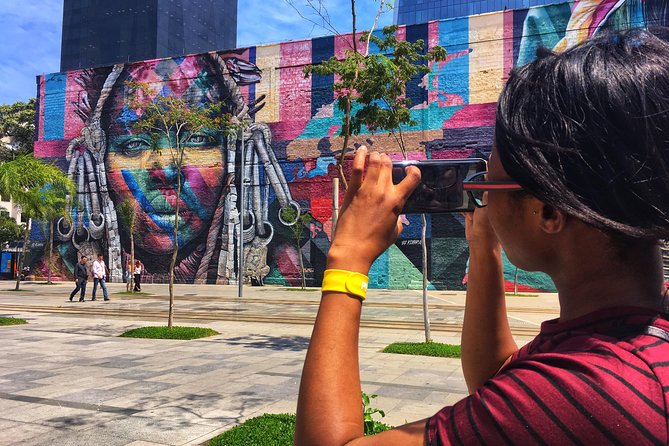
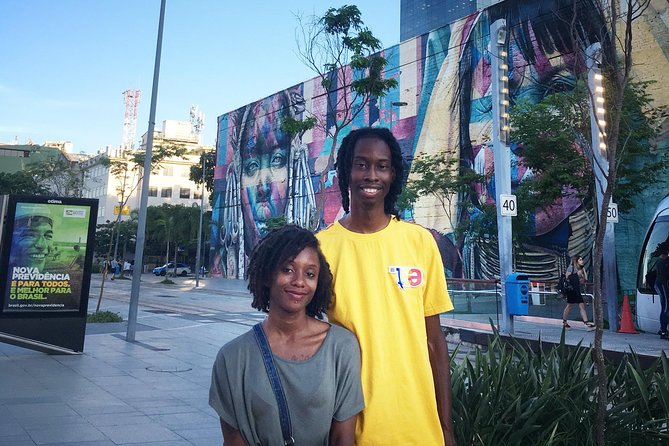
The route also includes time to view Eduardo Kobra’s enormous graffiti mural. The mural honors ancestral peoples and old cultures connected, directly or indirectly, to Brazil’s story. Its scale makes it a strong visual counterpoint to the small Morrinho model: one is a hand-built community view, the other is a public artwork that fills the city around you.
More History Tours in Rio de Janeiro
- Rio de Janeiro Historical Center Walking Tour
★ 4.5 · 336 reviews - Private Walking and Cultural Tour Rocinha-Rio de Janeiro
★ 5.0 · 239 reviews - Discover Rio Little Africa: A Cultural and Historical Journey
★ 5.0 · 238 reviews
IPN puts Brazil’s past in physical form
At Instituto de Pesquisa e Memória Pretos Novos, usually called IPN, the tour becomes more solemn. You visit an archaeological site and a permanent exhibition containing bones of Africans found there.
This is one of the most important stops because the subject is no longer presented only through dates, monuments, or broad statements. The remains force you to consider the people who suffered under Brazil’s slave system and the scale of what was done to them.
The visit lasts about 40 minutes, and admission is included. That matters because IPN is not simply a quick photo stop. It provides a place for explanation and reflection, with the guide helping connect the site to the wider story of African arrival, forced labor, and the cultural survival that followed.
I would not schedule this tour when you want a carefree morning. The material can be upsetting, and the experience works best when you are willing to listen carefully. That seriousness is also its value. You leave with a clearer sense that Afro-Brazilian culture did not appear apart from history. It grew through extraordinary hardship, resistance, faith, art, food, and community.
Cais do Valongo and the Little Africa district
The short stop at Cais do Valongo adds geographic context to the IPN visit. At the Historical Site of the Pier of Valongo, you learn about the port and the surrounding area known as Little Africa.
The stop lasts about 15 minutes, so do not expect a long lecture or a full museum program. Its purpose is to place the story on the ground. This was a point connected to the forced arrival of Africans in Brazil, and the surrounding district became central to Afro-Brazilian life.
That combination of location and explanation is useful. You are not only hearing about a distant past. You are moving through the part of Rio where African traditions, communities, and cultural practices took root and continued.
The tour also introduces the remaining community of Quilombo Pedra do Sal. A quilombo refers to a community formed by people of African descent who resisted slavery and preserved independent cultural traditions. Here, the emphasis is on cultural resistance and the survival of Afro-Brazilian heritage.
The weekly outdoor samba sessions are part of what gives Pedra do Sal its continuing importance. The setting links the past with Rio’s present-day music culture, showing that this is not a frozen historical site. It remains a place where people gather and express identity.
Three hours at Pedra do Sal: food, stories, and percussion

The longest part of the tour takes place at Pedra do Sal, with about three hours devoted to Afro-Brazilian gastronomy and musicality. This is where the experience becomes less about looking at sites and more about taking part.
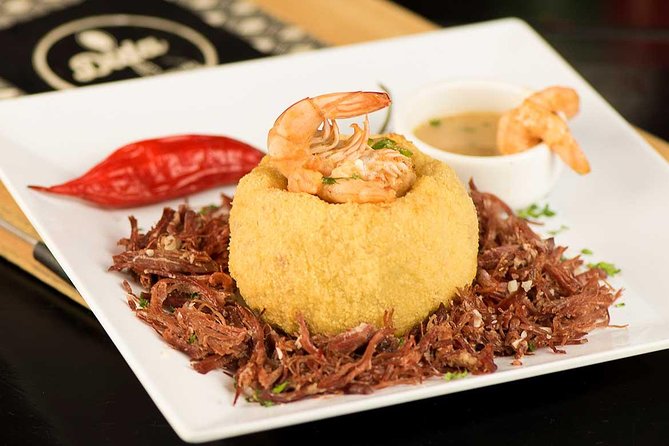
The food tasting includes typical dishes from Afro-Brazilian and Yoruba cooking. The tour connects these foods with the daily practices of religions of African origin, giving you a chance to understand food as more than a meal. Recipes, ingredients, and cooking traditions can carry memory across generations.
The exact dishes are not specified, so you should not book expecting a particular plate. You can expect a tasting rather than a formal restaurant meal, and the food is included in the price. Drinks are not included, so bring extra money if you want beer, juice, or another beverage.
The food restriction note deserves attention. This experience is specifically marked as unsuitable for people with food restrictions. If you have allergies, medical dietary needs, or strict religious requirements, ask the provider before booking rather than assuming substitutions will be available.
The musical portion is a percussion workshop led by an instructor and drummer from the African continent. That detail gives the session a personal link to African musical practice, while the location shows how those rhythms became part of Rio’s cultural life.
You are not merely listening to a performance. You focus on rhythm and participation, with the workshop offering a practical way to feel how percussion shapes samba and other traditions. If you are shy about music, the private format may help. Only your group takes part, so the session should feel more personal than a large class.
This three-hour block is a strength, but it also controls the pace of the tour. If you prefer quick sightseeing and many landmarks, you might find the schedule slow. I think the longer stop is worthwhile because food and music need time. A rushed tasting and a five-minute drum lesson would turn the most distinctive part of the experience into a token add-on.
A completely different kind of day:
- Rio de Janeiro: 6-Stop Highlights of Rio with Lunch
★ 4.4 · 5,157 reviews - Christ the Redeemer Entry Ticket by Corcovado Train
★ 4.4 · 4,476 reviews - Rio’s City Tour – Tickets for Christ, Sugar Loaf & Lunch included
★ 5.0 · 4,389 reviews - Full Day: Christ Redeemer, Sugarloaf, City Tour & Barbecue Lunch
★ 4.5 · 3,142 reviews
Largo de São Francisco da Prainha brings the afternoon together
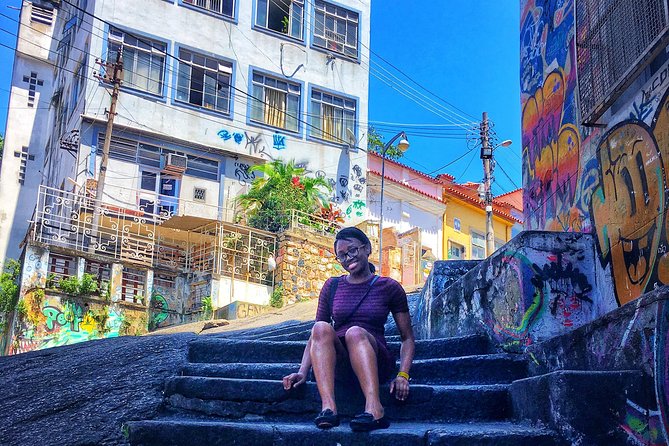
The final stop is Largo de São Francisco da Prainha, a square near Saúde and the end point of the tour. You spend about 15 minutes here, but the location deserves more than a quick glance if you have time after the official program.
The square is surrounded by Portuguese-style buildings and comes alive around sunset with samba, funk, jazz, and chorinho. Outdoor seating, cold beer, and snacks from local bars make it an easy place to continue the evening.
The stop works well as a closing scene because it brings several themes together. You have seen art inspired by community life, confronted the violence of the slave trade, visited places tied to African arrival, tasted food connected to African traditions, and worked with percussion. Here, music and ordinary social life share the same public space.
The tour ends here rather than returning you to the starting point at Museu do Amanhã. That is convenient if you plan to continue around the port district, but you should account for the one-way route when arranging your day. The end point is near public transportation, which helps with onward plans.
What $110 buys you
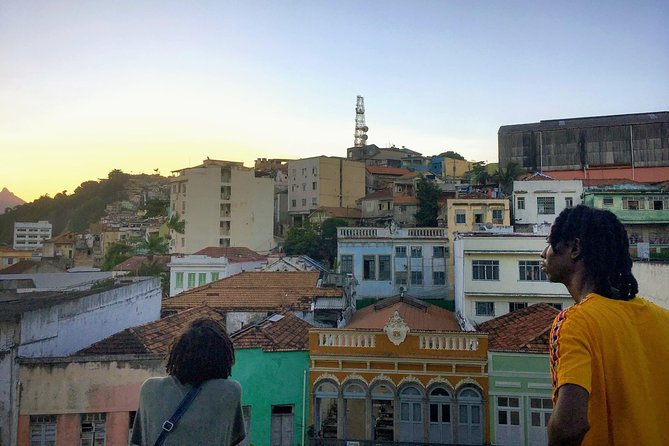
At $110 per person, this is not a bargain-priced orientation walk. It is a private five-hour experience with a specialist subject, IPN admission, an Afro-Brazilian food tasting, and a percussion workshop.
The private format is important. Your group is the only group on the activity, and the guides can explain difficult subjects at the right pace. Solo visitors may especially value this setup. One person who took the tour alone appreciated having a highly personal experience, while others found that the guide adjusted the conversation to their questions.
The strongest value comes from the combination of activities. You are not paying only for transport between monuments or a standard city commentary. The program joins visual art, archaeology, public memory, regional food, and music. If you want a quick list of Rio attractions, you can find cheaper options. If you want a focused look at Afro-Brazilian culture, the price is easier to justify.
Drinks are the main extra expense named in the program. The tour includes food, but not beverages. Also remember that the route requires good weather and may be changed or canceled if the minimum number of participants is not reached, with a new date or full refund offered in those cases.
You can cancel for a full refund up to 24 hours before the start time. Changes or cancellations inside that window are not refunded. Confirmation arrives when you book, and service animals are allowed.
Who will get the most from this Rio tour?
I would recommend this experience to you if you want Brazil explained through the viewpoint of African heritage and diaspora. It suits curious visitors who want more than beaches, viewpoints, and postcard landmarks.
It is particularly useful for anyone interested in Black history, food traditions, religion, music, urban development, or the social forces that shaped Rio. The guides have been praised for making difficult material easy to follow and for connecting past events with daily life in modern Brazil.
The tour can also work well for families, couples, and solo visitors. The private setup makes it easier to ask direct questions, and the food and percussion sections add variety to the historical sites.
I would hesitate to recommend it if you want a light, purely entertaining outing. The IPN visit includes human remains and the wider subject includes enslavement and harsh working conditions. The food policy is another concern for anyone with restrictions.
You should also be comfortable with a five-hour program that moves between several places and gives a large share of the day to Pedra do Sal. That is the right pace for cultural learning, but not for a checklist of attractions.
Should you book African Heritage: Gastronomy and Musicality?
Book it if you want Rio’s African identity treated as central, not as a footnote. The combination of Morrinho, IPN, Cais do Valongo, Pedra do Sal, Afro-Brazilian food, and percussion gives you a connected story that ordinary sightseeing often misses.
I especially value the balance between difficult evidence and living culture. The tour does not stop at tragedy. It shows how African descendants shaped food, music, community, religion, and public life in Rio.
Skip it if you have food restrictions that cannot be accommodated, if you dislike serious historical subjects, or if you want a fast-moving route with little discussion. For the right person, though, $110 buys a focused and personal introduction to a part of Rio that deserves far more attention.
FAQ
Where does the tour begin?
The tour begins at 10 a.m. at Museu do Amanhã, Praça Mauá, 1, Centro, Rio de Janeiro.
Where does the tour end?
It ends at Largo de São Francisco da Prainha in the Saúde district of Rio de Janeiro.
How long does the experience last?
The tour lasts approximately five hours.
Is this a private tour?
Yes. Only your group takes part in the activity.
Is food included?
Yes. An Afro-Brazilian gastronomy tasting is included.
Are drinks included?
No. Drinks are not included in the tour price.
Can I cancel for a full refund?
Yes. You can cancel at least 24 hours before the start time for a full refund. Cancellations or changes made less than 24 hours before the start time are not refunded.
Just added in Rio de Janeiro
- Full Day Tour in Rio de Janeiro★ 5.0 · 8 reviews
- Garganta do Ceu Cave Hiking Private Tour on Pedra da Gavea★ 4.5 · 3 reviews
- Gastronomic Tour at the Municipal Market in Rio de Janeiro★ 5.0 · 4 reviews
- GIG Airport Transfer x Rio de Janeiro Hotels★ 4.5 · 11 reviews
- Rio de Janeiro private Full day Custom Tours★ 5.0 · 35 reviews
- Christ the Redeemer – Complete Morning Tour with Ticket and Transport at the Hotel★ 3.5 · 4 reviews
- AquaRio, Museum, Boulevard Olimpico, Ferris Wheel, Transport and Tourism Guide.★ 4.0 · 6 reviews
- Personalized and Private Full-Day Tour in Rio de Janeiro★ 5.0 · 6 reviews
Historical Tours, compared.

Private Walking and Cultural Tour Rocinha-Rio de Janeiro
Read our review →
Discover Rio Little Africa: A Cultural and Historical Journey
Read our review →


Scenic Train ride to historical cities of Morretes and Antonina
Read our review →
Browse the lists this tour appears in