
Reviewed · RIO DE JANEIRO CITY TOURS
Ancient Rio and Santa Teresa Tour with Hotel pick-up and drop-off
Rio’s past is hiding in plain sight. This four-hour tour links the artistic streets of Santa Teresa with the grand squares and landmarks of downtown Rio, giving you a useful look beyond Christ the Redeemer and Sugarloaf Mountain. I like the hotel pickup and drop-off, and I like the way the route joins two very different parts of the city for $55 per person. The main drawback is pace: some departures move quickly, and the historic tram is viewed but not included as a ride.
The experience works best when your guide brings the city to life. Guides such as Renato, Dario, Monica, Wagner, Wanessa, Roger, Jack Daniel, and Romeu have earned praise for clear explanations, local pride, and thoughtful service. Still, pickup delays, full vans, traffic, closed attractions, and uneven cobblestones can affect the day, so you should know what you are buying.
In This Review
- Key points to know before booking
- Why Santa Teresa is the right place to begin
- Parque das Ruínas and Laurinda’s artistic legacy
- Arcos da Lapa, from aqueduct to tram route
- Praça XV and the center of imperial Rio
- Arco do Teles and the old market lanes
- Cinelândia’s grand public architecture
- Three impressive façades, not interior visits
- What the guides add to the experience
- Timing, transport, and the shared-van tradeoff
- Is $55 a fair price?
- Who should book this Rio history tour?
- Should you book Ancient Rio and Santa Teresa?
- FAQ
- How long does the Ancient Rio and Santa Teresa Tour last?
- What is included in the tour price?
- Does the tour include a ride on Santa Teresa’s historic tram?
- Do museum admission fees come with the tour?
- Where does the tour start and finish?
- What should I wear for the tour?
Key points to know before booking
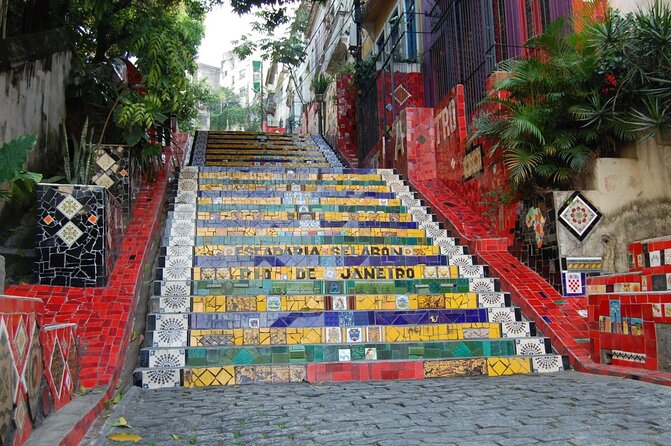
- Two sides of Rio in four hours: Santa Teresa’s old mansions and art scene are paired with Centro’s imperial squares, theaters, libraries, and former market lanes.
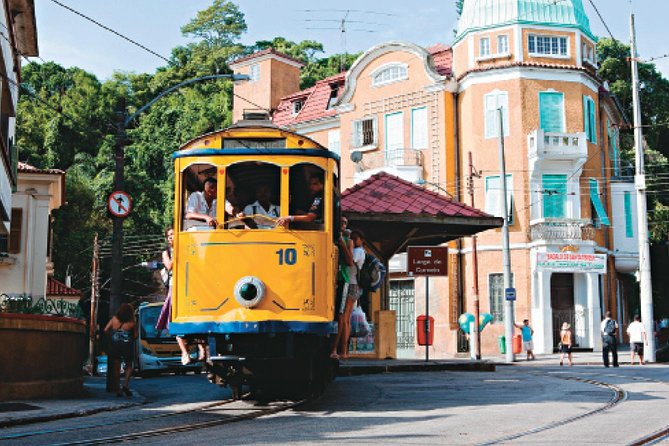
- The tram is not a ride: You see the famous old tram, but a tram journey is not part of this shared excursion because of the tight schedule.
- Great guides make the difference: Renato, Dario, Monica, Roger, and others have been praised for warmth, history knowledge, English, and attention to individual needs.
- Expect real walking: Santa Teresa and the old center include uneven cobblestones, slopes, steps, and short stops on foot.
- A good first look at Rio: At $55, air-conditioned transport and hotel service make this a practical orientation tour, though museum admissions and lunch cost extra.
Why Santa Teresa is the right place to begin
Santa Teresa feels removed from the broad avenues and beach hotels of Copacabana. Its winding streets climb through a neighborhood known for artists, old houses, colorful walls, small shops, and a slower rhythm. You get about an hour here, enough to see the character of the area and hear why it matters to Rio’s story.
The neighborhood’s early 20th-century mansions are a major part of the appeal. Their worn details and grand proportions hint at a period when this hilltop district was home to Rio’s well-to-do families. The streets are not polished into a museum. That is part of the charm, but it also means the walking can be hard going.
The famous yellow tram, built in 1897, remains one of Santa Teresa’s symbols. You should set your expectations carefully: this tour lets you see the original tram, but it does not include a ride. A tram trip takes more time than this shared route allows, so book a private tour instead if riding it is central to your plans.
I would choose a day when Santa Teresa’s shops and craft stalls are likely to be open. A Monday can feel quiet, and New Year’s Day brought closed shops and handicraft stores for one departure. Sunday was also described as a good option for a calmer downtown visit, though opening hours can vary.
More Rio city tours:
- Rio’s City Tour – Tickets for Christ, Sugar Loaf & Lunch included
★ 5.0 · 4,389 reviews - Full Day: Christ Redeemer, Sugarloaf, City Tour & Barbecue Lunch
★ 4.5 · 3,142 reviews - Rio: Christ the Redeemer, Sugarloaf, Selaron & BBQ Lunch
★ 4.5 · 2,428 reviews
Parque das Ruínas and Laurinda’s artistic legacy
The Centro Cultural Municipal Parque das Ruínas takes about 20 minutes. This cultural center occupies the former home of Laurinda Santos Lobo, an important supporter of artists. Her role gives the stop more meaning than a simple photo break: it connects Santa Teresa’s creative identity with a particular woman who helped artists find space and attention.
You will have free admission to the center, though the short visit limits how much time you can spend looking around. The value here is the combination of the building, the neighborhood setting, and the story behind it. Guides who explain Laurinda’s work well can make this brief stop memorable.
If you enjoy art, architecture, and Rio’s social history, this is one of the tour’s most distinctive stops. If you prefer long museum visits, you may find the time too short. The tour is designed to give you a broad introduction rather than a close study of any one site.
Arcos da Lapa, from aqueduct to tram route
The Arcos da Lapa is one of Rio’s most recognizable historic structures. Built to carry water, the arches now support the tram route serving Santa Teresa. The change in purpose tells you something useful about Rio: old infrastructure has not simply been preserved, it has been adapted to the city’s changing needs.
You spend about 30 minutes in the area. That gives you time for photographs and an explanation of the arches, but the stop may feel brief if you want to explore Lapa’s streets at leisure. Admission is not included, although the itinerary does not describe a required paid entrance.
This is also a place where traffic and city conditions can affect the experience. Carnival can cause serious delays, and a four-hour schedule has little room to absorb them. If your tour falls during Carnival, allow extra flexibility for the rest of your day.
Praça XV and the center of imperial Rio
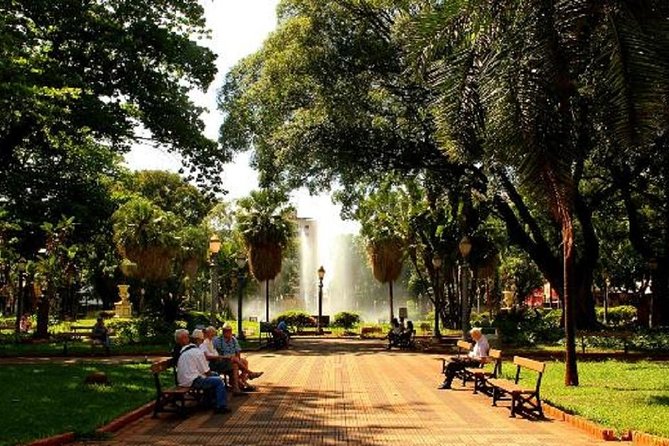
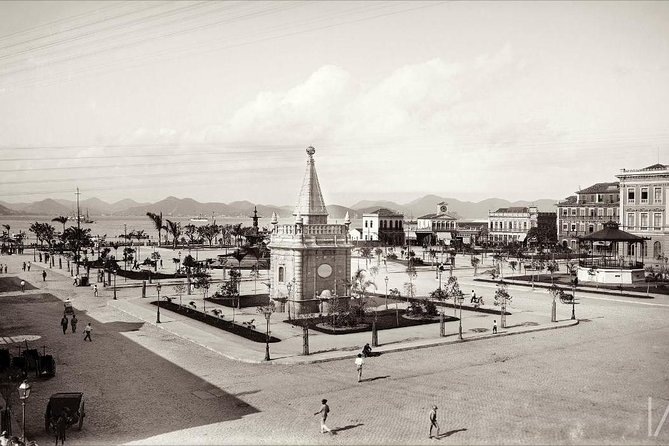
Praça Quinze de Novembro, usually called Praça XV, brings you into the historic center. The square is surrounded by the Palácio Tiradentes, home of Rio’s legislative assembly, and the Paço Imperial. The ferry terminal at Praça XV also links Rio with destinations including Niterói, so this is not merely a preserved monument zone. It remains part of the city’s daily movement.
The stop lasts around 30 minutes and admission is free. I like this part of the route because the buildings help explain Rio’s political importance. You are not just looking at handsome façades. You are seeing the setting where royal, imperial, legislative, and commercial life overlapped.
Your guide matters here. A good explanation can connect the square with Brazil’s colonial and imperial past while also acknowledging the difficult parts of that story. Roger was praised for discussing Rio’s complicated colonial history honestly and for linking earlier events with the modern city.
More things to do in Rio de Janeiro:
- Rio de Janeiro: 6-Stop Highlights of Rio with Lunch
★ 4.4 · 5,157 reviews - Christ the Redeemer Entry Ticket by Corcovado Train
★ 4.4 · 4,476 reviews - Rio de Janeiro: Rocinha Favela Walking Tour with Local Guide
★ 4.8 · 3,052 reviews - Rio’s Full Day: Selarón Steps, Christ & Sugarloaf – Tickets & Lunch Included
★ 5.0 · 2,724 reviews
Arco do Teles and the old market lanes
Arco do Teles leads into a small network of lanes and alleys in an area that was once the downtown market. Today, the passage is lined with bars and small restaurants. It is a pleasant contrast to the formal scale of Praça XV, with narrower streets and a more intimate feel.
You receive about 20 minutes here. That is enough to look around and take photographs, but not enough for a proper meal or a long café stop. Lunch is not included, and you should not count on having time to sit down unless your guide and the group are moving ahead of schedule.
This stop can also expose one of the tour’s weaknesses. Some departures have been tightly timed, with little chance to enter a café, use the restroom, or linger over a coffee. If local food and café time matter more to you than seeing many landmarks, a private arrangement would give you better control.
Cinelândia’s grand public architecture
Cinelândia is a large downtown square surrounded by important historic buildings. The tour gives you about 30 minutes, making it one of the better places for photographs and a short architectural overview.
The square reflects the modernization of Rio during the early 20th century, when mayor Pereira Passos reshaped parts of the then Federal Capital. That context helps the buildings around Cinelândia make sense. The broad public space and formal façades were part of a deliberate effort to present Rio as a modern capital.
The three following stops are short exterior visits, each about 10 minutes. You do not enter the museums or performance buildings, so think of them as guided architecture stops rather than admissions-based sightseeing.
Three impressive façades, not interior visits
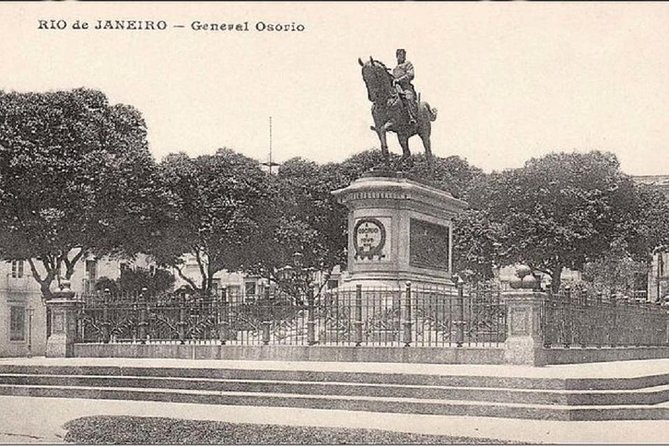
The Museu Nacional de Belas Artes occupies a building designed in 1908 by Adolfo Morales de los Rios for the National School of Fine Arts. The school continued the tradition of the Imperial Academy of Fine Arts, and the building belongs to the same period of urban change associated with Pereira Passos.
The tour does not include entry. You stop to admire the design from outside and hear why the building matters. If you want to see the collection, rare works, or galleries inside, you will need a separate visit.
Theatro Municipal do Rio de Janeiro opened in 1909 and remains one of Brazil’s major theaters. Its history includes international artists and leading Brazilian performers, and since the 1930s it has maintained its own choir, symphony orchestra, and ballet company.
Again, you view the exterior only. The building is worth seeing, but the brief stop will not satisfy anyone hoping for a performance or a full interior tour. Public opening hours also matter. One departure was affected because the opera house and library were not open to the public on that day.
The Biblioteca Nacional is another imposing building on the route. Founded in 1810 by King João VI of Portugal, it holds nearly nine million items, including rare books, manuscripts, Princess Isabel’s original letters, early Brazilian newspapers, and two copies of the Mainz Psalter Bible printed in 1492.
Those details make the library more than a photo backdrop. Yet you still do not enter, and the visit lasts only 10 minutes. I would treat this as a useful introduction and return later if books, archives, or grand public architecture are high on your list.
What the guides add to the experience
The strongest part of this tour is often the person leading it. Renato has been praised for tying Rio’s history and economics together. Dario has been described as patient, well informed, and proud of the city. Monica made special efforts to reduce walking for a husband with difficulty walking, while Roger was praised for fluent English and a thoughtful treatment of Brazil’s complicated past.
Other positive experiences involved Wagner, Wanessa, Jack Daniel, and Romeu. Their strengths included punctuality, enthusiasm, cultural context, local recommendations, and the ability to answer questions. That range matters because the route itself is fairly fixed. A warm guide can turn a string of short stops into a coherent story.
The quality is not perfectly consistent. Some departures have had guides who spoke very little to the group, seemed disengaged, or gave explanations that were difficult to follow. One guide was criticized for rushing everyone along, while another left the group feeling that the tour was disjointed.
I would pay attention to your guide’s name in the confirmation messages and contact the operator if you need a particular language or have mobility concerns. English and German have been available with some guides, but language ability is not stated as guaranteed for every departure.
Timing, transport, and the shared-van tradeoff
The tour lasts about four hours and uses an air-conditioned vehicle. That is welcome in Rio’s heat, especially after walking on exposed streets. Hotel pickup and return simplify the day, but you need to confirm the pickup time because the operator contacts you after booking based on your hotel location.
The stated maximum is 19 people per minivan, with a broader maximum of 99 for the activity. In practice, the size of your particular group affects the feel of the outing. A small group can be almost private, while a full van means less room, less flexibility, and more time spent collecting or returning people.
Pickup delays have occurred, including waits of more than 30 minutes and one wait of over an hour in hot weather. The return can also take longer when several people need to be dropped at different hotels. Carnival traffic is a special concern, and one departure lost substantial time before the sightseeing had properly begun.
Wear comfortable walking shoes. The old streets include uneven cobblestones, and Santa Teresa has slopes that can be tiring. Most people can take part, but this is not a low-walking sightseeing ride. Bring water, and keep your schedule after the tour open if you are visiting during a major city event.
Is $55 a fair price?
At $55 per person, the tour offers solid value if you want a guided orientation to Santa Teresa and central Rio. You get roughly four hours, hotel transport, an air-conditioned vehicle, and a route that would be awkward to assemble on your own in one morning.
The price does not include lunch, museum entry, or a tram ride. That keeps the cost down, but it also means the experience is mainly an exterior sightseeing tour. You are paying for transport, organization, and interpretation rather than a series of paid admissions.
The value improves when you are visiting Rio for a short stay and want more than the usual postcard sights. It is also useful after visiting Christ the Redeemer or Sugarloaf Mountain, since those major attractions do not show you much of the city’s older central districts.
The value drops if you want slow exploration, substantial indoor time, or a guaranteed tram journey. In that case, a private tour may cost more but offer better control over stops, cafés, walking distance, and timing.
Who should book this Rio history tour?
I would recommend it to first-time visitors who want to understand Rio beyond its beaches and famous viewpoints. It suits couples, families, and anyone with only a short window in the city. The mix of art, architecture, public squares, colonial-era stories, and local neighborhoods gives you useful bearings.
It is also a good choice for people who prefer a guide to handle transport between areas. You can see Santa Teresa and Centro without spending your limited vacation time working out the route.
I would be cautious if you have a walking problem, dislike uneven streets, or need frequent breaks. The guide may be able to reduce the walking, as Monica did for one couple, but that should be discussed ahead of time rather than assumed.
I would also avoid booking it immediately before an important evening commitment. Delayed pickup, Carnival traffic, or lengthy hotel drop-offs can stretch the day.
Should you book Ancient Rio and Santa Teresa?
Book this tour if you want a compact, affordable introduction to two of Rio’s most characterful historic areas, and you are happy with exterior visits and a brisk schedule. Its best moments come from the neighborhood atmosphere, old architecture, and a guide who explains how the city grew.
Do not book it expecting to ride the yellow tram, enter every museum, or linger over coffee. Choose a day when shops and cultural sites are more likely to be open, confirm pickup details, and tell the operator about mobility or language needs. With those expectations in place, this is a worthwhile complement to Rio’s major mountain and beach attractions.
FAQ
How long does the Ancient Rio and Santa Teresa Tour last?
The tour lasts approximately four hours.
What is included in the tour price?
An air-conditioned vehicle and hotel pickup and drop-off are included.
Does the tour include a ride on Santa Teresa’s historic tram?
No. You can see the historic tram, but a tram ride is not included in this shared tour.
Do museum admission fees come with the tour?
No. Entrance to museums is not included, and several stops are exterior visits only.
Where does the tour start and finish?
The listed start point is Hotel Rio Othon Palace at Av. Atlântica, 3264, Copacabana. The activity ends back at the meeting point.
What should I wear for the tour?
Comfortable clothing and walking shoes are recommended because the route includes walking on historic streets and uneven cobblestones.
Just added in Rio de Janeiro
- Full Day Tour in Rio de Janeiro★ 5.0 · 8 reviews
- Garganta do Ceu Cave Hiking Private Tour on Pedra da Gavea★ 4.5 · 3 reviews
- Gastronomic Tour at the Municipal Market in Rio de Janeiro★ 5.0 · 4 reviews
- Rio de Janeiro private Full day Custom Tours★ 5.0 · 35 reviews
- GIG Airport Transfer x Rio de Janeiro Hotels★ 4.5 · 11 reviews
- Christ the Redeemer – Complete Morning Tour with Ticket and Transport at the Hotel★ 3.5 · 4 reviews
- AquaRio, Museum, Boulevard Olimpico, Ferris Wheel, Transport and Tourism Guide.★ 4.0 · 6 reviews
- Personalized and Private Full-Day Tour in Rio de Janeiro★ 5.0 · 6 reviews
Rio de Janeiro City Tours, compared.

Rio’s City Tour – Tickets for Christ, Sugar Loaf & Lunch included
Read our review →
Full Day: Christ Redeemer, Sugarloaf, City Tour & Barbecue Lunch
Read our review →
Christ the Redeemer, Sugarloaf, Selaron & BBQ Lunch
Read our review →
São Paulo’s Full Day City Tour: Main City Sights in 7 Hours – (Shared Group)
Read our review →


Pub Crawl in Lapa with Cachaça Tasting and Live Samba
Read our review →
Rio’s Best_Corcovado, Sugar Loaf, Selaron, Cathedral and more
Read our review →Browse the lists this tour appears in