
Reviewed · BRAZIL FOOD AND SAMBA NIGHTS
Carnaval Experience: Backstage Tour at Samba City with Cocktail
Carnaval comes apart before it comes alive. This lively visit to Rio’s Cidade do Samba shows you the work behind the world’s biggest carnival, from costume decoration to parade planning, then lets you try the look and learn a few samba steps. I like the hands-on costume activity and the chance to dance with a professional passista. I also like the welcome caipirinha, a small but fitting introduction to Brazilian culture.
The main drawback is organization. Finding the correct tent can be confusing, and a bilingual or multilingual presentation may take longer than expected. A group of up to 30 people can also make it harder to hear, take photos, or ask questions.
In This Review
- Key points to know before you book
- Why Rio Carnaval begins in a warehouse
- Finding the smaller tent at Cidade do Samba
- The Grande Rio samba factory and its working spaces
- Costumes, photographs, and the playful side of the visit
- Caipirinhas and a taste of Brazilian hospitality
- Learning samba with a professional passista
- How long does the experience really take?
- What the $26.49 price delivers
- Who will enjoy this Rio Carnaval activity?
- How to get more from the visit
- Should you book the Carnaval Experience?
- FAQ
- Where does the Carnaval Experience meet?
- How do I get to Cidade do Samba?
- Is transportation included?
- How long does the tour last?
- What is included in the tour?
- Can children participate?
- What is the cancellation policy?
Key points to know before you book
- You enter a working samba-school setting: The tour visits the Grande Rio samba factory, one of Rio’s major samba-school production spaces.
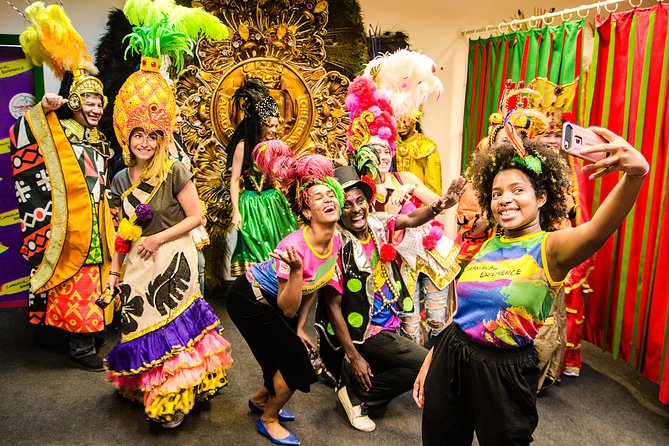
- Costumes are part of the fun: You can pose in carnival pieces and try them on for photographs.
- A professional passista teaches samba: The dance class is less about perfect technique and more about getting into the rhythm without taking yourself too seriously.
- Your caipirinha is included: The Brazilian national drink is served as a welcome refreshment, with a minimum drinking age of 18.
- The group may be large: The stated maximum is 30 people, which can affect sound quality and personal attention.
- Allow extra time for arrival: The meeting point is inside Cidade do Samba, under the smaller tent in the middle of the complex, not simply at the nearest road address.
Why Rio Carnaval begins in a warehouse
The Sambadrome parade may last only about 70 minutes for one samba school, but the preparation takes months of design, building, sewing, painting, rehearsing, and fundraising. That contrast is the central idea of this tour.
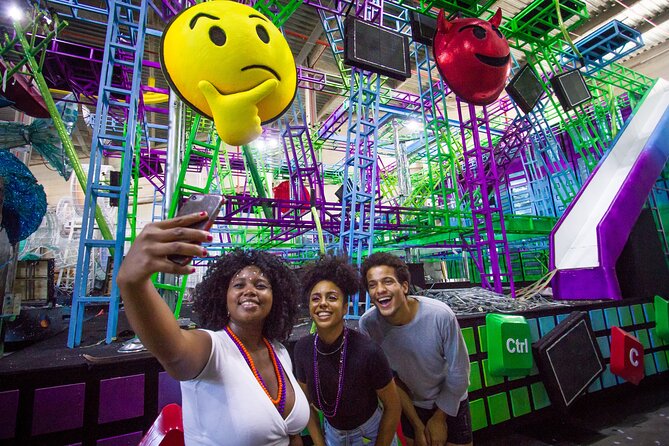
At Cidade do Samba, you get a look at the production side of the celebration. Instead of seeing only finished costumes and dancers under bright lights, you learn how a samba school turns a theme into a parade. Large floats, feathered costumes, decorations, and coordinated performances all have to fit one story.
That context gives the tour real value. Rio Carnaval can look spontaneous from the street, but it is a tightly planned competition. Samba schools compete for prestige, points, money, and neighborhood pride. The presentation explains the history of samba and the structure of the parades before you move through the production area.
You may not see a fully completed float at every visit. One person found the number of finished floats limited, while still appreciating the construction work. Set your expectations correctly: this is a working factory and educational visit, not a guaranteed display of every spectacular parade piece.
More Rio city tours:
- Rio’s City Tour – Tickets for Christ, Sugar Loaf & Lunch included
★ 5.0 · 4,389 reviews - Full Day: Christ Redeemer, Sugarloaf, City Tour & Barbecue Lunch
★ 4.5 · 3,142 reviews - Rio: Christ the Redeemer, Sugarloaf, Selaron & BBQ Lunch
★ 4.5 · 2,428 reviews
Finding the smaller tent at Cidade do Samba
The meeting point is Cidade do Samba in the Gamboa and Santo Cristo area of Rio. You meet inside the complex, under the smaller tent in the middle. The ticket redemption point is listed at the main entrance on Avenida Binário do Porto.
This distinction matters. A taxi or Uber driver can take you to Cidade do Samba, but you still need to walk into the complex and locate the tent. Some visitors have had trouble because a car dropped them at the address or the back side of the building rather than at the right entrance.
The VLT tram has a station in front of Cidade do Samba’s main entrance, which is the clearest public transport reference provided for the tour. If you use a taxi or ride service, ask for Cidade do Samba itself, then confirm the smaller tent once inside.
I would arrive early. The stated meeting instructions are more precise than a generic street address, and the complex may not immediately tell you where a tour begins. Keep the confirmation details and the provider’s contact information available in case you need help locating the group.
The Grande Rio samba factory and its working spaces
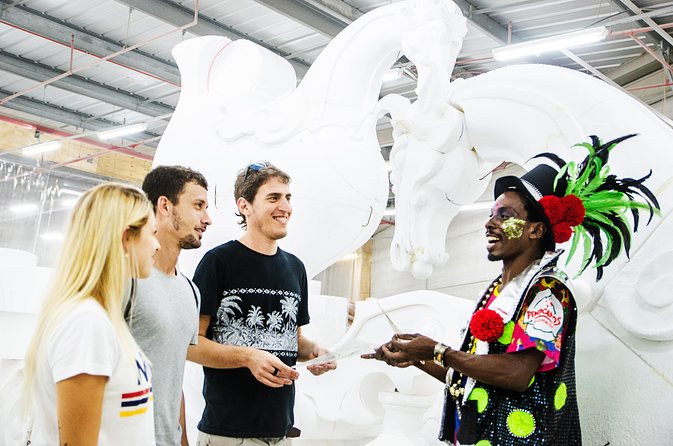
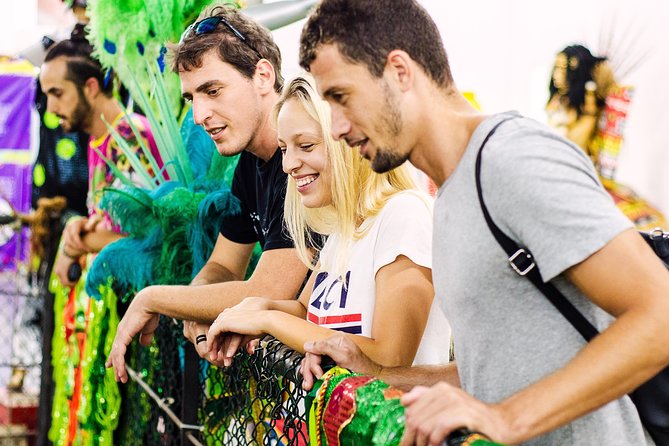
The visit begins with a bilingual guide and a walk through the Grande Rio samba factory. Grande Rio is one of Rio’s principal samba schools, so you are seeing a real part of the city’s Carnaval system rather than a general dance studio built only for tourists.
The guide first uses an explanatory panel to outline samba and the parades. This part gives you the vocabulary for the rest of the visit: samba schools, parade themes, costumes, floats, and the competitive pressure behind the show.
The best guides make the scale of the work easy to picture. Lia, who is also a Carnaval performer, received especially warm praise for explaining both samba’s cultural importance and the labor behind the parade. Lucas was also singled out for making the visit engaging. Guide quality can shape the whole hour, since much of the factory area needs explanation to make sense.
The guide may speak in Portuguese and English, and sometimes another language. That is useful for mixed groups, but it can slow the pace. Some people found themselves waiting while the same story was repeated. Others had trouble hearing when Portuguese and English speakers were gathered together.
If your guide switches languages, stand close and ask politely for clarification when needed. A position near the guide can make a real difference in a group of 30.
Costumes, photographs, and the playful side of the visit
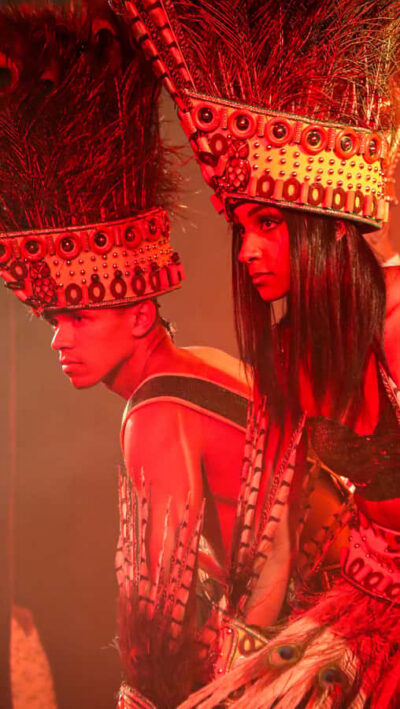
The costume section changes the mood from classroom to playroom. You are shown carnival pieces and invited to dress up and photograph yourself. The available items may include large, decorative parts rather than a complete head-to-toe parade costume.
That is still enough to make the experience memorable. A feathered headpiece, shoulder decoration, or sparkling costume element gives you a physical sense of the weight and design of Carnaval clothing. The activity also helps explain that a parade costume is not simply an outfit. It must be eye-catching from a distance, fit a large group theme, and work during movement.
Photography rules may vary by part of the visit. One person noted that photos were not allowed at the very beginning, then later enjoyed taking pictures and helping staff decorate a piece. Listen to the guide before taking out your phone.
This is a good stop for families, friends, and solo visitors who enjoy participatory activities. It is less satisfying if you want a quiet museum visit or detailed access to every workshop. You are there to see, learn, pose, and take part, not to inspect every production stage at close range.
More Food and Samba Nights in Rio de Janeiro:
- Rio de Janeiro: Beginner Samba Lesson in Ipanema
★ 4.9 · 1,071 reviews - Rio: Pub Crawl in Lapa with Cachaça Tasting and Live Samba
★ 4.7 · 881 reviews - Rio: Carnival Backstage Tour at Samba City with Cocktail
★ 4.6 · 520 reviews - Hop-ON Hop-OFF Sightseeing Bus in Rio de Janeiro – Rio Samba Bus
★ 3.5 · 457 reviews
Caipirinhas and a taste of Brazilian hospitality
The welcome drink is a caipirinha, Brazil’s best-known national cocktail. It usually functions as a simple greeting rather than a full tasting session, so do not book this expecting a bar tour or a menu of drinks.
Still, it fits the occasion. The drink adds a social pause before or after the dance portion, and it gives you a taste of a familiar Brazilian tradition while you are learning about another one. The minimum drinking age is 18.
The tour information describes welcoming caipirinhas, while one account refers to one included drink. If you do not drink alcohol, the supplied information does not specify a nonalcoholic alternative, so contact the provider before booking if that matters to you.
Dress is listed as smart casual. The dance and costume activities make comfortable clothing sensible, but the formal requirement is only smart casual. Bring a phone with enough battery for photos, though do not assume photographs are allowed in every area.
Learning samba with a professional passista
The samba class is the emotional high point for many people. A passista, the skilled samba dancer associated with the parade tradition, leads the session and demonstrates the basic movement.
You do not need previous dance experience. The purpose is to feel the rhythm and understand the physical energy required of a parade performer. Even a short lesson gives you more respect for the stamina, timing, and confidence involved in samba.
The class is designed for fun, not formal training. You may feel awkward at first, especially if you are dancing in front of a group. That is part of the charm. The atmosphere is light, and the activity works well for couples, families, groups of friends, and solo visitors who are willing to join in.
The performance element can include professional dancers appearing for a demonstration and photographs. One account described three beautiful dancers joining the group after the tour. Details may vary, but you should expect samba instruction and a performance-focused finish rather than a long technical class.
If you have mobility or health concerns, be realistic about the physical setting. Reports describe a hot warehouse and, in one case, four flights of stairs, although another person mentioned using a lift. The supplied information says most people can participate, but it does not promise step-free access or air conditioning.
How long does the experience really take?
The tour is described as lasting about one and a half hours, while the schedule also refers to two hours. Actual timing appears to depend on the group, guide, arrival delays, language mix, and the amount of time spent in each area.
Some people found the visit close to the expected length. One account said the full activity ended in about 45 minutes, while others described a satisfying two-hour afternoon. That range is important if you are planning a tight Rio schedule.
I would reserve at least two hours around the activity, plus transport time. Arriving late can cost you a large part of the experience because finding the factory is not always quick. If you have a restaurant reservation, airport transfer, or show afterward, leave a generous gap.
The tour ends back at the meeting point, so you do not need to arrange a separate pickup from another part of Rio.
What the $26.49 price delivers
At $26.49 per person, this is priced as an accessible cultural activity rather than a premium backstage production tour. The fee includes admission, the guided factory visit, the history presentation, costume access, the samba class, and the welcome drink.
That is good value if you want several types of activity in one short outing. You receive background information, a look at production, a photo opportunity, a drink, and a dance lesson. Booking an equivalent mix separately would likely take more planning, although no comparison price is provided here.
The value drops if your main goal is extensive access to float construction or a small private group. The group can reach 30 people, and a large crowd may limit your photos and questions. One person felt a cap of 10 would make the experience much smoother.
The tour is booked, on average, 21 days ahead. That suggests planning early, especially if your Rio visit falls near Carnaval season or you want a particular day. Free cancellation is available up to 24 hours before the start time. After that point, the payment is not refunded, and changes are not accepted.
Who will enjoy this Rio Carnaval activity?
I would recommend it most strongly to:
- First-time visitors who want context for Rio’s Carnaval
- People who enjoy costumes, dancing, and photographs
- Families with children accompanied by an adult
- Couples and friend groups looking for a colorful afternoon activity
- Visitors who want a short cultural stop near the port area
- Anyone curious about the work behind a major public celebration
It is also a useful first-day activity. The tour runs in the afternoon according to one account, and the combination of sitting, listening, posing, and dancing can be an easy way to begin a Rio visit while adjusting to a new time zone.
I would be more cautious if you dislike group activities, have difficulty hearing in noisy spaces, or need a guaranteed short schedule. The bilingual format may feel slow, and the physical setting can be hot. Older visitors or anyone with health concerns should ask in advance about the stairs, lift, and temperature.
How to get more from the visit
Arrive before the stated start time, not exactly at it. Go through the main entrance, look for the smaller tent in the center, and do not assume the first large tent or warehouse is correct.
Wear smart casual clothes that allow movement. You may try on costume pieces and take part in samba, so restrictive clothing will make both activities less enjoyable.
Stand near the guide during the explanation. This is especially useful when the group includes Portuguese and English speakers. If you are traveling with friends, spread out rather than standing together at the back, since the guide may be moving people through several areas.
Keep your camera ready but wait for permission. Some parts of the production space may not allow photography at first. The costume section is the safer point for photographs.
Finally, treat the class as participation, not performance. You are not being tested. The point is to understand the rhythm, laugh a little, and appreciate the skill of the dancers who make the parade look effortless.
Should you book the Carnaval Experience?
Book it if you want a friendly, affordable introduction to the machinery behind Rio Carnaval. The strongest parts are the access to a samba-school factory, the costume activity, and the samba class with a professional dancer. The cultural explanation also helps you see Carnaval as a serious artistic competition, not just a party.
Think twice if you need a small group, precise timing, easy wayfinding, or a cool, quiet indoor setting. The location can be confusing, language repetition can slow the tour, and the maximum group size is fairly large.
For most visitors, the $26.49 price is fair because it combines education and hands-on fun. Go early, allow extra time, and book it for the experience of seeing how the spectacle is made, not for a guaranteed tour of every float or workshop.
FAQ
Where does the Carnaval Experience meet?
It meets at Cidade do Samba in Rio de Janeiro. Inside the complex, look for the smaller tent in the middle. The listed ticket redemption point is at the main entrance on Avenida Binário do Porto.
How do I get to Cidade do Samba?
A VLT tram station is located in front of the main entrance. If you take an Uber or taxi, ask for Cidade do Samba.
Is transportation included?
No. You are responsible for getting to and from Cidade do Samba.
How long does the tour last?
The experience is described as approximately one hour and 30 minutes, with the schedule also referring to two hours. Timing can vary.
What is included in the tour?
The experience includes a bilingual guided visit to the Grande Rio samba factory, an explanation of samba and Carnaval parades, costume access for photographs, a welcome caipirinha, and a samba class with a passista.
Can children participate?
Yes, but children must be accompanied by an adult. Most people can participate according to the activity information.
What is the cancellation policy?
You can cancel at least 24 hours before the local start time for a full refund. Cancellations or changes made less than 24 hours before the start time are not accepted for a refund.
Just added in Rio de Janeiro
- Full Day Tour in Rio de Janeiro★ 5.0 · 8 reviews
- Garganta do Ceu Cave Hiking Private Tour on Pedra da Gavea★ 4.5 · 3 reviews
- Gastronomic Tour at the Municipal Market in Rio de Janeiro★ 5.0 · 4 reviews
- GIG Airport Transfer x Rio de Janeiro Hotels★ 4.5 · 11 reviews
- Rio de Janeiro private Full day Custom Tours★ 5.0 · 35 reviews
- Christ the Redeemer – Complete Morning Tour with Ticket and Transport at the Hotel★ 3.5 · 4 reviews
- AquaRio, Museum, Boulevard Olimpico, Ferris Wheel, Transport and Tourism Guide.★ 4.0 · 6 reviews
- Personalized and Private Full-Day Tour in Rio de Janeiro★ 5.0 · 6 reviews
Brazil Food and Samba Nights, compared.
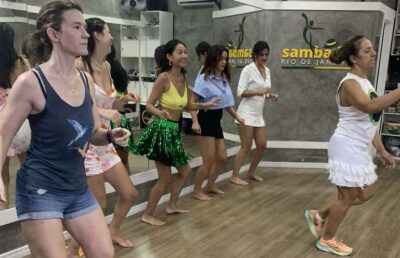

Pub Crawl in Lapa with Cachaça Tasting and Live Samba
Read our review →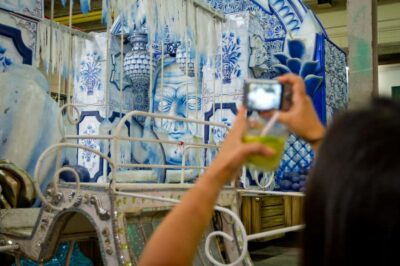
Carnival Backstage Tour at Samba City with Cocktail
Read our review →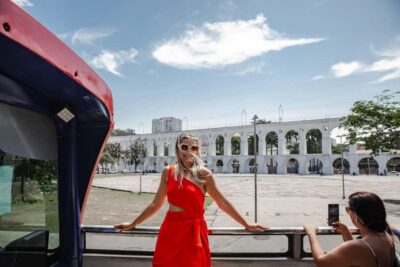
Hop-ON Hop-OFF Sightseeing Bus in Rio de Janeiro – Rio Samba Bus
Read our review →
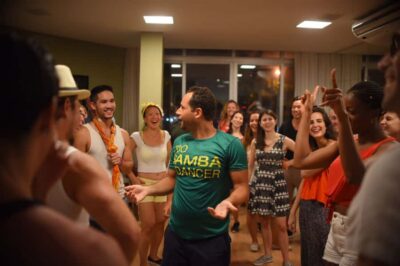

Ginga Tropical – Brazilian Samba and Folklore Show
Read our review →Browse the lists this tour appears in