
Reviewed · CHRIST THE REDEEMER AND SUGARLOAF
Climb to the Top of Sugarloaf Mountain
Skip the cable car and earn the view. This three-hour climb gives you a more active way to experience Rio’s famous Sugarloaf Mountain, with a small group of no more than six, safety equipment, and close guidance from skilled climbing instructors. I like the quiet, less-accessible viewpoints along the route, especially Philosopher’s Stone, and I like that the short roped section lets beginners try real climbing without signing up for an extreme expedition.
The catch is simple: this is not an easy walk. You need strong physical fitness, a steady head for heights, and suitable footwear. The first part includes unroped scrambling on steep rock, so anyone uncomfortable with exposure should think carefully before booking.
In This Review
- Key points at a glance
- Why climb Sugarloaf instead of taking the cable car
- The 2 p.m. start at the foot of Sugarloaf
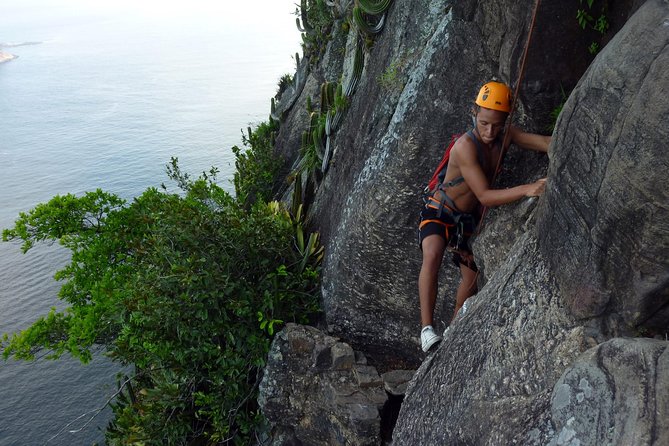
- The backside trail and the first steep scramble
- The 15-meter roped climb
- Philosopher’s Stone and the views only climbers see
- Reaching the 396-meter summit
- The cable-car descent to Morro da Urca
- What the guides add to the experience
- Who should book this Sugarloaf climb
- Booking, cancellation, and practical value
- Should you book the Sugarloaf climb?
- FAQ
- How long does the Sugarloaf Mountain climb take?
- Where does the climb begin?
- Is climbing experience required?
- Is safety equipment included?
- Is the cable-car ride included?
- What happens if bad weather cancels the activity?
Key points at a glance

- A real climb, not just a hike: The route includes scrambling and a 15-meter roped pitch.
- Small groups matter: With a maximum of six people, your guide can watch your footing and adjust the pace.
- Guides earn high marks: Mingo, also called Domingos, and Andrew are praised for calm instruction, encouragement, and safety.
- The views improve as you climb: You see parts of Sugarloaf that cable-car passengers never reach, including Philosopher’s Stone.
- The descent is easier: Your cable-car ride from the summit to Morro da Urca is included, followed by a 15-minute trail.
- Bring your own supplies: Water, snacks, proper hiking shoes, breathable clothing, and mosquito repellent are sensible choices.
Why climb Sugarloaf instead of taking the cable car
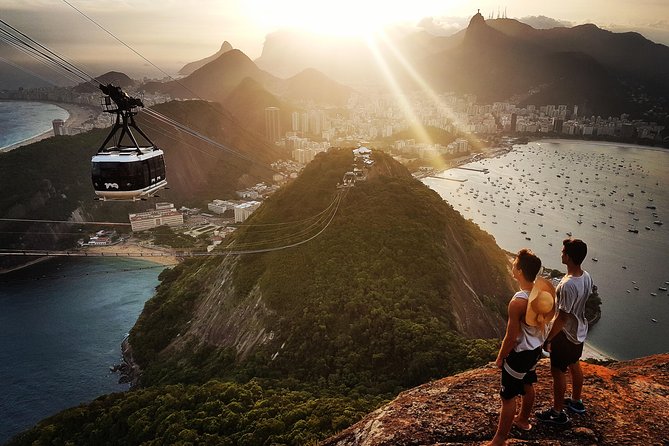
The cable car gives you the famous Rio view with very little effort. That is useful if you have limited time or do not enjoy steep trails. This experience is for a different kind of satisfaction: you reach the summit under your own power, with a few hands-on climbing moves along the way.
I like that the route adds texture to an icon most people see from a platform. You begin at the foot of Sugarloaf, then swing around the mountain’s backside before the real ascent begins. As you gain height, the views open in stages rather than arriving all at once.
The route also gives you a small taste of rock climbing without asking you to master a full climbing system. The technical section is short, about 15 meters, and is described as not difficult. Still, you will use a rope and harness, so it feels like a genuine achievement rather than a staged photo opportunity.
The price is $98.10 per person. That is far more than a standard cable-car ticket, but the comparison is not quite fair. You are paying for a guide, safety equipment, route support, and a small group rather than simply transport to a viewpoint. For a first climbing experience in one of Rio’s best-known settings, I consider the cost reasonable if the physical challenge is part of the appeal.
More Redeemer and Sugarloaf tickets:
- Christ the Redeemer Entry Ticket by Corcovado Train
★ 4.4 · 4,476 reviews - Rio’s City Tour – Tickets for Christ, Sugar Loaf & Lunch included
★ 5.0 · 4,389 reviews - Full Day: Christ Redeemer, Sugarloaf, City Tour & Barbecue Lunch
★ 4.5 · 3,142 reviews
The 2 p.m. start at the foot of Sugarloaf
The meeting point is at Av. Pasteur, 520, in Urca. The activity begins at 2 p.m. and finishes back at the same meeting point. The location is near public transportation, and you will need to arrange your own way there and back because transport is not included.
Starting in the afternoon can work well for the light. The climb takes about three hours, and the route description includes several viewpoints along the way. Depending on the season and the day’s conditions, you may catch late-day light from the summit, but you should not book this solely on the promise of a sunset. Weather and climbing pace can change the timing.
Before setting off, your guide should explain the route and help with the included safety equipment. This is where the small group becomes important. With no more than six people, you are not lost in a crowd waiting for one guide to finish with someone else.
Wear clothes that let you move freely. One climber specifically recommends pants, a breathable shirt, and hiking shoes with excellent traction rather than running shoes. That advice makes sense because the route combines steep trail, rock, scrambling, and a roped climbing pitch.
The backside trail and the first steep scramble
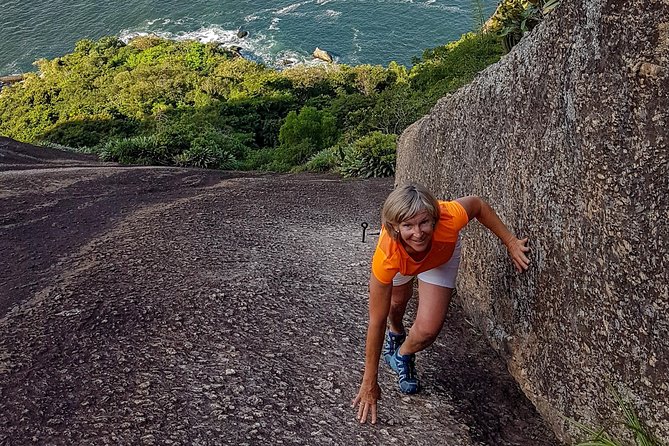
The first section follows a well-used trail around the backside of the mountain. It is steep but technically simple, at least compared with the roped pitch later on. You will still need to place your feet carefully and use your hands in places.
The most important detail is that some of this early scrambling is unroped. It is considered safe, but the sensation of exposure can be strong. If heights make you freeze, this may be more stressful than fun. Your guide can talk you through the moves, but no guide can remove the feeling of looking down from a steep rock face.
This is also where fitness begins to matter. The route reaches 396 meters, or 1,299 feet, and the climb is uphill for much of the way. One climber reached the top in a little over two hours but described arriving exhausted and soaked with sweat. That is a useful warning: the three-hour estimate is not a promise that the climb will feel easy.
Your guide should set a manageable rhythm. Andrew is praised for knowing when to encourage and when to stop for a break, while Mingo is praised for making a first-time climber feel calm and secure. Those qualities matter more here than a guide who simply moves quickly.
The 15-meter roped climb
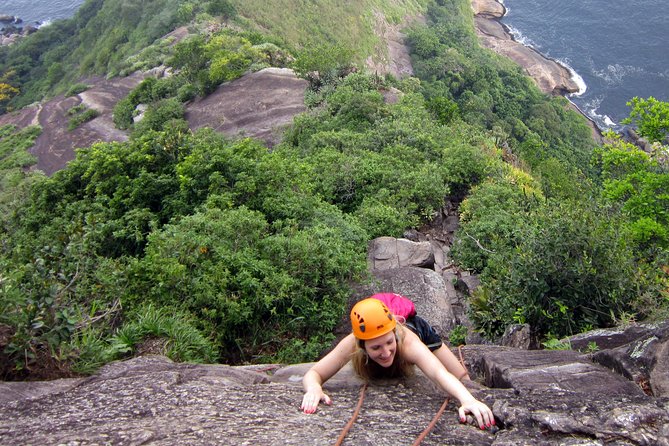
About halfway up, you reach the most technical part of the route: a 15-meter pitch using a rope and safety harness. The climb is not rated as difficult, but it does require attention and a willingness to follow instructions.
For someone curious about climbing, this is the heart of the experience. You can learn how it feels to move upward with a rope system, without committing to a long course or a demanding multi-pitch climb. The guide handles the safety side while you concentrate on foot placement, handholds, and staying composed.
That does not make the section effortless. You still need enough strength and balance to climb, and you should not arrive expecting the harness to do all the work. It is best understood as an introduction to climbing, not a passive ride up the rock.
The supplied equipment includes all required safety gear. You should still listen closely to every instruction and tell your guide if you feel tired, nervous, or unsure. Andrew and Mingo are both praised for clear guidance, including by people with little or no prior climbing experience.
More things to do in Rio de Janeiro:
- Rio de Janeiro: 6-Stop Highlights of Rio with Lunch
★ 4.4 · 5,157 reviews - Rio de Janeiro: Rocinha Favela Walking Tour with Local Guide
★ 4.8 · 3,052 reviews - Rio’s Full Day: Selarón Steps, Christ & Sugarloaf – Tickets & Lunch Included
★ 5.0 · 2,724 reviews - Rio: Christ the Redeemer, Sugarloaf, Selaron & BBQ Lunch
★ 4.5 · 2,428 reviews
Philosopher’s Stone and the views only climbers see
After the roped section, the group packs up the equipment and continues toward the summit. The route includes viewpoints that are not available from the cable-car stations. Philosopher’s Stone is one named stop, and it gives the climb a sense of discovery beyond simply reaching the top.
These pauses are not just for photographs. They break up the physical effort and let you look back at the route you have already covered. If you stop calmly, you might also notice wildlife. One account describes marmosets coming quite close and vultures sitting nearby during a rest break.
You should bring water and snacks because neither is included. A small snack can help during the final push, especially if you have not eaten recently. Summit food and drinks are available for purchase, but those costs are separate from the tour price.
Mosquito repellent is also a smart item to pack. It is not listed as included, and one climber specifically recommends bringing it. Keep your load light, though. You want enough water and food for the effort without carrying a bulky bag over steep ground.
Reaching the 396-meter summit
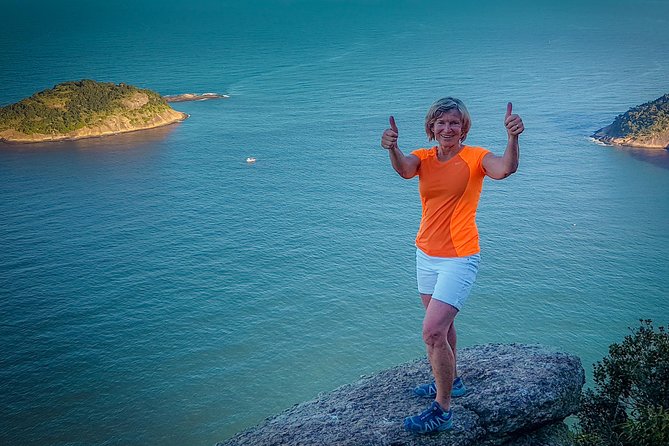
The summit is the payoff, but it is not the only reason to book. You get the broad Rio views associated with Sugarloaf, plus the satisfaction of having climbed there rather than simply arriving by cable car.
The summit also offers food and drinks, which is useful after a demanding ascent. You will pay for anything you buy there, so carry a card or cash suitable for your needs. The exact food options and prices are not specified, so do not build your budget around a particular meal.
The group may arrive at different energy levels. A fit hiker might want to keep moving, while another person may need frequent pauses. The strongest praise for the guides centers on their flexibility. Andrew is described as adjusting the pace and allowing breaks, and Mingo is praised for patient encouragement. That makes this a better choice for a fit beginner than for a seasoned climber seeking speed.
A 15-year-old completed the climb with a parent and found it enjoyable, though the key requirement remains physical fitness rather than age alone. Families should judge each person’s comfort with heights, steep rock, and sustained exertion.
The cable-car descent to Morro da Urca
The way down is kinder to tired legs. Your cable-car descent from the summit to Morro da Urca is included, so you do not need to reverse the climb on foot.
This is a practical part of the design. After three hours of uphill work, descending steep rock can be harder on knees and concentration than people expect. The cable car lets you enjoy the view without spending another hour negotiating the same terrain.
From Morro da Urca, you walk a 15-minute trail back to the original meeting point. The activity ends there, not at a separate location. You will still need to arrange your onward transportation from Urca.
What the guides add to the experience
The guide can make or break a climbing trip, and this is where Climb in Rio receives its strongest praise. Mingo, also referred to as Domingos, is described as patient, friendly, and reassuring, especially for a first climb. He also provides information about the area and its history while you move.
Andrew receives similar praise for clear English instructions, steady encouragement, and good judgment about breaks. One parent and teenager completed the climb with Andrew and Mingo despite having no real climbing background. That suggests the activity is built to welcome beginners who are comfortable with a physical challenge.
The small-group limit of six supports this personal approach. Your guide can give more direct help on the scrambling sections, check that you understand the rope instructions, and notice when you need to slow down.
Still, you should not treat a friendly guide as a substitute for preparation. Tell the guide about your fitness level and any fear of heights at the start. Good communication is part of staying safe.
Who should book this Sugarloaf climb
I would choose this experience if you:
- Enjoy strenuous hikes and want something more active than sightseeing.
- Have a strong fitness level and can manage steep uphill ground.
- Are curious about rock climbing but have little or no experience.
- Want viewpoints that the normal cable-car route does not provide.
- Prefer a small group and direct support from a guide.
- Like the idea of a rewarding physical challenge during a Rio visit.
I would hesitate if you have a serious fear of heights, dislike exposed scrambling, or are living a mostly sedentary lifestyle. The first few hundred meters can feel demanding even though the climbing is technically simple.
You also need to be comfortable with uncertainty from the weather. The experience requires good conditions. If poor weather cancels the climb, you are offered another date or a full refund.
Booking, cancellation, and practical value
The experience is often booked about 19 days ahead, so advance planning is sensible, especially if your Rio schedule is tight. Confirmation is normally issued at booking. If you book within two days of the date, confirmation may take up to 48 hours and depends on availability.
Cancellation is free up to 24 hours before the 2 p.m. start time for a full refund. Changes or cancellations inside that window are not accepted and are not refunded. Keep the local time in mind when calculating the deadline.
At $98.10, the tour is not the budget way to see Sugarloaf. But you receive a guide, all required safety equipment, a small group, a guided ascent, and the cable-car descent. If you only want a high viewpoint, take the cable car. If you want an active story to tell about how you reached the top, the price pays for a much fuller experience.
Should you book the Sugarloaf climb?
Book it if you want to work for your view. The route combines steep hiking, safe but exposed scrambling, a short roped climb, rare viewpoints, and a comfortable cable-car descent. Mingo and Andrew appear especially suited to beginners who need clear instructions and calm encouragement.
Skip it if you are looking for a relaxed afternoon or if heights and strenuous uphill effort are poor matches for you. Pack water, snacks, traction-focused hiking shoes, breathable clothes, and mosquito repellent. With the right preparation, this is one of the more rewarding ways to meet Sugarloaf Mountain.
FAQ
How long does the Sugarloaf Mountain climb take?
The experience lasts approximately three hours, including the climb, summit time, cable-car descent to Morro da Urca, and the 15-minute trail back to the meeting point.
Where does the climb begin?
The meeting point is Av. Pasteur, 520, in Urca, Rio de Janeiro. The activity begins at 2 p.m. and ends back at the meeting point.
Is climbing experience required?
No. The route is suitable for people who have little or no climbing experience, but you need a strong physical fitness level and must be comfortable with steep terrain and some exposure.
Is safety equipment included?
Yes. All required safety equipment is included, including the equipment used for the 15-meter roped climbing section.
Is the cable-car ride included?
Yes. The cable-car descent from the summit to Morro da Urca is included. The 15-minute trail from Morro da Urca returns you to the original meeting point.
What happens if bad weather cancels the activity?
If poor weather causes a cancellation, you will be offered a different date or a full refund. You can also cancel up to 24 hours before the start time for a full refund.
Just added in Rio de Janeiro
- Gastronomic Tour at the Municipal Market in Rio de Janeiro★ 5.0 · 4 reviews
- Full Day Tour in Rio de Janeiro★ 5.0 · 8 reviews
- Garganta do Ceu Cave Hiking Private Tour on Pedra da Gavea★ 4.5 · 3 reviews
- GIG Airport Transfer x Rio de Janeiro Hotels★ 4.5 · 11 reviews
- Rio de Janeiro private Full day Custom Tours★ 5.0 · 35 reviews
- Christ the Redeemer – Complete Morning Tour with Ticket and Transport at the Hotel★ 3.5 · 4 reviews
- AquaRio, Museum, Boulevard Olimpico, Ferris Wheel, Transport and Tourism Guide.★ 4.0 · 6 reviews
- Personalized and Private Full-Day Tour in Rio de Janeiro★ 5.0 · 6 reviews
Christ the Redeemer and Sugarloaf, compared.

Christ the Redeemer Entry Ticket by Corcovado Train
Read our review →
Rio’s City Tour – Tickets for Christ, Sugar Loaf & Lunch included
Read our review →
Full Day: Christ Redeemer, Sugarloaf, City Tour & Barbecue Lunch
Read our review →

Rio’s Full Day: Selarón Steps, Christ & Sugarloaf – Tickets & Lunch Included
Read our review →
Christ the Redeemer, Sugarloaf, Selaron & BBQ Lunch
Read our review →
The Best Half Day in Rio with Christ Redeemer and Sugar Loaf Hill
Read our review →
Rio’s Best_Corcovado, Sugar Loaf, Selaron, Cathedral and more
Read our review →Browse the lists this tour appears in