
Reviewed · RIO DE JANEIRO CITY TOURS
E-Bike Tour: Local Guide, Historic Center to Ipanema
Rio reveals itself in layers. This e-bike tour links Afro-Brazilian landmarks, grand civic buildings, famous beaches, and excellent viewpoints in three to four hours. I like its unusual route from Little Africa to Ipanema, and I like the small-group format, capped at four people.
The tour also gives you a lively guide-led introduction rather than a long museum visit. Bruno is praised for his friendly manner, patience, local tips, and flexible approach. The main drawback is that you cover a lot of ground quickly, and some riding takes place on streets or crowded cycle paths.
In This Review
- Six things to know before you book
- Starting in Little Africa: Pedra do Sal and Bafo da Prainha
- Port art and Praça Mauá in five-minute snapshots
- Praça XV and the political heart of downtown
- Cinelândia: Rio’s grand civic center
- Lapa’s arches and the tiled Selarón Steps
- Aterro do Flamengo and the Sugarloaf view
- Botafogo, Copacabana, and the long beach ride
- Finishing at Ipanema and Pedra do Arpoador
- What the $88.29 price really covers
- Who will enjoy this e-bike tour most
- Should you book it?
- FAQ
- How long does the e-bike tour last?
- What languages does the guide speak?
- How many people can join the tour?
- Does the tour include museum or building admission?
- What is included in the price?
- Can I cancel if the weather is poor?
Six things to know before you book
- You begin with Afro-Brazilian history: Pedra do Sal and Cais do Valongo give the tour serious historical weight before the beach scenery begins.
- The route covers a remarkable slice of Rio: You move from the port district through downtown, Lapa, Flamengo, Botafogo, Copacabana, and Ipanema.
- The group is very small: A maximum of four people makes it easier to ask questions, stop for photos, or adjust the route.
- The electric bike saves your legs: The ride is designed for sightseeing, not athletic effort, though you still need to manage streets and busy bike paths.
- You get two personal extras: The price includes one Polaroid photo and a personalized DiCria Rio Tours sticker.
- The best pause comes with a view: A coconut water stop looks toward Sugarloaf Mountain and adds a simple local touch.
Starting in Little Africa: Pedra do Sal and Bafo da Prainha
The tour opens in Rio’s port district, an important choice. Many quick city tours start with postcard views and leave the harder parts of Rio’s past for later, if they mention them at all. Here, the first stops focus on slavery, Afro-Brazilian culture, samba, and Carnival.
At Bafo da Prainha, the guide explains the history of slavery in Pedra do Sal and the rise of samba and Carnival. This is a short ten-minute stop, so expect a compact introduction rather than a long lecture. The value comes from having a local guide connect the street, the people, and the music.
Pedra do Sal is one of the tour’s most meaningful stops. It is known as the birthplace of samba and has deep ties to Rio’s African heritage. The stone itself is not a grand monument in the usual sense. Its importance comes from what happened around it: community life, music, religious traditions, and the formation of cultural practices that helped shape Rio.
I would pay close attention here and ask questions. The stop is brief, but it gives the rest of the ride more meaning. You are not simply moving from one photo point to another. You are starting with the people and traditions that helped create the city’s identity.
At Cais do Valongo, the guide explains the site’s connection to the Atlantic slave trade. It is described as the only physical trace of slavery in the Americas and is a UNESCO World Heritage Site. The planned stop is only five minutes, so this is another place where the guide’s explanation matters more than the time spent standing there.
These first stops can feel sobering. That is appropriate. Rio’s charm is not separate from its difficult past, and this opening gives you context before the tour shifts toward architecture and beaches.
More History Tours in Rio de Janeiro
- Rio de Janeiro Historical Center Walking Tour
★ 4.5 · 336 reviews - Private Walking and Cultural Tour Rocinha-Rio de Janeiro
★ 5.0 · 239 reviews - Discover Rio Little Africa: A Cultural and Historical Journey
★ 5.0 · 238 reviews
Port art and Praça Mauá in five-minute snapshots
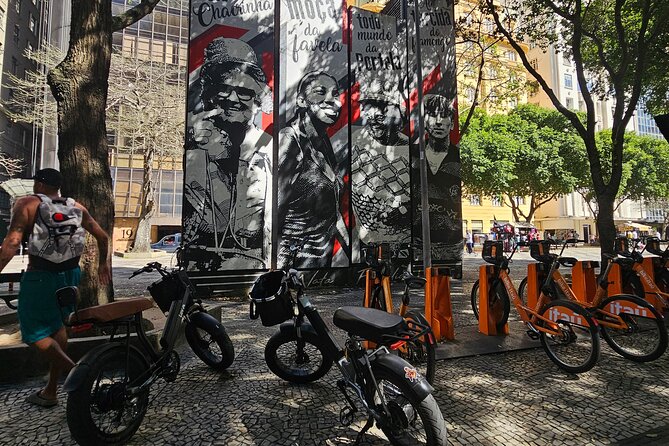
The route then reaches Painel Etnias, the enormous graffiti mural by artist Kobra. You stop for a photograph beside a work recognized as the world’s largest graffiti mural. Five minutes is enough for a quick picture and a brief explanation, but not for studying every detail.
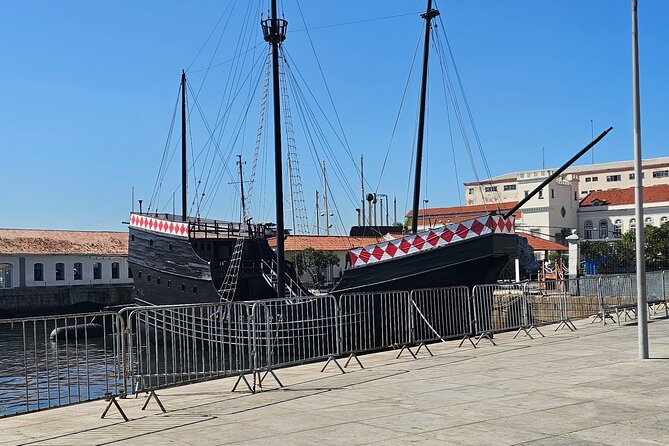
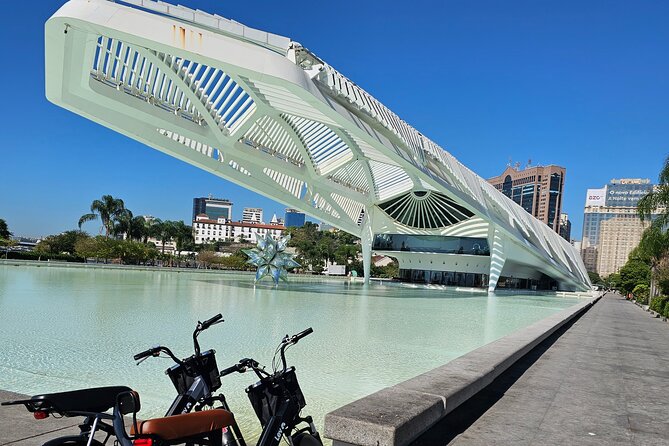
Next comes the Museum of Tomorrow and Praça Mauá. The tour goes around the outside of the museum rather than inside. That keeps the ride moving and lets you see the square, the waterfront setting, and the museum’s striking exterior without adding an admission visit.
This is a useful distinction when judging the price. The tour includes outside visits and explanations, not entry to paid attractions. If you want to see the Museum of Tomorrow’s exhibitions, you will need a separate visit.
The short stops create a fast rhythm. You get many landmarks, but you should not expect long quiet periods at each one. I think that trade-off works well for a first look at Rio, especially if you prefer seeing several districts in one outing.
Praça XV and the political heart of downtown
At Praça XV, the guide explains the Imperial era of Brazil and the buildings around the square. The Paço Imperial is the key stop, with about ten minutes for the history of the former imperial palace and its surroundings.
This section changes the mood again. The tour moves from Afro-Brazilian port history to the buildings linked with Brazil’s monarchy and political development. You get a sense of how Rio served as a center of power, not only a port and cultural capital.
The nearby Palácio Tiradentes adds another layer. It now houses the Legislative Assembly of Rio de Janeiro and once served as the seat of Brazil’s National Congress. The guide covers its role in the country’s political evolution and points out its art deco design.
The scheduled time is also ten minutes. You will hear the story and see the exterior, but this is not an interior architectural tour. Still, the stop is worthwhile because the building helps explain Brazil’s changing political life.
Cinelândia: Rio’s grand civic center

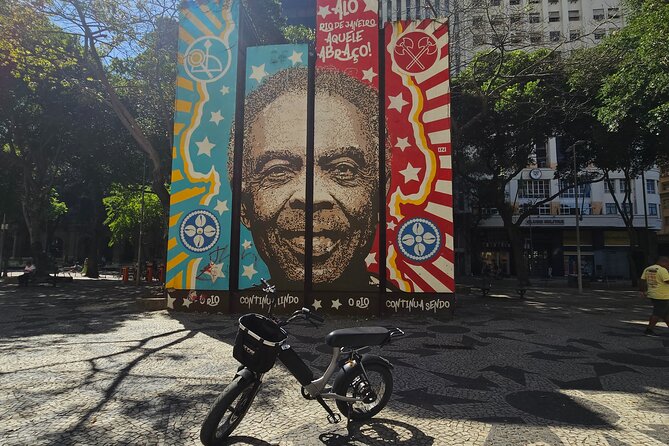
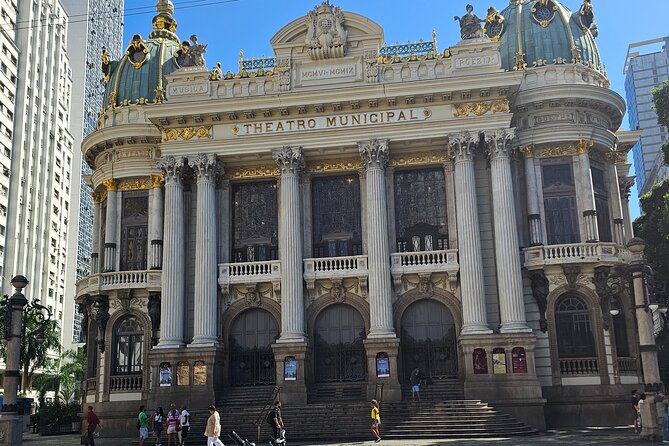
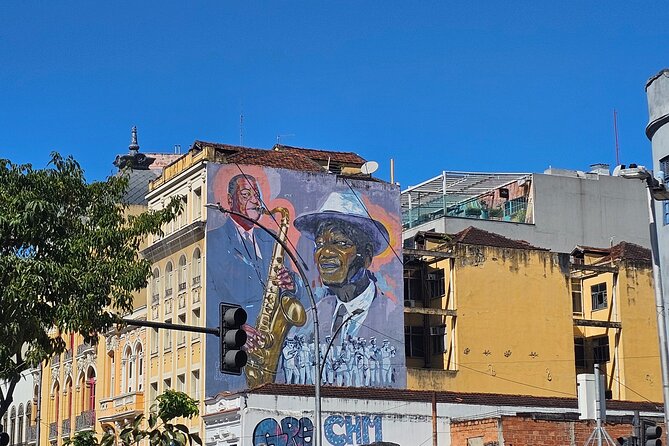
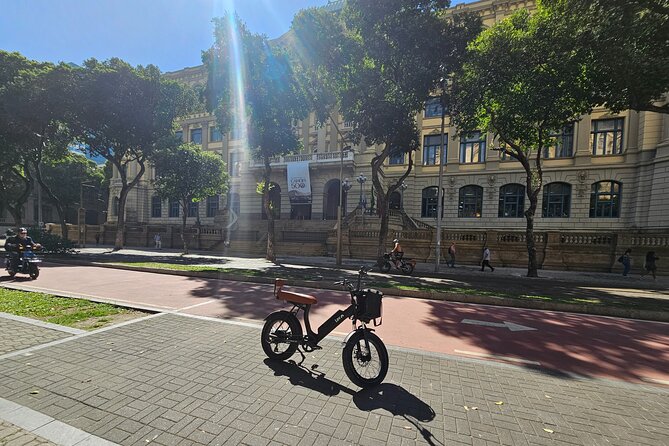
Cinelândia gives you a concentrated look at the city’s cultural and civic architecture. The route passes the Odeon Theater, Municipal Theater, National Library, and Pedro Ernesto Palace, along with street art.
The area rewards a slow eye, even during a short stop. The buildings represent different parts of Rio’s public life: performance, books, government, and urban culture. The planned visit lasts about five minutes, so use it as an orientation stop and note anything you want to revisit later.
The Biblioteca Nacional receives a separate ten-minute explanation. It is one of Latin America’s largest and most important libraries, housed in a neoclassical building. Its collection began with the Portuguese Royal Library and grew into a major Brazilian cultural institution.
Theatro Municipal gets another ten-minute visit. Inspired by the Paris Opera, it opened in 1909 and has hosted opera, ballet, and classical music. Its exterior is one of the most elegant sights in central Rio, and the guide explains why the building matters beyond its appearance.
I like this part of the route because it gives you more than beach scenery. If you arrive in Rio expecting only sand, palms, and mountain views, the downtown buildings show you a more formal and historic side of the city.
More Rio city tours:
- Rio’s City Tour – Tickets for Christ, Sugar Loaf & Lunch included
★ 5.0 · 4,389 reviews - Full Day: Christ Redeemer, Sugarloaf, City Tour & Barbecue Lunch
★ 4.5 · 3,142 reviews - Rio: Christ the Redeemer, Sugarloaf, Selaron & BBQ Lunch
★ 4.5 · 2,428 reviews - A Day in Rio – City Tour
★ 4.5 · 1,128 reviews
Lapa’s arches and the tiled Selarón Steps
The tour continues to the Arcos da Lapa, the famous white arches that cross the Lapa neighborhood. The guide gives a brief history, with about ten minutes at the stop.
Lapa is one of Rio’s most recognizable districts, and the arches make an easy landmark for photos. You will not spend a full evening here, but the stop gives you a useful daytime look at the area.
Then comes the Escadaria Selarón, the colorful staircase covered in tiles from Brazil and around the world. The guide provides a short history and time for photographs. Ten minutes is enough for the main view, though you may wish you had longer if you enjoy examining the individual tiles.
Because the ride has already included several downtown stops, the Lapa section feels like a visual change. It is colorful, informal, and highly photogenic. Keep your expectations realistic: this is a photo and explanation stop, not a long neighborhood walk.
Aterro do Flamengo and the Sugarloaf view
Aterro do Flamengo is where the tour opens up. You spend about thirty minutes moving along the park and Flamengo Beach, with views toward Christ the Redeemer and Sugarloaf Mountain.
This is one of the strongest parts of the route. The broad park gives you room to appreciate Rio’s setting, with water, mountains, and city space appearing together. After the tighter streets of downtown and Lapa, the change feels welcome.
The included coconut water stop adds a pleasant local break. It comes with a view of Sugarloaf Mountain, so this is more than a quick drink. You get a chance to pause, cool down, and take in the scenery.
Snacks are not included, so plan accordingly. The coconut water is included, but it should not be treated as a full refreshment stop. The tour lasts three to four hours, and the schedule stays active.
Botafogo, Copacabana, and the long beach ride
At Botafogo Beach, the tour includes about twenty minutes walking along the shore. The view is one of Rio’s classic urban scenes, with the bay framed by mountains and dense city neighborhoods.
The route then reaches Copacabana Beach, where you ride the entire bike path. Another twenty minutes gives you time to experience the famous curve of the beach rather than merely stopping for a distant photograph.
This is where the e-bike format makes practical sense. You cover a long stretch without turning the outing into a workout. One person described the electric bikes as making the ride easy, and another noted that the route covered central Rio through Copacabana in about three hours.
Still, easy does not mean effortless. Parts of the route require riding on streets, and the bike paths can involve people moving unpredictably. You may need to pay attention, slow down, and follow the guide closely. If you are new to city cycling, tell Bruno at the start. His patience is one of the tour’s strongest points.
The small group helps here. With no more than four people, the guide can keep the pace manageable and make photo stops without organizing a large group.
Finishing at Ipanema and Pedra do Arpoador
The final section reaches Ipanema Beach and ends at Pedra do Arpoador. The bike is stored at Rua Sá Ferreira after the Ipanema stop, and the final viewpoint comes with about five minutes for photos.
Arpoador is a fitting finish. It brings the tour back to Rio’s great natural setting, with the beach and ocean replacing the port streets and civic buildings from the morning. You finish in one of the city’s best-known beach areas rather than returning to the starting point.
The different start and end points are useful if you plan to continue exploring Ipanema. They are less convenient if you need to retrieve a vehicle or return to your original meeting area, so check the exact start and finish details before booking.
The route’s final section also explains the tour’s appeal. In a single outing, you see the roots of samba, the marks of slavery, imperial and republican buildings, modern public art, famous theaters, Lapa, and three major beach areas.
What the $88.29 price really covers
At $88.29 per person, this is not the cheapest way to see Rio. But the price needs to be judged against the route and the small group. You are paying for a private transportation format, an in-person guide in English, Spanish, or Portuguese, electric-bike assistance, and a route that links districts too far apart for a comfortable walking tour.
The tour also includes one Polaroid photograph, a personalized holographic DiCria Rio Tours sticker, and coconut water with a Sugarloaf view. These are small extras, but they make the experience feel personal rather than purely commercial.
You are not paying for museum admission or snacks. That matters if you hoped to enter the Museum of Tomorrow, National Library, or Municipal Theater. The tour works best as a broad orientation ride, followed by separate indoor visits to the places that catch your interest.
A 5.0 rating from 76 published ratings, with 100 percent recommending the experience, supports the strongest parts of the offer: the guide’s warmth, the number of places covered, and the ease of the electric bikes. The praise is especially strong for Bruno. He is described as friendly, flexible, entertaining, patient, and generous with advice about what to do during the rest of your Rio stay.
Who will enjoy this e-bike tour most
I would choose this tour if you have limited time and want to see Rio’s historic center and beach districts in one morning or afternoon. It is also a good fit if you want local explanation rather than simply renting a bicycle and following a map.
The ride suits people who are comfortable with some street cycling and busy paths. Most people can participate, but you should be honest about your comfort on a bike. One published account describes a person riding for the first time in 30 years and having a great time, which suggests the guide can help nervous riders. Even so, road awareness remains important.
This is also a strong choice for solo visitors or couples who value conversation. A maximum of four people leaves room for questions and route adjustments. On quieter days, you might have the guide almost to yourself.
The tour may not suit you if you want long museum visits, a slow architectural study, or a relaxed beach afternoon. Seventeen stops in three to four hours means quick explanations and frequent movement. Think of it as a well-paced city introduction, not a series of complete guided visits.
Book only with a decent weather forecast. The experience requires good weather, and a cancellation for poor conditions results in a different date or a full refund. You can cancel for a full refund up to 24 hours before the start time, but late cancellations and late changes are not accepted.
Should you book it?
Book this e-bike tour if you want range, local stories, and a personal guide in one compact outing. The best reason to choose it is the combination of places: you begin with Afro-Brazilian history, cross Rio’s political and cultural center, pass through Lapa, and finish beside the beaches of Ipanema.
The main decision is your cycling comfort. If busy bike paths and some street riding sound manageable, the electric assistance and small group make this an efficient way to see a great deal. If you prefer to stop indoors at every major building, choose separate walking tours and museum visits instead.
For a first day in Rio, I find the route particularly useful. It gives you a working map of the city, points out places worth returning to, and adds the human touch of Bruno’s stories and practical suggestions.
FAQ
How long does the e-bike tour last?
The tour lasts approximately three to four hours.
What languages does the guide speak?
The guide provides in-person service in English, Spanish, and Portuguese.
How many people can join the tour?
The maximum group size is four people.
Does the tour include museum or building admission?
No. The listed stops are outside visits, explanations, walking sections, or photo stops. Admission tickets are not included.
What is included in the price?
The experience includes private transportation, an in-person guide, one Polaroid photo, a personalized holographic DiCria Rio Tours sticker, and a coconut water stop with a view of Sugarloaf Mountain.
Can I cancel if the weather is poor?
Yes. The experience requires good weather. If the operator cancels because of poor weather, you can choose another date or receive a full refund. For a full refund after booking, you must cancel at least 24 hours before the start time.
More Bike Tours in Rio de Janeiro
- Small-Group Panoramic Bike Tour in Rio de Janeiro
★ 5.0 · 153 reviews - Rio de Janeiro: Guided Bike Tours in Small Groups
★ 4.5 · 133 reviews - Bike Tour Of Rio – Beaches and Lagoon
★ 5.0 · 20 reviews - Rio Bike Tour – Discover the Beaches and Lagoon
★ 4.1 · 10 reviews
Just added in Rio de Janeiro
- Gastronomic Tour at the Municipal Market in Rio de Janeiro★ 5.0 · 4 reviews
- Full Day Tour in Rio de Janeiro★ 5.0 · 8 reviews
- Garganta do Ceu Cave Hiking Private Tour on Pedra da Gavea★ 4.5 · 3 reviews
- GIG Airport Transfer x Rio de Janeiro Hotels★ 4.5 · 11 reviews
- Rio de Janeiro private Full day Custom Tours★ 5.0 · 35 reviews
- Christ the Redeemer – Complete Morning Tour with Ticket and Transport at the Hotel★ 3.5 · 4 reviews
- AquaRio, Museum, Boulevard Olimpico, Ferris Wheel, Transport and Tourism Guide.★ 4.0 · 6 reviews
- Personalized and Private Full-Day Tour in Rio de Janeiro★ 5.0 · 6 reviews
Rio de Janeiro City Tours, compared.

Rio’s City Tour – Tickets for Christ, Sugar Loaf & Lunch included
Read our review →
Full Day: Christ Redeemer, Sugarloaf, City Tour & Barbecue Lunch
Read our review →
Christ the Redeemer, Sugarloaf, Selaron & BBQ Lunch
Read our review →
São Paulo’s Full Day City Tour: Main City Sights in 7 Hours – (Shared Group)
Read our review →


Pub Crawl in Lapa with Cachaça Tasting and Live Samba
Read our review →
Rio’s Best_Corcovado, Sugar Loaf, Selaron, Cathedral and more
Read our review →Browse the lists this tour appears in