
Reviewed · HISTORICAL TOURS
Explore Little Africa : Unveiling Afro Heritage in Rio de Janeiro
History changes the way you see Rio. This half-day walk connects Afro-Brazilian memory to real streets, archaeological remains, museums, churches, and gathering places in the port district. I like the tour’s decolonial approach, which gives Black voices and experiences their proper place in Rio’s story. I also like how guides such as Carolina, Rafael, Malu, and Val bring warmth and clear explanation to difficult subjects.
The main caution is the amount of walking. The tour lasts about three and a half hours, includes a short VLT ride, and ends outdoors at Largo da Prainha. Afternoon timing can mean softer light for photographs, and the tour is not recommended for people with disabilities, so check the physical demands before booking.
In This Review
- Key points to know before you book
- Why Little Africa belongs on your Rio schedule
- Starting at Santa Rita Church in Centro
- The Pretos Novos Institute and the evidence beneath the city
- MUHCAB: Afro-Brazilian culture in a territory museum
- Valongo Wharf and the hard facts of forced migration
- Pedra do Sal and the survival of community
- Largo São Francisco da Prainha finishes the story outdoors
- The VLT ride adds local texture
- Guides make or break this experience
- Is $82.53 a fair price?
- Who should book this tour?
- Timing, weather, and practical preparation
- Should you book Little Africa in Rio?
- FAQ
- Where does the Little Africa tour begin?
- Where does the tour end?
- How long does the experience last?
- Is transportation included?
- Is the Pretos Novos Institute open on Sundays?
- Can I cancel for a full refund?
Key points to know before you book
- Six meaningful stops in Rio’s port district: You visit Santa Rita Church, the Pretos Novos Institute, MUHCAB, Valongo Wharf, Pedra do Sal, and Largo São Francisco da Prainha.
- Afro-Brazilian history takes center stage: The tour deals directly with slavery, Black resistance, religion, culture, migration, and the African Diaspora.
- A short VLT ride is included: The tram connects part of the route and is already covered in the tour price.
- Excellent guide quality: Carolina, Rafael, Malu, Val, and other guides have been praised for warmth, passion, clear English, and thoughtful pacing.
- Plan around closures: The New Black Institute is closed on Sundays, and all museums close from December 16 to January 5 and during Carnival season.
- Bring comfortable shoes: The route covers several historic sites on foot, with limited seating and some uneven city surfaces possible.
Why Little Africa belongs on your Rio schedule
Most first-time visits to Rio focus on Christ the Redeemer, Sugarloaf Mountain, beaches, and viewpoints. Those places are worth seeing, but they do not explain the full city. The port district offers another key to Rio, one tied to African peoples, forced migration, religion, music, memory, and Black life in Brazil.
This experience introduces you to the area often called Little Africa. That name is not simply a catchy label for an old neighborhood. It points to a concentration of places shaped by African and Afro-Brazilian communities, including sites connected to enslavement and the survival of culture under brutal conditions.
I appreciate that the tour does not treat the past as a tidy museum display. You move through working city streets and hear how different locations fit together. A church, a former wharf, an archaeological site, a museum, and a public square each reveal a different part of the story.
The subject can be painful. The experience deals with the inhumanity of slavery and the continuing effects of institutional inequality. At the same time, it also gives space to faith, music, community, creativity, and resistance. That balance makes the tour more useful than a simple list of dates and monuments.
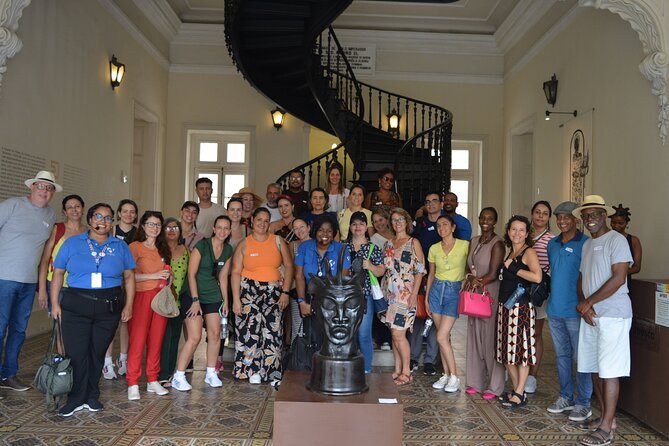
The group can include up to 20 people. That is small enough for a guide to manage, though not necessarily intimate. If you want the closest interaction, ask about a private option when booking.
More History Tours in Rio de Janeiro
- Rio de Janeiro Historical Center Walking Tour
★ 4.5 · 336 reviews - Private Walking and Cultural Tour Rocinha-Rio de Janeiro
★ 5.0 · 239 reviews - Discover Rio Little Africa: A Cultural and Historical Journey
★ 5.0 · 238 reviews
Starting at Santa Rita Church in Centro
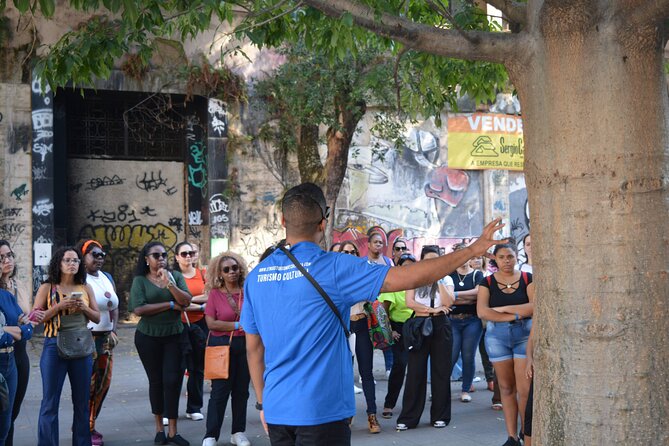
The meeting point is Santuário de Santa Rita, at Largo de Santa Rita in central Rio. You begin with an external visit to Matriz da Paróquia de Santa Rita, where the guide sets up the historical and cultural framework for the route.
The church is important here not only as a religious building but also as a doorway into a wider discussion of Black presence and colonial power. The guide uses a decolonial perspective, which means you are encouraged to question whose version of Rio’s story has traditionally been given the most attention.
Plan to arrive ready to listen. This is not a quick photo stop followed by a long bus ride. The opening section lasts about 20 minutes, and it helps you understand why the port area matters before you reach the more demanding sites.
The church itself is visited from the outside, so do not expect a long interior tour. That is a small limitation, but the location works well as a starting point because it places you in the historic center before the route moves toward Saúde and Gamboa.
The Pretos Novos Institute and the evidence beneath the city
The Instituto de Pesquisa e Memória Pretos Novos, usually called IPN, is one of the most important stops. The institution is dedicated to research and memory connected to the Pretos Novos, and the visit includes admission.
This part of the experience gives physical weight to the history you are hearing. Instead of treating slavery as something distant and abstract, the institute connects the past to archaeological evidence and to the people whose lives and deaths shaped Rio.
You have around 40 minutes here. That is enough time for a meaningful introduction, but it is not a full museum day. Your guide’s explanation matters greatly, especially because the material can raise difficult questions about memory, burial, historical neglect, and the way cities decide what deserves to be preserved.
The institute is closed on Sundays. It also closes, along with the other museums on the route, from December 16 through January 5 and during Carnival season. Confirm the operating schedule before you pay, since a closure changes the balance of the experience.
MUHCAB: Afro-Brazilian culture in a territory museum
Next comes MUHCAB, the Museum of Afro-Brazilian History and Culture. The museum focuses on the Gamboa region and is described as a territory museum, meaning the surrounding area is part of the story rather than a mere backdrop.
I like this idea because it helps connect objects, memories, streets, and communities. You are not being asked to look at Afro-Brazilian culture as something separate from Rio. You are seeing it in the place where many of these stories developed.
The visit lasts about 40 minutes, with admission included at no extra charge. The museum section gives the tour a useful change of pace after walking outdoors. It also allows the guide to explain culture alongside oppression, so the experience does not reduce Black history to slavery alone.
Past descriptions of the guiding have been especially strong here. Carolina has been praised for careful explanations and positive energy, while other guides have been recognized for making complex material approachable. English ability can vary by guide, but the experience is offered with English interpretation, and one guide was specifically praised for delivering the material clearly even though English was her second language.
A completely different kind of day:
- Rio de Janeiro: 6-Stop Highlights of Rio with Lunch
★ 4.4 · 5,157 reviews - Christ the Redeemer Entry Ticket by Corcovado Train
★ 4.4 · 4,476 reviews - Rio’s City Tour – Tickets for Christ, Sugar Loaf & Lunch included
★ 5.0 · 4,389 reviews - Full Day: Christ Redeemer, Sugarloaf, City Tour & Barbecue Lunch
★ 4.5 · 3,142 reviews
Valongo Wharf and the hard facts of forced migration
Cais do Valongo is the emotional center of the route. The former wharf sits in Rio’s port district between present-day Coelho e Castro and Sacadura Cabral streets. It is recognized as a place tied to the arrival of enslaved Africans in Brazil.
The stop lasts about 30 minutes and is outdoors. There is no entrance fee, but the site does not need elaborate architecture to make an impact. The ground itself carries the meaning. Your guide helps connect this place to the larger African Diaspora and to the millions of people forced across the Atlantic.
This is where the tour’s direct style matters. You will hear about the cruelty of the slave trade, but also about the lives, beliefs, skills, and cultural practices carried by Africans and their descendants. The history is not softened, yet it is not presented only as tragedy.
Give yourself time to absorb the place. You may want photographs, but this is not a stop to rush through while posing. The guide’s explanation is the reason to be here, and the site becomes much more significant when you understand what happened on this stretch of the port.
Pedra do Sal and the survival of community
Pedra do Sal, in the Saúde neighborhood near Largo da Prainha, is visited from the outside. The stop takes about 25 minutes and adds a religious and cultural layer to the route.
The landmark is associated with Black community life and with the cultural traditions that developed around the port. It helps show how Afro-Brazilian identity continued to grow in public spaces, not only inside museums or formal institutions.
This is also a good place to notice the tour’s broader point: history is not locked in the past. Pedra do Sal remains connected to present-day Rio, and the guide can help you understand the relationship between old community traditions and the city you see today.
The outdoor setting means weather matters. Rio can be extremely hot, and the route offers less comfort than an indoor museum. Wear light clothing, carry water, and use sun protection. These are basic suggestions, but they can decide whether you enjoy the final hour.
Largo São Francisco da Prainha finishes the story outdoors
The route ends at Largo São Francisco da Prainha, at number 7 on Rua São Francisco da Prainha. This square was once a symbolic part of Little Africa, marked by Black presence and the zungus, community spaces connected to Afro-Brazilian life.
Today, the square is also known as one of Rio’s cooler places to spend time. That modern reputation adds an interesting final note. You finish not at an isolated monument but in a living part of the city, where historic memory and present-day social life share the same streets.
The tour ends here rather than returning to the starting point. That is useful if you plan to continue exploring the port area, eat nearby, or make your own way onward. It also means you should not assume that your transport back to your hotel is included.
The final outdoor stop lasts about 20 minutes. Depending on the season and start time, daylight may be fading by then. One practical tip is to take your best photographs earlier in the tour and listen closely at the final stop instead of trying to force every picture into low light.
The VLT ride adds local texture
A short ride on Rio’s VLT public transport is part of the route, and the fare is included in the price. It is a small detail, but it breaks up the walking and gives you a quick look at how the port district functions today.
Do not expect the VLT to be a sightseeing ride in itself. Its value is practical. It helps connect the stops and gives your feet a brief rest. It also places the historic sites within the modern city rather than presenting Little Africa as a sealed-off historic zone.
The start and finish are in different places, so plan your day around a one-way route. If you are staying outside central Rio, allow extra time to reach Santa Rita Church.
Guides make or break this experience
The most praised part of the tour is the guiding. Carolina has been described as warm, thorough, articulate, and especially considerate with older family members. Rafael has been praised for making the material both enjoyable and clear. Malu has been described as pleasant and well informed, while Val has been appreciated for his English and for adding extra context to the route.
That matters because the sites are not all self-explanatory. At Valongo Wharf, for example, the meaning comes from the story connected to the ground. At Pedra do Sal and Largo da Prainha, a guide helps you understand why ordinary public spaces matter.
The tour also seems to work well for different ages and levels of prior knowledge. You can ask basic questions without feeling foolish, and the subject is presented in a way that invites comparison with the history of Black communities in the United States and across the African Diaspora.
One past scheduling problem involved a guide falling ill and an English interpreter needing to be arranged. The company rescheduled the experience, and another booking was adjusted after a delayed flight. These examples suggest some flexibility, though you should not rely on last-minute changes being possible.
Is $82.53 a fair price?
At $82.53 per person, the experience is not the cheapest walking tour in Rio. The price includes all fees and taxes, admission to the Pretos Novos Institute, museum access where applicable, and the VLT ride.
The value comes from the combination. You are paying for a focused route, specialist interpretation, museum access, and a coherent story that would be hard to assemble on your own in three and a half hours. The tour also brings you to places that many general Rio guidebooks barely explain.
Lunch and tips are not included. The route ends near Largo da Prainha, where you can continue your day, but you should budget separately for food and your return transport.
For someone mainly interested in beaches and scenery, the price may feel high. For someone who wants to understand Rio beyond its famous viewpoints, it is a reasonable half-day investment. I would place it early in your Rio stay if possible, since the historical context can shape how you see the rest of the city.
Who should book this tour?
I would recommend it to you if you care about:
- Afro-Brazilian history and culture
- The African Diaspora
- Religious and community traditions
- Archaeology and public memory
- Social history beyond the standard Rio attractions
- Guided walks with serious subject matter
Families can enjoy it, and the guides have shown care with older relatives. Still, the walking should not be underestimated. The experience is not recommended for people with disabilities, and the available information does not promise wheelchair access or an adapted route.
You should also be comfortable discussing slavery and inequality. The tour handles the topic professionally, but it does not turn painful history into a light sightseeing story.
Timing, weather, and practical preparation
The experience lasts approximately three hours and 30 minutes. A start around 2 p.m. may mean less intense heat than midday, which is one reason the afternoon schedule is used. The tradeoff is reduced daylight near the end, especially for photographs.
I would bring:
- Comfortable walking shoes
- Water
- Sun protection
- A small snack if you need one
- A way to reach the end point after the tour
The tour requires good weather. If poor weather causes cancellation, you are offered another date or a full refund. You can cancel for a full refund up to 24 hours before the start time, but changes or cancellations within 24 hours are not accepted.
Service animals are allowed, and the meeting point is near public transportation. Most people can participate, but the walking and outdoor stops make sensible planning important.
Should you book Little Africa in Rio?
Book it if you want the Rio that exists beyond Christ the Redeemer and Sugarloaf. This experience gives you a grounded, serious look at Afro-Brazilian life through six connected places, and the guide can make the difference between simply seeing a street and understanding what happened there.
I would not choose it as a casual filler activity if you want only bright views and easy entertainment. But if you want honest history, strong cultural context, and a better sense of how Black communities shaped Rio, the $82.53 price is justified. Schedule it when the museums are open, wear good shoes, and leave room afterward to think about what you have seen.
FAQ
Where does the Little Africa tour begin?
The tour begins at Santuário de Santa Rita, at Largo de Santa Rita in Centro, Rio de Janeiro.
Where does the tour end?
The experience ends at Largo São Francisco da Prainha, at Rua São Francisco da Prainha, 7, in the Saúde neighborhood.
How long does the experience last?
The tour lasts approximately three hours and 30 minutes.
Is transportation included?
A short ride on Rio’s VLT public transport is included in the final price.
Is the Pretos Novos Institute open on Sundays?
No. The New Black Institute is closed on Sundays.
Can I cancel for a full refund?
Yes. You must cancel at least 24 hours before the local start time for a full refund. Cancellations or changes made less than 24 hours before the experience are not accepted.
Just added in Rio de Janeiro
- Full Day Tour in Rio de Janeiro★ 5.0 · 8 reviews
- Garganta do Ceu Cave Hiking Private Tour on Pedra da Gavea★ 4.5 · 3 reviews
- Gastronomic Tour at the Municipal Market in Rio de Janeiro★ 5.0 · 4 reviews
- GIG Airport Transfer x Rio de Janeiro Hotels★ 4.5 · 11 reviews
- Rio de Janeiro private Full day Custom Tours★ 5.0 · 35 reviews
- Christ the Redeemer – Complete Morning Tour with Ticket and Transport at the Hotel★ 3.5 · 4 reviews
- AquaRio, Museum, Boulevard Olimpico, Ferris Wheel, Transport and Tourism Guide.★ 4.0 · 6 reviews
- Personalized and Private Full-Day Tour in Rio de Janeiro★ 5.0 · 6 reviews
Historical Tours, compared.


Private Walking and Cultural Tour Rocinha-Rio de Janeiro
Read our review →
Discover Rio Little Africa: A Cultural and Historical Journey
Read our review →


Scenic Train ride to historical cities of Morretes and Antonina
Read our review →
Browse the lists this tour appears in