
Reviewed · FAVELA TOURS
Favela Santa Marta: Walking Tour with local guide
See Rio from street level. This 150-minute Santa Marta tour takes you beyond postcard views and into a living neighborhood of colorful homes, local projects, murals, and steep lanes. I like the chance to visit places such as the Dona Marta arts center and the Residents’ Association, and I like that the guide is a local resident rather than an outside narrator. The main consideration is that the experience depends heavily on your assigned guide, especially if you book a specific language.
I also like the ride to the upper part of the favela when the Santa Marta cable car is operating. It saves your legs and gives the walking route a clear starting point. But the tour is not ideal for anyone with mobility limits, and one French-speaking booking had a late start and a guide who spoke only a few words of French. Confirming your language at booking is wise.
In This Review
- Key points at a glance
- Starting high above Santa Marta
- Walking through a real residential community
- Arts, sports, and community projects
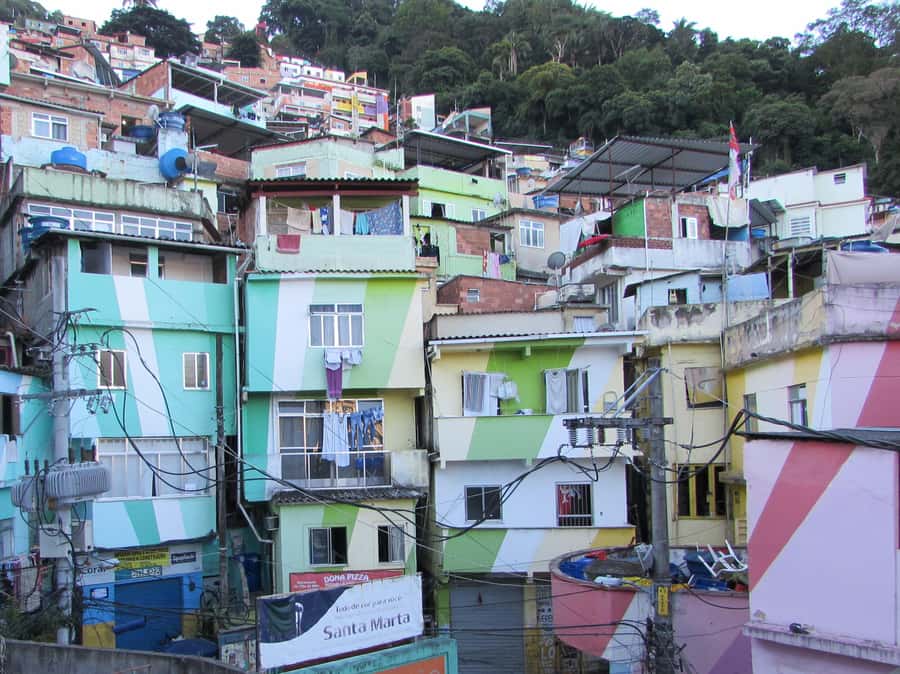
- Street art and colorful homes
- The Michael Jackson connection at Laje do Michael Jackson
- Why the guide makes or breaks the experience
- A fair look at the $34 price
- Timing, weather, and practical details
- Who will enjoy this walk most?
- Should you book the Santa Marta walking tour?
- FAQ
- How long does the Favela Santa Marta walking tour last?
- What languages are available?
- Is the guide a local resident?
- What happens if the Santa Marta cable car is closed?
- Is food included?
- Should I bring cash?
- Can people with mobility impairments take this tour?
- Can I cancel the booking for a refund?
Key points at a glance
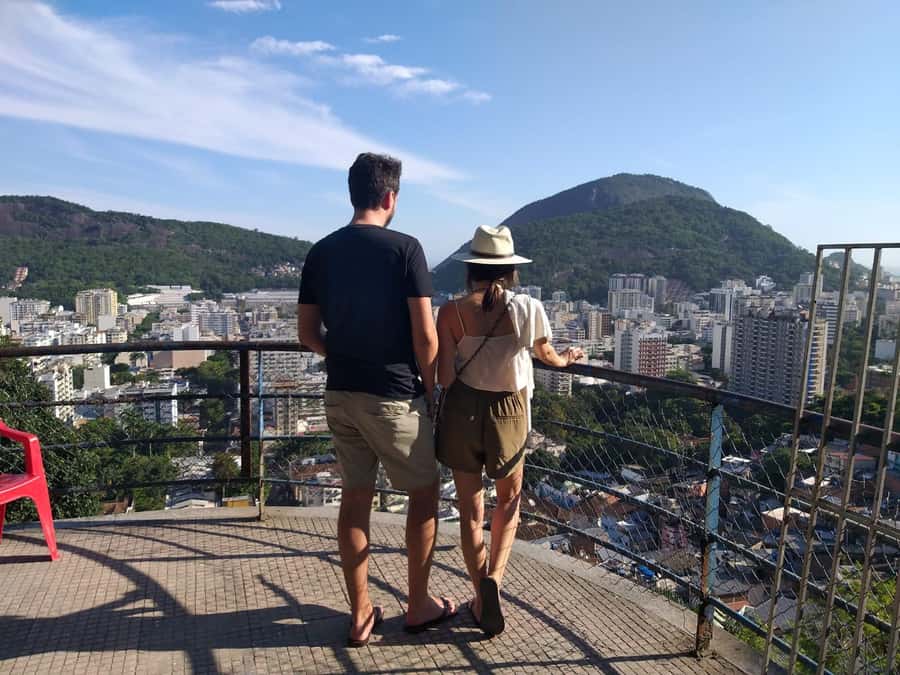
- Ride up to the highest part: Take the Santa Marta funicular when it is running, or walk uphill with your guide if it is not.
- A neighborhood with about 8,000 residents: The tour presents Santa Marta as a working community, not a staged attraction.
- Michael Jackson’s Laje viewpoint: See the statue and location connected with They Don’t Care About Us.
- Local projects are part of the route: Stops can include the arts center, sports center, daycare when open, Residents’ Association, and social projects.
- Strong language choice: Tours are offered in English, French, Spanish, and Portuguese, with private and small-group options.
- Bring cash and good shoes: You may want snacks, drinks, souvenirs, or handicrafts, and the streets are steep.
Starting high above Santa Marta
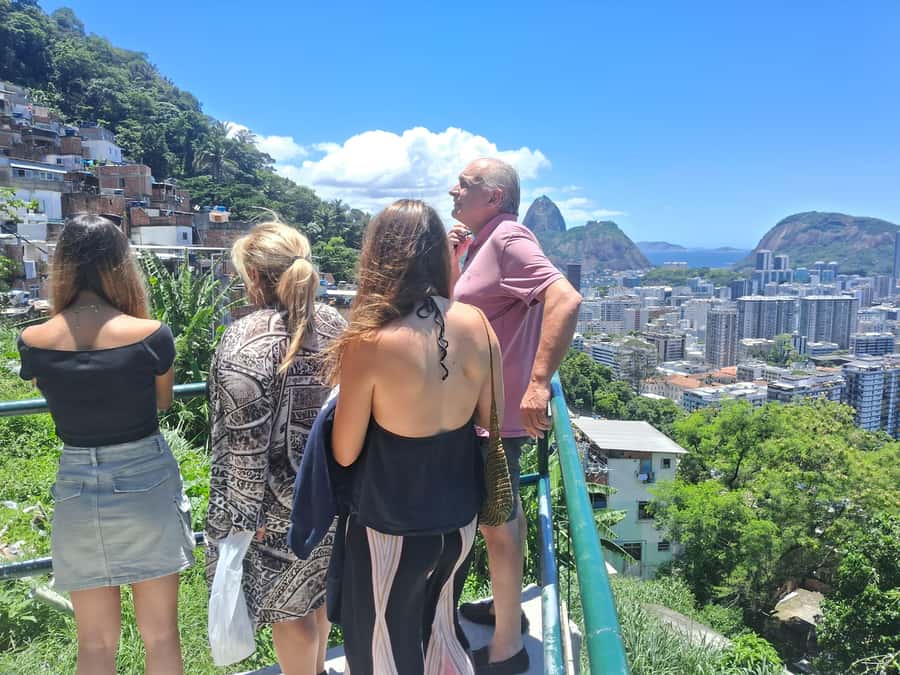
The route is designed to begin at the top of the community. That matters because Santa Marta is built on a steep hillside, and starting high lets you spend more of the tour walking down through the streets rather than climbing every step from the bottom.
When the Santa Marta cable car is operating, you ride the funicular to the upper section. This is a practical part of the outing, not just transport. It gives you an early sense of the hillside setting and avoids using your energy before the main walk begins.
Cable car operation is not guaranteed. If it is closed on the day of your visit, the guide will walk with you to the top. You can also take a taxi for about R$15. That small extra cost may be worth considering if you are not comfortable with a steep uphill walk.
Wear shoes with a firm grip. Comfortable footwear is specifically recommended, and this is one tour where that advice matters. The route passes through streets and lanes rather than a flat city sidewalk.
More Walking Tours in Rio de Janeiro
- Rio de Janeiro: Rocinha Favela Walking Tour with Local Guide
★ 4.8 · 3,052 reviews - Rio De Janeiro: Half-Day Rocinha Favela Walking Tour
★ 4.7 · 2,272 reviews - 3 Hour Rocinha Favela Walking Tour with a Local Guide
★ 5.0 · 833 reviews
Walking through a real residential community
The heart of the tour is a guided walk through Santa Marta, also called Dona Marta in the activity description. About 8,000 people live here, so you are moving through an active residential area, not a theme park built for sightseeing.
That distinction gives the tour its value. You get to see the colorful homes, street art, public spaces, and everyday setting of a Rio neighborhood while your local guide explains how the community developed. The best guides help you understand what you are seeing without turning people’s homes into scenery.
The walking pace should allow time for explanations and short stops, but the exact feel will depend on group size and the guide assigned to you. Private and small-group formats are available. I would choose a smaller group if you want more chances to ask questions about local life, the neighborhood’s past, or the projects you pass along the route.
The experience also asks you to look past the usual crime-focused image of a favela. Educational and social projects are included to show another side of the community. That does not make the tour a polished sales pitch. Instead, it gives you a fuller picture of a place where homes, services, arts, sports, and local organizations exist side by side.
Arts, sports, and community projects
Several stops give the walk more substance than a simple street stroll. The Dona Marta arts center and the favela’s sports center are included as examples of local activity and community organization.
The tour may also include a visit to a community daycare when it is open. The wording matters: this stop is not guaranteed. Community facilities have their own schedules, and an operating daycare is a working place first, a sightseeing stop second.
You can also visit the Residents’ Association and learn about social projects. This is one of the more useful parts of the route because it connects the physical neighborhood with the people and groups who help organize community life.
A visit to handicraft shops adds a chance to support local sellers directly. Bring cash if you want to buy something. The same advice applies to food and drinks at local stores or the pub mentioned as an optional stop.
One limitation is that not every planned cultural stop will happen at every time of day. A French-language booking in August did not include the music school because it was operating in the afternoon, after the visit. If a particular project matters to you, ask the provider about the day and start time before booking.
Street art and colorful homes
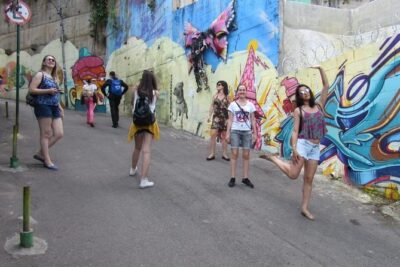
Santa Marta is known for its bright houses and painted public spaces, and the route gives you time to see them at walking speed. Street art murals appear along the way, mixed with traditional homes and the practical details of a densely built hillside community.
This is where a local guide can add real value. A mural alone is worth a photo, but an explanation about its place in the neighborhood makes the stop more meaningful. You are not simply collecting colorful pictures. You are hearing why particular spaces matter to residents and how art is used in the community.
The route also gives you a chance to notice the contrast between the narrow streets and the broad views beyond them. You move from close-up details, such as painted walls and doorways, to open mountain views across the region.
Keep your camera respectful. This is a residential area, and the tour’s strength comes from treating Santa Marta as a community rather than a spectacle. Follow your guide’s instructions about where to stop and what to photograph.
More Favela Tours in Rio De Janeiro:
- Favela Tours
★ 5.0 · 660 reviews - Rio de Janeiro: Favela Santa Marta Top Tour with Local Guide
★ 4.9 · 488 reviews - Favela Tour in Rio de Janeiro
★ 4.5 · 483 reviews - Favela Tour Rio de Janeiro – Vidigal Walking Tour by Russo Guide
★ 5.0 · 377 reviews
The Michael Jackson connection at Laje do Michael Jackson
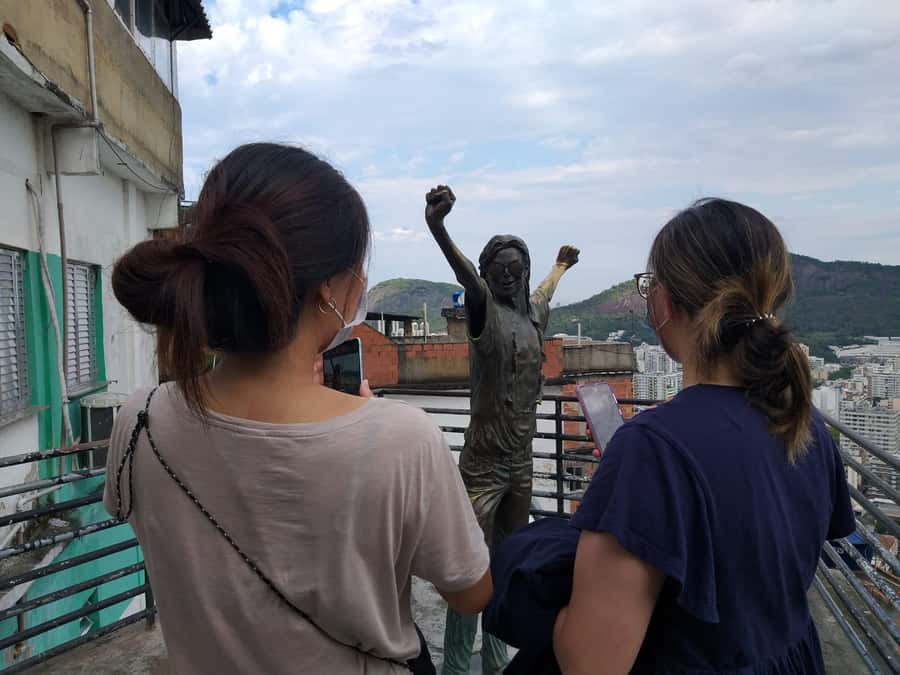
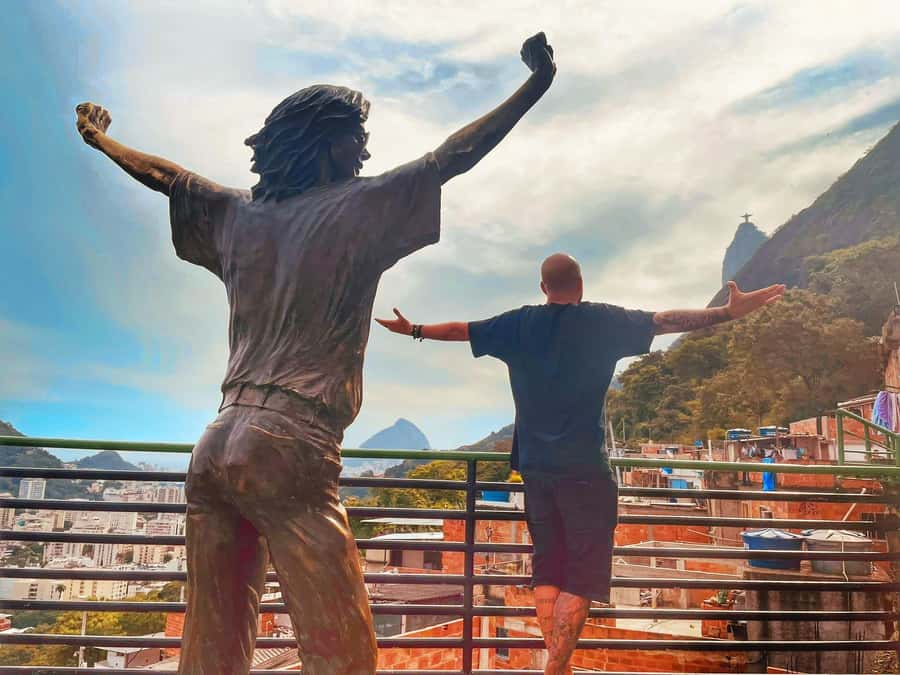
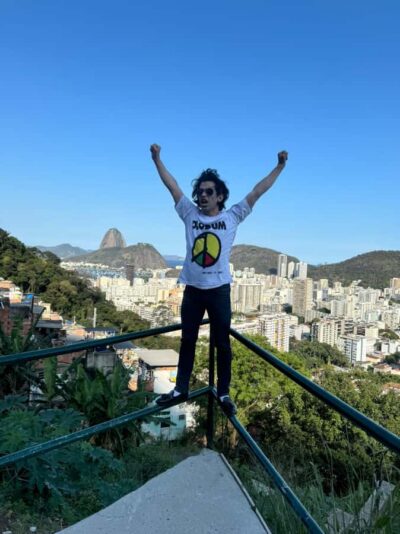
One of the tour’s most memorable stops is Laje do Michael Jackson, a viewpoint marked by a statue of the American singer. The location became known because it was used for the video of They Don’t Care About Us.
This gives the outing a clear pop-culture link, but the viewpoint offers more than a music reference. From here, you get a wide view across Rio’s mountains and surrounding areas. It is a natural pause in the route and likely one of the best places for photographs.
The Michael Jackson connection also helps explain why Santa Marta is recognized far beyond Rio. The video brought international attention to the neighborhood, while the walking tour shifts the focus back to the people who live there.
You should expect a viewpoint stop, not a full music-themed tour. The emphasis remains on the neighborhood, its streets, local work, and community projects. That balance works well if you want one famous Rio connection without spending the entire outing chasing celebrity locations.
Why the guide makes or breaks the experience
The tour promises an official guide and a local resident guide, with tours in English, French, Spanish, and Portuguese. Those details are important because the quality of explanation shapes almost every part of the visit.
Several bookings had excellent language support. Sonia from Belgium described her guide as friendly and very good in French, with enough explanation to help her understand the origins and way of life in the favela. Melissa also had a strong French-language experience with a guide named Marco, who was specifically thanked after the tour.
There is a clear warning on the other side. One French-language booking began at 10:00 but the guide did not arrive until 10:45. The assigned guide spoke only a few words of French and provided little background, leaving the outing feeling like a basic walk rather than an informed visit.
That does not mean every language booking will have the same problem. It does mean you should make the language request clear and confirm it if possible. If you are booking in French, Spanish, or Portuguese, do not assume the language listed automatically guarantees fluency from every guide.
The strongest experiences appear to come from guides who explain the neighborhood and answer questions, not just lead the group from stop to stop. A local resident guide can offer a perspective that an outside guide may not have, but communication still matters.
A fair look at the $34 price
At about $34 per person, the tour is reasonably priced for a two-and-a-half-hour guided visit, especially if you receive a fluent local guide and a small group. The price covers the walking tour, guide, and access to the planned community stops. It does not include food, drinks, souvenirs, or any optional taxi ride if the cable car is closed.
The value is strongest for you if you want context. A self-guided walk would not provide the same explanation of the arts center, social projects, Residents’ Association, or the Michael Jackson location. You would also miss the benefit of having someone familiar with the streets lead the way.
The value is weaker if you expect a tightly timed attraction with every stop guaranteed. The daycare is available only when open, the music school may operate at a different time, and the cable car may not be running. Think of the tour as a guided introduction to Santa Marta, with some flexibility built into the route.
A private option may make sense for families or couples who want more time for questions. A small group should give you a more personal feel without the full cost of booking alone.
Timing, weather, and practical details
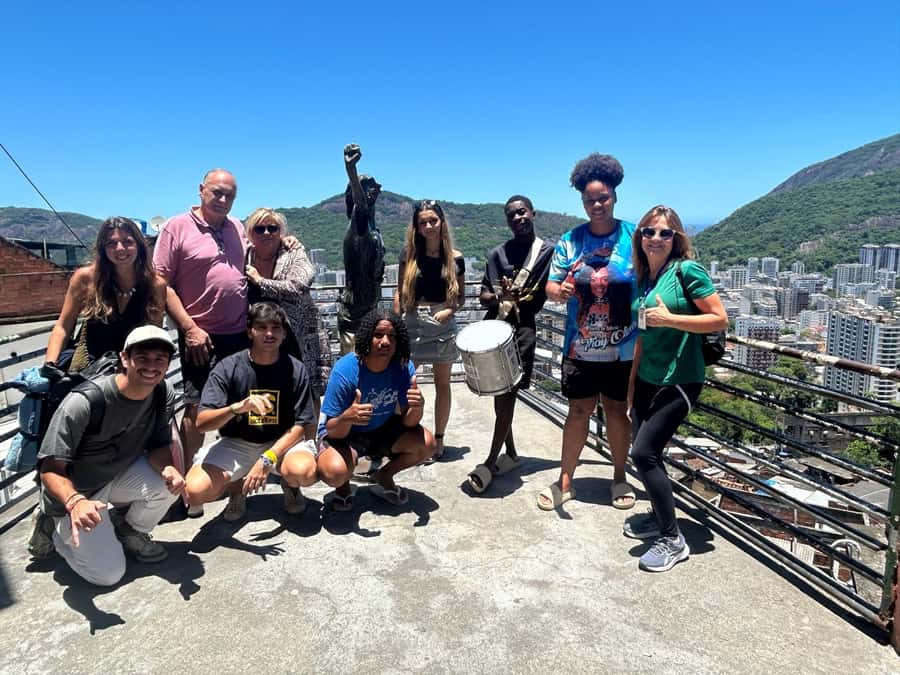
The tour lasts 150 minutes, but the starting time depends on availability. Check the selected date carefully, especially if you hope to visit a particular community project or music-related site.
Light rain will not necessarily cancel the outing. The tour can operate in light rain, so bring suitable clothing and protect your phone or camera. Wet streets may make the steep route less comfortable, which is another reason to wear proper shoes.
Carry your passport or another ID card, along with some Brazilian cash. Cash can be useful for handicrafts, food, drinks, or a taxi if the funicular is out of service. Food is not included, although you can buy your own food at a pub during the outing.
The meeting point can vary by the option you book. Read the final meeting instructions carefully instead of relying on a general map pin.
Free cancellation is available up to 24 hours before the tour for a full refund. You can also reserve now and pay later, which helps if your Rio schedule is still changing.
Who will enjoy this walk most?
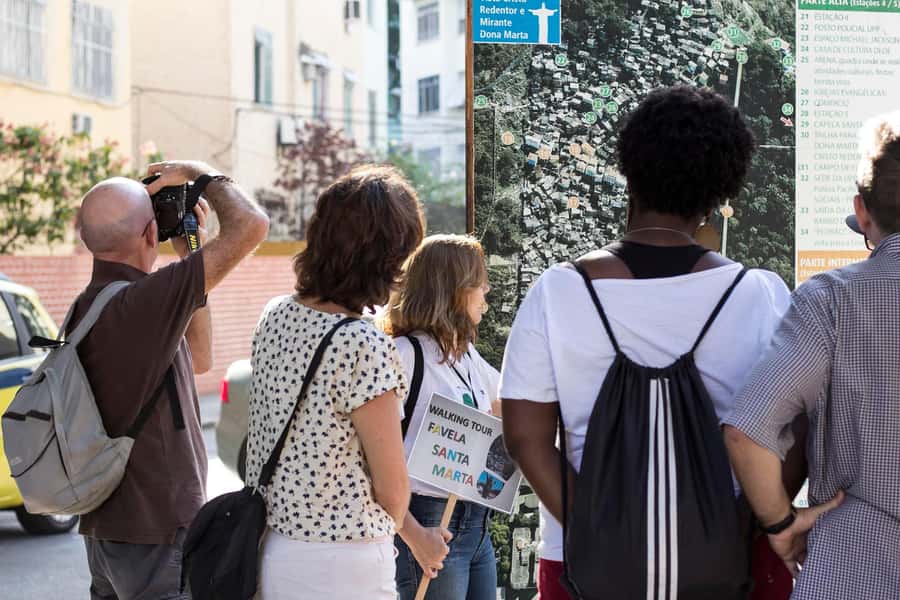
I would recommend Santa Marta to you if you want to see a side of Rio that is tied to daily community life, public art, local projects, and a famous music-video location. It suits curious visitors who prefer a guided neighborhood walk to a quick photo stop.
It is also a good match if you value local voices. The guide’s role is not only to show the route, but to explain how the neighborhood works and why its projects matter.
You should think twice if you have mobility impairments or dislike steep streets. The activity is specifically not suitable for people with mobility limitations, and the cable car may not operate.
You should also be cautious if your main priority is a guaranteed visit to a daycare, music school, or other specific facility. These stops can depend on opening hours and the day’s schedule.
Should you book the Santa Marta walking tour?
Book it if you want a reasonably priced, small-scale introduction to a real Rio community, and if you are happy with a tour whose exact stops may adjust to local schedules. The Michael Jackson viewpoint, mountain views, colorful streets, and community projects give the two-and-a-half-hour route plenty of variety.
Before paying, confirm your tour language and meeting point. If the cable car is closed, decide in advance if you are comfortable walking uphill or paying about R$15 for a taxi.
The best version of this experience comes with a guide who explains the neighborhood with care. The strong French-language outings with Marco and another fluent guide show what the tour can offer. The late start and weak language match reported in another booking show why that detail deserves attention.
FAQ
How long does the Favela Santa Marta walking tour last?
The tour lasts 150 minutes, or two and a half hours.
What languages are available?
The tour is offered in English, French, Spanish, and Portuguese.
Is the guide a local resident?
A local resident guide is included, along with an official tour guide.
What happens if the Santa Marta cable car is closed?
You will walk to the top of the favela with your guide. Alternatively, you can take a taxi, which costs about R$15.
Is food included?
No. Food is not included, but you can buy your own food at a pub during the tour. Local stores may also sell food and drinks.
Should I bring cash?
Yes. Cash is useful for handicrafts, souvenirs, food, drinks, or a taxi if the cable car is not operating.
Can people with mobility impairments take this tour?
No. The activity is not suitable for people with mobility impairments.
Can I cancel the booking for a refund?
Yes. You can cancel up to 24 hours in advance for a full refund. You can also reserve now and pay later.
Just added in Rio De Janeiro
- Full Day Tour in Rio de Janeiro★ 5.0 · 8 reviews
- Garganta do Ceu Cave Hiking Private Tour on Pedra da Gavea★ 4.5 · 3 reviews
- Gastronomic Tour at the Municipal Market in Rio de Janeiro★ 5.0 · 4 reviews
- GIG Airport Transfer x Rio de Janeiro Hotels★ 4.5 · 11 reviews
- Rio de Janeiro private Full day Custom Tours★ 5.0 · 35 reviews
- AquaRio, Museum, Boulevard Olimpico, Ferris Wheel, Transport and Tourism Guide.★ 4.0 · 6 reviews
- Personalized and Private Full-Day Tour in Rio de Janeiro★ 5.0 · 6 reviews
- Christ the Redeemer – Complete Morning Tour with Ticket and Transport at the Hotel★ 3.5 · 4 reviews
Favela Tours, compared.


3 Hour Rocinha Favela Walking Tour with a Local Guide
Read our review →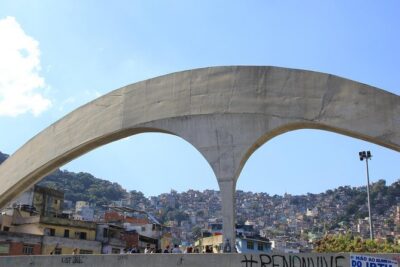
Favela Tour Rio de Janeiro – Vidigal Walking Tour by Russo Guide
Read our review →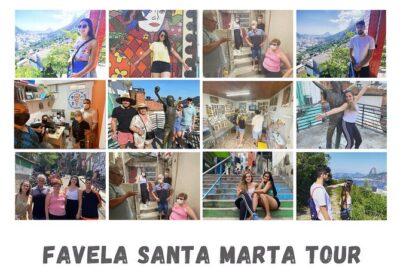
Browse the lists this tour appears in