
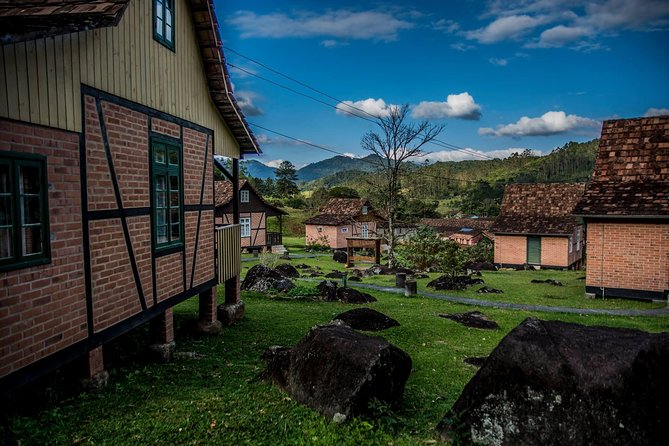
Reviewed · HISTORICAL TOURS
Germanic Route – Cultural and historical in Ilhota, Blumenau and Pomerode
German culture has a Brazilian address. This full-day route from Balneario Camboriu takes you inland to Ilhota, Blumenau, and Pomerode, where German customs appear in food, buildings, festivals, language, and local products. I especially like the contrast between beer-focused Blumenau and quieter Pomerode, plus the convenience of round-trip hotel transfers.
I also like that the tour leaves enough time for the main stops rather than rushing through a string of photo breaks. Guides such as Fernando, Rosana, Fabio, Jilson, and Junior have been praised for their warmth and clear explanations. The main caution is that pickup and departure times can slip when people arrive late, and one serious report describes a missed pickup altogether.
In This Review
- Key points to know before booking
- Leaving the coast for Santa Catarina’s European Valley
- Ilhota brings a brief shopping stop
- Blumenau explains the beer connection
- Pomerode feels smaller and more traditional
- German customs are tasted, not just explained
- What the guide adds to a shared tour
- Timing, pickup, and the main practical risk
- Who will get the most from this route
- Should you book the Germanic Route?
- FAQ
- How long does the Germanic Route tour last?
- What time does the tour start?
- Where does the tour begin?
- Which cities are included?
- How much time is spent in Ilhota?
- How long is the Blumenau stop?
- How long is the Pomerode stop?
- Is lunch included?
- Is transportation provided?
- How many people can join the tour?
- Can I cancel for a full refund?
- What happens if the tour does not reach its minimum number of participants?
Key points to know before booking
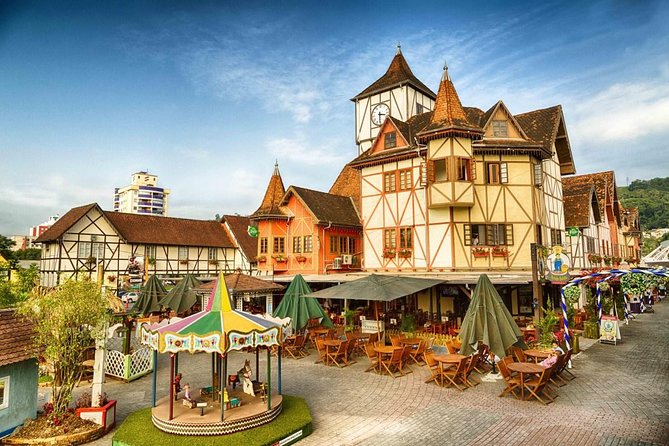
- Three very different towns: Ilhota offers a short shopping-oriented stop, Blumenau brings architecture, beer culture, and city history, while Pomerode feels smaller and more traditional.
- About eight hours on the road: The long day gives you a useful look at Santa Catarina beyond the coast, but it is not a relaxed local outing.
- Pomerode is the highlight for many people: German language, half-timbered buildings, food, crafts, and a slower pace give it a stronger sense of place.
- Blumenau is more modern than some visitors expect: Its German character appears in selected buildings, food, events, and businesses rather than across every street.
- Food is part of the appeal: Leave room in your budget for lunch, German pies, sausages, craft beer, liqueurs, chocolates, and local products.
- A good value at $28: Air-conditioned transport and a guide make the price appealing, especially if you want to avoid arranging three separate stops yourself.
Leaving the coast for Santa Catarina’s European Valley
Balneario Camboriu is known for its beach towers, nightlife, and sea views. This tour points the vehicle inland, toward a part of Santa Catarina shaped by German immigration and later local traditions. You get a different picture of the state, one built around town squares, food shops, old houses, beer, and community festivals.
The tour begins at about 8:00 am and lasts roughly eight hours. That timing matters. You will spend much of the day moving between the coastal resort area and the three inland towns, so this is best treated as a regional day trip, not a quick excursion.
The air-conditioned vehicle is a practical benefit in southern Brazil’s warm weather. Round-trip transfers from your accommodation also remove the need to navigate unfamiliar roads or coordinate transport between Ilhota, Blumenau, and Pomerode. The group can reach up to 45 people, so expect a shared tour rather than a private guide at your shoulder all day.
The price is $28 per person, with lunch extra. That is a strong rate for transportation, a guide, and three destinations. The value is greatest if you want an overview and do not have a rental car. If you prefer lingering in one town, shopping slowly, or stopping whenever something catches your eye, a private outing would offer more control.
More History Tours in Balneario Camboriu:
- Historic Florianópolis Tour with Beach
★ 4.0 · 4 reviews - Rio de Janeiro Historical Center Walking Tour
★ 4.5 · 336 reviews - Maria Fumaça – Wines and History
★ 4.0 · 242 reviews
Ilhota brings a brief shopping stop
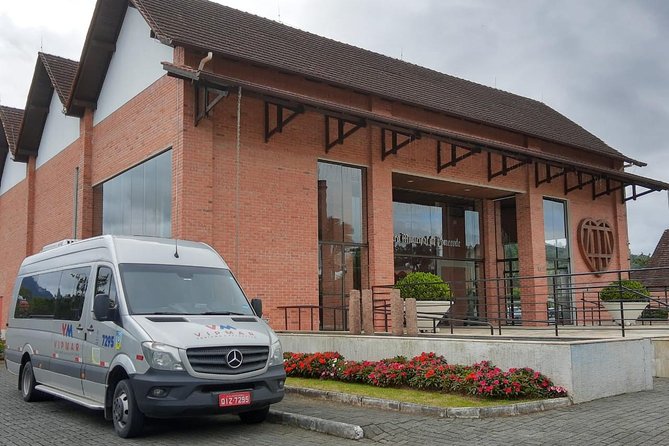
The first stop is Ilhota, with about 20 minutes set aside. The town is associated with underwear, beachwear, and fitness products, so this is primarily a quick look at its commercial identity rather than a major historical visit.
You should set your expectations correctly. Ilhota is not given the same sightseeing time as Blumenau or Pomerode. Twenty minutes is enough to browse or get a first impression, but not enough for a broad tour of the town. If you enjoy shopping for clothing and local products, this stop may be useful. If your main goal is architecture and history, save your attention for the next two towns.
Short stops can also become longer in practice if the group is slow to return. One useful point from the tour feedback is that late arrivals have caused delays. Keep an eye on the meeting time and return to the vehicle promptly. That small courtesy protects your time in Blumenau and Pomerode.
Blumenau explains the beer connection
Blumenau receives the longest scheduled visit, about three hours, and rightly so. It is the largest and most important stop on the route, known for Oktoberfest and its reputation as Brazil’s capital of beer. The city combines German customs with the scale and movement of a modern Brazilian center.
You can expect the guide to connect the city’s food, architecture, public celebrations, and commercial life to German colonization. The German influence is visible, but it is not uniform. One useful way to approach Blumenau is to think of it as a Brazilian city with German references woven through it, not as a transplanted town from Europe.
That distinction matters because first impressions vary. Some people find Blumenau attractive and full of cultural interest. Others expect a more consistently German appearance and feel that only certain buildings and details deliver it. I would visit with curiosity rather than a picture of an entire city built from half-timbered houses.
The three-hour window gives you more breathing room than many bus tours allow. You may have time for a walk, photographs, shopping, and a meal or snack, depending on the day’s exact schedule. The guide can also help explain what you are seeing instead of leaving you to decode the city on your own.
Food is a major part of Blumenau’s appeal. German-style dishes and beer culture are central to its identity, so lunch is not just a practical break. It is a chance to connect the town’s history with what people eat and drink today. Lunch is not included, so plan to pay separately.
Guide quality can shape this stop. Fabio, for example, has been praised for explaining in Portuguese and then taking time to explain in Spanish for Spanish-speaking visitors. He also adjusted when an explanation was easy to understand without translation. Fernando was praised for being friendly and approachable, while Rosana received strong comments for her attention and broad knowledge of Santa Catarina.
Do not assume every tour will have the same guide. Still, these names offer a useful picture of the service at its best: personal, flexible, and willing to make the information understandable for different language groups.
Pomerode feels smaller and more traditional
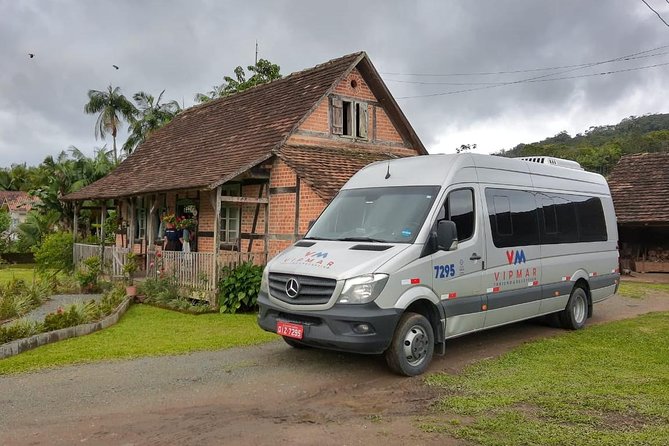
Pomerode gets about two hours, and for many people this is the most appealing part of the day. It is widely presented as the most German city in Brazil, with around 90 percent of residents speaking German. The town preserves local customs through folk festivals, food, language, and half-timbered architecture.
The scale changes here. After Blumenau, Pomerode can feel more like a village or small town. That quieter character is part of its charm. You are not simply checking off another city. You are seeing how cultural habits can remain part of everyday life in a smaller community.
The historic houses are described as dating from the World War II era, and the half-timbered style gives the town a clear visual identity. Seasonal decoration can also alter the mood. One visit was especially appreciated for its Christmas adornments, which made the town feel even more inviting.
Pomerode is the place to slow down and look closely. Notice the building details, browse the local shops, and pay attention to the food. The town is associated with German pies, sausages, craft beers, liqueurs, chocolates, handicrafts, and other local products. You may find that the best purchase is not a standard souvenir but something edible or made locally.
The two-hour stop is generous enough to avoid a frantic visit, though it still cannot cover every shop and attraction. One of the strongest positive points about this route is the sense that the schedule allows time in each town. A guide called the pace comfortable, with no constant feeling of being hurried. That is valuable on a long day with several destinations.
More things to do in Florianopolis:
- Bombinhas with Beach Safari by Casa do Turista
★ 5.0 · 99 reviews - Round Trip Beto Carrero World from Balneario Camboriu
★ 5.0 · 31 reviews - Panoramic City Tour Balneário Camboriú (With tickets)
★ 5.0 · 30 reviews - Transport Beto Carrero – from Balneário Camboriú by Centrotur
★ 5.0 · 26 reviews
German customs are tasted, not just explained
This tour works best when you treat food as part of the cultural lesson. German influence is not limited to façades and festival names. It appears in sausages, pies, beer, liqueurs, and local production. The flavors give you a more direct connection to the region than a quick photograph of a decorated building.
You will need to budget for these extras. Lunch is not included, and neither are personal purchases. At $28, that is fair, but the total cost of the day will rise if you sample several specialties or shop heavily in Pomerode.
I would choose one or two things to try rather than buying everything in sight. A German pie or sausage gives you a taste of the local style, while craft beer or a liqueur may appeal if you want a drink associated with the region. Chocolates and handicrafts are easier to carry home, but prices and selection will vary.
Shopping is part of the route, yet it does not appear to overwhelm the sightseeing. The schedule includes stores, but the time is not described as one long shopping circuit. That balance suits you if you want to browse without losing the cultural side of the day.
What the guide adds to a shared tour
A route like this can easily become a sequence of names and dates. The guide is important because Ilhota, Blumenau, and Pomerode are connected by regional history, but they do not look or feel identical.
A good guide can explain why German customs remain visible, point out architectural details, and help you understand the role of food and festivals. Rosana was praised for being especially attentive and for sharing information about Santa Catarina beyond the three stops. Jilson and Junior were also credited with making the day fun and memorable through conversation and explanations.
The language mix is worth considering. The tour may operate mainly in Portuguese, but Fabio made a point of explaining in Spanish when needed. That suggests Spanish-speaking visitors may be able to follow the experience comfortably, though the tour does not promise a specific language service in the information provided.
With a maximum of 45 people, the guide cannot provide the same personal attention as on a private tour. You may need to stay alert for meeting instructions and keep track of time. That is normal for a group outing, but it becomes more important when the route has three stops and a fixed return schedule.
Timing, pickup, and the main practical risk
The advertised start time is 8:00 am, with pickup from your accommodation. Confirmation is provided when you book, and the route is near public transportation. Most people can participate, and the tour is designed as a standard shared activity.
The biggest practical weakness is pickup reliability. One serious complaint describes waiting without anyone arriving, followed by a missed tour. That appears to be an exception rather than the general pattern, since the overall score is 4.3 from 67 ratings and several strong comments praise the guides and the day itself. Still, I would confirm your pickup details and be ready at the agreed point early.
Late departures are another possible issue. Some people have not followed the meeting times, which can delay the route. On a tour this long, a 15-minute delay can reduce your time in Pomerode or turn lunch into a rushed meal. Be punctual yourself, and ask the guide at the start how the day’s timing will be handled.
Free cancellation is available if you cancel at least 24 hours before the local start time. Changes or cancellations made inside that window are not refunded, and the operator may cancel if the minimum number of participants is not reached. In that case, you are offered another date or experience, or a full refund.
Who will get the most from this route
I would recommend this tour to you if you are staying in Balneario Camboriu and want to see more of Santa Catarina without renting a car. It is also a good choice for first-time visitors who want a broad introduction to the region’s German-Brazilian culture.
You will likely enjoy it most if you like:
- Small-town streets and regional architecture
- Local food, beer, sweets, and specialty products
- Guided cultural context rather than independent wandering
- A full day away from the beach
- Shopping mixed with sightseeing
- Spanish or Portuguese conversation with a flexible guide
It may be less suitable if you dislike group schedules or long transport days. It is also not the ideal choice if your only goal is a perfectly preserved German-style town. Blumenau is a functioning Brazilian city, and Ilhota is a brief commercial stop. Pomerode provides the strongest traditional atmosphere, but only two hours are allotted there.
Should you book the Germanic Route?
At $28, this is an appealing way to see three inland towns from Balneario Camboriu. The air-conditioned vehicle, guide, and hotel transfers cover the expensive and awkward parts of the day, while the route gives you history, food, architecture, and shopping in one outing.
I would book it if you want a broad regional picture and are comfortable with a shared group. Put Pomerode high on your personal priority list, use Blumenau to understand the beer and festival culture, and treat Ilhota as a quick bonus rather than the main event.
I would skip it only if you need complete control over timing or want to explore one town in depth. For everyone else, the combination of low price, strong guide reports, and a well-spaced route makes this a sensible inland break from the coast. Just confirm pickup details, keep lunch money ready, and return to the vehicle on time.
FAQ
How long does the Germanic Route tour last?
The tour lasts approximately eight hours.
What time does the tour start?
The listed start time is 8:00 am.
Where does the tour begin?
The experience is based in Balneario Camboriu and includes round-trip transfers from your accommodation.
Which cities are included?
The route visits Ilhota, Blumenau, and Pomerode.
How much time is spent in Ilhota?
The scheduled visit to Ilhota lasts about 20 minutes.
How long is the Blumenau stop?
The Blumenau visit lasts about three hours.
How long is the Pomerode stop?
The scheduled visit to Pomerode lasts about two hours.
Is lunch included?
No. Lunch is not included in the tour price.
Is transportation provided?
Yes. The tour includes an air-conditioned vehicle and round-trip transfers from your accommodation.
How many people can join the tour?
The group can include a maximum of 45 people.
Can I cancel for a full refund?
Yes, if you cancel at least 24 hours before the experience start time. Cancellations made less than 24 hours in advance are not refunded.
What happens if the tour does not reach its minimum number of participants?
If the operator cancels because the minimum is not reached, you can receive a full refund or be offered another date or experience.
Just added in Balneario Camboriu
- Historic Florianópolis Tour with Beach★ 4.0 · 4 reviews
- Round Trip Beto Carrero World from Balneario Camboriu★ 5.0 · 31 reviews
- Transport to Beto Carrero Park from Balneário Camboriú★ 5.0 · 7 reviews
- Shared transfer from Balneário Camboriú to Navegantes airport★ 3.5 · 2 reviews
- Private Transfer from the City Baln. de Camboriú to FLN Airport★ 5.0 · 1 review
- Transport Beto Carrero – from Balneário Camboriú by Centrotur★ 5.0 · 26 reviews
- Day tour in Balneário Camboriú and Unipraias Park with Cable Cars★ 4.0 · 12 reviews
- Round Trip Transfer Beto Carrero from Balneário Camboriú★ 5.0 · 7 reviews
Historical Tours, compared.


Private Walking and Cultural Tour Rocinha-Rio de Janeiro
Read our review →
Discover Rio Little Africa: A Cultural and Historical Journey
Read our review →


Scenic Train ride to historical cities of Morretes and Antonina
Read our review →
Browse the lists this tour appears in