
Reviewed · FOOD & DRINK
Guided Market Fruit Tasting in Rio with 15+ Exotic Flavors
Brazil comes in many flavors. This two-and-a-half-hour market walk turns an ordinary morning in Ipanema into a tasty lesson about Brazil, with more than 15 fruits, juices, nuts, and native ingredients to sample. I like that you are not simply handed unfamiliar produce and told to guess what it is. A local fruit expert explains how each item fits into Brazilian food and regional life.
I especially like the mix of hands-on tasting and market wandering, plus the small group limit of 15 people. Guides such as Hay Za, Caterina, and Erica have been praised for making the tasting friendly, informative, and generous. The main drawback is that the exact fruit selection depends on what is available, so you should not expect every famous Amazonian fruit on every visit.
In This Review
- Key points at a glance
- Starting with Brazil on a cutting board
- Walking through the Ipanema farmers market
- Sampling 15 to 20 fruits, one story at a time
- Juices, nuts, and native ingredients
- What the guides add to the experience
- Why the $49 price can make sense
- The pace, timing, and practical side
- Who will enjoy this fruit tour most
- What I like most, and what to keep in mind
- Should you book the Ipanema fruit tasting?
- FAQ
- Where does the fruit tasting start?
- What time does the tour begin?
- How long does the experience last?
- Where does the tour end?
- How many fruits are included?
- Are drinks and other ingredients included?
- Can I buy additional food at the market?
- What is the maximum group size?
- Are service animals allowed?
- What is the cancellation policy?
Key points at a glance
- More than 15 Brazilian fruits: The tasting usually includes 15 to 20 exotic fruits, with one guide finding 18 varieties even during autumn.
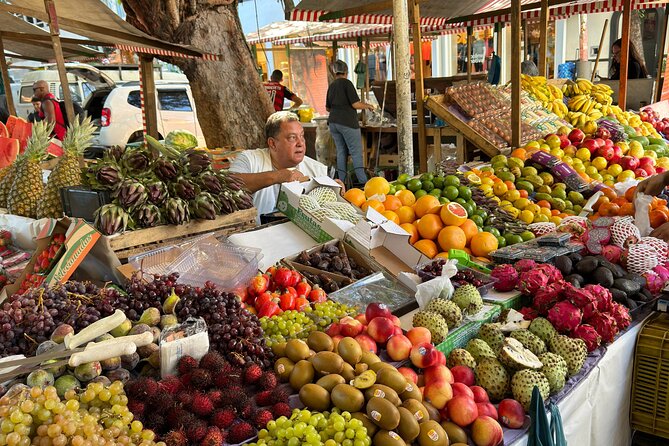
- A real Ipanema farmers market: You walk through a working market rather than a staged food display, with time to see what local sellers offer.
- Stories behind every bite: Learn how açaí connects to the Amazon, how jabuticaba grows on tree bark, and how cashew apples become sweets and liqueurs.
- More than fruit: Local juices, nuts, and other native ingredients add variety and make this feel like a Brazilian food lesson.
- Small morning group: The maximum of 15 people gives the guide room to answer questions and help with market shopping.
- Strong value for food lovers: At $49 per person, the price covers a guided tasting, cultural explanation, and market orientation in one compact outing.
Starting with Brazil on a cutting board
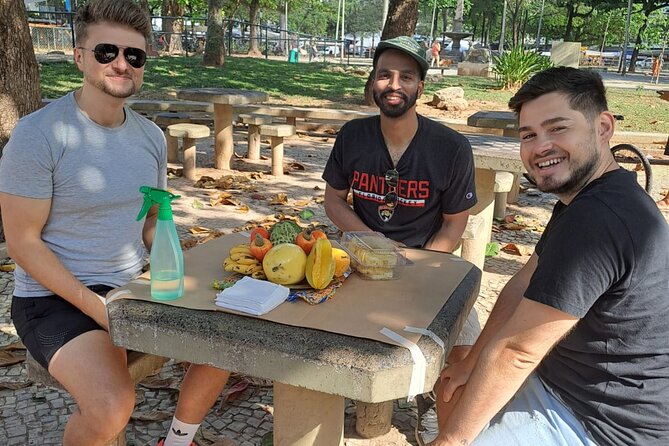
The meeting point is in Ipanema, and the activity begins at 10:00 a.m. That timing works well for a first morning in Rio because you can eat breakfast lightly, take the tour, and still have most of the day ahead of you.
I like the way this outing uses food as an introduction to Brazil. A market can tell you what a city eats, but a guide can explain why. Here, each fruit becomes a small doorway into a different part of the country. You might hear how açaí provides energy in the Amazon, or learn why jabuticaba looks so unusual, with its fruit growing directly from the trunk and branches of the tree.
The point is not to race through a checklist of tropical produce. The value comes from connecting flavor with place. A fruit may be eaten fresh, turned into juice, preserved as a sweet, or used in a drink. The guide helps you understand those differences while you taste.
More food tours in Rio de Janeiro:
- Rio: Pub Crawl in Lapa with Cachaça Tasting and Live Samba
★ 4.7 · 881 reviews - Sunset Boat Tour with Beer, Water, Soda and Snacks included
★ 5.0 · 227 reviews - 3-Hour Tasting Session in Rio with 33 Foods Brazilians Love
★ 5.0 · 220 reviews
Walking through the Ipanema farmers market
The market portion gives the tasting a useful setting. Instead of sampling fruit in an isolated room, you see produce where it is sold and used. That makes the experience more practical. After the guided portion, you can look around and buy additional fruit, snacks, drinks, or other market items for yourself.
The market is described as cozy, with good energy and local sellers. That matters because the setting is part of the lesson. You are not only learning what açaí or cashew apple tastes like. You are seeing the kind of place where Rio residents can shop, browse, and pick up something to eat.
A guide can also save you from wandering past unfamiliar items without knowing what to do with them. Erica, for example, has helped people shop after the tasting and answered questions about nearby farms and local eating habits. That shopping help is a nice bonus, though anything you buy beyond the included samples costs extra.
I would bring a little spending money if you enjoy food markets. The tour includes the guided tasting, but it does not include extra fruit, food, or drinks that you choose to purchase. The freedom to buy more is useful, and it lets you follow your own appetite instead of paying for a larger package that everyone must share.
Sampling 15 to 20 fruits, one story at a time
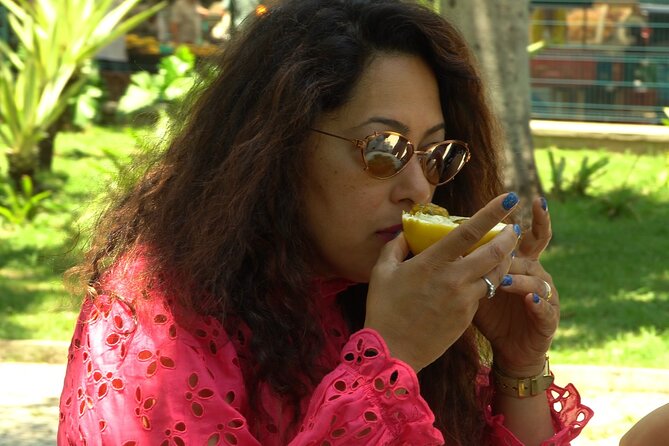
The central activity is the tasting of approximately 15 to 20 Brazilian fruits. That is a generous range for a two-and-a-half-hour outing, especially since the guide also talks about juices, nuts, and native ingredients.
The selection can change with the season. One guide managed to find 18 exotic fruits during autumn, which suggests that the tasting remains varied outside the height of summer. Still, the experience does not promise a fixed menu. If you have your heart set on one specific fruit, ask the guide or provider before booking rather than assuming it will be available.
You may already know some of the fruit on the table. That is part of the fun. Familiar items can taste different when they are fresh, prepared in another way, or paired with local context. The less familiar items give the tasting its real sense of discovery.
Here are a few examples of the kind of information you can expect:
- Açaí: Learn about its role as an energy food in the Amazon, rather than treating it only as a sweet bowl topping.
- Jabuticaba: See why this fruit surprises first-time tasters, since it grows right on the bark of the tree.
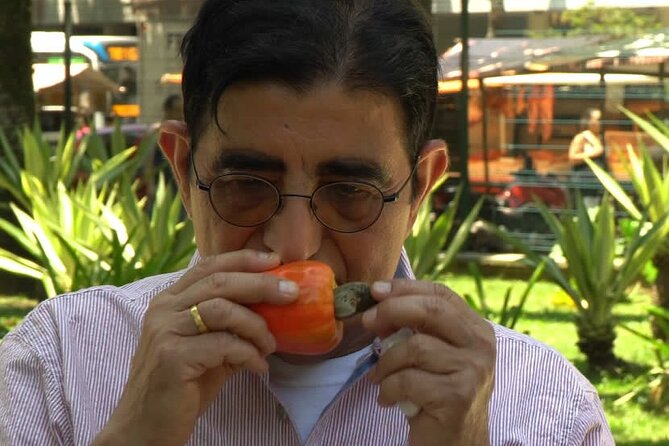
- Cashew apple: Discover that the fleshy fruit can be used in sweets and liqueurs, while the familiar cashew nut is only one part of the story.
Those details help the food stick in your memory. Long after the tour, you may remember jabuticaba because the tree itself seemed to grow fruit in the wrong place. That is better than memorizing a list of names.
Juices, nuts, and native ingredients
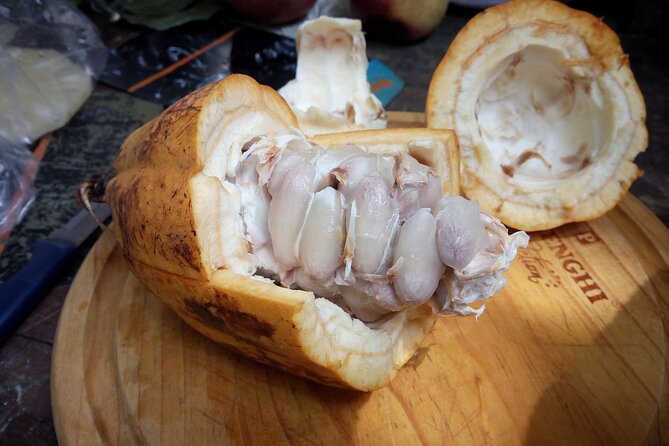
A fruit tasting can become repetitive if every sample is simply cut into pieces. This outing adds local juices, nuts, and other native ingredients, giving you more textures and ways to understand Brazilian food.
Juices show how a fruit changes once it is processed. A fruit that seems sharp or mild when eaten fresh may become sweeter, stronger, or more refreshing as a drink. Nuts offer a different texture and show that Brazilian market food is not limited to produce with bright colors.
The extra ingredients also make the experience more useful for later meals. If you plan to visit juice bars, restaurants, or markets during your Rio stay, you will have a better idea of what to order. You may recognize a name on a menu instead of choosing blindly.
I appreciate that this is not presented as a luxury food event. The appeal is local and direct. You taste what is available, listen to the guide, and learn how ordinary ingredients can carry a lot of regional meaning.
More markets in Rio de Janeiro:
- Rio’s Cookin’ Good: 9-Dish & Caipis Fiesta + Optional Market Tour
★ 5.0 · 876 reviews - Christ, St. Teresa, Selaron & Farmers Market. 6 Hours Tour.
★ 5.0 · 13 reviews - Private Street Food tour Adventure: With a Local Street Market!
★ 5.0 · 9 reviews - Gastronomic Tour at the Municipal Market in Rio de Janeiro
★ 5.0 · 4 reviews
What the guides add to the experience
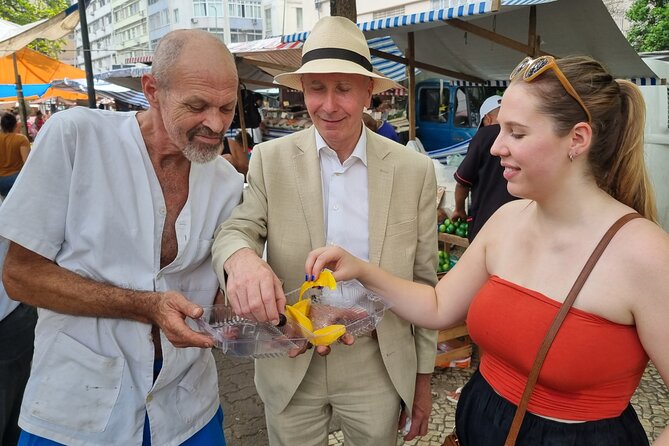
The guide is the key difference between a simple market visit and a worthwhile food tour. The strongest praise has gone to the personal approach: Hay Za has been described as sweet and well informed, Caterina as an engaging tasting guide, and Erica as someone who provided local context while answering questions.
Those comments point to the kind of guide you want here. You need someone who can explain unfamiliar fruit without making the lesson feel like school. You also want a person who is willing to pause when you have questions, especially if you are curious about how Brazilians eat these ingredients at home.
The group maximum is 15 people. That is not a private tour, but it is small enough for a guide to keep the tasting organized. If everyone wants to ask questions, the pace may slow down. That is usually a good trade for a food outing, since rushing through 15 samples would defeat the purpose.
Guide availability can vary, so do not book expecting a particular person unless the provider confirms it. The names Hay Za, Caterina, and Erica are associated with especially warm feedback, but the assigned guide may be different on your date.
Why the $49 price can make sense
At $49 per person, this is not the cheapest way to visit an Ipanema market. You can walk through a market on your own for free and buy fruit as you go. The question is what you are paying to add.
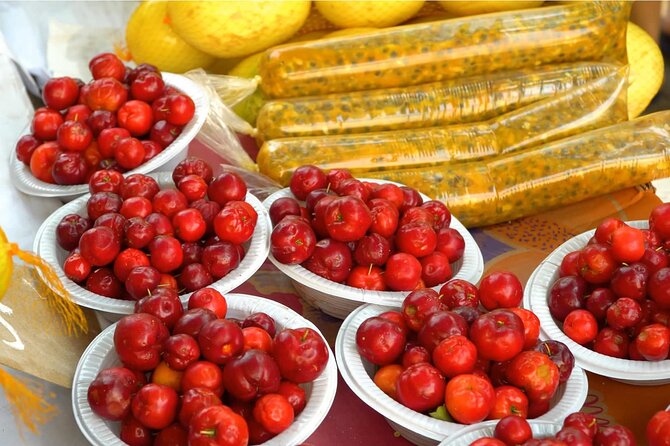
The fee covers a guided tasting of 15 to 20 fruits, local juices, nuts, native ingredients, cultural explanations, and a walk through a real farmers market. If you tried to identify and purchase that range on your own, you might spend less, but you would lose the explanations and would probably miss many items simply because you did not know what they were.
For a food-focused visitor, the price is reasonable because the tour combines several activities. You get a market orientation, a tasting session, and a short lesson in Brazilian food culture. The value is lower if you dislike unfamiliar flavors or prefer to browse at your own speed without a guide.
The included samples are also important. You are not paying only for access to the market. You get the chance to try a broad range of foods without buying an entire portion of each one. That is especially useful for ingredients you may never encounter again.
There is also a five-star guarantee: if the experience is not five-star, you do not pay for four. That promise may offer some reassurance, though the detailed terms should be confirmed when booking.
The pace, timing, and practical side
The listed duration is about two hours and 30 minutes. That gives the group enough time for a relaxed tasting and market walk without taking over your whole day.
I would avoid scheduling a major activity immediately afterward. Markets can be social and unpredictable, and a question or extra purchase may stretch the pace slightly. Still, starting at 10:00 a.m. and ending back at the meeting point makes this easy to fit into a Rio itinerary.
The tour begins and ends in Ipanema. It is near public transportation, which makes the meeting point easier to reach than an out-of-the-way food site. You should still allow enough time to arrive before 10:00 a.m., since the supplied details do not include a separate late-arrival policy.
The group can include up to 15 people. Service animals are allowed. Confirmation arrives at booking, and the activity requires a minimum number of participants. If that minimum is not met, you are offered another date or experience, or a full refund.
Free cancellation is available when you cancel at least 24 hours before the start time. Cancellations or changes made less than 24 hours ahead are not refunded or accepted. The cut-off follows Rio local time, so check your clock carefully if you are booking from another country.
Who will enjoy this fruit tour most
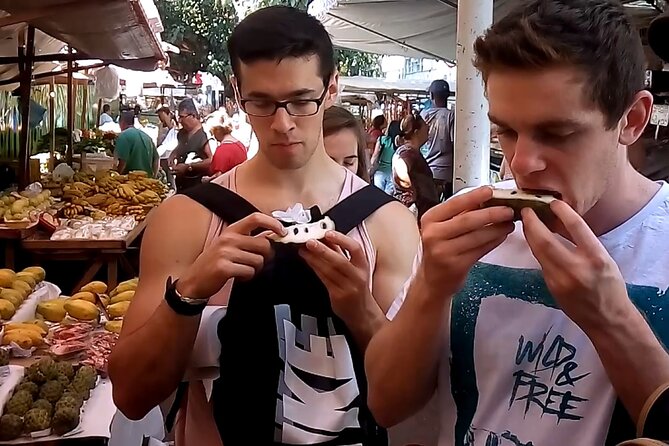
I would recommend this for food lovers, curious first-time visitors to Brazil, and anyone who likes learning through taste. It is also a good choice if you want a cultural activity that feels lighter than a museum or formal walking tour.
The outing suits people who are happy to try several unfamiliar foods. You do not need to be an expert, and you may already recognize some of the fruit. The best attitude is simple curiosity. Taste first, ask questions, and decide what you like.
Families may enjoy it too, especially if children are willing to try new things. The small group size can make it easier for a guide to keep young tasters involved, although no specific child age policy is provided.
Brazilian visitors can find value here as well. One Brazilian food lover was surprised by how many fruits were unfamiliar, which shows that this is not only for international visitors. Brazil is a large country with many regional foods, so even locals may encounter new ingredients.
I would think twice if you want a full meal. The tasting includes fruit, juices, nuts, and other ingredients, but it is not described as lunch. You should also budget separately for anything you buy in the market.
What I like most, and what to keep in mind
The best feature is the combination of range and explanation. Sampling one or two unusual fruits is easy to arrange. Sampling 15 to 20 while learning how they connect to Amazonian life, local drinks, sweets, and regional habits is much harder to recreate on your own.
I also like the human side. The strongest guide feedback centers on friendliness, generosity, and the ability to answer questions. That matters in a tasting because the guide controls the mood. A warm guide can make an unfamiliar flavor feel like an invitation rather than a test.
The main limitation is the flexible fruit selection. Seasonal supply affects what appears, and the experience does not list a guaranteed menu. The market may also tempt you to spend more than the $49 tour price, especially if you discover a favorite ingredient.
Should you book the Ipanema fruit tasting?
Book it if you want a compact, social introduction to Brazilian produce and you enjoy trying foods you cannot easily identify on your own. The 15-plus tasting, local stories, market setting, and small group format make this more useful than a quick stop at a fruit stall.
I would especially choose it early in a Rio visit. You will gain names, flavors, and shopping confidence that can help with the rest of your meals. Just keep your expectations flexible, bring money for optional purchases, and remember that the exact fruit list can change.
Skip it if your priority is a large meal, a private tour, or a fixed menu. For curious eaters, though, $49 buys a friendly way to taste across Brazil without leaving Ipanema.
FAQ
Where does the fruit tasting start?
The experience starts in Ipanema, Rio de Janeiro, Brazil.
What time does the tour begin?
The tour begins at 10:00 a.m.
How long does the experience last?
The activity lasts approximately two hours and 30 minutes.
Where does the tour end?
The tour ends back at the meeting point in Ipanema.
How many fruits are included?
The guided tasting includes approximately 15 to 20 exotic Brazilian fruits.
Are drinks and other ingredients included?
Yes. The experience includes tastings of local juices, nuts, and native ingredients, along with the fruit samples.
Can I buy additional food at the market?
Yes. Extra fruit, food, and drinks are not included, but you can wander through the market and purchase additional items yourself.
What is the maximum group size?
The activity allows a maximum of 15 participants.
Are service animals allowed?
Yes. Service animals are allowed.
What is the cancellation policy?
You can cancel at least 24 hours before the start time for a full refund. Cancellations or changes made less than 24 hours before the start time are not accepted or refunded.
Just added in Rio de Janeiro
- Full Day Tour in Rio de Janeiro★ 5.0 · 8 reviews
- Garganta do Ceu Cave Hiking Private Tour on Pedra da Gavea★ 4.5 · 3 reviews
- Gastronomic Tour at the Municipal Market in Rio de Janeiro★ 5.0 · 4 reviews
- GIG Airport Transfer x Rio de Janeiro Hotels★ 4.5 · 11 reviews
- Rio de Janeiro private Full day Custom Tours★ 5.0 · 35 reviews
- Christ the Redeemer – Complete Morning Tour with Ticket and Transport at the Hotel★ 3.5 · 4 reviews
- AquaRio, Museum, Boulevard Olimpico, Ferris Wheel, Transport and Tourism Guide.★ 4.0 · 6 reviews
- Personalized and Private Full-Day Tour in Rio de Janeiro★ 5.0 · 6 reviews
Food & Drink, compared.

Pub Crawl in Lapa with Cachaça Tasting and Live Samba
Read our review →
Guided Tour with Wine Tasting at Casa Seganfredo – Gramado
Read our review →
Sunset Boat Tour with Beer, Water, Soda and Snacks included
Read our review →
3-Hour Tasting Session in Rio with 33 Foods Brazilians Love
Read our review →
Rio Gastronomy: Culture & History Through The Art Of Food – Walking Group Tour
Read our review →
Personalized Tasting at Vale dos Vinhedos in Bento Gonçalves
Read our review →
Browse the lists this tour appears in