
Reviewed · WALKING TOURS
Half-Day Architecture Walking Tour in Rio
Rio’s old center rewards slow looking. This four-hour walk connects colonial churches with Beaux Arts, Art Deco, and modernist buildings, giving you a useful way to read downtown beyond its famous beaches. I like the expert-led storytelling and the chance to see Rio on foot, where daily life is part of the experience. The main drawback is that two entrance fees cost extra, and the route depends on good weather.
I also like the flexible choice of two start times and the small guide groups, advertised at no more than 15 people per guide. The tour is best for visitors who enjoy buildings, history, and context more than a fast checklist of sights. The Art Deco portion may feel brief, since Rio’s Belle Epoque and Beaux Arts architecture receive plenty of attention too.
In This Review
- Key points to know before you book
- Why this four-hour walk works in Rio
- Largo da Carioca, where downtown Rio begins
- The Convent of Saint Anthony and Rio’s early Catholic power
- Cinelandia and the city’s Belle Epoque face
- Palacio Capanema and five modern design ideas
- Edifício Austregésilo de Athayde and another modernist layer
- Museu de Arte Moderna and Rio’s brutalist turn
- What the guide adds to the buildings
- Price, group size, and practical value
- Weather, timing, and who should book
- Should you book the Half-Day Architecture Walking Tour in Rio?
- FAQ
- How long does the architecture tour last?
- How much does the tour cost?
- Which entrance fees must I pay separately?
- Where does the tour start and end?
- How large is the tour group?
- Can I cancel for a refund?
Key points to know before you book
- Four architectural eras in one walk: The route moves from Rio’s early Catholic foundations to Beaux Arts, Art Deco, and modernist design.
- Largo da Carioca sets the scene: This downtown square is linked to the first occupation of the city and offers views of the Church and Convent of Saint Anthony.
- The guide makes the difference: Alberto Cardoza has been praised for fluent multilingual guiding and for bringing four centuries of Rio’s past into focus.
- Modern architecture gets serious attention: Palacio Capanema and the Museum of Modern Art show how Brazilian architects adapted international ideas.
- Budget for R$30 in extra admissions: The Convent of Saint Anthony costs R$10, and the Museum of Modern Art costs R$20 per person.
- You return to the starting point: The walk begins and ends near Carioca in Centro, close to public transportation.
Why this four-hour walk works in Rio
Rio is often introduced through Sugarloaf Mountain, Christ the Redeemer, beaches, and samba. Those sights matter, but downtown Centro explains another side of the city. Here, churches, government buildings, cultural institutions, and office towers reveal how Rio changed from a colonial settlement into Brazil’s capital and a major modern city.
I like this tour because the route is not only about taking pictures of façades. A good guide can explain why a building looks the way it does, who paid for it, which ideas shaped its design, and what was happening in Brazil at the time. That turns a street walk into a clear lesson in power, religion, trade, and national identity.
The schedule is also sensible. Four hours gives you enough time to stop, listen, and look up without turning the day into a marathon. You should still wear comfortable shoes and clothing. The route is made for walking, and the experience does not include lunch or roundtrip transportation.
The provider offers two start times, which helps you fit the walk around other plans. The exact pickup or meeting instructions may depend on your hotel location, so contact Rio Carioca Tour Ltda if you need help reaching the start.
More Walking Tours in Rio de Janeiro
- Rio de Janeiro: Rocinha Favela Walking Tour with Local Guide
★ 4.8 · 3,052 reviews - Rio De Janeiro: Half-Day Rocinha Favela Walking Tour
★ 4.7 · 2,272 reviews - 3 Hour Rocinha Favela Walking Tour with a Local Guide
★ 5.0 · 833 reviews
Largo da Carioca, where downtown Rio begins
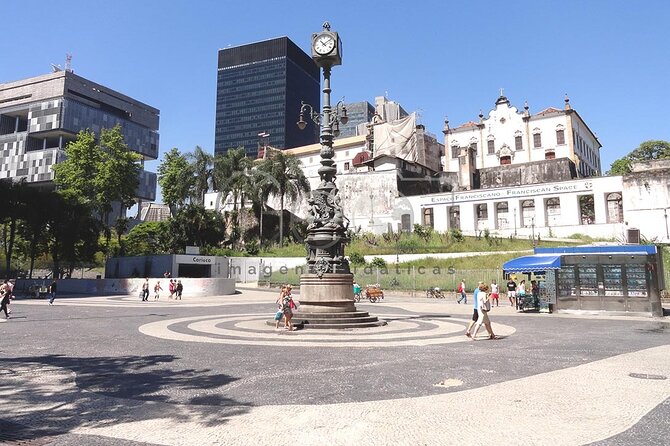
The walk starts at Carioca in Centro, near Largo da Carioca. This is described as the heart of downtown Rio, and the historical reason matters: the city’s occupation began here.
You can look toward the Church and Convent of Saint Anthony from the square. That first view gives the tour a useful opening contrast. Around you is central Rio as it functions today, while above the surrounding streets sits one of the city’s earliest major religious foundations.
I would pay close attention here instead of treating the square as a place to wait for the guide. The point is to understand how Rio grew outward from an early center. The guide’s explanation should help you connect the square, the religious buildings, and later layers of urban development.
The stop lasts about an hour, making it the longest part of the walk. That suggests the tour begins with orientation and context rather than rushing directly from one façade to another. For a first visit to Centro, this is valuable. You learn where you are before the architecture becomes more detailed.
The Convent of Saint Anthony and Rio’s early Catholic power
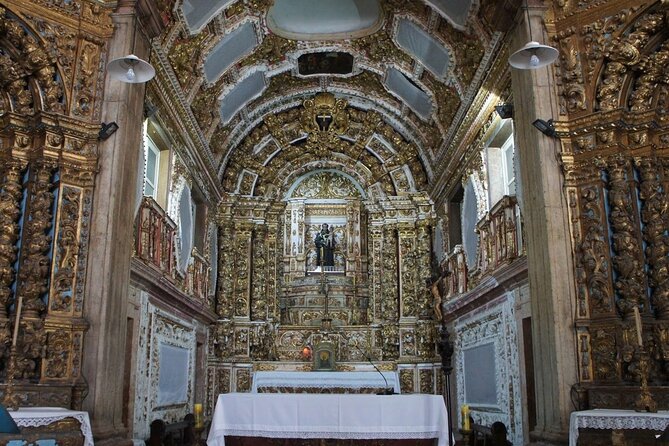
The Convent of Saint Anthony was founded in 1608 by the Order of Saint Francis. It is one of Rio’s first and most important Catholic constructions, so this stop gives the walking tour a strong link to the city’s earliest period.
Admission is not included. The listed cost is R$10 per person. That is a small extra charge, but you should carry enough local currency or have a payment method accepted at the site. The visit lasts about 30 minutes.
If timing allows, you may be able to attend a Mass. That possibility adds a living religious dimension, but it cannot be guaranteed. You should also remember that a church is an active place of worship, not simply an architectural exhibit. Dress and behavior should be respectful, especially if a service is taking place.
The most memorable architectural moment may come from a related church visit described during this experience. A guide may point out the Igreja de São Francisco da Penitência, including its Baroque and Rococo decoration. One especially unusual viewing tip involved lying on the floor of the central aisle to see a trompe l’oeil painting on the vaulted ceiling properly. This is not a standard promise to treat as guaranteed, but it shows the kind of close-looking that can make the church interiors more than a quick stop.
The same part of the walk can open a door into Rio’s colonial and imperial story. You may hear about Portuguese royalty, banking, customs, and the new Brazilian elite, along with the political effects of the Napoleonic era. There is even a story explaining where Brazil gets its name. A guide such as Alberto Cardoza, praised for speaking three languages and answering questions carefully, can make these subjects easier to follow.
Cinelandia and the city’s Belle Epoque face
The route continues to Cinelandia, where you can admire Art Deco buildings. The stop lasts about 30 minutes and has no admission charge.
This is a good place to keep your expectations realistic. The area offers architectural interest, but the experience is not presented as a long, dedicated survey of Art Deco. Belle Epoque and Beaux Arts design may receive more attention than the Art Deco label alone suggests.
That is not a weakness if you enjoy seeing how styles overlap. City architecture rarely changes in neat boxes. A formal Beaux Arts building, an Art Deco detail, and a later modernist structure can occupy the same downtown story. I would use this stop to compare shapes, decoration, entrances, and the way public buildings try to express authority.
Cinelandia also helps connect architecture to ordinary city life. You are not viewing buildings in an isolated museum setting. You are walking through an active part of Rio, which means the tour can show how people use these spaces today. One particularly praised feature of the experience is the chance to see people engaged in their hobbies and daily routines while the guide explains the city around them.
A completely different kind of day:
- Rio de Janeiro: 6-Stop Highlights of Rio with Lunch
★ 4.4 · 5,157 reviews - Christ the Redeemer Entry Ticket by Corcovado Train
★ 4.4 · 4,476 reviews - Rio’s City Tour – Tickets for Christ, Sugar Loaf & Lunch included
★ 5.0 · 4,389 reviews - Full Day: Christ Redeemer, Sugarloaf, City Tour & Barbecue Lunch
★ 4.5 · 3,142 reviews
Palacio Capanema and five modern design ideas
Palacio Capanema is one of the tour’s most important stops for anyone interested in modern architecture. The building incorporates Le Corbusier’s Five Points of a New Architecture, a set of principles that helped shape modern design.
The building was designed between 1935 and 1936 by a team that included Lucio Costa and Affonso Eduardo Reidy. Oscar Niemeyer, later Brazil’s best-known architect, was an intern in Costa’s office at the time.
Those names give the building extra weight, but you do not need to arrive with a technical background. The guide can help you look for how modern design ideas appear in the building itself. Instead of relying on heavy historical decoration, modernist architecture often focuses on structure, light, open space, and a new relationship between the building and the ground.
This is where the tour’s chronological method pays off. At the convent, architecture is closely tied to religious institutions and colonial beginnings. At Palacio Capanema, architecture becomes part of a national project linked to public life, professional design, and Brazil’s changing place in the 20th century.
The scheduled visit lasts about 30 minutes and is free. Since the tour is on foot, you may spend part of the time outside examining the building from the street. Access inside can depend on conditions not specified in the tour details, so do not assume you will receive a full interior tour.
Edifício Austregésilo de Athayde and another modernist layer
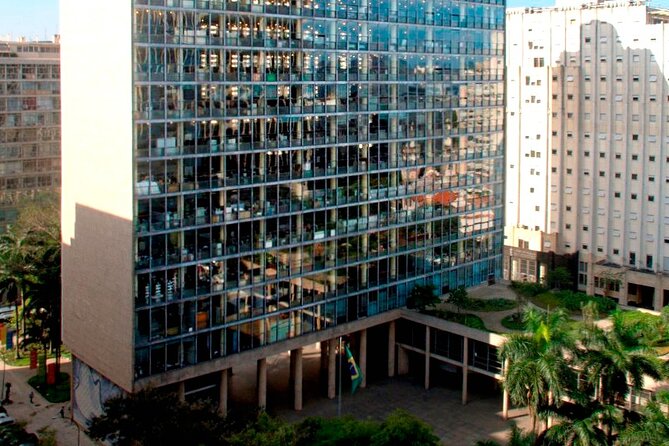
The route also includes the Edifício Austregésilo de Athayde. Located inside this building is a site described as a symbol of modernist architecture in Rio.
The supplied details do not give this stop a separate duration or admission price, so you should treat it as a shorter architectural point along the walk rather than a full museum visit. That can still be useful. Modernist cities are best understood through several examples, not just one famous building.
I like the inclusion because it keeps the tour from making Palacio Capanema carry the entire modern architecture section. You get another chance to compare the clean lines and practical ideas of modern design with the decorative styles seen earlier in Centro.
Ask your guide questions here. Since the building’s role and exact viewing details are not specified, the value will depend on the explanation you receive on the day. This is a good example of why a walking tour can be more useful than a self-guided route. A plain-looking building may have an important design story that you would otherwise miss.
Museu de Arte Moderna and Rio’s brutalist turn
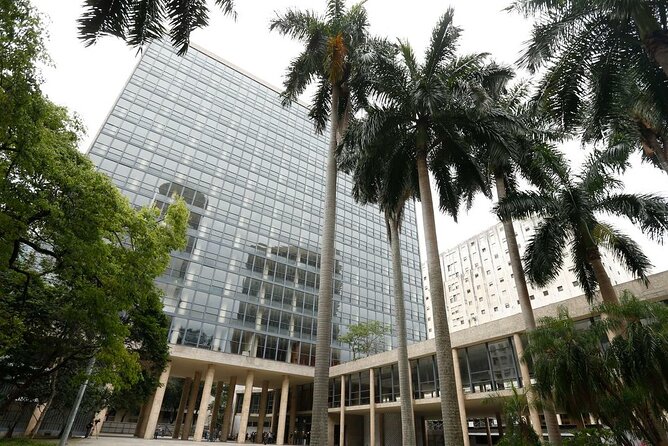
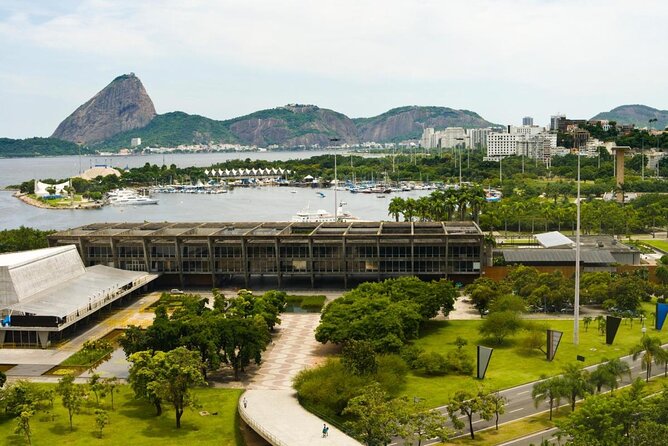
The final listed stop is the Museu de Arte Moderna do Rio de Janeiro, or MAM Rio. The museum introduces the city’s brutalist aesthetic, giving the walk a later and more forceful modern architectural note.
Admission costs R$20 per person and is not included in the tour price. The visit lasts about 30 minutes. That is enough time to understand the building’s architectural character, but it may not allow for a long museum visit or a careful look through every exhibition.
Brutalism can be an acquired taste. Its strong forms and exposed structural character may feel severe beside the ornament of Rio’s older churches and Beaux Arts buildings. That contrast is precisely why the stop works. You see how the city’s design language changed from carved decoration to bold mass and structure.
I would not book this walk only for a full art museum afternoon. The MAM stop is part of a wider architectural route, not a replacement for an extended museum visit. If your main interest is modern design, though, this final stage gives the tour a clear ending and shows that Rio’s architectural story did not stop with the colonial center.
What the guide adds to the buildings
The strongest praise for this experience centers on the guide’s storytelling. Alberto Cardoza has been described as fluent in three languages, patient with questions, and able to bring Rio from four centuries ago into the present.
That matters because architecture without context can become a parade of façades. The guide can connect a church to religious orders, a public building to political change, and a modernist design to the architects who shaped Brazil’s 20th century.
I especially like the way the experience encourages you to look at buildings from unusual angles. The ceiling-painting example at the Igreja de São Francisco da Penitência shows a guide using physical perspective, not just dates and names, to explain art. If you enjoy asking questions, this is likely to be one of the tour’s best features.
The tour received a perfect rating from 14 reviews, with 100 percent recommending it. That is a small sample, so I would not treat the score as a guarantee. Still, the praise is consistent: the strongest points are historical explanation, architecture, and the chance to see ordinary Rio life while walking between sites.
Price, group size, and practical value
The price is $60 per person for about four hours. The guide is included, but transportation, lunch, and admissions are not.
Add the listed entrance fees and the minimum known extra cost is R$30 per person: R$10 for the Convent of Saint Anthony and R$20 for MAM Rio. Currency exchange rates will affect the final amount, but the additional charges are modest compared with the main tour price.
You are paying mainly for the guide and the structure of the route. If you only want to photograph buildings from outside, you could walk through Centro on your own for less. The tour earns its price when you want the architectural terms, political background, and historical connections explained as you go.
The group limit is listed as a maximum of 15 people per guide, which should make it easier to hear and ask questions. A separate activity note lists a maximum of 100 participants, so the practical point is to confirm your guide group size if that matters to you. The tour is near public transportation, starts and ends at Carioca in Centro, and is described as suitable for most participants.
You should wear walking shoes and comfortable clothing. Children must be accompanied by an adult. If requested, you may need to present a copy of your ID.
Weather, timing, and who should book
The experience requires good weather and is nonrefundable if you cancel less than 24 hours before the start time. If poor weather causes the operator to cancel, you should be offered another date or a full refund. Plan carefully around the forecast because the tour is built around walking between outdoor sites.
You can cancel for a full refund up to 24 hours before the start time. Changes made within that period are not accepted. The local cutoff time applies.
I would recommend this walk to:
- Architecture students and design enthusiasts
- History buffs who want more than Rio’s postcard sights
- First-time visitors who want a clear introduction to Centro
- People who enjoy walking, questions, and careful looking
- Visitors interested in the shift from colonial religion to modernist public design
I would think twice if you dislike walking, want a long indoor museum visit, or expect a tour focused only on Art Deco. The route includes Art Deco, but it also gives serious space to colonial, Beaux Arts, and modernist architecture.
Should you book the Half-Day Architecture Walking Tour in Rio?
Book it if you want Rio to make more sense. The route links Largo da Carioca, the Convent of Saint Anthony, Cinelandia, Palacio Capanema, Edifício Austregésilo de Athayde, and MAM Rio into one readable story.
The best reason to choose it is the guide-led interpretation, especially if Alberto Cardoza is leading your group. The main cautions are the extra admission fees, the weather requirement, and the fact that the Art Deco section is not the whole focus.
At $60, I see good value for a visitor who wants history and architecture explained in person. If that sounds like your kind of afternoon, choose a start time, wear good shoes, and leave room for Rio’s older center to surprise you.
FAQ
How long does the architecture tour last?
The tour lasts approximately four hours.
How much does the tour cost?
The listed price is $60 per person. The guide is included, but lunch, roundtrip transportation, and entrance fees are extra.
Which entrance fees must I pay separately?
The Convent of Saint Anthony costs R$10 per person, and the Museu de Arte Moderna do Rio de Janeiro costs R$20 per person.
Where does the tour start and end?
The meeting point is Carioca / CentroCentro in Rio de Janeiro. The activity ends back at the meeting point.
How large is the tour group?
The tour information states a maximum of 15 people per guide. It also gives an overall maximum of 100 participants for the activity.
Can I cancel for a refund?
You can cancel at least 24 hours before the start time for a full refund. Cancellations or changes made less than 24 hours before the start are not accepted. If poor weather causes the operator to cancel, you should be offered another date or a full refund.
Just added in Rio de Janeiro
- Half Day Private E-Bike Tour in Rio★ 5.0 · 50 reviews
- Guided Walk to the Old River and Santa Teresa with Transportation★ 5.0 · 2 reviews
- Full-Day Guided Tour of Ilha de Paquetá with Pick Up★ 5.0 · 8 reviews
- Private City Tour in Cabo Frio: Discover Paradise at Beira-Mar★ 5.0 · 1 review
- Guided Walk to Telegraph Stone★ 4.5 · 49 reviews
- Path DA Guided to Gávea Stone★ 5.0 · 3 reviews
- Guided Trail to Beautiful Stone★ 5.0 · 6 reviews
- Guided Walk through the Historic Center of Rio DE Janeiro★ 5.0 · 3 reviews
Walking Tours, compared.


3 Hour Rocinha Favela Walking Tour with a Local Guide
Read our review →
Favela Tour Rio de Janeiro – Vidigal Walking Tour by Russo Guide
Read our review →

Private Walking and Cultural Tour Rocinha-Rio de Janeiro
Read our review →
Browse the lists this tour appears in