
Reviewed · HISTORICAL TOURS
Rio de Janeiro: Afrobrazilian Heritage & Black History Walk
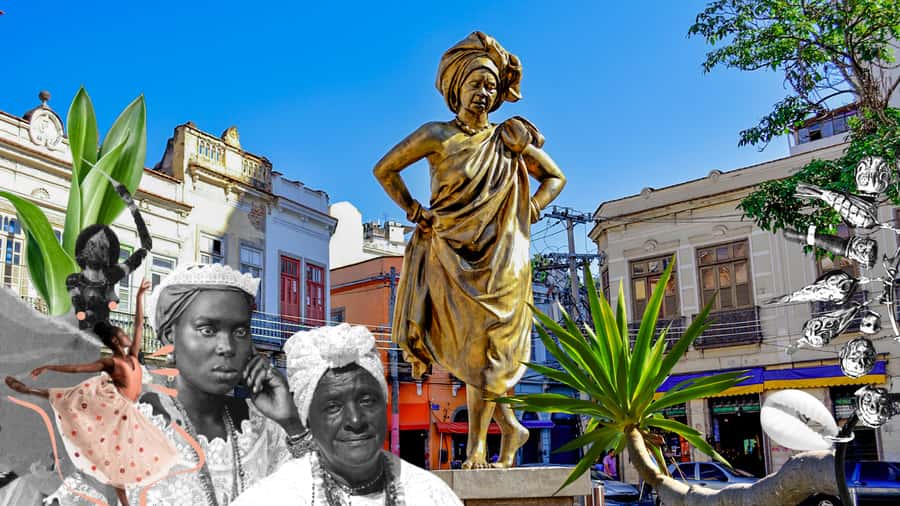
Rio’s past comes alive on foot. This 150-minute walk connects the slave trade, Afro-Brazilian religion, samba, public art, and modern Rio through places that are easy to miss on a standard city tour. You visit Valongo Wharf, the UNESCO World Heritage Site tied to the transatlantic slave trade, then continue through Saúde and Pedra do Sal, the heart of Rio’s historic Little Africa.
I like the way this tour places Black history at the center of Rio’s story, rather than treating it as a side note. I also like the personal approach offered by guides such as Kelly and Jaíse, whose family and cultural connections give the subject care and weight. The main drawback is that the tour is offered in English, Spanish, and Portuguese, not French, so French-speaking visitors may need to manage with another language.
In This Review
- Key points to know before booking
- Why this walk matters in Rio
- Meeting at Praça Mauá and entering Saúde
- Valongo Wharf and the memory of the slave trade
- Praça Mauá, murals, and the public face of Black Rio
- Pedra do Sal, the center of Little Africa
- Candomblé, umbanda, and Afro-Brazilian spiritual traditions
- What you get for $64
- Pace, language, and accessibility
- Who will appreciate this experience most
- Should you book the Afro-Brazilian Heritage Walk?
- FAQ
- How long does the Afro-Brazilian Heritage and Black History Walk last?
- Where does the tour meet?
- Which languages are available?
- Is Valongo Wharf included?
- Is museum admission included?
- Is food included?
- Is the tour wheelchair accessible?
- What should I bring?
Key points to know before booking
- Valongo Wharf is the emotional center: You visit the UNESCO site where millions of enslaved Africans arrived in Rio.
- Pedra do Sal links history with samba: The area is known as the birthplace of samba and still hosts weekly samba circles.
- The guide shapes the experience: Kelly and Jaíse have been praised for making complex history clear, personal, and engaging.
- This is a walking tour, not a museum tour: Museum admission is not included, and much of the learning happens outdoors.
- The route explores Little Africa: Saúde, Largo São Francisco da Prainha, Praça Mauá, and Pedra do Sal all connect to Afro-Brazilian life.
- The price is fair for a specialist tour: At $64 per person, you are paying for a focused cultural experience with a live guide, not transport or meals.
Why this walk matters in Rio
Rio is often sold through beaches, mountains, and nightlife. Those are real parts of the city, but they tell only a small piece of its story. Afro-Brazilian culture shaped Rio’s music, food, religious life, street celebrations, and neighborhoods. This tour gives you a way to see those connections in the places where they formed.
The focus is the forced arrival of Africans in Brazil and the lives and traditions that followed. The tour covers more than 380 years of human trafficking carried out by the Portuguese, along with the cultural survival and creativity of African descendants in Rio.
That distinction matters. You are not simply looking at old buildings or hearing a list of dates. You are learning how a painful past still influences the city today. Samba, Carnival, religious traditions, food, and local gatherings all become easier to understand after this walk.
The guide is central to the experience. Kelly has been praised for extensive research, personal connection, and a careful way of explaining the subject. Jaíse has also been singled out for detailed historical knowledge and for making Afro-Brazilian history feel immediate rather than distant.
More History Tours in Rio de Janeiro
- Rio de Janeiro Historical Center Walking Tour
★ 4.5 · 336 reviews - Private Walking and Cultural Tour Rocinha-Rio de Janeiro
★ 5.0 · 239 reviews - Discover Rio Little Africa: A Cultural and Historical Journey
★ 5.0 · 238 reviews
Meeting at Praça Mauá and entering Saúde
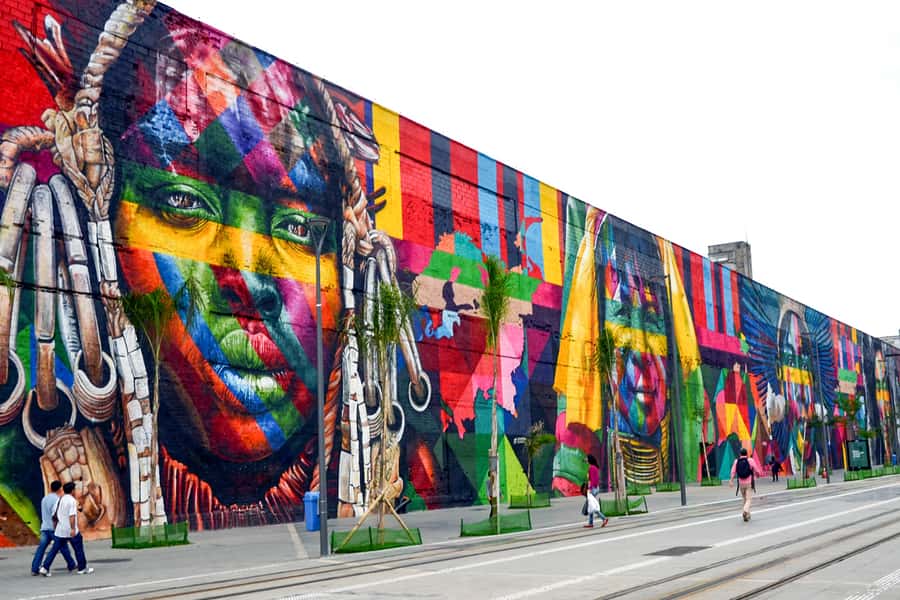
The meeting point is under the trees in front of the MAR, the Rio Art Museum, at Praça Mauá. This is a practical place to begin because the square connects several important cultural sites in central Rio. You may also see the Museum of Tomorrow and the large Kobra mural known as Etnias nearby.
The museum itself is not part of the tour. Admission to the Rio Art Museum and the Museum of Tomorrow is not included, so plan a separate visit if you want to go inside. The walking tour uses the public spaces around these attractions to tell a different story, one centered on Black heritage and the port district.
From Praça Mauá, the route moves toward Saúde. The listed walk between parts of the route takes about 15 minutes, and the full guided experience lasts 2.5 hours. That is long enough for serious discussion without taking over your entire day.
Wear comfortable clothes and shoes. Bring a reusable water bottle, hat, and rain gear. This tour runs rain or shine, so Rio’s sudden showers are not a reason to leave your poncho at the hotel.
Valongo Wharf and the memory of the slave trade
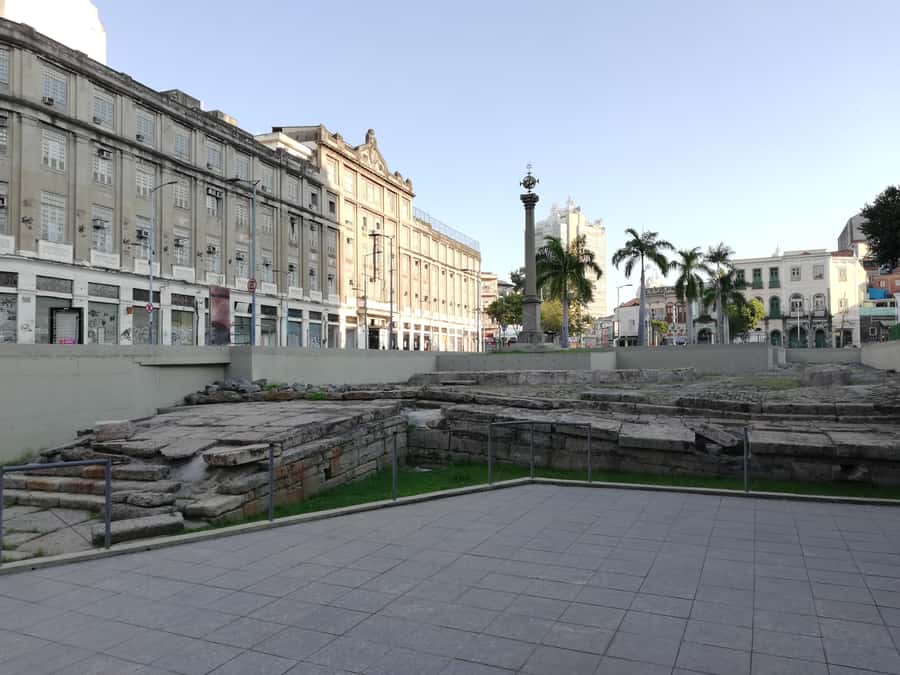
Valongo Wharf is the most important historical stop on the route. It is recognized by UNESCO as a World Heritage Site connected to the memory of the transatlantic slave trade. The wharf was the place where enslaved Africans arrived in Rio before being sold.
The scale is difficult to grasp. The tour explains that millions of Africans arrived here and were sold through the largest slave market in the Atlantic. The site is valuable because it makes that history local and physical. Instead of hearing only about slavery as a broad Atlantic system, you are standing in the part of Rio where that system operated.
This can be a sobering stop, and it should be. The tour deals with forced migration, sale, violence, and the destruction of families and communities. It also explains what remained and grew despite that cruelty, including music, spiritual traditions, community life, and forms of resistance.
Give yourself time to listen. This is not the kind of place to rush through for a photograph. The guide’s role is especially important here, since the meaning of the site is not always obvious from the street.
Praça Mauá, murals, and the public face of Black Rio
The area around Praça Mauá brings old and new Rio together. Alongside museums and waterfront redevelopment, you find public art that reflects Brazil’s many cultural roots. The Etnias mural by Eduardo Kobra is one of the visual highlights associated with the area.
The mural is not a replacement for historical interpretation, but it adds a useful modern layer. Its large faces and public location make a bold statement about Indigenous peoples and cultural diversity. The tour helps place that artwork beside the older port history, rather than treating it as an isolated attraction.
I like this part of the route because it shows that the story of Afro-Brazilian identity is not locked in the past. You move through spaces used by present-day Rio while learning about the people and customs that helped shape them.
Keep in mind that you are seeing the mural and surrounding public areas from outside. If art museums are a major reason for your visit, you will need extra time and a separate ticket for the MAR or Museum of Tomorrow.
More Walking Tours in Rio de Janeiro
- Rio de Janeiro: Rocinha Favela Walking Tour with Local Guide
★ 4.8 · 3,052 reviews - Rio De Janeiro: Half-Day Rocinha Favela Walking Tour
★ 4.7 · 2,272 reviews - 3 Hour Rocinha Favela Walking Tour with a Local Guide
★ 5.0 · 833 reviews - Favela Tour Rio de Janeiro – Vidigal Walking Tour by Russo Guide
★ 5.0 · 377 reviews
Pedra do Sal, the center of Little Africa
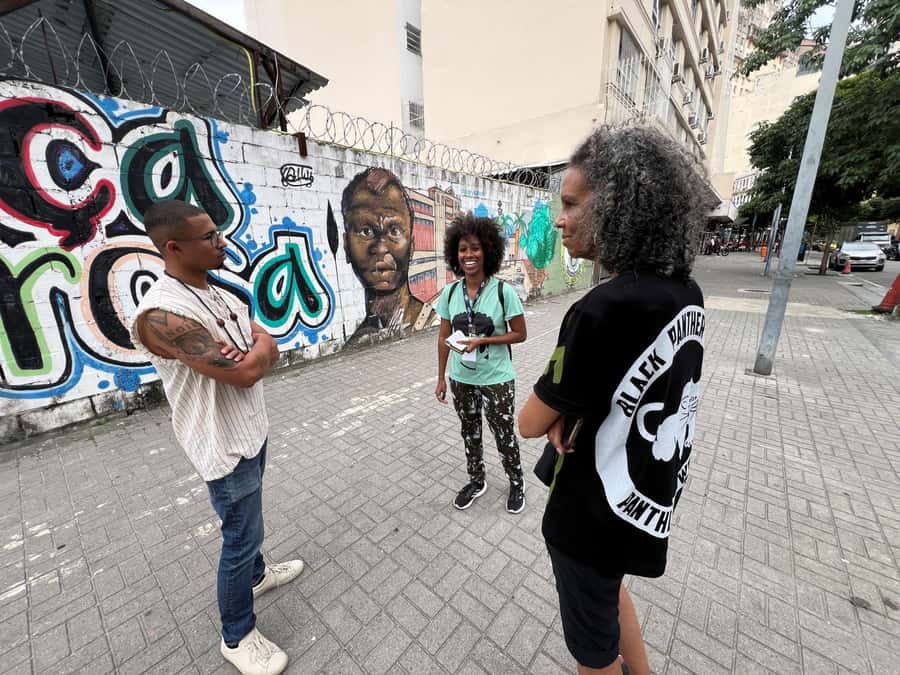
Pedra do Sal, or Rock of Salt, is the tour’s most lively historical setting. It is considered the center of Little Africa, the area where Afro-Brazilian communities helped shape the cultural life of Rio.
The stone itself is linked to the old port district, while the neighborhood became a meeting place for musicians and dancers. Pedra do Sal is widely associated with the origins of samba, and it was also the site of early Carnival bloco parties and parades.
The tradition continues. Weekly rodas de samba, or samba circles, still take place there. The tour can give you tips on local music, restaurants, museums, and current programming, and one guide invited a participant to an authentic samba jam after the walk. That kind of local suggestion can be one of the most useful parts of the afternoon, especially if you want to continue the experience on your own.
The timing of your tour matters here. The walk itself is a daytime cultural tour, and you should not assume a samba performance is included in the $64 price. Ask the guide about current events if music is a priority.
Pedra do Sal is also where the tour moves from historical explanation to living culture. You learn not only where samba developed, but why shared music, dance, and public gathering mattered to communities facing discrimination and hardship. That connection gives the neighborhood more meaning than a quick photo stop.
Candomblé, umbanda, and Afro-Brazilian spiritual traditions
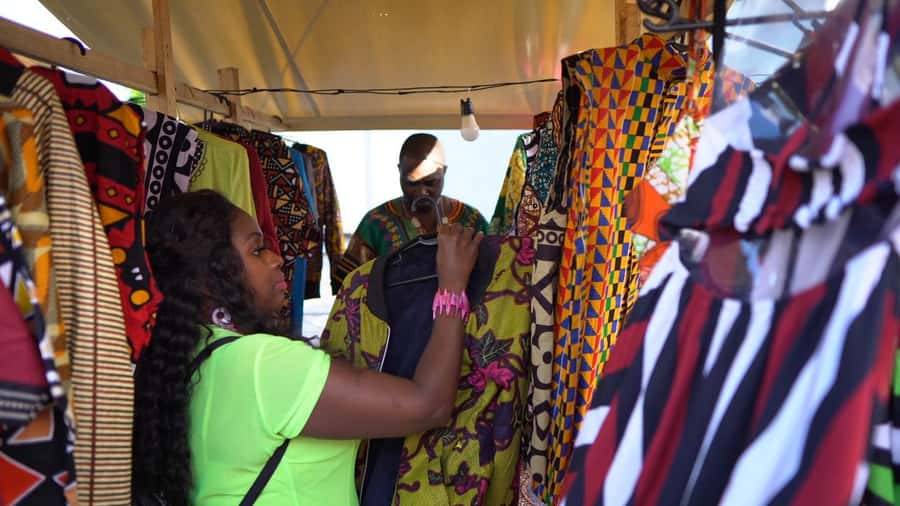
The tour also introduces candomblé and umbanda, two Afro-Brazilian religions shaped by African traditions and their development in Brazil. You learn about their links with Christianity and the process often described as religious syncretism.
The guide discusses orishas, nkisis, and voduns, along with Brazilian ancestral gods and goddesses connected with nature. These traditions are not presented simply as colorful folklore. They are treated as systems of belief, identity, memory, and community.
That approach is important for visitors. It is easy to misunderstand Afro-Brazilian religions if you view them only through Carnival imagery or tourist displays. The walk helps you see that spiritual traditions survived through adaptation, secrecy, and cultural exchange.
You should approach this section with respect and attention. The material may be unfamiliar, and the tour is not designed as a full religious studies course. It gives you a foundation, then points toward a wider understanding of Brazilian culture.
What you get for $64
At $64 per person, this is not the cheapest way to see central Rio. You are paying more than you would for a basic orientation walk, but the subject is far more focused. The value comes from the guide’s interpretation and the chance to connect several major sites into one clear story.
The tour includes a live guided walk, discussion of Afro-Brazilian culture, samba origins, candomblé, orishas, nkisis, voduns, and the Valongo Wharf UNESCO site. You also receive suggestions for music, art, museums, restaurants, and local events.
Transport is not included. Food is not included. Museum admission is not included. Those limits are worth noting because the route passes near places where you may want to spend more time afterward.
The food reference in the route suggests a regional food element around Pedra do Sal, but the official inclusions say food is not included. Treat the walk as a cultural route rather than a food tour, and budget separately for anything you eat.
For me, the price makes the most sense if you value a local guide and want a serious introduction to a part of Rio that many general tours barely cover. It is less useful if you mainly want transport, landmark photographs, or museum entry.
Pace, language, and accessibility
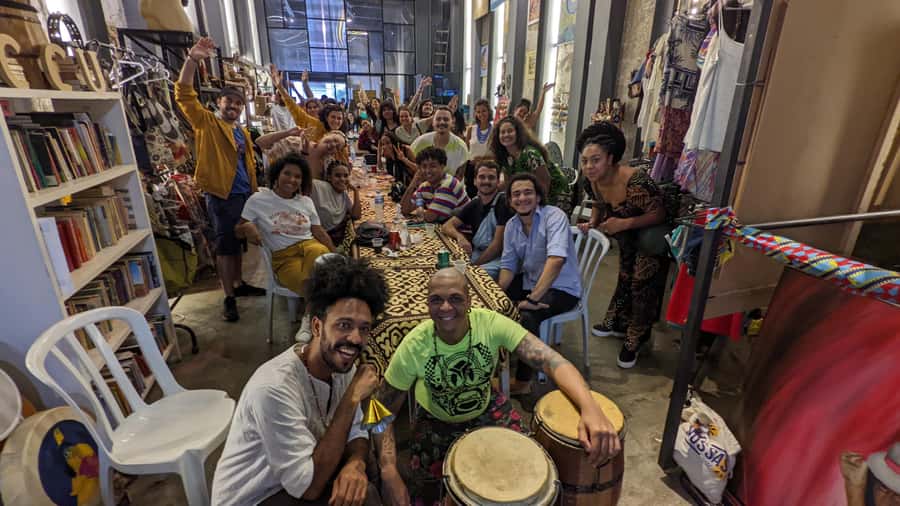
The tour lasts 150 minutes and is conducted on foot. That gives you a steady route through central Rio, but you should still expect to be outdoors for most of the experience. Comfortable clothing, water, sun protection, and rain gear will make a real difference.
The tour is wheelchair accessible. Because the experience takes place in public streets and historic areas, it is still sensible to confirm current route conditions with the provider before booking if you have specific mobility needs.
English, Spanish, and Portuguese are available. French is not listed as an operating language. One French-speaking participant found this frustrating, so French-only visitors should not assume that French support will be available simply because the booking information can be viewed in French.
Communication by WhatsApp is encouraged for faster contact. Keep the guide’s operational details and your travel insurance number handy. Insurance is not mandatory for this tour, but it is recommended by the provider.
Private groups can be arranged on another date with about 24 hours’ notice. Transfer fees may apply, and arrangements depend on vehicle availability.
Who will appreciate this experience most
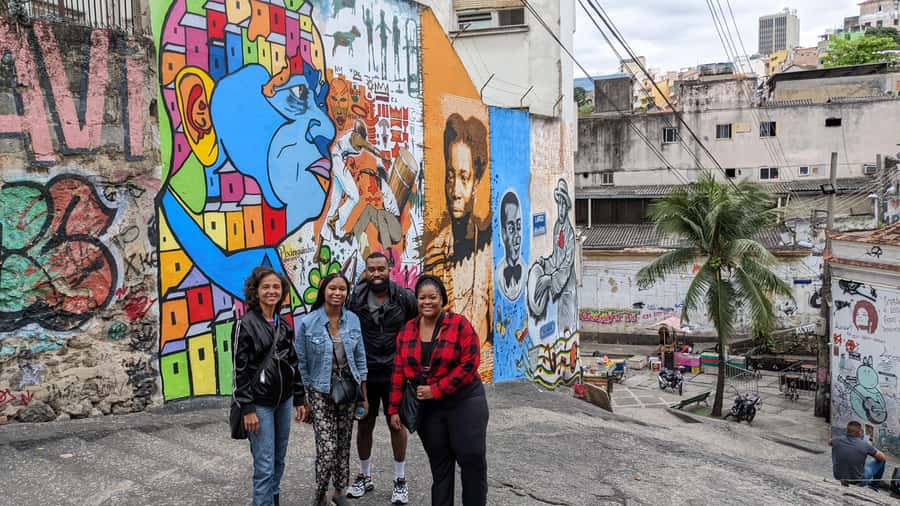
You should book this walk if you want to understand Rio through its African and Afro-Brazilian roots. It is especially suited to visitors who care about history, music, religion, public art, and local culture, and who prefer a guide-led experience over a self-guided stroll.
It is also a strong choice for repeat visitors. If you have already seen Sugarloaf Mountain, Christ the Redeemer, and Copacabana, this tour gives you a different way to read the city.
Families with older children and teenagers may find the subject useful, though the history is serious and includes slavery and human trafficking. Adults with limited time can also benefit because the tour brings several connected sites together in one 2.5-hour route.
You may want to skip it if you dislike walking, want a light sightseeing outing, or need a French-speaking guide. It is also not the right choice if you expect a museum tour, included food, or private transportation.
Should you book the Afro-Brazilian Heritage Walk?
I would book this tour if Rio’s cultural story matters as much to you as its famous views. The strongest parts are the visit to Valongo Wharf, the walk through Little Africa, and the explanation of how samba and Afro-Brazilian religions developed in the city.
The experience depends heavily on the guide, and that is a good thing here. Kelly and Jaíse have been praised for care, clarity, and personal commitment. Their approach appears to make difficult history understandable without turning it into a dry lecture.
Book it early in your Rio stay if possible. The suggestions about samba, museums, restaurants, and local events may help shape the rest of your visit. Choose another activity if you need transport, meals, or a major landmark checklist.
FAQ
How long does the Afro-Brazilian Heritage and Black History Walk last?
The tour lasts 150 minutes, or 2.5 hours.
Where does the tour meet?
Meet under the trees in front of the MAR, the Rio Art Museum, at Praça Mauá.
Which languages are available?
The tour is offered in English, Spanish, and Portuguese.
Is Valongo Wharf included?
Yes. The tour visits Valongo Wharf, the UNESCO World Heritage Site connected to the memory of the transatlantic slave trade.
Is museum admission included?
No. Entrance to the Rio Art Museum and Museum of Tomorrow is not included.
Is food included?
No. Food is not included in the tour price.
Is the tour wheelchair accessible?
Yes, the activity is listed as wheelchair accessible.
What should I bring?
Bring a reusable water bottle, comfortable clothing, a hat, and rain gear. The tour operates rain or shine.
Just added in Rio De Janeiro
- Full Day Tour in Rio de Janeiro★ 5.0 · 8 reviews
- Garganta do Ceu Cave Hiking Private Tour on Pedra da Gavea★ 4.5 · 3 reviews
- Gastronomic Tour at the Municipal Market in Rio de Janeiro★ 5.0 · 4 reviews
- GIG Airport Transfer x Rio de Janeiro Hotels★ 4.5 · 11 reviews
- Rio de Janeiro private Full day Custom Tours★ 5.0 · 35 reviews
- Christ the Redeemer – Complete Morning Tour with Ticket and Transport at the Hotel★ 3.5 · 4 reviews
- AquaRio, Museum, Boulevard Olimpico, Ferris Wheel, Transport and Tourism Guide.★ 4.0 · 6 reviews
- Personalized and Private Full-Day Tour in Rio de Janeiro★ 5.0 · 6 reviews
Historical Tours, compared.


Private Walking and Cultural Tour Rocinha-Rio de Janeiro
Read our review →
Discover Rio Little Africa: A Cultural and Historical Journey
Read our review →


Scenic Train ride to historical cities of Morretes and Antonina
Read our review →
Browse the lists this tour appears in