
Reviewed · WALKING TOURS
Rio de Janeiro: Bossa Nova Walking Tour
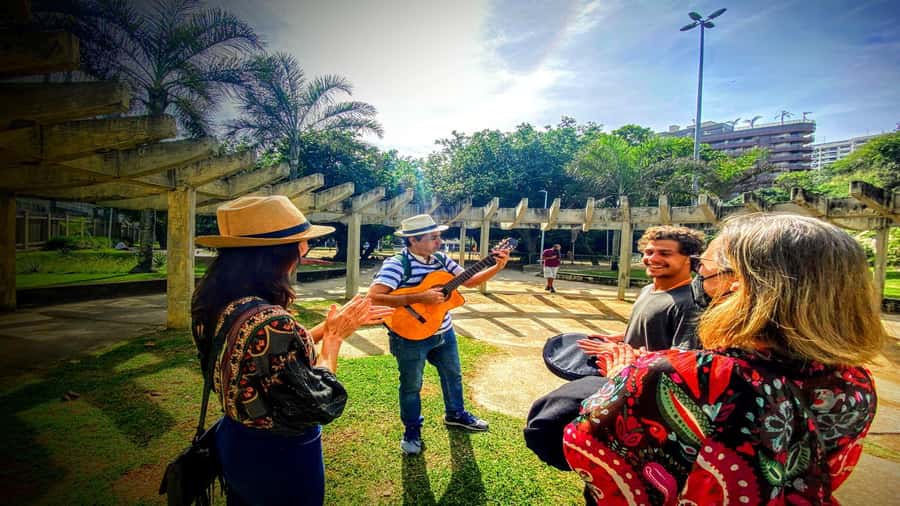
Music makes Rio easier to understand. This three-hour walk through Ipanema and Copacabana connects famous bossa nova songs with the streets, beaches, bars, and homes tied to the music’s early years. I like the small group size, limited to eight people, and I especially like that your guide is also a singer and guitarist, not simply someone reciting dates.
I also like the route’s clear sense of place. You move from Ipanema toward Copacabana, along the same general setting linked with The Girl from Ipanema. The main consideration is the price: at $95 per person, this is not a cheap sightseeing walk. You are paying for a specialized musical experience and a live performance, not transport, meals, or a long list of formal attractions.
One recent account identifies the musician-guide as Guilherme and describes the walk as a private concert that carries you back to old Ipanema. That is the right way to think about this tour: part neighborhood walk, part music lesson, and part intimate guitar show.
In This Review
- Key points to know before booking
- Why this walk is different from a standard Rio city tour
- Starting in Ipanema, where the music found its setting
- Hearing the story through guitar and voice
- From Ipanema toward Copacabana
- The 1950s and 1960s through Rio’s streets
- What the $95 price includes
- Language, group size, and practical planning
- Who should book this experience
- Should you book the Bossa Nova Walking Tour?
- FAQ
- How long does the Bossa Nova Walking Tour last?
- Where does the tour meet?
- Which neighborhoods does the tour visit?
- What languages are available?
- Is the tour limited to a small group?
- Is food or drink included?
- Can I cancel for a full refund?
Key points to know before booking
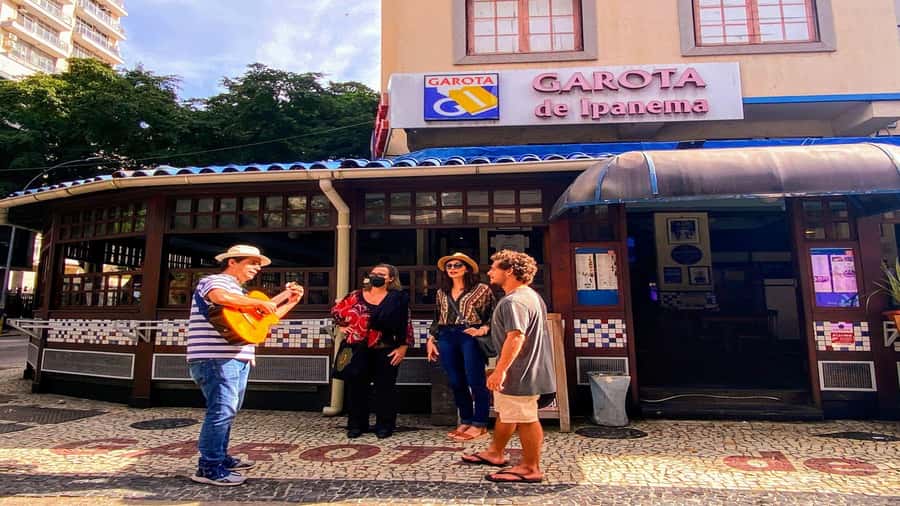
- Live music leads the walk: Your guide explains bossa nova while singing and playing guitar along the route.
- Ipanema to Copacabana: The three-hour path links two of Rio’s best-known seaside neighborhoods.
- The Girl from Ipanema connection: The tour visits streets and places associated with the song and its famous era.
- A small group of eight: The limited size should make it easier to hear the guide and ask questions.
- A focused 1950s and 1960s story: You learn about Tom Jobim, Vinícius de Moraes, João Gilberto, and the genre’s roots.
- Food and transport cost extra: Hotel pickup, drop-off, food, and drinks are not included.
Why this walk is different from a standard Rio city tour
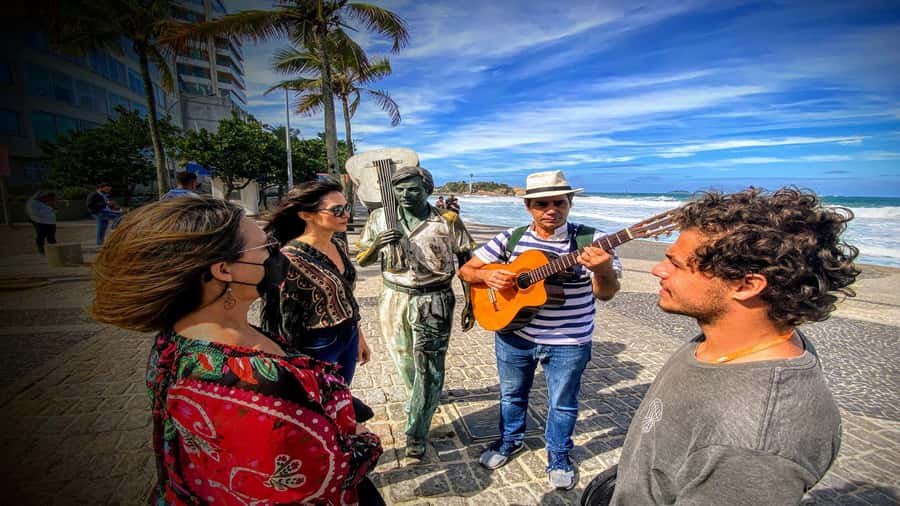
Most sightseeing walks use monuments, viewpoints, and architecture to explain a city. This one uses songs. That changes the pace and the mood. Instead of simply passing through Ipanema, you connect its streets and beach corners with the musicians who helped make Rio famous around the world.
I like that the subject is specific. The tour does not attempt to explain all of Brazilian music in three hours. It concentrates on bossa nova, its beginnings, its leading composers and performers, and the places tied to its rise in the 1950s and 1960s.
Your guide’s role matters here. A musician can show you how a melody works, not just tell you that a song was important. When the guitar comes out, the history becomes easier to place. You hear the gentle rhythms as you walk through the same broad setting that inspired some of the genre’s best-known songs.
The result should appeal most to you if music is part of how you experience a city. If you only want a fast introduction to Rio’s major sights, this may feel too narrow. If you want context, stories, and a live performance in the neighborhoods connected to bossa nova, the focus is the main attraction.
More Walking Tours in Rio de Janeiro
- Rio de Janeiro: Rocinha Favela Walking Tour with Local Guide
★ 4.8 · 3,052 reviews - Rio De Janeiro: Half-Day Rocinha Favela Walking Tour
★ 4.7 · 2,272 reviews - 3 Hour Rocinha Favela Walking Tour with a Local Guide
★ 5.0 · 833 reviews
Starting in Ipanema, where the music found its setting
The route begins in or around Ipanema, though the exact meeting point is provided only after booking. That detail is worth taking seriously. Ipanema is a large neighborhood, and you should check the confirmation carefully rather than assuming the walk begins at a familiar beach landmark.
Ipanema gives the tour its strongest sense of identity. The area is tied to the song The Girl from Ipanema, and the walk uses that connection as a doorway into the wider bossa nova story. You are not simply hearing the song as a tourist symbol. You are learning how a particular place became part of its public image.
The guide is expected to point out emblematic streets, houses, beach corners, and legendary bars associated with the music. The supplied details do not name each stop, so you should not expect a fixed museum-style itinerary with a published list of addresses. The value lies in the guide’s interpretation of the places you pass.
That format can be more satisfying than a rigid route. A musician-guide can explain why a corner mattered, who met there, and how the sound developed. The tradeoff is that the experience depends heavily on the person leading it. With a maximum of eight participants, you should have a good chance to ask for clarification or request another song, though the exact performance style will vary by guide.
Hearing the story through guitar and voice
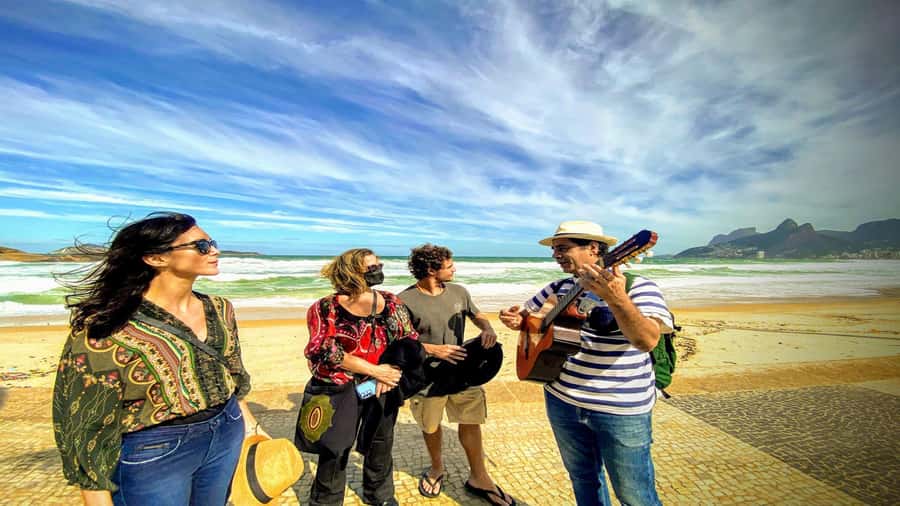
The tour’s best feature is also its clearest promise: the guide plays guitar and sings during the walk. This is not background entertainment added at the end. Music is built into the explanation of bossa nova.
You can expect stories about the genre’s origins and its key figures, including Tom Jobim, Vinícius de Moraes, and João Gilberto. Their names are not presented as a disconnected list. They help explain the creative circle behind the sound, the songs that shaped it, and the performers who carried it beyond Rio.
Tom Jobim is central to the songwriting tradition. Vinícius de Moraes links poetry and music. João Gilberto is one of the main performers associated with the intimate guitar rhythm that defines bossa nova for many listeners. The tour gives you a way to place these figures within Rio’s southern neighborhoods instead of meeting them only as names in a guidebook.
I would expect the guide to alternate between walking, storytelling, and short musical passages. The information does not promise a seated concert, so you should picture a moving performance rather than a formal stage show. That distinction matters. You get a more personal connection to the streets, but you should also be ready to keep walking while listening.
One particularly strong description calls the experience a private concert in which the participant is also part of the journey. That captures the appeal. You are not being asked to stand silently in an auditorium. You are hearing the songs in the places that give them meaning.
From Ipanema toward Copacabana
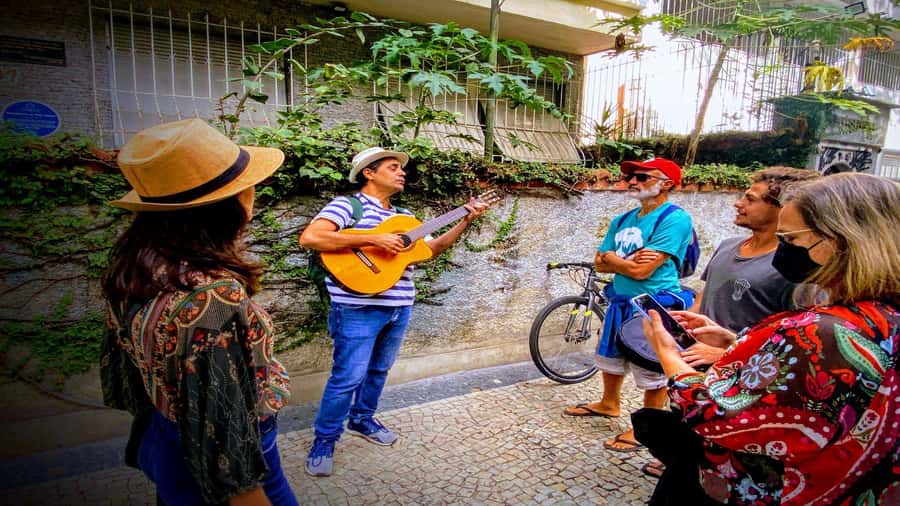
The walk continues from Ipanema toward Copacabana, following a route through two of Rio’s most recognizable coastal neighborhoods. The change from one district to the other gives the tour a simple narrative shape: begin with the world most closely linked to The Girl from Ipanema, then continue through the wider setting that helped define bossa nova’s image of Rio.
The beach sections are important because they connect music with everyday public life. The tour refers to beach corners loaded with history, rather than only indoor venues. That means you should expect the city itself to remain part of the experience as you move along the route.
Copacabana adds a second famous Rio setting, but the focus remains musical. This is not primarily a beach photography walk or a general Copacabana orientation tour. The guide uses the neighborhood to continue the story of composers, performers, bars, streets, and the era when bossa nova was taking shape.
The route may be especially enjoyable in a small group. With eight or fewer participants, you are less likely to lose the guide’s voice during a song or story. You can also ask about a musician, a melody, or a place that catches your attention.
Still, this is a walking tour, and the duration is three hours. The supplied information does not specify the distance, walking pace, or rest stops. If you prefer short walks or need a detailed mobility plan, ask the operator for those specifics before booking. That is not a criticism of the tour. It is simply a sensible question for any experience built around moving between neighborhoods.
A completely different kind of day:
- Rio de Janeiro: 6-Stop Highlights of Rio with Lunch
★ 4.4 · 5,157 reviews - Christ the Redeemer Entry Ticket by Corcovado Train
★ 4.4 · 4,476 reviews - Rio’s City Tour – Tickets for Christ, Sugar Loaf & Lunch included
★ 5.0 · 4,389 reviews - Full Day: Christ Redeemer, Sugarloaf, City Tour & Barbecue Lunch
★ 4.5 · 3,142 reviews
The 1950s and 1960s through Rio’s streets
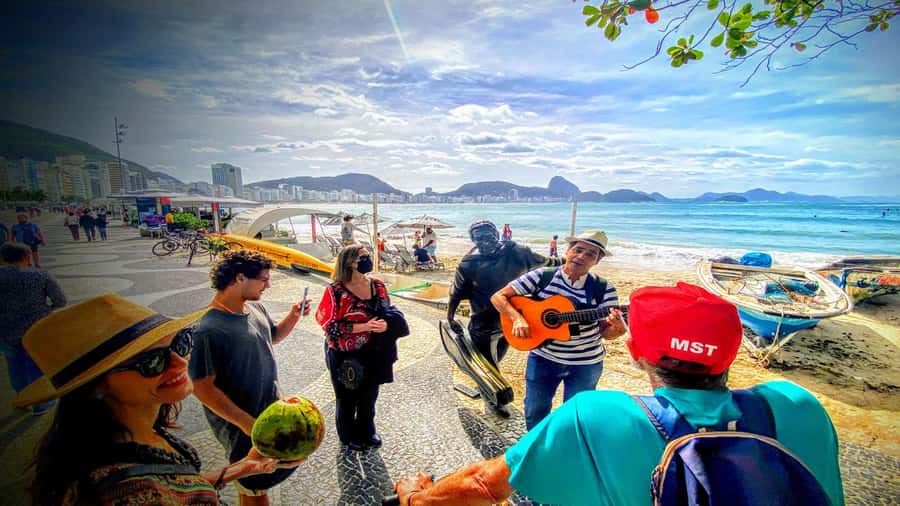
The historical focus on the 1950s and 1960s gives the tour its strongest time-travel quality. Your guide brings you back to the period when bossa nova was becoming one of Rio’s defining musical exports.
That period matters because the tour is not only about famous recordings. It is about the social setting in which musicians met, wrote, rehearsed, and played. The reference to bars, houses, and street corners helps you see bossa nova as a living scene rather than a polished product from a distant past.
I appreciate that the tour presents the music through anecdotes. Stories about encounters and creative friendships can make the genre easier to remember than a standard lecture. A melody sung at the right corner may stay with you longer than a paragraph about dates and biographies.
At the same time, you should book this with realistic expectations. The experience is an introduction, not a full academic study of Brazilian music. It promises the origins, major composers, key performers, and important locations, but three hours is not enough to cover every influence, recording, or later development.
For most people, that narrow scope is a strength. You get a coherent story instead of a rushed survey. I would especially recommend it after you have heard some bossa nova before, since familiar songs will make the stops more meaningful. You do not need expert knowledge, but a basic interest in the music will help you get more from the walk.
What the $95 price includes
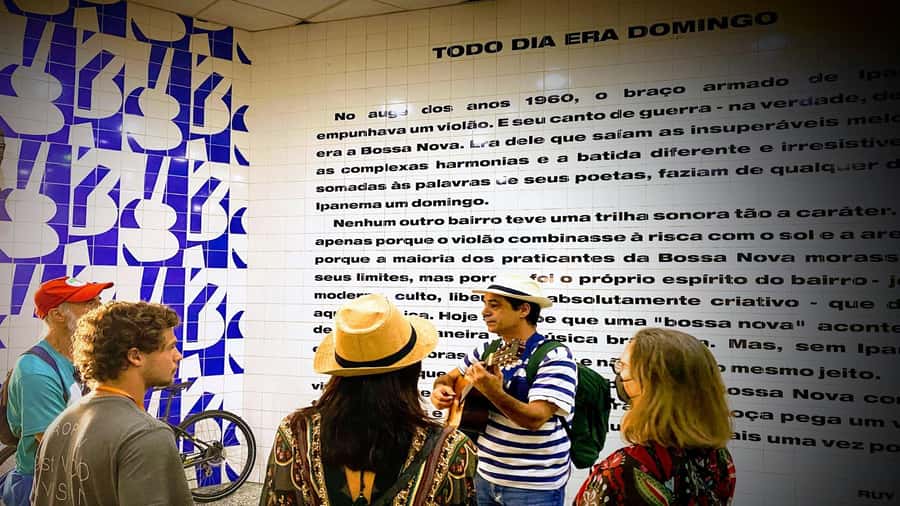
At $95 per person, the tour sits in the premium range for a three-hour walking activity. The price makes more sense when you separate it from a standard guided walk. You are paying for a specialist guide who performs live, a small group capped at eight, and a carefully focused connection between music and place.
The guide’s musical ability is the main value. If you would otherwise pay for a concert and a neighborhood tour separately, combining those elements can be appealing. The experience also avoids the feel of a large bus excursion. You walk through the neighborhoods instead of viewing them through a window.
The price will feel less worthwhile if you mainly want photos, general sightseeing, or a quick explanation of Ipanema and Copacabana. You are not getting food, drinks, hotel pickup, or hotel drop-off. Those costs and arrangements remain yours.
I would book this for a special interest, not as the only Rio tour you take. It is a focused cultural experience. Its value rises if you already enjoy live music, Brazilian culture, songwriting, or the story behind The Girl from Ipanema.
Language, group size, and practical planning
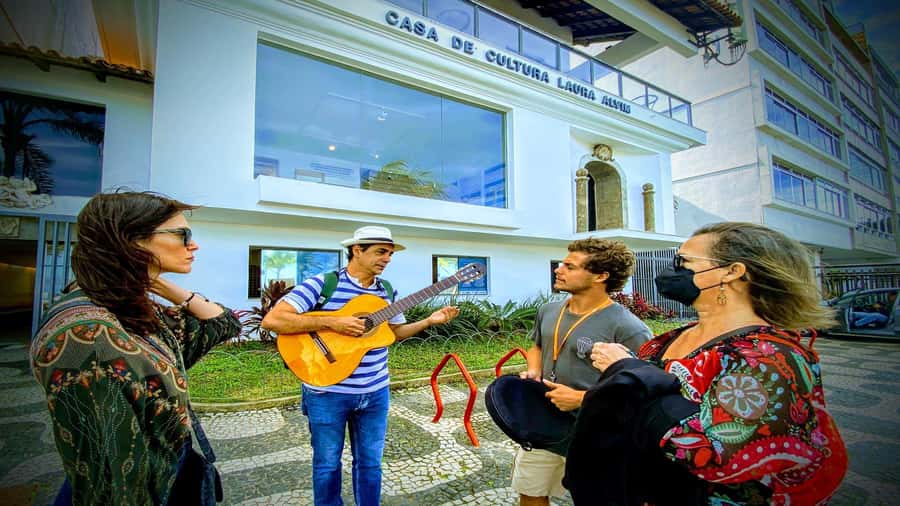
The tour is offered in English, Spanish, and Portuguese. Choose the language in which you can best follow musical stories and informal anecdotes. A language you understand only partly may make the lyrics, jokes, and historical details harder to catch.
The small-group format is limited to eight participants. That is a meaningful advantage for a music-led tour. A guitar and unamplified voice work better for a few attentive listeners than for a crowd spread along a sidewalk.
The exact meeting point arrives in your reservation confirmation. I would read that message before leaving for the walk and allow time to reach the starting area. Since hotel pickup and drop-off are not included, you must make your own way to the meeting point and arrange your return.
The experience lasts three hours, with starting times based on availability. Check the available time before you commit your day. The information provided does not identify a single daily departure or promise a particular time of day.
You can cancel for a full refund up to 24 hours before the tour. The reserve-now, pay-later option also gives you some flexibility while your Rio plans are still changing. Those policies are useful, but the quality of the experience depends more on finding a date and language that suit you.
Who should book this experience
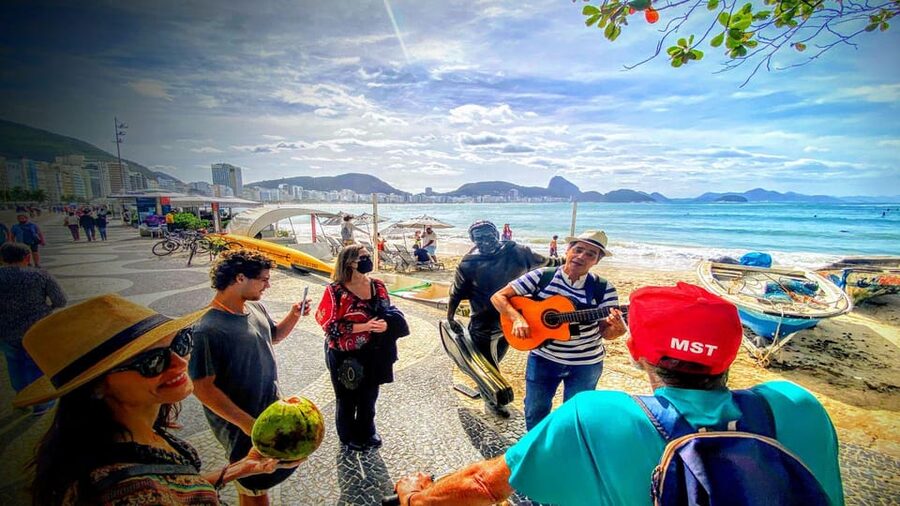
I would recommend this walk to you if you meet one or more of these descriptions:
- You listen to bossa nova or want a friendly introduction to it.
- You enjoy tours led by performers rather than only by conventional guides.
- You want to understand Ipanema through culture, not just scenery.
- You prefer small groups and direct conversation.
- You like hearing songs in the places connected to them.
- You are happy to pay more for a specialized three-hour experience.
I would be more cautious if you want a broad Rio orientation. This tour does not promise major landmarks outside Ipanema and Copacabana, nor does it include meals or transportation. It also may not satisfy you if you prefer quiet sightseeing without singing or storytelling along the way.
The strongest praise connected with the experience focuses on its intimate, almost private-concert quality. That is the detail I would use to make the decision. If the idea of hearing a musician sing bossa nova while guiding you through old Ipanema sounds special, the price has a clear purpose.
Should you book the Bossa Nova Walking Tour?
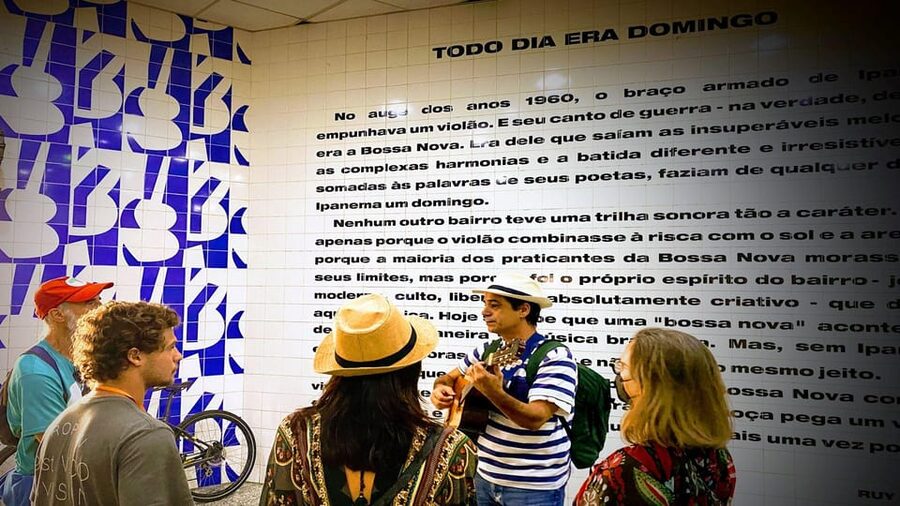
Book it if you want music in its original setting, not just another checklist of Rio sights. The combination of Ipanema, Copacabana, live guitar, and stories about Jobim, Moraes, and Gilberto gives the tour a clear identity.
Skip it if you are looking for a low-cost neighborhood stroll, included refreshments, or a general introduction to Rio. At $95, this is a specialist experience, and its success depends on your interest in bossa nova and the guide’s performance.
If Guilherme is leading your outing, expect the kind of guitar-led storytelling that has made this experience memorable for at least one recent participant. Either way, confirm the meeting point, language, timing, and walking details before paying. For music lovers, this is one of the more personal ways to connect Ipanema’s streets with the sound that made them famous.
FAQ
How long does the Bossa Nova Walking Tour last?
The tour lasts three hours.
Where does the tour meet?
The exact meeting location is provided in the reservation confirmation.
Which neighborhoods does the tour visit?
The walk explores Ipanema and Copacabana, following a route from Ipanema toward Copacabana.
What languages are available?
The live guide is available in English, Spanish, and Portuguese.
Is the tour limited to a small group?
Yes. The group is limited to eight participants.
Is food or drink included?
No. Food and drinks are not included in the $95 price.
Can I cancel for a full refund?
Yes. You can cancel up to 24 hours in advance for a full refund.
Just added in Rio De Janeiro
- Full Day Tour in Rio de Janeiro★ 5.0 · 8 reviews
- Garganta do Ceu Cave Hiking Private Tour on Pedra da Gavea★ 4.5 · 3 reviews
- Gastronomic Tour at the Municipal Market in Rio de Janeiro★ 5.0 · 4 reviews
- Rio de Janeiro private Full day Custom Tours★ 5.0 · 35 reviews
- GIG Airport Transfer x Rio de Janeiro Hotels★ 4.5 · 11 reviews
- Christ the Redeemer – Complete Morning Tour with Ticket and Transport at the Hotel★ 3.5 · 4 reviews
- AquaRio, Museum, Boulevard Olimpico, Ferris Wheel, Transport and Tourism Guide.★ 4.0 · 6 reviews
- Personalized and Private Full-Day Tour in Rio de Janeiro★ 5.0 · 6 reviews
Walking Tours, compared.



3 Hour Rocinha Favela Walking Tour with a Local Guide
Read our review →
Favela Tour Rio de Janeiro – Vidigal Walking Tour by Russo Guide
Read our review →

Private Walking and Cultural Tour Rocinha-Rio de Janeiro
Read our review →
Browse the lists this tour appears in