

Reviewed · HISTORICAL TOURS
Rio: Little Africa Unveiled: vibrant Afro-Brazilian Heritage
History gets personal here. This four-hour walking tour through Rio’s Little Africa focuses on Afro-Brazilian lives, struggles, and achievements, with two features I especially like: the attention given to overlooked stories and the way slavery, samba, religion, and the Vaccine Revolt are connected. Guide Carolina, known as Carol, also earned strong praise for making the past clear and relevant.
The main drawback is simple: this is a serious history walk, not a light sightseeing stroll. You should also expect to walk for four hours, meet at the Windsor Guanabara Hotel rather than your own hotel, and pay $107 per person, a price that makes the quality of the guide especially important.
In This Review
- Key Points Before You Book
- Why Little Africa Matters in Rio
- Following the Route Through Overlooked Stories
- Slavery, Freedom, and the Human Cost of Rio’s Growth
- Samba as Memory, Music, and Identity
- The Vaccine Revolt and Rio’s Social Conflicts
- Afro-Brazilian Religiosity and Living Traditions
- Carol’s Role in Making the Past Clear
- What the Small Group Changes
- Meeting at the Windsor Guanabara Hotel
- Is $107 a Fair Price?
- Who Will Get the Most From This Walk?
- Should You Book Rio’s Little Africa Unveiled?
- FAQ
- How long is the Little Africa tour?
- Where does the tour meet?
- How early should I arrive?
- How far is the meeting point from Cinelândia Metro Station?
- Is the tour conducted in English?
- How many people are in the group?
- Is hotel pickup included?
- Are food and drinks included?
- Can I cancel for a refund?
Key Points Before You Book
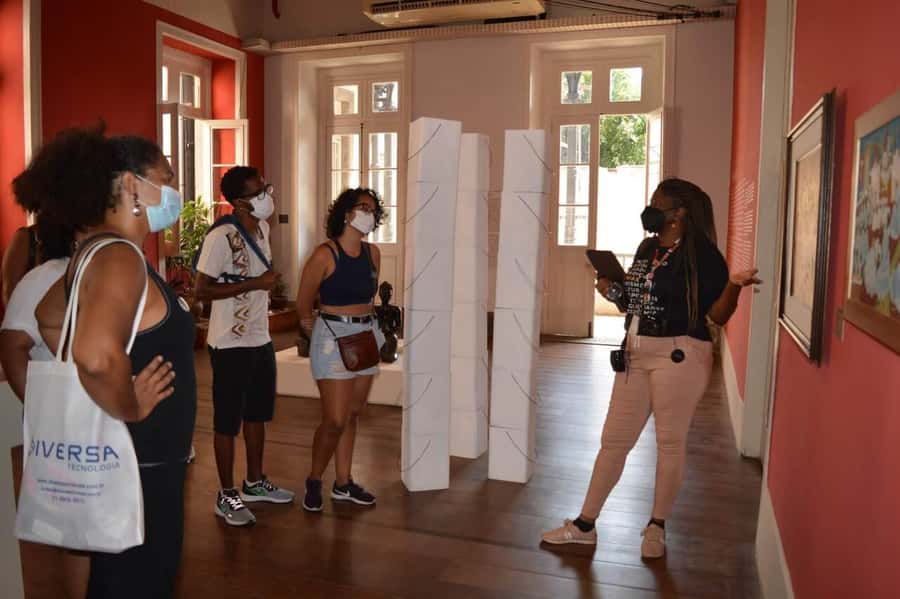
- Four hours on foot: Plan for a substantial walking experience through central Rio, not a quick stop between attractions.
- Afro-Brazilian focus: The tour examines Black contributions to Brazil’s economy, society, culture, and national identity.
- Major themes: Expect discussion of slavery, samba, the Vaccine Revolt, and Afro-Brazilian religiosity.
- Small group format: The group is limited to 10 people, allowing more room for questions and conversation.
- English guidance: The live tour is listed in English, with a bilingual guide included.
- Central meeting point: Meet in front of the Windsor Guanabara Hotel, about a 15-minute walk from Cinelândia Metro Station.
Why Little Africa Matters in Rio
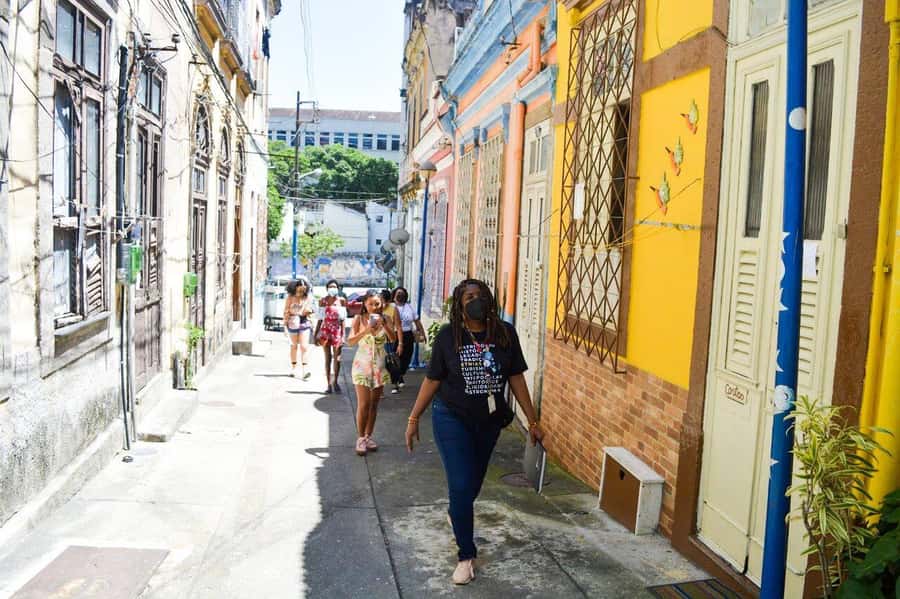
Rio is often introduced through beaches, mountains, music, and grand viewpoints. Those are important parts of the city, but they do not explain how Rio became Rio. This walk shifts your attention to the Black people whose labor, traditions, beliefs, and creative work helped shape Brazil.
The name Little Africa refers to an area of central Rio tied closely to Afro-Brazilian life. On this experience, you follow a route linking places of historical and cultural importance. The point is not simply to look at old buildings or hear dates. It is to understand how a city can preserve some stories while leaving others at the edges.
I like that the tour treats history as something active. The sites are presented as places connected to national identity, not as lifeless stops for a photograph. You are encouraged to think about who built Rio, who was denied freedom, whose customs survived, and how Black communities influenced the country after slavery.
That approach gives the tour more weight than a standard city walk. It also means you should arrive ready to listen. Some subjects are difficult, and the experience asks you to face them without smoothing away the painful parts.
More History Tours in Rio de Janeiro
- Rio de Janeiro Historical Center Walking Tour
★ 4.5 · 336 reviews - Private Walking and Cultural Tour Rocinha-Rio de Janeiro
★ 5.0 · 239 reviews - Discover Rio Little Africa: A Cultural and Historical Journey
★ 5.0 · 238 reviews
Following the Route Through Overlooked Stories
The exact stop-by-stop sequence is not supplied, so you should not expect a fixed list of named monuments in advance. What is clear is that the guide leads you along a carefully planned route through sites connected to Afro-Brazilian history and culture.
At each place, the value comes from the explanation. A building, street, or public space may look ordinary until you learn how it relates to slavery, Black labor, political conflict, religion, or music. This is one reason a walking guide matters here. You are not only seeing central Rio. You are learning how to read it.
The experience also deals with stories that have been overlooked or forgotten. That can change the way you understand Brazil’s national story. Instead of treating Afro-Brazilian culture as a colorful addition to Brazilian life, the tour presents it as a central force in the country’s development.
You may find the route especially useful if you have already seen Rio’s famous sights and want a stronger sense of the city’s social past. It also works well early in a visit because it can give later sightseeing more context. After hearing how communities shaped the city, streets and cultural traditions may carry more meaning.
Slavery, Freedom, and the Human Cost of Rio’s Growth
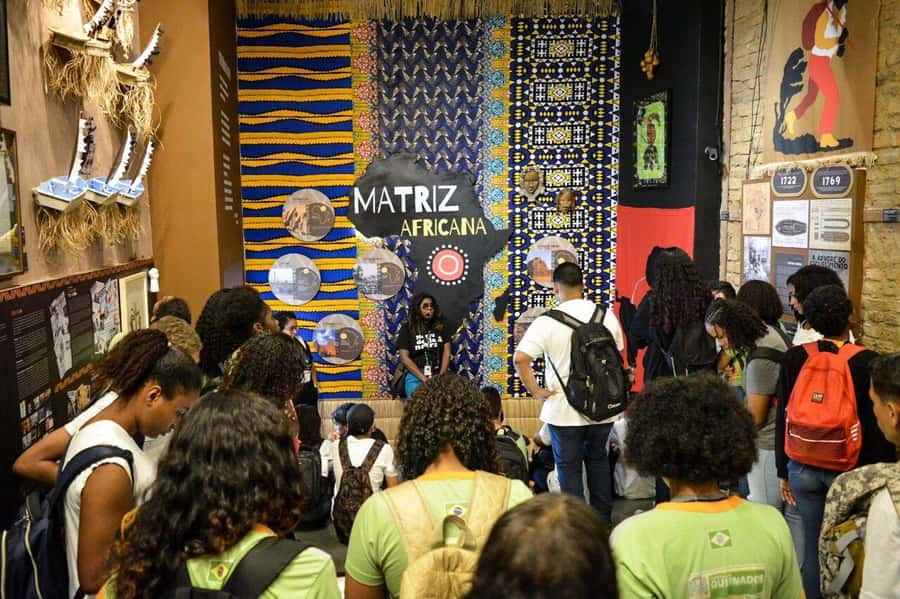
Slavery is one of the main subjects, and rightly so. Any serious account of Rio and Brazil must address the people who were enslaved, the economic systems that depended on them, and the lasting effects of that history.
The tour does not treat slavery as a distant chapter sealed away in the past. It connects the subject to the lives of Afro-Brazilians and to the country’s broader identity. That connection is important because it helps you see both suffering and agency. The story includes exploitation, but also survival, resistance, community, and cultural influence.
Expect the tone to shift between painful and inspiring. The tour description emphasizes both struggles and triumphs, which suggests a fuller account than one focused only on tragedy. You will hear about contributions that shaped society and culture, rather than being asked to view Black Brazilians only through the history of oppression.
This is also where the comparison with other countries can become useful. Maurice, a verified customer from the United States, praised the parallels between Brazilian and US history that emerged during Carol’s explanations. You should not expect the tour to become a US history lesson, but those comparisons may help American visitors place Brazil’s past in a wider frame.
Samba as Memory, Music, and Identity
Samba is another central theme. The tour connects the music to Afro-Brazilian experience rather than presenting it only as a cheerful soundtrack for Carnival.
That distinction matters. Music can carry memory, faith, community ties, and political meaning. When you hear samba discussed alongside slavery and Black identity, it becomes part of a larger story about how cultural traditions survive and gain national importance.
I appreciate this connection because it avoids a common travel mistake: enjoying a cultural form while ignoring the people and experiences that created it. The walk encourages you to think about samba as an expression of history, not just entertainment.
The available information does not promise a live performance, a music class, or a samba venue visit. Book this tour for interpretation and place-based history, not for a show. If you want music and nightlife as a separate experience, you will need to arrange that on your own.
A completely different kind of day:
- Rio de Janeiro: 6-Stop Highlights of Rio with Lunch
★ 4.4 · 5,157 reviews - Christ the Redeemer Entry Ticket by Corcovado Train
★ 4.4 · 4,476 reviews - Rio’s City Tour – Tickets for Christ, Sugar Loaf & Lunch included
★ 5.0 · 4,389 reviews - Full Day: Christ Redeemer, Sugarloaf, City Tour & Barbecue Lunch
★ 4.5 · 3,142 reviews
The Vaccine Revolt and Rio’s Social Conflicts

The historic Vaccine Revolt is one of the more unusual subjects included on the route. It brings public health, government power, and social resistance into the story of Rio.
The title alone can sound like a side note, but it adds an important layer. The tour is not limited to cultural celebration. It also looks at conflict and at the ways ordinary people responded when official policies affected their lives.
The supplied information does not provide the full explanation of the revolt or identify the exact site where it is discussed. Your guide will supply the local context during the walk. The practical lesson is to allow time for questions, especially if you are interested in how public policy and inequality shaped Rio.
This topic also reinforces the tour’s broader purpose. Afro-Brazilian history is not isolated from political history. It is part of the story of urban change, government decisions, social tension, and national life.
Afro-Brazilian Religiosity and Living Traditions
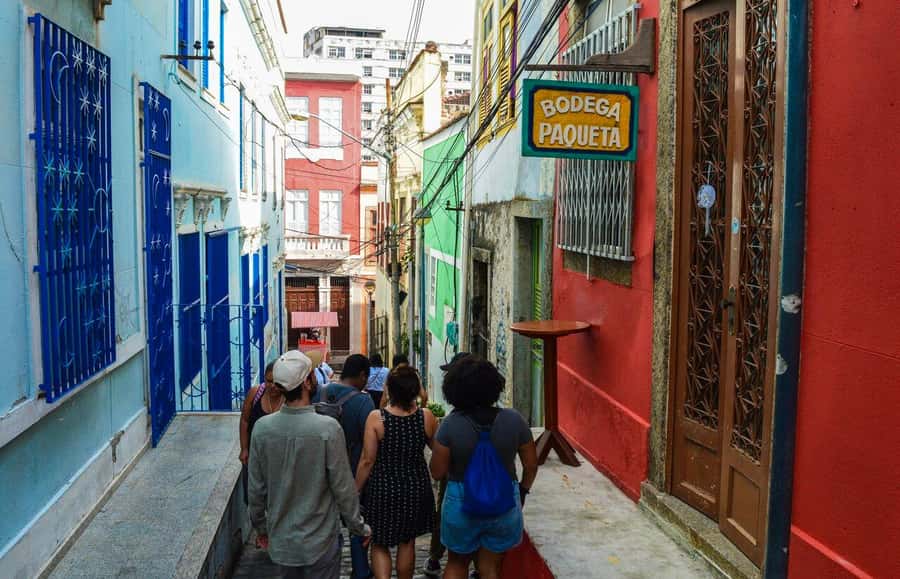
Religion is the fourth major theme. The walk explores Afro-Brazilian religiosity as part of the community’s identity and cultural continuity.
The information provided does not specify a religious site, ceremony, or worship experience. You should therefore expect discussion and historical interpretation rather than participation in a ritual. That distinction is important, especially if you are hoping for a hands-on cultural activity.
Still, the subject adds depth. Faith traditions can preserve memory and offer a sense of belonging when communities face pressure or exclusion. By including religiosity alongside slavery and samba, the tour presents Afro-Brazilian life as more than a response to hardship. It also highlights belief, creativity, and community.
Approach this section respectfully. The value comes from learning how religious life fits into Afro-Brazilian history, not from treating sacred traditions as a spectacle.
Carol’s Role in Making the Past Clear
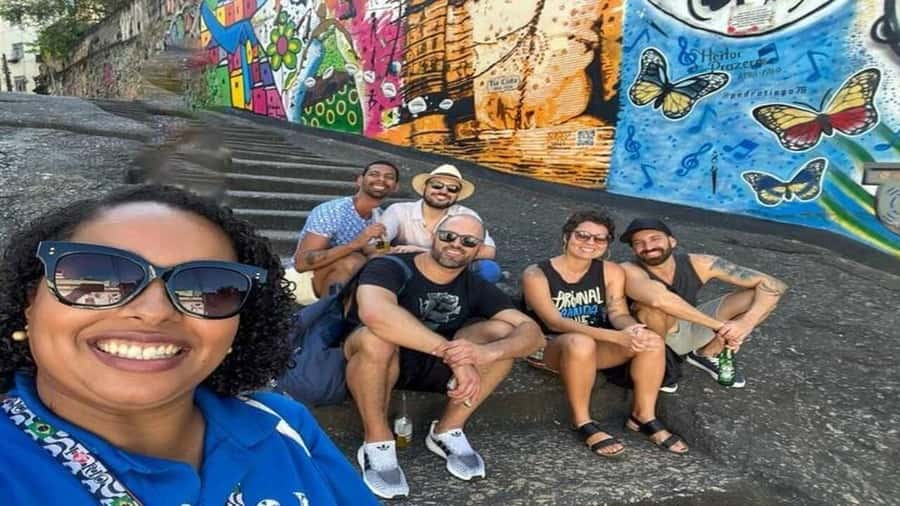
A walking tour depends heavily on its guide. Here, Carolina, called Carol, is the one specific guide praised in the available feedback. Maurice described her explanations as passionate and informative and said the experience became more meaningful because of her attention to detail.
That praise is worth emphasizing because this tour has few physical extras. There is no included meal, transfer, performance, or museum admission listed. Much of what you pay for is the guide’s ability to explain place, history, and connections in a way that makes sense as you walk.
Carol’s ability to draw parallels with US history was also singled out. For American visitors, that may make complex material easier to grasp. For everyone else, the same strength can help connect local events to larger questions about power, race, freedom, and identity.
The rating is 5 out of 5, but it comes from only one verified review. I would treat that as encouraging evidence, not a broad guarantee. The experience will be strongest when your guide is engaging and when you are genuinely interested in the subject.
What the Small Group Changes
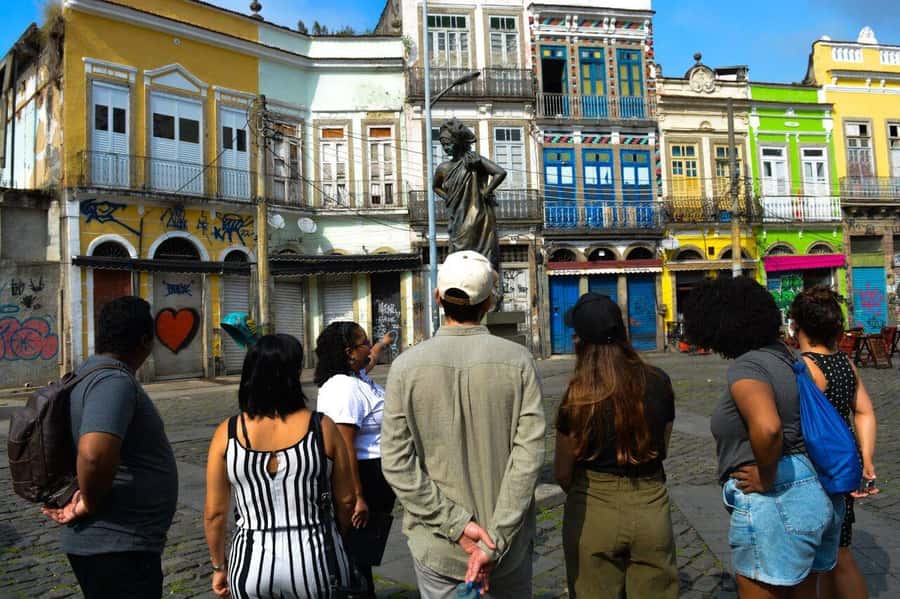
The group is limited to 10 people. That is a useful size for this kind of walk because the subject benefits from questions and conversation.
In a group of 10 or fewer, you are less likely to feel lost in a crowd. It should also be easier to hear the English explanations and ask about a detail that catches your attention. A small group can make serious subjects feel more like a guided discussion than a lecture.
The tradeoff is that a small group does not make the walking shorter. Four hours remains a half-day commitment. You should arrive ready to stay with the group and give the route your attention.
No hotel pickup or drop-off is included. You need to make your own way to the starting point and arrange your return afterward. Because the meeting point is central, the tour is practical for someone already spending time in Centro, but less convenient if your day begins far from the area.
Meeting at the Windsor Guanabara Hotel
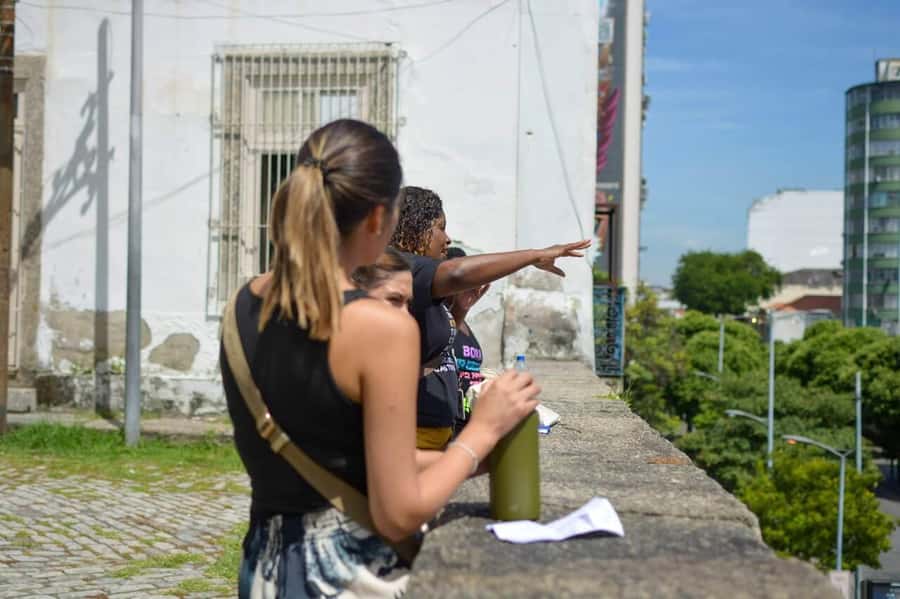
The meeting point is in front of the main entrance of the Windsor Guanabara Hotel at Av. Presidente Vargas, 392, in Centro, Rio de Janeiro.
You should arrive at least 20 minutes before the start time. That buffer matters because the tour is on foot, the group is small, and late arrivals may have trouble finding the guide after the walk begins.
From Cinelândia Metro Station on Line 1, the hotel is about a 15-minute walk. Build that time into your plan rather than arriving at the station at the listed start time. The activity information does not give a fixed starting hour, so check the available times when booking.
The location is easy to understand on paper: look for the hotel’s main entrance. You are not being collected from your accommodation, so double-check the route before leaving.
Is $107 a Fair Price?
At $107 per person, this is not a bargain city stroll. The value depends on what you want from the experience.
The price includes a four-hour walking tour, a live English guide, and a small group capped at 10 participants. You are paying for time, interpretation, and access to a focused historical route rather than for food, transportation, or entry tickets. No food or drinks are included, and hotel transfers are not included either.
I would consider the price reasonable for someone who places a high value on cultural context and personal guiding. A passionate guide can turn ordinary streets into meaningful places, and that is the core product here. The positive feedback about Carol suggests how much the guide can affect the experience.
I would be more cautious if you prefer fast sightseeing, want several famous attractions in a short time, or dislike walking tours built around difficult history. In those cases, the cost may feel high because the tour’s main reward is understanding rather than entertainment.
Who Will Get the Most From This Walk?
I would recommend this experience to you if you want to understand Rio beyond its postcard image. It suits visitors interested in slavery, race, music, religion, social movements, and the forces that shaped Brazilian identity.
It is also a strong choice for first-time visitors who want historical grounding, especially if you are willing to spend half a day on one theme. Returning visitors may find it even more useful because the tour gives fresh meaning to central Rio.
American visitors may appreciate the historical comparisons that Carol reportedly made during the walk. Anyone who prefers a neutral, quick overview should think carefully before booking, since the tour is designed to bring neglected stories to the front.
You should also be comfortable walking for four hours and arranging your own transport to and from the meeting point. The available information does not provide details about accessibility, terrain, or rest stops, so contact the provider if those points affect your decision.
Should You Book Rio’s Little Africa Unveiled?
Book it if you want a serious, focused look at Afro-Brazilian history and culture, and if you value a guide who can connect past events to present identity. The small group, central route, and four-hour format give the experience a clear purpose.
I would not book it simply because you have a free afternoon in Rio. The themes are substantial, and the $107 price makes sense only if this kind of learning is a priority for you. If it is, the opportunity to follow overlooked stories through central Rio, with an English-speaking guide and a group of no more than 10, makes this a strong cultural choice.
You can cancel up to 24 hours before the start for a full refund, and you can reserve now and pay later. Those terms make it easier to fit the walk into a changing Rio schedule, but the bigger decision is whether you want history, conversation, and reflection rather than a standard sightseeing circuit.
FAQ
How long is the Little Africa tour?
The walking tour lasts four hours.
Where does the tour meet?
You meet in front of the main entrance of the Windsor Guanabara Hotel at Av. Presidente Vargas, 392, Centro, Rio de Janeiro.
How early should I arrive?
You should arrive at least 20 minutes before the tour begins.
How far is the meeting point from Cinelândia Metro Station?
The Windsor Guanabara Hotel is about a 15-minute walk from Cinelândia Metro Station on Line 1.
Is the tour conducted in English?
Yes. The activity lists a live English-speaking guide. It also describes the included guide as bilingual.
How many people are in the group?
The group is limited to 10 participants.
Is hotel pickup included?
No. Hotel pickup and drop-off are not included, so you need to reach the Windsor Guanabara Hotel yourself.
Are food and drinks included?
No. Food and drinks are not included.
Can I cancel for a refund?
Yes. You can cancel up to 24 hours in advance for a full refund. You can also reserve now and pay later.
Just added in Rio De Janeiro
- Full Day Tour in Rio de Janeiro★ 5.0 · 8 reviews
- Garganta do Ceu Cave Hiking Private Tour on Pedra da Gavea★ 4.5 · 3 reviews
- Gastronomic Tour at the Municipal Market in Rio de Janeiro★ 5.0 · 4 reviews
- GIG Airport Transfer x Rio de Janeiro Hotels★ 4.5 · 11 reviews
- Rio de Janeiro private Full day Custom Tours★ 5.0 · 35 reviews
- Christ the Redeemer – Complete Morning Tour with Ticket and Transport at the Hotel★ 3.5 · 4 reviews
- AquaRio, Museum, Boulevard Olimpico, Ferris Wheel, Transport and Tourism Guide.★ 4.0 · 6 reviews
- Personalized and Private Full-Day Tour in Rio de Janeiro★ 5.0 · 6 reviews
Historical Tours, compared.



Private Walking and Cultural Tour Rocinha-Rio de Janeiro
Read our review →
Discover Rio Little Africa: A Cultural and Historical Journey
Read our review →


Scenic Train ride to historical cities of Morretes and Antonina
Read our review →
Browse the lists this tour appears in