
Reviewed · HISTORICAL TOURS
Rio: Olympic Boulevard, Museum of Tomorrow & History Tour
Rio’s past and future meet in four hours. This downtown tour brings together the Museum of Tomorrow, Eduardo Kobra’s giant mural, and the Valongo Wharf, while a guide adds the history that can be easy to miss on your own. I like the strong mix of modern Rio and colonial-era sights, and I like that museum entry and South Zone hotel transport are included. The main concern is uneven tour organization, especially during the return transfer.
The best guides make this walk memorable. Pedro earned praise for his detailed explanations of Brazilian history, while Emma was appreciated for her friendly manner and for letting the group explore the museum at its own pace. Still, one poor experience involved a guide losing the route, rushing the group, and leaving passengers waiting for replacement transport, so I would confirm every pickup and drop-off detail before setting out.
In This Review
- Key points to know before booking
- Why downtown Rio deserves a half-day
- Valongo Wharf and the African story of Rio
- Eduardo Kobra’s mural on Olympic Boulevard
- The Museum of Tomorrow’s futuristic waterfront
- Saint Benedict Monastery and Rio’s Baroque surprise
- The Olympic Cauldron and Praça XV
- A sweet finish at Confeitaria Colombo
- Guide quality can shape the whole morning
- Is $67 a fair price?
- Who should book this downtown route?
- Should you book the Museum of Tomorrow and History Tour?
- FAQ
- How long does the tour last?
- Is hotel pickup included?
- What languages are available?
- Is admission to the Museum of Tomorrow included?
- Is food included at Confeitaria Colombo?
- Does the tour visit Confeitaria Colombo on Sundays?
Key points to know before booking

- Valongo Wharf offers essential context: This UNESCO World Heritage site helps explain the African influence on Brazil and the painful history connected to Rio’s port.
- The Museum of Tomorrow ticket is included: You can spend time inside the country’s most visited museum without arranging separate admission.
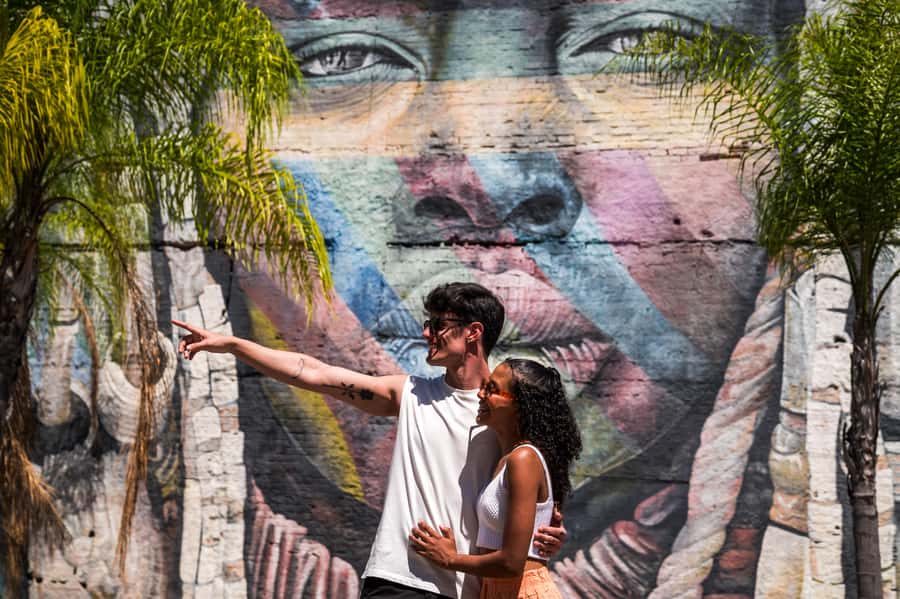
- Kobra’s mural is a major photo stop: Eduardo Kobra’s enormous artwork presents five ethnic groups in bold geometric color.
- The tour covers old and new Rio: Olympic Boulevard and the futuristic museum contrast sharply with Saint Benedict Monastery and Praça XV.
- Confeitaria Colombo adds a classic Rio finish: Order a Brazilian snack or sweet, but remember that food costs extra and the café closes on Sundays.
- Pickup is limited to the South Zone: Hotels in Copacabana, Leme, Ipanema, and Leblon are included, with a maximum group size of 19.
Why downtown Rio deserves a half-day
Many first visits to Rio focus on beaches and mountain views. That is understandable, but it leaves out the city’s political, religious, artistic, and commercial center. This four-hour outing gives you a practical way to see several important places without arranging multiple taxis or trying to connect them yourself.
The tour begins with hotel pickup in Rio’s South Zone, usually between 8:10 and 8:55 AM. You ride in an air-conditioned van before walking through central Rio. That combination matters because downtown sights are spread across several streets and plazas, while the walking portions give you a closer look at the buildings and public spaces.
The group can include up to 19 people. That is not a private tour, and the size may affect how easily you hear explanations in crowded places. At the same time, it is small enough to feel more manageable than a large coach outing.
Expect a moderate amount of walking. Comfortable shoes are a sensible choice, and you should be ready for the tour to operate in rain or shine. The route has a clear theme: begin with Brazil’s African past, move through modern public art and science, then return to imperial and religious landmarks before ending at one of Rio’s famous cafés.
More History Tours in Rio de Janeiro
- Rio de Janeiro Historical Center Walking Tour
★ 4.5 · 336 reviews - Private Walking and Cultural Tour Rocinha-Rio de Janeiro
★ 5.0 · 239 reviews - Discover Rio Little Africa: A Cultural and Historical Journey
★ 5.0 · 238 reviews
Valongo Wharf and the African story of Rio
Valongo Wharf is one of the most meaningful stops on the route. It is also one of the places that can be missed if you see Rio only through its postcard sights.
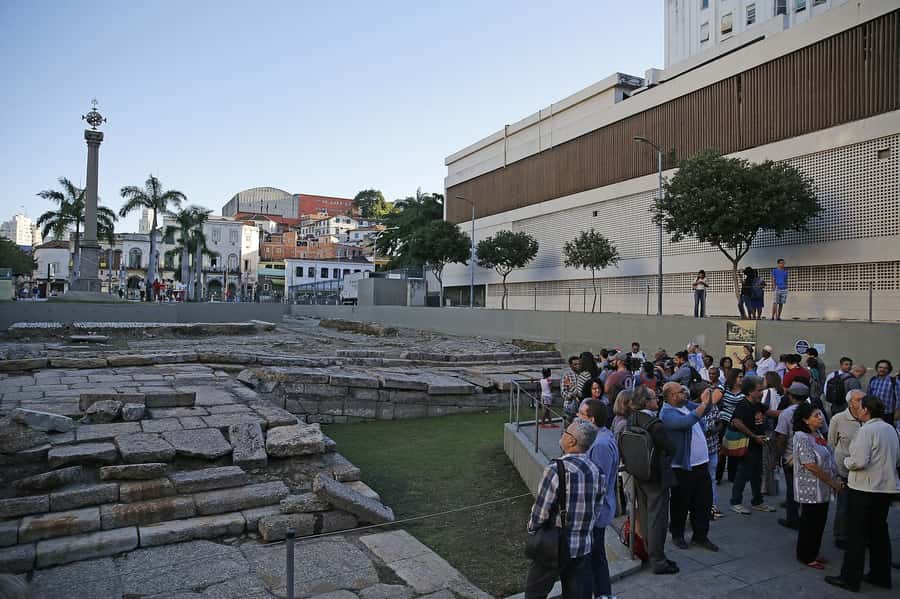
The wharf is the city’s latest UNESCO World Heritage site, and the guide uses it to explain the African influence on Brazil. That subject is central to understanding Brazilian culture, yet it is not always given enough attention on a quick city visit. Here, the physical site provides a direct connection to Rio’s port past and the people brought through it.
This is not simply a scenic stop. You should expect historical interpretation rather than a long visit filled with elaborate displays. The value comes from learning what happened here and how that past shaped Brazil. A guide who explains the context well can make this short stop far more meaningful.
Pedro was especially praised for his dedication to Brazilian history and for explaining the places along the way. Emanuella also received strong praise for discussing Brazil’s history and architecture. If your main reason for booking is to understand Rio rather than simply photograph it, the quality of the guide will matter greatly.
Eduardo Kobra’s mural on Olympic Boulevard
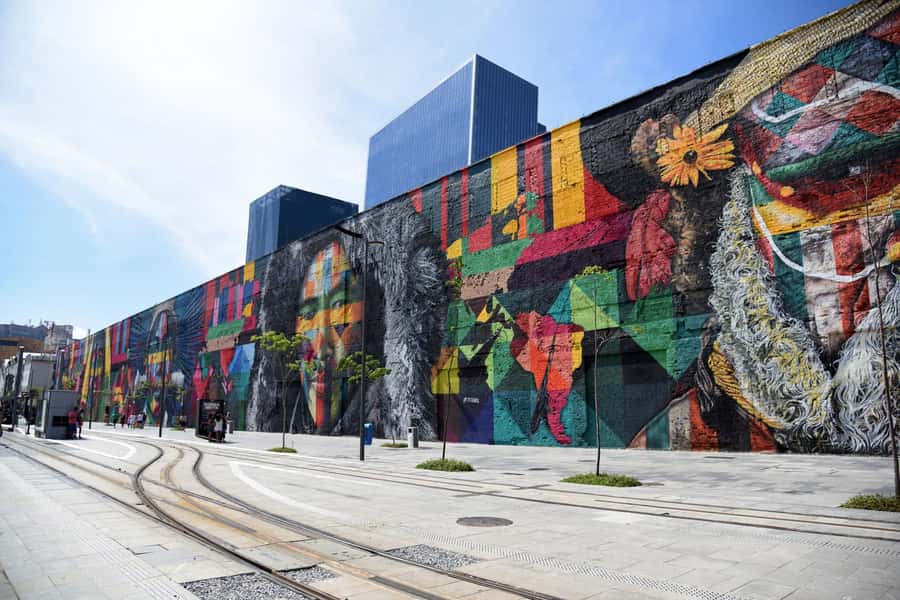
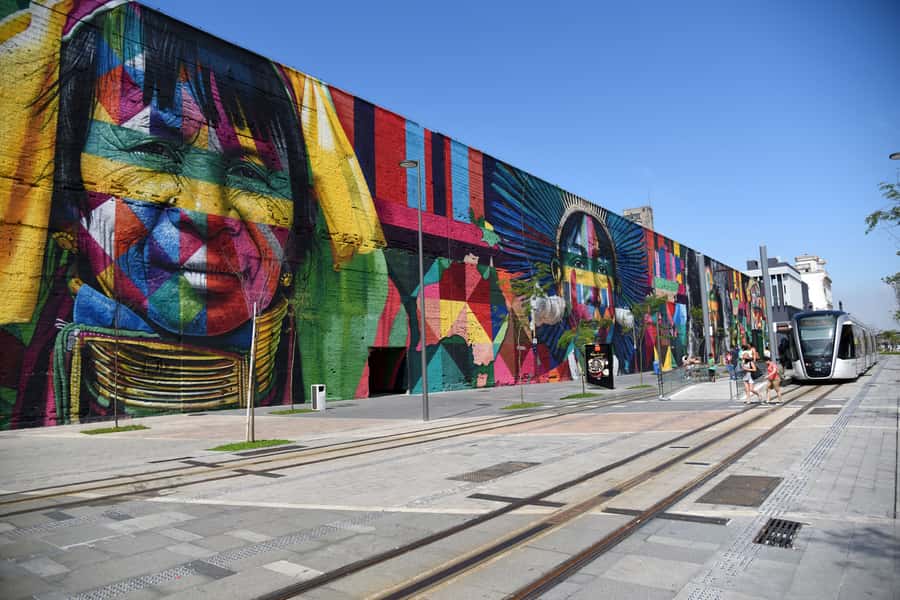
From Valongo Wharf, the route continues toward Eduardo Kobra’s mural along Olympic Boulevard. It is one of the world’s largest graffiti walls, and its scale makes it hard to appreciate in a quick photograph alone.
The artwork portrays five ethnic groups against a colorful geometric background. The image has a strong connection to the Olympic setting, where the theme of people from around the world was especially appropriate. You will have time to stop for pictures before continuing toward the Museum of Tomorrow.
This is one of the tour’s easiest wins. You do not need a long explanation to enjoy the mural, but the guide can add useful context about the Brazilian artist and the work’s public setting. It also breaks up the historical discussion with a large, contemporary piece of art.
The practical point is that this is an outdoor stop. Bring protection from sun or rain, since the tour runs in all weather. The mural is also a place where a group can spread out, so keep track of the guide before the walk continues.
The Museum of Tomorrow’s futuristic waterfront
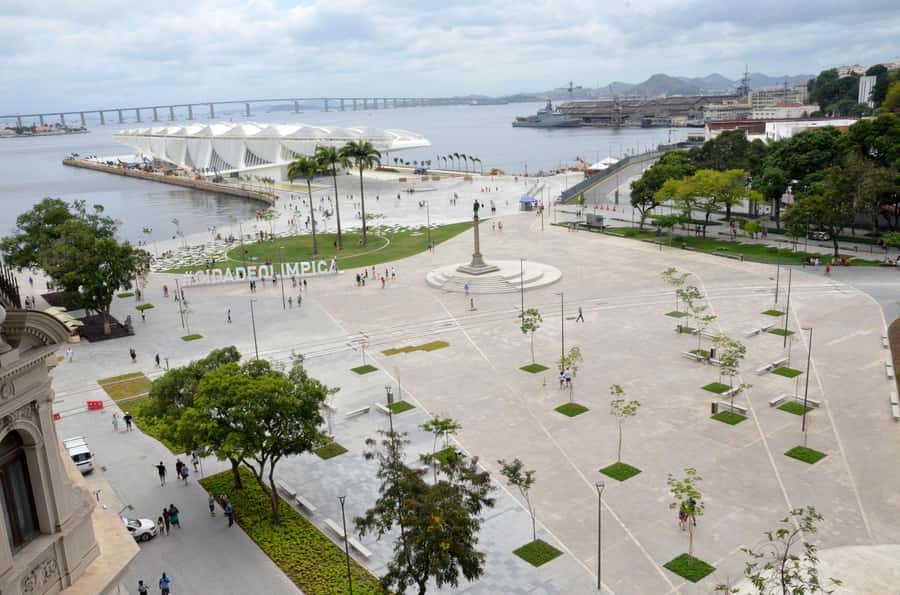
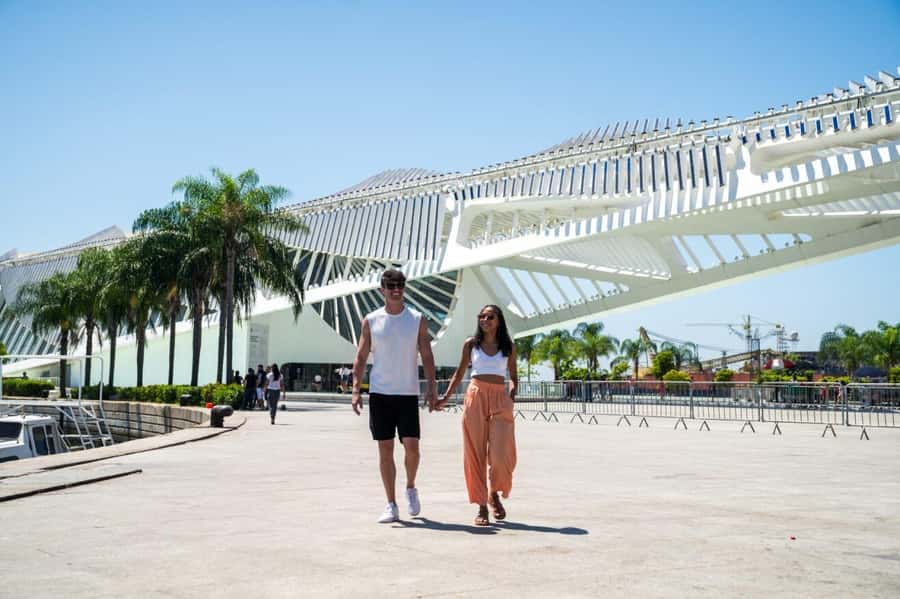
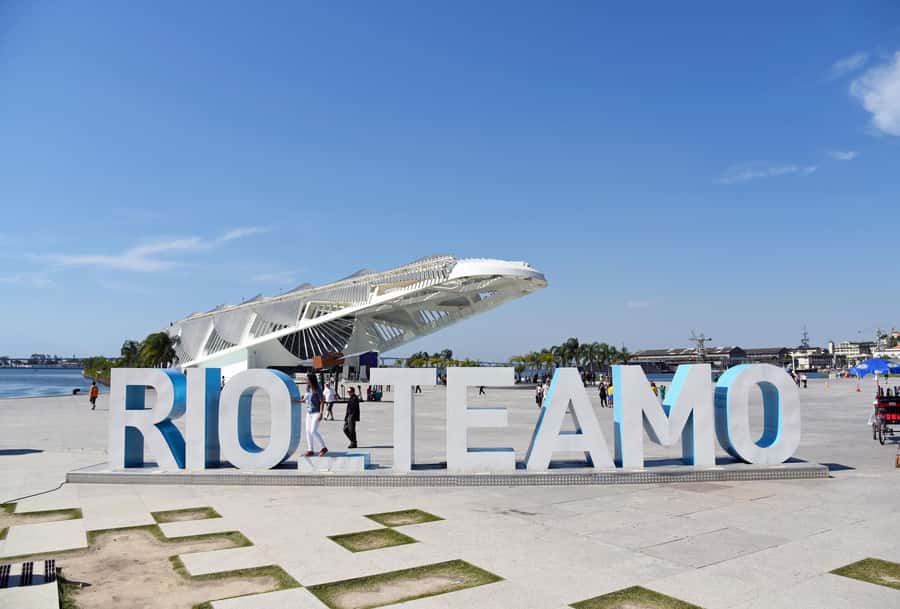
The Museum of Tomorrow is the centerpiece for many people on this tour. Its unusual structure looks designed for another century, and its location along Olympic Boulevard makes the approach part of the attraction.
The museum is dedicated to science, technology, and the possible future of the planet and humanity. Rather than functioning as a traditional collection of old objects, it asks questions about how people shape the years ahead. That gives the museum a different mood from the historic sites later in the morning.
Admission is included in the tour price, which is a real benefit. You do not have to queue separately or pay again at the entrance. One of the strongest points about the format is that you can explore the museum at your own pace. Emma was specifically praised for allowing that freedom, and it is a good feature for anyone who dislikes being hurried through a modern museum.
Four hours is not a huge amount of time for the full route, so your visit inside will have to fit the group’s schedule. You should not expect to read every panel or see every part of the museum in detail. Instead, treat this as a well-chosen introduction, with the option to focus on the displays that interest you most.
The building itself is worth seeing even if science museums are not usually at the top of your list. Its futuristic design creates a sharp contrast with the old churches and colonial buildings later in the tour. That contrast is one of the smartest parts of the route.
More museums in Rio De Janeiro:
- Petrópolis Day Trip from Rio de Janeiro including Imperial Museum and Crystal Palace
★ 4.0 · 101 reviews - Museum of Tomorrow, AquaRio & Olympic Boulevard in Rio de Janeiro
★ 4.5 · 69 reviews - Olympic Boulevard, Museum of Tomorrow & Historical Rio
★ 4.5 · 66 reviews - Rio: Olympic Boulevard, AquaRio and Museum of Tomorrow Tour
★ 4.5 · 54 reviews
Saint Benedict Monastery and Rio’s Baroque surprise
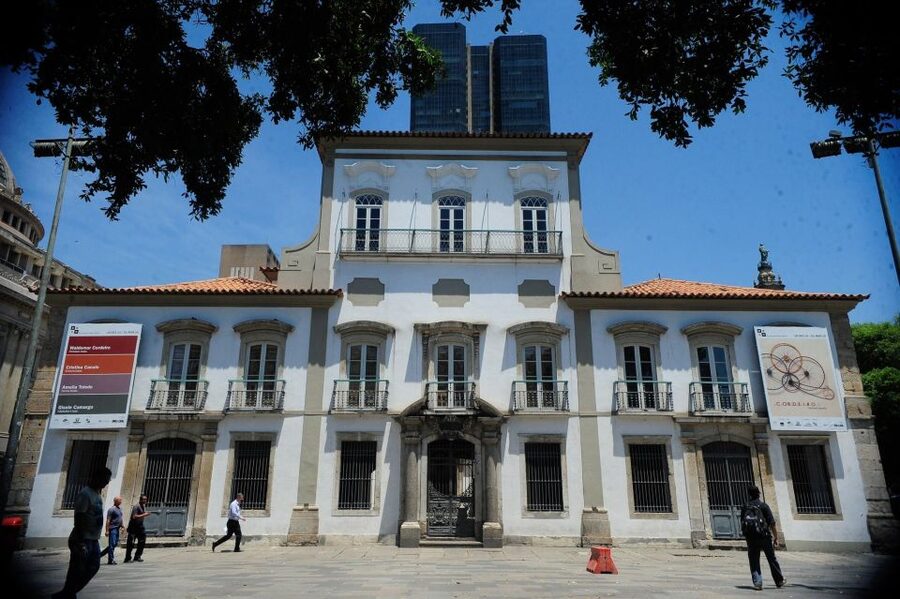
After looking toward the future, the tour shifts to the Monastery of Saint Benedict. The exterior is notably simple, which makes the interior even more striking.
Inside, golden Baroque decoration covers the space. The effect is a classic Rio surprise: a restrained façade gives little warning of the ornament beyond it. This stop works best when the guide explains the religious and artistic setting rather than treating it as a quick photo stop.
You will notice how different the monastery feels from the Museum of Tomorrow. One asks you to think about technology and the future, while the other reflects the wealth, faith, and artistic traditions of an earlier period. The route is not just a list of sights. It is built around these sharp changes in time and style.
Visitors should be respectful inside the monastery. The tour description does not promise a long formal visit or any special access, so allow the building itself and the guide’s commentary to shape your expectations.
The Olympic Cauldron and Praça XV
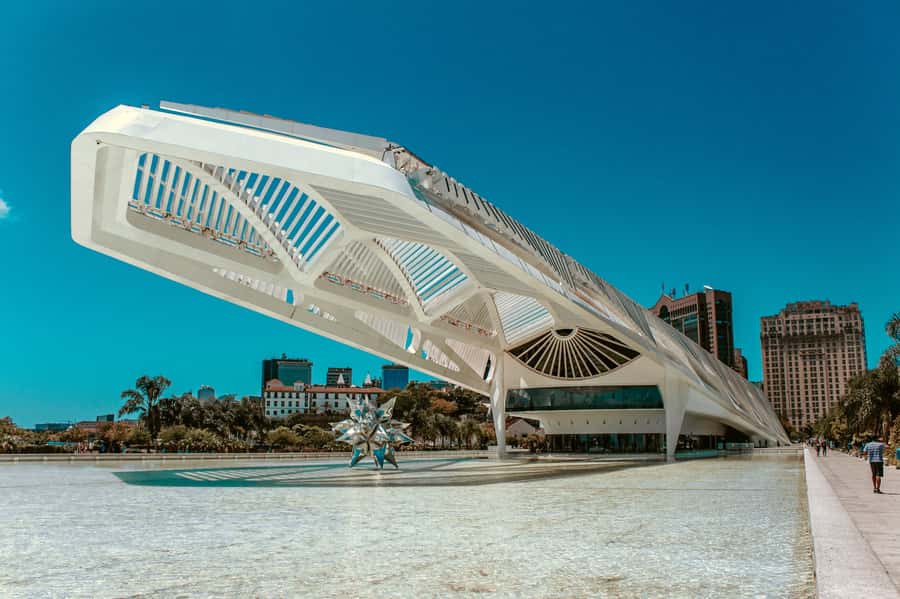
The Rio 2016 Olympic Cauldron is another brief but unusual stop. Created by American artist Anthony Howe, its reflective kinetic sphere structure serves as a reminder of the Games.
The cauldron is a modern public artwork, and its moving reflective form gives the Olympic Boulevard section another visual highlight. It is worth pausing for a photograph, though it is not a full museum visit. Think of it as a compact stop that links Rio’s recent international role with the newer waterfront development.
At Praça XV, the focus turns to Brazilian political history. You will see one of the former headquarters of the Brazilian empire and hear about important events connected with the square. This part of the tour helps place Rio in its national setting, rather than presenting the city only as a beach destination.
Praça XV is also useful for seeing how public spaces can hold several layers of history at once. The square connects imperial power, urban change, and the streets of central Rio. A good guide can help you notice details that would otherwise look like ordinary city scenery.
The quality of the commentary matters most here. Tracy described Pedro as very informative and credited him with teaching the group a great deal about Brazil. That kind of explanation is exactly what turns a pass-by into a worthwhile stop.
A sweet finish at Confeitaria Colombo
The final stop is Confeitaria Colombo, one of Rio’s celebrated historic cafés. Its Art Nouveau interior features huge stained glass panels, tiles, and mirrors imported from France, Portugal, and Belgium.
The café is worth visiting even if you are not hungry. Its decoration reflects the elegance associated with Rio at the beginning of the 20th century, and it gives the tour a relaxed ending after several historical and architectural stops.
Food and drinks are not included. You can buy a traditional Brazilian snack such as coxinha de frango, a small chicken-filled pastry, or choose a brigadeiro, a chocolate sweet made with condensed milk. These purchases are optional, so the extra cost depends entirely on what you order.
There is one important scheduling detail: Confeitaria Colombo is closed on Sundays. If your tour falls on that day, this final stop will not be available. I would check the operating date before booking if the café is one of your main reasons for choosing the tour.
Guide quality can shape the whole morning
This tour has a strong route, but the guide is the key variable. The most positive experiences centered on guides who explained Brazilian history clearly, treated people warmly, and allowed enough time at the Museum of Tomorrow.
Emma was described as friendly and flexible. Pedro received praise for his dedication and detailed history commentary. Emanuella was also credited with explaining Brazil’s history and architecture well. These comments point to the kind of guide who adds real value to the price.
There is also a serious organizational warning. One poor experience involved a guide named Marilia losing the way between stops and rushing the group afterward. Another account described a passenger being left behind when the shared vehicle departed, followed by an hour-long wait for an Uber arranged by the company.
You should not assume that every departure will have this problem, but you can reduce the risk by confirming the pickup and return arrangements with the provider. Pay attention when the guide gathers the group, especially if the vehicle is serving more than one tour. Keep the company contact details handy during the outing.
The overall score is 4.1 from 47 ratings, which suggests a generally positive experience with some meaningful service concerns. The praise is strongest for the route and the historical explanations. The criticism centers on timing, navigation, and transport coordination.
Is $67 a fair price?
At $67 per person, the tour is not the cheapest way to walk through downtown Rio. You are paying for more than admission, though. The price covers a professional guide in English, Spanish, or Portuguese, a half-day route, Museum of Tomorrow admission, hotel pickup and drop-off from the South Zone, an air-conditioned van, and taxes and handling charges.
That package can offer good value if you are staying in Copacabana, Ipanema, Leblon, or Leme and want someone else to connect the sights. Independent visitors could spend less by using public transport and visiting only selected locations, but they would need to manage the route, tickets, and historical background themselves.
The value is highest for a first visit, a short stay, or anyone who wants an introduction to central Rio without committing to a full-day city tour. It is less attractive if you already know downtown well or prefer to spend several hours inside the Museum of Tomorrow alone.
Food at Confeitaria Colombo is extra, as are any personal purchases. Children under five go free if they do not occupy a seat, and children must be accompanied by an adult. Unaccompanied minors are not allowed.
Free cancellation is available up to 24 hours before departure, and you can reserve now and pay later. The tour requires a minimum number of participants, so a cancellation for low enrollment can result in another date or a full refund.
Who should book this downtown route?
I would recommend this tour to you if you want a broad introduction to Rio’s center in a short morning. It suits first-time visitors who want history, architecture, public art, and a modern museum in one outing.
It is also a good choice if you care about Brazilian history and want more than a quick photograph at famous sites. Valongo Wharf, Saint Benedict Monastery, and Praça XV give the morning real substance, while Kobra’s mural and the Museum of Tomorrow keep the route visually varied.
Families can book it, provided children stay with an adult. The moderate walking and four-hour length may work well for older children, but the historical stops may not hold the attention of very young ones. Remember that children under five can go free only when they do not need a seat.
I would hesitate if you need flawless transport coordination or a slow, highly detailed museum visit. The group limit is 19, and the return transfer deserves particular attention. Contact the provider to confirm your hotel pickup time, and ask about the nearest hotel if you are staying in a hostel or bed-and-breakfast.
Should you book the Museum of Tomorrow and History Tour?
Book it if you want to connect several sides of Rio in one compact outing: the African past at Valongo Wharf, contemporary art by Kobra, science and technology at the Museum of Tomorrow, Baroque decoration at Saint Benedict, imperial history at Praça XV, and old Rio elegance at Confeitaria Colombo.
The route is excellent for showing that Rio is more than beaches and viewpoints. The best guide can turn the morning into a lively lesson in Brazilian history, and the included museum ticket improves the value.
Before paying, confirm three things: your exact pickup time, the return transport plan, and whether your date falls on a Sunday. If you can accept a shared vehicle and moderate walking, this is a worthwhile way to meet central Rio. If you want maximum independence or a guaranteed leisurely museum visit, arrange the sights separately.
FAQ
How long does the tour last?
The tour lasts four hours, including the guided downtown route, transportation from the South Zone, and the visit to the Museum of Tomorrow.
Is hotel pickup included?
Yes. Pickup and drop-off are available from hotels in Copacabana, Leme, Ipanema, and Leblon. If you stay in a hostel or bed-and-breakfast, you will be given the nearest hotel pickup point.
What languages are available?
The live guide commentary is available in English, Spanish, and Portuguese.
Is admission to the Museum of Tomorrow included?
Yes. The ticket to the Museum of Tomorrow is included in the tour price.
Is food included at Confeitaria Colombo?
No. Food and drinks are available for purchase at the café but are not included.
Does the tour visit Confeitaria Colombo on Sundays?
No. Confeitaria Colombo is closed on Sundays, so this stop is not available on that day.
Just added in Rio De Janeiro
- Full Day Tour in Rio de Janeiro★ 5.0 · 8 reviews
- Garganta do Ceu Cave Hiking Private Tour on Pedra da Gavea★ 4.5 · 3 reviews
- Gastronomic Tour at the Municipal Market in Rio de Janeiro★ 5.0 · 4 reviews
- GIG Airport Transfer x Rio de Janeiro Hotels★ 4.5 · 11 reviews
- Rio de Janeiro private Full day Custom Tours★ 5.0 · 35 reviews
- Christ the Redeemer – Complete Morning Tour with Ticket and Transport at the Hotel★ 3.5 · 4 reviews
- AquaRio, Museum, Boulevard Olimpico, Ferris Wheel, Transport and Tourism Guide.★ 4.0 · 6 reviews
- Personalized and Private Full-Day Tour in Rio de Janeiro★ 5.0 · 6 reviews
Historical Tours, compared.

Private Walking and Cultural Tour Rocinha-Rio de Janeiro
Read our review →
Discover Rio Little Africa: A Cultural and Historical Journey
Read our review →


Scenic Train ride to historical cities of Morretes and Antonina
Read our review →
Browse the lists this tour appears in