
Reviewed · RIO DE JANEIRO CITY TOURS
São Paulo Private City Tour
São Paulo rewards a well-planned first look. This four-hour private tour gives you a useful introduction to Brazil’s enormous commercial capital, mixing major landmarks, historic streets, green space, food, architecture, and street art in one private vehicle. I especially like the flexible private format and the chance to combine places as different as Pacaembu Stadium, Sé Cathedral, Mercadão, and Batman Alley.
I also like that hotel pickup and drop-off are included, which matters in a city where traffic can consume a surprising part of your day. The main caution is time: four hours is enough for an overview, not a leisurely visit to every stop. A few past tours also suffered from late arrival, weak air conditioning, or guides driving past advertised sights instead of stopping.
In This Review
- Key points to know before booking
- Why a private four-hour tour can work well
- Pacaembu Stadium and São Paulo’s football culture
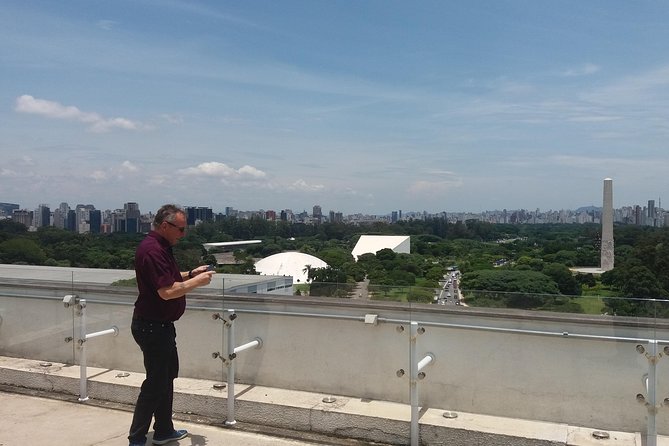
- Ibirapuera Park, São Paulo’s open-air pause
- The Japanese district and São Paulo’s immigrant story
- Sé Cathedral and the city center
- Pátio do Colégio, where São Paulo began
- Municipal Theatre and modern Brazilian art
- Estação da Luz and the age of coffee
- Mercadão, São Paulo on a plate
- Batman Alley and São Paulo’s street art
- Guide quality, vehicles, and the private advantage
- Timing, traffic, and value
- Who should book this São Paulo tour?
- Should you book it?
- FAQ
- How long is the São Paulo Private City Tour?
- Is this a private tour?
- Is hotel pickup and drop-off included?
- Is airport pickup available?
- Is port cruise terminal pickup or drop-off included?
- Are food and drinks included?
- Are admission tickets included?
- Can the itinerary be changed?
- What is the cancellation policy?
Key points to know before booking
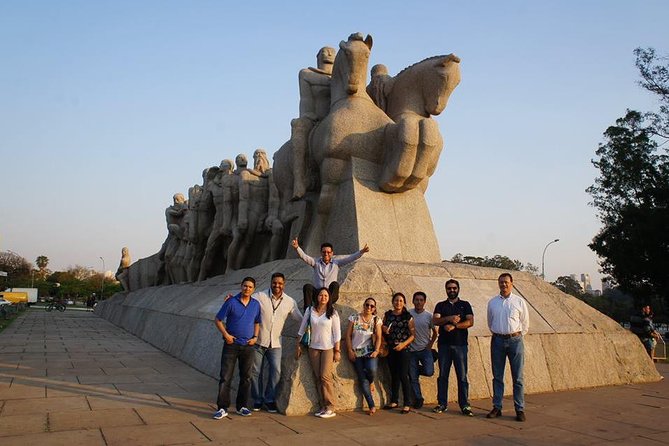
- Four hours covers a lot of ground: You will see central São Paulo, Ibirapuera Park, the Japanese district, major architecture, a food market, and street art.
- Private touring gives you room to adjust: Guides such as Juliana, Marlene, Mauro, Carlos, Edson, and Bruno have tailored routes to interests, weather, special events, and tight layovers.
- The historic center is the heart of the tour: Sé Cathedral and Pátio do Colégio explain how São Paulo began and how its religious and civic life developed.
- Mercadão adds a practical taste of the city: The Municipal Market is a good place to see produce, spices, meats, and local food culture in one stop.
- Batman Alley brings a different São Paulo: Its changing street art provides a strong contrast to colonial buildings, churches, and grand railway architecture.
- Ask for real stops, not drive-bys: Parking can be difficult, so confirm before departure which sites you will leave the vehicle to visit.
Why a private four-hour tour can work well
São Paulo is vast. Its historic center, museums, parks, food markets, financial districts, and residential areas are spread across a huge urban area, and heavy traffic can quickly turn independent sightseeing into a scheduling puzzle.
A private car solves part of that problem. You avoid organizing several taxis and can ask the guide to adjust the route. For a first visit, I see this as a city orientation tour, giving you enough context to decide where to return later.
The guide and driver may be the same person, or the tour may use a separate driver and guide. The experience is private, so only your group participates. Guides may be multilingual, but language ability can vary. Most people can take part, and the tour operates near public transportation, though the included hotel pickup and drop-off are more useful than a train connection for a short visit.
The format is especially handy during a long layover. One family used a 12-hour stop in São Paulo to tour between airport transfers, while another solo visitor used the experience during a layover and was returned to the airport on time. You still need to allow enough time for immigration, luggage, and traffic, but a private guide can keep the day moving.
More Rio city tours:
- São Paulo’s Full Day City Tour: Main City Sights in 7 Hours – (Shared Group)
★ 5.0 · 1,691 reviews - São Paulo: Main City Sights in 7 Hours – Shared Group Tour
★ 4.9 · 587 reviews - São Paulo: City Highlights Guided Tour
★ 4.5 · 307 reviews
Pacaembu Stadium and São Paulo’s football culture
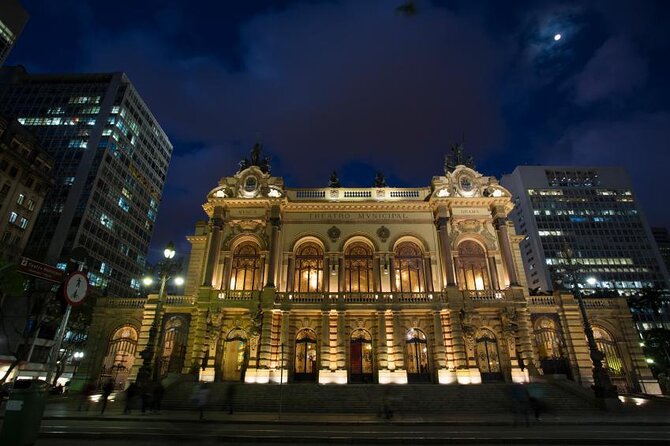
Pacaembu Stadium is a quick but meaningful opening stop. Built in 1940, the municipal stadium holds about 40,199 people and is used by São Paulo’s major football clubs when their regular grounds are unavailable or when a larger venue is needed.
The stadium carries the name of Paulo Machado de Carvalho, a major figure in Brazilian football and broadcasting. He led Brazil’s delegation at the 1958 World Cup and earned the nickname Marshal of Victory after that success.
The scheduled visit is about 15 minutes, with no admission fee. That is enough for photographs and an explanation of the stadium’s role, but not enough for a full stadium tour or a match-day experience. If football matters to you, tell your guide early. The route may be adjusted, though the supplied tour details do not promise stadium entry.
One practical issue matters here and at several other stops: parking. At least one disappointing experience involved simply driving past Pacaembu and other sites. I would politely confirm that you want time outside the vehicle for photographs.
Ibirapuera Park, São Paulo’s open-air pause
Ibirapuera Park gives the tour a welcome change of pace. Opened in 1954 for São Paulo’s 400th anniversary, it is the city’s best-known park and receives very large crowds throughout the week.
The planned visit lasts about 20 minutes. That is a short walk, not a full park outing. You can stretch your legs, take in the scale of one of São Paulo’s main public spaces, and hear how the park fits into city life.
I like this stop because it keeps the tour from becoming a string of buildings viewed through car windows. Still, you should keep expectations sensible. With only 20 minutes, you are getting an introduction rather than a proper exploration of the park’s paths and attractions.
If you prefer museums, architecture, or food to green space, this is one place where a private tour helps. Several guides have adapted the route to individual interests, including adding a contemporary art museum and a coffee stop with especially good cheese bread. Those changes are not guaranteed, but they show why it is worth discussing your priorities before setting off.
The Japanese district and São Paulo’s immigrant story
The tour also passes through the part of central São Paulo shaped by Japanese immigration. Japanese residents began settling on Count Sarzedas Street in 1912, drawn partly by inexpensive basement apartments and the area’s central location near work.
As the community grew, Japanese inns, shops, markets, restaurants, and small businesses appeared. The district became known for its Japanese character, and it remains one of the clearest examples of how immigration helped shape São Paulo’s neighborhoods and food culture.
The supplied schedule does not give this stop a precise duration, so your guide may explain it from the vehicle or include a short walk. Ask if you want to stop for photographs, browse shops, or discuss the area’s history in greater detail. This is a useful reminder that São Paulo is not defined by one colonial tradition. Its identity was built by many communities.
More Sao Paulo city tours:
- Skydive Tandem – São Paulo – Brazil
★ 5.0 · 1,840 reviews - 5-hour Private Tour Of São Paulo With Its Main Sights – Optional Airport Pickup
★ 5.0 · 643 reviews - 6-Hour Classic Half-Day Private Tour of São Paulo – Optional Airport Pickup
★ 5.0 · 441 reviews - Amazing São Paulo overview in 4 or 5 hours with a private guide
★ 5.0 · 290 reviews
Sé Cathedral and the city center
Sé Cathedral is one of the tour’s most important visual stops. Its Gothic design, granite construction, Italian capitals, stained glass, 92-meter towers, and large dome give it a powerful presence on the central square.
Construction began in 1913 under architect Maximilian Hehl. The cathedral was expected to be ready for São Paulo’s 400th anniversary in 1954, but it opened incomplete and did not receive its towers until 1970. That long building story gives your guide plenty to explain beyond the usual quick photograph.
The visit is listed at about 20 minutes and admission is free. You may have time to enter, look at the interior, and walk around the square, but the stop is not designed for a slow architectural study.
The cathedral also exposes one of the tour’s strengths and weaknesses. A good guide can connect the building to the city’s growth, religion, politics, and public life. A rushed guide may only point at the façade before moving on. One past group had to specifically request a stop here after the guide initially planned only to drive by. Make your wishes clear.
Pátio do Colégio, where São Paulo began
Pátio do Colégio marks the foundation site of São Paulo. On January 25, 1554, Jesuit priests Manuel da Nóbrega, José de Anchieta, and others celebrated the first mass at a mission on this plateau between the Tamanduateí and Anhangabaú rivers.
The original church and school were modest structures, later rebuilt using rammed earth. The Jesuit mission became the center of religious and educational life in the early settlement, though the priests also clashed with settlers involved in the capture and enslavement of Indigenous people.
The Jesuits were expelled, returned, and were expelled again after the suppression of their order in 1759. Their buildings later served government purposes. The church collapsed in 1896, and the site was rebuilt in the twentieth century with a colonial appearance. The museum and square now recall the early settlement, even though the surviving structures are not untouched originals.
This is one of the most worthwhile historical pauses because it explains the city’s starting point. You are not just seeing an old church. You are seeing the place from which an inland mission grew into one of the world’s largest cities.
Municipal Theatre and modern Brazilian art
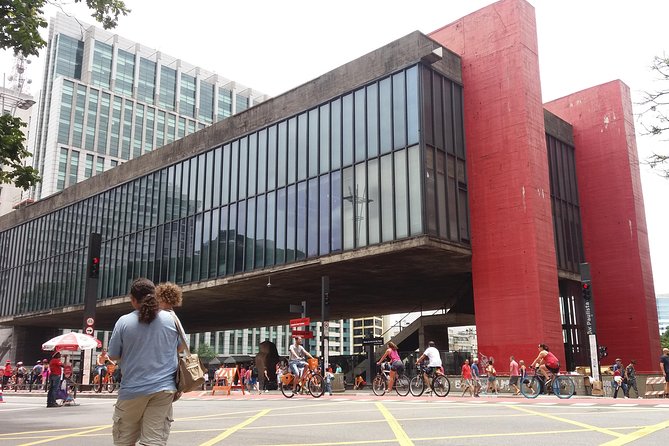
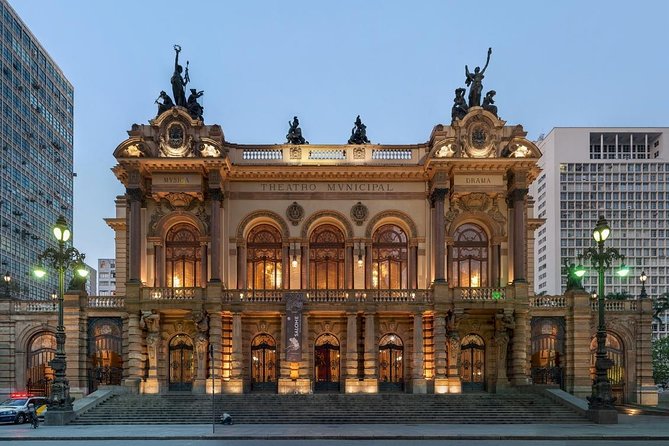
The Municipal Theatre of São Paulo adds grand architecture and cultural history to the route. It is regarded as one of the city’s key landmarks and became especially important as the venue for the 1922 Week of Modern Art.
That event challenged established artistic ideas and helped reshape Brazilian modernism. Even a brief look at the theatre gives you a way to understand São Paulo as a city that has repeatedly reinvented itself.
The supplied schedule does not assign a separate time for this stop, so you may see it from outside or combine it with a central walking section. If you want to go inside, ask in advance. The tour includes sightseeing, not a guaranteed performance or interior visit.
Estação da Luz and the age of coffee
Estação da Luz is one of São Paulo’s most striking railway buildings. The current station was built from 1895 to 1901 for the British-owned São Paulo Railway, whose line linked Santos on the coast with Jundiaí inland.
The railway helped move coffee toward the port of Santos and brought imported goods and capital into São Paulo. In the early twentieth century, the station was a major gateway to the city, so its story is closely tied to the growth of the coffee economy and industrial São Paulo.
Its iron structure was brought from England in pieces and assembled locally. The design is attributed to English engineer Henry Driver and is similar to Flinders Street Station in Melbourne.
The stop lasts about 20 minutes and has no admission charge. It is a good place for photographs and a short lesson in how railways helped make São Paulo wealthy and powerful. Again, confirm that you will actually stop. One poor experience involved the guide driving past the station because parking was difficult.
Mercadão, São Paulo on a plate
The Municipal Market, widely called Mercadão, is perhaps the tour’s most immediately enjoyable stop. Opened in 1933, it was designed by Francisco Ramos de Azevedo and handles fruits, vegetables, grains, meats, spices, and other foods.
The building is in the historic center near the Tamanduateí River and Dom Pedro II Park. It remains both a working market and a popular meeting place, so you get a more direct look at daily food culture than you would from a formal museum.
The planned visit is about 30 minutes, the longest scheduled stop. Food and drinks are not included, so budget separately if you want to sample something or buy local products. The short time means you will need to choose between browsing, eating, and taking photographs.
A guide can make this stop much more useful by explaining what you are seeing and pointing you toward foods that fit your taste. If food is a priority, say so before the tour begins. Several successful routes have included time for markets and coffee.
Batman Alley and São Paulo’s street art
Batman Alley is the most colorful finish to the route. This famous passage is known for street art, painted walls, and changing displays that show São Paulo’s contemporary creative side.
The scheduled visit is about 20 minutes. That gives you time to walk through, take photographs, and see the contrast between the city’s older center and its more experimental art scene.
The alley can also be a good place to extend the tour in your own way. One private group combined it with shopping, while another described it as a favorite part of a route that also included the market and a church. Shopping is not included, and the tour does not promise a particular set of murals, since street art changes.
Guide quality, vehicles, and the private advantage
The strongest part of this experience is usually the guide. Juliana has been praised for being friendly, flexible, and willing to change the route, including a visit connected with Ayrton Senna. Marlene has handled airport timing carefully, added coffee and market stops, and offered suggestions for restaurants, bars, museums, and shopping.
Carlos has been singled out for making the tour fun while explaining São Paulo’s history and culture. Edson has stepped in at short notice and still provided a strong central-city introduction. Bruno, Mauro, Viviane, Le, and others have also received praise for clear explanations and personal service.
The important point is not the name alone. A private tour lets you tell the guide what matters to you. If you want churches and history, say so. If you prefer football, food, art, or neighborhood life, say that instead.
Vehicle quality has been less consistent. The experience is promoted with private transport in a luxurious vehicle, but one group reported an older Honda Fit with weak air conditioning. Another praised a comfortable car with very good air conditioning. I would confirm the vehicle type and air conditioning if you are visiting during hot weather.
Timing, traffic, and value
There is no tour price supplied here, so I cannot judge the exact cost. The value depends on how much you would otherwise spend arranging airport or hotel transfers, taxis, and a guide for a short visit.
For a first visit, the private format can be good value because it saves planning time and lets you cover widely separated districts. It is particularly useful for a layover, a business trip, or a first day in the city when you want an overview before exploring independently.
Traffic is the main cost that does not appear on a price sheet. São Paulo traffic can delay the route, especially between the park, central landmarks, the market, and Batman Alley. A four-hour tour that starts late or loses time in congestion may feel much shorter.
The booking terms are straightforward. You can cancel for a full refund up to 24 hours before the start time. Cancellations or changes inside 24 hours are not refunded, and there is no refund if you miss the tour because a cruise ship arrives late. Port cruise terminal pickup and drop-off are not included, while hotel pickup and drop-off are included.
Who should book this São Paulo tour?
I would choose this tour if you have only a few hours, want private transport, or prefer a guide to explain the city as you move between districts. It also suits families, couples, solo visitors, and small groups who want to shape the day around personal interests.
It is less suitable if you want long museum visits, extensive walking, or a detailed look at every attraction. The route covers many locations, but several stops are short. You should also avoid booking it with a fixed plan that depends on entering every building unless the guide confirms that in advance.
Before the vehicle arrives, tell the company three things: your top two priorities, whether you want walking or mainly driving, and which stops require time outside the car. That simple conversation may prevent the most common disappointment.
Should you book it?
Book it if you want a fast, private introduction to São Paulo and understand that this is a sampler, not a full city tour. The best versions combine strong guiding, comfortable transport, and a route adjusted to your interests.
I would be cautious if you need guaranteed entry to Pacaembu, the Municipal Theatre, or museums, or if your plans cannot tolerate traffic delays. Confirm the vehicle, guide language, exact pickup point, and promised photo stops before paying.
For a layover or first day, I see real value here. For a slower visit, use the tour to get your bearings, then return on your own to the historic center, Mercadão, Ibirapuera Park, or Batman Alley with more time.
FAQ
How long is the São Paulo Private City Tour?
The tour lasts approximately four hours.
Is this a private tour?
Yes. Only your group participates in the private activity.
Is hotel pickup and drop-off included?
Yes. Hotel pickup and drop-off are included.
Is airport pickup available?
Airport pickup has been provided for some layover bookings, but the listed inclusions specifically state hotel pickup and drop-off. Confirm airport arrangements before booking.
Is port cruise terminal pickup or drop-off included?
No. Port cruise terminal pickup and drop-off are not included.
Are food and drinks included?
No. Food and drinks are not included. You may need to pay separately for anything purchased at the Municipal Market or elsewhere.
Are admission tickets included?
The listed stops show no admission ticket charge. The tour includes taxes, fees, a professional guide, and private transport, but it does not promise entry to every building or attraction.
Can the itinerary be changed?
The private format allows the route to be tailored to your interests, and guides have adjusted tours for weather, special events, and personal requests. Confirm important changes with the operator before the tour begins.
What is the cancellation policy?
You receive a full refund if you cancel at least 24 hours before the local start time. Cancellations or changes made less than 24 hours before the start time are not refunded.
Just added in Sao Paulo
- Private Transfer: GRU Airport to Sao Paulo City up to 15 People★ 5.0 · 12 reviews
- Private Transportation to Campos do Jordão – Premium Experience★ 5.0 · 1 review
- São Paulo Layover Tour from GRU AIRPORT | 06 hours of private tour★ 5.0 · 1 review
- Translate Airports SP★ 5.0 · 1 review
- 5-hour tour in the main points of São Paulo.★ 5.0 · 12 reviews
- Private Transfer from Sao Paulo (GRU) Airport to Aparecida Do Norte★ 5.0 · 1 review
- Private Transfer from Sao Paulo (GRU) Airport to Campos do Jordão★ 5.0 · 1 review
- (Sedan VIP Class) Transfer GRU Airport • São Paulo★ 5.0 · 6 reviews
Rio de Janeiro City Tours, compared.

Rio’s City Tour – Tickets for Christ, Sugar Loaf & Lunch included
Read our review →
Full Day: Christ Redeemer, Sugarloaf, City Tour & Barbecue Lunch
Read our review →
Christ the Redeemer, Sugarloaf, Selaron & BBQ Lunch
Read our review →
São Paulo’s Full Day City Tour: Main City Sights in 7 Hours – (Shared Group)
Read our review →


Pub Crawl in Lapa with Cachaça Tasting and Live Samba
Read our review →
Rio’s Best_Corcovado, Sugar Loaf, Selaron, Cathedral and more
Read our review →Browse the lists this tour appears in