
Reviewed · FAVELA TOURS
The real life behind the word favela
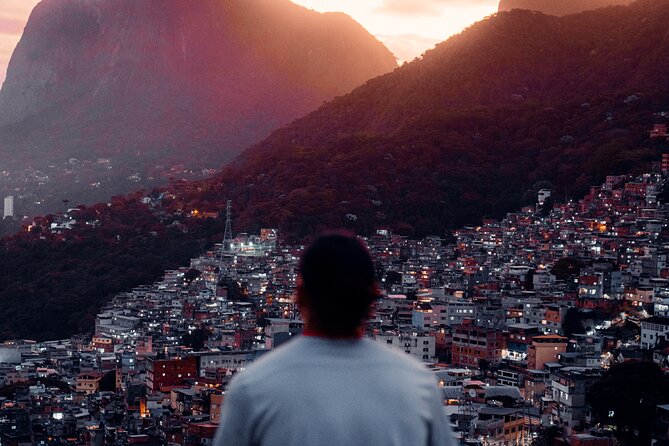
Rocinha rewards a curious approach. This three-hour visit with Favela Lives Tour offers a local view of Rio’s largest favela, with a personal guide, transportation, a viewpoint, and stops connected to daily life. I especially like the chance to hear the story from guides such as Carlos, Carolina, and Gilvan, and I like that the route can include capoeira, local schools, narrow lanes, a cathedral tied to Rocinha’s origins, and even an informal soccer moment.
The main consideration is that this is not a polished sightseeing circuit. Streets can be tight, the physical pace is moderate, and some parts may feel confronting or less structured than a standard city tour. One past guest also reported an unexpected five-real charge and pressure around tips, while another experienced a guide no-show, so clear communication matters.
In This Review
- Key points to know before you go
- Why Rocinha is worth seeing with local context
- Meeting at São Conrado and getting started
- Entering Rocinha by local transport
- Seeing daily life beyond the postcard view
- The viewpoint and the city below
- The human moments that make the visit memorable
- Price, group size, and what you receive
- Who will appreciate this tour most
- Practical ways to make the three hours better
- Should you book Favela Lives Tour?
- FAQ
- Where does the tour start?
- Where does the tour end?
- How long does the tour last?
- How much does the tour cost?
- What is included?
- Is food included?
- Are souvenirs included?
- How many people can join the tour?
- Is the tour suitable for people with limited mobility?
- Can I cancel for a refund?
- Can the tour be canceled because of weather?
Key points to know before you go
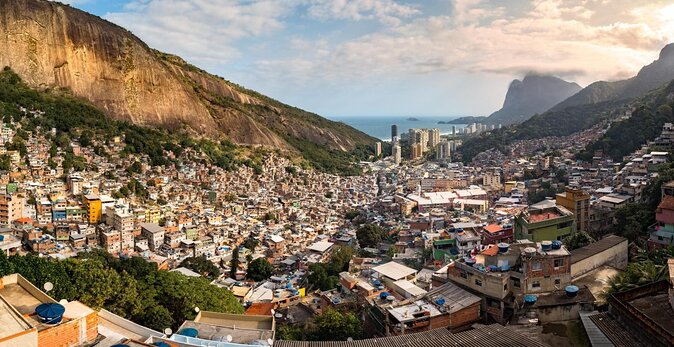
- Rocinha is treated as a city within Rio: The visit focuses on how the community functions, not just on taking photographs from above.
- Local guides shape the experience: Carlos, Carolina, and Gilvan receive especially warm praise for their care, language skills, and ability to explain everyday life.
- The route can include a mototaxi ride: One account describes beginning by motortaxi and moving through several parts of Rocinha.
- You may see more than street views: Stops can include capoeira, schools, a cathedral, narrow passageways, and a viewpoint.
- The tour runs about three hours: Transportation and a personal guide are included, but food and souvenirs cost extra.
- Book with practical expectations: The group can reach 20 people, a moderate fitness level is advised, and the meeting point is at São Conrado Metro station.
Why Rocinha is worth seeing with local context
Rio often gets reduced to beaches, sugarloaf views, samba, and football. Those are real parts of the city, but they are only part of it. Rocinha offers a chance to see how another part of Rio works, with homes, businesses, schools, religious spaces, and social life packed into steep urban streets.
The phrase favela tour can sound uncomfortable, and that concern is fair. You are entering a lived-in neighborhood, not an open-air museum. The quality of the experience depends heavily on the guide’s attitude, the group’s behavior, and the operator’s care with local residents.
That is why I find the local-guide approach important here. The stated aim is to show real life inside Rocinha and create a social and cultural experience. The strongest accounts describe guides who explain the community rather than simply point at it. Carlos is praised for detailed explanations and calm care. Carolina is described as exceptionally friendly, fluent in English, and willing to spend extra time answering questions. Gilvan is praised for being helpful and approachable.
The tone matters. A good guide can help you understand the difference between poverty, informal housing, community identity, and the stereotypes often attached to the word favela. You still see difficult realities, but you also see ordinary routines and personal pride.
More Favela Tours in Rio de Janeiro:
- Rio de Janeiro: Rocinha Favela Walking Tour with Local Guide
★ 4.8 · 3,052 reviews - Rio De Janeiro: Half-Day Rocinha Favela Walking Tour
★ 4.7 · 2,272 reviews - 3 Hour Rocinha Favela Walking Tour with a Local Guide
★ 5.0 · 833 reviews
Meeting at São Conrado and getting started
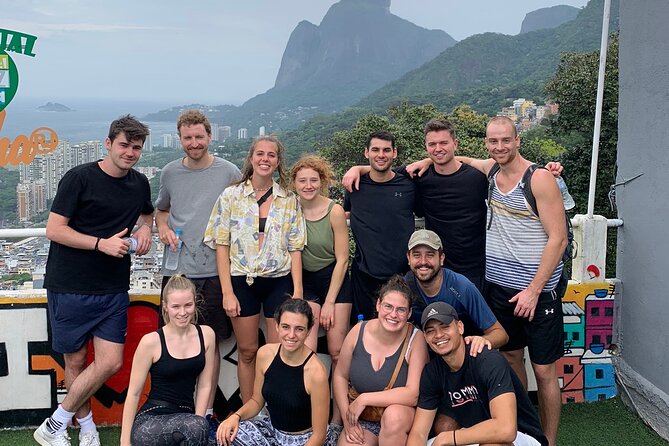
The meeting point is Metrô São Conrado, Exit B, at Estrada da Gávea in São Conrado. The tour returns to this same point after about three hours.
That arrangement is useful if you are staying near Rio’s southern neighborhoods or using the metro. It also removes the need to arrange a separate ride into Rocinha. Private transportation is included, and one detailed account describes the group starting with a mototaxi. The exact transport sequence is not fully specified, so I would confirm the pickup details when booking.
The starting point also gives you a practical way to plan the day. You are not being collected from every hotel, and you should allow enough time to reach São Conrado Metro. One person reported waiting 30 minutes after making a long trip from a hotel because no guide appeared. That appears to be an isolated but serious service failure, so I would keep the booking confirmation and contact details close at hand on the morning of the tour.
The activity accepts service animals and is near public transportation. It is best suited to people with a moderate level of physical fitness. That does not mean you need to be an athlete, but walking through narrow, uneven, or steep parts of the community may require care.
Entering Rocinha by local transport
A mototaxi can change the feel of the first few minutes. Instead of approaching Rocinha only as a distant viewpoint, you begin moving into its streets and seeing the density of daily life at close range.
This part can be exciting, but it may also feel busy or unfamiliar. If you are nervous, tell your guide. The strongest comments about the tour repeatedly praise guides for putting safety first and staying attentive to the group.
The operator describes Rocinha as the largest favela in Latin America and a city within the city. That phrase is useful if you treat it as a description of scale, not a slogan. You are not visiting one small settlement with a single viewpoint. You are entering a large community with its own streets, routines, landmarks, and local identity.
The physical setting helps explain why transportation is part of the experience. Narrow routes and dense construction can make short distances feel very different from a normal Rio neighborhood. You might find yourself shifting between wider streets, tight passageways, and spots where the city opens out below you.
Seeing daily life beyond the postcard view
The tour’s strongest feature is its focus on ordinary life. The route may include local schools, capoeira, a cathedral, and narrow ways through Rocinha. Each stop offers a different question to ask.
A school can help you think about how children and families use the neighborhood’s institutions. Capoeira connects movement, music, sport, and community culture. The cathedral is especially interesting because one account identifies it as part of Rocinha’s origin story. These are more meaningful stops than a simple drive through a poor neighborhood.
A personal guide can add the missing links. You might hear how the area developed, how people move around, and what daily routines look like. The supplied details do not promise a fixed script or a guaranteed stop at every location, so I would treat the route as flexible rather than expect a precise checklist.
That flexibility can be a strength. If your group asks good questions, the visit may feel like a conversation rather than a lecture. One account describes Carlos answering many questions in detail, while another says the guide showed nearly every corner of the favela. Still, the experience will vary with the guide, group size, weather, and local conditions.
Photography deserves restraint. The tour is about people’s homes and daily lives. Ask before photographing individuals, children, schools, or private spaces, and follow the guide’s advice. Even if a picture seems harmless to you, it may not feel that way to someone who lives there.
More things to do in Rio de Janeiro:
- Rio de Janeiro: 6-Stop Highlights of Rio with Lunch
★ 4.4 · 5,157 reviews - Christ the Redeemer Entry Ticket by Corcovado Train
★ 4.4 · 4,476 reviews - Rio’s City Tour – Tickets for Christ, Sugar Loaf & Lunch included
★ 5.0 · 4,389 reviews - Full Day: Christ Redeemer, Sugarloaf, City Tour & Barbecue Lunch
★ 4.5 · 3,142 reviews
The viewpoint and the city below
A viewpoint is included, and it gives the visit a wider frame. From above, you can connect Rocinha to Rio’s famous coastal setting and see how tightly the community fits into the city.
I like the viewpoint because it prevents the tour from becoming only a walk through narrow streets. It also helps you understand the contrast between Rio’s famous tourist image and the neighborhoods that sit just beyond the beach postcard.
One person reported being asked to pay five reals per person after staying on a terrace. That fee was not expected from the published details, and it caused frustration. Bring some small Brazilian currency for ordinary purchases if you wish, but ask your guide clearly about any extra charge before agreeing to it.
The same account described repeated pressure to give tips to local people during stops. Supporting local residents can be worthwhile, but tipping should be your choice. I would prefer the guide to explain the purpose of any contribution plainly, without making you feel cornered.
The human moments that make the visit memorable
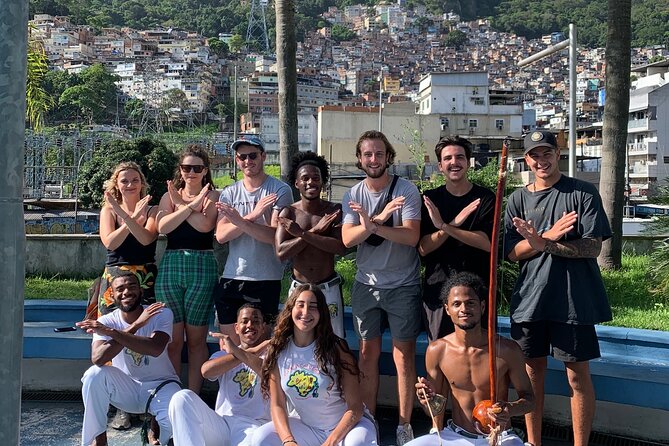
The most appealing part of this experience is the possibility of a genuine exchange. One couple’s account describes a husband who was initially nervous but left enthusiastic, even playing soccer with local teenagers. That sort of moment cannot be guaranteed, but it shows what can happen when the visit is handled with respect and the setting allows it.
You may also find informal social contact around capoeira or other local activities. The point is not to treat residents as entertainment. The point is to see a community where people work, study, play, worship, and socialize in the same way people do elsewhere, even under very different conditions.
That balance is crucial. A favela visit should not turn hardship into a spectacle. The best version of this tour gives you context and lets you observe without pretending that three hours can explain every part of Rocinha.
The guide’s personality makes a large difference. Carlos is repeatedly singled out for his detailed explanations, kindness, and care. Carolina receives exceptional praise for her English and patience with questions. A Spanish-language account describes Carlos Henrique as clear, friendly, protective, and very good in Spanish. If language is important to you, ask which guide is scheduled and what languages are available.
Price, group size, and what you receive
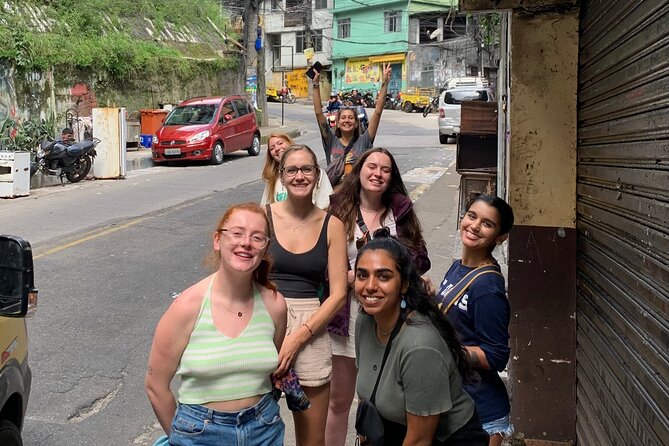
At about $49.05 per person, the price is reasonable if you value guided access, local transportation, and interpretation. You are paying for roughly three hours, a personal guide, private transportation, and a viewpoint. Food and souvenirs are not included.
The value is less about the number of sights and more about the access and explanation. Without a guide, you could pass through a few streets and leave with little understanding. With a strong guide, the same streets can reveal how the community developed and how people live there now.
The group may include up to 20 people. That is not a private tour in the strict sense, even though a personal guide is included. A group of 20 can make movement easier in some places, but it may reduce time for personal questions and make sensitive stops feel more conspicuous.
If you want the most intimate experience possible, ask about the expected group size before you commit. If you are comfortable with a small group setting, the maximum is still manageable for a three-hour outing.
The high rating of 4.9 from 186 ratings and the 99 percent recommendation figure suggest strong overall satisfaction. I would read those numbers as evidence that the tour often works well, not as a promise that every departure will be perfect. The no-show complaint and the concern about extra fees are worth keeping in mind.
Who will appreciate this tour most
I would recommend it to you if you want to understand Rio beyond its famous sights and are ready to listen. It suits solo visitors, couples, families, and friends, with positive accounts from all of those types of groups.
It is especially useful early in a Rio stay if you want social context for the rest of your visit. One suggestion was to take it after seeing places such as Copacabana, giving you a broader sense of Brazil beyond the main tourist areas.
You should choose another activity if you want a highly polished attraction with fixed timings, guaranteed photo stops, and no uncertainty. This visit involves a real neighborhood, a moderate physical pace, and the need for respectful behavior.
I would also be cautious if you are uncomfortable with close observation of poverty or with a tour that may include informal local interactions. The tour’s stated goal is cultural understanding, but your own expectations and conduct help shape the experience.
Booking is flexible in one useful way: cancellation is free up to 24 hours before the start time. Within 24 hours, you do not receive a refund. The tour may also be canceled because of poor weather or because a minimum number of people is not reached, in which case you are offered another date or a full refund.
Practical ways to make the three hours better
Wear shoes suitable for moderate walking and narrow routes. The available details do not promise meals, so eat beforehand and carry what you need for the morning or afternoon.
Arrive at São Conrado Metro with time to spare. Keep your confirmation available, and if the guide is not present at the expected time, contact the operator rather than waiting without an update.
Bring some cash only if you want to buy something or make a voluntary contribution. Ask about costs before entering a terrace or accepting any extra activity, since one person was surprised by a five-real charge.
Keep your camera ready for the viewpoint, but use it carefully in residential areas. I would follow the guide’s instructions around schools, homes, and local people.
Finally, ask questions. The best praise for this tour centers on guides who explain, listen, and challenge assumptions. You will get more from the experience if you approach it as a conversation about people and place, not as a quick checkmark beside a famous type of neighborhood.
Should you book Favela Lives Tour?
I would book this tour if you want a respectful, locally guided look at Rocinha and you accept that the visit may feel less polished than a standard attraction. The strongest reasons to go are the personal guides, the mix of cultural and everyday stops, the viewpoint, and the chance to hear a fuller story of life inside the community.
I would confirm the meeting details, ask about the guide’s language, and clarify any extra costs before setting out. With those questions answered, the $49.05 price offers good value for three hours of transport, explanation, and access to a side of Rio that many visitors never understand.
FAQ
Where does the tour start?
It starts at Metrô São Conrado, Exit B, at Estrada da Gávea in São Conrado, Rio de Janeiro.
Where does the tour end?
The activity ends back at the same meeting point.
How long does the tour last?
The tour lasts approximately three hours.
How much does the tour cost?
The listed price is $49.05 per person.
What is included?
Private transportation, a viewpoint, and a personal guide are included.
Is food included?
No. Food is not included.
Are souvenirs included?
No. Souvenirs are not included.
How many people can join the tour?
The maximum group size is 20 people.
Is the tour suitable for people with limited mobility?
A moderate level of physical fitness is advised. The available information does not provide detailed mobility-access information.
Can I cancel for a refund?
Yes. You can cancel at least 24 hours before the start time for a full refund. Cancellations within 24 hours are not refunded.
Can the tour be canceled because of weather?
Yes. If poor weather causes cancellation, you are offered a different date or a full refund.
Just added in Rio de Janeiro
- Full Day Tour in Rio de Janeiro★ 5.0 · 8 reviews
- Garganta do Ceu Cave Hiking Private Tour on Pedra da Gavea★ 4.5 · 3 reviews
- Gastronomic Tour at the Municipal Market in Rio de Janeiro★ 5.0 · 4 reviews
- GIG Airport Transfer x Rio de Janeiro Hotels★ 4.5 · 11 reviews
- Rio de Janeiro private Full day Custom Tours★ 5.0 · 35 reviews
- AquaRio, Museum, Boulevard Olimpico, Ferris Wheel, Transport and Tourism Guide.★ 4.0 · 6 reviews
- Personalized and Private Full-Day Tour in Rio de Janeiro★ 5.0 · 6 reviews
- Christ the Redeemer – Complete Morning Tour with Ticket and Transport at the Hotel★ 3.5 · 4 reviews
Favela Tours, compared.


3 Hour Rocinha Favela Walking Tour with a Local Guide
Read our review →
Favela Tour Rio de Janeiro – Vidigal Walking Tour by Russo Guide
Read our review →
Browse the lists this tour appears in