
Reviewed · FLORIANÓPOLIS TOURS
Whale Watching – Whale watching from land
Whales are never on a timetable. That is part of the appeal of this land-based outing near Florianopolis, where your guide checks current sightings and takes you to Imbituba, Garopaba, or Laguna. I like the flexible whale-search plan and the chance to learn about old whaling traditions and Indigenous culture, not just stare at the sea.
I also like that binoculars and air-conditioned transport are included. You can spend three to four hours moving between scenic viewing areas instead of waiting in one place. The main drawback is simple: a whale sighting is not guaranteed, and the final viewing spot may not be known until the day of the tour.
In This Review
- Key points to know before booking
- Why this whale tour is different from a boat trip
- Imbituba: begin where the whales are
- Garopaba and the old whaling stations
- Laguna and Indigenous traditions
- How the moving route affects your day
- Binoculars make land viewing worthwhile
- The guide shapes the experience
- Is $43.37 a fair price?
- Weather, cancellation, and who should book
- Should you book this Florianopolis whale tour?
- FAQ
- Where does the whale-watching experience take place?
- How long does the experience last?
- Is this a boat whale-watching tour?
- Are binoculars included?
- Is transportation provided?
- Is hotel pickup available?
- Is a whale sighting guaranteed?
- What happens if the weather is poor?
Key points to know before booking
- Three possible whale-viewing areas: The guide chooses between Imbituba, Garopaba, and Laguna based on where the whales are.
- Land-based watching: You stay on shore and use provided binoculars rather than taking a boat.
- Local stories add depth: The outing covers former whaling stations, traditional fishing canoes, and Indigenous sites.
- Private experience: Only your group participates, which makes the moving schedule easier to manage.
- Good value at $43.37: Transport, a guide, and binoculars are included for roughly half a day.
- Weather matters: Poor conditions can lead to a new date or a full refund, but sightings themselves are never promised.
Why this whale tour is different from a boat trip
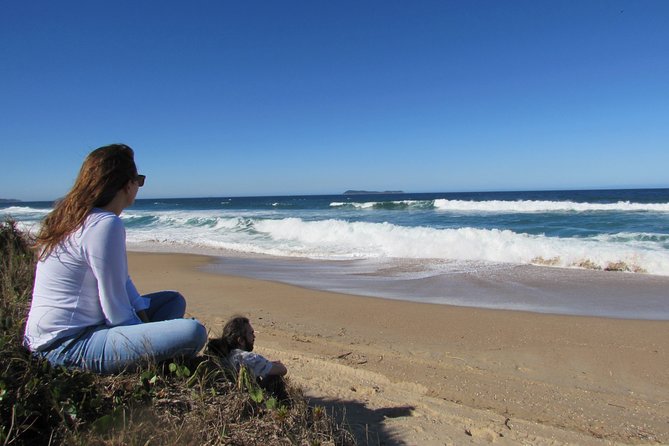
This is whale watching from land, a calmer choice for anyone who would rather keep both feet on solid ground. You do not board a vessel, deal with waves, or spend the whole outing scanning from one moving platform. Instead, the guide uses the day’s information to decide which coastal area offers the best chance of seeing whales.
That approach has a practical advantage. The three possible areas, Imbituba, Garopaba, and Laguna, are treated as one broad viewing zone. If the whales are not near one location, the outing can shift to another. You are not locked into a single lookout simply because that was the original meeting point.
The tradeoff is that the experience depends on nature. Even with a good guide and binoculars, whales may remain far offshore or fail to appear. The tour does not include a whale-watching guarantee, so you should book it for the full experience of coastal viewing, local stories, and wildlife searching rather than as a promise of a close encounter.
For me, that makes this best for flexible people. If you need a certain animal sighting at a certain time, this may feel uncertain. If you enjoy the search and appreciate the setting around it, the format makes good sense.
More things to do in Florianopolis:
- Floripa City Tour by Bus – Whole Island – The Most Complete City Tour
★ 5.0 · 672 reviews - Beach Safari – panoramic beach tour
★ 5.0 · 506 reviews - Rafting Adventure in Apuama – Rio Cubatão in Greater Florianópolis
★ 5.0 · 281 reviews
Imbituba: begin where the whales are
Imbituba is one of the three possible places used for the outing. The stop is planned for about one hour, although the exact order and location can change according to whale activity. You may begin here, or you may reach it after visiting another part of the coast.
The useful detail is that the guide does not treat Imbituba as a fixed sightseeing box. It is one option in a live search. On the day of your tour, the guide checks where the whales are and directs the vehicle accordingly.
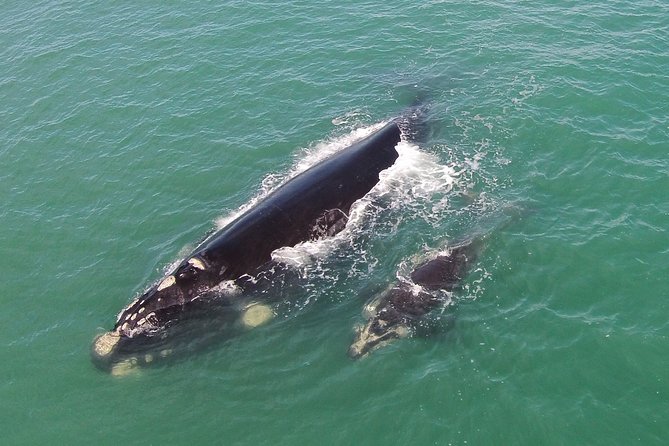
Once you reach the viewing area, the provided binoculars become important. From land, whales can appear small even when they are visible, so having binoculars for each group is much better than relying only on your eyes. You may catch glimpses of whales and younger whales, but the distance and visibility will depend on conditions.
The one-hour estimate gives you a sense of scale. This is not a quick photo stop followed by an immediate departure. You have time to watch, listen, and let your eyes adjust. Still, the guide may move you along if another area offers a better chance.
Garopaba and the old whaling stations
The Garopaba portion is planned for about 30 minutes. Its appeal is not only the possibility of seeing whales. It also connects the coast to the area’s former whaling economy and to the fishing traditions that followed.
You may hear about old whaling stations and see a traditional Canoa Baleeira. These boats were once used for whale hunting and are now part of artisanal fishing traditions. The canoe may be found in Garopaba, Laguna, or Imbituba, depending on the route chosen that day.
That detail gives the tour a useful layer of context. Whales here are not simply wildlife viewed from a safe distance. They are tied to the history of local communities, work, food, boats, and changing attitudes toward the sea. A short explanation beside an old station or traditional canoe can make the sighting feel connected to the place.
The 30-minute estimate also means you should not expect a long museum visit or a formal historical tour. The cultural information is folded into the whale outing. That is a plus if you want several subjects in one half-day, though it may feel brief if your main goal is a detailed study of whaling history.
Laguna and Indigenous traditions
Laguna is another possible stop, also planned for around 30 minutes. Here the focus may shift toward Indigenous Peoples of the region and traces of earlier life along the coast.
You might observe ancient Sambaqui burial sites. These sites are important because they connect the present coast to communities that lived here long before modern tourism and commercial fishing. The tour may also include a look at the Canoa de um Pau Só, a dugout canoe described as the largest Indigenous artifact still in use today.
The canoe can appear in Laguna, Imbituba, or Garopaba, so you should not treat any single location as certain. The same flexibility that helps with whale sightings also shapes the cultural stops. Your guide chooses the route based on the day’s conditions and the location of the whales.
I like this part of the experience because it keeps the outing from becoming a single-purpose wildlife chase. You receive a broader introduction to the coast, including Indigenous life, traditional boats, and the way people have used the sea over time.
On the other hand, the cultural details are not presented as a full archaeological tour. If you want extensive time at Sambaqui sites or a long explanation of Indigenous history, you may find the 30-minute stop too short. For a compact whale-watching experience, though, it adds real value.
A completely different kind of day:
- Ecological Boat Tour 10 Deserted Beaches – Waterfall Trails-by Zimbros Ecotour
★ 5.0 · 181 reviews - Snorkeling Tour on Macuco Island With Underwater Photos by Zimbros Ecotour
★ 5.0 · 135 reviews - Aqua Aventura – diving for families
★ 5.0 · 117 reviews - Bombinhas with Beach Safari by Casa do Turista
★ 5.0 · 99 reviews
How the moving route affects your day
The listed duration is about three to four hours. That is long enough to feel like a proper half-day activity without taking over your entire schedule in Florianopolis. You should keep the rest of your day somewhat open, since the final route depends on where the whales are and how much time is useful at each place.
The vehicle is air-conditioned, which matters in a warm coastal region. You may spend time traveling between viewing areas, and the air conditioning makes those transfers more comfortable. The experience is private, so only your group participates. That gives you a more personal setting than a large shared excursion and may make it easier to ask questions or adjust the pace.
Pickup requires a little planning. Check if your hotel is on the pickup list. If it is not, arrange pickup from another location before the tour. Do not assume every hotel is covered simply because transport is included.
The flexible route is the heart of the tour, but it can also make the day less predictable. You are not buying a fixed sequence of three attractions. You are joining a guided search that may use one, two, or all three areas as conditions dictate.
Binoculars make land viewing worthwhile
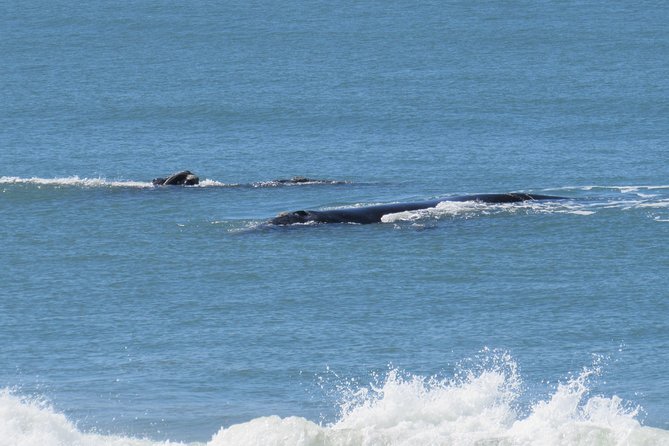
The included binoculars are one of the most practical features. A whale seen from shore may be a dark back, a blow, or a brief movement in the water. Binoculars help you follow those moments and give you a better chance of seeing young whales when they are present.
You should still set realistic expectations. Binoculars do not guarantee a close view, and no equipment can control the weather, sea conditions, or animal behavior. They simply make the wildlife search more rewarding when something appears offshore.
I would bring patience along with the binoculars. The best part may be the waiting, scanning, and learning how to read the water with help from the guide. That is a different rhythm from a boat tour that tries to bring you directly to an animal.
If your group includes children, this format may work well if they enjoy spotting games and short trips between locations. It may be less suitable for anyone who expects constant action. The tour offers several chances to look, but it cannot promise continuous sightings.
The guide shapes the experience
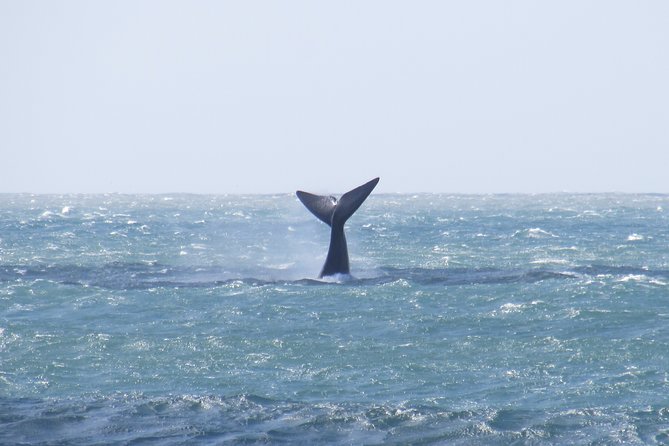
A guide is especially useful on a land-based whale outing. Without one, you might spend hours looking at open water without knowing where to focus or what counts as a real sighting. Here, the guide provides information about migration and explains why the region once depended on whales.
Camilo received special praise for making one outing memorable by taking the group to several beautiful locations. That detail matters because the experience depends heavily on how the route is handled. A guide who combines whale searching with the surrounding places gives you more from the time, even if the animals stay distant.
The cultural material also gives the guide plenty to explain. You may learn about whaling stations, the Canoa Baleeira, Sambaqui burial sites, and the Canoa de um Pau Só. These are not random add-ons. They show how the coast has been shaped by Indigenous communities, whaling, and artisanal fishing.
The experience has a 4.9 rating from 24 reviews, and 96 percent of people recommend it. That is a strong record, while still being a small sample. I would take it as evidence that the personal guiding and multi-stop format work well, not as proof that every outing will produce a whale sighting.
Is $43.37 a fair price?
At $43.37 per person, the price is reasonable for a private three to four-hour experience that includes air-conditioned transport and binoculars. You are also paying for local route planning. The guide must decide where to go based on current sightings instead of simply repeating the same short visit every day.
The value is strongest if you care about more than a photograph of a whale. You receive wildlife watching, migration stories, old whaling history, traditional boat culture, and possible Indigenous sites in one outing. The several beautiful locations praised in the feedback also suggest that the ride itself can be part of the experience.
The price is less convincing if you measure value only by confirmed whale sightings. There is no guarantee, and poor weather can cancel the activity. You need to accept that uncertainty before booking.
For a private group, the cost can make more sense than it first appears. You are not sharing the experience with a large crowd, and the route can focus on your group. Confirmation is sent within 48 hours of booking, subject to availability, so leave some time before your preferred date.
Weather, cancellation, and who should book
Weather is a real part of this experience. If poor weather forces a cancellation, you can receive a different date or a full refund. The activity also requires a minimum number of participants, and if that minimum is not met, you can be offered another date or experience, or receive a full refund.
For your own cancellation, you can cancel up to 24 hours before the start time for a full refund. Changes or cancellations made less than 24 hours before the start time are not accepted for a refund. The cutoff uses local time.
I would recommend this tour for:
- People who want whale watching without going out on a boat
- Couples, families, or private groups that prefer a flexible outing
- Anyone interested in local fishing and whaling traditions
- Visitors who want wildlife and cultural context in the same half-day
- People comfortable with nature-based plans that cannot promise an animal sighting
I would think twice if you need a guaranteed whale encounter, dislike changing plans, or want a long, detailed visit at one historical or Indigenous site. The route is built around current conditions, not a rigid schedule.
Should you book this Florianopolis whale tour?
Book it if you see whale watching as a search, not a guarantee. The smart parts are the private air-conditioned vehicle, provided binoculars, three possible viewing areas, and a guide who connects the whales to local life.
The best reason to choose it is the mix. You may see whales and younger whales, but you also learn why whaling once mattered, how the Canoa Baleeira remains part of fishing traditions, and what Sambaqui sites and the Canoa de um Pau Só reveal about the region.
At $43.37, it is a fair half-day choice for a flexible schedule. Check hotel pickup before paying, allow three to four hours, and book with weather in mind. If you can accept that the sea makes the final decision, this offers a thoughtful and personal way to watch for whales near Florianopolis.
FAQ
Where does the whale-watching experience take place?
It takes place in the Florianopolis region, using Imbituba, Garopaba, or Laguna as possible viewing areas.
How long does the experience last?
The experience lasts approximately three to four hours.
Is this a boat whale-watching tour?
No. This is whale watching from land.
Are binoculars included?
Yes. Binoculars for whale watching are included.
Is transportation provided?
Yes. The experience includes an air-conditioned vehicle.
Is hotel pickup available?
You need to check if your hotel is on the pickup list. If it is not, you can arrange pickup from another location.
Is a whale sighting guaranteed?
No. A whale-watching guarantee is not included.
What happens if the weather is poor?
If the experience is canceled because of poor weather, you will be offered a different date or a full refund.
Just added in Florianopolis
- Private Tour: Itajai and Camboriu★ 4.5 · 8 reviews
- Breath Experience★ 5.0 · 39 reviews
- Bombinhas + Snorkel by Zimbros Ecotour★ 5.0 · 2 reviews
- Beer Tasting Experience★ 5.0 · 35 reviews
- Beto Carrero Transfer – Bombinhas Exit★ 5.0 · 9 reviews
- Transfer Beto Carrero★ 4.5 · 15 reviews
- Florianopolis Walking Tour – History, Art and Gastronomy★ 5.0 · 38 reviews
- Kayak Water Trail in Red River Park by Adrenailha★ 5.0 · 40 reviews
Florianópolis Tours, compared.
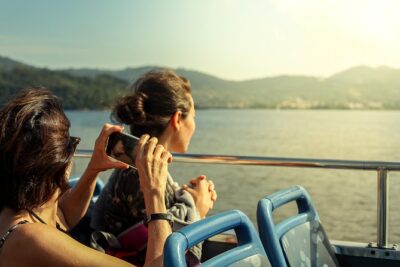
Floripa City Tour by Bus – Whole Island – The Most Complete City Tour
Read our review →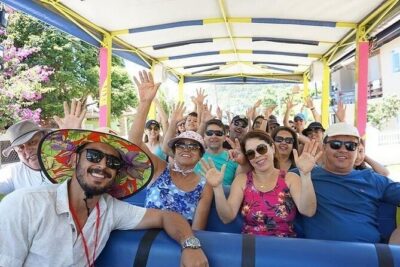
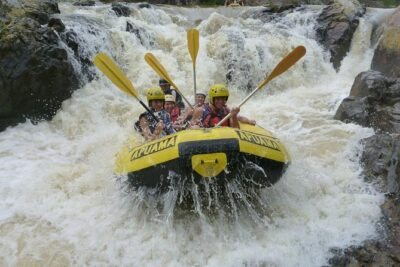
Rafting Adventure in Apuama – Rio Cubatão in Greater Florianópolis
Read our review →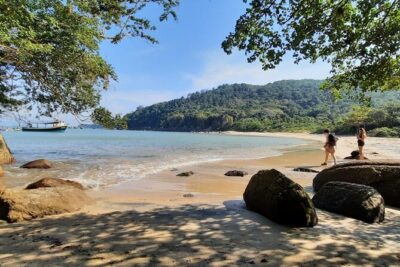
Ecological Boat Tour 10 Deserted Beaches – Waterfall Trails-by Zimbros Ecotour
Read our review →
Snorkeling Tour on Macuco Island With Underwater Photos by Zimbros Ecotour
Read our review →
Cação Beach Sunset with Photos Included by Zimbros Ecotour
Read our review →Browse the lists this tour appears in