
Reviewed · SOUTHERN BRAZIL TOURS
Florianopolis Walking Tour – History, Art and Gastronomy
History comes alive on foot. This Florianópolis tour links old civic buildings, Afro-Brazilian heritage, samba culture, and the Public Market in about two hours. I especially like the small maximum of 15 people, which gives you room to ask questions, and the way guide Isaac connects architecture with slavery, Indigenous land, and everyday local life. You also get a city map with food and drink tips.
The main consideration is pace. The walk covers eight stops, and the schedule leaves only a few minutes at some places. Food, drinks, and beer are extra, so your final cost depends on how much you eat at the market or stop for a pint.
In This Review
- Key points to know before you book
- Why this short Florianópolis walk works
- Starting at Largo da Alfândega
- Remembering the old pier at Memorial Miramar
- Bar do Noel, samba, and feijoada
- The huge fig tree in Praça XV de Novembro
- Palace rooms and Cruz e Sousa’s cultural legacy
- Teatro Álvaro de Carvalho and the difficult past
- The Church of Our Lady of the Rosary and Saint Benedict
- Ending at Mercado Público de Florianópolis
- Isaac’s guiding style and group size
- What the $17.64 price includes
- Who should book this walk
- Should you book the Florianópolis Walking Tour?
- FAQ
- How long does the Florianópolis Walking Tour last?
- Where does the tour begin?
- Where does the tour end?
- Is food or alcohol included?
- What is included in the tour?
- What happens if the weather is poor?
Key points to know before you book
- Isaac brings a historian’s approach: His storytelling covers Florianópolis, slavery in Brazil, Indigenous land, and the social meaning of local places.
- The route finishes at the Public Market: Allow time after the tour for fish, groceries, restaurants, and souvenir stalls.
- The group is capped at 15 people: That is a useful size for conversation without the feel of a large procession.
- You see the city’s Afro-Brazilian past: The Church of Our Lady of the Rosary and Saint Benedict was built by the Black community for the Black community.
- It costs $17.64 per person: With the map, rain coats, and guided context included, this is a good-value orientation walk.
- The walk needs decent weather: Rain coats are supplied, but poor weather can lead to a new date or a full refund.
Why this short Florianópolis walk works
Florianópolis is best understood in layers. You have the modern capital of Santa Catarina, the old city center, Portuguese colonial influence, Afro-Brazilian traditions, public food culture, and memories of places that no longer exist. This walk gives you a compact introduction to those layers without asking you to spend half a day inside museums.
The route is also practical. It begins at Café Bar do Largo da Alfândega, where you can get coffee or water and use the restroom before setting off. That small detail matters on a walking tour. You start prepared, rather than searching for a bathroom two stops later.
I like the balance between formal history and ordinary city life. One stop is a former governor’s palace and museum. Another is a bar known for samba and feijoada. The final stop is a working public market, where you can think about what you have learned while looking at food, shops, and places to eat.
The tour has a 5 out of 5 rating from 38 reviews, with 100 percent of participants recommending it. That strong record fits the experience’s clear strengths: a well-paced explanation, a personal guide, and more social context than you would get from simply walking past the buildings alone.
More trips in southern Brazil:
- Lagoinha do Leste Hiking and Photography Tour in Florianopolis
★ 5.0 · 26 reviews - Florianopolis: Walking Tour – History, Art and Gastronomy
★ 5.0 · 21 reviews - Florianopolis Bike Tour: Photography, History & Street Food
★ 5.0 · 18 reviews
Starting at Largo da Alfândega
Meet outside Café Bar do Largo da Alfândega at Largo da Alfândega, 142, in central Florianópolis. The first stop lasts about 10 minutes and is free to enter.
This is a useful meeting point because you can take care of the basics before the walk. Buy coffee or water if you need it, use the restroom, and make sure you have comfortable shoes. The tour is only about two hours, but it includes several stops and city streets, so a little preparation makes the experience easier.
Largo da Alfândega also sets the tone for the tour. You are beginning in the center, close to places tied to trade, public life, and the city’s older waterfront connections. Isaac can then place the following buildings and institutions within that wider setting.
The tour includes a city map with local recommendations. This is more useful than it may sound. A map marked with places to eat and drink can help you turn a short orientation walk into a plan for the rest of your stay.
Remembering the old pier at Memorial Miramar
The next stop is Memorial Miramar, a five-minute visit focused on one of the city’s old piers and a popular former bar.
Because the stop is brief, you should not expect a long museum visit. Its value comes from memory and urban change. A pier and bar can tell you how people once met, moved around, and spent leisure time in the city. Places like this help you picture Florianópolis beyond official buildings and dates.
I find stops like this important on a history walk. You are not only looking at what remains. You are also learning about what disappeared. The memorial gives Isaac a chance to explain how the city’s public life changed over time.
The short timing means you will need to listen closely. If you prefer long visits at each site, this may feel quick. If you want a broad introduction, the five minutes is enough to add another piece to the city’s story without slowing the whole route.
Bar do Noel, samba, and feijoada
Bar do Noel takes about five minutes. It is known as one of the popular downtown bars, with live samba and feijoada.
This stop brings the tour out of the realm of monuments and into living culture. Samba is not just background music here, and feijoada is not merely a dish to photograph. Together, they give you a way to connect food, music, and social life with the history being discussed.
Food and drinks are not included in the tour price, so this is an introduction rather than a scheduled meal. You may want to return later if the bar’s music or menu appeals to you. The provided local recommendations can help with that kind of decision.
A pint costs about $4 on average, according to the tour information. That is a useful figure when planning your spending, but it is only an estimate. Your final bill will depend on the drink, venue, and anything you order with it.
More History Tours in Florianopolis:
- Germanic Route – Cultural and historical in Ilhota, Blumenau and Pomerode
★ 4.5 · 67 reviews - Florianópolis: Historical Center, Beach & Nature Tour
★ 3.3 · 25 reviews - Historic Florianópolis Tour with Beach
★ 4.0 · 4 reviews - Rio de Janeiro Historical Center Walking Tour
★ 4.5 · 336 reviews
The huge fig tree in Praça XV de Novembro
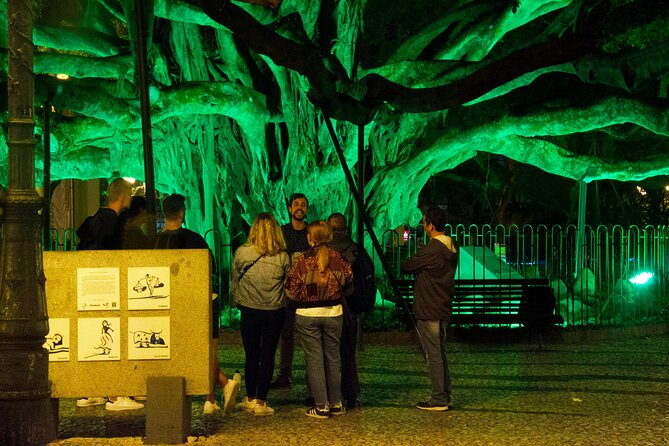
Allow about 20 minutes in Praça XV de Novembro, the city’s main square. The square is home to a gigantic fig tree, which gives the stop an easy visual focus.
The long pause here makes sense. A central square is often the best place to understand how a city organizes public life. You can look at the tree, the surrounding buildings, and the movement through the center while Isaac explains the square’s place in Florianópolis.
The fig tree also gives the tour a welcome change of scale. After hearing about piers, bars, and urban memory, you have a large living landmark to anchor your sense of place. It is the kind of feature you may walk past quickly on your own, even though it helps make the square memorable.
This is one of the better stops for questions. The group limit of 15 should make it easier to ask about the city, the square, or the buildings around it without having to call out over a crowd.
Palace rooms and Cruz e Sousa’s cultural legacy
The tour then reaches Palácio Cruz e Sousa, the former governor’s palace and home of the Cruz e Sousa Museum. The visit lasts about 10 minutes and has no separate admission charge.
This stop adds political and literary weight to the walk. You see a building linked to government, then encounter the museum connected to Cruz e Sousa. Isaac’s broader explanation of slavery and social history can help you consider who had power in the city, who was excluded, and how culture records those tensions.
Ten minutes is enough for an introduction, not a full museum visit. If the museum is a major interest for you, you may want to return independently and give it more time. During the tour, the goal is to understand why the palace matters as part of the city’s story.
I appreciate that the route does not treat an impressive government building as a complete explanation of Florianópolis. The social context matters. One especially praised part of Isaac’s guiding is his ability to connect the city’s history with slavery in Brazil in a clear, engaging way.
Teatro Álvaro de Carvalho and the difficult past
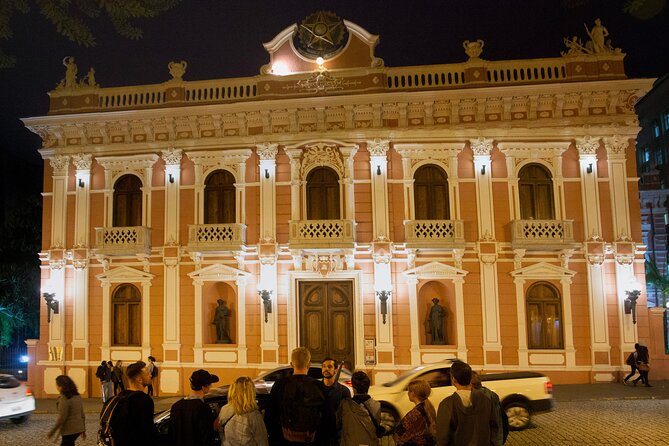
The Teatro Álvaro de Carvalho, commonly called TAC, receives about 10 minutes. The theater was used as a prison for Federalist rebels in 1894.
That detail changes how you see the building. A theater suggests performance, music, and public gathering. Its use as a prison points to political conflict and repression. The contrast gives this stop more force than a simple architectural photo opportunity.
This is also where a guide’s storytelling matters most. A plaque may give you a date, but Isaac can explain the human and political meaning behind it. The supplied comments describe his style as engaging, clear, and easy to follow, with enough detail for history lovers without becoming tiring.
The tour’s pace appears designed for a general audience. You get context, then move on before the amount of information becomes heavy. If you already have a strong background in Brazilian political history, you may want more time. For a first visit, the short explanation should give you a useful framework.
The Church of Our Lady of the Rosary and Saint Benedict
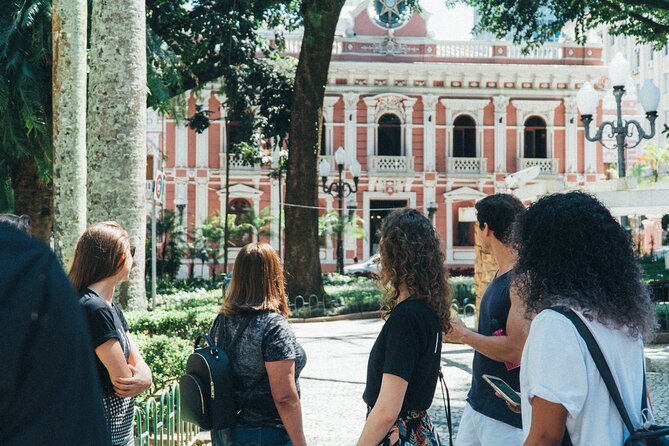
This 10-minute stop focuses on a church built by the Black community for the Black community. It is one of the most important points on the route because it makes Afro-Brazilian history part of the city center, not a side note.
The church gives you a chance to consider how Black communities created their own religious and social institutions. Its place on this walk also prevents the city’s story from becoming only a parade of colonial buildings and government landmarks.
Isaac’s treatment of slavery in Brazil has been praised for being direct and engaging. The tour also acknowledges Indigenous land, adding another layer to the discussion of who lived here, who held power, and how the city developed.
Ten minutes will not cover every aspect of the church or the community behind it. Still, this is a meaningful stop for anyone who wants a more honest account of Florianópolis. I would pay close attention here and use the question time well.
Ending at Mercado Público de Florianópolis
The final stop is Mercado Público de Florianópolis, with about 30 minutes set aside. This is the longest stop, and it is a fitting finish because the market brings the tour into present-day city life.
Inside, you can find local restaurants, souvenir shops, fish, and groceries. The market is not presented as a polished historical display. Its value is in showing how people shop, eat, meet, and use the center now.
The 30-minute visit gives you time to look around and decide what deserves a return visit. Food and drinks cost extra, so you can keep your spending modest or turn the ending into a meal. If you are interested in local food, this is the part of the tour where the map’s recommendations become especially useful.
The market also gives Isaac a practical way to finish. Instead of leaving you at an isolated monument, the walk ends near places where you can continue exploring on your own. One account describes Isaac joining the group for dinner at a small pub after the tour, but that should not be treated as a promised part of the experience. The official tour ends at the market.
Isaac’s guiding style and group size
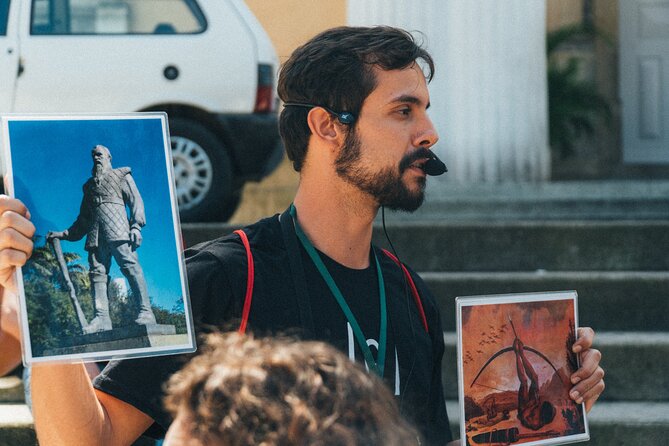
Isaac is the key reason to choose this walk over simply following a city map. He is described as a trained historian and a strong storyteller, with a personable approach that encourages questions and discussion.
His subject range is broad but connected. You hear about old public spaces, slavery, Indigenous land, religious communities, political rebels, samba, feijoada, and market food. That combination keeps the walk from feeling like a string of unrelated stops.
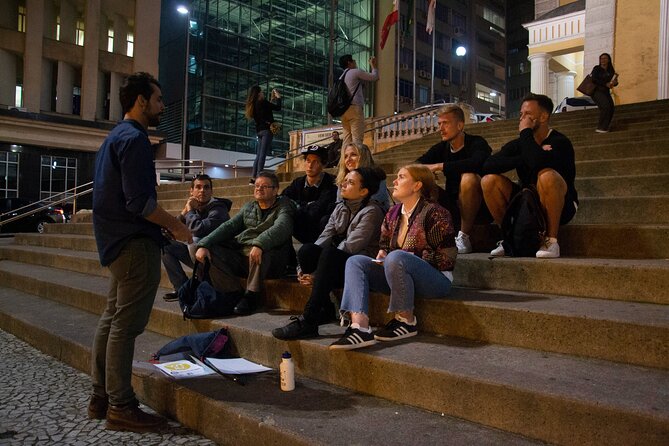
The maximum group size is 15 people. That is small enough for a personal feel, while still allowing the tour to run at a reasonable price. A smaller group is especially helpful at the square, church, and market, where you may want to ask about details that interest you.
The experience is recommended by 100 percent of participants and carries a 5 out of 5 rating from 38 reviews. Praise centers on Isaac’s storytelling, social context, clear pacing, and useful food and drink advice. Those are the qualities I would value most in a short city introduction.
What the $17.64 price includes
At $17.64 per person, this is a strong value if you want context rather than a long list of photo stops. You are paying for roughly two hours with a historian-led guide, a small group, a local map, and the chance to ask questions along the route.
Admission is free at each listed stop, so the price is not being used to cover expensive entry tickets. That makes the guide’s interpretation the main product. If you only want to see the buildings, you can walk through the center yourself. If you want to understand how the places connect, the fee is easier to justify.
Rain coats are included in case of rain. That is helpful, but the tour still requires good weather, and poor conditions may lead to a different date or a full refund. Food, drinks, and alcohol are not included. Budget extra if you plan to eat at the market or order a beer.
Who should book this walk
I would choose this tour during the first part of a Florianópolis stay. The route gives you a map, local suggestions, and enough background to make later visits more meaningful. It is also well suited to anyone who enjoys history but does not want an exhausting lecture.
This is a good match for you if you:
- Want to understand Florianópolis through buildings, food, music, and social history
- Care about Afro-Brazilian and Indigenous context
- Prefer a small group to a large guided crowd
- Like asking questions and discussing what you see
- Want practical advice on eating and drinking downtown
- Have about two hours for a central city walk
You may want another kind of activity if you need long museum visits, extensive free time at each monument, or a meal included in the price. The route moves quickly at several stops, and the market is the only place with a substantial 30-minute pause.
Wear comfortable shoes and arrive ready to walk between central sites. Start with water or coffee if useful, and keep some money available for food or drinks. If rain threatens, check the local forecast and remember that weather can affect the schedule.
Should you book the Florianópolis Walking Tour?
Book it if you want a compact, thoughtful introduction to central Florianópolis and value a guide who can connect places to Brazil’s social history. Isaac’s storytelling, the small group, and the final market visit give the walk more substance than a standard sightseeing loop.
The $17.64 price is fair because the tour’s value lies in explanation, not admission tickets. I would be especially keen to book it early in a visit, then use the map and market advice to plan the next few days.
Skip it only if you want a purely architectural tour, a full meal, or lots of time inside each museum and church. For most people seeking history, culture, and a practical first look at the city, this is an easy recommendation.
FAQ
How long does the Florianópolis Walking Tour last?
The tour lasts approximately two hours. The listed stops add up to about 100 minutes, with the remaining time allowing for walking between locations and transitions.
Where does the tour begin?
It begins outside Café Bar do Largo da Alfândega at Largo da Alfândega, 142, Centro, Florianópolis, Santa Catarina, postal code 88010-110.
Where does the tour end?
The activity ends at a different location from the meeting point. The final stop is Mercado Público de Florianópolis.
Is food or alcohol included?
No. Food, drinks, and alcoholic beverages are not included. The average price for a pint is about $4.
What is included in the tour?
Rain coats are provided in case of rain, and you receive a city map with local recommendations.
What happens if the weather is poor?
The experience requires good weather. If it is canceled because of poor weather, you can choose a different date or receive a full refund. Free cancellation is also available up to 24 hours before the start time.
More Walking Tours in Florianopolis
- Private Walking Tour in Florianopolis with Local Bar Hop
★ 5.0 · 9 reviews - A walk through the center of Floripa
★ 4.5 · 9 reviews - Rio de Janeiro: Rocinha Favela Walking Tour with Local Guide
★ 4.8 · 3,052 reviews - Rio De Janeiro: Half-Day Rocinha Favela Walking Tour
★ 4.7 · 2,272 reviews
Just added in Florianopolis
- Private Tour: Itajai and Camboriu★ 4.5 · 8 reviews
- Breath Experience★ 5.0 · 39 reviews
- Bombinhas + Snorkel by Zimbros Ecotour★ 5.0 · 2 reviews
- Beer Tasting Experience★ 5.0 · 35 reviews
- Beto Carrero Transfer – Bombinhas Exit★ 5.0 · 9 reviews
- Whale Watching – Whale watching from land★ 5.0 · 24 reviews
- Transfer Beto Carrero★ 4.5 · 15 reviews
- Kayak Water Trail in Red River Park by Adrenailha★ 5.0 · 40 reviews
Southern Brazil Tours, compared.

Ticket MAI – Museum of Indigenous Art – Curitiba
Read our review →
Guided Tour with Wine Tasting at Casa Seganfredo – Gramado
Read our review →

Sailing in Guaíba with White Swan Boat – Porto Alegre
Read our review →
Browse the lists this tour appears in