
Reviewed · SOUTHERN BRAZIL TOURS
Monumental Axis Bike Tour – Brasilia
Brasília makes more sense on two wheels. This three-hour ride links the capital’s grand civic buildings, quiet residential superquadras, parks, churches, and public squares in a way that is hard to manage on foot. I especially like the efficient route and the chance to see both famous Oscar Niemeyer buildings and less obvious parts of daily Brasília. The main catch is simple: you need to be comfortable riding a bike, including over a few curbs and short hills.
I also like the guides’ strong focus on architecture, city planning, and symbolism. Rogério, Romain, Mauricio, and other guides have been praised for clear explanations and friendly pacing, with English and, in some cases, French available. The tour has a maximum of 15 people, but small departures can feel almost private.
In This Review
- The key reasons to ride
- Starting at Brasil 21 and getting oriented
- Sarah Kubitschek Park and Brasília’s open scale
- Superquadra 302 and the city behind the monuments
- Sarah Hospital and the human side of modernist design
- South Commercial Sector, where Brasília gets busy
- National Library, National Theatre, and the cultural axis
- The Esplanade and the boldest Niemeyer views
- Lúcio Costa’s model and the city in miniature
- Itamaraty, the Supreme Court, and the Three Powers Square
- Pantheon of the Fatherland and the final ride back
- What the ride feels like in practice
- Is $62.78 a fair price?
- Who should book this ride?
- FAQ
- How long is the Monumental Axis Bike Tour?
- How much does the tour cost?
- Where does the tour start?
- Where does the tour end?
- What sights are included?
- Is the tour suitable for children?
- How many people can join?
- Is the tour near public transportation?
- Can I cancel for a full refund?
- Should you book it?
The key reasons to ride
- Covers a huge city efficiently: Brasília’s monumental districts are spread out, and the bicycle cuts out long walks and parking problems.
- Shows more than postcard buildings: You pass a working commercial district, a hospital sector, a superquadra, a park, and a pharmacy street.
- Niemeyer is only part of the story: Lúcio Costa’s city plan and the four urban scales help explain why Brasília looks and functions as it does.
- Good mix of riding and stops: The route includes free-access photo stops, short explanations, and time to enter selected spaces.
- Mostly manageable cycling: The route is generally easy, with some hills, crowds, curbs, and at least one place where you may walk the bike.
- Strong value for a first visit: At $62.78 per person, it costs more than a simple rental but adds a guide, route planning, context, and access to many major sights in one outing.
Starting at Brasil 21 and getting oriented
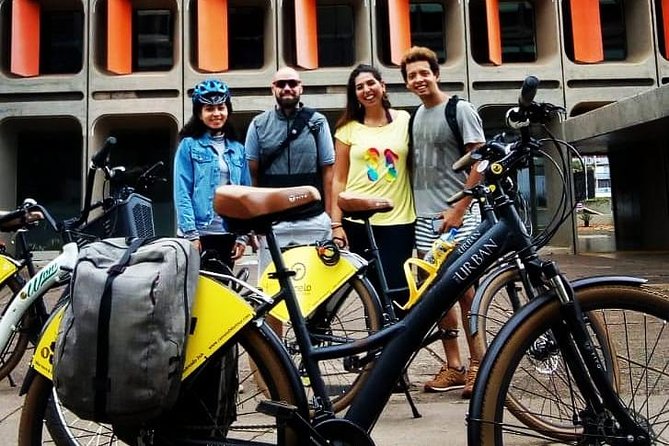
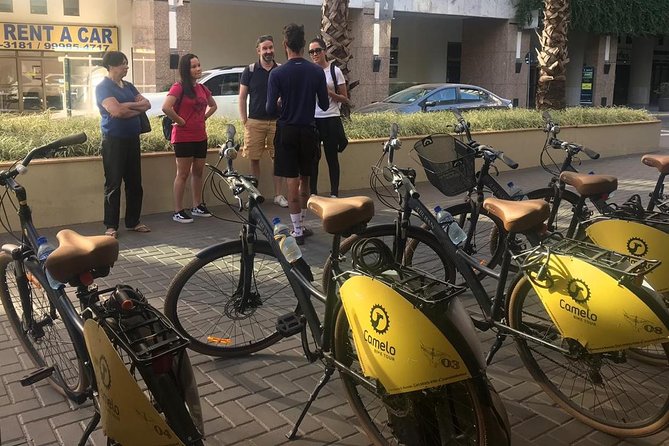
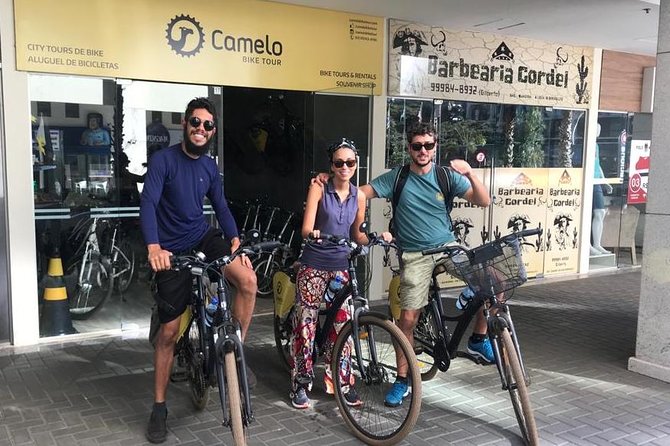
The meeting point is Camelo Bike Tour Brasília at SHS Quadra 06, Conjunto A, Bloco A, Loja 17, Centro Empresarial Brasil 21, in Asa Sul. The ride finishes back at this same location, which makes the tour easy to fit into a day of sightseeing.
The route begins with an introduction at the agency before heading to the Torre de Televisão. This first stop lasts about 20 minutes and gives you an early look at the scale of Brasília. The city is built around long axes and broad open spaces, so the tower is a useful first reference point before you head toward the monumental core.
You then pass the Ulysses Guimarães Convention Center. It has space for 9,400 people at once, spread across 54,000 square meters, with five auditoriums and 13 modular meeting rooms. You may not spend a long time here, but the building helps show that Brasília is not only a collection of government monuments. It also functions as a major center for business, public events, and large gatherings.
More trips in southern Brazil:
- Brasilia : Private Custom Tour with a Local Guide
★ 4.7 · 30 reviews - Brasilia Sightseeing
★ 3.0 · 23 reviews - Brasilia City Highlights Tour with Guide
★ 3.5 · 8 reviews
Sarah Kubitschek Park and Brasília’s open scale
Parque da Cidade Sarah Kubitschek is one of the largest urban parks in the world, and the tour gives you about 25 minutes there. This is a welcome change from the formal geometry of the central axis.
The park helps you understand Brasília’s generous approach to open space. The city’s broad avenues and large areas of greenery can feel strange if you expect a compact historic center. On a bicycle, that spaciousness becomes easier to appreciate because you move through it at a human pace rather than simply watching it pass from a car window.
The route then reaches the Santuario São João Bosco for about 15 minutes. Built in honor of St. John Bosco, Brasília’s patron saint, the sanctuary is one of the most atmospheric stops on the ride. It also gives the tour a useful change of mood. After the monumental offices and wide roads, this is a place for a quieter look at the city’s religious identity.
Superquadra 302 and the city behind the monuments
At Superquadra Sul 302, the focus shifts to Brasília’s residential scale. A superquadra is not just a block of apartments. It is part of Lúcio Costa’s plan for combining housing, local shops, schools, green areas, and leisure space in a carefully organized setting.
This is an important stop because the famous government buildings are only one part of the city’s design. The superquadras show how the original plan was meant to support ordinary routines. You may notice the buildings raised on pilotis, open space around them, and a separation between local services and the larger traffic routes.
The tour does not stop at the first model superquadra, known as the Quadra Modelo, but 302 has a similar configuration. The 15-minute visit is brief, so it will not provide a full architectural study. It does, however, give you enough context to recognize the pattern elsewhere in Brasília.
You also pass Rua das Farmácias, a street where pharmacies dominate because of its location near the South Medical and Hospital Sector. This small detail adds a dose of everyday Brasília. It is not a grand monument, but it shows how the city’s sectors developed around specific functions.
Sarah Hospital and the human side of modernist design
Another pass takes you by the first unit of the Sarah Hospitals Network. The rehabilitation center specializes in locomotion and orthopedic conditions, and its design was created to make long hospital stays less harsh.
The building reflects the work of João da Gama Filgueiras Lima, known as Lelé, who worked with Oscar Niemeyer and Lúcio Costa and taught at the University of Brasília. His approach paid close attention to construction methods, materials, internal flexibility, natural light, and ventilation.
The hospital’s design includes large, colorful, airy spaces, terraces, gardens, and double-height areas. The facades use Vierendeel beams, which help create the distinctive structure. You may not enter the hospital, but the guide’s explanation makes this passing stop worthwhile. It broadens the tour beyond the better-known names and shows how modern architecture can respond to human needs, not just civic image-making.
More bike tours in Brasilia:
- Fatima Neighborhood and Church Unit Bike Tour
★ 5.0 · 58 reviews - Bike Tour of the 4 Scales of Lucio
★ 5.0 · 49 reviews - Pirenópolis, the charming baroque city inaugurated in 1723 in the gold cycle
★ 4.5 · 40 reviews - JK Memorial Bike Tour and Crystal Square
★ 5.0 · 4 reviews
South Commercial Sector, where Brasília gets busy
The 30-minute stop at Setor Comercial Sul is one of the most useful parts of the tour. This is central Brasília’s working, pedestrian-heavy side, with services and institutions drawing people during the week. Its closeness to the bus station and the Esplanade of Ministries adds to the foot traffic.
Here you get a sharper sense of the city as a lived place. Different social groups, workers, commuters, and shoppers meet in this area, making it more varied than the monumental lawns. The South Commercial Sector represents Lúcio Costa’s gregária, or gathering, scale.
The area has also seen efforts to improve public spaces. Praça do Povo was renovated in 2021, with room for skateboarding, shows, and kiosks. The project received a regional award from the Instituto de Arquitetos do Brasil in the urbanism, planning, and cities category.
This stop also includes buildings connected with architects such as Lelé and Niemeyer. The contrast is useful: Brasília’s original plan was not only about isolated monumental structures. It also needed places where people could meet, work, shop, and spend time together.
National Library, National Theatre, and the cultural axis
The National Library of Brasília receives a short five-minute stop, followed by the Claudio Santoro National Theatre, also designed by Niemeyer. The theatre is considered one of Brasília’s notable works, with its strong geometric form adding another piece to the city’s modernist collection.
Five minutes is enough for an exterior explanation and photographs, but not for a full visit inside. That timing is typical of this tour. You see a large number of buildings, then rely on the guide to explain why each matters.
The route also passes Conic, a landmark in the Southern Amusement Sector. This is another reminder that the capital has zones for entertainment and informal public life, not only ministries and courts.
The Esplanade and the boldest Niemeyer views
The tour then moves toward the National Congress, the visual anchor at the start of the Esplanade of Ministries. The Congress occupies the apex of the Three Powers Square and is one of the city’s most recognizable sights.
You continue past the Esplanade of Ministries toward the National Museum of the Republic. The museum belongs to Brasília’s planned cultural complex, based on a project commissioned from Niemeyer in the 1970s. The stop lasts about five minutes, so expect an outside look rather than a museum visit.
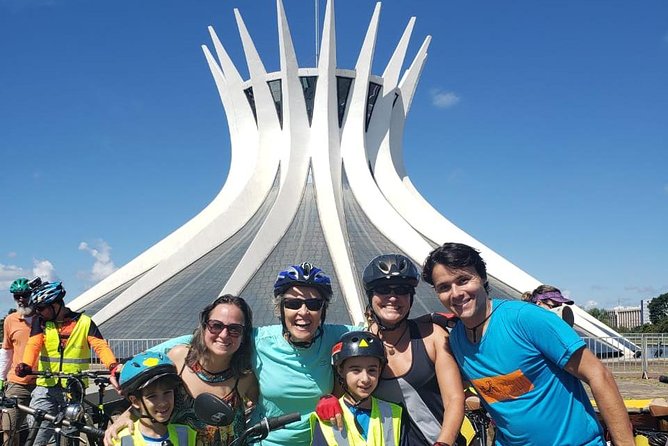
The Metropolitan Cathedral receives about 15 minutes and is one of the route’s major highlights. Niemeyer’s design helped make the cathedral a landmark in modern architecture, with curved concrete ribs rising around the structure. This is one of the places where the ride pauses long enough for you to go inside, according to the tour details and past experiences.
The cathedral is also a good test of how you respond to Brasília’s architecture. Some people find its forms graceful and uplifting. Others find the monumental buildings cold or imposing. Either reaction is fair, and the guide’s context helps you see the design as part of a deliberate attempt to create a new national capital from scratch.
Lúcio Costa’s model and the city in miniature
At Espaço Lúcio Costa, you spend about 15 minutes viewing a large model of Brasília and the Plano Piloto tactile model. The underground space opened in 1992 during celebrations for Lúcio Costa’s 90th birthday.
This is one of the most valuable stops for first-time visitors because Brasília can be hard to understand from street level. The model lets you see the city’s main axes, sectors, monumental core, and residential areas as one planned composition.
I would pay close attention here, even if you are not an architecture specialist. Once you see the plan in miniature, the broad roads, separated districts, and long distances feel less random. You begin to understand why a bicycle is so useful on this route.
Itamaraty, the Supreme Court, and the Three Powers Square
Palácio Itamaraty, also known as the Palace of the Arches, houses Brazil’s Ministry of Foreign Affairs. It is another Niemeyer work, known for its elegant arches and reflecting water feature designed by landscape artist Roberto Burle Marx.
The tour passes the building opposite the Itamaraty Palace, described as having concrete waterfalls on its facade and a water mirror. The route gives you time to hear the explanation and take photographs, though the itinerary does not promise an interior visit.
At Praça dos Três Poderes, you spend about 20 minutes, followed by another stop of about 10 minutes for an exterior visit and explanation of the Supreme Federal Court. The court occupies one of the square’s three vertices, opposite the Planalto Palace, and was designed by Niemeyer with an original plan by Lúcio Costa.
The square opened on April 21, 1960, the same day Brasília became Brazil’s federal capital. It brings together the executive, legislative, and judicial powers in one carefully planned civic space. You also see the National Congress and the place where the president works and conducts official business.
This is the intellectual center of the ride. The guide can connect the buildings to the city plan, the symbolism of the square, and the political purpose behind the monumental setting.
Pantheon of the Fatherland and the final ride back
The final listed stop is the Panteão da Pátria, or Pantheon of the Fatherland, with about five minutes for an exterior look and explanation. It honors important figures and events in Brazil’s national story and completes the tour’s movement from everyday districts to the symbolic heart of the capital.
You then return to the Camelo Bike Tour office. The full experience is advertised at about three hours, though the number of stops means the exact pace may vary. If you want long visits inside buildings, this is not that sort of outing. It is a guided overview, with enough stops to build a strong mental map of Brasília.
What the ride feels like in practice
The route is mostly easy, and Brasília has many bike paths. Still, you should not read easy as completely effortless. One detailed account noted that some sidewalks lack ramps, so you may need to lift the front wheel over a curb or get off and walk the bike.
There are also a few hilly sections. At one point, you may walk the bike up a ramp. Crowds can appear around central sights, and you need to stay alert when riding near other people. Basic confidence on a bicycle matters more than speed.
The guides have received especially strong praise for safety, pacing, and clear explanations. Romain has been praised for speaking excellent English and French, while Rogério has been singled out for explaining the city’s history before the ride begins. Mauricio has also received warm comments for his architecture and city-planning explanations.
Bikes have been described as well maintained. For children from about four to 10 or 12 years old, the company can provide an articulated tandem car trailer or bike, but you need to ask in advance.
Is $62.78 a fair price?
At $62.78 per person, this is not the cheapest way to look at Brasília. A bicycle rental would cost less, but it would leave you to plan a route through a city built around long distances and separated districts.
The price makes more sense if you have only a short stay or want a clear introduction before exploring alone. In roughly three hours, you cover the tower, park, sanctuary, superquadra, commercial sector, cathedral, museum area, ministries, courts, and Three Powers Square.
You also get the value of interpretation. Without a guide, it is easy to see Brasília as a series of striking concrete shapes. With explanations about Lúcio Costa, Niemeyer, Lelé, Burle Marx, the four urban scales, and the city’s political symbolism, the buildings begin to connect.
The 99 percent recommendation rate and 5.0 rating from 133 ratings suggest a consistently strong experience. I would still factor in the physical demands and short stop times before booking.
Who should book this ride?
I would choose this tour if you want to see the main sights quickly, enjoy architecture, or have one free morning or afternoon in Brasília. It is especially useful for solo visitors because the route and transport problem are handled for you.
It also suits curious cyclists who want more than a photo checklist. The South Commercial Sector, Rua das Farmácias, Sarah Hospital, and Superquadra 302 add daily life and city planning to the better-known monuments.
I would be more cautious if you are not comfortable riding, dislike stopping often, or want extended indoor visits. This is a moving overview, not a museum tour. You should also allow some flexibility for weather, since poor conditions can cancel the ride.
Cancellation is free up to 24 hours before the start time for a full refund. The activity requires good weather, and if conditions force cancellation, you are offered another date or a full refund.
FAQ
How long is the Monumental Axis Bike Tour?
The tour lasts approximately three hours.
How much does the tour cost?
The price is $62.78 per person.
Where does the tour start?
It starts at Camelo Bike Tour Brasília, SHS Quadra 06, Conjunto A, Bloco A, Loja 17, Centro Empresarial Brasil 21, Asa Sul, Brasília.
Where does the tour end?
The tour ends back at the meeting point.
What sights are included?
The route includes the Torre de Televisão, Parque da Cidade Sarah Kubitschek, Santuario São João Bosco, Superquadra Sul 302, Setor Comercial Sul, National Library, National Theatre, Supreme Federal Court, National Museum, Metropolitan Cathedral, Espaço Lúcio Costa, Palácio Itamaraty, Praça dos Três Poderes, and Pantheon of the Fatherland.
Is the tour suitable for children?
An articulated tandem car trailer or bike is available for children from about four to 10 or 12 years old. You should ask about this in advance.
How many people can join?
The maximum group size is 15 people.
Is the tour near public transportation?
Yes, the meeting point is near public transportation.
Can I cancel for a full refund?
Yes. You can cancel at least 24 hours before the start time for a full refund. Cancellations or changes made less than 24 hours before the start are not refunded or accepted.
Should you book it?
Yes, if you want the quickest practical introduction to Brasília and feel steady on a bicycle. The tour’s best feature is its range: in one outing, you move from a residential superquadra and working commercial streets to Niemeyer’s cathedral, the Esplanade, Itamaraty, and the Three Powers Square.
Book it with realistic expectations. You will ride between many short stops, handle a few curbs and hills, and spend more time understanding the city than touring interiors. For most first visits, that is a fair trade. Brasília is too spread out for casual wandering, and this bicycle route gives you both the major sights and the planning logic that holds them together.
Just added in Brasilia
- Transfer Brasilia Pirenópolis★ 5.0 · 3 reviews
- Airport pick up services Same day booking. Driver speak English, Spanish and Portuguese.★ 5.0 · 9 reviews
- Brasilia City Highlights Tour with Guide★ 3.5 · 8 reviews
- Pirenópolis, the charming baroque city inaugurated in 1723 in the gold cycle★ 4.5 · 40 reviews
- Brasilia Private Custom Walking Tour With A Guide (Private Tour)★ 4.5 · 6 reviews
- JK Memorial Bike Tour and Crystal Square★ 5.0 · 4 reviews
- Green City Tour in Brasilia★ 3.0 · 1 review
- Private Tour of the Federal District in Brasilia★ 4.5 · 4 reviews
Southern Brazil Tours, compared.
Ticket MAI – Museum of Indigenous Art – Curitiba
Read our review →
Guided Tour with Wine Tasting at Casa Seganfredo – Gramado
Read our review →
Sailing in Guaíba with White Swan Boat – Porto Alegre
Read our review →

Transfer back and forth to Gramado/Canela de Porto Alegre/Caxias
Read our review →Browse the lists this tour appears in