
Reviewed · CYCLING TOURS
Fatima Neighborhood and Church Unit Bike Tour
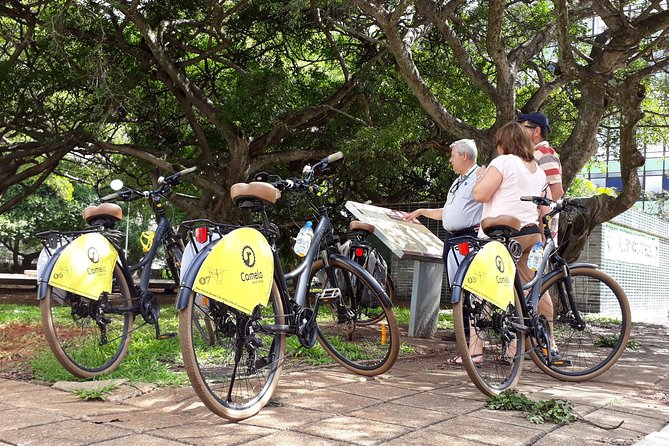
Brasília makes more sense on two wheels. This three-hour ride links modernist landmarks, Burle Marx gardens, a model superquadra, and two important churches, giving you a clear look at how the capital was planned and how people live inside it. I like the well-spaced route, which mixes open parks with residential streets, and I like that the tour reaches places a standard monument circuit often skips. The main drawback is that the experience depends on good weather, and the $62.73 price is not bargain-level for a three-hour activity.
You meet at Camelo Bike Tour’s office in Asa Sul and finish at the same place. The group can reach 15 people, so this is not a private outing, but it is still small enough for a guide to keep the ride organized. Guide Duda has been praised for explaining both Brasília’s design and everyday life in the superquadras, which is exactly the sort of context that gives this route its value.
In This Review
- Key details before you pedal away
- Meeting in Asa Sul and getting oriented
- Choro, Oscar Niemeyer, and Brasília’s musical voice
- Parque da Cidade and the Eduardo e Mônica square
- Two Burle Marx stops, two different scales
- SQS 308, Brasília’s model residential block
- Cine Brasília and Renato Russo Hall
- Igrejinha Nossa Senhora de Fátima
- Sanctuary São João Bosco and the final change of mood
- What the $62.73 price buys you
- Who will enjoy this ride most
- Should you book the Fatima Neighborhood and Church Unit Bike Tour?
- FAQ
- How long does the Fatima Neighborhood and Church Unit Bike Tour last?
- How much does the tour cost?
- Where does the tour begin?
- Where does the tour end?
- Is admission included at the stops?
- How many people can join the tour?
- Can children participate?
- What happens if the weather is poor?
Key details before you pedal away
- A model superquadra reveals Brasília’s daily design: SQS 308 shows how housing, shops, schools, public space, and cultural venues were meant to work together.
- Burle Marx appears twice: You visit the huge Parque da Cidade Sarah Kubitschek and the smaller Jardim Burle Marx, seeing how planting and open space shaped the capital.
- The route includes two very different churches: Igrejinha Nossa Senhora de Fátima is small and intimate, while the São João Bosco Sanctuary is known for its striking interior and role as Brasília’s patron saint church.
- Music and film are part of the ride: Stops connected with Choro, Legião Urbana, Renato Russo, and Cine Brasília add local culture beyond architecture.
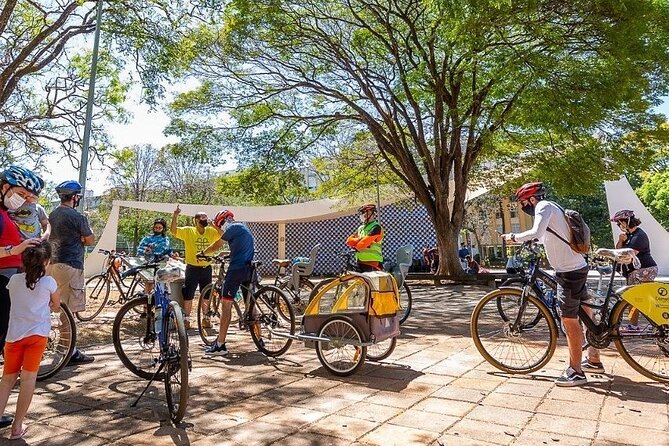
- Children can ride with the group: An articulated tandem passenger trailer or bike is available for children from about 4 to 10 or 12 years old, but you need to ask in advance.
- The tour is designed for a half-day window: It lasts about three hours, costs $62.73 per person, and is commonly booked around 41 days ahead.
Meeting in Asa Sul and getting oriented
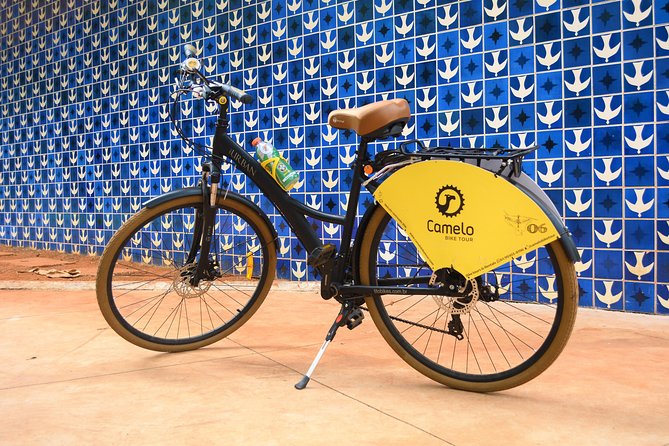
The ride begins at Camelo Bike Tour, located at SHS Quadra 06, Conjunto A, Bloco A, Loja 17, Centro Empresarial Brasil 21, in Asa Sul. The meeting point is near public transportation, which helps if you are staying elsewhere in Brasília and do not have a car.
I would allow a little extra time to find the office. The tour ends at this same location, so you do not have to arrange a pickup from the final church. That simple out-and-back setup is useful in a city built around broad avenues and large planned sectors.
The first stop is the Torre de Televisão, or TV Tower. You spend about 10 minutes here for an explanation and photographs. Admission is free, so this is a quick orientation rather than a long visit.
The tower is a useful opening point because Brasília can feel scattered when you first arrive. A brief explanation here helps you place the residential sectors, parks, and monumental areas within the city’s larger plan. I would not book this ride only for tower access or a long viewing-platform visit. The value comes from using the tower as a starting point before cycling into the city’s residential core.
More bike tours in Brasilia:
- Monumental Axis Bike Tour – Brasilia
★ 5.0 · 133 reviews - Bike Tour of the 4 Scales of Lucio
★ 5.0 · 49 reviews - Pirenópolis, the charming baroque city inaugurated in 1723 in the gold cycle
★ 4.5 · 40 reviews
Choro, Oscar Niemeyer, and Brasília’s musical voice
One of the route’s additional cultural stops concerns the Choro Club of Brasília. The space was inspired by the idealism of Reco do Bandolim and shaped by Oscar Niemeyer’s architectural vision, with the goal of honoring Brazilian cultural roots while supporting its growth.
Choro is an important Brazilian instrumental tradition, and this stop gives the tour a cultural thread that a purely architectural ride would miss. You are not simply looking at concrete forms and planned blocks. You are also being shown how music became part of Brasília’s identity.
The stop is especially useful if you want to connect the city’s modern architecture with Brazilian culture. The description does not promise a performance, concert, or extended interior visit, so I would treat this as a guide-led explanation and photo opportunity rather than a scheduled show.
Parque da Cidade and the Eduardo e Mônica square
The next major stop is Parque da Cidade Sarah Kubitschek, one of the world’s largest urban parks. The park was created by Burle Marx, the celebrated Brazilian designer whose work appears in several parts of this route.
You spend about 25 minutes inside the park. That is enough time to get a feel for its scale and visit Praça Eduardo e Mônica, a square created in honor of the song by Legião Urbana. This is a particularly good stop for anyone interested in Brazilian popular music, since the ride links a physical place with a well-known song by a Brasília band.
I like this section because it changes the pace. The TV Tower and Choro-related stop introduce the city through architecture and culture, while the park gives you open space and room to cycle. You also get a clearer sense of how Brasília’s planners included large public areas rather than treating the city as one continuous collection of buildings.
The park’s size is also the reason a bicycle makes practical sense. On foot, you would spend much of your time simply getting from one section to another. The scheduled visit is fairly short, though, so do not expect a full exploration of the park.
Two Burle Marx stops, two different scales
The Jardim Burle Marx comes next, with about 10 minutes set aside for the visit. This stop is shorter than the park, but it adds another example of Burle Marx’s approach to planting, paths, and public space.
Seeing both sites in one ride helps you compare a large city park with a more focused garden. The park shows how open space can serve a whole capital, while the garden offers a closer look at design details. I find that contrast more useful than visiting one garden in isolation.
The schedule is tight here. Ten minutes will give you an introduction, not a leisurely garden visit. If gardens are your main interest, you may want to return later on your own. For this tour, the garden works best as one part of a larger story about Brasília’s planned residential setting.
More things to do in Brasilia:
- Civic, Legal and Architectural Citytour
★ 4.5 · 81 reviews - Brasilia : Private Custom Tour with a Local Guide
★ 4.7 · 30 reviews - Brasilia Sightseeing
★ 3.0 · 23 reviews - Airport pick up services Same day booking. Driver speak English, Spanish and Portuguese.
★ 5.0 · 9 reviews
SQS 308, Brasília’s model residential block
The longest stop is SQS 308, also called Superquadra Sul 308. You spend about 45 minutes here, making it the central stop of the tour.
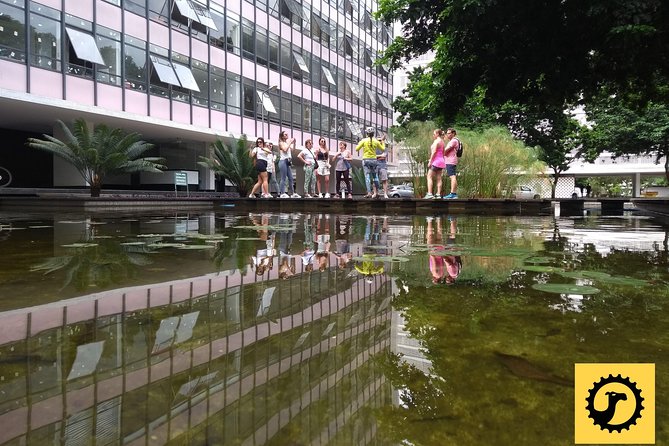
This block was selected as Brasília’s model court. Lúcio Costa designed it, Burle Marx handled its urban planning and planting, and Banco do Brasil built it. It opened on February 19, 1962.
The important point is that SQS 308 is not just a famous building or a photo stop. It was intended to show how the city’s Residential Scale could work. The superquadra concept placed housing within a larger unit, with nearby services and shared public areas. The aim was to make daily life fit into a planned neighborhood rather than scatter homes and amenities without a clear structure.
This is where guide Duda’s style matters. The route can show you more than façades. You can learn how people live in the superquadras and how the nearby shopping area, school, cinema, and residential buildings fit into the plan. That practical explanation is one of the strongest reasons to choose this ride.
If you only visit Brasília’s monumental axis, you may leave with a picture of grand government buildings but little sense of ordinary city life. SQS 308 corrects that imbalance. It shows the capital as a place where people shop, study, attend films, and live in planned residential sectors.
The possible limitation is that modernist planning can feel abstract if you are interested only in headline sights. Give this stop time. It rewards curiosity more than quick photography.
Cine Brasília and Renato Russo Hall
The route also includes Cine Brasília, a cultural venue used for the Brasília Film Festival. Its program includes Brazilian film releases, international screenings, themed weeks, debates, book launches, and exhibitions involving paintings, photographs, and posters.
The cinema’s role extends beyond film screenings. It works with embassies, public schools, and universities, helping create audiences and support cultural exchange. That makes it a useful example of how Brasília’s planned neighborhoods were meant to include cultural life.
Renato Russo Hall adds another music-related point to the route. Together with the Legião Urbana square and the Choro Club, it gives the ride a strong connection to Brasília’s music scene.
The available schedule does not list separate times for Cine Brasília or Renato Russo Hall, so these may be brief stops or part of the explanation around SQS 308. I would enjoy them as cultural context rather than expect long indoor visits or a performance.
Igrejinha Nossa Senhora de Fátima
The Igrejinha Nossa Senhora de Fátima is the next principal stop, with about 20 minutes for a visit. The church opened in June 1958 and was the first church in Brasília’s residential sector.
Its origin is personal. Dona Sarah Kubitschek requested the church after a grace connected with the cure of her daughter. That story gives the building a human beginning, quite different from the broad civic ambitions behind the capital’s urban plan.
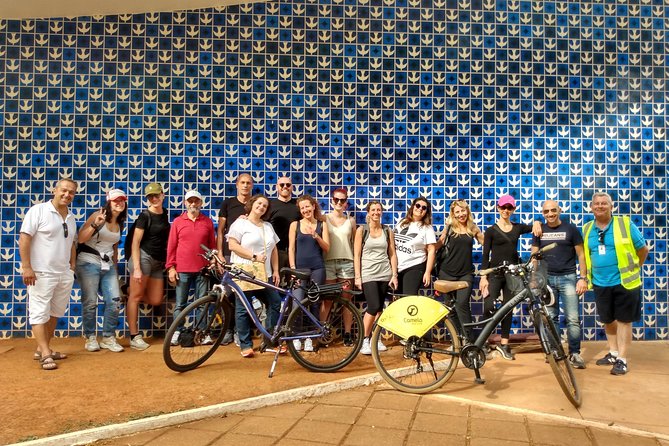
The church’s outside walls are lined with Athos Bulcão tiles. Their stylized figures represent the Dove of the Divine and the Star of the Nativity. This is one of the clearest places on the route to see how Brazilian artists brought color and pattern into Brasília’s modernist setting.
I would pay close attention to the tilework rather than rush straight inside. The church is small, and the exterior decoration is a major part of what makes the stop special. Admission is free, and the 20-minute timing should allow for an explanation, photographs, and a short visit.
Because this is an active religious site, keep your behavior respectful and follow any local instructions. The tour information does not promise a service or a special religious event, so the experience is primarily architectural, artistic, and historical.
Sanctuary São João Bosco and the final change of mood
The final stop is the Santuário São João Bosco, visited for about 10 minutes. The sanctuary was built in honor of Saint John Bosco, the patron saint of Brasília.
This church creates a strong contrast with the Igrejinha. The Fatima church feels tied to a neighborhood and a family story, while the São João Bosco Sanctuary represents the capital on a larger spiritual and civic scale. The route ends here because it provides a memorable final image after the smaller residential sites.
The visit is brief, so you should not expect a long guided tour of every feature. Still, the sanctuary gives the ride a satisfying finish. One direct account of the tour specifically praised ending at this church, and I can see why: it gathers together Brasília’s faith, design, and bold public architecture in one last stop.
From here, the activity returns to the Camelo Bike Tour meeting point. That return arrangement keeps the day simple and means you can plan lunch or another Asa Sul activity without arranging transport from a distant endpoint.
What the $62.73 price buys you
At $62.73 per person, this is more expensive than simply renting a bicycle and riding around Brasília on your own. The fee makes more sense if you want interpretation, a planned route, and access to the city’s residential design rather than a self-guided ride between famous buildings.
You are paying for the structure of the experience. The route connects the TV Tower, parks, a model superquadra, cultural venues, the Fatima church, and the São João Bosco Sanctuary in three hours. Doing that independently would require route planning and a fair amount of research to understand why SQS 308 matters.
The tour is also limited to 15 people. That is not the same as a private ride, but it avoids the scale of a large bus group. A smaller group should make it easier to hear explanations and ask about Brasília’s daily life.
I would call the price fair for someone who values urban design and local cultural context. If you only want to pedal through parks or take photographs of churches, it may feel high. If you want the city explained as a working residential capital, the price is easier to justify.
Who will enjoy this ride most
I would recommend this tour to you if you want to understand Brasília beyond the monumental buildings. It suits people interested in modern architecture, city planning, Brazilian music, public parks, and religious art.
It is also a good fit if you prefer a route with varied stops. You move from a tower to a cultural venue, then through a large park, a designed garden, a working residential block, a cinema, two churches, and back to the starting point. The changing subjects keep the ride from becoming a single-note architecture lesson.
Families can ask about the articulated tandem passenger trailer or bike for children from 4 to 10 or 12 years old. Ask in advance, since the equipment is not presented as automatic or guaranteed for every booking.
The tour may suit most people physically, according to the supplied participation information, but you should still be comfortable spending about three hours on a bike. The experience requires good weather. If rain or other poor conditions cancel the ride, you can choose a different date or receive a full refund.
You can cancel for a full refund up to 24 hours before the local start time. Changes or cancellations made inside that 24-hour window are not accepted for a refund.
Should you book the Fatima Neighborhood and Church Unit Bike Tour?
Book it if you want the residential Brasília that many short city visits miss. The best part is the 45-minute stop at SQS 308, where the guide can explain how shops, schools, cinema, housing, and public space were intended to work together.
I also like the way the route links design with culture. Legião Urbana, Renato Russo, Choro, Athos Bulcão, Burle Marx, Lúcio Costa, and Oscar Niemeyer all enter the story without turning the ride into a dry lecture.
Skip it if your priority is only Brasília’s monumental core, or if you need a fully weather-proof activity. For everyone else, this is a well-shaped half-day ride with free admission at every listed stop, a manageable group size, and a useful view of how the capital functions beyond its postcard buildings.
FAQ
How long does the Fatima Neighborhood and Church Unit Bike Tour last?
The tour lasts approximately three hours.
How much does the tour cost?
The listed price is $62.73 per person.
Where does the tour begin?
It begins at Camelo Bike Tour Brasília, SHS Quadra 06, Conjunto A, Bloco A, Loja 17, Centro Empresarial Brasil 21, Asa Sul, Brasília.
Where does the tour end?
The activity ends back at the meeting point.
Is admission included at the stops?
All listed stops specify free admission.
How many people can join the tour?
The maximum group size is 15 people.
Can children participate?
Children from about 4 to 10 or 12 years old can use an articulated tandem passenger trailer or bike. You need to ask for this option in advance.
What happens if the weather is poor?
The tour requires good weather. If it is canceled because of poor conditions, you will be offered another date or a full refund.
Just added in Brasilia
- Transfer Brasilia Pirenópolis★ 5.0 · 3 reviews
- Airport pick up services Same day booking. Driver speak English, Spanish and Portuguese.★ 5.0 · 9 reviews
- Brasilia City Highlights Tour with Guide★ 3.5 · 8 reviews
- Pirenópolis, the charming baroque city inaugurated in 1723 in the gold cycle★ 4.5 · 40 reviews
- Brasilia Private Custom Walking Tour With A Guide (Private Tour)★ 4.5 · 6 reviews
- JK Memorial Bike Tour and Crystal Square★ 5.0 · 4 reviews
- Green City Tour in Brasilia★ 3.0 · 1 review
- Private Tour of the Federal District in Brasilia★ 4.5 · 4 reviews
Cycling Tours, compared.
Small-Group Panoramic Bike Tour in Rio de Janeiro
Read our review →
E-Bike Tour: Local Guide, Historic Center to Ipanema
Read our review →
Browse the lists this tour appears in