
Reviewed · BRAZIL FOOD AND SAMBA NIGHTS
Carnaval Experience – Behind the Scenes of Rios Carnival in the City of Samba
Carnaval is built long before the music starts. This lively Rio tour takes you into the City of Samba and Grande Rio’s samba factory, where costumes, floats, design, and dance meet. I like the hands-on costume session and the chance to learn basic samba steps, not just hear a polished story from outside the gates. I also like the welcome caipirinha, juice, or water, plus pickup and return from South Zone hotels.
The main caution is simple: this is not a grand tour of every warehouse or float at the City of Samba. Most of the visit takes place inside one building, and some people have found the timing loose or the waiting uncomfortable. If you expect a full working-factory tour, you may find the $96 price harder to justify.
In This Review
- What makes this Carnaval visit worth your time
- Why Rio Carnaval takes more than one wild weekend
- Starting at Cidade do Samba
- Inside Grande Rio’s samba factory
- Floats, costumes, and the limits of the visit
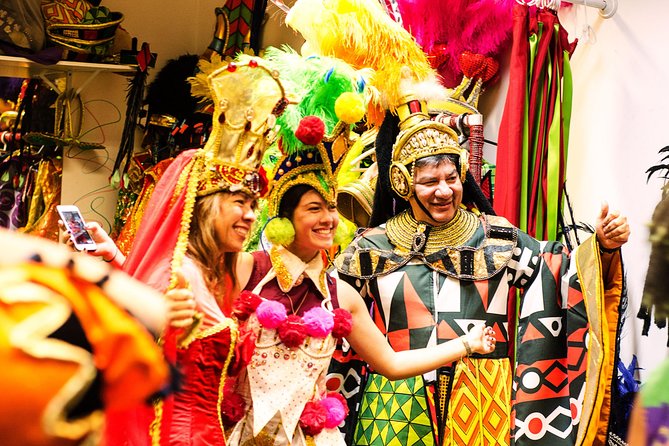
- Trying on authentic Carnaval costumes
- Learning basic samba steps
- Timing, transport, and the two-hour schedule
- Is $96 a fair price?
- Who will enjoy this most?
- A few practical tips before you go
- Should you book the Carnaval Experience?
- FAQ
- How long does the Carnaval Experience last?
- Where does the tour take place?
- Is hotel pickup included?
- Which languages are used during the tour?
- Can I wear Carnaval costumes?
- Is a samba lesson included?
- Is food included?
What makes this Carnaval visit worth your time
- See where Rio’s parade spectacle is prepared: Visit Cidade do Samba, the headquarters of Rio’s major samba schools.
- Enter Grande Rio’s samba factory: See costumes, float work, and an exhibition area tied to Rio’s famous Carnaval tradition.
- Wear authentic Carnaval costumes: Try on outfits from past editions and take photographs.
- Learn a few samba steps: The short dance lesson turns the visit into an activity rather than a museum stop.
- Ride from South Zone hotels: Air-conditioned van service covers hotels in Copacabana, Ipanema, Leblon, and Leme.
- Expect a compact two-hour outing: The tour is easy to fit into a busy Rio schedule, but the short format limits how much of the complex you see.
Why Rio Carnaval takes more than one wild weekend
Rio’s Carnaval looks spontaneous from the street. The samba schools make it anything but spontaneous.
A parade entry depends on months of planning, design, construction, sewing, rehearsals, music, and coordination. The samba school must present a complete theme, with floats, costumes, choreography, and a strong performance before judges. That long preparation is what gives this visit its value. You are not simply looking at glittery clothing. You are seeing part of the work behind Rio’s biggest annual spectacle.
The tour helps explain the role of the samba schools and the competition for the Carnaval trophy. That context matters because a costume or float can look decorative if you see it alone. Once you understand that each piece supports a larger parade story, the oversized shapes and elaborate details make more sense.
I especially like this kind of visit for a first trip to Rio. It gives you a cultural frame before you see Carnaval footage, visit a samba event, or hear music in the city. It also works outside Carnaval season, when the parade itself is not happening.
More Rio city tours:
- Rio’s City Tour – Tickets for Christ, Sugar Loaf & Lunch included
★ 5.0 · 4,389 reviews - Full Day: Christ Redeemer, Sugarloaf, City Tour & Barbecue Lunch
★ 4.5 · 3,142 reviews - Rio: Christ the Redeemer, Sugarloaf, Selaron & BBQ Lunch
★ 4.5 · 2,428 reviews
Starting at Cidade do Samba
The first stop is Cidade do Samba, the large complex associated with Rio’s leading samba schools. The planned stop is brief, about 10 minutes, and admission is included.
Keep your expectations in check here. The City of Samba is not presented as a long walking tour through many buildings. The substantial part of your visit takes place at the Grande Rio samba factory. The opening stop mainly gives you the setting and shows you where this work is carried out.
That distinction is important. The name City of Samba can suggest a broad behind-the-scenes tour across the full complex. Some people have expected to see several warehouses and many floats, only to find that the visit focuses on one building. I would treat this first stop as an introduction, not as a separate attraction requiring a long visit.
Inside Grande Rio’s samba factory
The main visit lasts about 1 hour and 20 minutes. You enter the Grande Rio samba factory and learn how the school prepares for Carnaval.
The tour includes a look at float and costume production, an exhibition room, and a film explaining the process. You can expect the guide to connect what you see with the organization and history of Carnaval. The quality of this explanation matters a lot, and the strongest part of the experience appears to be the guide’s energy, humor, patience, and language ability.
Priscilla has been praised for explaining the story clearly, translating, taking photographs, and watching belongings while people changed costumes. Other guides have also been singled out for bringing the subject to life with enthusiasm. Since the guide provides live commentary in English and Portuguese on site, tell the operator your language needs when confirming the booking.
The factory is a working production space, not a quiet gallery. One person found it hot and poorly ventilated, with a chemical smell from spray painting. The tour operates in rain or shine, so an indoor visit can be useful during wet weather, but indoor does not always mean cool or comfortable.
Floats, costumes, and the limits of the visit
The floats and costumes are the visual stars. Even a quick look can show why Rio Carnaval requires so much labor and planning.
You will see production areas and some floats, but do not expect access to every structure in the complex. The exact number of floats visible can vary, and the visit is centered on the Grande Rio building rather than a broad tour of all samba school facilities. If your main goal is to study float construction in detail, this may feel brief.
For me, the exhibition room and costume display help make up for that limitation. They give you a clearer sense of the design language behind Carnaval, while the guide supplies the missing story. The combination works better than simply walking past large objects without explanation.
Photography rules may also affect your expectations. One account says photographs were not allowed inside, while the activity specifically includes wearing and photographing authentic costumes. The safest approach is to ask your guide where photography is permitted. You should be able to photograph the costume session, but do not assume every production area allows cameras.
More Food and Samba Nights in Rio de Janeiro:
- Rio de Janeiro: Beginner Samba Lesson in Ipanema
★ 4.9 · 1,071 reviews - Rio: Pub Crawl in Lapa with Cachaça Tasting and Live Samba
★ 4.7 · 881 reviews - Rio: Carnival Backstage Tour at Samba City with Cocktail
★ 4.6 · 520 reviews - Hop-ON Hop-OFF Sightseeing Bus in Rio de Janeiro – Rio Samba Bus
★ 3.5 · 457 reviews
Trying on authentic Carnaval costumes
The costume portion is the most playful part of the tour. You get to wear costumes from past Carnaval editions and take photos.
This is more than a quick dress-up stop. The costumes give you a physical sense of the scale and showmanship involved in the parade. You can see how much visual effect is built into the clothing, even when you are not watching a full procession.
It is also a good moment for families, couples, and solo visitors because it breaks up the explanation and gives you something to do. Children must have an adult with them, and children age four and under can attend free if they do not occupy a seat.
Allow for a little practical patience while people change. The guide may help with photographs and belongings, as Priscilla did for one group, but the precise changing arrangements are not detailed. Wear something comfortable and easy to manage rather than treating this like a formal photo shoot.
Learning basic samba steps
The short samba class gives the tour its final burst of energy. You are not expected to become a parade dancer in one lesson. The aim is to learn a few basic movements and feel the rhythm.
I like that the dance lesson is included rather than sold as an extra. It turns the visit from a visual presentation into a small cultural exchange. You hear about samba, see its costumes, then try a few steps yourself.
The atmosphere depends partly on the guide and the group. Several guides have been praised for bringing humor and enthusiasm, which can make even shy participants join in. If you dislike group participation, you can still enjoy the explanation and displays, but the lesson is clearly designed as a fun shared activity.
Timing, transport, and the two-hour schedule
The advertised duration is about two hours. That includes transportation arrangements, the City of Samba stop, the factory visit, costume time, and the basic dance lesson.
Pickup and drop-off are offered from main hotels in Copacabana, Ipanema, Leblon, and Leme. Transport is by air-conditioned van. When you book, provide your hotel name or a nearby location when confirming the reservation. This service is convenient if you are staying in the South Zone and would rather not arrange a ride to an industrial area yourself.
The weak point is coordination. Some departures have involved early pickup and a long wait before the tour began. Another account described the tour starting and finishing about an hour late. A separate booking problem involved cancellation and confusion over return transport. These reports do not mean every departure will run badly, but they do tell you to confirm the pickup time and return arrangement carefully.
One solo participant was told to arrange her own way back after being driven to the factory. That was especially uncomfortable because she did not speak Portuguese and had difficulty finding a driver later in the day. Since roundtrip South Zone transport is part of the advertised service, confirm that both directions are included for your booking, particularly if you are traveling alone.
The maximum group size is 45 people. That is not a tiny private tour, and a full group could make costume changes, photos, and explanations feel less personal. The guide’s performance becomes even more important in a larger group.
Is $96 a fair price?
At $96 per person, this is not a cheap quick stop. The price includes an English and Portuguese-speaking guide on site, transportation by air-conditioned van, taxes and fees, costumes, the samba class, and a welcome drink.
The value depends on what you want to see. If you want a simple introduction to Carnaval culture with transport from your hotel, costume photos, and a little dancing, the package is reasonably complete. You avoid arranging a taxi to Cidade do Samba, and you get an explanation rather than only a look at stored costumes.
If you want a long construction tour through several warehouses, the price may disappoint. The visit is concentrated in one Grande Rio building, and some of the float viewing is brief. You are paying for the guided presentation and activities as much as for the physical access.
The drink is a small touch, not a meal. Food is not included, so plan lunch or a snack separately. The experience lasts roughly two hours, which makes it easy to combine with other Rio plans, but it also means you should not expect a half-day production tour.
Who will enjoy this most?
I would recommend this tour to you if you want a clear, entertaining introduction to Rio Carnaval and prefer an activity with several parts. Couples can enjoy the costume photographs, families can use the dance lesson as a break from sightseeing, and solo visitors can learn a lot without needing to attend Carnaval itself.
It is also a smart rainy-day option because it operates in all weather and spends most of its time indoors. Just remember that the factory may feel warm and may have a chemical smell when production work is underway.
You may want to skip it if your priority is seeing many floats up close or touring several samba school buildings. You should also think twice if delayed departures cause serious problems for your schedule. The experience is short, but transport delays can make the total outing longer.
The tour is conducted in English and Portuguese on site. If language is important to you, confirm it before departure rather than assuming every communication will arrive in English. The booking details say most people can participate, with children required to stay with an adult.
A few practical tips before you go
- Confirm your hotel pickup and return details, especially if you are staying outside Copacabana, Ipanema, Leblon, or Leme.
- Leave extra time around the two-hour estimate in case the group starts late or transport runs behind.
- Bring a camera, but ask before photographing production areas. Costume photography is part of the activity, while indoor photography rules may vary.
- Wear comfortable clothing for changing and samba steps.
- Do not plan on eating during the tour. Food is not included.
- If you are sensitive to heat or chemical odors, be prepared for factory conditions rather than museum conditions.
- Children four and under are complimentary only if they do not take a seat.
- Free cancellation is available up to 24 hours before the local start time. Changes or cancellations inside that window are not refunded, and the operator may offer another date or a full refund if the minimum group size is not met.
Should you book the Carnaval Experience?
Book it if you want the story behind Rio’s Carnaval, not just the parade image. The guide-led explanation, Grande Rio factory visit, costume session, and samba lesson give you a lively two-hour introduction, and the strongest guides make the subject memorable.
I would book with realistic expectations. This is a focused visit to one samba factory, not a complete tour of Cidade do Samba. At $96, it offers fair value when hotel transport and the activities matter to you, but less value if you mainly want extensive access to floats.
For most first-time Rio visitors, I think it is a worthwhile cultural add-on, especially outside Carnaval season or on a rainy day. Confirm the return ride, allow slack in your schedule, and you will be better prepared to enjoy the color, craft, and serious competition behind Brazil’s biggest party.
FAQ
How long does the Carnaval Experience last?
The experience lasts approximately two hours.
Where does the tour take place?
It visits Cidade do Samba and the Grande Rio Samba Factory in Rio de Janeiro.
Is hotel pickup included?
Roundtrip transport is included from main hotels in Copacabana, Ipanema, Leblon, and Leme, using an air-conditioned van.
Which languages are used during the tour?
The professional guide provides live commentary in English and Portuguese on site.
Can I wear Carnaval costumes?
Yes. The activity includes trying on authentic costumes from previous Carnaval editions and taking photographs.
Is a samba lesson included?
Yes. A basic samba class is included in the tour.
Is food included?
No. Food is not included, though you receive a welcome drink of caipirinha, juice, or water.
Just added in Rio de Janeiro
- Gastronomic Tour at the Municipal Market in Rio de Janeiro★ 5.0 · 4 reviews
- Full Day Tour in Rio de Janeiro★ 5.0 · 8 reviews
- Garganta do Ceu Cave Hiking Private Tour on Pedra da Gavea★ 4.5 · 3 reviews
- GIG Airport Transfer x Rio de Janeiro Hotels★ 4.5 · 11 reviews
- Rio de Janeiro private Full day Custom Tours★ 5.0 · 35 reviews
- Christ the Redeemer – Complete Morning Tour with Ticket and Transport at the Hotel★ 3.5 · 4 reviews
- AquaRio, Museum, Boulevard Olimpico, Ferris Wheel, Transport and Tourism Guide.★ 4.0 · 6 reviews
- Personalized and Private Full-Day Tour in Rio de Janeiro★ 5.0 · 6 reviews
Brazil Food and Samba Nights, compared.


Pub Crawl in Lapa with Cachaça Tasting and Live Samba
Read our review →
Carnival Backstage Tour at Samba City with Cocktail
Read our review →
Hop-ON Hop-OFF Sightseeing Bus in Rio de Janeiro – Rio Samba Bus
Read our review →

Carnaval Experience: Backstage Tour at Samba City with Cocktail
Read our review →
Browse the lists this tour appears in