
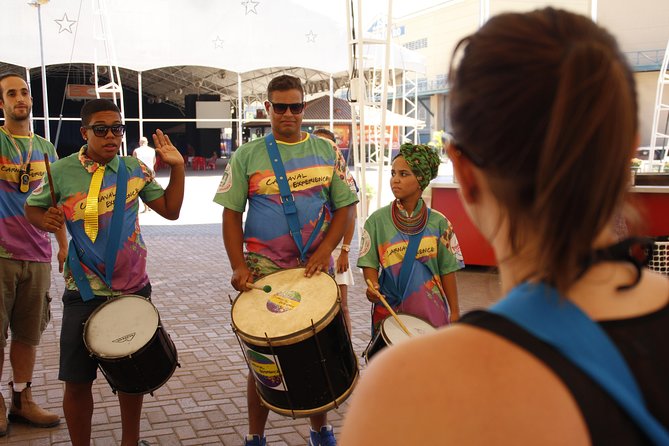
Reviewed · BRAZIL FOOD AND SAMBA NIGHTS
Cidade do Samba Behind-the-Scenes Carnival Tour in Rio de Janeiro
Carnival has a backstage. This 3.5-hour Rio tour takes you into Cidade do Samba, where Grande Rio builds floats, stores costumes, and prepares for the city’s famous parade. I like the close look at the working warehouse and the chance to try on a real Carnival costume. I also like that hotel pickup, a guide, and a caipirinha are included. The main drawback is that transport can run late, and the time around the floats may feel too short for serious Carnival fans.
The visit costs $86.54 per person and runs in English. It is a good fit if you want more than a Sambadrome seat and prefer a small group, capped at 15 people. Just remember that this is a backstage introduction, not a full production workshop or a complete Carnival show.
In This Review
- Key points at a glance
- Why Cidade do Samba matters to Rio Carnival
- The 2 p.m. pickup and ride to Gamboa
- Entering the Cidade do Samba complex
- Inside Grande Rio’s backstage area
- Carnival’s long path to Brazil
- Trying on a Carnival costume
- The caipirinha stop
- What the $86.54 price really covers
- Who should book this Rio Carnival tour?
- Practical tips before you go
- Should you book it?
- FAQ
- How long does the Cidade do Samba tour last?
- What time does the tour start?
- Which Rio hotels offer pickup?
- Is the tour offered in English?
- Is a drink included?
- What happens if I need to cancel?
Key points at a glance
- Grande Rio’s working warehouse: Walk through the storage and preparation area of Acadêmicos do Grande Rio, one of Rio’s top samba schools.
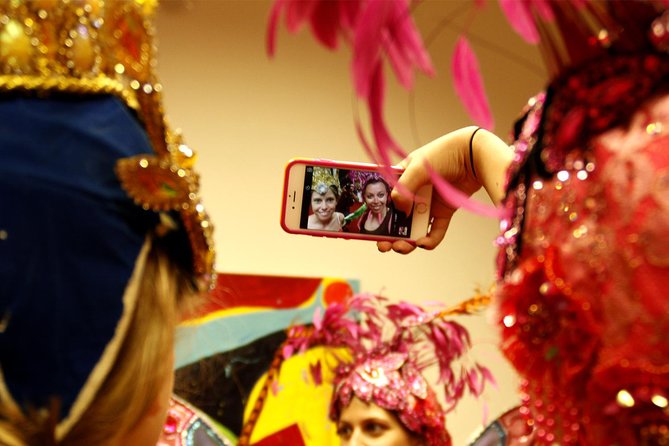
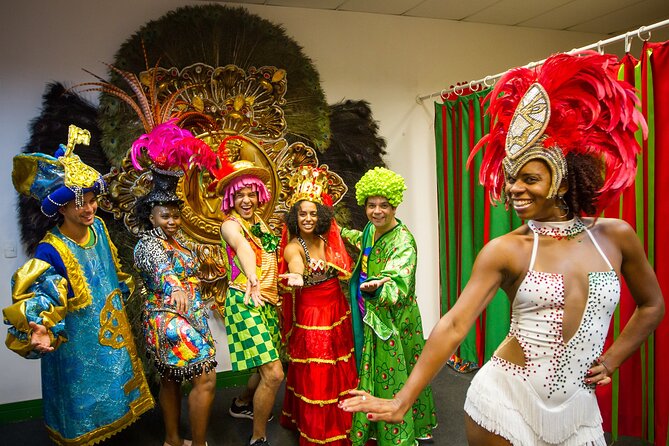
- Costumes you can try on: Put on an extravagant Carnival outfit and take photos during the visit.
- A drink with a story: Your included caipirinha mixes cachaça, sugar, and lime.
- Gamboa connection: Visit Cidade do Samba in the neighborhood linked to the birth of Rio’s samba scene.
- Small-group format: The maximum group size is 15, which should make it easier to hear the guide and ask questions.
- Hotel transfers included: Pickup and return service cover most hotels in Copacabana, Ipanema, Leblon, and São Conrado.
Why Cidade do Samba matters to Rio Carnival
Rio Carnival can look spontaneous from the street. In reality, the parade depends on months of planning, skilled construction, costume work, music, choreography, and storytelling. Cidade do Samba gives you a look at the machinery behind that spectacle.
The complex is described as mandala-shaped and sits in Gamboa, an area tied to the origins of Rio’s samba culture. More than 80 samba schools take part in Carnival, with around 100,000 dancers involved across the city. Only about 12 to 14 schools reach the Special Group, also called the First League, whose members compete in the main Sambadrome parade.
Grande Rio belongs to this top tier. The school was founded in 1988 and is known for the scale of its parade work. The warehouse visit helps you understand that the costumes and floats are not simply decorations. They support an allegory, a story, or a cultural theme that the school presents before judges and a huge crowd.
I find this context useful because Carnival can be hard to read if you only see the feathers, lights, and dancing. The guide explains the ideas behind the pageantry, giving the visual spectacle a clearer purpose.
More Food and Samba Nights in Rio de Janeiro:
- Rio de Janeiro: Beginner Samba Lesson in Ipanema
★ 4.9 · 1,071 reviews - Rio: Pub Crawl in Lapa with Cachaça Tasting and Live Samba
★ 4.7 · 881 reviews - Rio: Carnival Backstage Tour at Samba City with Cocktail
★ 4.6 · 520 reviews
The 2 p.m. pickup and ride to Gamboa
The scheduled start is 2 p.m. Pickup is offered from most hotels in Copacabana, Ipanema, Leblon, and São Conrado. You wait in your hotel lobby, then ride in a comfortable vehicle to Cidade do Samba.
This transfer is a real benefit in Rio. You do not need to work out the route to Gamboa or arrange a separate taxi for the return. It also makes the tour easy to fit into a day of sightseeing, since the activity begins in the afternoon and lasts about three and a half hours including transport.
There is one practical point to watch. Pickup timing is not guaranteed to be exact, and the return vehicle has had a mechanical problem that caused a delay. I would avoid booking a dinner reservation or airport transfer immediately after the tour. Give yourself extra time.
If your hotel is not on the pickup list, contact the operator before the day of the visit. You will be given the closest pickup point and an estimated pickup time. That small step can save confusion in a busy city.
Entering the Cidade do Samba complex
Once you reach the complex, the guide introduces you to the role of Cidade do Samba in Rio’s Carnival system. The warehouses serve as storage and work areas for floats, props, and costumes used by the leading schools.
The contrast is part of the appeal. At the Sambadrome, you see a finished parade moving past at speed. Here, you see the objects at rest, often surrounded by racks, tools, and work in progress. It is a chance to look at the size and detail of the parade without being pressed into a grandstand seat or crowded street.
Do not expect every float to be ready for inspection. Carnival preparation continues throughout the year, but the exact condition of the warehouse can vary. Some pieces may be under construction, stored away, or not presented for close viewing. The value comes from seeing the production setting, not from receiving a museum-style display of every major float.
That distinction matters. I would recommend this visit to anyone curious about how Carnival is made. If your main goal is to see a large number of finished floats up close, you may find the allotted time limiting.
Inside Grande Rio’s backstage area
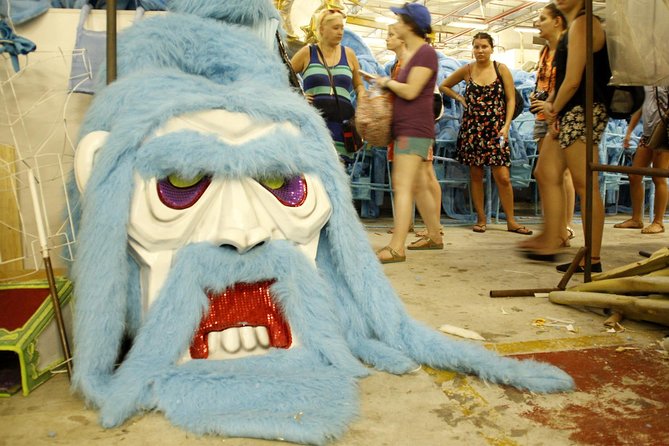
The most specific part of the tour is the guided visit to the warehouse of G.R.E.S. Acadêmicos do Grande Rio. The guide leads you through the backstage area, where you can see floats in progress and rows of costumes waiting for Carnival.
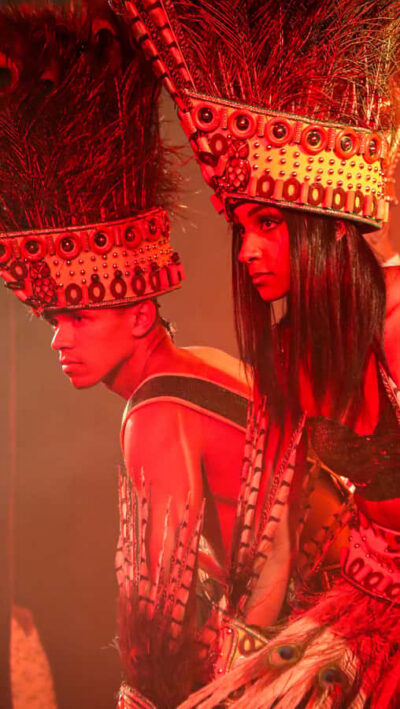
The costumes are the visual high point. They are intentionally oversized, theatrical, and far removed from ordinary clothing. You may see elaborate headpieces, bright materials, and designs built to read from a distance during the parade. The racks alone help explain why a samba school needs such a large workspace.
The floats tell a similar story. Even when a piece is unfinished, its scale gives you a better sense of the labor involved. A parade float must be seen by thousands of people, often while moving, so details need to be bold and easy to understand. Your guide explains the stories and legends that shape the designs.
One useful improvement would be more time with the floats. The warehouse portion is listed as about two hours, but that includes the explanation, costume activity, and drink. If you are fascinated by construction details, you may wish the group could pause longer at each float.
The small maximum group of 15 helps here. A smaller group should make it easier to stay near the guide and hear the explanation, though the pace still depends on the day’s schedule and the access allowed inside the warehouse.
More things to do in Rio de Janeiro:
- Rio de Janeiro: 6-Stop Highlights of Rio with Lunch
★ 4.4 · 5,157 reviews - Christ the Redeemer Entry Ticket by Corcovado Train
★ 4.4 · 4,476 reviews - Rio’s City Tour – Tickets for Christ, Sugar Loaf & Lunch included
★ 5.0 · 4,389 reviews - Full Day: Christ Redeemer, Sugarloaf, City Tour & Barbecue Lunch
★ 4.5 · 3,142 reviews
Carnival’s long path to Brazil
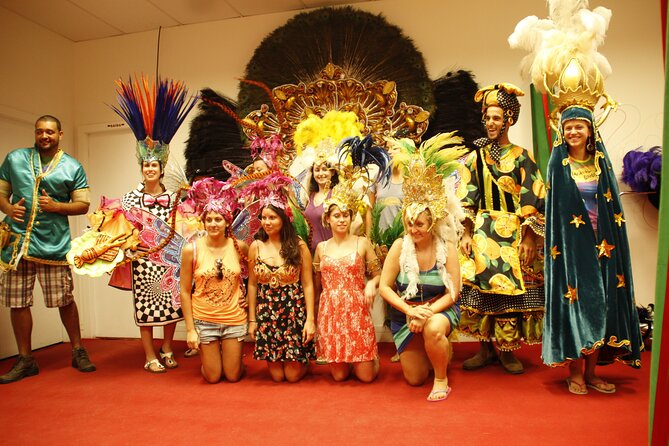
The history talk reaches beyond Rio. You learn about Carnival’s pagan roots in ancient Greece, its continuation through medieval Europe, and its arrival in Brazil through Portuguese colonization.
This part gives the tour a wider frame. Rio Carnival is often presented as a purely Brazilian creation, but its traditions developed over many centuries and changed as they moved between cultures. In Brazil, those older customs took on new forms through music, dance, local communities, and samba-school competition.
The discussion of samba schools is especially helpful. These schools are not just dance groups. They organize large creative operations, develop a theme, produce floats and costumes, rehearse performers, and compete in the Sambadrome. Seeing the warehouse makes that structure easier to understand.
The quality of the experience depends heavily on the guide. The guide is expected to explain the history, culture, parade rules, and meaning behind the designs. A friendly and energetic guide can turn a storage building into a memorable cultural visit. A rushed presentation would make the same space feel less rewarding.
Trying on a Carnival costume
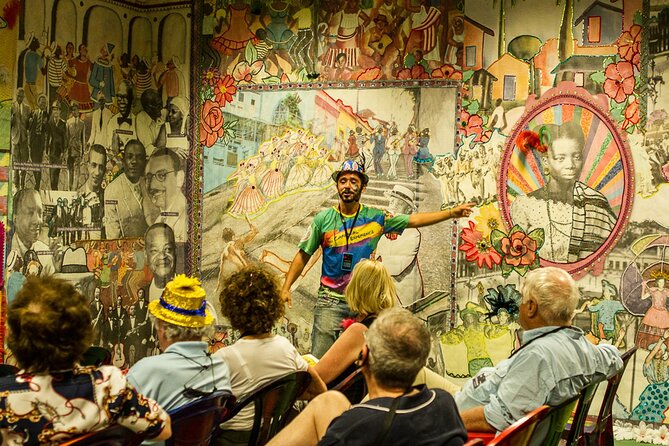
After seeing the costumes on their racks, you get the chance to try on one of the more outrageous outfits. This is the playful part of the visit, and it works especially well for families and groups of friends.
You should wear comfortable clothing and shoes. The costume activity is about fun and photos, not about recreating a full samba-school performance. Still, putting on the clothing helps you understand how much visual impact these outfits are designed to create.
The costume experience also breaks up the historical explanation. You can listen to the guide talk about parade traditions, then take part in a small piece of the spectacle yourself. It is a simple activity, but it gives the visit a personal memory rather than leaving you with only photographs of floats.
The tour is offered in English, and most people can participate. The provided information does not promise that every costume will fit every person or that a particular costume style will be available on a given day, so keep your expectations flexible.
The caipirinha stop
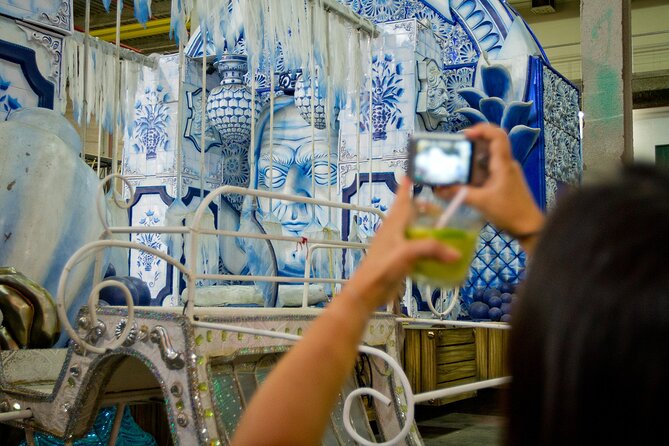
The visit ends with one included caipirinha, Brazil’s well-known cocktail made with cachaça, sugar, and lime. Cachaça is a sugar-cane spirit, and the drink is a fitting finish after a look at one of Brazil’s most famous cultural traditions.
The alcohol is optional in practical terms, but the tour sets the minimum drinking age at 18. If you do not drink, the supplied details do not specify an alternative beverage, so ask the operator when booking if that matters to you.
Food is not included. The caipirinha is a tasting, not a meal, and you should eat before or after the tour according to your schedule. Since the activity begins at 2 p.m. and may not return you directly at the expected minute, a flexible meal plan is wise.
What the $86.54 price really covers
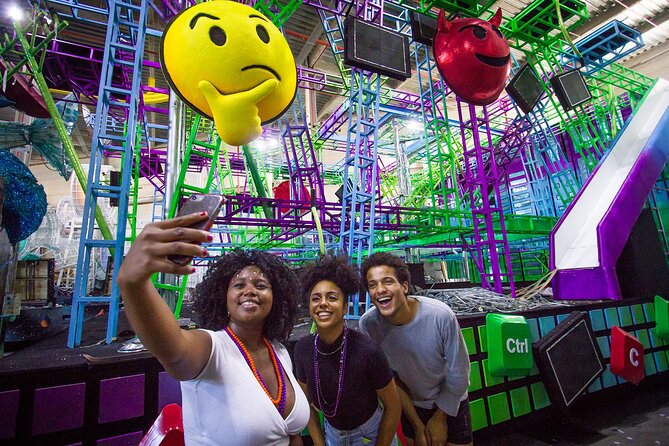
At $86.54 per person, this is not the cheapest way to learn about Rio Carnival. The price includes a professional guide, the Grande Rio warehouse visit, one caipirinha, and round-trip hotel transportation from many South Zone hotels.
The value depends on how you would otherwise reach Gamboa. If you are staying in Copacabana, Ipanema, Leblon, or São Conrado, the included transfer removes the cost and effort of arranging transport. You are also paying for access to a working samba-school space, rather than only viewing Carnival from a public street.
I think the price is reasonable for someone with a strong interest in Carnival, samba, or Rio’s cultural history. It is less convincing if you only have a short time in Rio and want the city’s biggest landmarks. In that case, a full afternoon away from central sightseeing may be a significant tradeoff.
The tour receives an overall rating of 3.8 from five reviews, which suggests a generally positive but not flawless experience. The strongest praise centers on the dedication behind the schools and the creative designs in the warehouse. The clearest criticism concerns delayed transport and a desire for more time looking at the floats.
Who should book this Rio Carnival tour?
I would choose this tour if you fit one or more of these groups:
- You are visiting Rio outside Carnival season and want to understand what happens behind the parade.
- You enjoy costume design, set building, dance, music, or large public festivals.
- You are traveling with children or teenagers who will enjoy dressing up and taking photos.
- You prefer a guided cultural visit with hotel transport already arranged.
- You want a smaller group rather than a large bus excursion.
- You plan to attend the Sambadrome and want more background before seeing the competition.
I would think twice if you need a tightly timed afternoon, dislike organized transfers, or want a long technical look at float construction. The tour offers access and context, but it does not promise a working lesson with artisans or unlimited time inside the warehouse.
Practical tips before you go
Wear comfortable clothes and shoes. You will be moving through a warehouse complex, and the costume activity is easier when you are not dressed for a formal evening.
Keep your afternoon open after the scheduled return. The vehicle may arrive late, and one reported breakdown caused an additional delay. This is not a tour I would pair with a fixed dinner booking or an important evening appointment.
Confirm the pickup point if you are staying outside the listed hotel areas. The covered neighborhoods are São Conrado, Copacabana, Ipanema, and Leblon. If your hotel is not listed, the operator can provide a nearby meeting location.
The tour requires a minimum number of participants. If that number is not reached, the operator may offer another date or experience, or provide a full refund. You can cancel for a full refund if you do so at least 24 hours before the 2 p.m. start time. Changes or cancellations inside that window are not accepted for a refund.
Should you book it?
Book it if you want the story behind Rio Carnival, not just the finished parade. The Grande Rio warehouse, flamboyant costumes, historical explanation, and included caipirinha create a lively three-hour-plus introduction to the people and planning behind the spectacle.
Skip it if your schedule is tight or your main goal is a long, detailed inspection of finished floats. The transport can be imperfect, and the float viewing may feel brief. For the right visitor, though, this tour adds meaning to Carnival and offers a rare look at a samba school’s backstage world.
FAQ
How long does the Cidade do Samba tour last?
The full experience takes approximately 3 hours and 30 minutes, including hotel transportation. The Cidade do Samba visit itself is listed at about two hours.
What time does the tour start?
The scheduled start time is 2 p.m.
Which Rio hotels offer pickup?
Round-trip pickup and drop-off are offered from most hotels in São Conrado, Copacabana, Ipanema, and Leblon. If your hotel is not listed, contact the operator for the closest pickup point and time.
Is the tour offered in English?
Yes. The tour is offered in English and includes a professional guide.
Is a drink included?
Yes. One caipirinha is included. The minimum age to drink alcohol on the tour is 18.
What happens if I need to cancel?
You can receive a full refund if you cancel at least 24 hours before the experience start time. Cancellations or changes made less than 24 hours before the start are not accepted for a refund.
Just added in Rio de Janeiro
- Full Day Tour in Rio de Janeiro★ 5.0 · 8 reviews
- Garganta do Ceu Cave Hiking Private Tour on Pedra da Gavea★ 4.5 · 3 reviews
- Gastronomic Tour at the Municipal Market in Rio de Janeiro★ 5.0 · 4 reviews
- GIG Airport Transfer x Rio de Janeiro Hotels★ 4.5 · 11 reviews
- Rio de Janeiro private Full day Custom Tours★ 5.0 · 35 reviews
- Christ the Redeemer – Complete Morning Tour with Ticket and Transport at the Hotel★ 3.5 · 4 reviews
- AquaRio, Museum, Boulevard Olimpico, Ferris Wheel, Transport and Tourism Guide.★ 4.0 · 6 reviews
- Personalized and Private Full-Day Tour in Rio de Janeiro★ 5.0 · 6 reviews
Brazil Food and Samba Nights, compared.


Pub Crawl in Lapa with Cachaça Tasting and Live Samba
Read our review →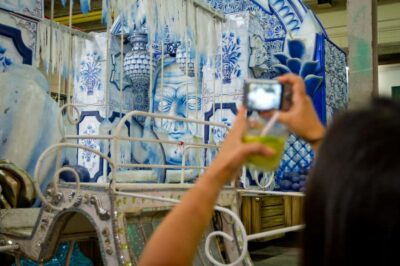
Carnival Backstage Tour at Samba City with Cocktail
Read our review →
Hop-ON Hop-OFF Sightseeing Bus in Rio de Janeiro – Rio Samba Bus
Read our review →

Carnaval Experience: Backstage Tour at Samba City with Cocktail
Read our review →
Browse the lists this tour appears in