
Reviewed · PRIVATE DRIVERS
Little Africa Guided Tour with Transfer
Rio’s past is written in stone. This four-hour Little Africa tour brings you to Cais do Valongo, Casa da Tia Ciata, Pedra do Sal, and the Instituto dos Pretos Novos, linking each place to the lives of Africans brought to Brazil and their descendants. I like the small-group format, which makes it easier to hear the guide, and I like that the route treats Little Africa with care rather than reducing it to a quick photo stop.
The air-conditioned transfer is useful in Rio’s heat, especially if you are staying in Copacabana, Ipanema, Leblon, Flamengo, or Centro. The main consideration is that this is a walking tour with serious subject matter, and guide quality can vary. One guest found Antonio’s English difficult to follow and faced cramped transport, while Monica received high praise for her pacing, extra stops, and clear command of the subject.
In This Review
- Key points to know before booking
- Why Little Africa matters in Rio
- Cais do Valongo and the stones that remember
- Casa da Tia Ciata and the making of Afro-Brazilian culture
- Pedra do Sal and the labor behind the name
- Instituto dos Pretos Novos and the work of remembrance
- A walking tour with a transfer, not a sightseeing bus ride
- Guide quality and English communication
- Is $60 a fair price?
- Who should book this experience?
- Practical booking advice for a smoother morning or afternoon
- Should you book the Little Africa Guided Tour?
- FAQ
- How long does the Little Africa Guided Tour last?
- Where does the tour start and end?
- Is hotel pickup available?
- Is the tour offered in English?
- What sites are included?
- Is food included?
- What happens if the weather is bad?
Key points to know before booking
- Cais do Valongo is the emotional center: You stand at the former harbor where enslaved Africans arrived, with the stones linked directly to that forced labor.
- Four major stops tell one connected story: The route moves from the harbor to Black cultural life, working conditions, and the effort to preserve memory.
- Walking matters more than riding: The vehicle gets you around Rio, but you should expect time on foot and bring comfortable shoes.
- The guide makes or breaks the experience: Monica was praised for care and flexibility, while one English-speaking guest struggled with Antonio’s explanations.
- Pickup is limited by neighborhood: Most central beach and downtown areas are covered, but Barra da Tijuca and Recreio cost extra.
- This is not a light sightseeing outing: The subject is slavery, loss, survival, and cultural endurance. Go ready for a thoughtful, sometimes painful morning or afternoon.
Why Little Africa matters in Rio
Rio’s Little Africa is not simply a district with a few old buildings. It is a place where the forced arrival of Africans, the growth of Afro-Brazilian culture, and present-day questions about memory and redevelopment meet in a compact part of the city.
The tour gives you a way to connect those subjects on foot. Instead of seeing isolated monuments, you move between places that explain how people were brought here, where they lived and worked, how music and community took shape, and why preserving the past still matters.
I would not choose this tour if I wanted only grand viewpoints and easygoing photo stops. I would choose it if I wanted a more serious look at Brazil, one that adds needed context to Rio’s beaches, samba, and famous celebration culture.
The experience is offered in English twice daily, in the morning and afternoon. Four hours is long enough to cover the main places without taking your entire day, though the amount of walking and the emotional weight may make it feel fuller than a typical half-day outing.
More things to do in Rio de Janeiro:
- Rio de Janeiro: 6-Stop Highlights of Rio with Lunch
★ 4.4 · 5,157 reviews - Christ the Redeemer Entry Ticket by Corcovado Train
★ 4.4 · 4,476 reviews - Rio’s City Tour – Tickets for Christ, Sugar Loaf & Lunch included
★ 5.0 · 4,389 reviews
Cais do Valongo and the stones that remember
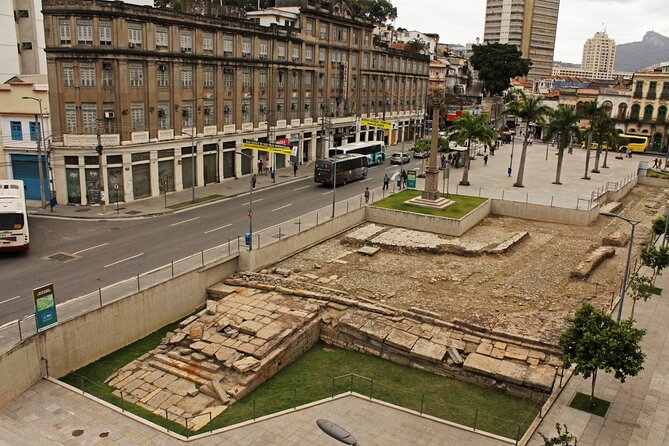
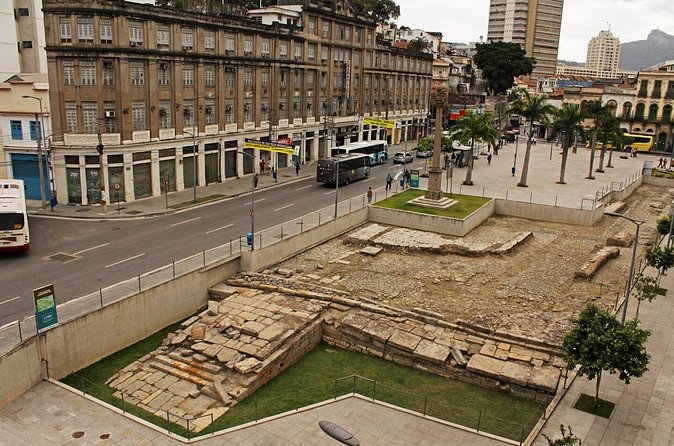
The first stop is Cais do Valongo, the former harbor and the most important historical site on the route. The stones used to build it were carried by the same enslaved population that arrived there, giving the site a direct physical connection to the people whose lives were controlled by the slave trade.
That detail changes the way you look at the ground. This is not only a waterfront structure from an earlier period. It is a place where forced labor shaped the city in both visible and nearly forgotten ways.
The harbor was given different names at different points in its past, each name serving the interests of those with power. Your guide explains how these changes helped conceal or reshape the site’s meaning. The place was covered over and forgotten for years, then brought to light again in 2011. It is also recognized as a UNESCO heritage site.
You have about an hour here. Admission is free, but the value comes from explanation rather than an entrance ticket. A strong guide can make the stones readable, showing you why this waterfront deserves attention and how much of its meaning was nearly erased.
This can be the hardest part of the tour emotionally. The guide is expected to continue with care and empathy, but you should still prepare yourself for difficult material. The subject is not softened into a simple tale of progress.
Casa da Tia Ciata and the making of Afro-Brazilian culture
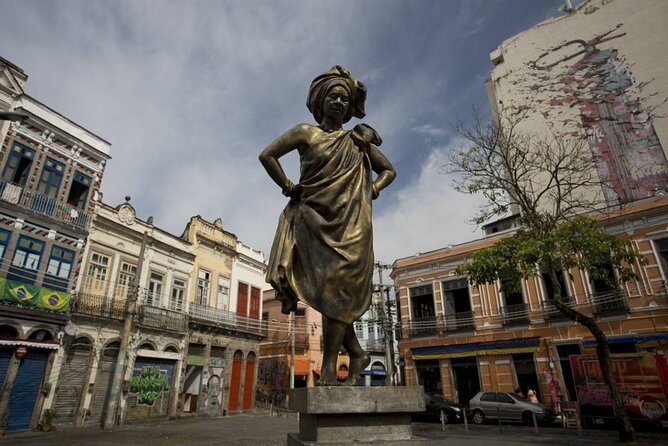
Casa da Tia Ciata provides a different view of Little Africa. After Cais do Valongo establishes the violence and forced movement behind the district’s beginnings, this stop turns toward community, cultural expression, and the people who helped shape Afro-Brazilian life.
You have about an hour to look around and listen to details from the guide. The supplied information does not promise a formal indoor exhibition or a specific performance, so think of this as a place where interpretation matters. Pay attention to the small details your guide points out rather than expecting a large attraction with a long list of displays.
The stop is useful because it prevents the tour from becoming only a lesson in suffering. Little Africa is also connected to creativity, social life, music, and cultural survival. That contrast is important. The people associated with this area were not defined only by what was done to them.
A guide who knows how to connect Casa da Tia Ciata to the rest of the route can help you see why cultural memory is part of historical memory. This is also where the tour may feel more personal and less like a standard monument circuit.
Pedra do Sal and the labor behind the name
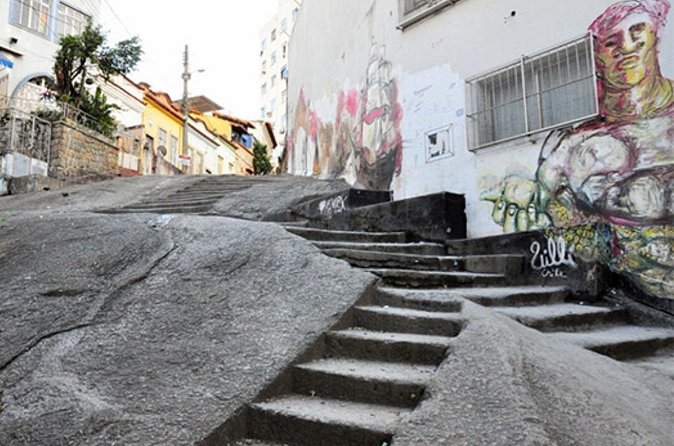
Pedra do Sal gets roughly 30 minutes, making it the shortest stop. Your guide explains the truth behind its name and describes the demanding working conditions of the people connected with the area.
The name is not just a picturesque label. It points toward labor and the physical work that shaped this part of Rio. The stop helps you understand how everyday economic activity, not only major political events, formed Little Africa.
Because the visit is brief, listen closely. You will not have a long period for an extended presentation, and the meaning may be easy to miss if you treat Pedra do Sal as a quick picture stop. Comfortable shoes help here and throughout the walk.
This is also an example of why the guide matters. A short site can become useful when the explanation gives it context. Without that explanation, you might see stone and surrounding streets without understanding the human work attached to them.
A few more options to weigh up in Rio de Janeiro
- Rio de Janeiro: Rocinha Favela Walking Tour with Local Guide
★ 4.8 · 3,052 reviews - 3 Hour Rocinha Favela Walking Tour with a Local Guide
★ 5.0 · 833 reviews - Rio de Janeiro: Guided Jeep Tour through Tijuca Rainforest
★ 4.3 · 740 reviews - Jeep Adventure: Guided Tour through Tijuca Rain Forest
★ 4.0 · 554 reviews
Instituto dos Pretos Novos and the work of remembrance
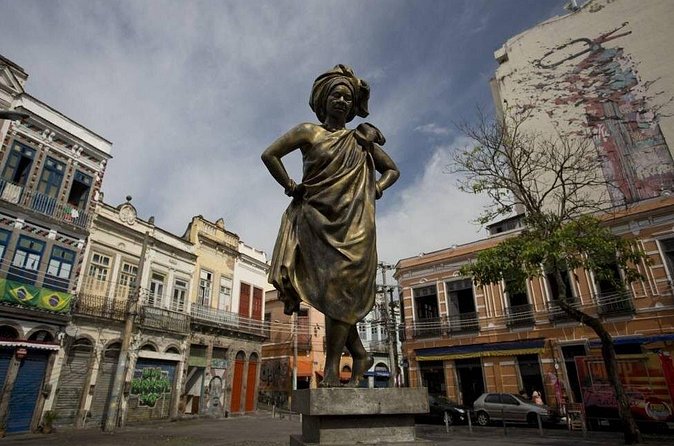
The Instituto de Pesquisa e Memória Pretos Novos, commonly called IPN, receives about an hour and includes admission. It focuses on how the institute was created and why preserving the memory of Africans in Brazil remains necessary.
This stop adds an important layer to the tour. Cais do Valongo shows a place of arrival. IPN shows the continuing work of finding, documenting, and interpreting what happened afterward. It asks you to consider who gets remembered, who gets ignored, and what happens when a city covers over painful parts of its past.
The institute is a small African heritage museum and Afro-Brazilian cultural center. Its importance is not measured by size. You are there to understand the purpose behind the institution and the effort required to protect historical memory.
The emotional tone may build across the four stops. If you prefer to process serious subjects slowly, the morning or afternoon schedule gives you the rest of the day afterward. I would avoid stacking this tour with another demanding historical visit immediately afterward.
A walking tour with a transfer, not a sightseeing bus ride
The title may suggest a vehicle-based excursion, but the heart of the experience is on foot. The air-conditioned vehicle handles the transfer from the meeting point and between parts of the route as needed, while the core exploration happens by walking through areas of importance.
Pickup is available from most hotels in Leblon, Ipanema, Copacabana, Flamengo, and Centro. The stated meeting point is the Hotel Rio Othon Palace on Avenida Atlântica in Copacabana, and the tour returns there at the end. You should contact the operator 24 hours before departure with your hotel location and confirm the pickup time.
Pickup from Barra da Tijuca or Recreio dos Bandeirantes costs extra. One booking problem involved a guest who expected hotel pickup from outside the normal area and was directed to another hotel instead. Confirm this detail before you assume a door-to-door transfer.
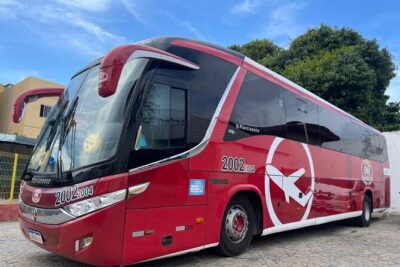
The vehicle has air conditioning and a maximum capacity of 19 people. The tour is described as small-group, which should make commentary easier to follow, but do not assume a private car. One group of three found the rear seats cramped, so ask about vehicle space if comfort is important to you.
Bring comfortable shoes, sunscreen, sunglasses, and a hat. Rio’s sun can make a short walk feel much longer, and the route includes several hours of standing and moving between sites.
Guide quality and English communication
For this tour, the guide is the main source of value. The sites are meaningful, but much of their context is not obvious from what you see. Clear English, thoughtful pacing, and a careful approach to slavery and racial history matter more here than a polished vehicle or a fast schedule.
Monica received especially strong praise for her experience and subject knowledge. She adjusted the pace for two older participants and added brief stops at other sites. That kind of flexibility is useful on a walking route, particularly when people in the group have different energy levels.
The experience with Antonio was less successful for one English-speaking party. The guest found his English difficult to understand, reported cramped transport, and paid for two taxis when the group moved around. The operator disputed parts of that account and said it would reinforce English training and consider a larger vehicle.
That mixed record does not mean you should avoid the tour, but it does mean you should confirm that the guide assigned can communicate comfortably in English. You should also ask before departure how transportation between stops will work and remember that lunch and taxi fares are not included.
An extra invitation described by the operator involved a concert on Copacabana Beach. This was outside the scheduled tour, so treat any added activity as a goodwill gesture, not part of what you paid for. Keep your own plans and expenses separate from the four-hour route.
Is $60 a fair price?
At $60 per person, the tour is reasonably priced if you want transport, an English-speaking guide, and admission to IPN combined in one half-day experience. You are paying mainly for interpretation and logistics, not expensive attractions. Cais do Valongo, Casa da Tia Ciata, and Pedra do Sal have no admission charge.
The price works best for visitors staying in the covered pickup areas who would otherwise need to organize several rides and research the sites independently. The air-conditioned vehicle also has value after time in Rio’s heat.
It is less attractive if you are already comfortable using public transportation, enjoy researching historical sites on your own, or want a private guide. The tour can include up to 19 people in the vehicle, and the exact level of personal attention depends on the group and guide.
There is no lunch included. Since the route lasts about four hours, you can plan a meal before or after, but do not count on the guide providing one. One guide offered to take a participant to a restaurant in Little Africa, which may be a nice extra when available, but it is not part of the stated package.
Group discounts are offered. Children under four are free and sit on a parent’s lap in the vehicle. Children must be accompanied by an adult, and every participant, including children, needs an ID or a copy.
Who should book this experience?
I would recommend this tour to you if you want to understand Rio beyond its beaches and famous viewpoints. It suits history-minded visitors, people interested in Afro-Brazilian culture, and anyone who prefers a local district with difficult stories over a polished sightseeing circuit.
It can also work well for older people if the guide adjusts the pace. Monica’s handling of two older participants is a good sign that flexibility is possible, although you should still be honest about walking limits before departure.
Families can join, but parents should decide if the subject is suitable for their children. The operator allows young children, yet the topic includes enslavement, death, exploitation, and the treatment of human beings as cargo. This is not a carefree family attraction.
I would hesitate to recommend it to you if you need guaranteed hotel pickup outside the listed areas, require a spacious vehicle, or expect every guide to speak polished English. Confirm those points first. I would also skip it if bad weather is forecast, since the experience depends on suitable conditions and is not refundable for weather cancellations unless the operator cancels and offers a new date or refund.
Practical booking advice for a smoother morning or afternoon
Contact the operator at least 24 hours before departure. Give the hotel location and confirm the pickup time, especially if your accommodation is in Centro or outside the standard pickup zone.
Keep your confirmation details and ID with you. The ID rule applies to children as well as adults, and the tour requires a minimum number of participants before it runs.
The itinerary can change order, but the four main highlights remain. That flexibility may help the operator manage traffic, timing, and group needs, so focus on seeing the sites rather than expecting the exact sequence listed.
Free cancellation is available up to 24 hours before the start time for a full refund. Changes or cancellations made inside that window are not accepted and are not refunded. If the minimum number is not reached, the operator may reschedule or offer another experience and a refund.
Should you book the Little Africa Guided Tour?
Book it if you want a serious, well-framed introduction to Rio’s African heritage and you value having a guide connect the sites. The strongest parts are Cais do Valongo, IPN, and the chance to see Little Africa as a living district rather than a footnote in a city tour.
Before paying, confirm your pickup location, the guide’s English ability, and the expected vehicle size. Bring sun protection, expect several hours on foot, and budget nothing extra for lunch or possible taxis.
The tour offers real value at $60 when the guide is as careful and flexible as Monica. It is less dependable when communication is weak or transport arrangements are unclear. If those practical details are settled in advance, this is a worthwhile way to meet a side of Rio that many visitors miss.
FAQ
How long does the Little Africa Guided Tour last?
The tour lasts approximately four hours and is offered in the morning or afternoon.
Where does the tour start and end?
The stated meeting point is the Hotel Rio Othon Palace at Av. Atlântica, 3264, fifth floor, in Copacabana. The activity ends back at the meeting point.
Is hotel pickup available?
Pickup is available from most hotels in Leblon, Ipanema, Copacabana, Flamengo, and Centro. Pickup from Barra da Tijuca or Recreio dos Bandeirantes costs extra.
Is the tour offered in English?
Yes. The tour is offered in English. You should confirm the pickup time and hotel details with the operator 24 hours before departure.
What sites are included?
The route includes Cais do Valongo, Casa da Tia Ciata, Pedra do Sal, and the Instituto de Pesquisa e Memória Pretos Novos, also called IPN.
Is food included?
No. Lunch is not included in the price.
What happens if the weather is bad?
The experience requires good weather. If the operator cancels because of poor weather, you will be offered another date or a full refund.
Just added in Rio de Janeiro
- Maracanã Stadium: Match Tickets with Welcome Drink★ 5.0 · 33 reviews
- Marco Nascer do Sol Private Tour in Rio de Janeiro★ 5.0 · 4 reviews
- Maracana Stadium Special Tour★ 3.0 · 1 review
- Maracana Stadium Guided Tour: Behind-the-Scenes Access★ 4.0 · 36 reviews
- Stadium Stories & Food: Join a Maracanã stadium tour with a Local★ 3.5 · 3 reviews
- Live an experience in the Rocinha Favela.★ 5.0 · 41 reviews
- Samba Night in Lapa Private Tour★ 5.0 · 6 reviews
- Little Africa Unveiled: Vibrant Afro-Brazilian Heritage in Rio★ 5.0 · 12 reviews
Private Drivers, compared.

TRANSFER 4 PASSENGERS GIG/SDU X Copacabana/Ipanema/Leblon
Read our review →
Private Transfer to São Paulo from the Airport
Read our review →
Transfer Fortaleza to Jericoacoara for up to 4 people
Read our review →
Private Transfer GIG International Airport To or From Rio de Janeiro
Read our review →
Transfer GRU airport Guarulhos <> São Paulo City only/CGH airport
Read our review →
Transfer to Iberostar Selection Praia do Forte or Waves Bahia
Read our review →Browse the lists this tour appears in