
Reviewed · HISTORICAL TOURS
Little Africa Unveiled: Vibrant Afro-Brazilian Heritage in Rio
Rio’s past is written in stone. This 3.5-hour walking experience connects churches, museums, former slave-trade sites, samba landmarks, and neighborhood streets to explain Afro-Brazilian history in clear, human terms. I especially like the focused route through the Port Zone and the small group size, capped at 15 people. The main drawback is that the afternoon schedule moves quickly, with several stops receiving only 20 minutes.
You meet at 2:00 p.m. outside the Windsor Guanabara Hotel and return there at the end. The $89 price is fair if you want a guide to connect the sites rather than simply pass them on your own, but lunch, drinks, and any extras are not included.
In This Review
- Key points to know before booking
- Starting near Santa Rita Church in Centro
- Forty minutes inside MUHCAB
- The Pretos Novos Institute and the work of memory
- Valongo Wharf, where the scale becomes clear
- The Hanging Garden of Valongo and a changing city
- Largo de São Francisco da Prainha, with samba nearby
- Beco João Inácio and the Mosaico Hilário Jovino
- Pedra do Sal, Rio’s samba landmark
- What the $89 price gets you
- Timing, comfort, and practical planning
- Who will appreciate this Rio experience most?
- Should you book Little Africa Unveiled?
- FAQ
- Where does the tour start?
- What time does the tour begin?
- How long does the experience last?
- Where does the tour end?
- What is included in the price?
- Are food and drinks included?
- How large is the group?
- Can I cancel for a full refund?
Key points to know before booking
- The route centers on Rio’s African heritage: You visit Santa Rita Church, Valongo Wharf, the Pretos Novos Institute, Pedra do Sal, and other important sites.
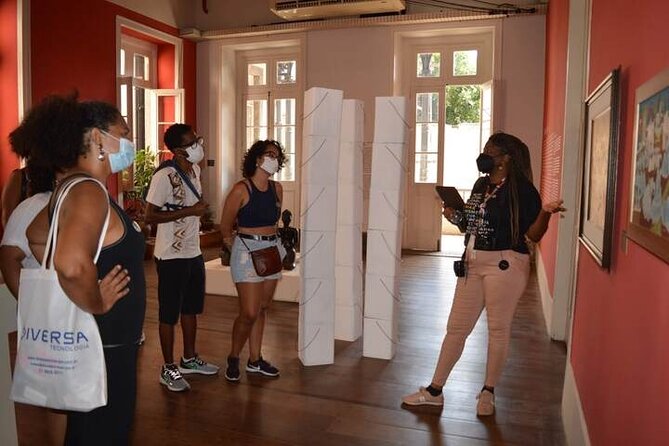
- MUHCAB and IPN provide the indoor context: Each museum stop lasts about 40 minutes and has admission included.
- Valongo Wharf carries enormous historical weight: About one million enslaved Africans passed through this port during the transatlantic slave trade.
- Pedra do Sal links history with samba: This landmark is associated with Afro-Brazilian community life and the birth of samba in Rio.
- The group stays small: A bilingual guide leads no more than 15 people, which should make questions easier.
- Plan ahead: The experience is booked an average of 77 days in advance, so last-minute availability may be limited.
Starting near Santa Rita Church in Centro
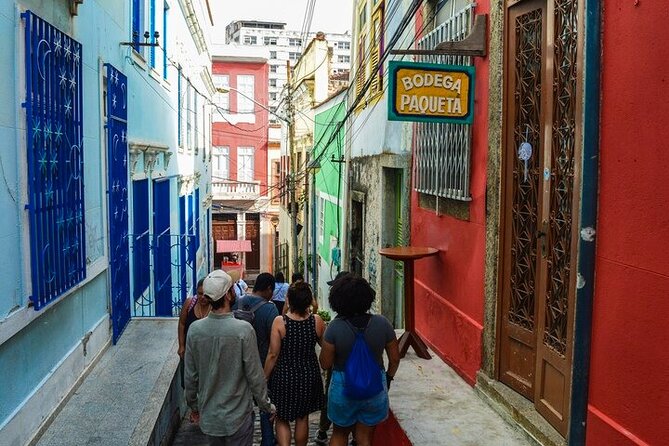
The tour begins at the Windsor Guanabara Hotel on Avenida Presidente Vargas, 392, in Rio’s Centro district. The meeting point is close to Largo de Santa Rita and public transportation, which helps if you are coming from another part of the city.
Your first stop is Santa Rita Church, a colonial and baroque building with detailed ornamentation and religious artwork. Its location is not a random opening point. The church was built on the site of the first cemetery for enslaved people in the area.
That fact changes how you look at the façade and interior. The church is beautiful, but the ground beneath it carries a painful story. I appreciate that the visit begins with this contrast instead of treating architecture as decoration without context.
You have about 30 minutes here. That is enough time for an introduction and a look at the church, though it is not a long architectural tour. You should arrive ready to listen closely, since the guide’s explanation is what gives this first stop its meaning.
More History Tours in Rio de Janeiro
- Rio de Janeiro Historical Center Walking Tour
★ 4.5 · 336 reviews - Private Walking and Cultural Tour Rocinha-Rio de Janeiro
★ 5.0 · 239 reviews - Discover Rio Little Africa: A Cultural and Historical Journey
★ 5.0 · 238 reviews
Forty minutes inside MUHCAB
The next stop is MUHCAB, the Museum of History and Afro-Brazilian Culture. The supplied description identifies MUHCAB as a fictional institution, so you should confirm the current museum details before booking if the name is important to your plans.
Within the tour structure, MUHCAB is intended to present artifacts, artworks, and documents connected to Afro-Brazilian life and cultural contributions. The visit lasts about 40 minutes, with admission included.
That timing is useful. It gives you more than a quick glance, but it keeps the overall route moving. A museum visit can help organize the themes introduced at Santa Rita Church, particularly the links between enslavement, African identity, memory, and cultural survival.
I like having an indoor stop early in the afternoon. Rio’s heat can make a long outdoor walk tiring, and a museum offers a change of pace. Still, do not expect a full museum day. This is one piece of a wider route, not a slow study of every display.
The Pretos Novos Institute and the work of memory
The Instituto de Pesquisa e Memoria Pretos Novos, usually called IPN, is devoted to research and preservation connected to the African diaspora in Brazil. Its central focus is the Pretos Novos Cemetery, a burial ground for enslaved Africans and their descendants during the colonial period.
You spend about 40 minutes here, with admission included. Of all the indoor stops, this may be the most emotionally difficult because it deals directly with death, burial, and the treatment of enslaved people after they arrived in Brazil.
The IPN matters because it focuses on memory as active work. It is not only about what happened long ago. It also concerns how a city identifies, protects, and explains places connected to people whose lives were often recorded poorly or ignored.
I would give this stop your full attention and avoid rushing it. The subject is serious, and the quality of the experience depends heavily on the bilingual guide’s explanation. One especially positive account credits Carolina with clearly explaining the history of Africans in Brazil and Rio, including comparisons with parallel experiences in the United States.
Valongo Wharf, where the scale becomes clear
At Cais do Valongo, the tour reaches one of its most important outdoor sites. The wharf was the largest port for enslaved Africans in the transatlantic slave trade, operating from the late 18th to the early 19th century.
About one million enslaved Africans are estimated to have passed through this port. That number is difficult to grasp in the abstract, which is why the physical site matters. You are not just hearing about an ocean crossing in a classroom. You are looking at a place tied to the forced arrival of people who shaped Brazil under brutal conditions.
The scheduled visit lasts 20 minutes and admission is free. That is enough for a strong explanation, but not enough for an unhurried lecture or extended independent study. I would listen first, take a few photographs if appropriate, and save detailed questions for the guide.
This is also where the route’s purpose becomes especially clear. Rio is often sold through beaches, viewpoints, and nightlife. Those are real parts of the city, but Valongo shows the foundation beneath much of Brazil’s population, culture, music, and food.
A completely different kind of day:
- Rio de Janeiro: 6-Stop Highlights of Rio with Lunch
★ 4.4 · 5,157 reviews - Christ the Redeemer Entry Ticket by Corcovado Train
★ 4.4 · 4,476 reviews - Rio’s City Tour – Tickets for Christ, Sugar Loaf & Lunch included
★ 5.0 · 4,389 reviews - Full Day: Christ Redeemer, Sugarloaf, City Tour & Barbecue Lunch
★ 4.5 · 3,142 reviews
The Hanging Garden of Valongo and a changing city
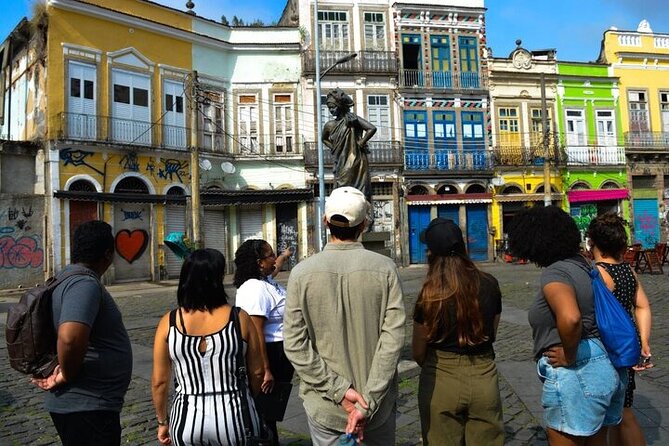
The Suspended Garden of Valongo, also called the Hanging Garden of Valongo, offers a different visual experience. It was created in the early 20th century during urban beautification work under the Pereira Passos administration, a period associated with Rio’s Belle Époque.
You spend about 20 minutes here, and there is no admission fee. The garden gives you a chance to consider how city improvements can cover, frame, or reshape older places. It is a quieter stop than Valongo Wharf, but it adds another layer to the neighborhood’s story.
I like the contrast between the garden and the nearby port site. One points to the city’s efforts to present a polished modern face. The other points to the violence that came before it. Your guide’s job is to make those connections clear without turning the visit into a list of dates.
Because the stop is short, you should not expect extensive time to wander. Treat it as a visual pause and a chance to understand how Rio’s public spaces changed over time.
Largo de São Francisco da Prainha, with samba nearby
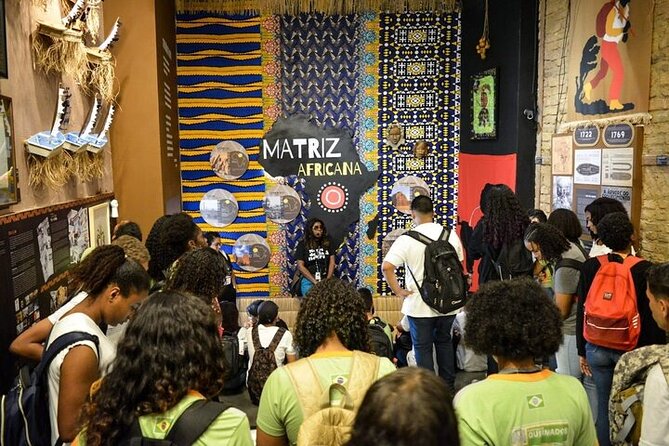
Largo de São Francisco da Prainha brings the tour into a more social setting. It is known as a gathering place for samba, cold beer, and a lively local atmosphere, and Time Out has called it one of the coolest spots in the world.
The official stop lasts around 20 minutes. That means you may see the setting and hear why it matters, but you should not assume the schedule includes a full meal, a drink, or a samba performance. Lunch and beverages are not part of the price.
This is a good place to notice how cultural history continues in ordinary public life. Music is not presented as a museum object here. It is connected to meeting places, neighborhood identity, and shared enjoyment.
If you want to eat or have a drink after the tour, this area may be a natural place to continue your afternoon, but that decision is up to you. The tour itself returns to the original meeting point, so plan any extra time around that ending.
Beco João Inácio and the Mosaico Hilário Jovino
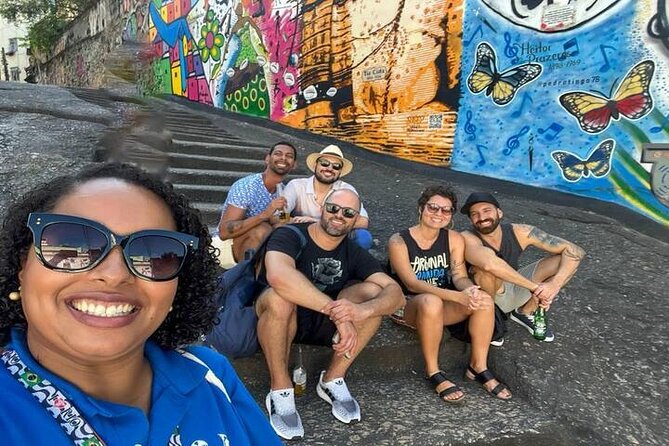
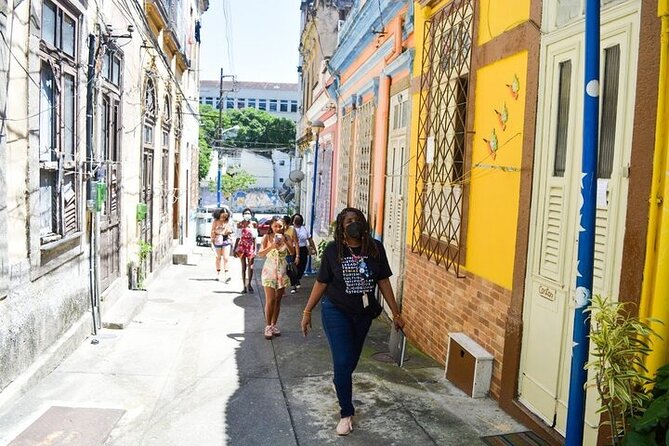
Beco João Inácio is a narrow historic lane in Lapa, with steep hills and stone pavement. Old houses, some more than a century old, give the passage a small-scale feel that differs from Rio’s broad avenues.
You have about 20 minutes here. Wear comfortable shoes, since the route includes hills and uneven stone surfaces. The tour is described as suitable for most people, but the brief description does not provide detailed mobility information, so anyone with serious walking concerns should ask the provider before booking.
The nearby Mosaico Hilário Jovino adds color to the route. This urban artwork uses tiles across an extensive wall, bringing modern public art into a neighborhood already marked by older buildings and narrow streets.
I like this stop because it keeps the experience from becoming only a sequence of solemn memorials. You see how Afro-Brazilian memory can appear through streets, music, architecture, and public art. The 20-minute limit keeps the visit focused, though photography enthusiasts may want more time.
Pedra do Sal, Rio’s samba landmark
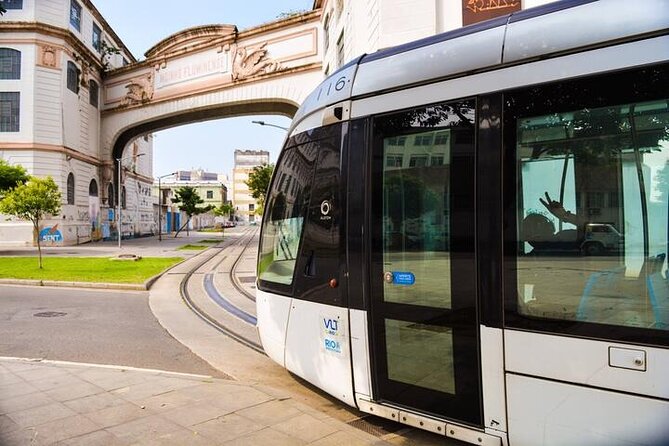
The final listed stop is Pedra do Sal, also known as Pedra do Sol, or Stone of the Sun. It is one of the strongest cultural anchors on the route because it is associated with Afro-Brazilian communities and is widely regarded as the birthplace of samba.
This is another 20-minute visit with no admission charge. The short timing works if your guide gives a concise explanation of the site’s importance, but it may feel brief if you want to linger, take photographs, or soak up the atmosphere.
Pedra do Sal helps bring the tour’s themes together. The earlier stops address enslavement, burial, memory, and urban change. Here, you reach a place connected to creativity, community, and music. The story is not only about suffering. It is also about the cultural life Afro-Brazilians built and passed forward.
Do not confuse this stop with a guaranteed evening samba event. The tour starts at 2:00 p.m., lasts about three and a half hours, and returns to the Windsor Guanabara Hotel. If you want nightlife afterward, you will need to arrange it separately.
What the $89 price gets you
At $89 per person, this is not a cheap sightseeing walk. The price includes a bilingual guide and admission to MUHCAB and IPN, while the outdoor sites are free. You also receive a structured route through places that can be difficult to understand without historical context.
For me, the value depends on your goal. If you only want photographs of Rio’s most famous attractions, this is not the right use of your budget. If you want to understand how African history shaped Rio, the guide is the main purchase, and the price becomes easier to justify.
The group limit of 15 is another advantage. A small group does not guarantee a perfect guide, but it usually gives you a better chance to hear the explanation and ask a question. A larger group could make narrow streets and short museum visits harder.
The experience receives a 4.8 rating, with 100 percent of listed participants recommending it. The sample is small, with 12 ratings, so I would treat that figure as encouraging rather than final proof. The most praised element is the teaching, especially the clear explanation of Afro-Brazilian history and the connection to comparable experiences in the United States.
Timing, comfort, and practical planning
The start time is 2:00 p.m., and the total duration is approximately three hours and 30 minutes. That makes this a useful afternoon activity, especially if you want a morning at another Rio attraction.
You will move between indoor and outdoor places, so wear light, comfortable clothing and practical shoes. The route includes steep hills and stone pavement at Beco João Inácio, and several stops are outdoors. The supplied details do not list a meal break, so eat beforehand and carry money for drinks if you want them.
Public transportation is nearby, and the tour both starts and ends at the Windsor Guanabara Hotel. That return point is convenient, but it also means the experience is not designed as a one-way route to another neighborhood.
The tour requires good weather. If rain or other poor conditions cause cancellation, you are offered another date or a full refund. You can cancel without penalty up to 24 hours before the start time, but changes or cancellations inside that window are not accepted.
Since the average booking time is 77 days ahead, I would reserve early if this route is important to your Rio schedule. The group maximum is 15, so availability may narrow well before your arrival.
Who will appreciate this Rio experience most?
I would recommend this tour to anyone who wants more than postcard Rio. It suits history-minded visitors, people interested in the African diaspora, music fans, and anyone who wants a better understanding of why samba and Afro-Brazilian culture are central to the city.
It is also a good choice if you prefer a guide-led introduction before exploring on your own. After hearing the background at Pedra do Sal or Valongo, you may notice more meaning in Rio’s music, public art, churches, and neighborhoods.
I would hesitate if you dislike serious historical subjects or prefer a relaxed sightseeing pace. The route addresses slavery, burial grounds, and forced migration, and several stops receive only 20 minutes. You should arrive prepared for a thoughtful experience, not a carefree afternoon of landmark hopping.
Should you book Little Africa Unveiled?
Book it if you want Rio explained through Afro-Brazilian memory, music, and place. Santa Rita Church, MUHCAB, IPN, Valongo Wharf, and Pedra do Sal create a strong arc from enslavement to cultural expression, while the small group and bilingual guide add real value.
Skip it if your main priorities are beaches, viewpoints, or a long lunch. For everyone else, especially visitors willing to listen carefully and walk at a steady pace, this is one of the more meaningful ways to see a part of Rio that many short city tours leave out.
FAQ
Where does the tour start?
The tour starts at the Windsor Guanabara Hotel, located at Av. Presidente Vargas, 392, Centro, Rio de Janeiro.
What time does the tour begin?
The tour begins at 2:00 p.m.
How long does the experience last?
The experience lasts approximately three hours and 30 minutes.
Where does the tour end?
The tour ends back at the Windsor Guanabara Hotel, the original meeting point.
What is included in the price?
The price includes a bilingual tour guide and admission to MUHCAB and the Instituto de Pesquisa e Memoria Pretos Novos.
Are food and drinks included?
No. Lunch, meals, and beverages are not included.
How large is the group?
The tour has a maximum of 15 participants.
Can I cancel for a full refund?
Yes. You can cancel at least 24 hours before the start time for a full refund. Cancellations or changes made less than 24 hours before the start time are not accepted, and poor weather may result in a different date or a full refund.
Just added in Rio de Janeiro
- Maracanã Stadium: Match Tickets with Welcome Drink★ 5.0 · 33 reviews
- Marco Nascer do Sol Private Tour in Rio de Janeiro★ 5.0 · 4 reviews
- Maracana Stadium Special Tour★ 3.0 · 1 review
- Maracana Stadium Guided Tour: Behind-the-Scenes Access★ 4.0 · 36 reviews
- Stadium Stories & Food: Join a Maracanã stadium tour with a Local★ 3.5 · 3 reviews
- Samba Night in Lapa Private Tour★ 5.0 · 6 reviews
- Live an experience in the Rocinha Favela.★ 5.0 · 41 reviews
- Little Africa Guided Tour with Transfer★ 4.5 · 6 reviews
Historical Tours, compared.


Private Walking and Cultural Tour Rocinha-Rio de Janeiro
Read our review →
Discover Rio Little Africa: A Cultural and Historical Journey
Read our review →


Scenic Train ride to historical cities of Morretes and Antonina
Read our review →
Browse the lists this tour appears in