
Reviewed · HISTORICAL TOURS
Little Africa: Historical & Heritage Tour of Rio de Janeiro
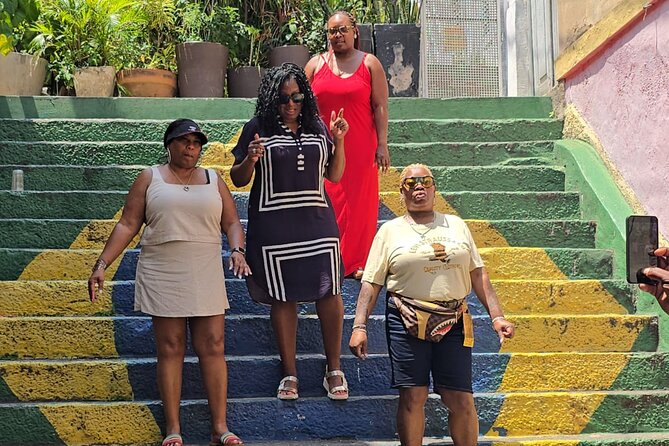
Rio’s past is written into its streets. This private walking tour connects Rio de Janeiro’s African heritage sites with clear historical context, local stories, and plenty of time to ask questions. I like the route’s focus on Cais do Valongo, the former landing place for enslaved Africans, and Pedra do Sal, a key site for Afro-Brazilian culture, samba, and Carnival. The tour also includes a useful introduction to the old port area, rather than treating each stop as an isolated monument.
The main concern is value. At $75.46 per person, this is not a cheap city walk, especially since most stops are free and the experience includes a fair amount of standing and walking. Your guide makes a major difference. Anna Maria has been praised for her insight and warmth, while Nathaly has helped solo visitors feel accompanied from hotel pickup through the walk. Rafael has also earned praise for answering detailed questions and offering useful Carnival advice.
This is a private tour for your group only, offered in English, and it usually takes between two and four hours. The route begins at Praça Quinze de Novembro and ends at Cais do Valongo, with an optional paid visit to the Instituto de Pesquisa e Memoria Pretos Novos, known as IPN. I would choose this experience for a serious introduction to Rio’s African heritage, but I would confirm the meeting details and ask about walking pace if you are traveling with an older companion.
In This Review
- Key points to know before booking
- Why Little Africa matters in Rio
- Starting at General Osorio and Praça Quinze
- The Olympic Boulevard and Rio’s old port
- Santa Rita and the hidden burial ground
- Maua Square and the port district
- Largo de São Francisco da Prainha and local street life
- Cais do Valongo, the route’s essential stop
- Pedra do Sal, samba, and Afro-Brazilian culture
- The IPN museum and the dead of Pretos Novos
- How much value do you get for $75.46?
- Who should book this walking tour?
- Practical details before you go
- Should you book Little Africa?
- FAQ
- How long does the Little Africa tour take?
- Where does the tour begin?
- Where does the tour end?
- Is the tour private?
- Is the tour offered in English?
- Is admission to the IPN museum included?
- Are the tour stops free to enter?
- Can I cancel for a full refund?
Key points to know before booking
- Cais do Valongo is the emotional center: This former port was where enslaved Africans arrived in Rio during the nineteenth century.
- The route links several important sites: You visit burial grounds, old port spaces, cultural landmarks, and a museum connected to the city’s African past.
- Pedra do Sal adds living culture: The site connects Afro-Brazilian religious practice, samba, and the spread of Carnival traditions.
- It is a private walking tour: Only your group participates, so you can ask specific questions and discuss the pace with your guide.
- The IPN museum costs extra: The visit lasts about 30 minutes, but admission is not included in the tour price.
- The quality depends on the guide: Anna Maria, Nathaly, and Rafael have each been praised for different strengths, including warmth, insight, and practical help.
Why Little Africa matters in Rio
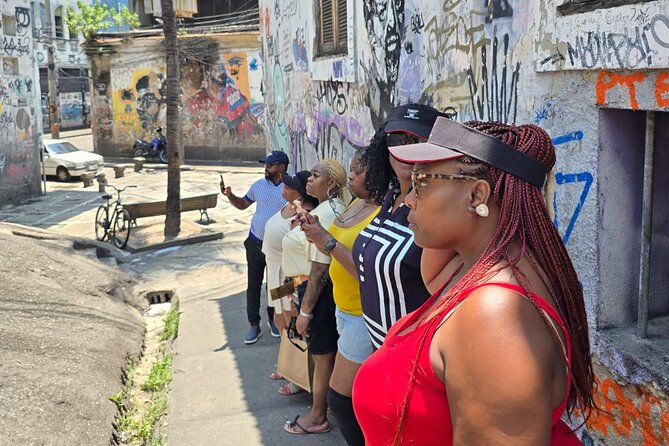
Rio’s African heritage is not confined to one museum. It appears in port works, churches, burial places, music, food, religious practice, and the shape of neighborhoods. The Little Africa route gives you a way to connect those pieces on foot.
The subject is also difficult. These places are tied to the forced transport, sale, burial, and exploitation of enslaved Africans in Brazil. This is not a light sightseeing stroll where you simply collect photographs. I would expect serious subject matter, frequent stops, and a guide-led explanation of what happened at each location.
The private format helps. You are not placed in a large group with a fixed script and little room for questions. If you want to ask about slavery, Afro-Brazilian religion, samba, Carnival, or the old port, you can do so directly. One visitor found Rafael especially useful because he handled very specific questions and even offered advice about blocos and a last-minute visit to Cidade de Samba.
The route is listed as two to four hours, although the scheduled stops add up to roughly two hours before walking time and the optional museum visit. That range matters. A brisk version may feel compact, while a slower tour with questions, photographs, and the IPN visit can take much longer.
More History Tours in Rio de Janeiro
- Rio de Janeiro Historical Center Walking Tour
★ 4.5 · 336 reviews - Private Walking and Cultural Tour Rocinha-Rio de Janeiro
★ 5.0 · 239 reviews - Discover Rio Little Africa: A Cultural and Historical Journey
★ 5.0 · 238 reviews
Starting at General Osorio and Praça Quinze
The official meeting point is Praça Quinze de Novembro in central Rio, while the first listed stop is the Statue of General Osorio. This opening section takes about ten minutes and costs nothing to enter.
I see this as a practical orientation rather than a major attraction. Your guide can help establish where you are in central Rio and explain how the old city connects to the port district. If you arrive early, use the time to confirm that you are at the correct meeting place. One past participant had a taxi take them to the wrong location because of a misunderstanding and language trouble. Rafael waited, which was kind, but the incident shows why a clear meeting-point message matters.
This is also where I would raise any mobility concerns. The experience includes walking and standing at several outdoor locations. A visitor with an elderly mother found the pace demanding, so ask your guide in advance if you need more sitting time or a slower route.
The Olympic Boulevard and Rio’s old port
The next stop is Boulevard Olímpico, a corridor created for the Olympics in the area where the old port once operated during colonial times. You spend about 15 minutes here.
The modern promenade provides a useful contrast. Rio rebuilt and reshaped this part of the waterfront for a major international event, yet beneath that recent public space is an older port zone connected to colonial trade and slavery. The guide’s explanation is what turns a broad urban walkway into a meaningful historical stop.
Do not expect a long visit here. Fifteen minutes is enough for context, but not enough for an extended look at nearby museums or public art. The Museum of Tomorrow and the Rio Art Museum are located by Maua Square later in the route, but they are not included as interior visits. If you want to enter either museum, plan that separately.
Santa Rita and the hidden burial ground
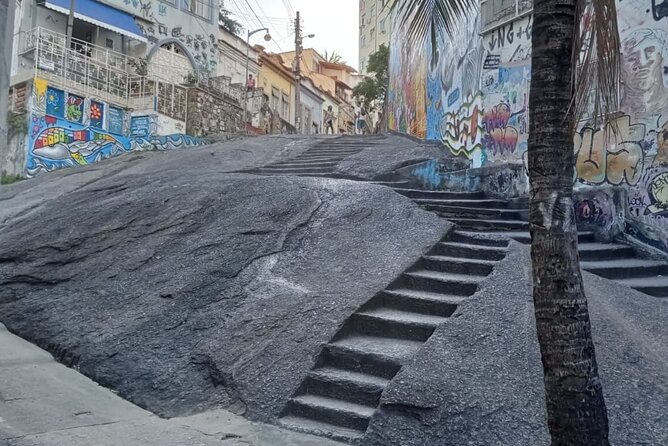
Matriz da Paroquia de Santa Rita is a brief ten-minute stop. It marks a former burial place for enslaved Africans.
This is one of the route’s most important lessons: the city’s history is often found beside ordinary streets and active religious buildings. The site may not provide the visual drama of a grand monument, but its meaning is powerful. Your guide can explain how burial grounds reveal the treatment of enslaved people and the way African lives were pushed to the margins of official urban memory.
The short stop also shows a limitation of the experience. You are moving through a sequence of places, and some may require imagination rather than a large display or preserved structure. If you prefer museums with labels, artifacts, and long indoor visits, this walk may feel spare. If you value place-based storytelling, the setting adds weight.
A completely different kind of day:
- Rio de Janeiro: 6-Stop Highlights of Rio with Lunch
★ 4.4 · 5,157 reviews - Christ the Redeemer Entry Ticket by Corcovado Train
★ 4.4 · 4,476 reviews - Rio’s City Tour – Tickets for Christ, Sugar Loaf & Lunch included
★ 5.0 · 4,389 reviews - Full Day: Christ Redeemer, Sugarloaf, City Tour & Barbecue Lunch
★ 4.5 · 3,142 reviews
Maua Square and the port district
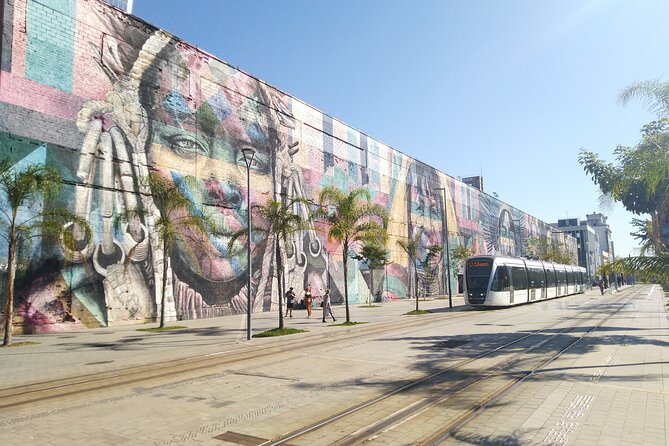
Maua Square sits beside the port and near the Museum of Tomorrow and the Rio Art Museum. The scheduled time here is about ten minutes.
I like this pause because it widens the story. Little Africa is not separate from Rio’s current cultural life. The square links the port’s painful past with the city’s modern public projects, art spaces, and waterfront redevelopment.
Still, ten minutes goes quickly. You will not have time for a proper museum visit during the tour. Think of Maua Square as an exterior orientation point. If the museums interest you, return on another day rather than trying to squeeze them into this walk.
The square is also a useful place to consider how cities present themselves. New architecture and public art can draw attention to the future, while the tour asks you to look back at the people and events that shaped this waterfront long before the Olympic works.
Largo de São Francisco da Prainha and local street life
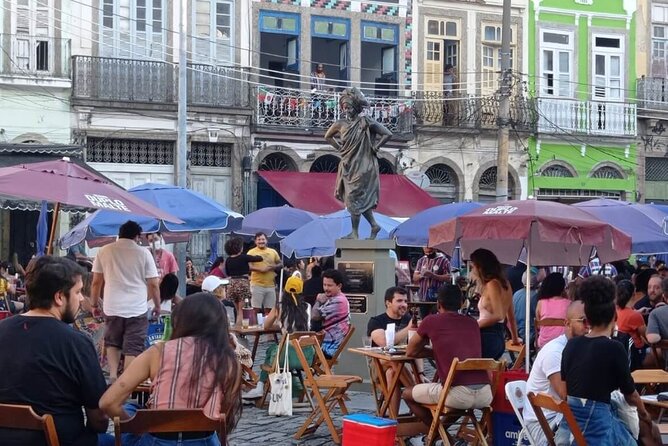
The tour continues to Largo de São Francisco da Prainha for about 15 minutes. This area was once a beach that was later buried, and it is now known for local bars.
This stop brings the route closer to everyday neighborhood life. Instead of viewing African heritage only through tragedy, you get a sense of how food, music, gathering places, and nightlife continue to shape the area. The former beach also offers a reminder that Rio’s waterfront has been repeatedly altered by construction and urban growth.
I would not treat this as a scheduled meal stop. The information only promises a visit to an area with local bars, not food or drinks included. One account praised a tour that included a great meal, but that should not be assumed as part of every booking. Ask the provider if eating is important to you.
Cais do Valongo, the route’s essential stop
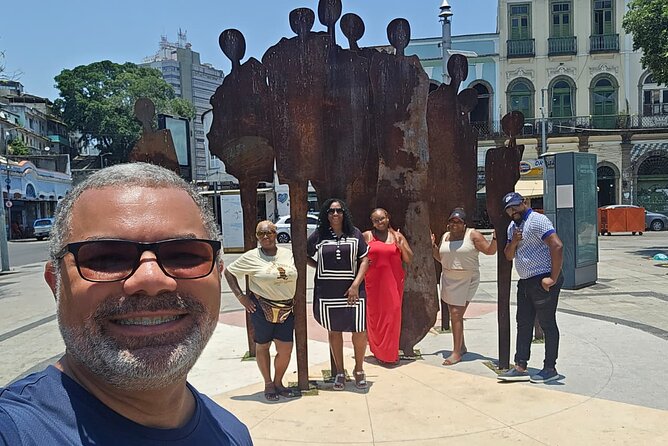
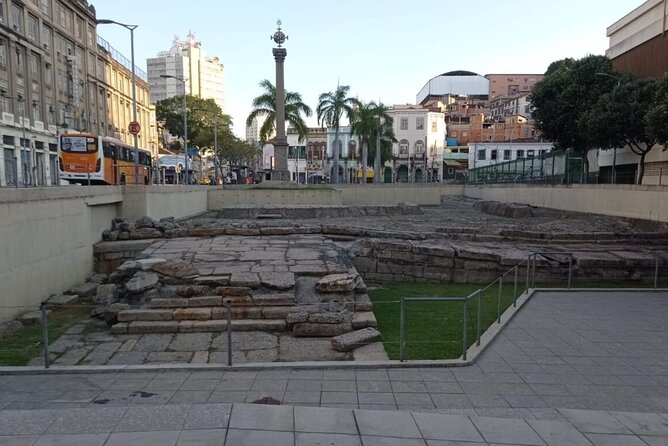
Cais do Valongo receives about 20 minutes and is the historical heart of the tour. These docks were where enslaved Africans arrived in Rio during the 1800s.
This is the place I would most want to understand before visiting. A guide can explain the port’s role in the slave trade and help you grasp the scale of what occurred here. The site is moving because it connects a global crime to a specific stretch of Rio, not to an abstract chapter in a textbook.
One participant described visiting Cais do Valongo as especially important and moving. That reaction makes sense. You are standing at a place connected directly to forced arrival, sale, and separation. The visit is short on paper, but the subject deserves time for quiet attention.
The stop also shows why a good guide matters so much. The physical site alone cannot answer every question. You need clear explanation, care with language, and enough room to process what you are hearing. Rafael has been praised for his command of the subject and for responding thoughtfully to detailed questions.
Pedra do Sal, samba, and Afro-Brazilian culture
Pedra do Sal is listed as a five-minute stop, the shortest on the route. It is a historic site connected with the spread of Carnival and some African religions.
Five minutes may sound brief, but the site works as a sharp cultural link. The tour moves from forced arrival and burial to the traditions that survived, adapted, and helped shape Rio’s identity. Pedra do Sal is tied to music, religious practice, and community life, so your guide’s explanation matters more than the length of the stop.
I would ask questions here rather than simply take a photograph. You might want to know how African traditions influenced Carnival, how religious practices developed in Brazil, or why this location remains important. The route does not promise a live samba performance or a Carnival event, so treat this as a historical and cultural explanation, not entertainment.
The area can also help you understand why Little Africa is more than a memorial route. It deals with pain, but it also recognizes creativity, faith, music, and community strength.
The IPN museum and the dead of Pretos Novos
The final listed stop is the Instituto de Pesquisa e Memoria Pretos Novos, or IPN. The visit takes about 30 minutes and requires a separate admission payment.
The IPN marks the place where enslaved Africans who died before reaching Brazil were buried. It is now a museum and research center. For many visitors, this may be the most direct way to encounter physical evidence of the human cost behind the port system.
Because admission is not included, check the price before you go. The tour fee covers the guide and route, but the optional museum visit is an extra expense. I would still consider it worthwhile if you want more than outdoor explanations. The 30-minute visit gives the subject a more focused setting and can help connect the burial ground at Santa Rita with the broader story of people who never survived the voyage or sale process.
The IPN is also a good reason to allow extra time. A two-hour walk can become closer to three or four hours once you include movement, questions, and the museum.
How much value do you get for $75.46?
At $75.46 per person, the price needs careful thought. The stops themselves are free, apart from the optional IPN admission, so you are paying mainly for a private guide, historical interpretation, route planning, and the ability to shape the conversation around your group’s interests.
For one person or a couple, the cost may feel high. For a small private group, the calculation improves because the experience is shared only by your party. Group discounts are available, which may make this a better choice for families or friends traveling together.
I would compare it with the cost of a general city tour, but do not judge this walk only by the number of attractions. Its value lies in access to a difficult subject and in the guide’s ability to connect separate places. If your guide is warm, prepared, and open to questions, the experience can be very worthwhile. If the delivery is flat or rushed, the free outdoor stops may make the price feel excessive.
The strongest praise has focused on guide quality. Anna Maria has been described as kind, insightful, and able to connect history, art, food, and conversation. Nathaly has been valued by a solo visitor who felt accompanied and safe, including help getting back to the hotel. Rafael has been praised for historical detail, patience, and practical Carnival suggestions.
There is also a clear warning. One person found the tour too focused on walking and standing, with limited explanation, little eye contact, and too few substantial stories for the price. That criticism should not be ignored. This experience depends heavily on who leads it on the day.
Who should book this walking tour?
I would choose this tour if you want to understand Rio beyond beaches, viewpoints, and famous landmarks. It suits people who enjoy asking questions, listening to local interpretation, and visiting places that do not always announce their importance with grand architecture.
It can work especially well for solo visitors because the private format and guide support can make the walk feel less isolating. Nathaly’s approach, including meeting a solo guest at the hotel and returning with them, was particularly reassuring. That arrangement should be confirmed before booking, since the official meeting point is Praça Quinze de Novembro.
Families and small groups can also benefit from the private setup. You can request a slower pace, focus on particular questions, and make better use of the guide than you would in a large group. Still, anyone with limited stamina should plan carefully because the tour includes extended walking and standing.
I would skip it if you want a relaxed sightseeing loop with many indoor attractions, included food, or constant visual spectacle. I would also hesitate if $75.46 feels uncomfortable for a tour built around mostly free sites. The history is important, but the price only makes sense when the guide adds real depth.
Practical details before you go
The tour is offered in English and confirmation is provided when you book. It runs near public transportation, and service animals are allowed. Most people can participate, but the walking format remains the main physical consideration.
The advertised start is Praça Quinze de Novembro in Centro, and the listed end is Cais do Valongo on Avenida Barão de Tefé in Saúde. Since the route finishes in a different area, plan your onward transport rather than assuming you will return to the starting point.
You can cancel for a full refund up to 24 hours before the local start time. Cancellations or changes made less than 24 hours in advance are not accepted for a refund.
Should you book Little Africa?
Book it if you want a focused, serious look at the African heritage of Rio and you value conversation more than a long list of attractions. Cais do Valongo, Pedra do Sal, Santa Rita, and the IPN create a meaningful sequence, moving from arrival and burial to culture and memory.
Before paying, I would ask two questions: who is guiding the tour, and can the pace be adjusted for your group? If you are traveling with friends, family, or alone and receive a strong guide such as Anna Maria, Nathaly, or Rafael, the private format can justify the price. If you prefer a cheaper walk or need frequent sitting breaks, choose with more caution and consider skipping the optional IPN visit.
FAQ
How long does the Little Africa tour take?
The experience takes approximately two to four hours. The final length depends on walking time, questions, and whether you add the optional IPN museum visit.
Where does the tour begin?
The listed starting point is Praça Quinze de Novembro in Centro, Rio de Janeiro.
Where does the tour end?
The tour ends at Cais do Valongo on Avenida Barão de Tefé in the Saúde area of Rio de Janeiro.
Is the tour private?
Yes. Only your group participates in the private tour or activity.
Is the tour offered in English?
Yes. English is the listed language for the experience.
Is admission to the IPN museum included?
No. The IPN visit is optional, takes about 30 minutes, and requires a separate admission payment.
Are the tour stops free to enter?
The listed stops have no admission charge. The exception is the optional IPN museum visit, whose admission is not included.
Can I cancel for a full refund?
Yes. You must cancel at least 24 hours before the experience’s local start time to receive a full refund. Changes or cancellations made less than 24 hours in advance are not refunded.
Just added in Rio de Janeiro
- Petrópolis Historical Tour – Museum Ticket and Lunch!★ 3.0 · 9 reviews
- Centro Historico and Lapa – Santa Teresa Walking, Historical and Bohemian Tour★ 5.0 · 44 reviews
- Historical Rio Walking Tour★ 5.0 · 19 reviews
- Hiking to Christ the Redeemer A Journey to Rio’s Iconic Landmark★ 5.0 · 20 reviews
- Best Private Historic Day Tour of Rio de Janeiro★ 5.0 · 3 reviews
- Petrópolis, the Imperial City★ 4.5 · 8 reviews
- Hire Photographer, Professional Photo Shoot – Rio de Janeiro★ 3.5 · 3 reviews
- Hikking the Favela + Morro Dois Irmaos!★ 4.5 · 7 reviews
Historical Tours, compared.


Private Walking and Cultural Tour Rocinha-Rio de Janeiro
Read our review →
Discover Rio Little Africa: A Cultural and Historical Journey
Read our review →


Scenic Train ride to historical cities of Morretes and Antonina
Read our review →
Browse the lists this tour appears in