
Reviewed · BRAZIL FOOD AND SAMBA NIGHTS
Rio Santa Teresa and Lapa Samba Tour
Rio gets more interesting after dark. This four-hour tour links Santa Teresa’s old streets with Lapa’s samba rooms, using food, music, and local bars to explain Rio beyond its postcard sights. I like the focus on modest, traditional places rather than polished tourist venues, and I like the chance to hear samba even on a quieter night such as Monday.
The strongest part is the guide’s cultural context. Damiana Florencio has been praised for explaining Brazilian history, art, music, and Afro-Brazilian religions, while another excellent guide, Alberto, led one especially well-liked outing. The main consideration is the walking: you go through hilly Santa Teresa, walk between several stops, and finish in Lapa late in the evening. Also confirm the group size before booking, since the tour is described as both capped at nine and limited to 15.
In This Review
- Five things that make this Rio night out different
- Santa Teresa is the right place to begin
- Armazém São Joaquim brings food and culture together
- Bar do Mineiro serves a proper Carioca classic
- Bar do Gomes feels like a trip back to 1919
- Agô introduces Afro-Brazilian traditions
- The descent to Lapa changes the mood
- Leviano Bar adds samba, forró, and a view
- Beco do Rato finishes with serious samba
- What the $225 price really covers
- Who will enjoy this tour most
- Practical tips for making the evening better
- Should you book the Rio Santa Teresa and Lapa Samba Tour?
- FAQ
- How long does the Rio Santa Teresa and Lapa Samba Tour last?
- Where does the tour start?
- Where does the tour end?
- What food is included?
- Are drinks included?
- Is the tour offered in English?
- What is the cancellation policy?
Five things that make this Rio night out different
- Five food and music stops: Try skewers, bean broth, savory snacks, and caipirinhas before settling into Lapa’s samba scene.
- Santa Teresa first: Old buildings, a traditional yellow cable car, cafés, bars, and steep streets give the opening portion a distinct Rio character.
- Locally focused bars: The route favors places tied to Carioca street life instead of a single large entertainment venue.
- Afro-Brazilian culture at Agô: This newer bar connects its food, drinks, and decoration with Afro-Brazilian religious traditions.
- A useful nightlife introduction: You finish at Beco do Rato, a respected samba venue near the Selarón Steps, rather than being dropped at a generic club.
Santa Teresa is the right place to begin
The meeting point is Cine Santa Teresa, at Rua Paschoal Carlos Magno, 136. From there, the tour begins in one of Rio’s most atmospheric neighborhoods, where old buildings and the famous yellow cable car create a gentler mood than the city center below.
Santa Teresa is often associated with art, restaurants, and its bohemian character. The food scene ranges from refined cooking and German fare to northeastern Brazilian dishes and simple Carioca bars. This tour makes a deliberate choice within that mix: you spend your time in traditional bars and casual restaurants that better reflect Rio’s everyday social life.
That choice matters. You are not simply moving from one photogenic street to another. Your guide uses each place to explain how food, drinking, music, religion, and neighborhood identity fit together. The setting also changes as the evening goes on. Santa Teresa feels residential and old-fashioned, while the route eventually descends toward Lapa’s louder nightlife.
You should wear comfortable shoes. The walk from the central part of Santa Teresa to Bar do Gomes takes about 10 minutes, and the whole route includes hills and several stops. The tour is near public transportation, but the listed meeting and ending points are different, so you should plan your return from Lapa in advance.
More Rio city tours:
- Rio’s City Tour – Tickets for Christ, Sugar Loaf & Lunch included
★ 5.0 · 4,389 reviews - Full Day: Christ Redeemer, Sugarloaf, City Tour & Barbecue Lunch
★ 4.5 · 3,142 reviews - Rio: Christ the Redeemer, Sugarloaf, Selaron & BBQ Lunch
★ 4.5 · 2,428 reviews
Armazém São Joaquim brings food and culture together
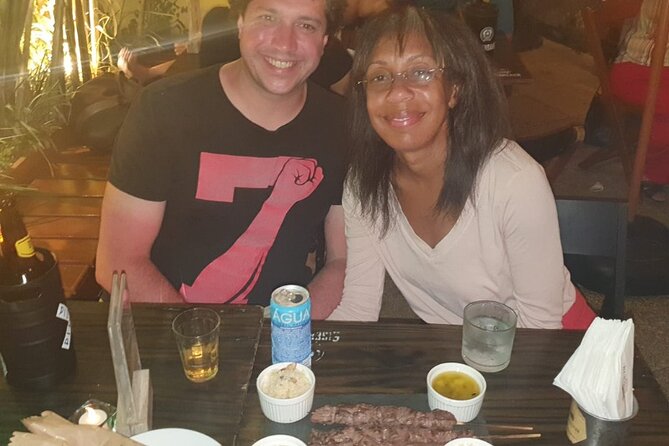
The first food stop is Armazém São Joaquim, a rustic townhouse in Santa Teresa. It is more than a bar. The space functions as a cultural and artistic center, with events connected to music, photography, poetry, philosophy, theater, workshops, and literary programs.
You will try one of its well-known skewers, with a choice of beef cooked rare, medium rare, or well done. That is a small but useful detail for anyone particular about meat. The skewer also gives the evening an easy start: familiar food, a historic setting, and a chance to get acquainted with the guide before the route becomes more varied.
Admission is listed as included at this stop. The description specifically includes the skewer, but you should ask your guide what drinks cost separately. Food portions at a bar crawl are usually designed as tastings rather than a full dinner, and this tour includes several savory bites later.
The cultural setting is the real reason this stop works. If you only visit Santa Teresa for photographs, you miss much of what gives the neighborhood its personality. Here, the building itself and its creative programming help place the food within a wider local scene.
Bar do Mineiro serves a proper Carioca classic
Next comes Bar do Mineiro, one of Santa Teresa’s most traditional casual bars. Its old tiles, simple rooms, cold beer, and lack of polished decoration make it a useful contrast to Rio’s more fashionable restaurants.
The specialty included here is caldinho de feijão, a seasoned bean broth served in a cup or bowl. It is a common Brazilian bar snack, especially popular during a long night out. The broth is hearty, salty, and warming, and it makes more sense as part of the evening than a random tasting chosen only for visitors.
I like this stop because it gives you a food with real local importance without dressing it up. The experience is not about fine dining. It is about understanding what people order while talking, drinking, and listening to music.
Bar do Mineiro can draw both Cariocas and tourists, so it may feel busier than the first stop. That is part of its appeal, but it also means the group may spend more time finding space than it would in a quieter bar. The small-group format helps, although the exact maximum should be confirmed when you book.
Bar do Gomes feels like a trip back to 1919
The walk to Armazém de São Thiago, also called Bar do Gomes, takes you farther from Santa Teresa’s center. The short journey is part of the experience. The streets and old buildings create the feeling of moving through an earlier version of Rio, rather than following a modern restaurant strip.
Bar do Gomes has operated on the same corner since 1919. Its 1920s-style gallery and retro interior give it a strong sense of place, and the city recognized the establishment as cultural heritage in 2011.
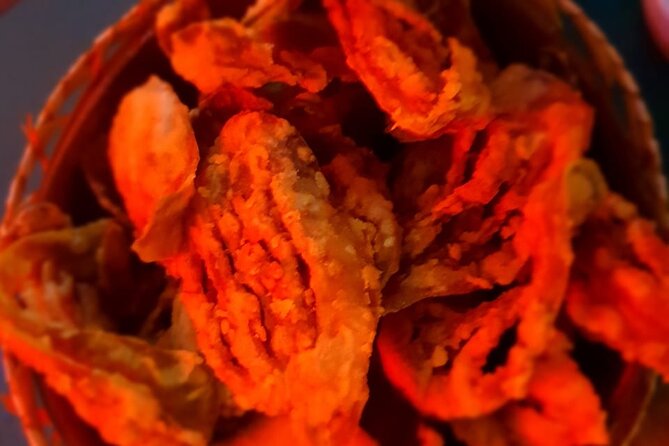
The food here includes a beef jerky ball with gorgonzola and a codfish ball. These are compact, flavorful snacks that show two sides of Brazilian bar cooking: dried beef, a staple with strong links to the country’s interior and northeastern food traditions, and salted cod, a familiar influence in Portuguese-Brazilian cooking.
The suggested drink is a caipirinha. The tour description calls it one of the best in town, but I would treat that as an invitation rather than a guarantee. Drink purchases are not clearly listed as included, so budget separately for cocktails and beer.
This is one of the tour’s best stops for atmosphere. You get a historic bar, recognizable local snacks, and a short walk through Santa Teresa’s older streets. If you prefer modern interiors and large portions, the place may feel cramped or old-fashioned. That is precisely why it belongs on this route.
More Food and Samba Nights in Rio de Janeiro:
- Rio de Janeiro: Beginner Samba Lesson in Ipanema
★ 4.9 · 1,071 reviews - Rio: Pub Crawl in Lapa with Cachaça Tasting and Live Samba
★ 4.7 · 881 reviews - Rio: Carnival Backstage Tour at Samba City with Cocktail
★ 4.6 · 520 reviews - Hop-ON Hop-OFF Sightseeing Bus in Rio de Janeiro – Rio Samba Bus
★ 3.5 · 457 reviews
Agô introduces Afro-Brazilian traditions
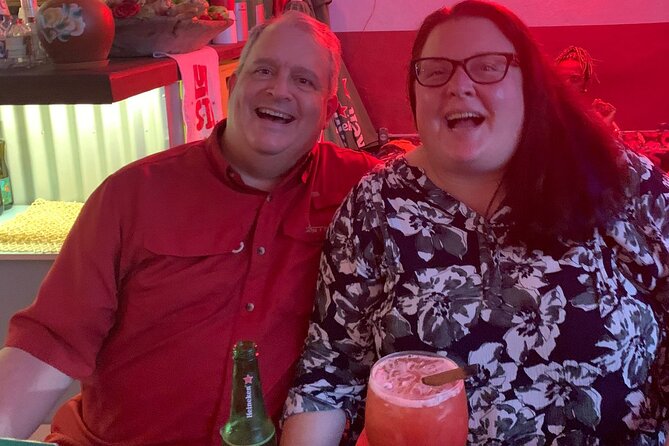
The final Santa Teresa stop is Agô, also called Agô Bar da Encruza. It is one of the newer places on the route and takes a different approach from the old taverns.
The bar celebrates religions of African origin. The word Agô is used as a request for permission to enter, leave, or pass through in Yoruba religious settings. The decoration, drinks, menu, and appetizers are designed as tributes to terreiros, the Afro-Brazilian religious communities and temples connected with those traditions.
This stop gives the guide a chance to discuss a part of Brazilian culture that is often simplified or ignored. The bar’s identity centers Black cultural presence and representation, rather than treating Afro-Brazilian religion as a decorative theme.
The description includes admission and allows about 30 minutes here. That is enough time for a drink or bite and a focused explanation, but not enough for a long meal. You should listen carefully to the guide, since the setting is most valuable when the cultural meaning is explained with care.
Agô is also a useful change of pace. After three historic bar settings, you see how Santa Teresa’s food culture continues to develop. The neighborhood is not frozen in the past, and this stop makes that clear.
The descent to Lapa changes the mood

After Santa Teresa, the route goes downhill toward Lapa, Rio’s other major bohemian quarter. The change is noticeable. Santa Teresa gives you old façades, narrow streets, and a slower rhythm. Lapa brings larger public spaces, famous arches, late-night bars, and music venues.
The tour is especially useful here because Lapa can feel confusing if you arrive without a plan. The route gives you a guide, a sequence of venues, and a reason to walk between them. One evening described by the company included shopping late, an outdoor dance party, a swing gathering, and live samba, although the exact nightlife program can vary by date.
That flexibility is important. Samba clubs and bars do not all offer the same music every night. A good guide can adjust the route to what is actually happening, which helps explain why the experience has been praised for finding local music even on Monday.
You should not expect a single formal concert with guaranteed performers. This is a moving nightlife tour, and the appeal comes from seeing different styles of Rio entertainment in one evening.
Leviano Bar adds samba, forró, and a view
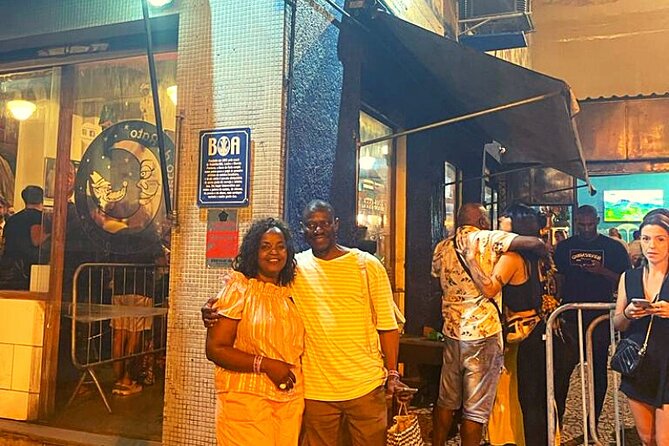
Leviano Bar offers a broad mix of music, including samba and forró, with occasional acrobatic performances. Forró is a dance and music tradition strongly linked to northeastern Brazil, so this stop adds variety rather than giving you the same samba sound at every venue.
The bar has views toward the Arcos da Lapa and the Cathedral. Its kitchen serves meals, snacks, and sweets, while the bartenders prepare drinks with a theatrical touch. Two named house drinks are the Sexy Delícia and the Amante.
This is a good place to pause and watch the room. You can take in the arches, hear a different musical style, and decide how much energy you want to spend before the final stop. The food sounds more substantial here than at some of the tasting-focused stops, but the tour does not clearly state that a full meal is included.
Leviano’s entertainment can also make it feel more commercial than Bar do Mineiro or Bar do Gomes. That is not necessarily a weakness. It gives you a more show-oriented side of Lapa, which balances the older, neighborhood-based venues in Santa Teresa.
Beco do Rato finishes with serious samba
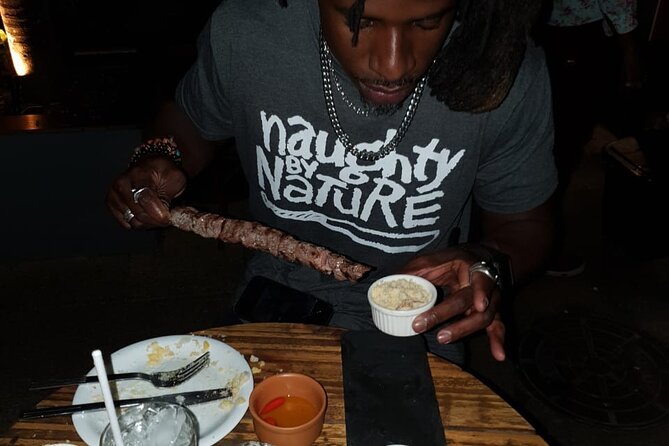
The final stop is Beco do Rato, at Rua Joaquim Silva, 11, between Lapa and Glória. The tour ends here at a restaurant and samba club, so you can continue enjoying the area after the official four-hour program finishes.
Beco do Rato has operated since 2005 in a space that was once neglected. Its owners helped bring new life to the area near the Selarón Steps, and the venue is associated with music, culture, cold beer, snacks, and samba circles.
The bar is linked to Márcio Pacheco, who is also responsible for Samba Luzia. The description presents him as someone deeply connected to Rio’s tavern culture and a devotee of São Jorge. Those details give the venue a stronger local identity than a club chosen only because it is convenient.
This is the tour’s most important music stop. The evening begins with food and neighborhood context, moves through different bar styles, and ends with live samba in Lapa. You are not just watching a performance. You are seeing how the music fits into Rio’s social life.
The end point is practical, too. Beco do Rato is clearly identified, rather than leaving you to find your way from an unnamed club. Since the tour ends at night, arrange your onward transportation before the last song.
What the $225 price really covers
At $225 per person, this is an expensive four-hour experience. The value depends on how much you want guidance, cultural explanation, and a planned route through Rio’s nightlife.
The price is easier to justify if you would otherwise spend the evening guessing which bars are open, which venues welcome newcomers, and where samba is actually being played. It also includes a sequence of food tastings and admission at several listed stops, although drinks and any larger meals do not appear to be clearly included.
You are paying for access and interpretation as much as for food. A guide such as Damiana Florencio can connect the bars to Brazilian music, history, art, and religion. That context is the part you cannot reproduce simply by visiting Lapa alone.
Still, the price will feel high if you mainly want an inexpensive night of beer and music. You may get better value from this tour if you see it as a guided introduction to Rio nightlife, then return to one favorite venue on your own.
Group discounts are available. The experience is described as a small group capped at nine, while the additional booking information gives a maximum of 15. That difference matters, so ask for the expected group size before paying.
Who will enjoy this tour most
I would choose this outing if you want to:
- See Santa Teresa and Lapa in one evening
- Try several traditional Brazilian bar snacks
- Learn about Afro-Brazilian culture in a respectful setting
- Hear samba, forró, and other live music
- Have a guide handle the route between nightlife areas
- Meet a guide who can explain Rio beyond landmarks
It suits solo visitors especially well. One person who toured Rio alone described receiving help from Damiana on several private experiences, including airport pickup and a favela art walk. That does not mean this samba tour includes airport service, but it does suggest the company has experience working closely with people who want personal attention.
The tour may be less suitable if you dislike walking, prefer an early night, or want a fixed concert with guaranteed music. It is also not ideal for anyone seeking a formal restaurant meal. The food is mainly bar fare and tastings.
Most people can participate, and the tour is near public transportation. Good weather is required. If poor weather cancels the outing, you can receive another date or a full refund. The same applies if the minimum number of participants is not reached.
Practical tips for making the evening better
Wear shoes that can handle hills and several hours on foot. Santa Teresa’s charm comes partly from its streets, but the route is not a flat food tour.
Eat lightly before meeting the group. You will receive a series of snacks, including beef skewers, bean broth, dried beef, codfish, and other appetizers. The portions may not replace a full dinner, but arriving hungry enough to sample everything will make the evening more enjoyable.
Bring a card or cash for drinks unless the operator confirms that any are included. The food inclusions are described more clearly than the drinks, and caipirinhas, beer, and house cocktails can add to the final cost.
Ask which guide is leading your date. Damiana Florencio has been praised for her energy and explanations, and Alberto has also received strong personal praise. The guide is central to the experience, particularly at Agô and Beco do Rato.
Finally, keep your plans after the tour flexible. The exact music and nightlife mix can change, but that is part of the point. You are being introduced to Rio’s evening rhythm, not placed in a theater seat for a fixed two-hour show.
Should you book the Rio Santa Teresa and Lapa Samba Tour?
Book it if you want a guided, food-centered introduction to Rio nightlife and value local context more than a low price. The combination of Santa Teresa’s old bars, Agô’s Afro-Brazilian focus, Lapa’s music venues, and the final samba stop at Beco do Rato gives the evening real range.
Skip it if you only want a cheap bar crawl, a guaranteed headline concert, or a short and easy walk. At $225, the experience needs to deliver more than drinks, and its best value comes from the guide’s storytelling, the carefully chosen neighborhood stops, and the chance to find music you might not locate alone.
For the right visitor, this is a lively first look at Rio after sunset. Confirm the group size, ask what food and drinks are included, and arrive ready to walk, snack, listen, and let the evening unfold.
FAQ
How long does the Rio Santa Teresa and Lapa Samba Tour last?
The tour lasts approximately four hours.
Where does the tour start?
It starts at Cine Santa Teresa, Rua Paschoal Carlos Magno, 136, Santa Teresa, Rio de Janeiro.
Where does the tour end?
The tour ends at Beco do Rato, Rua Joaquim Silva, 11, in Lapa. The end point is a restaurant and samba club.
What food is included?
Included tastings include a beef skewer at Armazém São Joaquim, bean broth at Bar do Mineiro, and snacks such as beef jerky with gorgonzola and a codfish ball at Bar do Gomes.
Are drinks included?
The tour information clearly lists food and admission at several stops, but it does not clearly state that drinks are included. Ask the operator before booking.
Is the tour offered in English?
Yes. The tour is offered in English.
What is the cancellation policy?
You can cancel up to 24 hours before the start time for a full refund. Cancellations or changes made less than 24 hours before the start time are not refunded or accepted. If bad weather or an insufficient number of participants cancels the tour, you can choose another date or receive a full refund.
Just added in Rio de Janeiro
- Gastronomic Tour at the Municipal Market in Rio de Janeiro★ 5.0 · 4 reviews
- Full Day Tour in Rio de Janeiro★ 5.0 · 8 reviews
- Garganta do Ceu Cave Hiking Private Tour on Pedra da Gavea★ 4.5 · 3 reviews
- GIG Airport Transfer x Rio de Janeiro Hotels★ 4.5 · 11 reviews
- Rio de Janeiro private Full day Custom Tours★ 5.0 · 35 reviews
- Christ the Redeemer – Complete Morning Tour with Ticket and Transport at the Hotel★ 3.5 · 4 reviews
- AquaRio, Museum, Boulevard Olimpico, Ferris Wheel, Transport and Tourism Guide.★ 4.0 · 6 reviews
- Personalized and Private Full-Day Tour in Rio de Janeiro★ 5.0 · 6 reviews
Brazil Food and Samba Nights, compared.


Pub Crawl in Lapa with Cachaça Tasting and Live Samba
Read our review →
Carnival Backstage Tour at Samba City with Cocktail
Read our review →
Hop-ON Hop-OFF Sightseeing Bus in Rio de Janeiro – Rio Samba Bus
Read our review →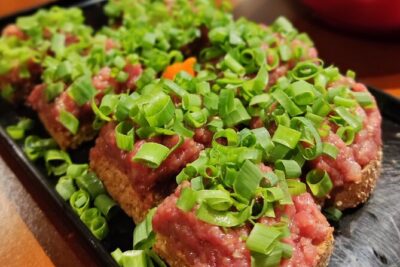

Carnaval Experience: Backstage Tour at Samba City with Cocktail
Read our review →
Browse the lists this tour appears in