
Reviewed · BRAZIL FOOD AND SAMBA NIGHTS
Food Tour Experience in Rio de Janeiro – Private Tour
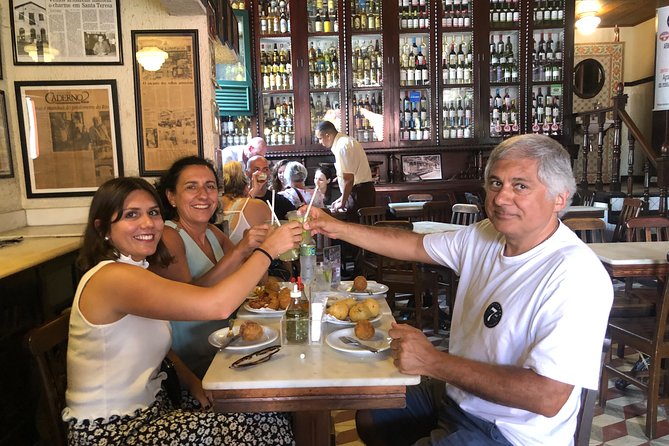
Rio tastes better one stop at a time. This private food tour pairs local dishes with major sights, so you can sample market snacks, seafood, Brazilian sweets, beer, and caipirinhas while learning about the city’s neighborhoods and past. I especially like the chance to visit places many first-time visitors would miss, with the guide handling food orders in English.
I also like the comfortable setup: pickup is offered, transport is air-conditioned, and the tour lasts about five to six hours. The main drawback is that the route changes, since Rio’s farmers market moves to a different neighborhood each day. You should also expect a busy schedule, with plenty of driving, walking, eating, and sightseeing packed into one outing.
In This Review
- Key things to know before booking
- Why this tour works well for a first day in Rio
- Markets, tapioca, and the first taste of Rio
- Seafood, fish markets, and a cold Brazilian beer
- Santa Teresa, street art, and views of Christ the Redeemer
- Selarón Steps and the colorful heart of Lapa
- Central Rio through churches, cafés, and grand public buildings
- Coffee and sweets at Confeitaria Colombo
- The port area, Kobra’s mural, and Rio’s complicated past
- Historic churches and Rio’s religious art
- What $175 per person buys you
- Timing, comfort, and practical concerns
- Should you book this Rio food tour?
- FAQ
- How long does the Rio food tour last?
- What language is the tour offered in?
- Is pickup available?
- Where does the farmers market visit take place?
- How many people can join the tour?
- Can I cancel for a full refund?
Key things to know before booking
- The food is tied to Rio’s neighborhoods: Expect market produce, tapioca, seafood, pão de queijo, açaí, bar snacks, sweets, and local drinks rather than a formal restaurant meal.
- The guides add cultural context: Lully and Vicente speak English, Spanish, and Portuguese, and Vicente has a personal connection to the Selarón Steps.
- You see much more than food: Santa Teresa, Lapa, the historic center, the port area, and major cultural sights all fit into the day.
- The market stop changes by date: The farmers market may be in Copacabana, Ipanema, or another neighborhood.
- The private format costs $175 per person: That is a serious price, but it includes personal guiding, ordering help, transportation, and a full half-day of food and sightseeing.
- Plan for moderate activity: You will walk through markets, streets, squares, and historic areas, so comfortable shoes matter.
Why this tour works well for a first day in Rio
A food tour can be a smart way to get oriented in Rio. You are not only eating. You are learning what people buy at a market, how Brazilian snacks differ from one region to another, and how food fits into daily life.
This experience also gives you a broad first look at the city. Depending on the route, you may move from a neighborhood market to Santa Teresa, then through Lapa and the historic center before reaching the port area. That makes the tour useful if you want local food and city sightseeing in the same package.
The private format is important here. A guide can adjust the pace, explain unfamiliar dishes, and order for you when Portuguese menus become difficult. You are not left pointing at a food counter and hoping for the best.
The day is not built around one signature dish. Instead, it gives you a series of tastes. A market snack may be followed by seafood, then a drink at an old tavern, then sweets or coffee. That variety is one of the tour’s strongest features.
More Food and Samba Nights in Rio de Janeiro:
- Rio de Janeiro: Beginner Samba Lesson in Ipanema
★ 4.9 · 1,071 reviews - Rio: Pub Crawl in Lapa with Cachaça Tasting and Live Samba
★ 4.7 · 881 reviews - Rio: Carnival Backstage Tour at Samba City with Cocktail
★ 4.6 · 520 reviews
Markets, tapioca, and the first taste of Rio
The market portion gives the tour its best local footing. The exact farmers market depends on the day, because markets operate in different neighborhoods throughout the week. Copacabana and Ipanema are listed as possible market stops, but the route can change.
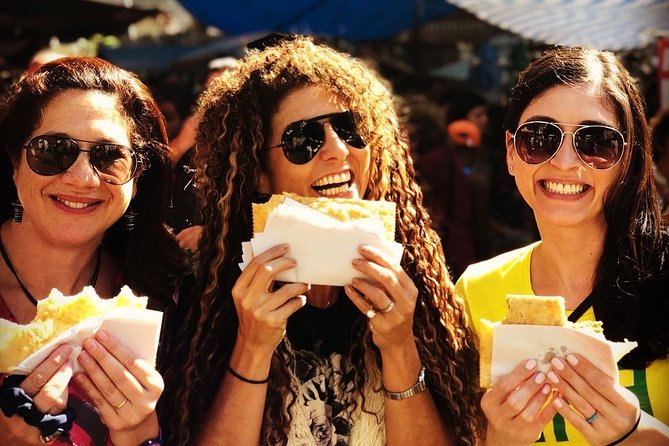
You might see artisanal cheeses, coconut treats, and tapioca-based foods. One especially memorable tasting described on the tour was a tapioca pizza, a playful Brazilian take on a familiar dish. It is the sort of small bite that can be hard to find when you stick to standard restaurant menus.
A market is also a useful place to learn how Rio shops and eats. You can compare fresh produce, regional products, prepared snacks, and simple street food in one setting. The guide’s role matters because the best choice may not have an English sign or an obvious translation.
There is one practical limitation: the market stop is not fully fixed. If you have your heart set on one particular market, confirm the route for your date before booking. The changing schedule is also part of the appeal, since the experience can feel more connected to the day’s local rhythm.
Seafood, fish markets, and a cold Brazilian beer
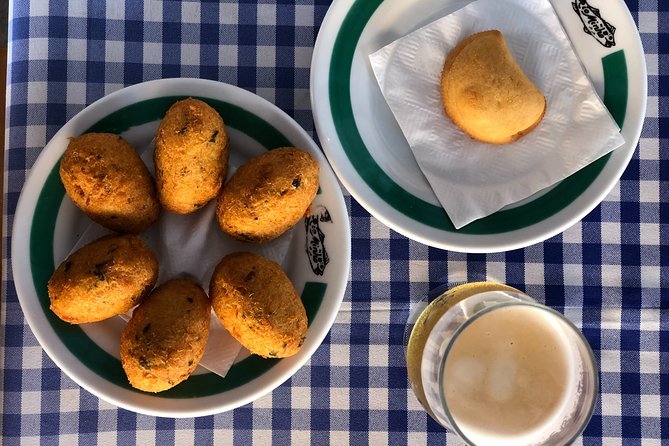
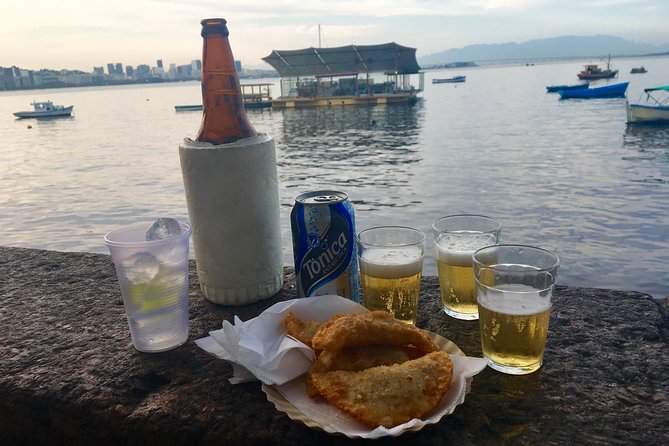
The food stops can include a fish market and seafood dishes such as crab stew and cheese-stuffed shrimp. These are more substantial tastes than a quick pastry, and they give you a better sense of Brazil’s coastal cooking.
A local draft beer may accompany the seafood. This is a good example of how the tour appears to work best: you taste a dish, hear where it fits in Rio’s food culture, and keep moving rather than spending the entire afternoon at one restaurant.
You should tell the company about food allergies and dietary restrictions before the tour. The experience is built around several stops, so advance notice gives the guides a better chance to shape the day safely. The available information does not promise that every dietary request can be met, so be specific when you book.
Santa Teresa, street art, and views of Christ the Redeemer
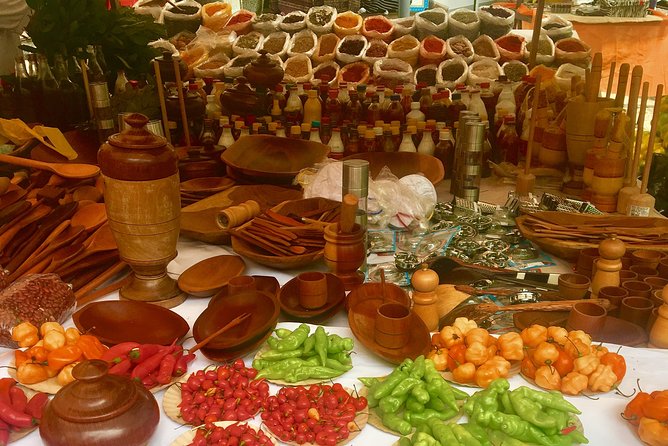
Santa Teresa is one of the most appealing parts of the route. Built into the hills above central Rio, the neighborhood is associated with artists, studios, old streets, and a strong food scene. It is often compared with Montmartre in Paris, though the comparison should not make you expect a copy of Paris. Santa Teresa has its own Brazilian character.
Here, you might stop for pão de queijo, the small cheese bread that is a Brazilian staple. It is simple, warm, and ideal for a tour that keeps you moving.
The route also includes photo stops and views of Christ the Redeemer from different angles. These are not a replacement for visiting the statue itself, but they add visual variety to the food-focused day. The guide can connect what you are seeing with the neighborhoods below, which makes the city easier to understand than a string of disconnected viewpoints.
One useful detail comes from the guides’ connection to the Selarón Steps. Vicente worked with artist Jorge Selarón and supplied more than 100 tiles for the project. That gives the stop a personal angle that a standard photo visit would not provide.
More food tours in Rio de Janeiro:
- Sunset Boat Tour with Beer, Water, Soda and Snacks included
★ 5.0 · 227 reviews - 3-Hour Tasting Session in Rio with 33 Foods Brazilians Love
★ 5.0 · 220 reviews - Rio Gastronomy: Culture & History Through The Art Of Food – Walking Group Tour
★ 5.0 · 164 reviews - Petropolis The Imperial City with Beer tour and Lunch
★ 4.5 · 83 reviews
Selarón Steps and the colorful heart of Lapa
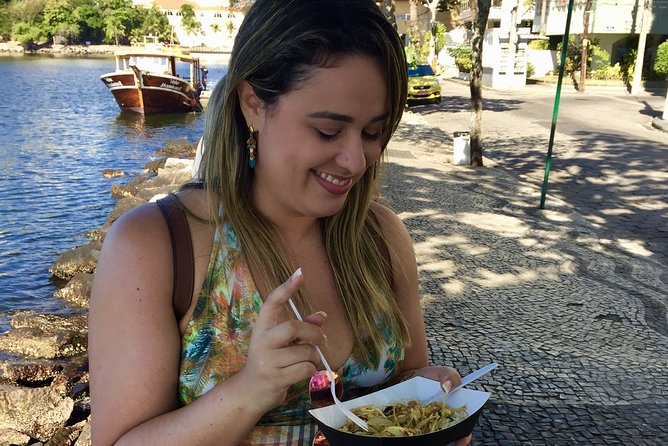
The Escadaria Selarón is one of Rio’s most recognizable public artworks. The tiled staircase links Santa Teresa and Lapa, and its bright, uneven patterns reward a slow look. The tour includes admission and allows about 30 minutes at the site.
This is a strong stop for anyone interested in public art. You can examine tiles from different countries and see how a passageway became a major city landmark. Vicente’s connection to the project adds useful background, especially if you want more than a quick photograph.
From there, the itinerary may bring you to the Carioca Aqueduct, better known as the Lapa Arches. Built in the mid-18th century, the aqueduct carried water from the Carioca River into the city. Its large white arches are now one of central Rio’s most familiar architectural sights.
Lapa also gives you a look at Rio’s historic nightlife district. The food tour may not focus on evening entertainment, but the guide can explain how the arches and nearby streets fit into the city’s social life.
Central Rio through churches, cafés, and grand public buildings
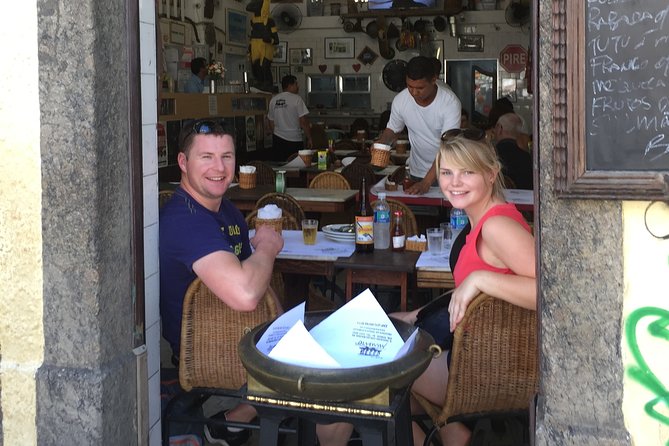
The downtown portion is dense with history. Depending on timing, you may pass Praça Floriano Peixoto, commonly called Cinelândia, a public square once central to Brazil’s political and cultural life.
The area includes the Theatro Municipal, whose design was inspired by Paris’s Opéra Garnier. Construction used materials imported from Europe, and the theater opened on Bastille Day in 1909. The tour information describes a guided visit as a possibility, including the auditorium, staircase, vestibule, and basement, but you should confirm whether interior admission is part of your specific booking. The itinerary contains many sights, and some may be viewed from outside or during a short stop.
The National Museum of Fine Arts is another major downtown landmark. Its collection includes Brazilian art from the 19th and 20th centuries, works by Eugène Boudin, contemporary art, and a large print collection. It is worth knowing about even if you only see the building during this food-centered outing.
The Brazilian National Library is nearby. With more than 200 years of history and about nine million items, it is one of the country’s most important cultural institutions. The building and its collections help explain why Rio was once the center of Brazil’s political and intellectual life.
The Royal Portuguese Reading Room offers a different kind of visual treat. Its neomanueline design recalls Lisbon’s Jerónimos Monastery, and its collection includes more than 350,000 Portuguese-language volumes, including rare books from the 16th, 17th, and 18th centuries. If the doors are open during your visit, this is the sort of place worth slowing down for.
Coffee and sweets at Confeitaria Colombo
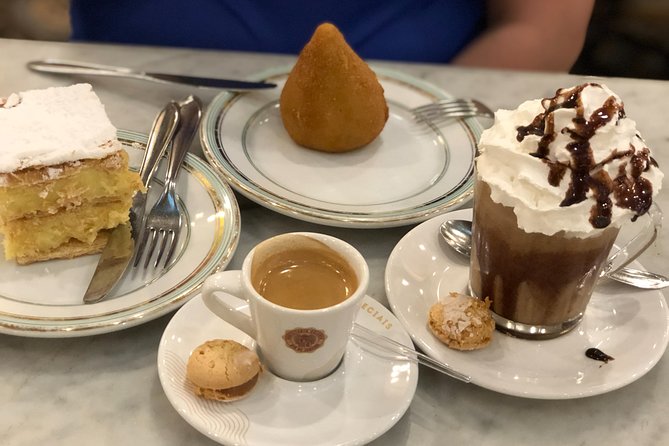
Confeitaria Colombo is one of the tour’s most atmospheric food stops. Its late-19th-century interior features stained glass, ornate mirrors, and marble counters. Even if you are not a serious dessert fan, the setting makes a pause here worthwhile.
A pastel de nata, the Portuguese custard tart, is one possible sweet. The choice fits Rio’s strong Portuguese influence and gives you a quick lesson in how old traditions remain part of everyday city life.
This stop may feel more polished than the farmers market or fish market. That contrast is useful. Rio’s food culture is not one single thing. It includes street snacks, neighborhood bars, market stalls, seafood, Portuguese pastries, and grand cafés.
The port area, Kobra’s mural, and Rio’s complicated past
The port district adds some of the tour’s most important context. Mauá Square is the center of the revitalized port area, surrounded by the Museum of Tomorrow, the Rio Art Museum, and other major buildings.
The Museum of Tomorrow examines sustainability and the challenges facing humanity in the decades ahead. The Rio Art Museum presents the city through art, society, conflict, and change. Both museums may be visited or viewed as part of the route, but the tour’s food focus means you should not assume there is enough time for a full museum visit.
The Eduardo Kobra mural in Gamboa is easier to appreciate in a short stop. Covering about 2,500 square meters, it depicts the world’s peoples through five faces linked to the Olympic rings. It was recognized by Guinness World Records as one of the largest graffiti panels in the world.
Valongo Wharf brings a more serious subject. The archaeological site was once a major landing point for enslaved Africans. Objects connected with traditions from Congo, Angola, and Mozambique were found during port renovations. The site became a UNESCO World Heritage Site in 2017.
This part of the route is valuable because it refuses to present Rio as only beaches, music, and beautiful views. The city’s food, architecture, and public spaces are tied to Portuguese colonization, African heritage, migration, slavery, commerce, and modern redevelopment. A good guide can help you connect those pieces without turning the day into a lecture.
Historic churches and Rio’s religious art
Several religious buildings appear in the route. The Candelária Church combines Portuguese colonial Baroque with later neoclassical and neo-Renaissance elements. Its long construction period, from 1775 into the late 19th century, is visible in the mix of styles.
The church associated with Saint Francis has a small museum at the entrance and lavish gilded woodwork dating from the early 18th century. Its ceiling painting is considered an important early example of perspective in Brazilian art.
The Santo Antônio Monastery offers a quieter change of pace in the middle of central Rio. Its church includes carved and gilded woodwork and a painted ceiling. The complex sits above Largo da Carioca and provides a calm interior after the noise of downtown streets.
These stops may appeal most to visitors who enjoy architecture and art as much as food. If you want a tightly focused culinary tour with long tastings at each location, the number of churches, squares, museums, and historic buildings may feel like a distraction. If you want a city orientation with food at the center, the mix is a real advantage.
What $175 per person buys you
At $175 per person, this is not a cheap way to grab lunch. The value depends on how much you want from the day.
You are paying for a private experience lasting roughly five to six hours, pickup, air-conditioned transportation, an English-speaking guide, help with ordering, multiple food and drink stops, and sightseeing across several parts of Rio. A private guide can also answer personal questions about life in the city, as Vicente did for one family during the tour.
The price makes more sense if you are visiting Rio for a short time or want a quick introduction without managing buses, directions, menus, and neighborhood connections yourself. It also suits families or small groups who value flexibility and personal attention. Group discounts may be available, which can improve the cost for a larger party.
The value is weaker if you mainly want a long, leisurely meal or already know Rio’s central districts well. You may prefer a less expensive market tour or a restaurant crawl with fewer sightseeing stops.
The experience allows a maximum of 15 people, but booking it as a private tour should give you a more personal setting. Confirm the exact group arrangement when booking, especially if you are comparing it with a standard small-group outing.
Timing, comfort, and practical concerns
Plan on moderate physical activity. You will walk through markets, historic streets, squares, and neighborhoods, with some standing during tastings and photo stops. Comfortable shoes and light clothing are sensible in Rio’s heat.
The air-conditioned vehicle is a major benefit. Rio can be hot, and moving between neighborhoods in comfort makes the long route easier. Pickup is offered, but the exact pickup details should be confirmed when you reserve.
The tour is offered in English. Lully and Vicente also speak Spanish and Portuguese, which may help multilingual groups.
Tell the operator about allergies and dietary restrictions before the start date. Also, take the cancellation deadline seriously: free cancellation is available up to 24 hours before the local start time. Changes or cancellations inside that window are not accepted for a refund.
Holiday timing deserves care. One reservation problem occurred on New Year’s Eve when many establishments were closed, and the operator said the booking was refunded through the booking platform. That is a reminder to avoid assuming that a normal food route operates unchanged on major holidays.
The experience receives a 4.6 rating, with 91 percent of customers recommending it across 11 ratings. Most of the strongest praise centers on the variety of food, the cultural background, and the guides’ friendly help. The one serious complaint involved a missed New Year’s Eve appointment, so date selection and confirmation matter.
Should you book this Rio food tour?
Book it if you want food and a broad introduction to Rio in one day. It is especially useful for first-time visitors, families, short stays, and anyone who would rather have a guide handle transport, ordering, and neighborhood connections.
I would choose it early in a Rio visit, ideally after confirming the market location and asking which sights include interior visits. That lets you use the tour as a map for the rest of your stay.
Skip it if your priority is a slow, restaurant-heavy tasting menu, or if $175 feels high for a half-day outing. But if you want crab stew, tapioca, pão de queijo, açaí, caipirinhas, Portuguese pastries, public art, churches, and port-area history in one well-packed experience, this tour offers a useful and flavorful introduction.
FAQ
How long does the Rio food tour last?
The experience lasts approximately five to six hours.
What language is the tour offered in?
The tour is offered in English. The guides, Lully and Vicente, also speak Spanish and Portuguese.
Is pickup available?
Yes. Pickup is offered as part of the experience.
Where does the farmers market visit take place?
The market changes by day because Rio’s farmers market takes place in a different neighborhood each day. Copacabana and Ipanema are listed as possible market stops.
How many people can join the tour?
The maximum group size is 15 people.
Can I cancel for a full refund?
Yes. You can cancel at least 24 hours before the local start time for a full refund. Cancellations or changes made less than 24 hours in advance are not accepted for a refund.
Just added in Rio de Janeiro
- Full Day Tour in Rio de Janeiro★ 5.0 · 8 reviews
- Garganta do Ceu Cave Hiking Private Tour on Pedra da Gavea★ 4.5 · 3 reviews
- Gastronomic Tour at the Municipal Market in Rio de Janeiro★ 5.0 · 4 reviews
- GIG Airport Transfer x Rio de Janeiro Hotels★ 4.5 · 11 reviews
- Rio de Janeiro private Full day Custom Tours★ 5.0 · 35 reviews
- Christ the Redeemer – Complete Morning Tour with Ticket and Transport at the Hotel★ 3.5 · 4 reviews
- AquaRio, Museum, Boulevard Olimpico, Ferris Wheel, Transport and Tourism Guide.★ 4.0 · 6 reviews
- Personalized and Private Full-Day Tour in Rio de Janeiro★ 5.0 · 6 reviews
Brazil Food and Samba Nights, compared.


Pub Crawl in Lapa with Cachaça Tasting and Live Samba
Read our review →
Carnival Backstage Tour at Samba City with Cocktail
Read our review →
Hop-ON Hop-OFF Sightseeing Bus in Rio de Janeiro – Rio Samba Bus
Read our review →

Carnaval Experience: Backstage Tour at Samba City with Cocktail
Read our review →

Browse the lists this tour appears in