
Reviewed · COOKING CLASSES
Hands-On Cooking Class in Rio: Iconic Street Foods & Caipirinhas
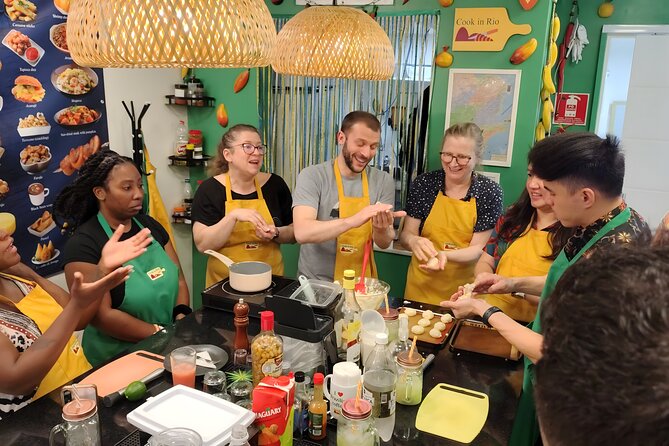
Rio tastes better from a frying pan. This three-hour class turns familiar street snacks into a hands-on lesson in Carioca cooking, with a local host guiding you through caipirinhas, croquettes, pastries, and more. I like the friendly home-style setting and the chance to understand how simple ingredients become such satisfying food. The main consideration is the fixed meeting point in Ipanema, since transfers are not included.
I also like the small maximum of eight people, which should give you room to ask questions and work at the stove without feeling lost in a crowd. Raiza’s relaxed style has made the class feel like cooking with a friend for many people, while Maira and the Cook in Fiesta team keep the mood easy and social. If you do not drink alcohol, or you are under 18, virgin versions of the drinks are available.
In This Review
- Key points at a glance
- Why this class is a smart first-day activity
- Meeting in Ipanema and settling into the class
- Starting with the classic caipirinha
- Bolinho de feijoada and the clever use of beans
- Fried sardines and the pleasure of simple food
- Pastel: choosing between beef, cheese, and heart of palm
- Pão de queijo and tapioca flour
- Fried cassava and the Brazilian snack table
- Coxinha, the crowd favorite with a practical lesson
- The relaxed teaching style and small group
- What the $85 price includes
- Who will enjoy this Rio food experience most
- Booking, cancellation, and practical planning
- Should you book the Rio street-food cooking class?
- FAQ
- How long does the cooking class last?
- Where does the experience begin?
- Where does the activity finish?
- Is transportation included?
- Is the class offered in English?
- What food will I prepare?
- Are drinks included?
- Can food allergies or intolerances be accommodated?
- What is the cancellation policy?
Key points at a glance
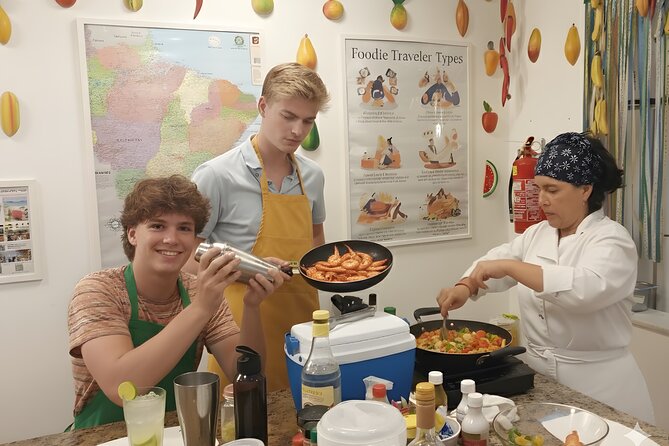
- A full Brazilian snack menu: You prepare bolinho de feijoada, fried sardines, pastel, pão de queijo, fried cassava, and coxinha.
- Caipirinha practice included: The class begins with Brazil’s classic cocktail, with nonalcoholic versions available.
- Small-group format: The maximum is eight people, a good size for hands-on cooking and conversation.
- Local setting near Ipanema: The class meets at R. Visc. de Pirajá, 281, and ends at the same point.
- Useful for food beginners: The class explains the background and techniques behind everyday Brazilian snacks.
- Flexible for dietary needs: Food allergies and intolerances can be accommodated if you share the information in advance.
Why this class is a smart first-day activity
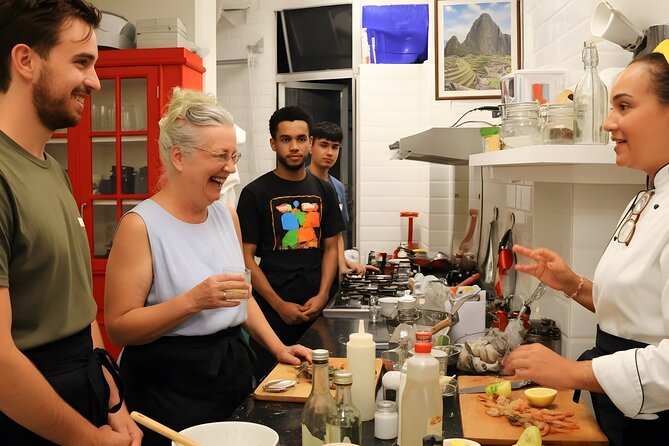
I like the idea of scheduling this class near the start of your Rio stay. You get an introduction to Brazilian food before you spend days choosing snacks from kiosks, cafés, markets, and bars around town.
One especially useful part is the attention to technique. Brazilian street food can look simple on the plate, but the texture often depends on careful preparation, shaping, frying, and timing. A class like this helps you notice the work behind a crisp pastel or a well-made croquette.
The experience also gives you a friendly way to settle into Rio. You are not only eating a meal. You are cooking, sharing a table, and hearing the stories behind the dishes. That social side matters if you have just arrived and want a gentle introduction to local life.
The class is offered in English, which makes the food explanations easier to follow. Since the group is capped at eight, you should have a fair chance to see what is happening and ask about unfamiliar ingredients.
More cooking classes in Rio de Janeiro:
- Family Cooking Class in Rio Make 9 Brazilian Dishes Together
★ 5.0 · 32 reviews - 3-Hour Brazilian Cooking Class in Rio de Janeiro
★ 5.0 · 30 reviews - Brazilian Cooking Class in Copacabana with Hotel Pickup
★ 5.0 · 8 reviews
Meeting in Ipanema and settling into the class
The meeting point is at R. Visc. de Pirajá, 281, in Ipanema. You are responsible for getting there, since transportation is not included. The activity ends back at this same meeting point, so you do not need to arrange a separate return transfer.
The exact setting may be a welcoming local home or a culinary studio. One recent class used an outdoor patio that felt pleasant and intimate for a small group. Since the location can shape the mood of a cooking class, I would treat the home or studio format as part of the experience rather than expecting a restaurant-style kitchen.
Plan your route before class and allow time to arrive without rushing. You will get more from the session if you can start with an appetite and a little curiosity, rather than arriving stressed after crossing the city.
The class lasts about three hours. That is long enough for a substantial meal and several cooking projects, but short enough to fit beside sightseeing in Ipanema or elsewhere in Rio.
Starting with the classic caipirinha
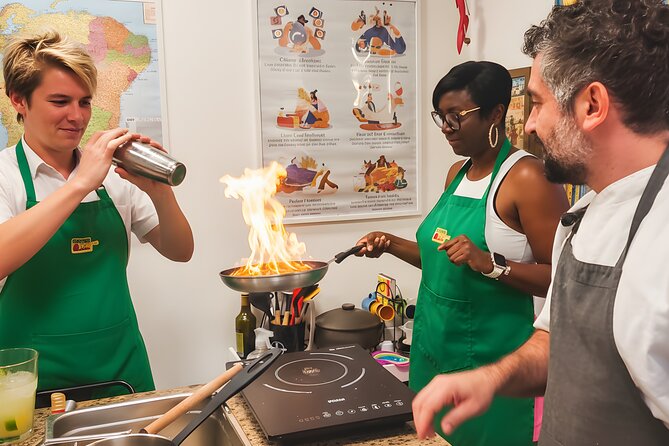
The class begins with a classic caipirinha, Brazil’s best-known cocktail. You learn to prepare the drink as part of the session rather than simply receiving one at the table.
This is a good opening because it sets the tone. The drink is social, familiar to many visitors, and closely tied to Brazilian food culture. You get a chance to participate right away, then carry that same hands-on approach into the cooking.
Alcoholic beverages are included in the price. If you are under 18 or do not drink, the host can prepare virgin versions instead. That makes the experience more practical for mixed groups, couples, and families with older children.
You should still mention any dietary restrictions before the class. The host can accommodate food allergies or intolerances when told in advance, but last-minute surprises are best avoided in a menu that includes wheat, dairy, meat, fish, and alcohol.
Bolinho de feijoada and the clever use of beans

Bolinho de feijoada is a deep-fried bite based on feijoada, Brazil’s famous bean stew. It is a useful dish for understanding how Brazilian cooks turn a substantial meal into a portable snack.
The preparation also shows why street food is more than a list of quick recipes. A dish may begin with humble, everyday ingredients, but the final result depends on technique. The class focuses on that transformation, including how the mixture becomes a shaped, fried bite.
If beans are not your favorite food, this may be the dish that changes your mind. The cooking process gives the ingredient a different texture and purpose, and the result is far removed from a plain bowl of beans.
For me, this is one of the most valuable parts of the menu. You are not only copying a recipe. You are learning how Brazilian cuisine uses creativity rather than expensive equipment or unusual spices to make food memorable.
More things to do in Rio de Janeiro:
- Rio de Janeiro: 6-Stop Highlights of Rio with Lunch
★ 4.4 · 5,157 reviews - Christ the Redeemer Entry Ticket by Corcovado Train
★ 4.4 · 4,476 reviews - Rio’s City Tour – Tickets for Christ, Sugar Loaf & Lunch included
★ 5.0 · 4,389 reviews - Full Day: Christ Redeemer, Sugarloaf, City Tour & Barbecue Lunch
★ 4.5 · 3,142 reviews
Fried sardines and the pleasure of simple food
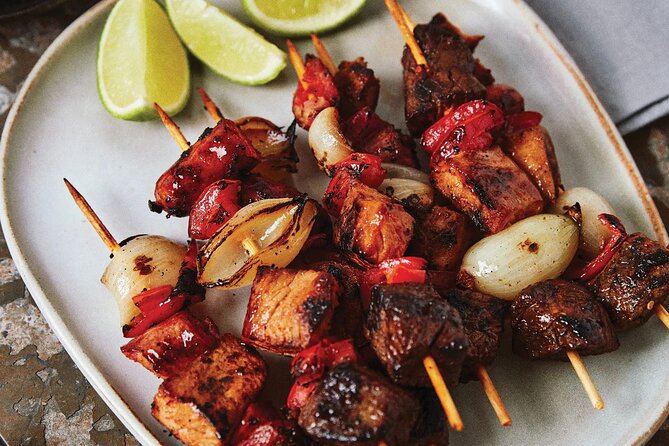
Fried sardines bring a seafood element to the menu. They also fit the spirit of Brazilian street food, where a straightforward ingredient can become a crisp, satisfying snack with the right preparation.
The dish may appeal most to anyone who enjoys seafood and fried foods. If you are unsure about sardines, ask the host about the preparation and any available substitutions when you provide your dietary information.
This part of the class helps balance the menu. Much of the food is dough-based or shaped into croquettes, while the sardines offer a different flavor and texture. You will not spend the full session making variations of the same pastry.
Pastel: choosing between beef, cheese, and heart of palm

Pastel is a thin, crisp fried pastry filled with options such as ground beef, cheese, heart of palm, or combinations of these. It is one of the clearest examples of a snack that looks modest but depends on careful handling.
You get a choice of fillings, which is helpful for mixed preferences. Meat eaters can choose ground beef, cheese works for a simpler savory option, and heart of palm offers a plant-based direction, though you should still confirm ingredients if you have an allergy or strict dietary requirement.
The thin pastry is the star here. The appeal comes from the contrast between the delicate, crisp shell and the warm filling inside. Making it yourself also gives you a better sense of why freshly fried pastel is so popular.
I would pay attention to the shaping and frying rather than rushing toward the eating. Those small steps are what separate a good pastel from one that is greasy, split, or underfilled.
Pão de queijo and tapioca flour

Pão de queijo are chewy Brazilian cheese puffs made with tapioca flour. They are naturally different from wheat-based bread, with a springy texture and a savory cheese flavor.
This is a particularly useful recipe to take home because the ingredients are simple and the finished snack works at breakfast, as an afternoon bite, or alongside other food. The printed or digital recipes mean you do not have to rely on memory after leaving Rio.
The tapioca flour also gives you a glimpse of an ingredient that appears in many Brazilian foods. You can taste how it changes texture and gives the cheese puffs their characteristic chew.
If you love bread but want to try something outside the usual European styles, this is one of the most approachable dishes in the class.
Fried cassava and the Brazilian snack table
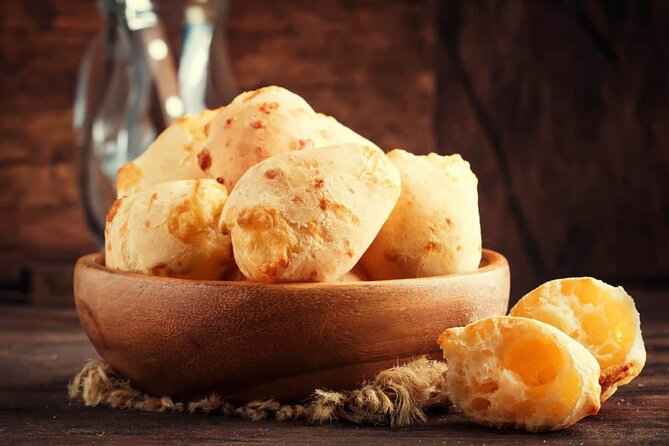
Fried cassava adds another starchy favorite to the meal. Cassava is an important food in Brazil, and frying it creates a familiar crisp exterior with a soft center.
This dish may seem basic, but that is exactly why it belongs here. A street-food class should show you how ordinary ingredients become popular snacks. You will see the connection between the pantry and the food sold in casual local settings.
Together, the cassava, pão de queijo, pastel, and croquettes create a broad picture of Brazilian comfort food. The menu is filling, so arrive hungry and expect the class to function as both a lesson and a meal.
Coxinha, the crowd favorite with a practical lesson
Coxinha is a shredded chicken croquette, usually shaped into a small teardrop. It is one of the most recognizable Brazilian snacks on the menu and one of the dishes most likely to make you appreciate the work involved.
The filling needs to be prepared, enclosed, shaped, and fried. The class gives you a chance to see how several basic components come together in one portable snack.
Coxinha is also a good example of why a cooking class can be more useful than simply ordering food. At a café, you taste the finished product. Here, you see the labor behind its shape and texture.
Do not expect every dish to be quick. The food is casual, but some techniques are not. One of the best lessons here is patience, especially when working with fillings and fried dough.
The relaxed teaching style and small group
The strongest part of this experience is its social tone. The class is designed to feel welcoming rather than formal, and Raiza’s approach has been described as relaxed, engaging, and similar to cooking at a friend’s home.
That atmosphere can make a big difference. You are more likely to ask questions, admit that an ingredient is unfamiliar, and try something outside your usual diet when the setting feels easy.
The maximum group size is eight. That is small enough for a personal feel, though the experience will still depend on the final number of people booked. A class with two people may feel especially intimate, while a full group will bring more conversation and shared tasting.
Cultural stories are part of the session, so listen for the context behind each dish. The value is not only in taking home recipes. You also gain a clearer idea of how Brazilian food connects to everyday life, street stalls, family kitchens, and resourceful cooking.
What the $85 price includes
The cost is $85 per person. For a three-hour session, that is not the cheapest way to eat in Rio, but it includes much more than a meal.
Your fee covers the cooking instruction, all ingredients, utensils, the full menu, alcoholic beverages, and printed or digital recipes. You also receive cultural background and a hosted setting, either in a local home or culinary studio.
The menu is generous. You prepare a caipirinha plus several savory dishes, including feijoada bites, sardines, pastel, pão de queijo, cassava, and coxinha. If you ordered every one of those items separately around town, you might spend less or more depending on the venue, but you would not get the instruction or the chance to make them yourself.
I see the price as fair for someone who values participation and food education. If you only want a quick, inexpensive lunch, a street stall will serve you better. If you want a social activity, a substantial meal, and recipes to use later, the fee makes more sense.
Who will enjoy this Rio food experience most
I would recommend this class to first-time visitors who want an early introduction to Brazilian food. It is also a good fit for people who enjoy cooking classes but prefer a relaxed setting over a polished demonstration.
You do not need prior cooking experience. The menu is built around approachable street foods, and the host guides the group through the preparation.
Food lovers should enjoy the range of textures and fillings. The class also suits couples, friends, and small family groups, especially because nonalcoholic drinks can be arranged.
You may want to choose another activity if you dislike fried food, avoid meat and dairy, or want a formal culinary course with advanced technique. The menu is broad, but it is firmly centered on Brazilian snacks, frying, cheese, chicken, beef, fish, and cassava.
The outdoor patio used for one class was described as cute and comfortable for a small group. Still, if weather or setting matters greatly to you, remember that the exact venue format is not presented as a fixed restaurant room.
Booking, cancellation, and practical planning
The class is offered in English and uses a mobile ticket. Confirmation is normally sent when you book, though reservations made within 20 hours of the start time are confirmed as soon as possible and depend on availability.
The activity is booked an average of 20 days ahead, so I would not leave it until the last minute if your Rio dates are fixed. The group maximum is eight, which can limit availability.
You can cancel for a full refund up to 24 hours before the start time. Changes or cancellations inside that 24-hour window are not accepted for a refund. The provider may also cancel if the minimum number of participants is not reached, in which case you are offered another date or experience, or a full refund.
Service animals are allowed, and the class is near public transportation. Share food allergies or intolerances in advance so the kitchen can plan properly.
Should you book the Rio street-food cooking class?
Book it if you want to do more than sample Brazilian food. The class gives you a meal, recipes, cultural context, and a friendly way to meet local hosts in a small setting.
I especially like it as a first-day or early-trip activity. You leave with a better sense of what to order later, from pastel and coxinha to pão de queijo and feijoada-based snacks. The relaxed style, careful guidance, and broad menu are the main reasons it earns a strong recommendation.
Skip it if your priority is the lowest possible meal price, or if you want a tour centered on Rio landmarks rather than food. For everyone else, $85 is a reasonable price for three hours of cooking, eating, drinking, and learning near Ipanema.
FAQ
How long does the cooking class last?
The class lasts approximately three hours.
Where does the experience begin?
It begins at R. Visc. de Pirajá, 281, Ipanema, Rio de Janeiro, RJ 22410-001, Brazil.
Where does the activity finish?
The class ends back at the meeting point in Ipanema.
Is transportation included?
No. Transfers are not included, so you need to make your own way to the meeting point.
Is the class offered in English?
Yes. The activity is offered in English.
What food will I prepare?
The menu includes a classic caipirinha, bolinho de feijoada, fried sardines, pastel with beef, cheese, or heart of palm, pão de queijo, fried cassava, and coxinha.
Are drinks included?
Yes. Alcoholic beverages are included. Virgin versions can be prepared for anyone under 18 or anyone who does not drink alcohol.
Can food allergies or intolerances be accommodated?
Yes, the provider can accommodate food allergies or intolerances when you give advance notice.
What is the cancellation policy?
You can cancel up to 24 hours before the start time for a full refund. Cancellations or changes made less than 24 hours before the start time are not accepted for a refund.
Just added in Rio de Janeiro
- Full Day Tour in Rio de Janeiro★ 5.0 · 8 reviews
- Garganta do Ceu Cave Hiking Private Tour on Pedra da Gavea★ 4.5 · 3 reviews
- Gastronomic Tour at the Municipal Market in Rio de Janeiro★ 5.0 · 4 reviews
- GIG Airport Transfer x Rio de Janeiro Hotels★ 4.5 · 11 reviews
- Rio de Janeiro private Full day Custom Tours★ 5.0 · 35 reviews
- Christ the Redeemer – Complete Morning Tour with Ticket and Transport at the Hotel★ 3.5 · 4 reviews
- AquaRio, Museum, Boulevard Olimpico, Ferris Wheel, Transport and Tourism Guide.★ 4.0 · 6 reviews
- Personalized and Private Full-Day Tour in Rio de Janeiro★ 5.0 · 6 reviews
Cooking Classes, compared.
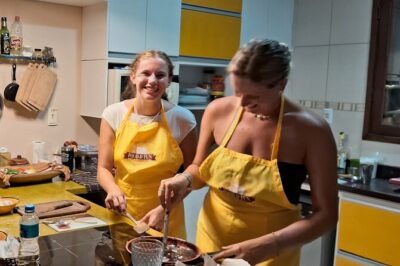
Cooking class in Salvador, an authentic dinning experience
Read our review →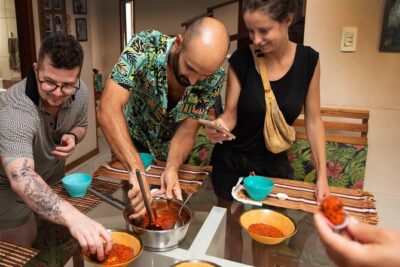
4h Cooking Class in Salvador with 9 Recipes & Bottomless Drinks
Read our review →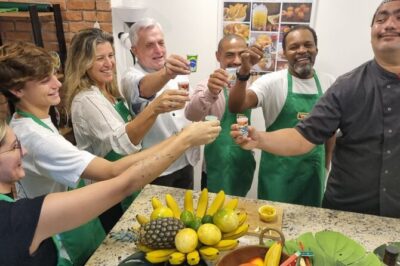
Family Cooking Class in Rio Make 9 Brazilian Dishes Together
Read our review →
3-Hour Brazilian Cooking Class in Rio de Janeiro
Read our review →
4h Cooking Class in Florianópolis: 8 Recipes & Bottomless Drinks
Read our review →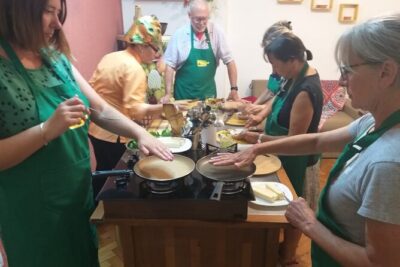
Brazilian Cooking Class in Copacabana with Hotel Pickup
Read our review →

Brazilian Breakfast Cooking Class in Rio: Bake and Blend
Read our review →Browse the lists this tour appears in