
Reviewed · SALVADOR AND BAHIA TOURS
4h Cooking Class in Salvador with 9 Recipes & Bottomless Drinks
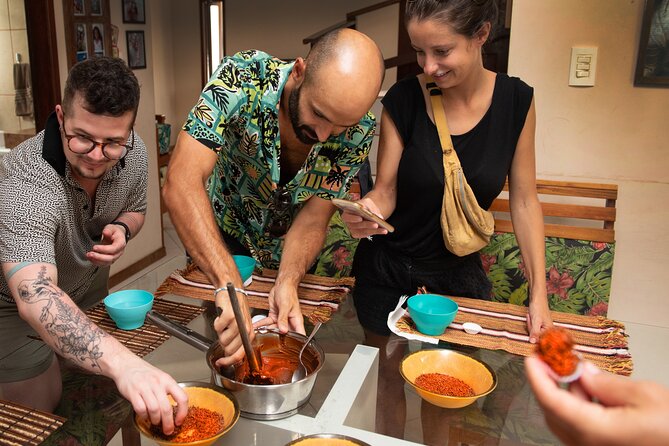
Salvador tastes better from a home kitchen. This small-group class brings you into a real Brazilian home in Stella Maris, where you help prepare up to nine recipes, including moqueca and farofa, then sit down to eat what the group has made. I like the personal setting and the chance to learn practical cooking methods from bilingual local hosts such as Karla and Rebeca.
I also like the generous extras: a full meal, unlimited drinks, a digital recipe book, photos, and a Salvador food guide. The main point to consider is important, though: the experience is advertised as hands-on, but one participant found that the host did most of the cooking. If active kitchen work is essential to you, confirm the format before booking.
In This Review
- Key Things to Know Before You Book
- A Home Kitchen Instead of a Cooking School
- How the Three-and-a-Half-Hour Visit Works
- Moqueca, Farofa, and the Flavors of Bahia
- Drinks, Conversation, and the Shared Table
- The Hosts Make the Difference
- Location, Transport, and Timing in Stella Maris
- Is $75 a Fair Price?
- Who Will Enjoy This Most?
- What You Take Home
- FAQ
- How long does the cooking experience last?
- Where does the experience start and end?
- Is hotel pickup included?
- What food is prepared?
- Are drinks included?
- How many people can join the class?
- Is the class taught in English?
- Can I cancel for a refund?
- Should You Book This Salvador Cooking Class?
Key Things to Know Before You Book
- You cook in a real Salvador home: The class takes place in a family setting, not a formal culinary school.
- Moqueca is a featured dish: This famous Bahian seafood preparation gives you a useful introduction to local ingredients and cooking style.
- Unlimited drinks are included: Homemade caipirinhas are part of the meal, along with other drinks served throughout the experience.
- The group stays small: The class has a maximum of six people, while the wider activity limit is listed as eight travelers.
- You leave with recipes to use: A digital booklet and Salvador food guide help you continue exploring after the class.
- The meeting point is in Stella Maris: You arrange your own transport to Condomínio Sol Do Atlantico, and the activity ends there.
A Home Kitchen Instead of a Cooking School
The most appealing part of this experience is the setting. You are not seated in a demonstration room with rows of workstations. You meet your host at a home in Salvador and take part in a more relaxed evening built around food, conversation, and local hospitality.
That setting changes the mood. The cooking is meant to feel natural rather than formal. You learn how dishes are approached in a Brazilian household, including the small choices and techniques that may not appear in a standard recipe.
The hosts are bilingual local cooks, and Karla receives especially warm praise for explaining ingredients, adapting to preferences, and keeping the atmosphere easy. Rebeca is also noted for speaking excellent English and welcoming people alongside her family.
You should expect a social evening as much as a lesson. Conversation, music, cocktails, and the family home are all part of the experience. One family dog, Fila, has even become a memorable part of the evening for some visitors.
More of Salvador and Bahia:
- Round trip transfer, Salvador, Bahia, Brazil
★ 5.0 · 228 reviews - Salvador City Tour – Discover Brazil’s First Capital En, It, Es
★ 5.0 · 217 reviews - Cooking class in Salvador, an authentic dinning experience
★ 5.0 · 132 reviews
How the Three-and-a-Half-Hour Visit Works
The experience lasts about three hours and 30 minutes, although its title presents it as a four-hour class. That small difference is normal for an activity with a flexible home setting, but you should allow a full evening rather than scheduling something immediately afterward.
The supplied details describe a class focused on preparation, cooking, eating, and conversation. In one version of the experience, the day may also include a market or supermarket visit before going to the host’s home. That market element appears in some accounts, but it is not clearly listed as part of every booking, so do not assume it is guaranteed.
If the market visit is included, it adds useful context. You may see unfamiliar fruits and local ingredients before learning how they are used in the kitchen. It also helps connect the finished plate with the food culture of Salvador, rather than treating each recipe as an isolated cooking exercise.
At home, you can expect ingredients, utensils, and an apron to be ready. You do not need to bring cooking equipment. The class is designed for a small group, with six people listed as the maximum for the class itself, which should allow more conversation and individual attention than a large workshop.
Moqueca, Farofa, and the Flavors of Bahia
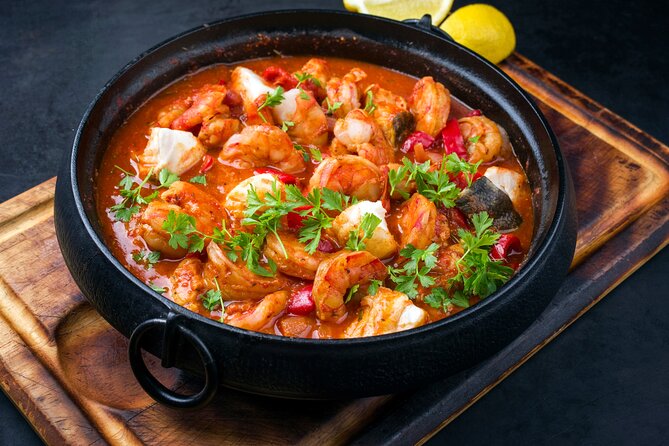
Moqueca is the star dish named in the description, and it is a sensible choice for a Salvador cooking class. It is closely associated with Brazilian coastal cooking and gives you a chance to work with the flavors that define much Bahian food.
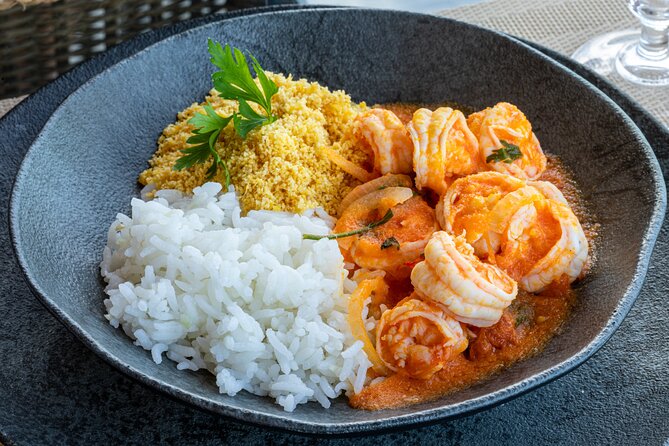
Farofa is another named recipe. This toasted side dish may look simple, but it is one of the foods that helps make a Brazilian meal feel complete. Learning how it is prepared can be more useful than simply tasting it in a restaurant, since the technique is practical and the ingredients are generally easy to find.
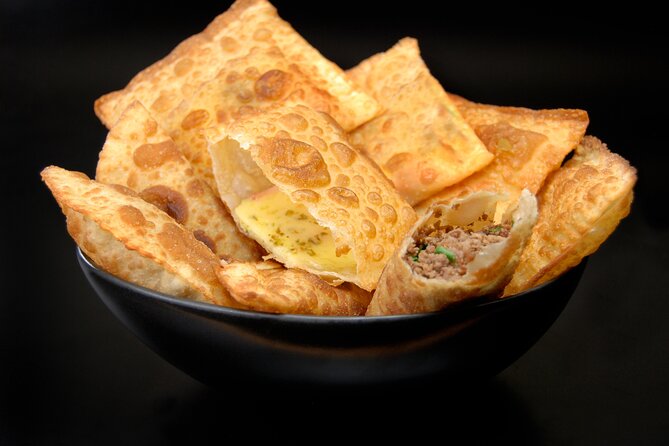
The class includes nine recipes, though only some are identified in the available details. You can expect a full meal with an appetizer, main dish, and dessert. Brigadeiro, a beloved Brazilian sweet, is specifically praised as one of the best parts of the meal.
The benefit here is not just learning a list of recipes. You gain a sense of how dishes fit together on a table. The meal has a beginning, a main course, a sweet finish, and drinks that keep the group talking between stages.
A useful feature is that most ingredients are described as easy to find around the world. That matters if you want to recreate the food at home. You will not be left with a recipe that depends entirely on one rare Brazilian product.
Still, the exact amount of cooking you do deserves attention. The main description promises a hands-on experience, but one four-star account says the host cooked while the group tasted the dishes. Other accounts describe making cocktails and cooking local food, so the format may vary by host, group, or stage of the class.
If you want to chop, stir, season, and assemble every dish yourself, ask Cook in Fiesta what your specific session includes. If you are happy with a social demonstration plus tasting, the less active format may still be enjoyable, especially on a rainy evening.
Drinks, Conversation, and the Shared Table
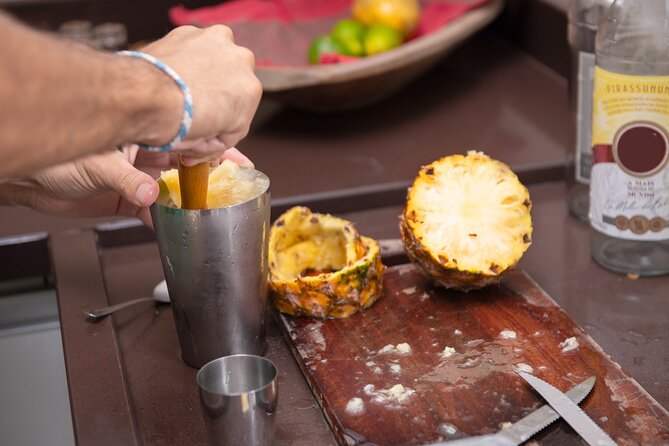
The drinks are not a minor extra. Unlimited drinks are included, and the evening features homemade caipirinhas. These provide an easy social start and make the kitchen feel more like a friendly dinner party than a strict lesson.
The drink policy also helps explain the $75 price. You are paying for a full meal, ingredients, equipment, instruction, a home-hosted setting, and bottomless refreshments. In Salvador, that can be fair value if you want a three-and-a-half-hour cultural activity rather than a quick restaurant meal.
Of course, unlimited alcohol is only a benefit if you want to drink. The details do not specify the full range of nonalcoholic options, so anyone avoiding alcohol should ask what will be available. You should also pace yourself. A caipirinha can taste innocent, but it is still a strong cocktail.
The shared table is where the experience seems to reach its best form. After cooking, everyone sits down together and eats the food prepared during the session. Conversation, laughter, and music are part of the evening, and that relaxed finish gives the class a clear sense of occasion.
I like this format because it avoids the usual problem with cooking demonstrations. You are not simply handed a sample and sent away. The food becomes dinner, and the people you met in the kitchen become your table companions.
More cooking classes in Salvador:
- Family Cooking Class in Rio Make 9 Brazilian Dishes Together
★ 5.0 · 32 reviews - 3-Hour Brazilian Cooking Class in Rio de Janeiro
★ 5.0 · 30 reviews - Hands-On Cooking Class in Rio: Iconic Street Foods & Caipirinhas
★ 5.0 · 11 reviews - Brazilian Cooking Class in Copacabana with Hotel Pickup
★ 5.0 · 8 reviews
The Hosts Make the Difference
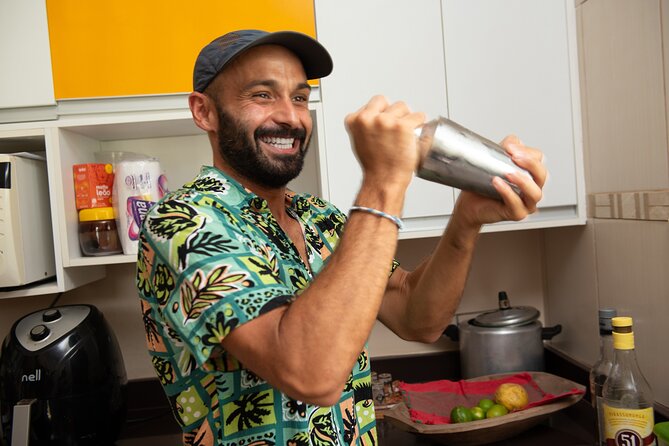
A home cooking class depends heavily on its host, and the strongest praise here goes to the people leading it. Karla is described as warm, accommodating, and informative, with a talent for explaining local ingredients and adjusting to food preferences.
Rebeca is praised for her English and her clear explanations. Her family also helps create the welcoming tone that makes the evening feel personal. This is a good choice if you want cultural contact through ordinary hospitality rather than a polished performance.
The host’s role extends beyond recipes. You may hear about Brazilian food traditions, the background of local ingredients, and the habits that shape everyday meals. One participant described the class as an eye-opening lesson in the history and tradition behind Brazilian cuisine.
That cultural context gives the food more meaning. Moqueca is no longer just a seafood dish, and brigadeiro is not merely a sweet bite. You begin to understand how food connects with family life, celebrations, regional identity, and social gatherings.
There is also a practical advantage to learning from someone who cooks these foods at home. A professional recipe can make a dish look exact and intimidating. A local host can show you what matters most, what can be adjusted, and how to cook without treating every measurement as sacred.
Location, Transport, and Timing in Stella Maris
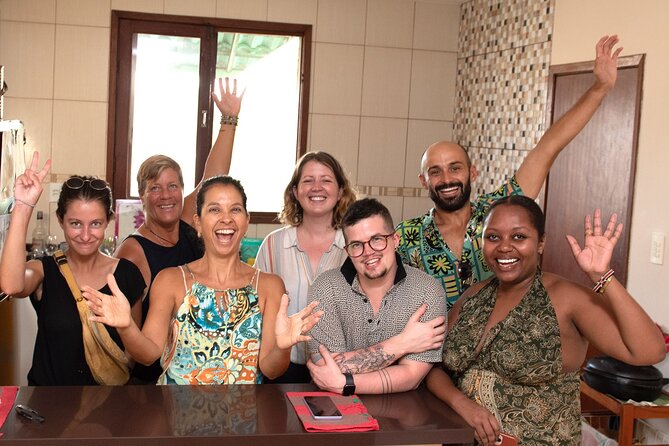
The meeting point is Condomínio Sol Do Atlantico, Al. Praia de Guaratuba, 218, in Stella Maris, Salvador, postal code 41600-741. The experience begins and ends at this same location.
Hotel pickup and drop-off are not included. You need to arrange your own way there and back, so check the route from your accommodation before committing. The meeting point is near public transportation, but the supplied information does not specify the exact bus line or travel time.
This location is in north Salvador, away from the historic center. That is not necessarily a drawback. It means you are visiting a different part of the city and seeing how a home-based experience works outside the usual sightseeing circuit. It does mean you should build transport time into your plans.
The class requires a minimum number of participants. If that minimum is not reached and the experience is canceled, you will be offered another date or experience, or a full refund. Confirmation is normally sent at booking, though reservations made within 12 hours of the start time are confirmed as soon as possible, subject to availability.
Free cancellation is allowed up to 24 hours before the start time for a full refund. Changes or cancellations inside that window are not accepted for a refund, and the cut-off follows Salvador local time.
Is $75 a Fair Price?
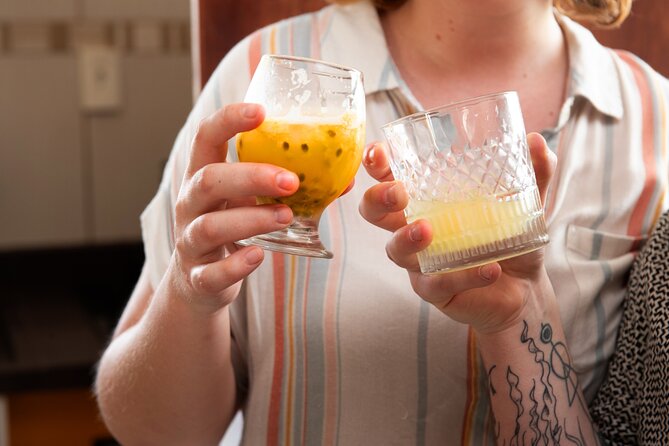
At $75 per person, this is not the cheapest way to eat in Salvador. You can find less expensive meals, and a regular restaurant will not ask you to spend three and a half hours in a kitchen.
The comparison is not really restaurant versus restaurant, though. The price includes ingredients, utensils, an apron, bilingual guidance, a full appetizer-to-dessert meal, unlimited drinks, a digital recipe booklet, and a Salvador food guide. You also receive candid photos, which adds a personal souvenir without requiring you to stage every moment yourself.
I consider the price reasonable for someone who values the home setting and cultural exchange. It becomes especially good value if you take the recipes seriously and cook them again after returning home. A single meal disappears quickly, but a method for making moqueca or brigadeiro can stay useful for years.
The value is less clear if you mainly want a professional cooking lesson with guaranteed individual participation. Because one account describes the host doing most of the cooking, you should clarify how active the class will be before paying.
The five-star money-back guarantee offers some reassurance, but it should not replace asking basic questions. Find out which host is scheduled, what dishes are planned, and how much hands-on work the group will actually do.
Who Will Enjoy This Most?
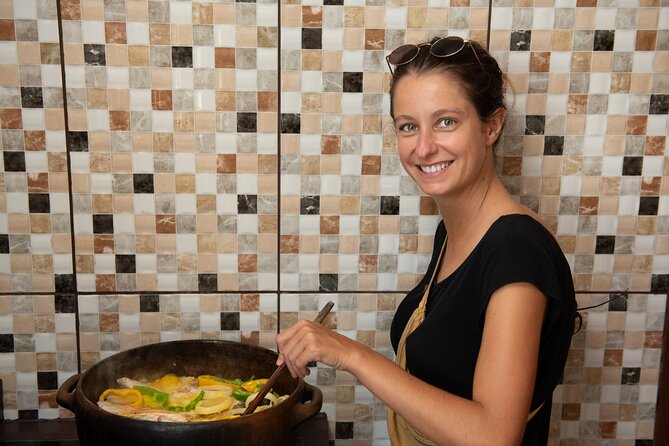
I would recommend this for couples, solo visitors, and small groups who want food, conversation, and a home setting. It suits people who enjoy learning through stories and shared meals, even if they are not confident cooks.
It is also a good choice for anyone who has already tried Brazilian food in restaurants and wants to understand it better. The focus on local ingredients, household methods, and Bahian traditions adds context that a menu alone cannot provide.
The small maximum group size should appeal to people who dislike large organized activities. Six people is small enough for direct conversation, though the wider listing allows up to eight participants, so confirm the group size if that matters to you.
Families may enjoy the relaxed format, but the supplied information does not specify a minimum age or child policy. Ask before booking if you are traveling with children.
You should think twice if you need a tightly timed class, a guaranteed market tour, or a formal teaching kitchen. You may also prefer another option if you do not drink and the beverage selection is important to you.
What You Take Home
The digital recipe book is the most practical souvenir. It gives you a way to repeat the dishes without relying on memory, and the promise that ingredients are widely available makes that follow-up cooking more realistic.
The Salvador Food Guide is useful in a different way. It helps you keep looking for local flavors after the class, rather than treating the evening as your only contact with Bahian food.
Photos provide another reminder of the experience. Since they are described as candid, they should capture the group cooking, drinking, and eating without turning the evening into a photo session.
Most of all, you take home a better understanding of how a Bahian meal comes together. That is the real value here. You learn through food, but also through the people preparing it and the home in which it is shared.
FAQ
How long does the cooking experience last?
The experience lasts approximately three hours and 30 minutes. Its title refers to four hours, so you should allow roughly a full four-hour block.
Where does the experience start and end?
It starts at Condomínio Sol Do Atlantico, Al. Praia de Guaratuba, 218, Stella Maris, Salvador, Brazil. It ends back at the same meeting point.
Is hotel pickup included?
No. Hotel pickup and drop-off are not included, so you must arrange your own transportation.
What food is prepared?
The experience includes up to nine recipes. Named examples include moqueca and farofa, with an appetizer, main dish, and dessert included in the meal. Brigadeiro is also specifically associated with the class.
Are drinks included?
Yes. Unlimited drinks are included, including homemade caipirinhas.
How many people can join the class?
The class has a maximum of six people. The wider activity listing gives a maximum of eight participants.
Is the class taught in English?
The experience is guided by a bilingual local host. Rebeca is specifically described as speaking excellent English.
Can I cancel for a refund?
Yes. You can cancel at least 24 hours before the start time for a full refund. Cancellations and changes made less than 24 hours before the start time are not accepted for a refund.
Should You Book This Salvador Cooking Class?
Book it if you want a friendly evening built around Bahian food, local hosts, homemade caipirinhas, and a meal shared in a real home. The strongest reasons are the warm hosting, small group size, practical recipes, and cultural stories that give the food meaning.
Before booking, confirm the exact meeting arrangements, the host, the dishes, and how much hands-on cooking is planned. That last point matters because the experience may be more demonstrative in some sessions than the title suggests.
For food-minded visitors who value conversation as much as technique, this is a strong use of an evening in Salvador. It offers more than dinner, but it works best when you arrive ready for an informal home gathering rather than a tightly scripted culinary course.
Just added in Salvador
- Mãe Tereza Ecological Park | A peaceful paradise, perfect for relaxing!★ 4.5 · 19 reviews
- Full Day Tour in Trancoso with Chocolate Factory★ 4.5 · 35 reviews
- Horse back riding and Eco tourism food and fun.★ 5.0 · 1 review
- Salvador: Schooner Cruise with Pickup and Itaparica Stop★ 3.8 · 5 reviews
- Salvador: Traditional Drumming and Percussion Workshop★ 4.4 · 10 reviews
- PROMO Salvador: Interactive Art and Culture Private Tour★ 5.0 · 2 reviews
- Salvador: 3-Hour Percussion Class★ 4.9 · 10 reviews
- Salvador: Cultural Treasure – Samba de Roda.★ 4.9 · 51 reviews
Salvador and Bahia Tours, compared.

Salvador City Tour – Discover Brazil’s First Capital En, It, Es
Read our review →
Cooking class in Salvador, an authentic dinning experience
Read our review →
Tour to the Frades Islands and Itaparica, from Salvador – Ba
Read our review →


Tour Praia do Forte and Guarajuba, Leaving Salvador-Bahia.
Read our review →
Transfer to Iberostar Selection Praia do Forte or Waves Bahia
Read our review →
Transfer Iberostar Waves Bahia / Praia do Forte – Private
Read our review →Browse the lists this tour appears in