
Reviewed · SALVADOR AND BAHIA TOURS
Salvador: 3-Hour Percussion Class
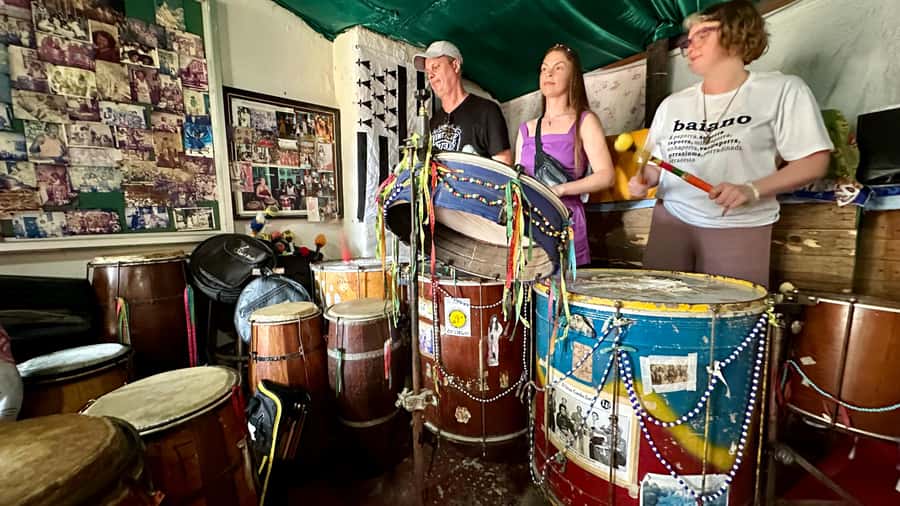
Feel the beat before you understand it. This Salvador percussion class offers a direct way into Bahia’s musical culture, with hands-on practice in rhythms shaped by African traditions and Brazilian creativity. I like the chance to play several drums, and I like the small group of no more than six people, which gives the instructor room to adjust to different skill levels.
The main caution is the timing. The experience is sold as three hours, but that includes hotel transport. Several bookings describe roughly 90 minutes to 1 hour 45 minutes of actual instruction. At $90 per person, that makes the class good value for serious music fans, but less convincing if you expect three full hours of drumming.
In This Review
- Key points to know
- Why percussion matters in Bahia
- Hotel pickup and the trip to the workshop
- Meeting the percussion teacher
- Playing different drums and building a group rhythm
- Samba-reggae, samba, and the sound of Bahia
- How much value do you get for $90?
- Who should book this Salvador class?
- Timing, cancellation, and practical planning
- What the high rating tells you, and what it does not
- Should you book the percussion class?
- FAQ
- How long is the Salvador percussion class?
- What music will I learn?
- Will I play instruments during the class?
- Who teaches the percussion class?
- What languages are available?
- How many people can join?
- Is hotel transportation included?
- Can I cancel for a full refund?
Key points to know
- Samba-reggae is the star rhythm: You learn about a Bahia sound that became known far beyond Brazil, including through Michael Jackson’s interest in it.
- You play several instruments: The class can include different drums and simple group rhythms, not just a demonstration from the teacher.
- Maestro Macambira teaches with patience: He has been praised for working well with complete beginners and experienced percussion players.
- Transport counts toward the three hours: Plan for the class itself to last closer to 90 minutes in some cases.
- The group is capped at six: This makes the session more personal than a large workshop.
- Spanish, English, and Portuguese are available: A guide can translate the teacher’s demonstrations and explanations.
Why percussion matters in Bahia
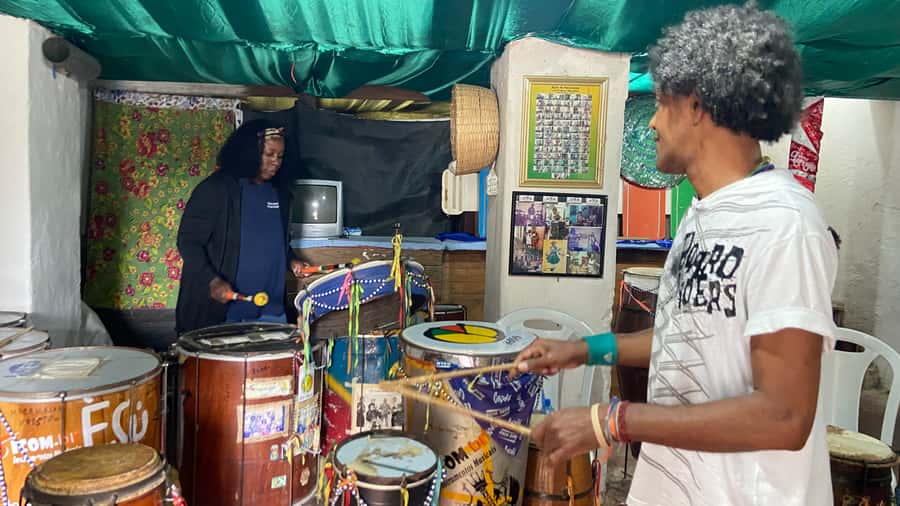
In Bahia, percussion is not just stage entertainment. It appears in social gatherings, Samba de Roda performances, religious ceremonies connected with Candomblé, and public celebrations. The drum gives shape to a melody, sets the pace of a group, and turns music into something you feel in your hands and chest.
That context helps explain why this class can feel more meaningful than a standard tourist activity. You are not simply tapping a rhythm for a photograph. You are learning one small part of a musical culture tied to African heritage, Brazilian identity, and everyday community life.
The class also introduces you to the range of Brazilian music. Samba-reggae is the most obvious focus, but the teaching can touch on samba and jazz as well. You may hear how a basic beat changes when the tempo, accent, or combination of instruments shifts.
I would not expect a full course in Bahia’s musical traditions in three hours. Still, the workshop gives you a practical introduction. You hear the sounds, handle the instruments, and learn how a group creates a shared rhythm.
More of Salvador and Bahia:
- Round trip transfer, Salvador, Bahia, Brazil
★ 5.0 · 228 reviews - Salvador City Tour – Discover Brazil’s First Capital En, It, Es
★ 5.0 · 217 reviews - Cooking class in Salvador, an authentic dinning experience
★ 5.0 · 132 reviews
Hotel pickup and the trip to the workshop
Your guide meets you in your hotel lobby, and transportation is included in both directions. That makes the class easy to fit into a Salvador itinerary, especially if you do not want to work out local transport to an unfamiliar part of the city.
The pickup is also part of the timing issue. Although the activity is advertised as three hours, the total includes the ride. One booking described the class as about 1 hour 30 minutes, while another put the full activity at about 1 hour 45 minutes. The exact split may vary, so ask for the expected teaching time when you book.
This is a useful question, not a complaint. If you are passionate about percussion, you will want to know how much time your hands will actually spend on the drums. If you mainly want a cultural introduction, the transport and guided setting may make the shorter class worthwhile.
The guide’s role matters here. English, Spanish, and Portuguese are offered, and a translator may explain what the percussion teacher is demonstrating. That is especially helpful because rhythm instruction can move fast. A spoken explanation in your language lets you focus on the beat rather than trying to decode every gesture.
Meeting the percussion teacher
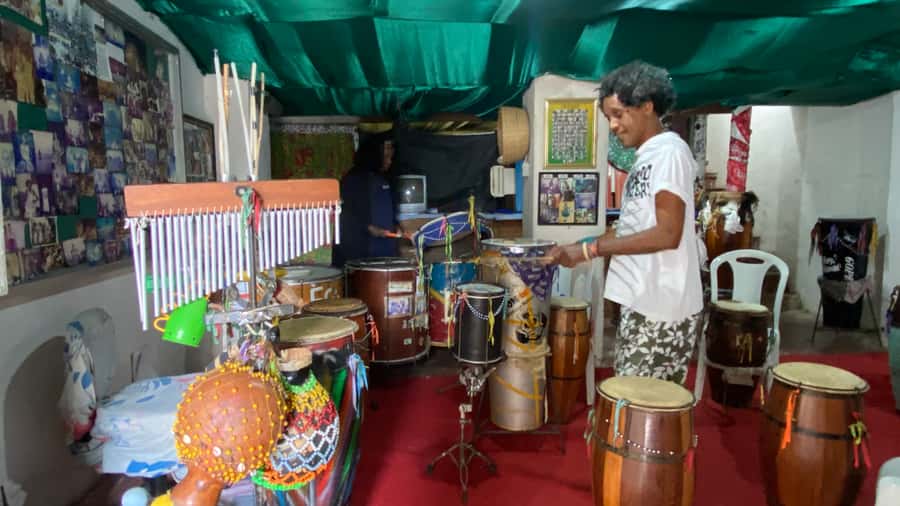
The strongest personal detail connected with the class is Maestro Macambira. He has been praised for his patience and for adapting the lesson to the ability of the person in front of him. That matters in a percussion class, where one participant may already play an instrument while another has never held a drum.
The teaching appears to be friendly and hands-on rather than formal or academic. You learn by watching, repeating, and joining the rhythm. A guide can translate the explanation, but the sound itself remains the main teacher. You will need to listen closely and copy the pattern.
A one-on-one or very small group can change the entire feel of a class. In one booking, the session was described as a great morning one-on-one, with time to play multiple instruments and learn different rhythms. A group of up to six still keeps the setting intimate, though the amount of individual practice will depend on the number of people booked that day.
The class suits beginners because the rhythms are taught in manageable steps. It also suits people who already play percussion and want a local introduction to Afro-Brazilian sounds. The limitation is that the patterns may remain simple. One participant felt the beats did not become complex enough, especially given the price.
Playing different drums and building a group rhythm
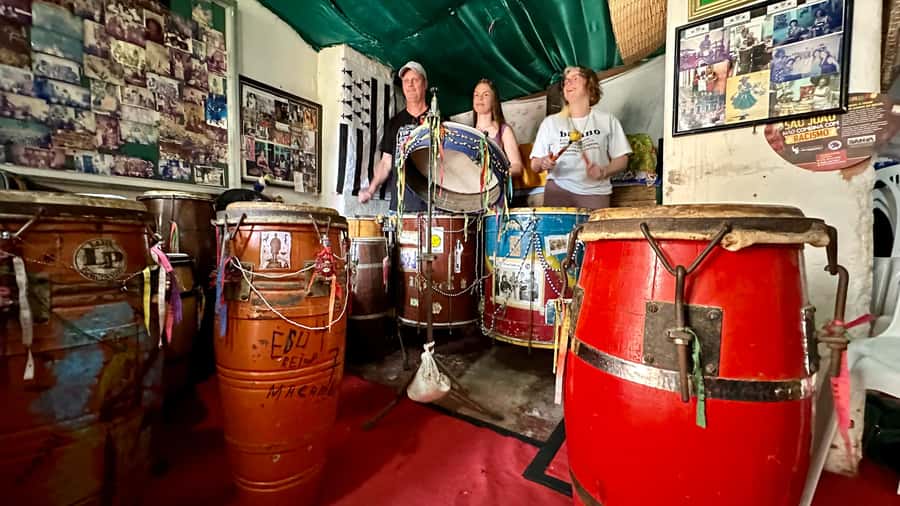
The most appealing part is the chance to play different percussion instruments. Instead of watching a local musician perform while you sit back, you take part in the sound. You may move between instruments and practice more than one role within the rhythm.
This is where the activity earns its place in Salvador. A concert lets you admire Bahia’s percussion. A class shows you how hard it can be to keep a simple rhythm steady while listening to everyone else. Even basic beats become more interesting when several people play together.
The group jam is another highlight. A shared rhythm gives the session a social quality, and it can work well for families or mixed-age groups. One booking specifically described the experience as enjoyable across three generations. You do not need to be a trained musician to take part.
Keep your expectations sensible, though. The available feedback suggests that you may not try a large range of instruments or learn advanced arrangements. This is an introduction, not a professional workshop. If you hope to leave playing a full samba-reggae arrangement, the class may feel too short.
More things to do in Salvador:
- Tour to the Frades Islands and Itaparica, from Salvador – Ba
★ 4.0 · 130 reviews - Transfer Salvador Airport / Hotel Litoral Norte
★ 5.0 · 111 reviews - Private City Tour in Salvador
★ 5.0 · 110 reviews - From Salvador: Schooner Tour to Frades Islands and Itaparica
★ 3.9 · 98 reviews
Samba-reggae, samba, and the sound of Bahia
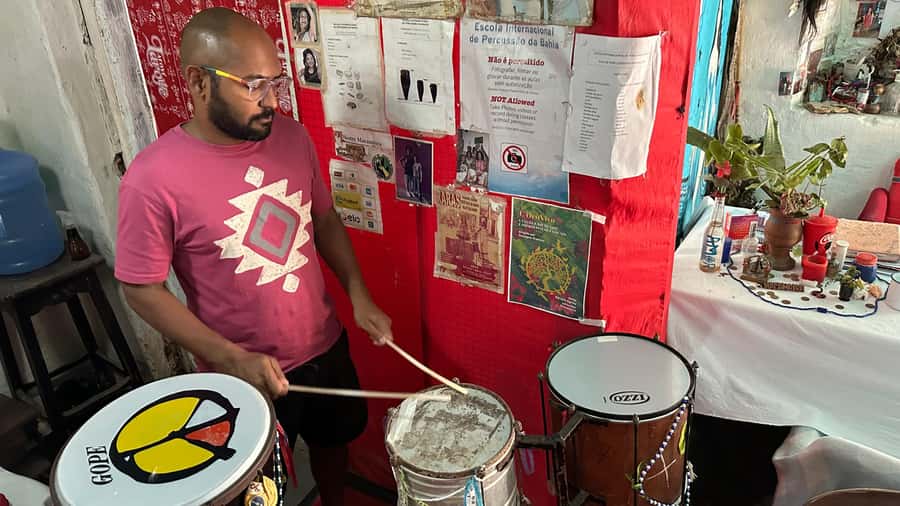
Samba-reggae deserves special attention. It blends the drive of reggae with Brazilian percussion traditions and is closely tied to Bahia’s musical culture. The sound is strong, layered, and built for groups. Even when the class uses simple patterns, you can begin to hear how the parts fit together.
The activity also places samba in a wider setting. Samba is one of Brazil’s best-known musical forms, but Bahia has its own local sounds and traditions. The class helps you hear the difference between a general idea of Brazilian music and the specific rhythms associated with Bahia.
The mention of Michael Jackson adds an interesting pop connection. Samba-reggae gained international attention through his interest in Bahia and its music. You should not expect a lesson centered on pop history, but the reference helps show how a local rhythm reached a global audience.
The link to jazz points to the flexibility of Brazilian percussion. The class may introduce you to rhythms that can support different musical styles rather than one fixed beat. That said, the available details do not promise a full jazz lesson or a formal comparison of styles.
How much value do you get for $90?
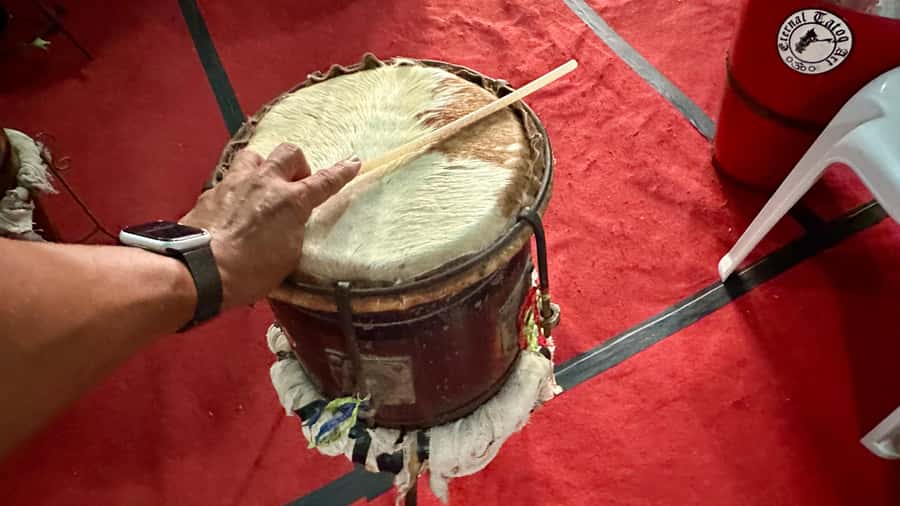
At $90 per person, this is not a cheap casual activity. The fee includes hotel pickup and drop-off, entrance costs, a professional guide, translation support when needed, and a small group limited to six participants. Those extras make the cost easier to understand.
The value depends mainly on your interest in music. If you love percussion, the chance to play several instruments with a local teacher may justify the price. A one-on-one class or a very small booking can make the fee feel more reasonable, especially if Maestro Macambira gives you focused attention.
If you are simply looking for a quick cultural stop, the cost is harder to defend. The actual class may last around 90 minutes, and one participant felt the experience was overpriced because it lasted only about 1 hour 45 minutes in total, with simple beats and limited instrument variety.
I would judge the price against the alternative. A short drum activity with transport and a local instructor costs more than a free performance, but it gives you participation rather than observation. For a music-focused Salvador itinerary, that difference can matter.
The best value comes when you book with realistic expectations: expect a guided introduction to Bahian percussion, not an intensive three-hour music course.
Who should book this Salvador class?
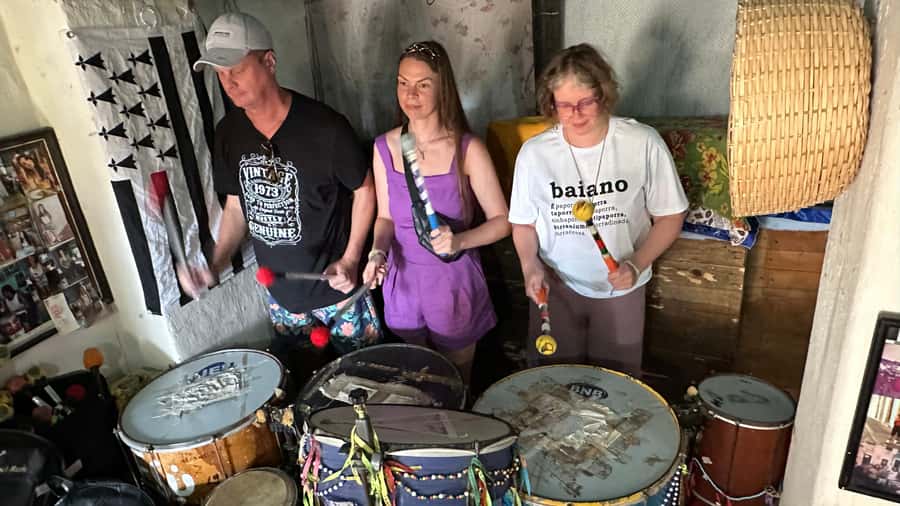
I would point this activity toward several kinds of people:
- You enjoy music and want to understand it through your hands.
- You are curious about Afro-Brazilian culture and want more than a sightseeing stop.
- You are traveling with family members of different ages.
- You prefer a small, personal activity to a large group workshop.
- You already play drums and want a local perspective on Brazilian rhythms.
- You want a structured cultural activity with hotel pickup.
It may be less suitable if you need wheelchair access, since the tour cannot accommodate wheelchairs. It may also disappoint you if you want a long lesson, advanced technique, or a broad survey of many instruments.
Language should not be a major barrier. Portuguese is useful in Bahia, but English and Spanish are available, and the guide may translate the instructor’s demonstrations. Still, rhythm is partly physical, so careful watching and listening remain important in any language.
Timing, cancellation, and practical planning
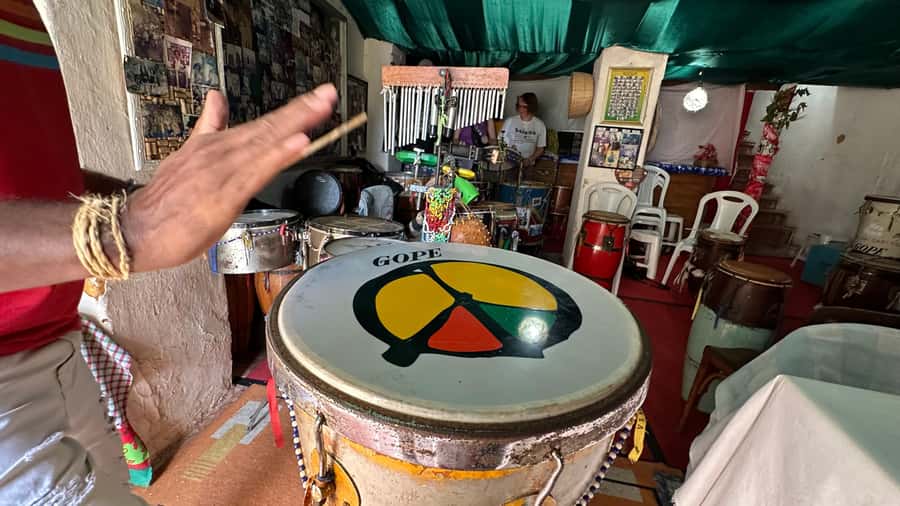
The activity lasts three hours in the booking description, with starting times available according to the schedule. Since transport is included, allow the full three-hour window and do not place a tightly timed attraction immediately afterward.
I would also confirm the expected length of the teaching session. The difference between 90 minutes of drumming and three full hours of instruction is important, especially at this price. The class may be longer in some cases, but the supplied experiences show that transport can take a meaningful share of the booking.
Food and drinks are not included, so plan to eat before or after the class if your schedule calls for it. Entrance fees and professional guide service are included.
You can cancel up to 24 hours in advance for a full refund. A reserve-now, pay-later option is also available, which helps if your Salvador plans are still changing.
What the high rating tells you, and what it does not
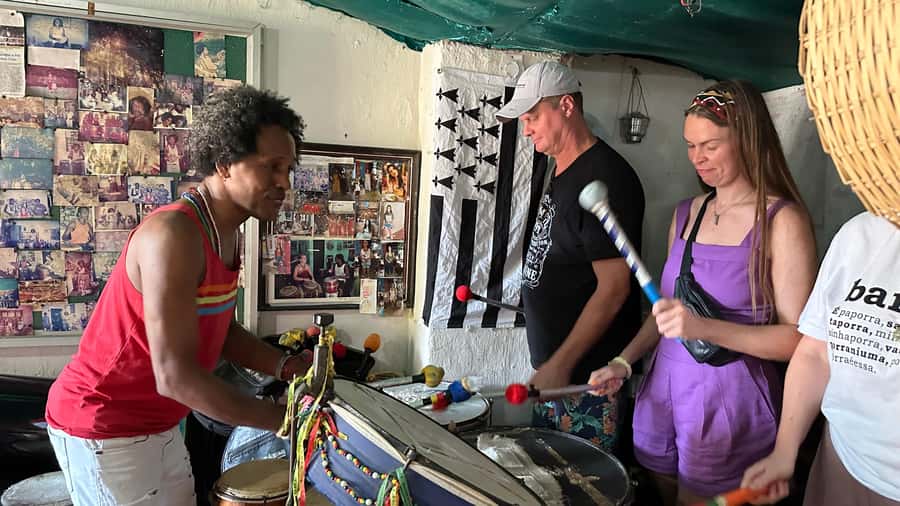
The experience has a 4.9 rating from 10 reviews, with repeated praise for the instructor, the friendly atmosphere, and the chance to play several drums. The most consistent positive point is the human side of the class. Maestro Macambira is described as patient, attentive, and able to work with different ability levels.
The session also earns praise for being unusual. You can find concerts and dance performances in Salvador, but fewer activities let you join a local percussion lesson. That makes this a useful choice for someone who wants a personal memory rather than another look at a famous sight.
The main criticism is also consistent: the class feels short compared with the three-hour promise. A second concern is price, especially when the beats stay simple or the group does not try many instruments.
So the rating should guide you, not decide for you. The class is highly liked by people who value music, personal contact, and cultural context. It is less convincing for someone measuring value by minutes of instruction or technical progress.
Should you book the percussion class?
Book it if you want a small-group introduction to Bahia’s musical culture and you are happy to learn through simple, hands-on rhythms. The combination of local teaching, several drums, translation support, and hotel transport makes it easy and memorable.
Before paying $90, ask how long the actual class will last and how many people are booked. If you are a percussion enthusiast, request as much individual playing time as possible. If you prefer a relaxed cultural activity, the shorter lesson may be enough.
I would recommend it most strongly to music fans, families, and curious first-time visitors who want to participate rather than watch. I would skip it if you need wheelchair access, want advanced drumming, or expect three full hours of instruction.
FAQ
How long is the Salvador percussion class?
The activity is listed as three hours, including transportation. The actual teaching time may be about 90 minutes to 1 hour 45 minutes, based on the stated experience details.
What music will I learn?
The class focuses on Bahian percussion, especially samba-reggae. It also introduces samba and may cover connections with jazz and other Brazilian musical styles.
Will I play instruments during the class?
Yes. You can expect hands-on practice with different drums and the chance to join a group jam.
Who teaches the percussion class?
The instructor is Maestro Macambira. He is described as patient, friendly, and able to work with different experience levels.
What languages are available?
The tour is offered in English, Spanish, and Portuguese. A guide may translate the instructor’s demonstrations and explanations.
How many people can join?
The group is limited to a maximum of six participants.
Is hotel transportation included?
Yes. Pickup and drop-off at your hotel are included, with pickup from the hotel lobby.
Can I cancel for a full refund?
Yes. You can cancel up to 24 hours in advance for a full refund. A reserve-now, pay-later option is also available.
Just added in Salvador
- Mãe Tereza Ecological Park | A peaceful paradise, perfect for relaxing!★ 4.5 · 19 reviews
- Full Day Tour in Trancoso with Chocolate Factory★ 4.5 · 35 reviews
- Horse back riding and Eco tourism food and fun.★ 5.0 · 1 review
- Salvador: Schooner Cruise with Pickup and Itaparica Stop★ 3.8 · 5 reviews
- Salvador: Traditional Drumming and Percussion Workshop★ 4.4 · 10 reviews
- PROMO Salvador: Interactive Art and Culture Private Tour★ 5.0 · 2 reviews
- Salvador: Cultural Treasure – Samba de Roda.★ 4.9 · 51 reviews
- Salvador by Night: Cultural Show and Dinner.★ 4.4 · 17 reviews
Salvador and Bahia Tours, compared.
Salvador City Tour – Discover Brazil’s First Capital En, It, Es
Read our review →
Cooking class in Salvador, an authentic dinning experience
Read our review →
Tour to the Frades Islands and Itaparica, from Salvador – Ba
Read our review →


Tour Praia do Forte and Guarajuba, Leaving Salvador-Bahia.
Read our review →
Transfer to Iberostar Selection Praia do Forte or Waves Bahia
Read our review →
Transfer Iberostar Waves Bahia / Praia do Forte – Private
Read our review →Browse the lists this tour appears in