
Reviewed · SALVADOR AND BAHIA TOURS
Salvador: Traditional Drumming and Percussion Workshop
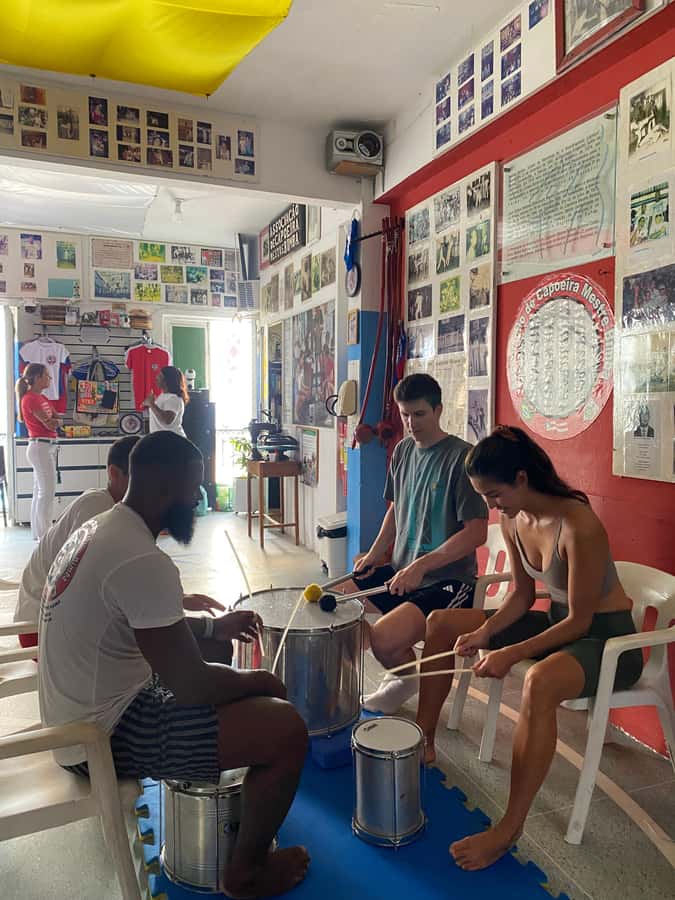
Feel the beat of Salvador’s past. This one-hour workshop brings you into Mestre Bimba’s First Ever School, a place tied to the survival and growth of Afro-Brazilian arts. I like the hands-on format, and I like that you learn several rhythms and percussion styles rather than simply watching a demonstration. The main concern is language consistency: the activity is offered in Portuguese and English, but one recent participant found that the instructor could not provide the expected English instruction.
The class costs $43 per person and takes place in Pelourinho, Salvador’s historic center. That makes it easy to pair with an afternoon of sightseeing, especially since one participant combined the class with time in the area during Carnaval. With a maximum of 10 people, the session can feel personal, though the group size may vary.
In This Review
- Key Points Before You Book
- Why This Workshop Belongs in a Salvador Itinerary
- Arriving at Mestre Bimba’s First School
- What Happens During the One-Hour Class
- The Value of Learning Through Capoeira Percussion
- Small Groups and One-to-One Attention
- Language: A Practical Concern for English Speakers
- How the Location Adds Value
- Is $43 a Fair Price?
- Who Will Enjoy This Most?
- Booking Flexibility and Timing
- My Verdict: Book It for Culture and Participation
- FAQ
- Do I need musical experience?
- How long does the workshop last?
- What languages are offered?
- Where does the workshop meet?
- Is hotel pickup included?
- How many people can join the class?
- Can I cancel for a refund?
Key Points Before You Book
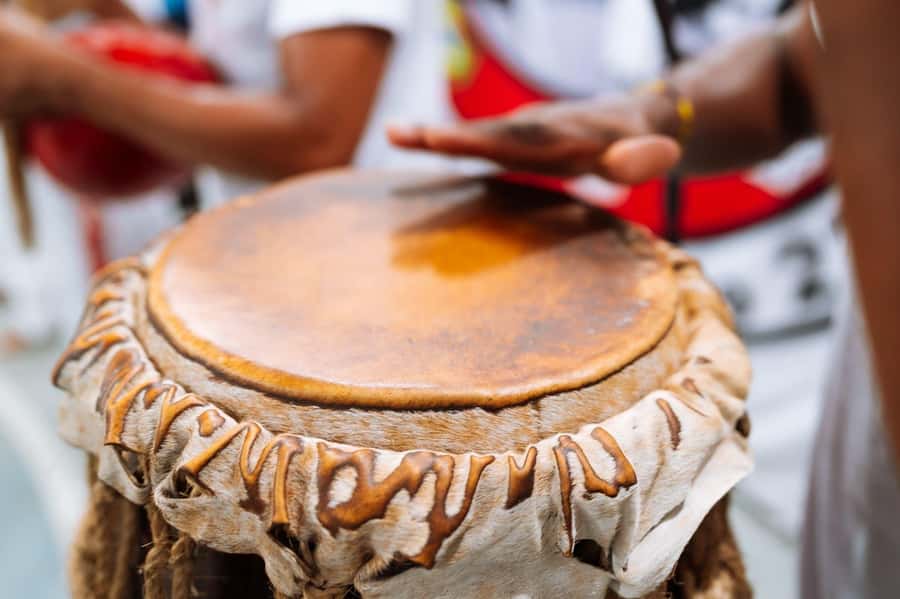
- You play the instruments yourself: This is an active drumming class, not a performance you simply sit and watch.
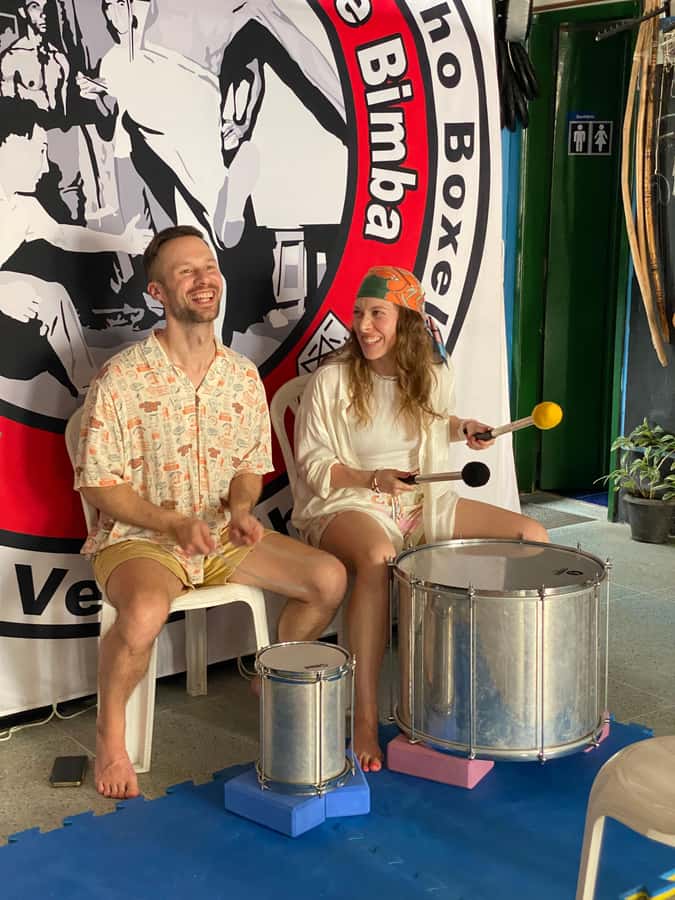
- The setting carries real cultural weight: The workshop takes place at Associação de Capoeira Mestre Bimba, linked to Mestre Bimba’s first school.
- No musical background is needed: The instructors teach basic gestures, posture, rhythms, and playing methods from the ground up.
- One hour is enough for a useful introduction: You can try different instruments and rhythms without turning the activity into a long lesson.
- Small groups help with personal instruction: The stated limit is 10 participants, and one session provided thoughtful one-to-one teaching.
- English may need confirming: Portuguese and English are listed, but English instruction was not consistent for every booking.
Why This Workshop Belongs in a Salvador Itinerary
Salvador is a city where music is not just entertainment. Afro-Brazilian rhythms connect to community, ceremony, dance, capoeira, and identity. A short drumming class gives you a way to understand that culture with your hands and ears, not only through photographs or a guide’s explanation.
I especially like the location. Associação de Capoeira Mestre Bimba is not a generic activity room created for visitors. It connects directly to the capoeira tradition and to a period when cultural practices such as capoeira, samba, and drumming faced suspicion and could even be criminalized.
The school is presented as a Quilombo of resistance and resilience. In this context, that means a place where Afro-Brazilian cultural practices survived pressure and continued to develop. You are not simply learning a rhythm. You are learning in a setting linked to the effort to protect these traditions.
That background adds meaning to the class, but the activity does not require you to arrive with a detailed knowledge of Brazilian culture. You only need curiosity, a willingness to follow instructions, and a little patience with your own sense of rhythm.
More of Salvador and Bahia:
- Round trip transfer, Salvador, Bahia, Brazil
★ 5.0 · 228 reviews - Salvador City Tour – Discover Brazil’s First Capital En, It, Es
★ 5.0 · 217 reviews - Cooking class in Salvador, an authentic dinning experience
★ 5.0 · 132 reviews
Arriving at Mestre Bimba’s First School
You make your own way to Associação de Capoeira Mestre Bimba. There is no hotel pickup or drop-off, so plan your route before leaving your accommodation.
The meeting point is in the Pelourinho area. Useful nearby landmarks include Ó Paí Ó Restaurante and São Domingos Gusmão Church in Largo do Terreiro de Jesus. Those references matter because the historic center has many streets and landmarks close together, and a clear visual target is more useful than relying on a vague neighborhood name.
I would allow enough time to find the school without rushing. The workshop lasts only one hour, so arriving late can take a noticeable bite out of your playing time. Since transportation is not included, this is best scheduled alongside other plans in central Salvador rather than treated as a distant side trip.
The setting is one of the experience’s strongest features. You are visiting a place connected to Mestre Bimba and the roots of capoeira instruction, not just entering a studio for a generic percussion lesson. The cultural setting gives the hour a stronger sense of purpose.
What Happens During the One-Hour Class
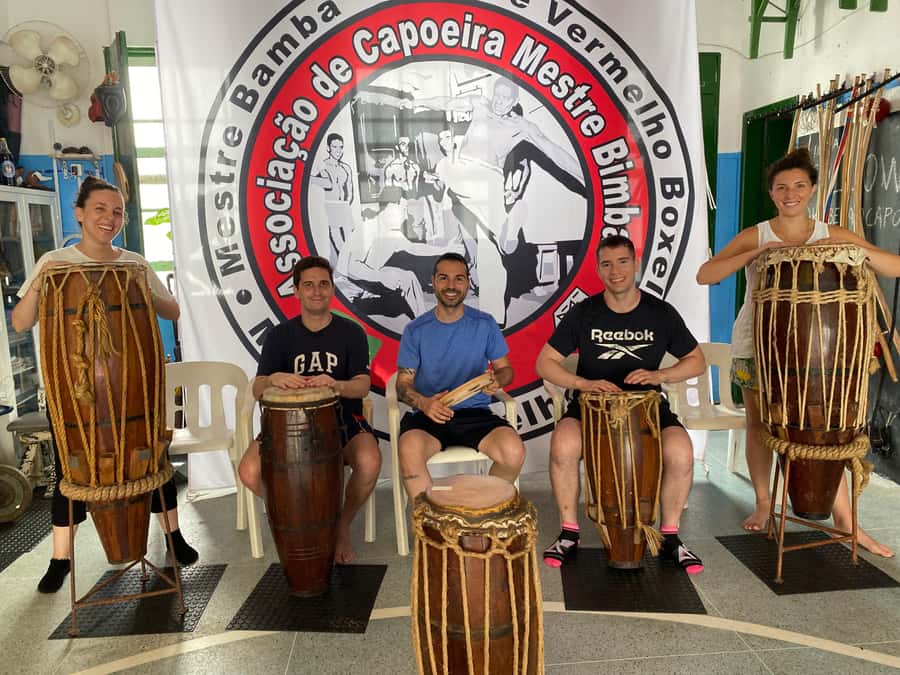
The workshop is built around participation. You receive instruction from a professional teacher, handle the instruments, and work through rhythms and playing methods. You do not need prior musical experience, and the class is intended to help beginners take part without feeling tested.
A typical session can include:
- An introduction to Brazilian capoeira percussion instruments
- Basic playing methods
- Guidance on hand movements, gestures, and posture
- Practice with more than one type of rhythm
- Cultural and historical explanation from the instructor
- Time to play along and improve through repetition
One particularly useful detail is the attention given to body position. A participant who worked with Yasmin described her as patient and careful when demonstrating the correct movements and posture. That sort of correction matters more than it may sound. Percussion is not only about hitting an instrument at the right moment. The way you hold yourself affects control, timing, and comfort.
You may also see several ways of creating percussion sounds rather than repeating one basic beat. The class can introduce different rhythms and different instruments connected with Brazilian capoeira music. The exact mix may depend on the teacher and the group, but the goal is broader than learning one short pattern.
Do not expect a full music course in 60 minutes. The hour is best understood as a lively introduction. You will get a taste of the instruments, learn some basic patterns, and gain a better sense of how rhythm supports Afro-Brazilian cultural expression.
The Value of Learning Through Capoeira Percussion
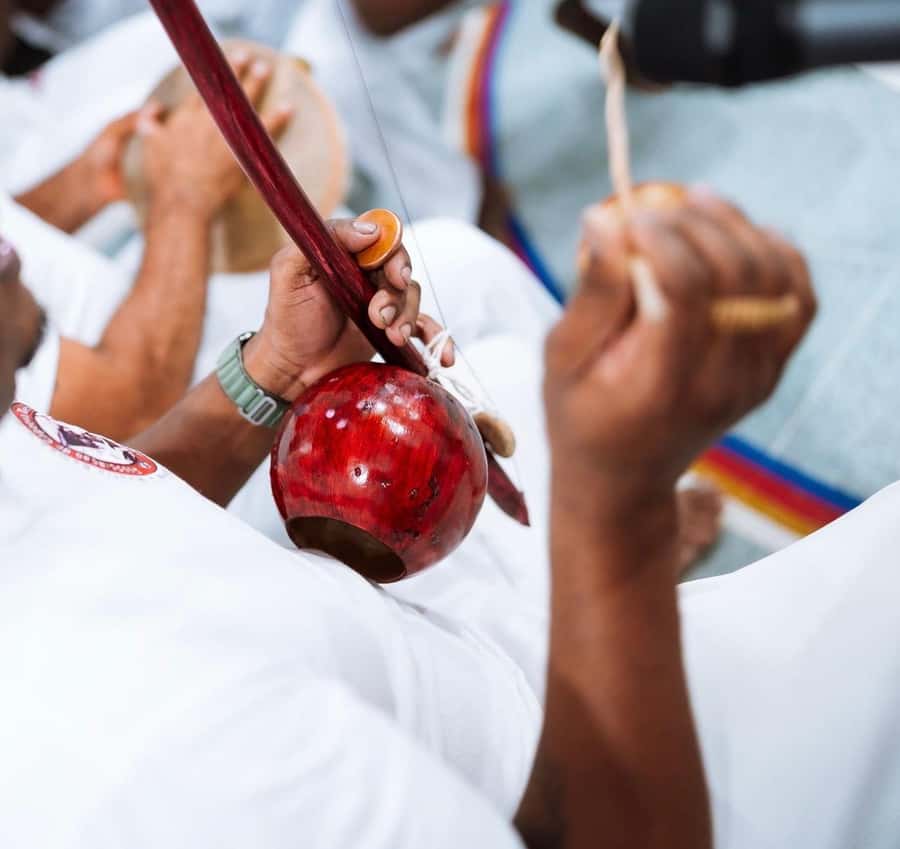
The word capoeira often brings acrobatic movement to mind, but its music is central to the practice. Percussion helps set the pace and mood, and the instruments form part of the social experience around capoeira.
This workshop gives you a small window into that musical side. The instruction connects the sound to the history of Afro-Brazilian communities and to the persistence of traditions that were once treated as suspicious. That explanation helps keep the class from feeling like a disconnected activity designed only for a quick photo.
I also appreciate that the class does not assume musical confidence. Beginners often worry that they will be the person who cannot keep time. One participant arrived expecting to fail spectacularly and found the instruments more manageable than expected, crediting the teacher’s patient instruction.
That is a good way to approach the session. You are not being judged on performance. You are learning a sequence, repeating it, and gradually getting a feel for the rhythm. If you make a mistake, it is part of the point.
More things to do in Salvador:
- Tour to the Frades Islands and Itaparica, from Salvador – Ba
★ 4.0 · 130 reviews - Transfer Salvador Airport / Hotel Litoral Norte
★ 5.0 · 111 reviews - Private City Tour in Salvador
★ 5.0 · 110 reviews - From Salvador: Schooner Tour to Frades Islands and Itaparica
★ 3.9 · 98 reviews
Small Groups and One-to-One Attention
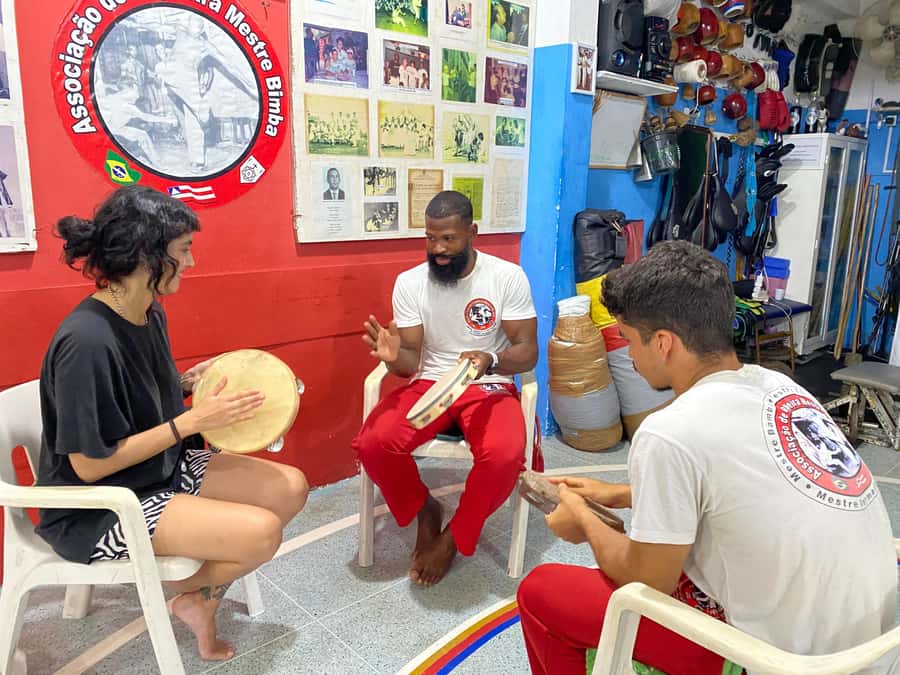
The official group limit is 10 participants. That is small enough to give the instructor a reasonable chance to watch each person, though the actual level of individual attention can depend on attendance.
One session became a one-to-one lesson with Yasmin. That allowed careful instruction across several percussion instruments and plenty of time to ask questions. You should not assume every booking will be private, but the small-group design gives you a better chance of receiving corrections than a large class would.
This matters most if you are new to music. A beginner may need help with hand position, timing, or the force used to strike the instrument. In a large group, those details can be easy to miss. Here, the stated limit is modest, and the class is designed for direct participation.
The one possible limitation is that a small group does not guarantee the same teacher or the same teaching style for every session. If English instruction is important to you, confirm that point before booking. Portuguese is the main local language, and the activity lists both Portuguese and English, but English delivery has not been dependable in every case.
Language: A Practical Concern for English Speakers
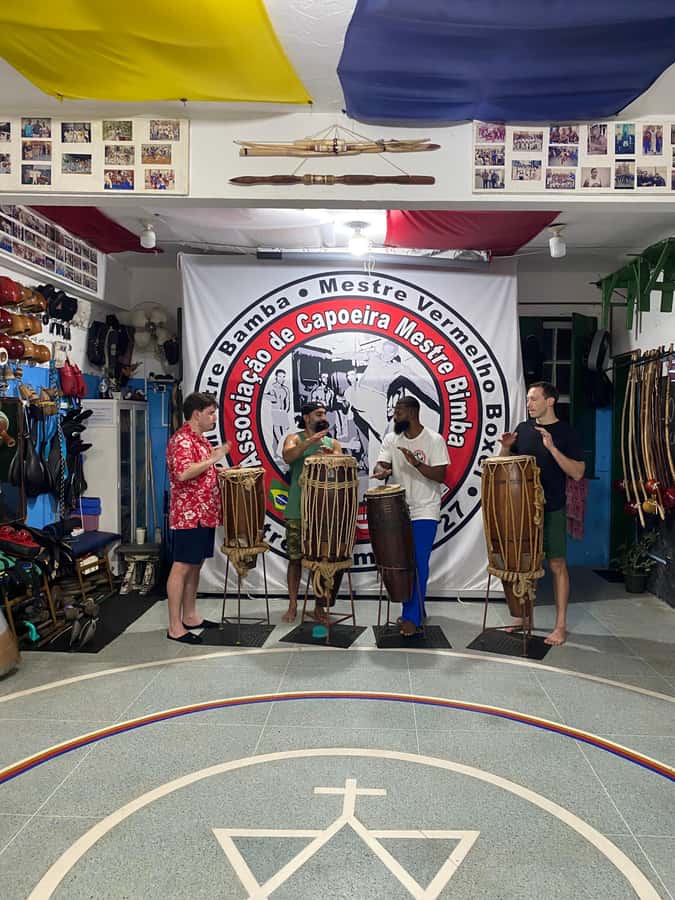
Language is the clearest caution attached to this experience. The class is advertised in Portuguese and English, and one English-speaking participant had an excellent lesson with Yasmin. That session included clear instruction, historical explanation, and patient help with several instruments.
However, another participant booked an English class and found that the teacher could not speak English. The activity still felt worthwhile to that person, but the language mismatch reduced the quality of the instruction.
If you speak Portuguese, this concern is much smaller. If you do not, I would contact the provider before booking and confirm that an English-speaking instructor will lead your specific session. That is especially important if you want the cultural explanation, not just the physical activity.
Even with limited shared language, rhythm can be taught through demonstration and repetition. Still, clear communication makes it easier to understand posture, technique, instrument names, and the historical points that give the workshop its meaning.
How the Location Adds Value
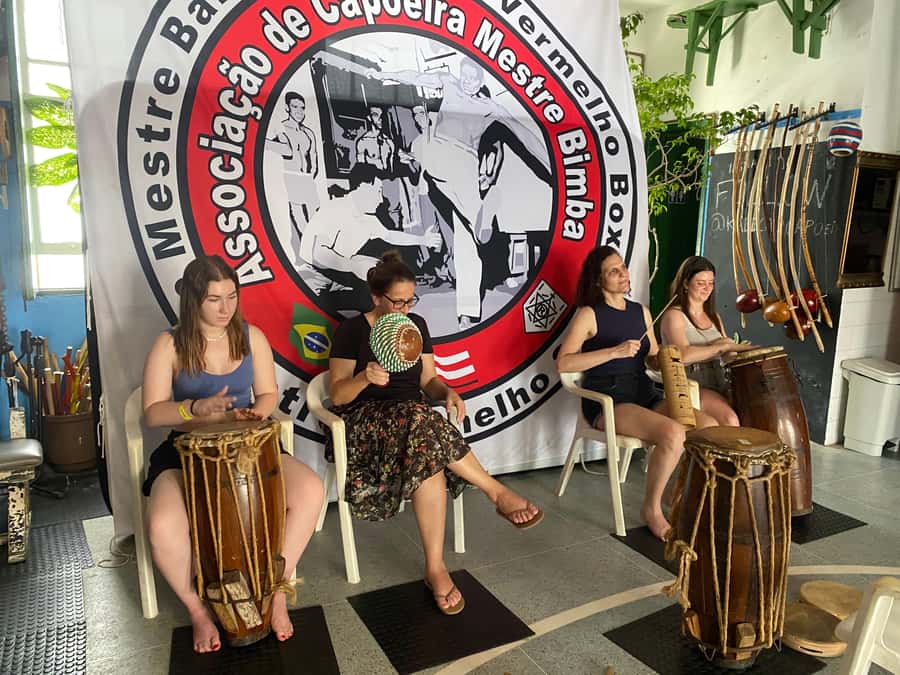
Pelourinho is one of Salvador’s main areas for sightseeing, and the school’s central location makes the workshop easy to combine with other plans. You can spend part of the day around Largo do Terreiro de Jesus, visit nearby churches and restaurants, and fit in the class without arranging a separate vehicle.
That location gives you good flexibility. A one-hour activity does not consume an entire afternoon, and it can provide a change of pace after walking through historic streets. One participant paired the lesson with sightseeing during the Carnaval period and felt the combination provided two activities in one part of the city.
There is also a practical benefit to taking the class in the historic center. You are close to places connected with Salvador’s cultural identity, so the workshop fits the setting instead of feeling detached from it.
The drawback is that you must handle your own transport and navigation. No hotel pickup is offered, and the activity does not include meals or drinks. I would eat beforehand or plan a nearby meal after class, rather than expect refreshments as part of the booking.
Is $43 a Fair Price?
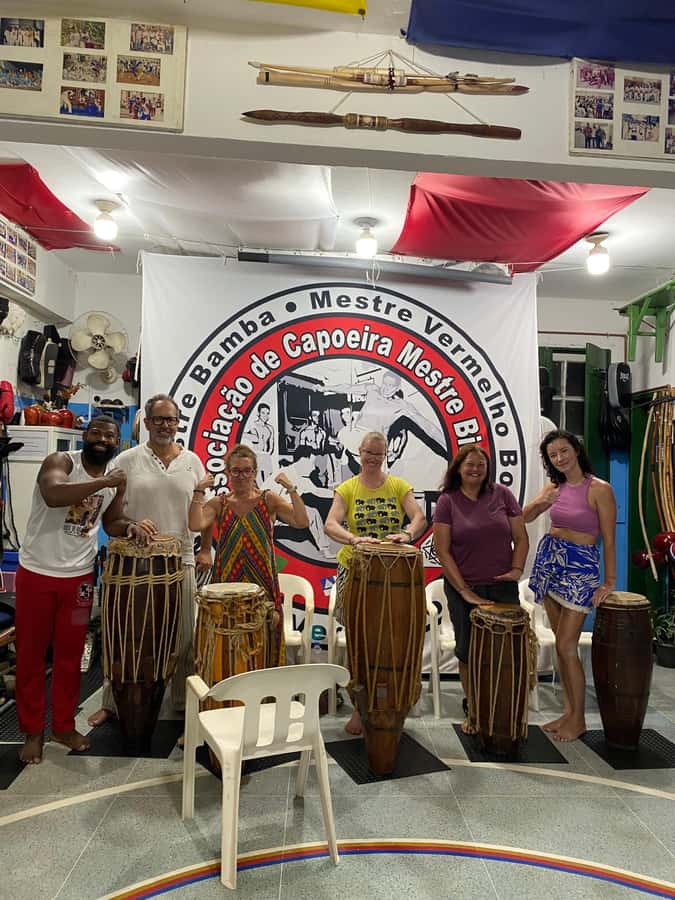
At $43 per person, the value depends on what you want from a one-hour activity. If you are looking for a long lesson with a broad range of instruments, this is a short introduction. If you want an accessible cultural activity in central Salvador, the price is reasonable because it includes the workshop, an instructor, and entry into a historically meaningful school setting.
The strongest value comes from the combination of three things: direct participation, cultural context, and location. You are not paying only for a drum demonstration. You receive guidance from an instructor, try the instruments yourself, and learn why these sounds matter in Brazil.
The price also compares well when you build it into a larger day in Pelourinho. You do not need a separate excursion vehicle, and the class takes just one hour. That makes it easier to fit around other sightseeing.
I would be less enthusiastic if the English-language promise is essential and cannot be confirmed. A language mismatch can reduce both the teaching quality and the historical explanation. For Portuguese speakers, or for people comfortable learning by demonstration, the value is stronger.
Who Will Enjoy This Most?
I would recommend the workshop to you if you want an active cultural experience rather than another sightseeing stop. It suits first-time musicians, curious adults, couples, solo visitors, and small groups looking for something more personal than a large show.
It is also a good fit if you have an interest in capoeira, samba, Afro-Brazilian culture, or the history of Salvador’s Black communities. You do not need to know how to play an instrument, and you do not need to be physically skilled.
Families and groups should note that no specific age guidance is provided, so you would need to check suitability directly if traveling with young children. The same applies to any personal requirements not addressed in the activity details.
You may want to skip it if you dislike hands-on classes, prefer a passive performance, or have only a few hours in Salvador and cannot reach Pelourinho easily. The class is short, but the no-pickup arrangement still requires planning.
Booking Flexibility and Timing
You can cancel up to 24 hours before the activity for a full refund. The reserve-now, pay-later option also helps if your Salvador schedule is still changing.
Starting times depend on availability, so check the calendar before building the workshop into a tightly planned day. I would avoid placing it immediately before a fixed departure or an important reservation, since finding the meeting point is your responsibility.
With only one hour of activity time, punctuality matters. Give yourself enough time to reach the association, identify the nearby landmark, and settle in before the lesson begins.
My Verdict: Book It for Culture and Participation
I would book this workshop if I wanted a short, meaningful activity in Salvador’s historic center. The best parts are the connection to Mestre Bimba’s first school, the chance to play several Afro-Brazilian percussion instruments, and the patient beginner-level teaching described in the strongest sessions.
The class works particularly well as an addition to a Pelourinho day. At $43, it offers good value for an hour of personal instruction and cultural context, especially when you do not need prior musical experience.
My advice is simple: confirm the teaching language before paying, plan your own route to Associação de Capoeira Mestre Bimba, and arrive ready to participate. If you do that, this can turn a quick stop in Salvador into a more personal encounter with the rhythms and traditions that shaped the city.
FAQ
Do I need musical experience?
No. The workshop is designed for beginners, and no previous music experience is required.
How long does the workshop last?
The drumming and percussion workshop lasts one hour.
What languages are offered?
Instruction is listed in Portuguese and English. English delivery may vary, so confirm that an English-speaking instructor will lead your session if this matters to you.
Where does the workshop meet?
The meeting point is Associação de Capoeira Mestre Bimba in Salvador. Nearby landmarks include Ó Paí Ó Restaurante and São Domingos Gusmão Church in Largo do Terreiro de Jesus.
Is hotel pickup included?
No. You must make your own way to the meeting point, as hotel pickup and drop-off are not offered.
How many people can join the class?
The activity is limited to 10 participants.
Can I cancel for a refund?
Yes. You can cancel up to 24 hours in advance for a full refund. You can also reserve now and pay later, subject to the booking terms.
Just added in Salvador
- Mãe Tereza Ecological Park | A peaceful paradise, perfect for relaxing!★ 4.5 · 19 reviews
- Full Day Tour in Trancoso with Chocolate Factory★ 4.5 · 35 reviews
- Horse back riding and Eco tourism food and fun.★ 5.0 · 1 review
- Salvador: Schooner Cruise with Pickup and Itaparica Stop★ 3.8 · 5 reviews
- PROMO Salvador: Interactive Art and Culture Private Tour★ 5.0 · 2 reviews
- Salvador: 3-Hour Percussion Class★ 4.9 · 10 reviews
- Salvador: Cultural Treasure – Samba de Roda.★ 4.9 · 51 reviews
- Salvador by Night: Cultural Show and Dinner.★ 4.4 · 17 reviews
Salvador and Bahia Tours, compared.
Salvador City Tour – Discover Brazil’s First Capital En, It, Es
Read our review →
Cooking class in Salvador, an authentic dinning experience
Read our review →
Tour to the Frades Islands and Itaparica, from Salvador – Ba
Read our review →


Tour Praia do Forte and Guarajuba, Leaving Salvador-Bahia.
Read our review →
Transfer to Iberostar Selection Praia do Forte or Waves Bahia
Read our review →
Transfer Iberostar Waves Bahia / Praia do Forte – Private
Read our review →Browse the lists this tour appears in