
Reviewed · RIO DE JANEIRO CITY TOURS
Private City Tour in Salvador
Salvador reveals itself in layers. This private city tour gives you a useful first look at Bahia’s capital, pairing the cobbled streets of Pelourinho with golden churches, bay views, historic squares, and the lively Mercado Modelo. I especially like the private air-conditioned vehicle and the chance to shape the day around your interests. I also like that several guides, including Monia, Vagner, Wilson, Fernando, João Luís, and Maria, have been praised for clear English, local insight, patience, and flexibility.
The main caution is simple: four hours is a tight timetable for so many stops. You will see the city’s headline sights, but some visits are brief, and entrance fees are extra. There have also been isolated complaints about communication, pickup problems, and one occasion when a supposedly private tour included additional people, so I would confirm the arrangements before setting out.
In This Review
- At a glance: what this tour does best
- Why Salvador works well as a private half-day tour
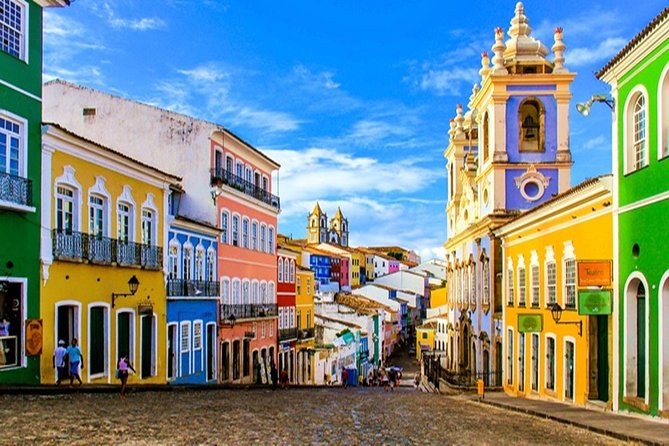
- Pelourinho: Salvador’s best hour on foot
- São Francisco and the Cathedral: gold, tiles, and power
- Optional historic buildings and museums
- Lacerda Elevator and the upper to lower city
- Barra: lighthouse views and the story of the bay
- Porto da Barra: a short beach pause
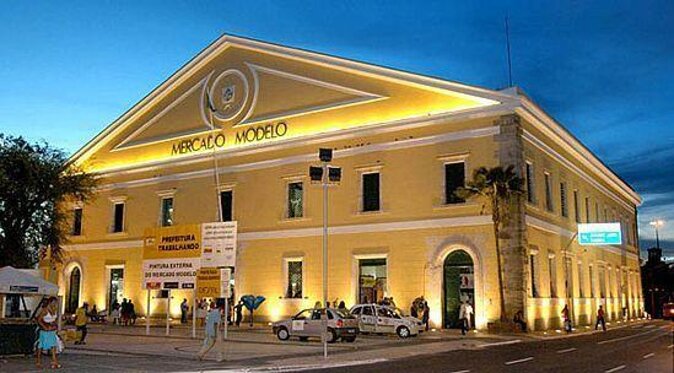
- Mercado Modelo: shopping with a time limit
- Guides, language, and the private format
- Timing, comfort, and what to budget
- Should you book the Salvador private city tour?
- FAQ
- How long does the private Salvador city tour last?
- What sights are included?
- Is transportation included?
- Is the Lacerda Elevator ticket included?
- Are church entrance fees included?
- Is lunch included?
- Can I cancel for a full refund?
- Is the tour private?
At a glance: what this tour does best
- Five centuries in four hours: See Salvador’s old center, colonial churches, the upper and lower city, Barra, and Mercado Modelo in one compact outing.
- Pelourinho on foot: Spend about an hour among colorful colonial buildings, five connected squares, and steep cobbled streets.
- Gold, tiles, and Jesuit art: Visit the Church and Convent of São Francisco and Salvador Cathedral, with interior admission costs paid separately.
- The Lacerda Elevator connection: Ride Brazil’s first elevator, linking the upper city with the lower city.
- A private format with room to adjust: Guides have adapted routes for solo participants, older relatives, changing interests, and cruise-ship schedules.
- Strong overall satisfaction, with a few warning signs: The tour has a 4.8 rating from 110 ratings and is recommended by 93 percent of customers, but service coordination is worth confirming.
Why Salvador works well as a private half-day tour
Salvador is not a city you understand from a moving vehicle alone. Its major sights are spread between the Cidade Alta, or upper city, the Cidade Baixa, or lower city, and the Barra district along Todos os Santos Bay. A car saves time between these areas, while walking lets you notice the details that make the old center special.
At $120 per person, this is not the cheapest way to see Salvador. The price makes more sense for a pair or small group that values hotel or port pickup, private transportation, air conditioning, and a guide who can adjust the pace. A solo visitor pays the same listed per-person rate but must meet the minimum of two adults per booking.
I would see this as an orientation tour rather than a slow cultural study. You get the city’s main structure quickly, then you can return to Pelourinho, Barra, or another area later with a better sense of direction. The guide’s commentary is a major part of the value. Several people praised guides for bringing together colonial history, African influence, modern Salvador, and everyday life in Brazil.
More Rio city tours:
- Salvador City Tour – Discover Brazil’s First Capital En, It, Es
★ 5.0 · 217 reviews - Afro-Brazilian Roots Private City Tour in Salvador
★ 4.7 · 88 reviews - Historical African oriented City Tour
★ 5.0 · 52 reviews
Pelourinho: Salvador’s best hour on foot
The tour begins with roughly an hour in Pelourinho, the historic core of Salvador. This is the part of the experience where walking matters most. Cobblestones, colonial façades, churches, squares, and narrow streets create a setting that a drive-by tour cannot explain properly.
The route covers a complex of five squares. You can expect your guide to point out the city’s Portuguese colonial design and explain why Salvador was once Brazil’s capital. The area also carries the marks of African-Brazilian culture, religious traditions, music, and social change.
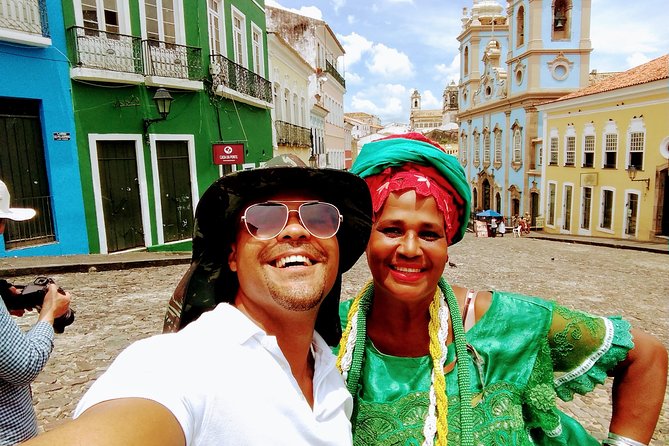
This is where Monia received especially warm praise for connecting the past with present-day Salvador. One person described her as a guide who made the city feel rather than simply displaying it. Wilson was also praised for linking buildings, art, Afro-Brazilian culture, and questions of inequality in a way that worked for both adults and teenagers.
An hour is enough for a strong introduction, but not for every museum and side street. Wear shoes that handle uneven stone, and tell the guide if heat, hills, or stairs are difficult for you. The tour has been adjusted successfully for an 80-year-old parent and for a solo participant whose companion became ill, but it is still a walking tour in an old district.
São Francisco and the Cathedral: gold, tiles, and power
The Church and Convent of São Francisco receives about 25 minutes. Its interior is the visual shock of the day, with extensive Portuguese tilework and heavy gold-leaf Baroque decoration. The contrast between the relatively restrained exterior and the ornate inside is part of what makes the visit memorable.
The church also offers a way to discuss wealth, colonial power, religious orders, artistic labor, and the relationship between Portugal and Brazil. Wilson was singled out for explaining the tiles and gilded carvings rather than treating the church as a quick photo stop. That distinction matters. Without context, the amount of gold can feel merely extravagant. With a good guide, it becomes a window into colonial society.
Admission is not included. The supplied pricing lists church entry at R$20 per person. Since local prices can change, confirm the current amount before you go and carry a way to pay for optional admissions.
The Cathedral Basilica of Salvador follows with about 15 minutes. This is the principal Jesuit church in the colonial center and is presented as an important example of ecclesiastical art in South America. The visit is short, so you should expect a focused look rather than a long architectural study.
I like the pairing of São Francisco and the cathedral because they show two different sides of Salvador’s religious center. The first is famous for gold and tile. The second helps explain the Jesuit presence and the city’s role within the Catholic world during the colonial period.
Optional historic buildings and museums
The route includes optional stops at historic government buildings and museums, but the descriptions do not guarantee entry. One government memorial is not open on a regular schedule, so the guide may only be able to show it from outside or explain its role in Salvador’s political past.
Other possible stops include a museum of colonial silverwork and a museum housed in a Portuguese colonial building focused on wood and painting. These sound worthwhile for visitors who care about decorative arts, but the exact timing depends on opening hours and the group’s priorities.
This is a good moment to be direct with your guide. If you prefer museums over shopping, say so early. If you want to spend longer in Pelourinho, the schedule may need trimming elsewhere. The private setup is most useful when you treat the route as a framework rather than a rigid checklist.
More of Salvador and Bahia:
- Round trip transfer, Salvador, Bahia, Brazil
★ 5.0 · 228 reviews - Cooking class in Salvador, an authentic dinning experience
★ 5.0 · 132 reviews - Tour to the Frades Islands and Itaparica, from Salvador – Ba
★ 4.0 · 130 reviews - Transfer Salvador Airport / Hotel Litoral Norte
★ 5.0 · 111 reviews
Lacerda Elevator and the upper to lower city
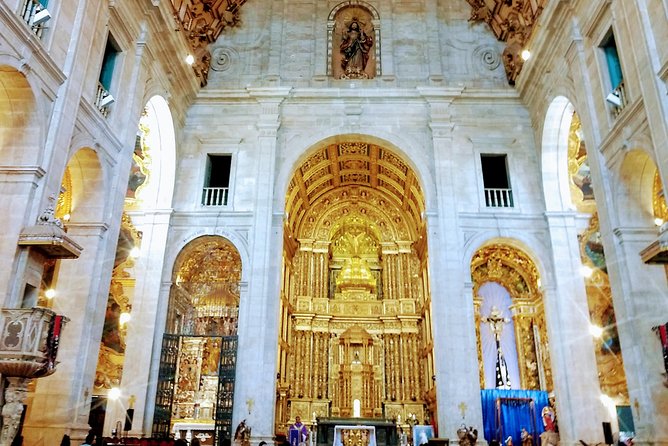
The Lacerda Elevator takes about 10 minutes and admission is included. The ride itself is brief, but its purpose is important: it links Salvador’s upper and lower sections and gives you a practical sense of the city’s unusual vertical arrangement.
At the upper level, Praça Tomé de Souza provides one of the best quick views in the itinerary. You can see the elevator, the bay, and several major civic buildings in one glance. The square contains the city hall, the Rio Branco Palace, the Salvador City Council, and a statue of Tomé de Sousa, Brazil’s first governor general.
This is an efficient stop for photographs and orientation. It also helps explain why Salvador developed in two distinct levels. You are not simply riding an old lift for novelty. You are using a working piece of the city’s structure.
The tour also includes Praça da Sé, the square in front of the main Catholic church. Allow about 15 minutes for photographs and a walking look at the monuments. Then comes Terreiro de Jesus, where the Jesuits organized their religious work and helped establish early higher education in Brazil.
Thirty minutes at Terreiro de Jesus gives the guide more room to explain the square and its surrounding buildings. Still, the schedule may move quickly if you stop inside multiple churches or museums. If religious art and colonial architecture are your priorities, tell the guide before the day begins.
Barra: lighthouse views and the story of the bay
Farol da Barra brings you to Santo Antonio da Barra Fortress and its lighthouse for about 15 minutes. The setting is excellent for understanding Salvador’s geography. From here, you look across Todos os Santos Bay and hear why this location mattered to the arrival of Europeans and the transatlantic trade.
The lighthouse is also a useful place to discuss Salvador as Brazil’s first capital. The bay offered a strategic position, and the fort reflects the city’s military and commercial importance.
You can visit the Nautical Museum if time and interest allow, but admission is not included. The information provided gives two different prices, R$12 per person in the itinerary and R$30 per person in the exclusions. That is a point I would clarify before the tour rather than assume either figure is current.
Fifteen minutes is enough for the exterior, the views, and a short explanation. It is not enough for a careful museum visit unless another stop is shortened. If you have a strong interest in maritime history, ask for the museum before leaving the hotel or ship.
Porto da Barra: a short beach pause
Porto da Barra Beach is a small cove on Todos os Santos Bay, with calm water and a pleasant setting in the Barra district. The tour allows about 15 minutes here, so think of it as a brief stop for photographs, a look at the shoreline, or a quick sense of local beach life.
The beach is especially popular on weekends and holidays. That means the atmosphere and available space can change with the day, and a short stop may feel more useful for seeing the setting than for a full swim.
The beach sits near Santa Maria Fortress, Ladeira da Barra, and Farol da Barra, so the stop fits naturally with the lighthouse portion of the route. If you want more time by the water, you will need to negotiate that with the guide and give up time elsewhere.
Mercado Modelo: shopping with a time limit
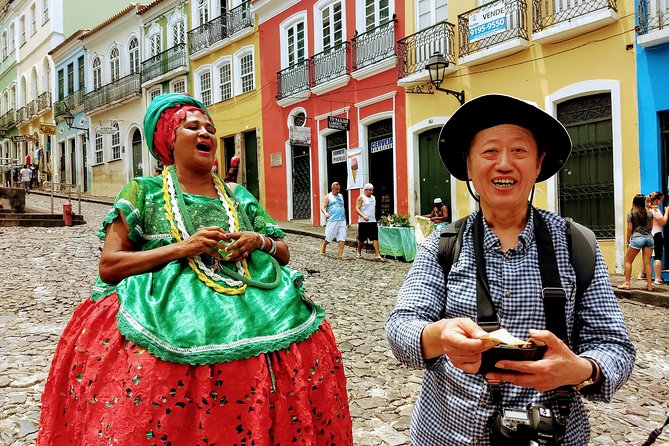
The final major stop is Mercado Modelo, with about 30 minutes for shopping. This is the place to look for handicrafts and small gifts, and one guide was praised for helping a visitor choose presents for grandchildren.
Half an hour is enough for a focused browse. It is not much time for a relaxed meal, extensive shopping, and conversation with sellers. Lunch and drinks are not included, so do not count on this stop to cover food costs or provide a scheduled meal.
The market works well at the end because you have already seen the city’s historic center and can shop with a clearer idea of what interests you. Guides have also helped with small local purchases such as popcorn and Bonfim ribbons. Those simple moments can be useful when you want help handling transactions or choosing a meaningful souvenir.
Guides, language, and the private format
The strongest feature here is the guide. Monia was praised for her long experience, passion, patience, and ability to adapt the route. Vagner was praised for excellent English and broad coverage of the city. Wilson received especially high marks for connecting architecture with history and culture. Fernando, João Luís, Sergio, Ronaldo, Marcus, and Maria were also praised for friendly service, flexibility, clear explanations, and good pacing.
You should not expect every booking to have the same guide. Ask who is assigned if a particular language or subject matters to you. English-language service has been specifically praised, but the provider’s information does not promise a particular guide or language for every departure.
The private format normally means only your group participates, with a driver and a guide in an air-conditioned vehicle. That makes it easier to stop for questions, adjust the walking pace, or spend less time shopping. One serious complaint described a departure during Carnival when other people were added despite the private booking. Another complaint involved pickup and communication problems. These accounts are not consistent with the usual private-tour description, but they are enough reason to confirm the group size and pickup point in writing.
Timing, comfort, and what to budget
The experience lasts about four hours and includes hotel pickup and drop-off. Port pickup has worked smoothly for some cruise passengers, including an early meeting with the guide and driver, but I would provide your exact ship name, terminal, and return deadline well ahead of time.
The vehicle is air-conditioned, an important benefit in Salvador’s heat. The tour combines driving with walks over cobblestones and short periods outdoors. Ask for a slower pace if needed, particularly when traveling with older relatives. One guide received special praise for being gentle with an 80-year-old participant and attentive to stamina.
Your listed price does not cover lunch, drinks, church entry, or the optional Farol da Barra museum. Budget for those separately. The value is strongest when two or more people share the private vehicle and you care about saving time between districts.
Free cancellation is available if you cancel at least 24 hours before the local start time. Cancellations or changes made within 24 hours are not refundable.
Should you book the Salvador private city tour?
I would book this tour if you have only half a day, want a broad introduction to Salvador, or prefer a private vehicle and personal guide instead of a fixed group schedule. It suits couples, families, cruise passengers, first-time visitors, and anyone who wants to combine history with practical city orientation.
I would choose it with caution if you want long museum visits, a leisurely beach afternoon, or a slow study of Pelourinho. Four hours cannot give every sight the attention it deserves. Confirm the guide’s language, pickup details, private group arrangement, and current admission prices before paying.
For the right visitor, the tour offers a smart first look at Salvador: one hour among the old city’s stones, a pair of remarkable churches, a historic elevator, sweeping bay views, a small beach stop, civic squares, and time for local handicrafts. The best guides do more than identify buildings. They help you understand how Portuguese rule, African culture, Catholic institutions, trade, and modern Bahia meet in the same streets.
FAQ
How long does the private Salvador city tour last?
The tour lasts approximately four hours.
What sights are included?
The route includes Pelourinho, the Church and Convent of São Francisco, Salvador Cathedral, Lacerda Elevator, Farol da Barra, Porto da Barra Beach, Praça Tomé de Souza, Praça da Sé, Terreiro de Jesus, and Mercado Modelo.
Is transportation included?
Yes. The tour includes private transportation in an air-conditioned vehicle, along with hotel pickup and drop-off.
Is the Lacerda Elevator ticket included?
Yes. Admission to the Lacerda Elevator is included.
Are church entrance fees included?
No. Church admission is listed separately at R$20 per person.
Is lunch included?
No. Lunch and drinks are not included.
Can I cancel for a full refund?
Yes, if you cancel at least 24 hours before the experience start time. Cancellations made within 24 hours are not refundable.
Is the tour private?
The activity is described as private, with only your group participating. Because one account reported extra participants during Carnival, confirm the private arrangement and group size before the tour date.
Just added in Salvador
- Mãe Tereza Ecological Park | A peaceful paradise, perfect for relaxing!★ 4.5 · 19 reviews
- Full Day Tour in Trancoso with Chocolate Factory★ 4.5 · 35 reviews
- Horse back riding and Eco tourism food and fun.★ 5.0 · 1 review
- Salvador: Schooner Cruise with Pickup and Itaparica Stop★ 3.8 · 5 reviews
- Salvador: Traditional Drumming and Percussion Workshop★ 4.4 · 10 reviews
- PROMO Salvador: Interactive Art and Culture Private Tour★ 5.0 · 2 reviews
- Salvador: 3-Hour Percussion Class★ 4.9 · 10 reviews
- Salvador: Cultural Treasure – Samba de Roda.★ 4.9 · 51 reviews
Rio de Janeiro City Tours, compared.
Rio’s City Tour – Tickets for Christ, Sugar Loaf & Lunch included
Read our review →
Full Day: Christ Redeemer, Sugarloaf, City Tour & Barbecue Lunch
Read our review →
Christ the Redeemer, Sugarloaf, Selaron & BBQ Lunch
Read our review →
São Paulo’s Full Day City Tour: Main City Sights in 7 Hours – (Shared Group)
Read our review →


Pub Crawl in Lapa with Cachaça Tasting and Live Samba
Read our review →
Rio’s Best_Corcovado, Sugar Loaf, Selaron, Cathedral and more
Read our review →Browse the lists this tour appears in