
Reviewed · SALVADOR AND BAHIA TOURS
Salvador: Capoeira Class at Mestre Bimba’s 1st Ever School.
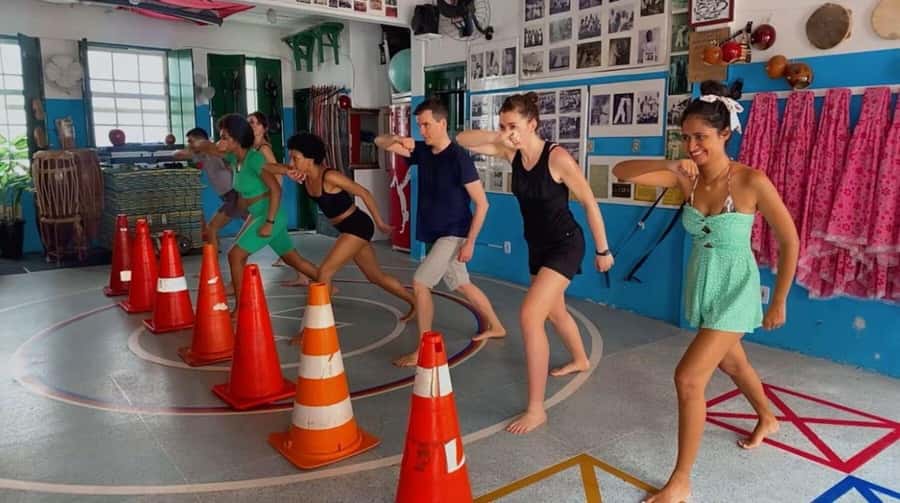
Feel Salvador through movement. This one-hour beginner capoeira class takes place at the first capoeira school in Brazil, founded by Mestre Bimba in 1937. I like the direct link to Salvador’s Afro-Brazilian culture, and I like that instructor Yasmin teaches with patience, clear demonstrations, and English support. The main consideration is physical effort: even a short class can leave your legs feeling it for days.
You do not need martial arts, dance, or fitness experience. The lesson covers basic attacks, defenses, and flowing movements, while explaining why capoeira is far more than exercise. At $43 per person, it is not the cheapest one-hour activity in Salvador, but the setting, cultural context, and personal instruction give it real value if you want to do more than look at the city.
In This Review
- Key points to know before you book
- Why this class belongs in a Salvador itinerary
- Meeting at Largo do Terreiro de Jesus
- The first few minutes: culture before movement
- Learning attacks, defenses, and flow
- Learning with Yasmin in English
- What makes the historic setting valuable
- Is $43 a fair price for one hour?
- Who will enjoy this most?
- Practical preparation for a better class
- How this compares with simply watching capoeira
- Final verdict: should you book it?
- FAQ
- Where does the capoeira class meet?
- Is hotel pickup included?
- Is this class suitable for complete beginners?
- How long does the class last?
- What languages does the instructor speak?
- What will I learn during the class?
- Is bottled water included?
- How much does the class cost?
Key points to know before you book
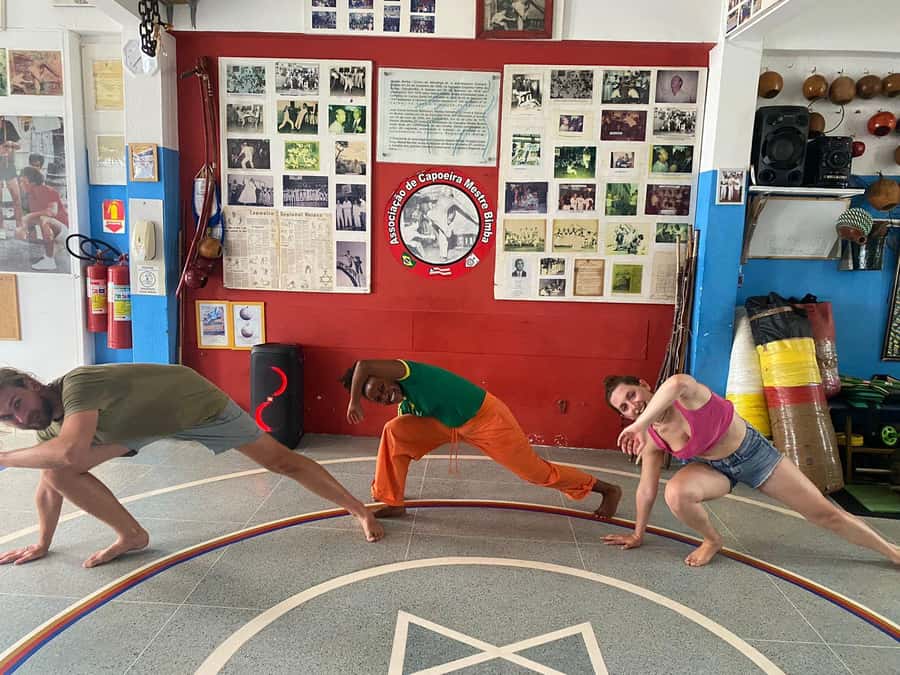
- Brazil’s first capoeira school: Train at the Associação de Capoeira Mestre Bimba, founded in 1937 by the creator of Regional Capoeira.
- Made for complete beginners: The class is designed for people who have never trained capoeira or any martial art.
- English instruction is available: Yasmin has been praised for patient teaching, careful demonstrations, and supportive correction.
- Culture comes with the workout: You learn about capoeira’s Afro-Brazilian roots, historical role, music, and connection to Salvador.
- Expect a real physical session: You will practice attacks, defenses, and flow movements, and you may sweat heavily.
- Easy historic-center meeting point: Find the school near Largo do Terreiro de Jesus, close to Ó Paí Ó Restaurante and São Domingos Gusmão Church.
Why this class belongs in a Salvador itinerary
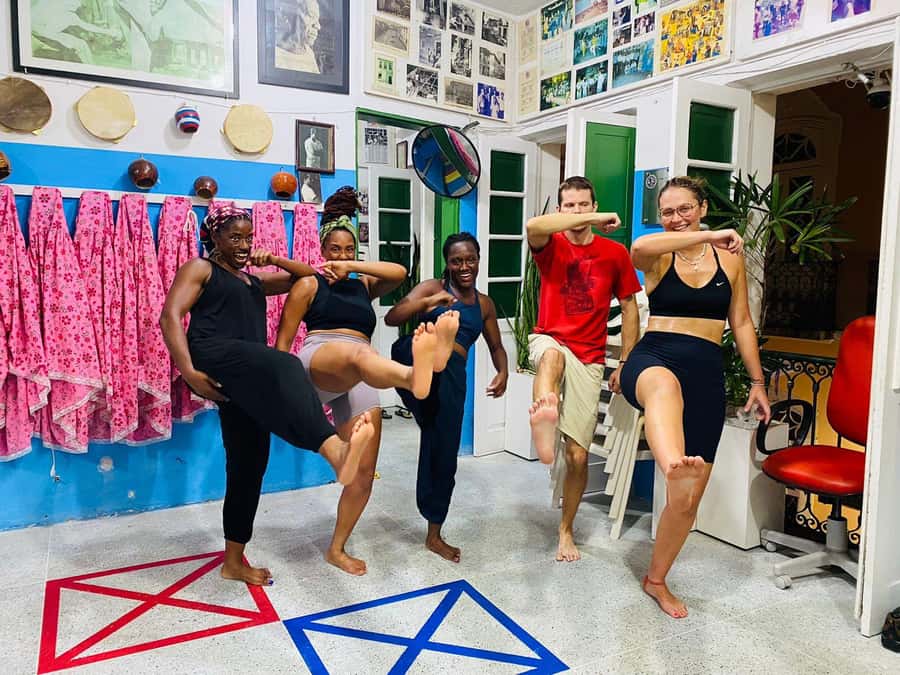
Salvador can be admired from churches, plazas, and lookout points, but capoeira gives you a hands-on way to understand the city. The art combines fighting, dance, music, acrobatics, discipline, and self-defense. That blend reflects the way Afro-Brazilian culture has shaped Salvador’s identity.
I like this activity because it does not treat capoeira as a simple tourist show. You are taught the basic movements yourself. Even in one hour, that changes the way you watch capoeira afterward. You begin to notice the balance, rhythm, feints, defensive movements, and flowing footwork behind what can first look like spontaneous play.
The setting adds another layer. This is the Associação de Capoeira Mestre Bimba, identified as Brazil’s first capoeira school, founded in 1937. You are not simply taking a generic fitness class in a rented studio. You are training at a place tied directly to Mestre Bimba and to the development of an important Brazilian martial art.
The class is especially useful if you have more than one day in Salvador. It gives you an activity that is active, social, and tied to local culture, rather than another passive sightseeing stop.
More of Salvador and Bahia:
- Round trip transfer, Salvador, Bahia, Brazil
★ 5.0 · 228 reviews - Salvador City Tour – Discover Brazil’s First Capital En, It, Es
★ 5.0 · 217 reviews - Cooking class in Salvador, an authentic dinning experience
★ 5.0 · 132 reviews
Meeting at Largo do Terreiro de Jesus
There is no pickup service, so you need to make your own way to the Associação de Capoeira Mestre Bimba. The meeting point is in the Largo do Terreiro de Jesus area, a central part of Salvador’s historic district.
Use familiar nearby landmarks to get oriented. Ó Paí Ó Restaurante and São Domingos Gusmão Church are both close to the association. This is helpful because searching for a small cultural venue can be harder than finding a major church or plaza, especially if you are still getting used to Salvador’s streets.
Allow enough time to arrive without rushing. The class lasts only one hour, so arriving late can take a noticeable bite out of your lesson. The provided information does not include hotel transport or a detailed arrival procedure, so check the exact meeting instructions when you book and use the nearby landmarks as your practical reference points.
The central location also makes this easy to pair with other sights in the historic area. You can plan it around time in Largo do Terreiro de Jesus, but remember that capoeira is physical. I would not schedule a demanding walking route immediately after class unless you are comfortable exercising in Salvador’s heat.
The first few minutes: culture before movement
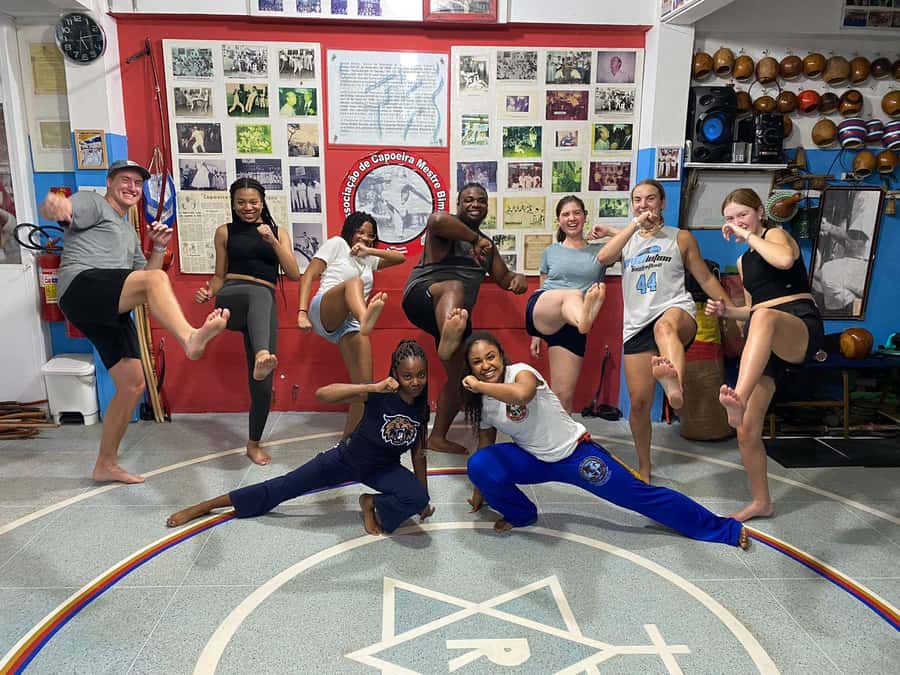
The lesson begins with context, not just calisthenics. You learn what capoeira is and why it matters within Afro-Brazilian culture. That introduction is important because the movements make more sense once you understand that capoeira developed as a martial art with cultural, social, and musical dimensions.
The class explains capoeira as a combination of fight, culture, dance, music, and acrobatics. You also hear about its connection to Afro-Brazilian ancestry. This makes the activity more meaningful than a standard workout where the movements are separated from their origins.
Yasmin has received particular praise for explaining the history before moving into the physical work. Her approach suits first-timers who may feel unsure about doing something unfamiliar in front of other people. She is described as warm, encouraging, patient, and demonstrative, with a habit of making sure the group understands one stage before moving on.
That teaching style matters. Capoeira can look complicated when experienced practitioners perform it at speed. A good beginner lesson needs to slow things down, show the shape of each movement, and make room for repetition. Yasmin’s instruction appears to focus on exactly that.
Learning attacks, defenses, and flow
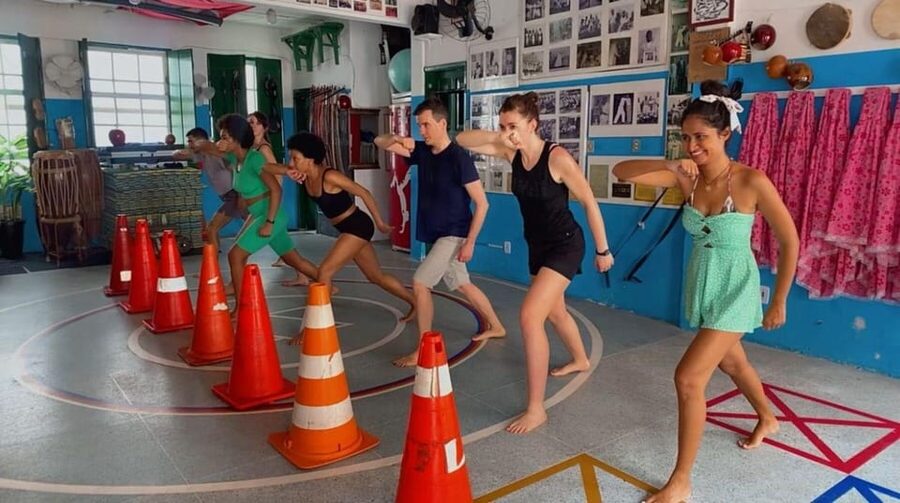
The physical part of the class introduces basic attacks, defenses, and flow movements. You are not expected to arrive knowing the names or mechanics. The session is built for people who have never trained capoeira, so you can arrive without martial arts experience.
The word flow is central here. Capoeira is not practiced as a stiff sequence of isolated punches and blocks. Movements connect, shift, and respond. You learn to move from one position to another while keeping your body active and ready.
For a beginner, this can be both fun and demanding. The movements require coordination, balance, leg strength, and attention. You may spend more energy than the one-hour duration suggests because capoeira keeps you moving and asks you to remember new patterns at the same time.
The class is not described as a gentle demonstration. Several participants found it to be an intense workout, and one person said their legs were sore for days. That is useful information if you are planning a long day of sightseeing afterward. Wear comfortable sports clothing, expect to sweat, and bring a water bottle. Bottled water is included, but an extra bottle is still sensible in Salvador’s warm conditions.
You do not need to be highly fit. The class is specifically aimed at beginners, and the teaching is presented as supportive and inclusive. Still, beginner-friendly does not mean effortless. You should be ready for a genuine physical session rather than a quick photo opportunity.
More things to do in Salvador:
- Tour to the Frades Islands and Itaparica, from Salvador – Ba
★ 4.0 · 130 reviews - Transfer Salvador Airport / Hotel Litoral Norte
★ 5.0 · 111 reviews - Private City Tour in Salvador
★ 5.0 · 110 reviews - From Salvador: Schooner Tour to Frades Islands and Itaparica
★ 3.9 · 98 reviews
Learning with Yasmin in English
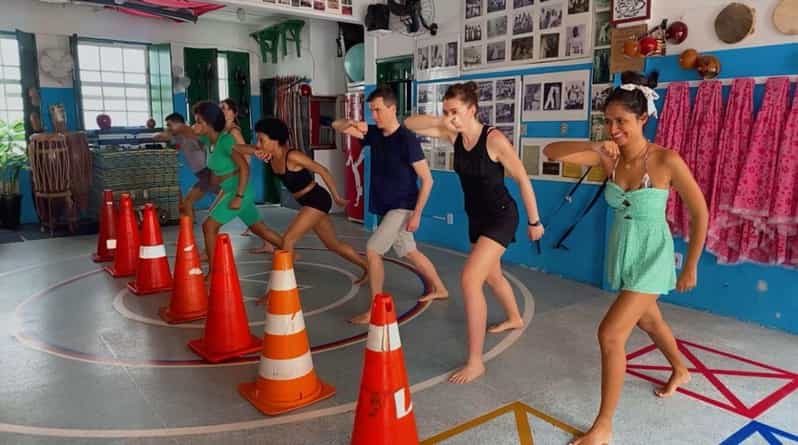
Language can make or break a movement class. Instructions that are vague or rushed are hard to follow when you are also trying to control your feet, arms, and balance.
The class is offered in English and Portuguese. Yasmin is the instructor named in the supplied information, and her teaching receives repeated praise for patience, clarity, and encouragement. She demonstrates the movements and checks that people understand before continuing.
That is good news for English-speaking visitors who want more than a silent exercise class. You can ask questions and follow the cultural explanation without needing to guess what the instructor means.
The teaching also appears to work well for mixed ability levels. One parent and daughter attended as complete beginners while other people had more experience, yet the atmosphere remained friendly and inclusive. That suggests you do not need to worry about holding up the group simply because you are starting from zero.
Still, the exact group size is not provided. If you prefer very private instruction, you should confirm the class arrangement before booking. The available details support a welcoming beginner class, but they do not promise a one-on-one lesson.
What makes the historic setting valuable
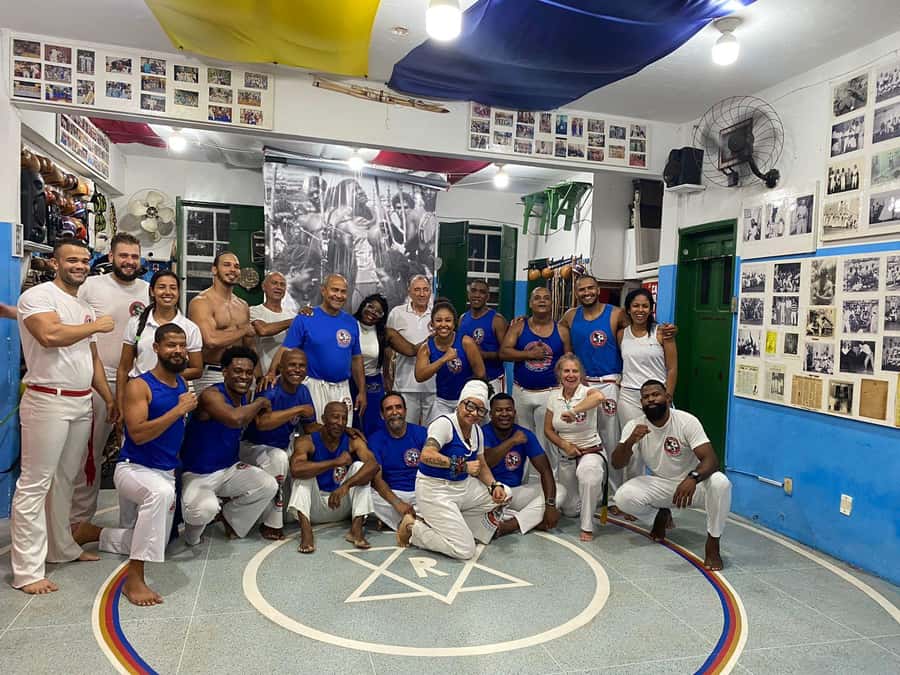
The school’s link to Mestre Bimba gives this class unusual importance. Founded in 1937, it presents itself as Brazil’s first capoeira school. That is a powerful setting for learning the basics because you are connecting the movements to a real institution and to the development of capoeira in Brazil.
Mestre Bimba is closely linked with Regional Capoeira, a style that helped bring structure and formal teaching to the art. The information provided for this activity does not outline a full lecture on his life or give a detailed museum visit, so you should not book expecting a long archival tour. The value comes from learning and training at the school itself, with cultural explanation included in the lesson.
For me, this is the difference between a worthwhile cultural activity and a generic class. You are not only burning energy. You are learning why the art exists, how it relates to Afro-Brazilian ancestry, and why it has such a strong place in Salvador.
The nearby Largo do Terreiro de Jesus setting also makes the experience feel connected to the city around it. You can walk out of class and continue seeing Salvador through the cultural ideas you have just encountered.
Is $43 a fair price for one hour?
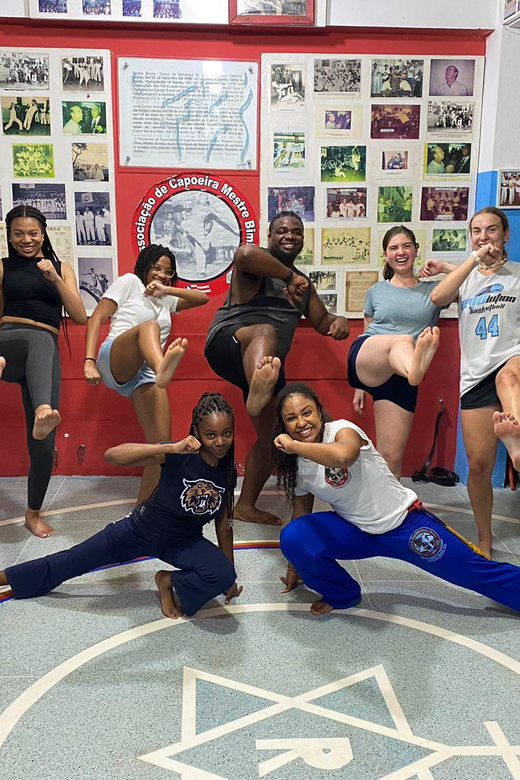
At $43 per person, this is a relatively significant price for a one-hour activity. If you judge it only by time, it may look expensive compared with a longer group tour or a simple dance lesson.
The value improves if you care about the setting and instruction. The price includes access to a historic capoeira school, an English-speaking teacher, a beginner-focused lesson, cultural and historical explanation, and bottled water. You are paying for guided instruction and context, not just room hire and exercise time.
The class also gives you something that a standard city walk cannot. You actively learn a local art form, and the lesson can change how you understand capoeira performances elsewhere in Salvador or Brazil.
I would book it if you value authentic cultural contact and want an activity that mixes learning with exercise. I would skip it if your main goal is the cheapest possible workout or if you strongly dislike physical classes. One hour is enough to learn the basics, but not enough to become proficient.
The option to reserve now and pay later helps if your schedule is still changing. You can also cancel up to 24 hours in advance for a full refund, which gives you some protection when arranging a busy Salvador itinerary.
Who will enjoy this most?
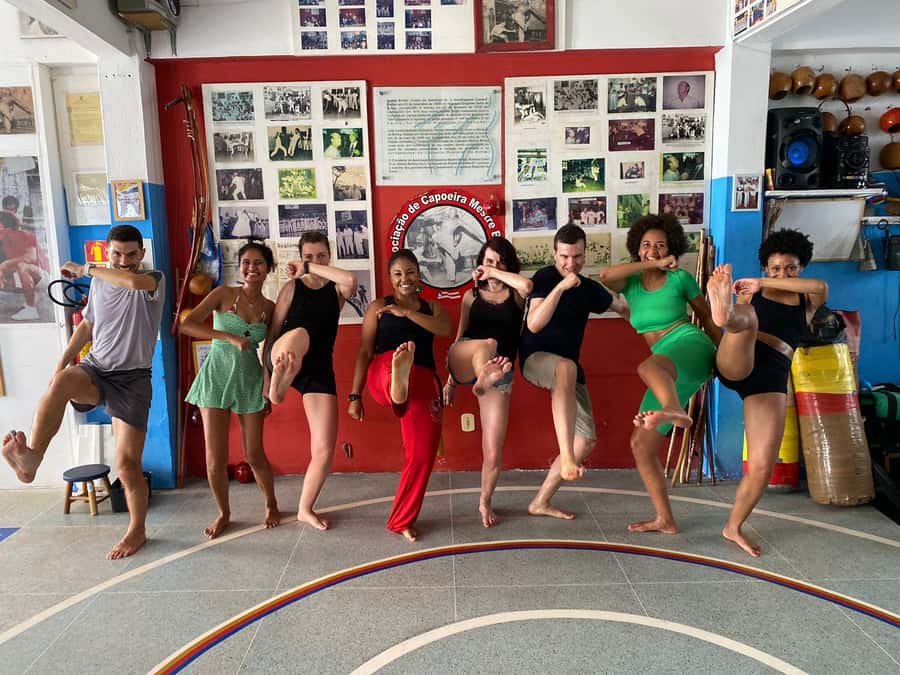
This class is a strong fit for:
- First-time capoeira students
- Solo visitors looking for a social activity
- Couples, friends, or parent and child pairs
- People interested in Afro-Brazilian culture
- Visitors who enjoy active sightseeing
- Anyone curious about martial arts but unsure about committing to formal training
You do not need prior capoeira, dance, or martial arts experience. The lesson is built for beginners, and the instructor’s patient style should help settle nerves.
It also suits people with limited time. A one-hour class can fit neatly between visits to the historic center, provided you leave enough time to reach the meeting point and recover afterward.
It may be less suitable if you want a slow cultural talk with little movement. You should also think twice if you have planned a packed walking schedule and do not want tired legs. The workout can be intense even though the class is short.
Practical preparation for a better class
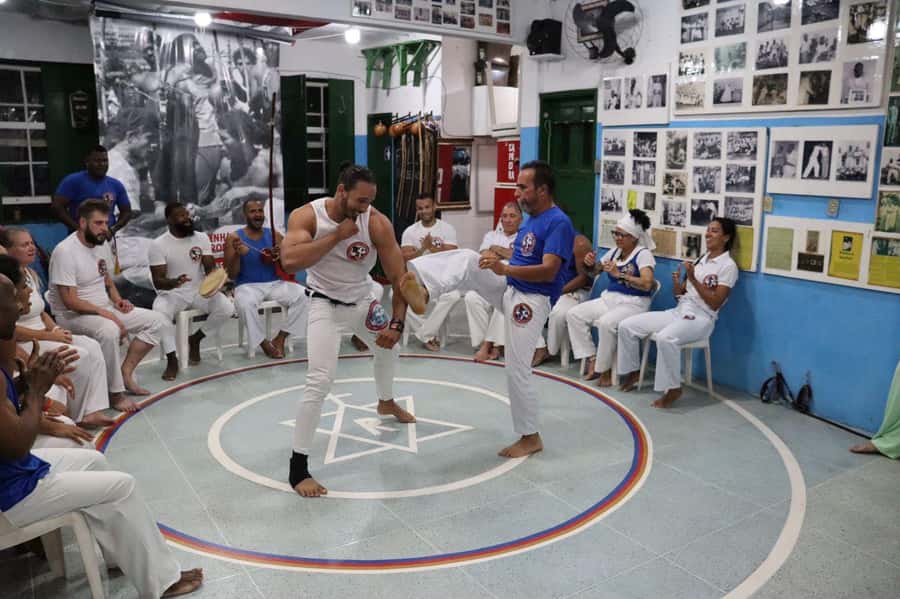
Wear comfortable sports clothes that allow your legs and arms to move freely. The supplied advice specifically points to comfortable clothing and the likelihood of heavy sweating.
Bring a water bottle even though bottled water is included. You will be moving, and staying hydrated is especially sensible in Salvador’s warm climate.
Arrive at the Associação de Capoeira Mestre Bimba rather than waiting for a pickup. There is no pickup service. Use Ó Paí Ó Restaurante or São Domingos Gusmão Church in Largo do Terreiro de Jesus as nearby landmarks when finding the association.
Keep the rest of your schedule flexible. After class, you may feel ready to continue sightseeing, or you may prefer a slower pace. The physical effort is one of the activity’s strengths, but it is also the main reason not to treat this as a quick, effortless stop.
How this compares with simply watching capoeira
Watching capoeira is entertaining, but participating gives you a better sense of the skill involved. When you try to link a defensive movement to a flowing step, you feel how much balance, timing, and body control the art requires.
The class also gives you a basic vocabulary of movement. You will not leave as an expert, but you should understand the foundations of attacks, defenses, and flow. That makes later performances easier to follow and appreciate.
The cultural explanation is just as important as the exercise. Capoeira is tied to Afro-Brazilian ancestry, so learning the story behind the art helps you avoid treating it as a collection of flashy tricks. You gain a clearer sense of its purpose and place in Brazilian culture.
One person enjoyed the class so much that they returned for a second session and also learned that the school offers samba and other dance styles. Those additional classes are not part of this booking, but you can ask about them if you want to continue your movement-based time in Salvador.
Final verdict: should you book it?
Book this class if you want a memorable Salvador activity that combines physical effort with local culture. The historic school, beginner-friendly structure, English instruction, and Yasmin’s patient teaching make it especially appealing for first-timers.
The $43 price is easier to justify if you see the lesson as cultural instruction at an important capoeira school, not simply a one-hour workout. You should also be honest about the physical side. Expect sweat, active legs, and the possibility of soreness.
I would choose it for anyone with at least one spare hour in Salvador who wants to participate rather than only observe. Skip it if you need a very gentle activity or want the lowest-cost way to fill your schedule. For most curious beginners, this offers a memorable way to feel Salvador from the inside.
FAQ
Where does the capoeira class meet?
It meets at the Associação de Capoeira Mestre Bimba in Salvador. Nearby landmarks include Ó Paí Ó Restaurante and São Domingos Gusmão Church in Largo do Terreiro de Jesus.
Is hotel pickup included?
No. The school does not offer pickup service, so you need to make your own way to the meeting point.
Is this class suitable for complete beginners?
Yes. The class is directed at beginners who have never trained capoeira, and no previous experience is required.
How long does the class last?
The class lasts one hour.
What languages does the instructor speak?
Instruction is available in English and Portuguese.
What will I learn during the class?
You will learn basic capoeira attacks, defenses, and flow movements, along with information about the cultural and historical importance of capoeira.
Is bottled water included?
Yes. Bottled water is included, though bringing a water bottle is also recommended because the class can be strenuous.
How much does the class cost?
The price is $43 per person. You can reserve now and pay later, and cancellation is free up to 24 hours in advance for a full refund.
Just added in Salvador
- Mãe Tereza Ecological Park | A peaceful paradise, perfect for relaxing!★ 4.5 · 19 reviews
- Full Day Tour in Trancoso with Chocolate Factory★ 4.5 · 35 reviews
- Horse back riding and Eco tourism food and fun.★ 5.0 · 1 review
- Salvador: Schooner Cruise with Pickup and Itaparica Stop★ 3.8 · 5 reviews
- Salvador: Traditional Drumming and Percussion Workshop★ 4.4 · 10 reviews
- PROMO Salvador: Interactive Art and Culture Private Tour★ 5.0 · 2 reviews
- Salvador: 3-Hour Percussion Class★ 4.9 · 10 reviews
- Salvador: Cultural Treasure – Samba de Roda.★ 4.9 · 51 reviews
Salvador and Bahia Tours, compared.
Salvador City Tour – Discover Brazil’s First Capital En, It, Es
Read our review →
Cooking class in Salvador, an authentic dinning experience
Read our review →
Tour to the Frades Islands and Itaparica, from Salvador – Ba
Read our review →


Tour Praia do Forte and Guarajuba, Leaving Salvador-Bahia.
Read our review →
Transfer to Iberostar Selection Praia do Forte or Waves Bahia
Read our review →
Transfer Iberostar Waves Bahia / Praia do Forte – Private
Read our review →Browse the lists this tour appears in