
Reviewed · SALVADOR AND BAHIA TOURS
Salvador de Bahia African Culture Tour
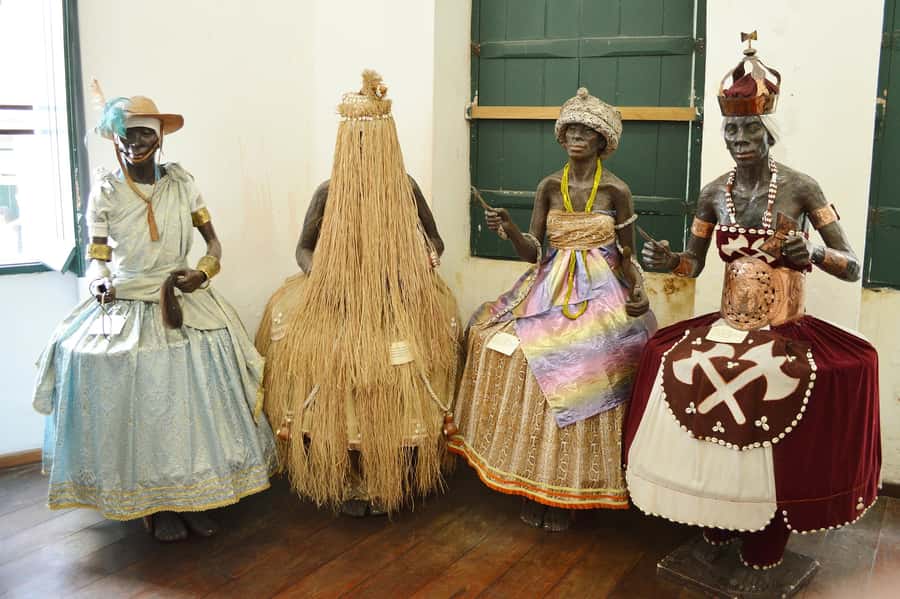
Salvador’s African soul is impossible to miss. This three-hour private walk connects Terreiro de Jesus, the Cross of São Francisco, and the Escola do Olodum with clear discussion of slavery, liberation, music, dance, and Carnival. I especially like the focus on Afro-Brazilian culture rather than a quick checklist of churches and photo stops. I also like the chance to shape the conversation around your interests, something several guides have handled well.
The main caution is value. You are paying for a private guide and focused interpretation, but this is still a walking tour, and the museums included may be free. One booking ended after two hours instead of three, so confirm the expected duration at the start.
In This Review
- Key points to know before booking
- Why this walk matters in Salvador
- Terreiro de Jesus and the colonial starting point
- The Cross of São Francisco and Black community action
- Escola do Olodum and the meaning of Carnival
- A private guide makes the biggest difference
- Timing, walking, and practical comfort
- Is the tour good value?
- Who should book this Salvador walking tour?
- Should you book it?
- FAQ
- Where does the Salvador African Culture Tour begin?
- How long does the walking tour last?
- Which languages are available?
- Is this a private tour?
- What places are included on the route?
- Is an Afro-Brazilian Mass included?
- Can I cancel for a full refund?
Key points to know before booking
- Terreiro de Jesus opens the story: Learn how Jesuit missions and Portuguese colonization shaped Salvador’s center.
- The Cross of São Francisco links faith and resistance: The stop covers a 19th-century men’s organization created to support the Black community’s fight for liberation.
- Olodum gives Carnival a cultural context: The Escola do Olodum explains why drumming, parade groups, and Carnival matter so much in Salvador.
- Samba and capoeira are treated as history, not just entertainment: The guide explains their place in Afro-Brazilian life and invites questions.
- Private guiding makes the pace flexible: Guides such as Sayuri, Eduardo, Adilson, Aldison, Nilza, Facundo, and Carlos have been praised for adapting the walk to individual interests.
- The route ends at São Francisco: You finish near the Cross of São Francisco after about three hours, rather than returning to the cathedral.
Why this walk matters in Salvador
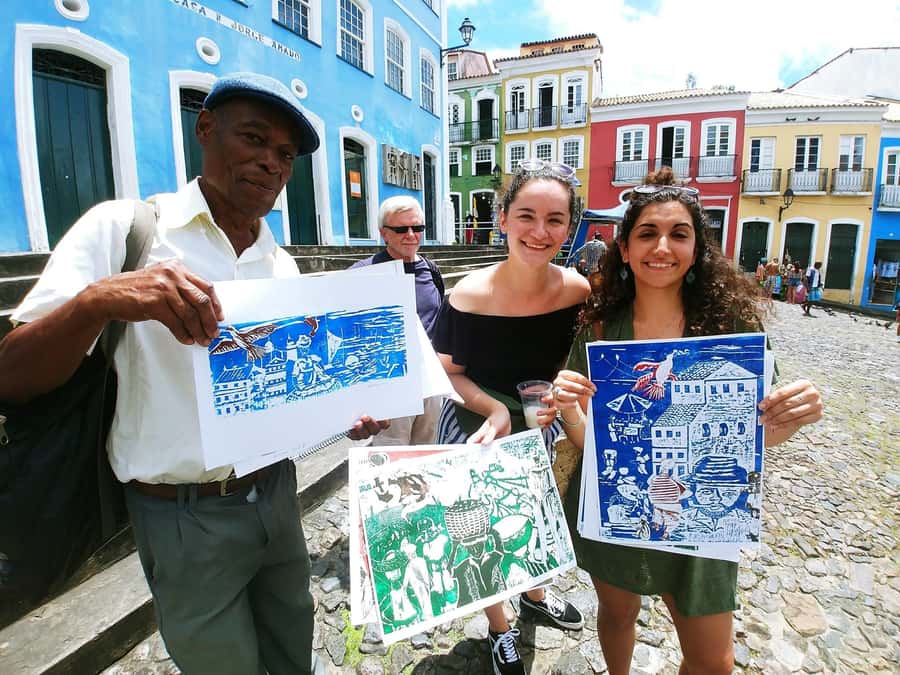
Salvador is one of the best places in Brazil to connect African heritage with daily city life. This is not simply a tour of old buildings with African culture added as a footnote. The route uses the historic center to explain how African people, their descendants, and their traditions shaped the city through music, religion, dance, food, art, and community action.
I like that the tour also addresses difficult subjects. The guide may discuss slavery, prostitution, colonization, and the experience of Black Brazilians. Those topics are not treated as decoration. They help explain why the streets, churches, cultural groups, and public celebrations of Salvador carry such strong meaning.
You meet at 2 pm in front of the Cathedral Basilica of San Salvador. The location is easy to identify, with coordinates listed as -12.972854614257812, -38.50970458984375. From there, you walk through the central historic district, with the tour finishing at the Cross of São Francisco.
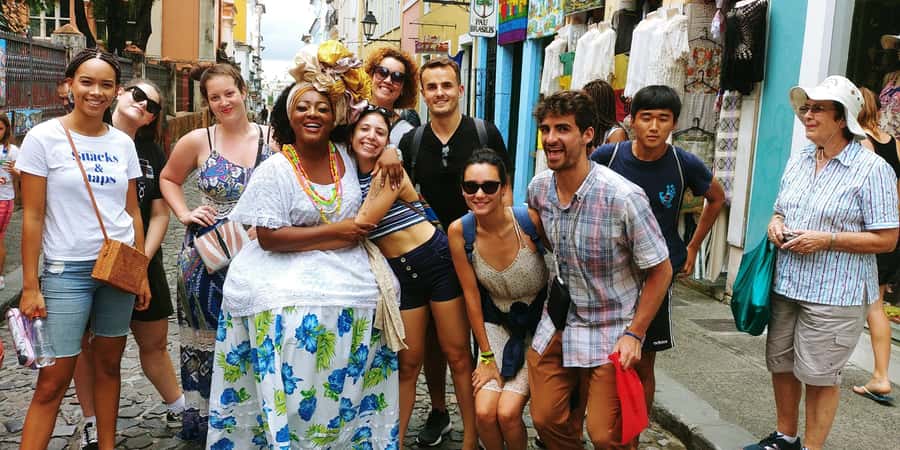
Because the group is private, you can ask for more detail on subjects that matter to you. One guide began by asking what the group wanted to learn, then shaped the walk around those interests. Another guide took a group to three museums, showing that the exact balance between street history, museum visits, and discussion can vary.
More of Salvador and Bahia:
- Round trip transfer, Salvador, Bahia, Brazil
★ 5.0 · 228 reviews - Salvador City Tour – Discover Brazil’s First Capital En, It, Es
★ 5.0 · 217 reviews - Cooking class in Salvador, an authentic dinning experience
★ 5.0 · 132 reviews
Terreiro de Jesus and the colonial starting point
The first major stop is Terreiro de Jesus, a square that provides the tour’s historical foundation. Here, you learn how the Jesuit missions and Portuguese colonization influenced this part of Brazil.
That starting point is useful because it gives you a way to read the rest of the route. Instead of seeing Salvador’s churches and public squares as isolated sights, you begin to understand how religion, colonial power, forced labor, and African cultural survival were tied together.
The guide also discusses African figures connected with Salvador over time. The supplied details do not name those figures in advance, so I would ask your guide which people will be covered. If you have a particular interest in musicians, religious leaders, artists, or political figures, this is a good place to steer the conversation.
Terreiro de Jesus is also a practical first stop. You are still near the cathedral and the heart of the historic center, so the explanation begins before the walk has covered much ground. That leaves more time for questions and helps you get oriented to the area.
Do not expect a formal lecture with every date and name. The strongest part of this experience appears to be the conversation between guide and guest. Eduardo, for example, was praised for explaining both local events and wider Brazilian history in a way that encouraged questions. That style is especially helpful in Salvador, where a single street can raise questions about colonial rule, religion, race, and culture at once.
The Cross of São Francisco and Black community action
The walk continues to the Cross of São Francisco. This stop brings the story closer to organized resistance and mutual support within Salvador’s Black community.
You learn about a men’s organization founded in the 19th century with the goal of helping Black people in their struggle for liberation. The detail matters because it shifts the focus away from the idea that African descendants in Brazil were only acted upon by colonial authorities. Community groups created support networks and worked toward freedom under extremely difficult conditions.
The Cross of São Francisco is also tied to the city’s Catholic setting, which makes it a useful place to discuss the complicated relationship between Christianity, colonial power, and African traditions. The tour’s African heritage theme works best when these parts are placed side by side rather than kept in separate boxes.
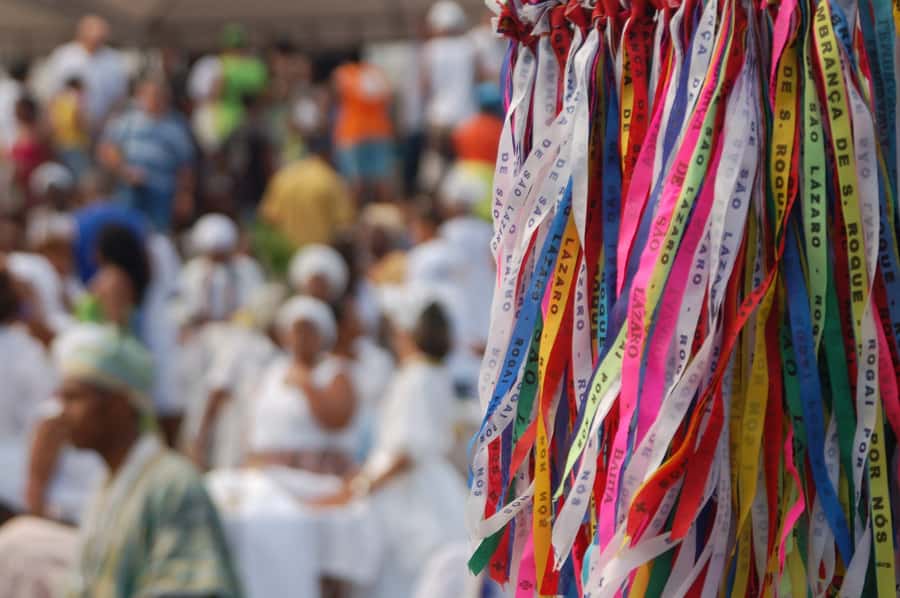
This is where the guide may also explain samba and capoeira. You should not book the walk expecting a full dance show, since the description promises explanation rather than a scheduled performance. Still, learning how these forms connect to Afro-Brazilian identity can make later music, street performances, and Carnival events easier to understand.
The guides receive particularly strong praise for making these explanations interactive. Adilson was described as friendly and easy to talk with, while another guide was praised for letting the group guide the tour at times. That flexibility is valuable here, since some people will want more cultural background, while others will want to focus on social history or the arts.
Escola do Olodum and the meaning of Carnival
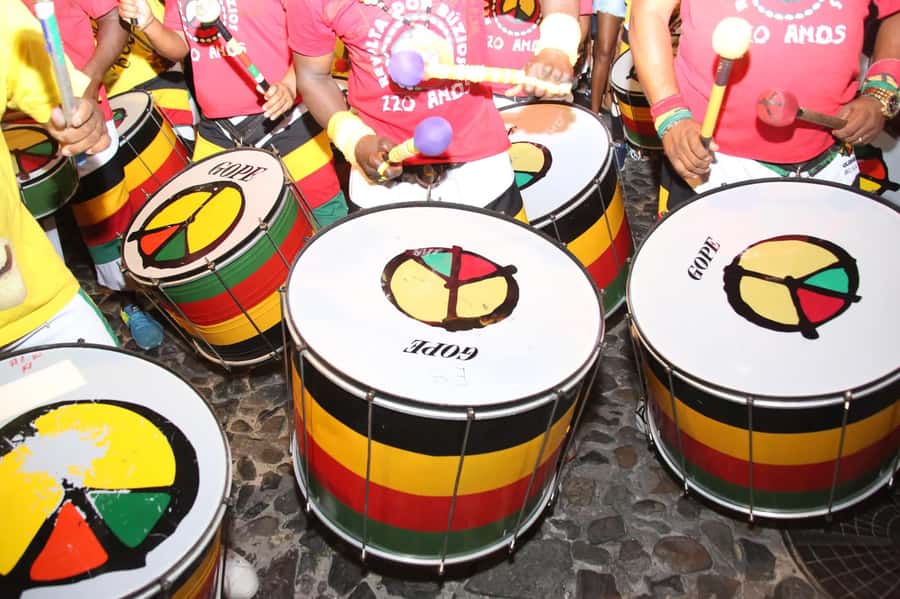
The final major cultural stop is the Escola do Olodum, a cultural and educational center linked to Salvador’s African-descended community. The visit focuses on Carnival and its role in the city.
Olodum is important because Carnival in Salvador is not only a party for visitors. It is also a major expression of music, identity, neighborhood life, and Afro-Brazilian culture. The tour helps explain that wider meaning before you encounter the city’s Carnival traditions on your own.
This part should appeal to anyone who enjoys music and performance but wants more context than a nightclub or street show can provide. The discussion of drumming and parade culture can also help you understand why Salvador’s rhythms feel so closely tied to public life.
If you are visiting near Carnival, ask the guide for current advice. One guide, Sayuri, continued offering helpful Carnival tips after the walk and helped a past guest make better sense of the celebrations beyond the tour itself. That kind of local guidance can be more useful than a standard list of events, though you should treat extra advice as a bonus rather than a formal part of the three-hour program.
The listed highlights also include an Afro-Brazilian Mass. However, the detailed route description specifically explains Terreiro de Jesus, the Cross of São Francisco, samba, capoeira, and Olodum. Since a mass depends on the religious schedule and timing, ask before booking if attending one is essential to you.
More things to do in Salvador:
- Tour to the Frades Islands and Itaparica, from Salvador – Ba
★ 4.0 · 130 reviews - Transfer Salvador Airport / Hotel Litoral Norte
★ 5.0 · 111 reviews - Private City Tour in Salvador
★ 5.0 · 110 reviews - From Salvador: Schooner Tour to Frades Islands and Itaparica
★ 3.9 · 98 reviews
A private guide makes the biggest difference
The private format is the clearest reason to choose this experience over a standard group walk. You are not locked into a fixed conversation, and the guide can respond to your questions as the history unfolds.
That does not mean every guide will deliver the same tour in exactly the same way. Several guides are named in the feedback, including Eduardo, Sayuri, Aldison, Adilson, Nilza, Facundo, and Carlos. The repeated strengths are warmth, patience, strong historical explanation, and a willingness to talk rather than simply recite facts.
Sayuri was praised for asking about specific interests before setting the route. Eduardo received praise for connecting Salvador’s story with Brazilian history as a whole. Aldison was described as making the group feel as if they were getting to know the city with a friend. Facundo and Carlos were credited with presenting Salvador through its cultural and historical side.
Those details give you a useful booking tip: arrive with questions. Ask about Candomblé, slavery, capoeira, Carnival, music, food, religion, or particular historical figures. The tour will likely be more rewarding if you take part in the discussion instead of waiting for a set speech.
The private format also suits mixed-interest groups. One person can ask about architecture, another about African resistance, and another about Carnival. A guide who adapts well can connect those subjects without forcing everyone into the same narrow route.
Timing, walking, and practical comfort
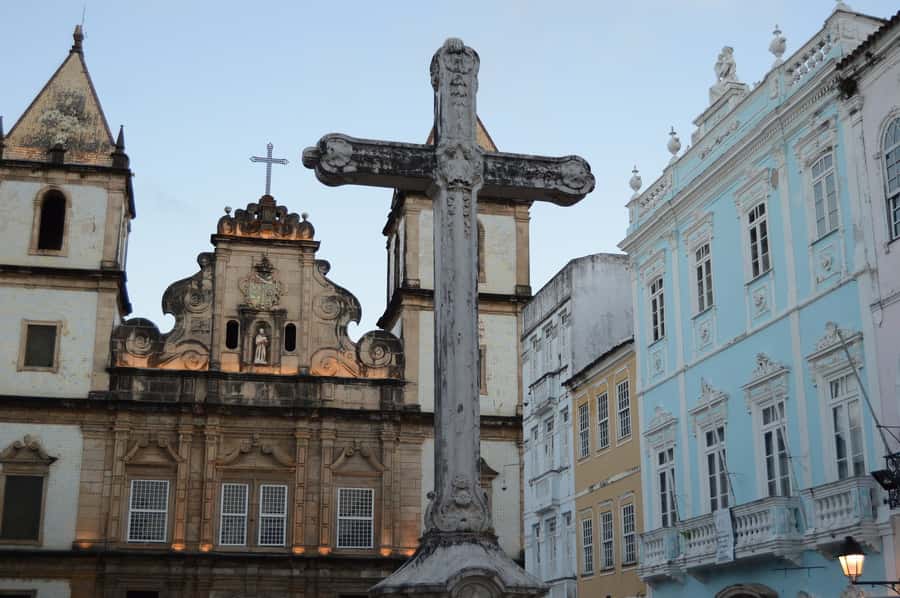
The tour begins at 2 pm and lasts three hours, ending at the Cross of São Francisco. That afternoon schedule gives you the morning for another Salvador activity and places you in the historic center during the later part of the day.
You should be ready for a walking tour through the city center. The available information does not give a total distance, a detailed accessibility statement, or a list of included transport. I would wear comfortable shoes, bring water, and confirm the route if stairs, slopes, or uneven surfaces are a concern.
The endpoint matters. You do not return to the Cathedral Basilica, so plan your next stop from the Cross of São Francisco. This is easy enough if you want to continue exploring the historic center, but it is worth knowing if you have a fixed dinner booking or transport waiting at the cathedral.
The tour is offered in English, Portuguese, and Spanish. That range is helpful in Salvador, where a good explanation of sensitive historical subjects depends on nuance. If language choice matters to you, select or confirm it when booking.
Is the tour good value?
No price is supplied here, so I cannot judge the exact cost in Brazilian reais. The value depends on how much you want from the guide, not simply on how many buildings you visit.
A private three-hour walk can be worthwhile if you want a tailored explanation of Afro-Brazilian culture and the chance to ask difficult questions. The guides have been praised for offering historical context, sharing local suggestions, and making the city feel personal. For a first visit to Salvador, that kind of orientation can shape how you understand the rest of your stay.
The value is weaker if you expect paid attractions, transport, food, or a performance. One critical assessment found the tour too expensive because it was a walking route using free museums. That is a fair concern. You should compare the price with other private walking tours in Salvador and decide if personal guiding is worth the difference.
I would also confirm the full three-hour schedule at the start. The advertised duration is three hours, but one booking finished after two. That appears to be an exception, yet it is the one practical issue I would address directly with the guide.
Free cancellation up to 24 hours before the start and the option to reserve without paying immediately make the booking less rigid. Those terms are useful if your Salvador plans may change, but they do not remove the need to check the guide language, meeting point, and expected route.
Who should book this Salvador walking tour?
I would recommend it most strongly to you if you want history with cultural context. It suits first-time visitors who want to understand why African traditions are central to Salvador, not just see attractive streets and churches.
It is also a good fit for:
- People interested in slavery, liberation, and Black Brazilian history
- Carnival fans who want to understand Olodum and Salvador’s music culture
- Visitors who prefer private discussion to a large group lecture
- Couples, families, or friends with different interests
- Anyone who wants a guide who can suggest museums, art, food, and local cultural activities
I would be more cautious if you want a performance-heavy outing. Samba and capoeira are discussed, but the route does not promise a dedicated show. I would also choose another activity if you prefer a bus tour, dislike walking, or want admission to major paid sights included in the price.
Should you book it?
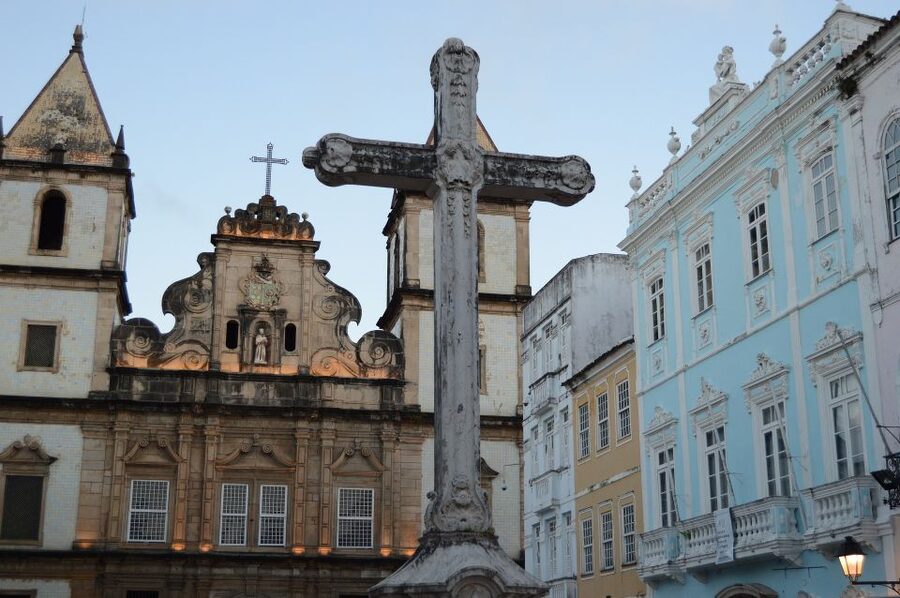
Book this tour if you want Salvador explained through its African heritage, with a private guide who can adjust the conversation to your questions. Terreiro de Jesus gives you the colonial setting, the Cross of São Francisco adds a story of Black community action, and Olodum connects the past to Carnival and music today.
Before paying, confirm three things: that the guide can lead in your preferred language, that the walk will run for the full three hours, and whether the Afro-Brazilian Mass is actually included on your date. If the price feels high for a walking route, choose it only if the guide’s personal attention and historical interpretation are worth that premium to you.
FAQ
Where does the Salvador African Culture Tour begin?
It begins at 2 pm in front of the Cathedral Basilica of San Salvador. The listed coordinates are -12.972854614257812, -38.50970458984375.
How long does the walking tour last?
The scheduled duration is three hours. The tour ends at the Cross of São Francisco.
Which languages are available?
The tour is offered in English, Portuguese, and Spanish.
Is this a private tour?
Yes. The activity is organized for a private group rather than a shared group.
What places are included on the route?
The route includes Terreiro de Jesus, the Cross of São Francisco, and the Escola do Olodum. The experience also covers samba, capoeira, Carnival, colonization, and African cultural influence in Salvador.
Is an Afro-Brazilian Mass included?
An Afro-Brazilian Mass is listed among the highlights, but the detailed route description does not provide a mass time or confirm attendance. Ask the provider to confirm this for your date.
Can I cancel for a full refund?
You can cancel up to 24 hours in advance for a full refund. You can also reserve now and pay later, according to the stated booking terms.
Just added in Salvador
- Full Day Tour in Trancoso with Chocolate Factory★ 4.5 · 35 reviews
- Mãe Tereza Ecological Park | A peaceful paradise, perfect for relaxing!★ 4.5 · 19 reviews
- Horse back riding and Eco tourism food and fun.★ 5.0 · 1 review
- Salvador: Schooner Cruise with Pickup and Itaparica Stop★ 3.8 · 5 reviews
- Salvador: Traditional Drumming and Percussion Workshop★ 4.4 · 10 reviews
- PROMO Salvador: Interactive Art and Culture Private Tour★ 5.0 · 2 reviews
- Salvador: 3-Hour Percussion Class★ 4.9 · 10 reviews
- Salvador: Cultural Treasure – Samba de Roda.★ 4.9 · 51 reviews
Salvador and Bahia Tours, compared.
Salvador City Tour – Discover Brazil’s First Capital En, It, Es
Read our review →
Cooking class in Salvador, an authentic dinning experience
Read our review →
Tour to the Frades Islands and Itaparica, from Salvador – Ba
Read our review →

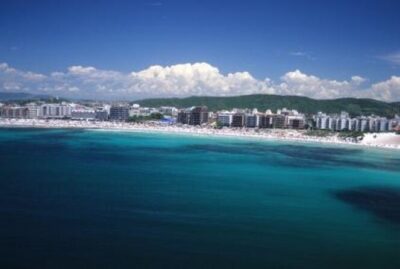
Tour Praia do Forte and Guarajuba, Leaving Salvador-Bahia.
Read our review →
Transfer to Iberostar Selection Praia do Forte or Waves Bahia
Read our review →
Transfer Iberostar Waves Bahia / Praia do Forte – Private
Read our review →Browse the lists this tour appears in