
Reviewed · BRAZIL FOOD AND SAMBA NIGHTS
Salvador: Cultural Night of Capoeira, Samba, and Drumming
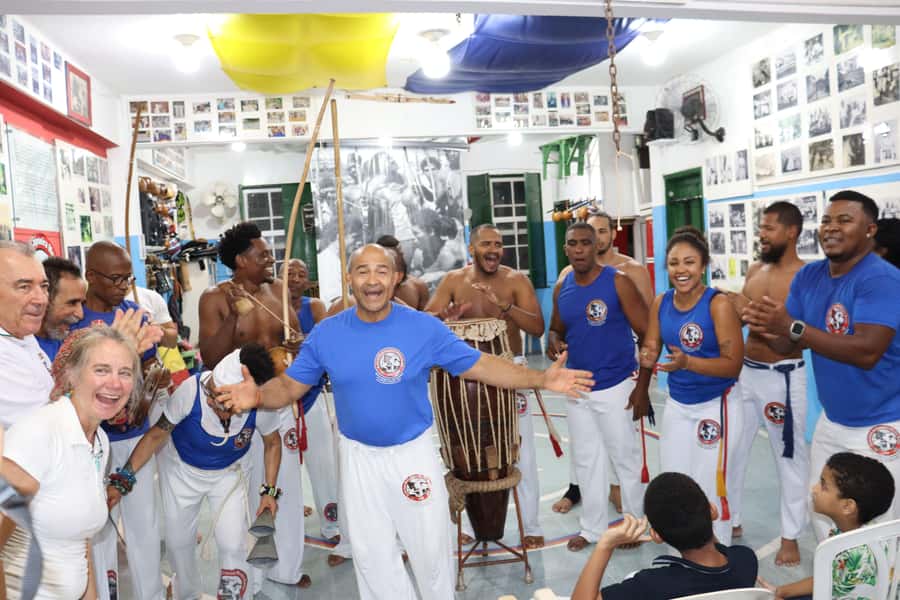
Feel the room come alive. This one-hour cultural night takes place at the first Capoeira school in Brazil, founded by Mestre Bimba in 1937, and brings together Capoeira, Samba, and Maculelê with live drumming and music. I like the setting because it gives the performance real cultural weight, and I like the unscripted feel, where people of different ages and abilities take part. The main drawback is heat: the room can become very warm, and the show may feel less polished than a formal theater production.
You will meet at Associação de Capoeira Mestre Bimba in Salvador’s Largo do Terreiro de Jesus. There is no pickup, food, or drink included, so you need to arrange your own way there and wear light clothing. The price is $30 per person, a fair deal if you want a compact introduction to Afro-Brazilian performance rather than a long stage show.
In This Review
- Key points to know before you go
- Why Mestre Bimba’s school matters
- Arriving in Largo do Terreiro de Jesus
- The opening Capoeira roda
- Samba, Maculelê, and the force of rhythm
- Acrobatics without the theater polish
- A one-hour program with a small timing puzzle
- What the $30 price includes
- Heat, clothing, and physical demands
- How authentic is the experience?
- Planning your evening in Salvador
- Who should book this cultural night?
- FAQ
- Where does the cultural night take place?
- How long does the experience last?
- What performances are included?
- Is transportation provided?
- What languages are available?
- What should I wear or bring?
- Should you book it?
Key points to know before you go
- Mestre Bimba’s 1937 school: The venue is tied to the founder of Capoeira Regional and gives the evening meaning beyond entertainment.
- Several traditions in one hour: You see Capoeira, Samba, Maculelê, drumming, singing, live music, and acrobatics in a short program.
- An organic performance: This is connected to an association and its practice, not a tightly polished tourist production.
- Fast Capoeira rodas: Expect quick, intense movement, musical exchange, and participation across ages and genders.
- Heat is part of the practical picture: Bring comfortable clothes, comfortable shoes, and prepare for a hot room.
- Easy-to-find meeting point: Use Ó Paí Ó Restaurante or São Domingos Gusmão Church in Largo do Terreiro de Jesus as nearby landmarks.
Why Mestre Bimba’s school matters
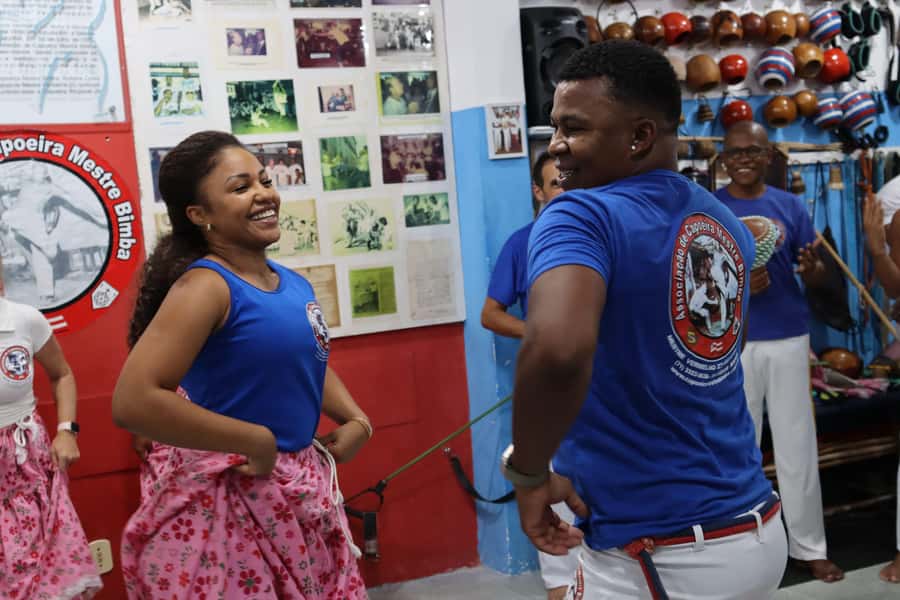
The address is not a random hall hired for an evening show. Associação de Capoeira Mestre Bimba is linked to Mestre Bimba, who founded the first Capoeira school in Brazil in 1937 and created Capoeira Regional.
That detail changes how I would approach the night. You are not simply watching people perform Brazilian dance. You are entering a place connected to the teaching and preservation of a martial art that carries music, movement, community, and cultural resistance.
Capoeira grew from Afro-Brazilian traditions and has long blended combat, dance, rhythm, and improvisation. The school’s setting helps you see those elements as part of a living practice rather than a museum display.
The experience provider is the Associação de Capoeira Mestre Bimba itself. That makes the evening feel closer to an association gathering or demonstration than a commercial theater package. If you want perfect timing, theatrical lighting, and a fixed script, this may not be your ideal night. If you want to see how the art is practiced by real members of a group, the setting is a major plus.
More of Salvador and Bahia:
- Round trip transfer, Salvador, Bahia, Brazil
★ 5.0 · 228 reviews - Salvador City Tour – Discover Brazil’s First Capital En, It, Es
★ 5.0 · 217 reviews - Cooking class in Salvador, an authentic dinning experience
★ 5.0 · 132 reviews
Arriving in Largo do Terreiro de Jesus
You make your own way to the meeting point, since transportation and hotel pickup are not provided. The listed meeting point is Associação de Capoeira Mestre Bimba, with Ó Paí Ó Restaurante and São Domingos Gusmão Church offered as nearby landmarks in Largo do Terreiro de Jesus.
That advice is useful because Salvador’s historic center has many close streets, churches, restaurants, and public squares. I would give myself enough time to find the exact entrance instead of arriving at the last second. The evening is short, so missing the opening Capoeira section would take away a large part of the experience.
There is no stated group size, and the event is described as a live cultural night rather than a guided walking tour. English and Portuguese are available, but the heart of the program is physical and musical, so you will understand much of it even if you speak little Portuguese.
The show starts at the association and remains focused on performance. You do not spend the evening moving between several sights. That makes it a practical choice for a free night in Salvador, especially if you are staying near the historic center.
The opening Capoeira roda
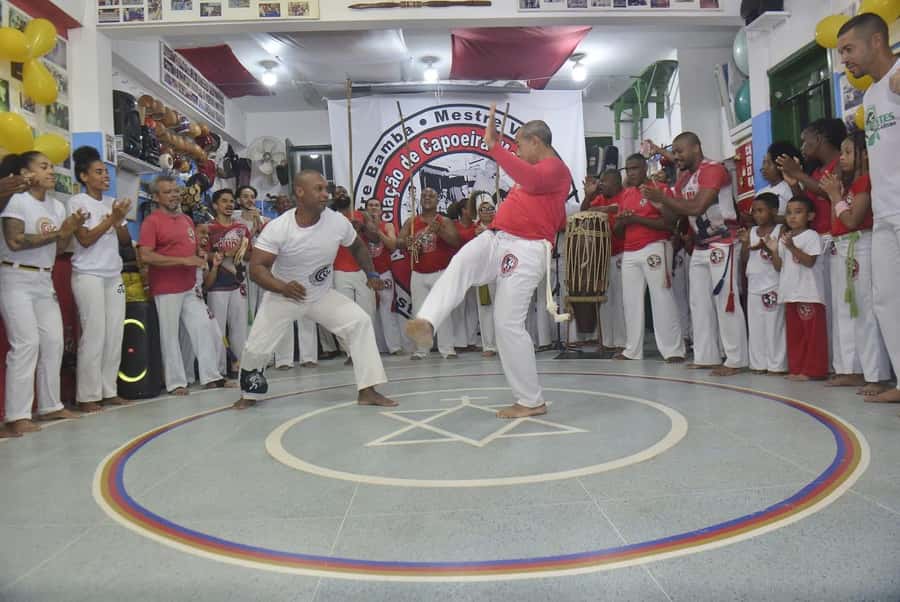
Capoeira takes the lead, and this is likely the most important part of the evening. A roda is a circle formed around the players and musicians. Inside it, two people exchange quick movements while the surrounding group supports the action with rhythm, singing, and attention.
You can expect fast footwork, low movements, sudden changes of direction, kicks, spins, and acrobatic gestures. The action is not simply a fight and not simply a dance. It is a conversation in motion, shaped by timing and control.
One of the strongest features is the range of people involved. The performance includes different ages and genders, which gives you a better sense of Capoeira as a community practice rather than a specialty reserved for professional athletes.
That also explains why the movements can vary. Some exchanges may look intense and highly skilled. Others may feel more like practice or demonstration. The unevenness is part of the deal. You are seeing an association’s living activity, not a cast repeating the same routine eight times a week.
I especially like this distinction because it protects the experience from becoming a staged postcard. The program is still arranged for an audience, but the energy comes from the participants and the circle around them.
Samba, Maculelê, and the force of rhythm
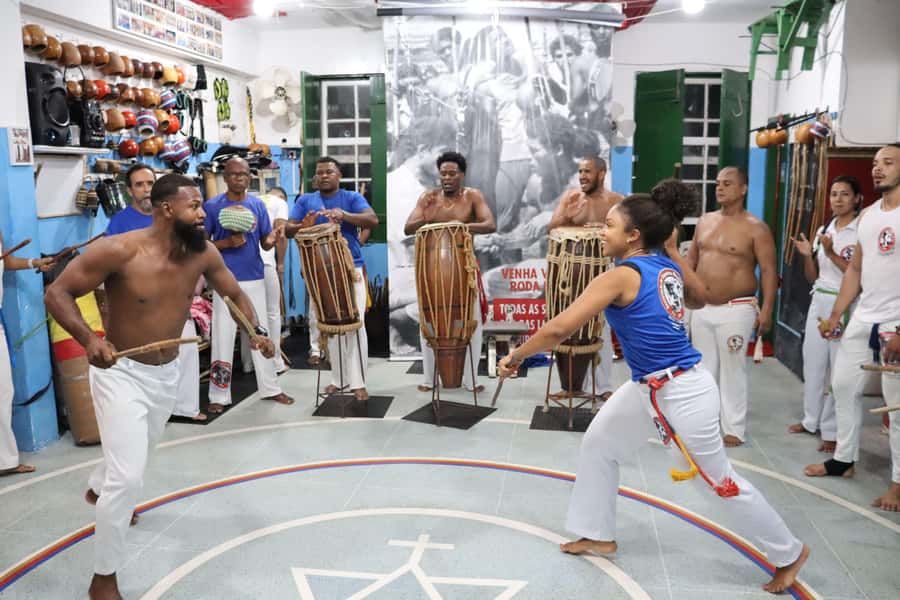
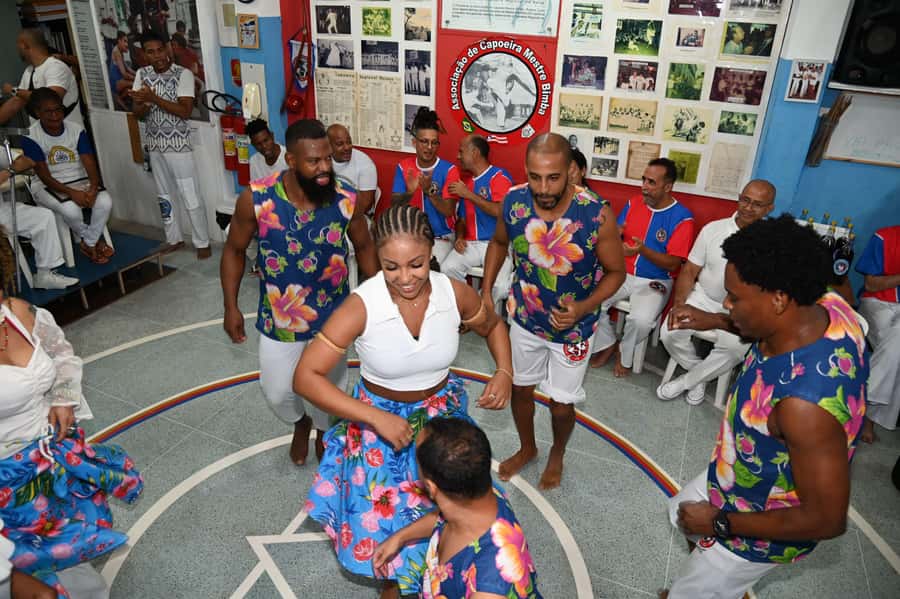
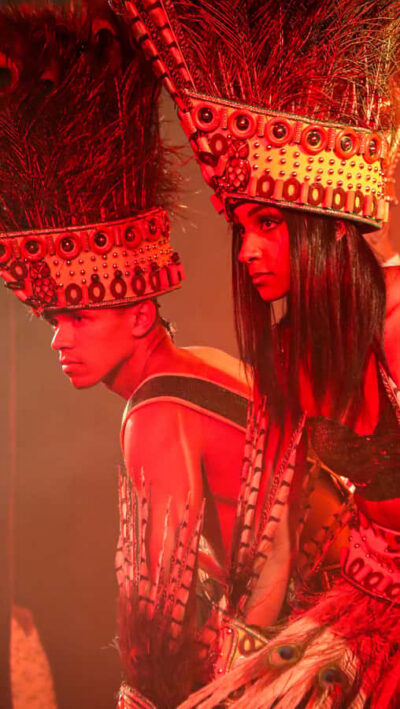
After Capoeira, the evening broadens into other Brazilian forms. Samba brings dance, singing, and a lighter social energy. The program includes both men and women, and the music gives the room a chance to shift from martial movement to celebration.
Maculelê adds a different visual character. This Afro-Brazilian performance tradition is known for rhythmic movement with sticks, often combining dance, percussion, and dramatic gestures. The supplied details describe it as fiery and acrobatic, so you should expect a lively section rather than a quiet folk presentation.
The drumming holds the program together. Traditional percussion does more than provide background sound. It sets the pace, signals changes, and gives the performers a common pulse. Live singing and music make the night feel active from start to finish.
You may notice that the audience is close to the action. That can make the quick movements more exciting, but it can also mean a warmer, louder room. The performance does not appear designed as a seated concert with a cool, quiet atmosphere. Bring patience for a crowded-feeling setting and let the rhythm do some of the work.
More Food and Samba Nights in Salvador:
- Salvador: Cultural Treasure – Samba de Roda.
★ 4.9 · 51 reviews - Salvador: Caipirinha Masterclass with Unlimited Drinks
★ 4.2 · 4 reviews - Rio de Janeiro: Beginner Samba Lesson in Ipanema
★ 4.9 · 1,071 reviews - Rio: Pub Crawl in Lapa with Cachaça Tasting and Live Samba
★ 4.7 · 881 reviews
Acrobatics without the theater polish
The acrobatics are another draw, especially during the Capoeira sections and Maculelê. Expect flips, low passes, spins, and controlled physical feats rather than a separate circus act.
This is where your expectations matter. The strongest moments can feel immediate because the action happens in a real cultural setting. At the same time, not every movement will have the same level of polish. One assessment of the evening described the performances as genuine but uneven, which is a fair way to frame the trade-off.
I would choose this night for energy and cultural contact, not technical perfection. A large production might give you cleaner choreography and more predictable pacing. This association-based show gives you more of the feeling of people practicing, sharing, and performing their traditions in their own space.
A one-hour program with a small timing puzzle
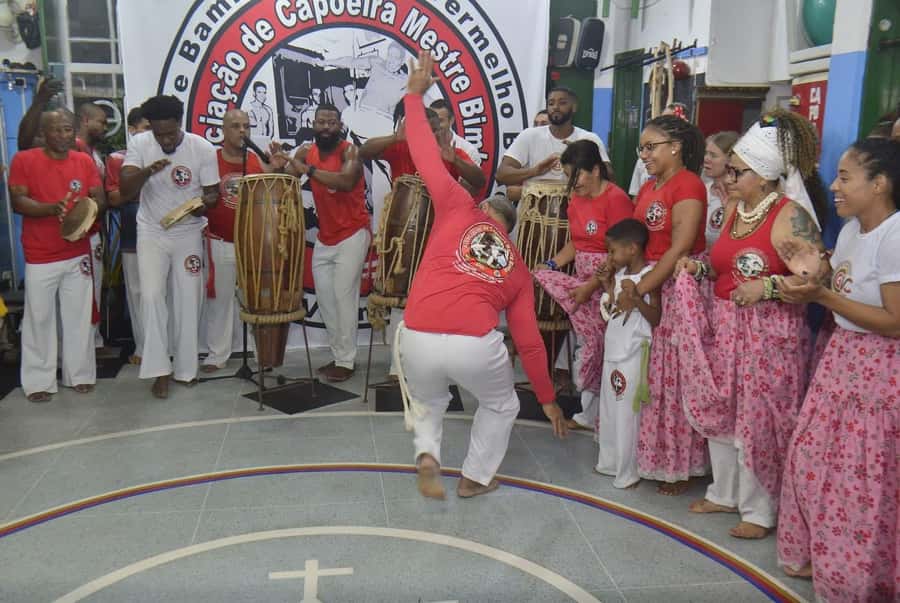
The activity is advertised as lasting one hour, while the detailed schedule describes the concert and dance show as taking about one and a half hours. That difference is worth noting when you plan dinner, transport, or another evening activity.
If your schedule is tight, ask for the current start and end time when you reserve. Availability changes by date, and the exact program may affect the length. I would avoid booking a nonrefundable reservation immediately afterward.
The short format is still useful. In about an hour, you get several forms of performance without giving up an entire evening. Capoeira receives the central focus, while Samba, Maculelê, drumming, music, and acrobatics add variety.
The pace should suit you if you want an introduction rather than a full course in Brazilian culture. You will not leave knowing every historical detail or technical term, but you will see how music and movement work together.
What the $30 price includes
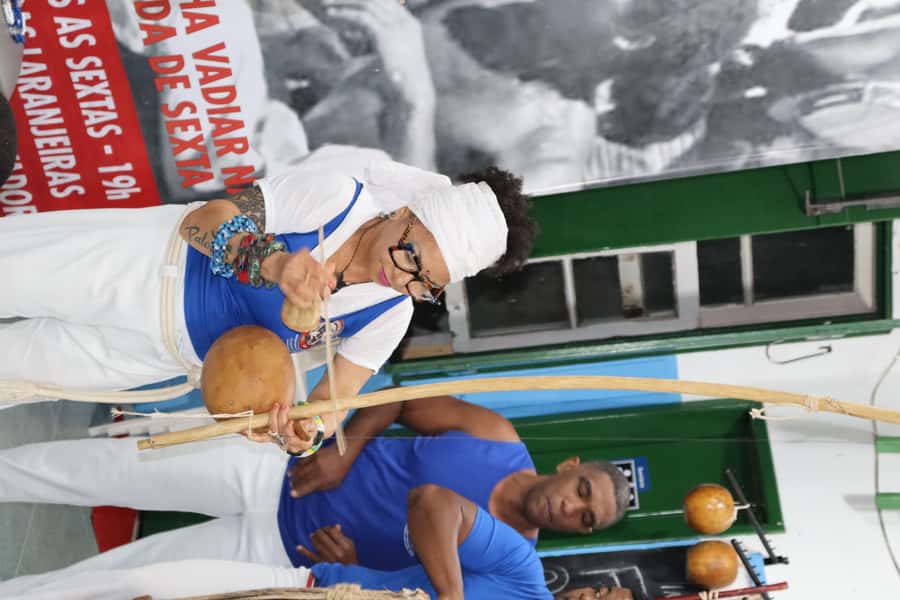
At $30 per person, the admission includes entry to the cultural night and the full set of performances: Capoeira, Samba, Maculelê, traditional drumming, live music, and acrobatics.
I consider that reasonable because the venue has genuine historical importance and the program combines several art forms. You are paying for more than a single dance number. You are also supporting an association connected to Mestre Bimba’s Capoeira tradition.
The value depends on what you want. If you mainly want a polished show with a large stage and professional theatrical effects, you may find the price less attractive. If you want a direct look at Afro-Brazilian performance in a place tied to Capoeira’s development, $30 is a sensible spend.
Food, drinks, and transportation are not included. One especially nice touch reported after the show was a refreshing treat, but I would not plan on that as part of the formal inclusions. Eat before you arrive or plan a meal afterward, and carry only what you need for the performance.
Heat, clothing, and physical demands
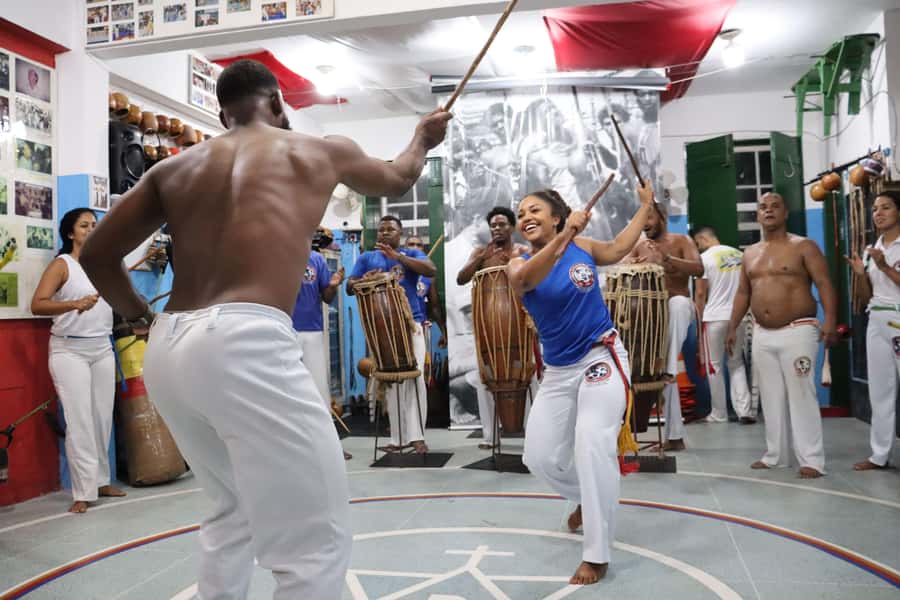
Wear comfortable clothes and shoes. The room can get hot, so lightweight clothing will make a real difference. You may also want to avoid heavy layers that become uncomfortable once the drumming and movement get going.
Smoking is not allowed. The activity is not suitable for pregnant women or people with back problems, which makes sense given the fast movement and acrobatics taking place nearby.
You do not need to perform, and the information describes a show rather than a hands-on lesson. Still, the atmosphere may feel active and close. If you have trouble with heat, standing, or crowded indoor performances, consider that before booking.
The event should appeal to people who enjoy music, dance, and cultural history. Families with older children may appreciate the range of performers, though the suitability of the setting for young children is not specified. I would not choose it for someone seeking a quiet, seated cultural lecture.
How authentic is the experience?
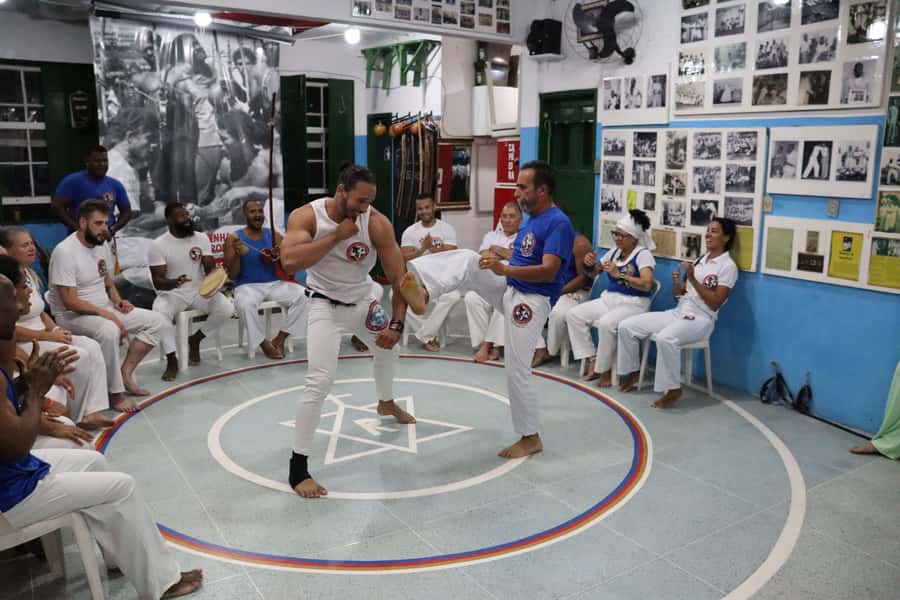
The program makes a clear distinction between a tourist show and an organic celebration. That does not mean the audience is ignored or that the evening has no structure. It means the performance draws on a real association and its members rather than presenting only a rehearsed routine designed for visitors.
That distinction is important in Salvador. You can find polished cultural shows built for tourism, and those have their place. They are often easier to follow and more consistent from night to night. This event offers another kind of value: a glimpse of Capoeira and related traditions as active community practices.
The strongest praise focuses on the energy, the singing, the drumming, and the chance to see people from young to old taking part. One especially useful detail is that the show began on time, so you should still arrive early rather than assume a relaxed start.
I would describe the experience as real, spirited, and occasionally rough around the edges. That is not a complaint unless you expected a formal theater production. For me, the imperfections make the cultural setting easier to believe.
Planning your evening in Salvador
Because the event is in Largo do Terreiro de Jesus, it can fit neatly into an evening focused on Salvador’s historic center. You can arrange your own meal before or after, but there is no included dining segment.
Do not count on venue transportation. Use the stated landmarks, especially Ó Paí Ó Restaurante or São Domingos Gusmão Church, to help locate the association. The exact route depends on where you are staying, and no pickup service is offered.
Check the available starting time before you reserve. The booking terms allow cancellation up to 24 hours in advance for a full refund, and you can reserve now and pay later. Those terms help if your Salvador plans are still changing, but they do not remove the need to confirm the timing.
The night is best treated as a focused cultural stop. It is not a city tour, a meal, or a long lesson. Give yourself time to arrive, watch the full performance, and leave without rushing to another appointment.
Who should book this cultural night?
I would book this if you want to see Capoeira in a place tied directly to Mestre Bimba, enjoy live percussion, and prefer a genuine association setting to a glossy stage show.
It is also a good fit if your time is limited. The program brings several Brazilian traditions together in a compact evening, and the $30 price is fair for that mix.
I would hesitate if you need air conditioning, a fixed running time, or highly polished choreography. The room may become hot, and the performances can vary in smoothness because they are connected to real practice rather than a fully scripted production.
FAQ
Where does the cultural night take place?
It takes place at Associação de Capoeira Mestre Bimba in Salvador, Brazil, in the Largo do Terreiro de Jesus area.
How long does the experience last?
The activity information lists a duration of one hour, while the detailed schedule describes the concert and dance show as about one and a half hours. Check the current timing when you reserve.
What performances are included?
Entry includes Capoeira, Samba, Maculelê, traditional drumming, live music, and acrobatics.
Is transportation provided?
No. You must make your own way to Associação de Capoeira Mestre Bimba. Ó Paí Ó Restaurante and São Domingos Gusmão Church are listed as nearby landmarks.
What languages are available?
The live tour guide languages are English and Portuguese.
What should I wear or bring?
Wear comfortable clothes and comfortable shoes. Smoking is not allowed, and the room can become hot.
Should you book it?
Yes, if you want real Capoeira energy in a meaningful Salvador setting. The historic connection to Mestre Bimba, the mix of music and movement, and the participation of people across ages give the night more substance than a standard dance display.
Just set your expectations correctly. You are choosing an organic, sometimes uneven association performance, not a perfectly rehearsed theater show. For $30, that trade-off is worthwhile for anyone who values cultural connection, live rhythm, and a memorable evening in Salvador’s historic center.
Just added in Salvador
- Mãe Tereza Ecological Park | A peaceful paradise, perfect for relaxing!★ 4.5 · 19 reviews
- Full Day Tour in Trancoso with Chocolate Factory★ 4.5 · 35 reviews
- Horse back riding and Eco tourism food and fun.★ 5.0 · 1 review
- Salvador: Schooner Cruise with Pickup and Itaparica Stop★ 3.8 · 5 reviews
- Salvador: Traditional Drumming and Percussion Workshop★ 4.4 · 10 reviews
- PROMO Salvador: Interactive Art and Culture Private Tour★ 5.0 · 2 reviews
- Salvador: 3-Hour Percussion Class★ 4.9 · 10 reviews
- Salvador: Cultural Treasure – Samba de Roda.★ 4.9 · 51 reviews
Brazil Food and Samba Nights, compared.
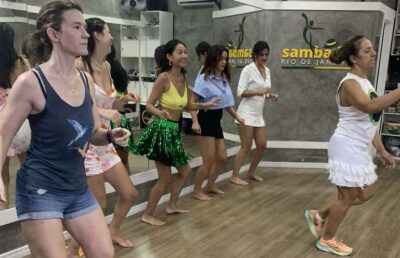
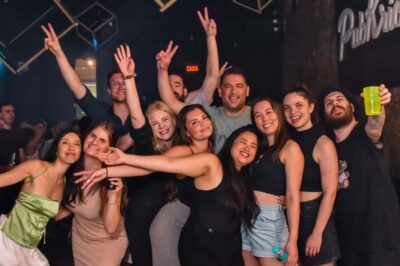
Pub Crawl in Lapa with Cachaça Tasting and Live Samba
Read our review →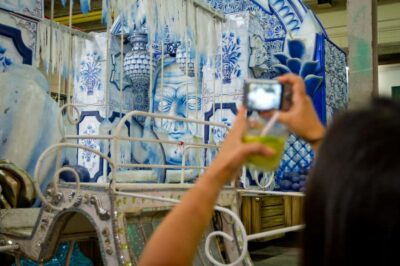
Carnival Backstage Tour at Samba City with Cocktail
Read our review →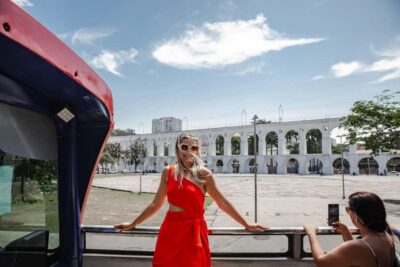
Hop-ON Hop-OFF Sightseeing Bus in Rio de Janeiro – Rio Samba Bus
Read our review →
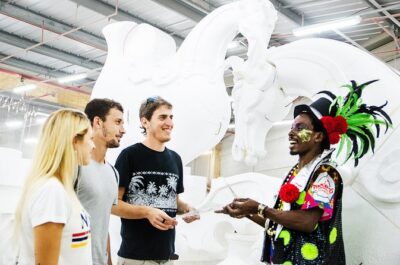
Carnaval Experience: Backstage Tour at Samba City with Cocktail
Read our review →
Browse the lists this tour appears in