

Reviewed · SALVADOR AND BAHIA TOURS
Salvador Walking Tour Through Pelourinho
Salvador’s story unfolds one square at a time. This $40 walking tour links the city’s major historic sights in about 1 hour and 40 minutes, from Praça Castro Alves to Pelourinho. I like the clear route and the way it combines major landmarks with living Bahian culture, including capoeira, traditional dress, Olodum, and the famous Black Church.
I also like the small group size, capped at 15 people, and the guide’s useful advice for the rest of your stay. The main consideration is pace: nine stops in less than two hours means several visits are brief, so this works best as an introduction rather than a slow, detailed tour of every building.
Facundo receives repeated praise for his friendly manner, clear explanations, safety tips, and practical recommendations. If you want a well-organized first look at Salvador’s historic center, this is a strong choice, especially if you are comfortable walking in warm weather and moving from one sight to the next.
In This Review
- Key Points About the Salvador Walking Tour
- Starting at Praça Castro Alves With a Bay View
- Praça Thomé de Souza and the Origins of Government
- Riding the Lacerda Elevator for Five Minutes
- Mercado Modelo and Salvador’s Commercial Side
- Praça da Sé and a Lost Cathedral
- Terreiro de Jesus, Capoeira, and Public Life
- The Golden Interior of São Francisco
- Olodum and Salvador’s Musical Identity
- Pelourinho, the Heart of the Historic Center
- What the Guide Adds to the Walk
- The $40 Price and What You Receive
- Who Will Get the Most From This Experience?
- Timing, Group Size, and Cancellation
- Should You Book the Pelourinho Walking Tour?
- FAQ
- How long does the Salvador Pelourinho walking tour last?
- How much does the tour cost?
- Where does the tour begin?
- Where does the tour end?
- What sights are included on the route?
- Is a guide included?
- How many people can join the tour?
- Are admission tickets included?
- Can I cancel for a refund?
Key Points About the Salvador Walking Tour
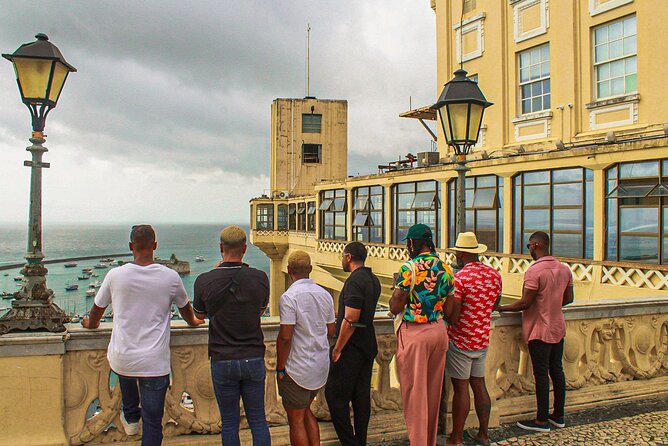
- Nine historic stops in 1 hour and 40 minutes: The route covers Praça Castro Alves, Praça Thomé de Souza, the Lacerda Elevator, Mercado Modelo, Praça da Sé, Terreiro de Jesus, São Francisco Church, Olodum, and Pelourinho.
- A useful introduction to Salvador: You get a quick look at the city’s colonial government, religious traditions, public squares, music, Afro-Brazilian culture, and famous viewpoints.
- A guide-led small group: An accredited guide leads the experience, with a maximum of 15 people. Facundo is especially praised for his explanations and practical advice.
- The Lacerda Elevator connects two cities: The short stop explains how this urban elevator links Salvador’s upper and lower sections, serving about 27,000 people daily during peak season.
- Culture is part of the route: Capoeira dancers, Bahian women in traditional clothing, Olodum, and the Black Church help connect the historic buildings with Salvador today.
- Free cancellation with a cutoff: You can cancel for a full refund up to 24 hours before the start time. Bad weather may lead to a new date or a full refund.
Starting at Praça Castro Alves With a Bay View
The walk begins at Praça Castro Alves in central Salvador. It is a sensible meeting point because the opening view introduces one of the city’s defining features: All Saints Bay, with its 56 islands.
This first 12-minute stop gives you geographical bearings before the older streets begin. I like that the tour starts with a broad view instead of rushing straight into church interiors and colonial facades. You can begin to understand why Salvador developed as a port city and why the upper and lower parts of town matter so much.
There is no admission charge here. The stop is short, but it sets up the rest of the route well. Bring water and wear shoes you can walk in comfortably, since the experience is entirely on foot and includes several historic squares.
More Walking Tours in Salvador
- Private Walking Tour of Salvador Pelourinho
★ 5.0 · 70 reviews - Salvador Historic Walking Tour – Pelourinho
★ 4.8 · 62 reviews - Salvador: Walking Tour Through Pelourinho
★ 5.0 · 49 reviews
Praça Thomé de Souza and the Origins of Government
The next stop, Praça Thomé de Souza, lasts about 15 minutes. This square is tied to the early official administration of Brazil, and the guide discusses the old governor’s palace, the first city council chamber, and the first prison.
The square also introduces the unusual relationship between Salvador’s government, transport, and vertical layout. The city’s first urban elevator was built here, a detail that helps explain why the Lacerda Elevator is more than a sightseeing stop.
This part of the tour is valuable if you want context rather than a string of attractive buildings. Salvador’s historic center is easy to admire at street level, but the political story gives the architecture a clearer purpose.
Riding the Lacerda Elevator for Five Minutes
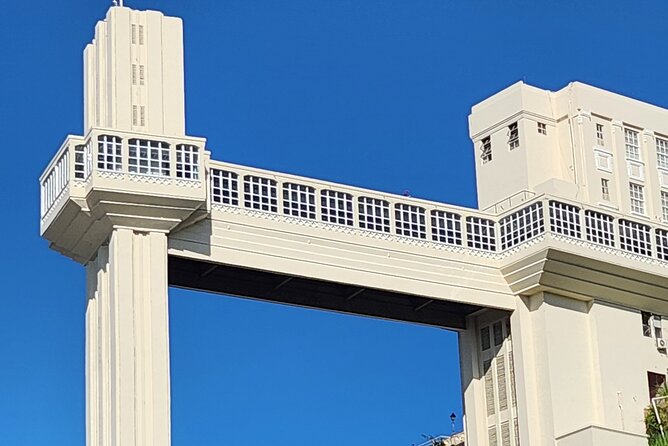
The Lacerda Elevator gets only about five minutes, but it is one of the most memorable parts of the route. Its urban function is simple: it connects the lower city with the upper city.
The numbers help put it in perspective. During peak season, about 27,000 people use the elevator each day. That makes it a working part of Salvador’s transport system, not merely a monument placed for photographs.
Admission is included. The short timing means you should not expect a long engineering presentation or an extended ride. Instead, the guide uses the stop to show how Salvador works as a city divided between upper and lower levels. You will also understand why this connection has mattered to daily life for generations.
Mercado Modelo and Salvador’s Commercial Side
After the elevator comes Mercado Modelo, with about 10 minutes set aside for the visit. It is one of Salvador’s four most visited attractions and sits in the lower city, making it a natural companion to the elevator stop.
The market adds a more commercial note to the walk. After the government buildings and religious landmarks, you get a sense of the city’s public shopping culture and its role as a place where visitors look for Bahian goods and souvenirs.
Admission is included. Ten minutes is enough to orient yourself, but not enough for a leisurely browse through every stall. If you want to shop, treat this as a first look and plan to return later, rather than trying to make purchases while the group is moving on.
More of Salvador and Bahia:
- Round trip transfer, Salvador, Bahia, Brazil
★ 5.0 · 228 reviews - Salvador City Tour – Discover Brazil’s First Capital En, It, Es
★ 5.0 · 217 reviews - Cooking class in Salvador, an authentic dinning experience
★ 5.0 · 132 reviews - Tour to the Frades Islands and Itaparica, from Salvador – Ba
★ 4.0 · 130 reviews
Praça da Sé and a Lost Cathedral
The 10-minute stop at Praça da Sé brings the tour back to Salvador’s upper city and focuses on the fallen cross monument. The monument marks the site of the former cathedral, Brazil’s primatial cathedral, which was destroyed in 1933.
This is one of the route’s most thought-provoking pauses because the square contains both a physical landmark and an absence. The missing cathedral is part of the story. The monument encourages you to look at the open space and ask what has been lost as Salvador changed.
There is no admission fee. The guide’s explanation matters here because the square may otherwise seem like another scenic public space. A short, well-timed account can turn it into a lesson about preservation, demolition, and the layers beneath the modern city.
Terreiro de Jesus, Capoeira, and Public Life
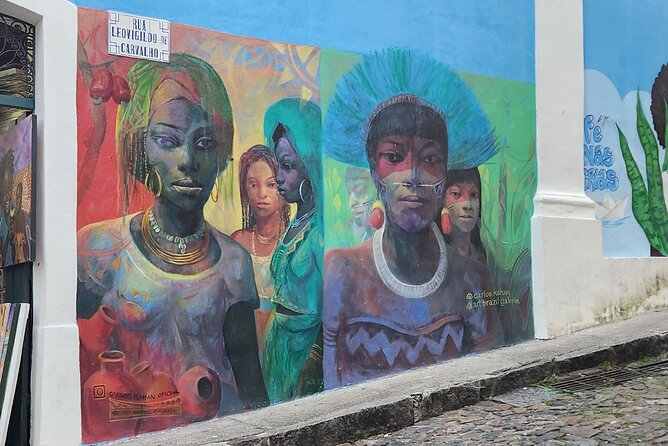
The tour spends about 15 minutes at Praça Terreiro de Jesus, one of the busiest squares in the historic center. This is where the route moves most clearly from formal monuments into public life.
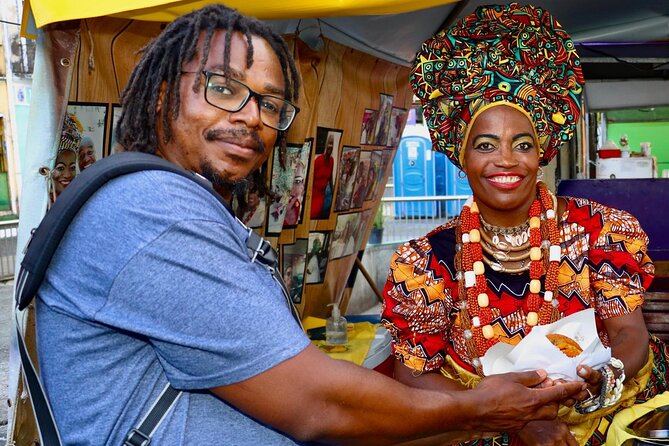
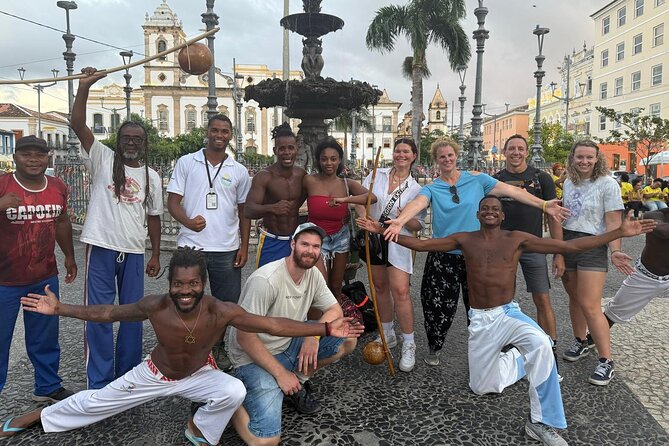
You may see capoeira dancers and Bahian women dressed in traditional clothing. The square is also associated with some of the city’s best-known bars and restaurants, making it a useful place to note down ideas for later.
The tour describes Salvador as a city with just over 365 churches, and Terreiro de Jesus gives you a chance to see several important religious buildings gathered around one square. The exact sightseeing experience can vary with the day and conditions, but the setting itself is central to the historic district.
I especially like this stop for first-time visitors. It gives you more than architecture. You see how music, performance, clothing, food, and religion share the same public space.
The Golden Interior of São Francisco
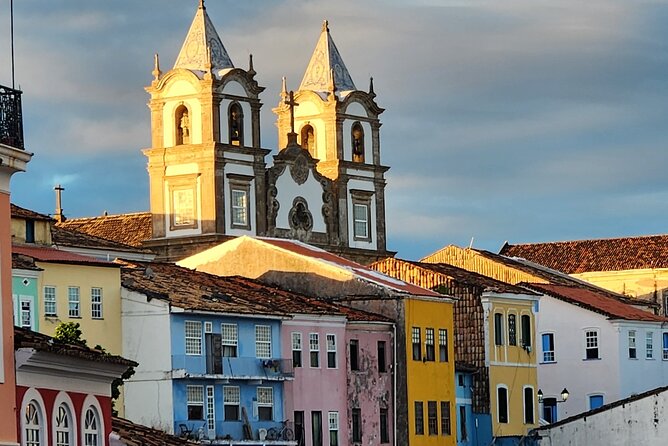
The stop at Igreja e Convento de São Francisco lasts about five minutes. The church is known as the Golden Church because of its highly decorated interior and is described as one of the seven wonders of Portuguese origin.
Five minutes is not much for a church with this reputation. You should expect a focused explanation and a quick look rather than a long period to study the details. If the decoration interests you, you may want to return independently for more time.
Still, the brief visit has value. São Francisco represents the wealth and religious power that shaped Salvador’s historic center. Its ornate style also contrasts with the open squares and street scenes outside, helping you see how different parts of the city expressed status and devotion.
The tour lists this stop without a separate admission charge. As with any busy historic site, the exact experience inside can depend on conditions at the time of the visit.
Olodum and Salvador’s Musical Identity
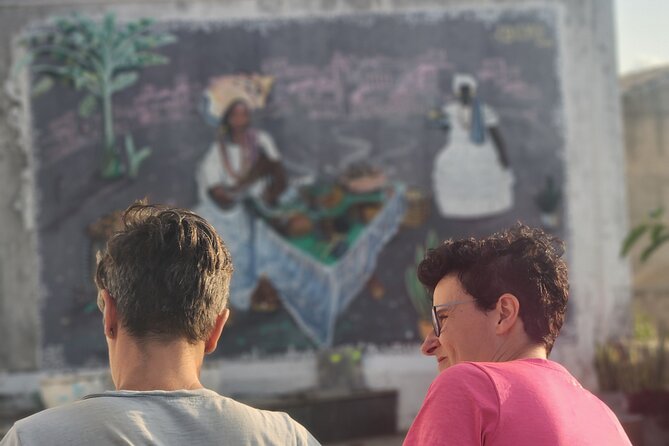
The 10-minute Olodum stop brings music into the center of the story. The guide explains the history of the band that gained international attention after being introduced to the wider world by Michael Jackson.
This is an important inclusion. A walk through Pelourinho can easily become too focused on colonial buildings and churches. Olodum shows that Salvador’s identity is still being created through rhythm, performance, and Afro-Brazilian culture.
The stop is not presented as a concert or performance. It is a chance to understand why the group matters and why its connection with Pelourinho became internationally known. If you enjoy music, this may be one of the most useful explanations on the route.
Pelourinho, the Heart of the Historic Center
The final 10-minute stop is Pelourinho itself, the area most closely associated with Salvador’s historic center. The tour describes it as the heart of the city, and it is also linked with major performers, including Michael Jackson.
The Black Church is located here as well. Its presence adds another important layer to the district, especially when viewed alongside São Francisco, Terreiro de Jesus, and the wider story of Afro-Brazilian culture.
The tour ends at Praça Terreiro de Jesus rather than returning to the starting point. That matters when planning your day. You finish in a central historic area with nearby sights, restaurants, and bars, but you will need to arrange your own way back to Praça Castro Alves or continue exploring from Terreiro de Jesus.
What the Guide Adds to the Walk
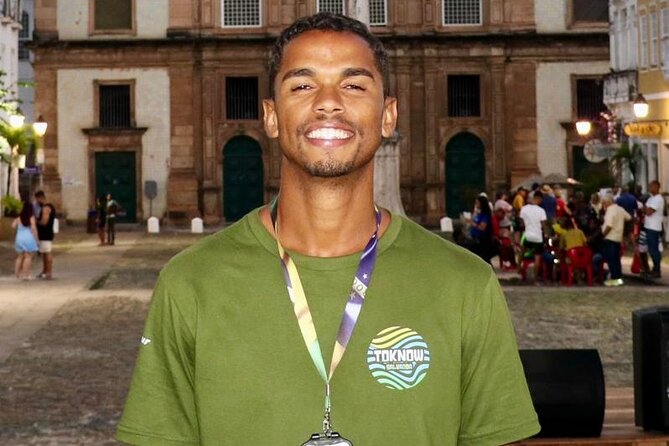
An accredited guide is included, and the guide can make a major difference on a short route like this. With nine stops packed into 100 minutes, you need someone who can explain the main point quickly without turning every square into a lecture.
Facundo is repeatedly praised for being friendly, attentive, and clear. The strongest practical benefit is the advice he gives beyond the formal route. He offers recommendations for the rest of your stay, including ideas for food, walks, and other useful details.
That help can be especially valuable if you are visiting during Carnival. One booking described the tour as useful for understanding the holiday and for learning about other parts of Salvador during that busy period.
The tour has a maximum of 15 people. That is small enough for questions to be possible, though it is not a private walk. If your group includes several people with different interests, the short stop times may feel brisk.
The $40 Price and What You Receive
At $40 per person, the tour is priced as a guided orientation to Salvador rather than a full-day cultural program. You are paying for an accredited guide, a planned route through nine significant places, and included admission for the Lacerda Elevator and Mercado Modelo.
Several other stops are listed as free, so the main value lies in the interpretation and organization. I think the price makes sense if this is your first day in Salvador and you want to understand how the upper city, lower city, historic squares, churches, music, and public culture connect.
The value is weaker if you prefer to move slowly, spend time inside churches, or shop at Mercado Modelo. You could see many of the outdoor places without a guide, but you would lose the explanations about the first government buildings, the destroyed cathedral, the Lacerda Elevator’s daily role, and Olodum’s place in the city.
You also do not receive breakfast or lunch. That is not a serious problem for a tour lasting about 1 hour and 40 minutes, but you should plan your own meal afterward, especially since the route ends near restaurants and bars at Terreiro de Jesus.
Who Will Get the Most From This Experience?
I would recommend this walk to a first-time visitor who wants a quick, organized introduction to Salvador. It suits you if you enjoy learning the story behind a place and want practical suggestions for the rest of your visit.
It is also a good fit for people interested in Afro-Brazilian culture, Brazilian music, colonial architecture, religious art, and the daily life of historic public squares. The route does not isolate the past from the present. Capoeira, traditional clothing, Olodum, and the Black Church all help connect the buildings with Salvador today.
You may want a different option if you have mobility concerns, since the experience is a walking tour through a historic district and the supplied information does not describe special accessibility arrangements. Most people can participate, but the listing gives no detailed accessibility assessment.
The tour is also less suitable if you want a long church visit or extensive shopping time. Its strength is breadth and explanation, not depth at each individual stop.
Timing, Group Size, and Cancellation
The advertised duration is approximately 1 hour and 40 minutes. Because the schedule includes nine stops, expect a steady walk with short explanations rather than long breaks.
The starting point is Praça Castro Alves, Centro, Salvador, Bahia, postal code 40020-160. The visit ends at Praça Terreiro de Jesus in the historic center, postal code 40026-290. Check that ending point before booking so you can fit the walk into the rest of your day.
Confirmation is provided when you book. The maximum group size is 15 people, and most people can participate.
You can cancel up to 24 hours before the local start time for a full refund. Changes or cancellations made less than 24 hours in advance are not accepted for a refund. The experience requires good weather, and if poor weather cancels it, you are offered another date or a full refund.
Should You Book the Pelourinho Walking Tour?
Book it if you want a short, well-planned introduction to Salvador with strong historical context and practical advice. The route covers a lot: All Saints Bay, early government, the Lacerda Elevator, the lower city, a lost cathedral, churches, capoeira, Olodum, and Pelourinho.
I would be especially happy to book it early in a Salvador stay. The tour gives you a map in your head and may help you decide which places deserve a longer return visit. Facundo’s clear explanations, friendly approach, and safety tips add useful value.
Skip it if you want a slow architectural study, a private guide, or a full meal and shopping experience built into the outing. At $40, it works best as a compact orientation walk, not as the final word on Salvador’s historic center.
FAQ
How long does the Salvador Pelourinho walking tour last?
The tour lasts approximately 1 hour and 40 minutes.
How much does the tour cost?
The listed price is $40 per person.
Where does the tour begin?
The meeting point is Praça Castro Alves in Centro, Salvador, Bahia, postal code 40020-160.
Where does the tour end?
The visit ends at Praça Terreiro de Jesus in Salvador’s historic center, postal code 40026-290.
What sights are included on the route?
The route includes Praça Castro Alves, Praça Thomé de Souza, the Lacerda Elevator, Mercado Modelo, Praça da Sé, Praça Terreiro de Jesus, Igreja e Convento de São Francisco, Olodum, and Pelourinho.
Is a guide included?
Yes. An accredited tour guide is included.
How many people can join the tour?
The experience has a maximum group size of 15 people.
Are admission tickets included?
Admission is listed as included for the Lacerda Elevator and Mercado Modelo. The other listed stops are marked as free admission.
Can I cancel for a refund?
Yes. You can cancel at least 24 hours before the start time for a full refund. If poor weather cancels the experience, you are offered another date or a full refund.
Just added in Salvador
- Mãe Tereza Ecological Park | A peaceful paradise, perfect for relaxing!★ 4.5 · 19 reviews
- Full Day Tour in Trancoso with Chocolate Factory★ 4.5 · 35 reviews
- Horse back riding and Eco tourism food and fun.★ 5.0 · 1 review
- Salvador: Schooner Cruise with Pickup and Itaparica Stop★ 3.8 · 5 reviews
- Salvador: Traditional Drumming and Percussion Workshop★ 4.4 · 10 reviews
- PROMO Salvador: Interactive Art and Culture Private Tour★ 5.0 · 2 reviews
- Salvador: 3-Hour Percussion Class★ 4.9 · 10 reviews
- Salvador: Cultural Treasure – Samba de Roda.★ 4.9 · 51 reviews
Salvador and Bahia Tours, compared.
Salvador City Tour – Discover Brazil’s First Capital En, It, Es
Read our review →
Cooking class in Salvador, an authentic dinning experience
Read our review →
Tour to the Frades Islands and Itaparica, from Salvador – Ba
Read our review →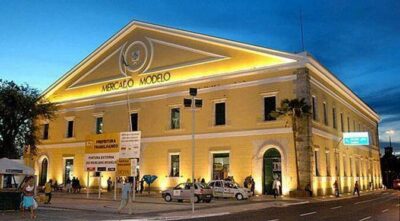

Tour Praia do Forte and Guarajuba, Leaving Salvador-Bahia.
Read our review →
Transfer to Iberostar Selection Praia do Forte or Waves Bahia
Read our review →
Transfer Iberostar Waves Bahia / Praia do Forte – Private
Read our review →Browse the lists this tour appears in