
Reviewed · SALVADOR AND BAHIA TOURS
From Salvador: Quilombo Heritage Daytrip with Lunch
History comes alive in Bahia’s countryside. This day trip links Santo Amaro, Quilombo Kaonge, and Cachoeira in one long outing focused on Afro-Brazilian culture, rural life, and the legacy of Brazil’s struggle for independence. I like the chance to speak with a community elder and take part in making manioc flour, rather than simply looking at exhibits. I also like the small-group format, which should make conversation easier and keep the day personal.
The main concern is value. At $170 per person, you are paying for an eight-hour private-feeling experience, transport, lunch, and a guide, but one verified review felt the Quilombo activities amounted to only a few basic demonstrations. The guide received strong praise, including a specific mention of Wilson, so the quality of the day may depend heavily on how actively your guide explains and involves you.
In This Review
- Key points before you book
- Why the Bahia Recôncavo matters
- Starting in Santo Amaro and Praça da Purificação
- The rural road toward Quilombo Kaonge
- Meeting the griô of Quilombo Kaonge
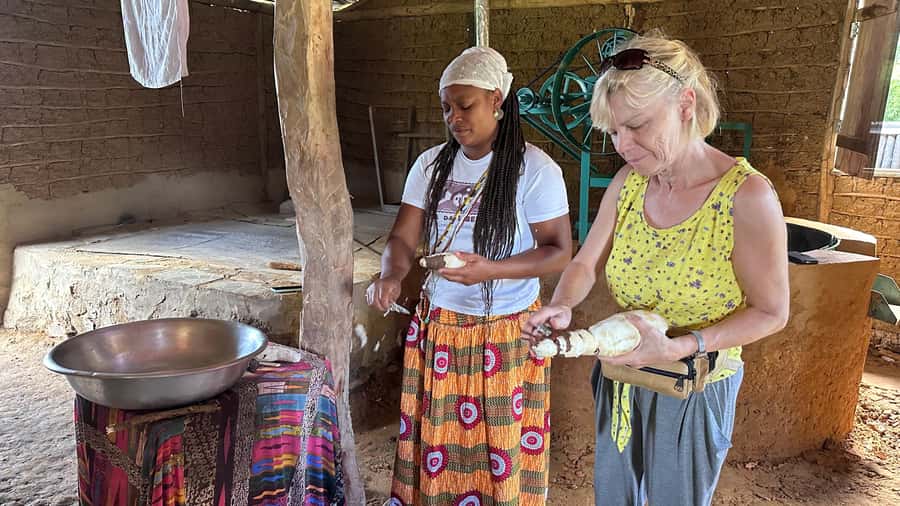
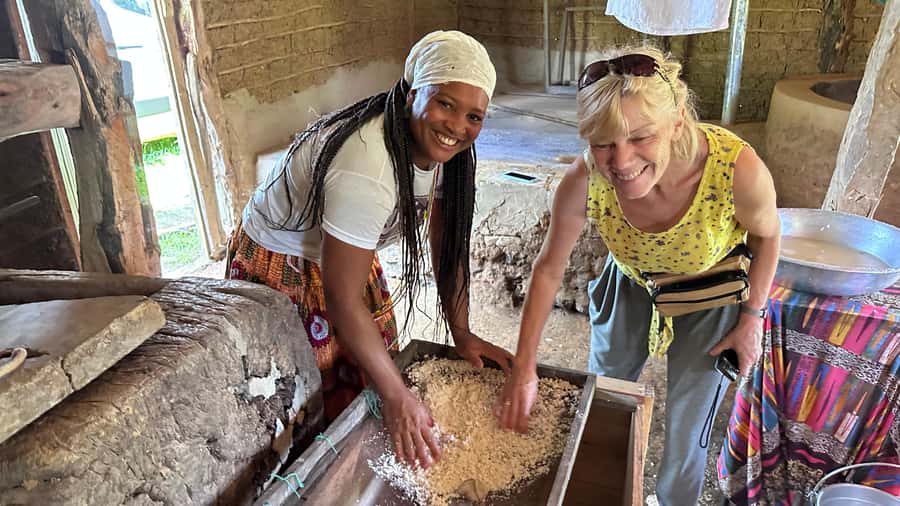
- Making manioc flour with your own hands
- Lunch and regional food in the community
- Crossing the Paraguaçu River into Cachoeira
- How the $170 price measures up
- Small groups, languages, and comfort
- Who will enjoy this day trip
- Should you book the Quilombo Heritage Daytrip?
- FAQ
- How long does the Quilombo Heritage Daytrip last?
- Is hotel pickup included?
- What places does the tour visit?
- Is lunch included?
- Are drinks included with lunch?
- Can I request vegetarian food?
- What languages are available for the guide?
- How far in advance can I cancel for a full refund?
Key points before you book
- Manioc flour is the hands-on focus: You do not just hear about a Brazilian staple. You take part in the process of making flour and palm oil.
- Quilombo Kaonge offers community contact: The visit includes time with a griô, or elder, who shares the community’s knowledge and daily life.
- Santo Amaro sets the historical stage: You walk through Praça da Purificação, the public fair, and old secular houses tied to sugar production and enslaved labor.
- Cachoeira adds colonial architecture: The route crosses the Paraguaçu River on an English-built bridge from 1830 before reaching the Dannemann cigar factory.
- The day lasts eight hours: Hotel pickup and drop-off make the long route easier, but this is a full day rather than a quick side trip.
- The group-size information needs checking: The tour is described as a small group, with one published limit of four participants and another reference to a maximum of six.
Why the Bahia Recôncavo matters
The Bahia Recôncavo wraps around the Bay of All Saints and carries several layers of Brazilian history in a relatively compact area. Portuguese colonial influence appears in the towns, churches, homes, farms, and old commercial routes. African traditions remain equally important, shaping religion, food, music, family life, and community identity.
This tour focuses on the connection between those histories. Santo Amaro grew through sugar cane plantations and enslaved labor. Quilombo communities formed part of the long resistance to slavery and colonial control. Cachoeira became one of the Recôncavo’s key cities and played an important role in the movement for Brazilian independence.
I find that context useful because the day is not simply a sequence of scenic stops. The fair, the farms, the flour-making, and the old river crossing all relate to how people worked, traded, resisted, and built communities. You will get more from the experience if you arrive ready to listen, not just take photographs.
More History Tours in Salvador
- Salvador Historic Walking Tour – Pelourinho
★ 4.8 · 62 reviews - Historical African oriented City Tour
★ 5.0 · 52 reviews - Full-Day Historic Private City Tour of Salvador with Lunch
★ 5.0 · 50 reviews
Starting in Santo Amaro and Praça da Purificação
The day begins with pickup at your Salvador hotel. From there, the route heads into the Recôncavo toward Santo Amaro. The eight-hour schedule includes driving, so hotel pickup and drop-off are practical benefits rather than minor extras.
At Praça da Purificação, you have about 30 minutes for a guided visit, photographs, and sightseeing. The square gives you an introduction to Santo Amaro’s colonial-era character, with old secular houses and a public fair nearby. The town’s past is tied closely to sugar cane production, plantation wealth, and enslaved work.
The fair is important because it brings the region’s history into ordinary daily life. Instead of seeing the past only in a museum, you can watch how food and local commerce still occupy public spaces. The visit is short, though, so do not expect a full city tour or a long historical walk.
Your guide’s explanations matter here. A good guide can connect the architecture and market to the plantation economy, while a rushed visit may feel like a quick photo stop. Wilson received especially warm praise for making the outing fun and informative, so if he is assigned to your group, his approach may add real value.
The rural road toward Quilombo Kaonge
After Santo Amaro, the route passes through areas associated with sugar cane, manioc, and tobacco farming. These crops help explain why the Recôncavo developed as an agricultural center and why manioc remains central to local food traditions.
The drive is part of the experience, but it also takes time away from the community visit. You should see this as a regional day trip, not a single attraction with eight hours of activities at one site. The changing countryside provides useful context, although the supplied details do not promise a formal farm tour or a set number of stops along the way.
Quilombo Kaonge is the heart of the outing. A Quilombola community is formed from the descendants of people who resisted slavery and established independent settlements. Visiting one gives you a chance to learn through conversation and practical work rather than through a standard tourist presentation.
That distinction matters. You are not simply viewing an old building or reading a plaque. The program is built around meeting people, hearing community knowledge, and sharing food and work. At the same time, the activities appear modest. One review rated the guide highly but found the demonstrations too basic for the price. Keep that expectation in mind.
Meeting the griô of Quilombo Kaonge
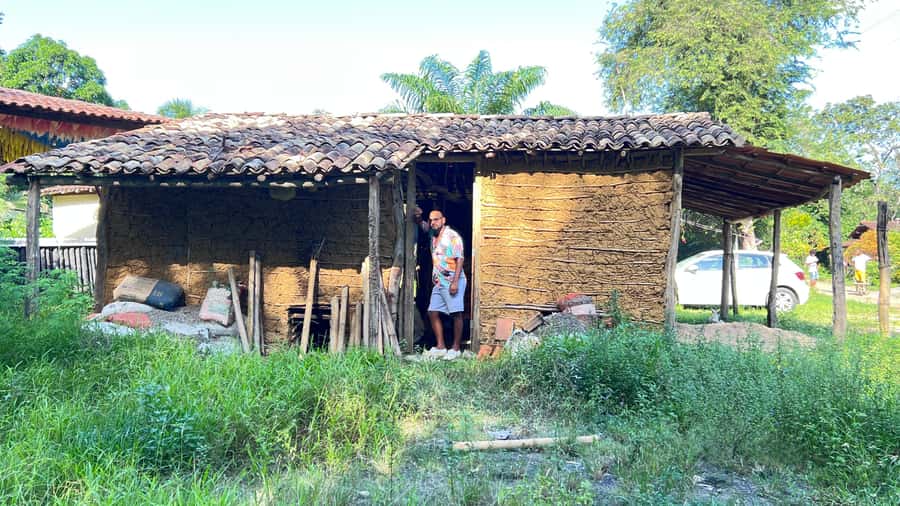
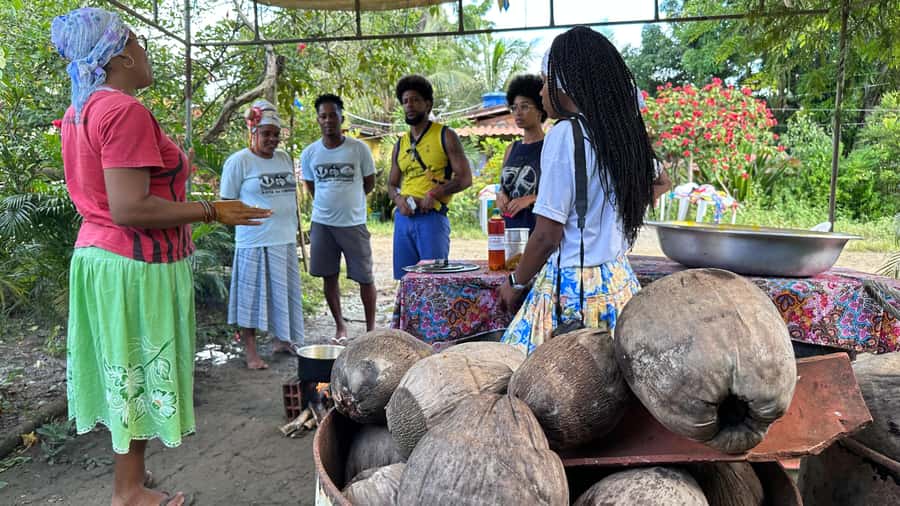
The planned conversation with the community’s griô is one of the strongest reasons to consider this tour. In this setting, the griô is an elder who carries memories, customs, and practical wisdom. Time with an elder can give the visit a human center that a fast sightseeing route often lacks.
The information provided does not promise a particular speech, performance, or length of conversation. That is helpful to understand before booking. You should expect an opportunity to talk and listen, not a staged show with a fixed script.
I would treat this part with patience. Ask about daily life, food, farming, family traditions, and the meaning of the community’s work. The tour description specifically emphasizes sharing wisdom and tastes, so the value comes from the exchange as much as from the formal schedule.
Language should not be a major barrier. Live guiding is offered in English, Spanish, and Portuguese. Still, the quality of translation and the amount of direct conversation may vary depending on the guide and the group.
More of Salvador and Bahia:
- Round trip transfer, Salvador, Bahia, Brazil
★ 5.0 · 228 reviews - Salvador City Tour – Discover Brazil’s First Capital En, It, Es
★ 5.0 · 217 reviews - Cooking class in Salvador, an authentic dinning experience
★ 5.0 · 132 reviews - Tour to the Frades Islands and Itaparica, from Salvador – Ba
★ 4.0 · 130 reviews
Making manioc flour with your own hands
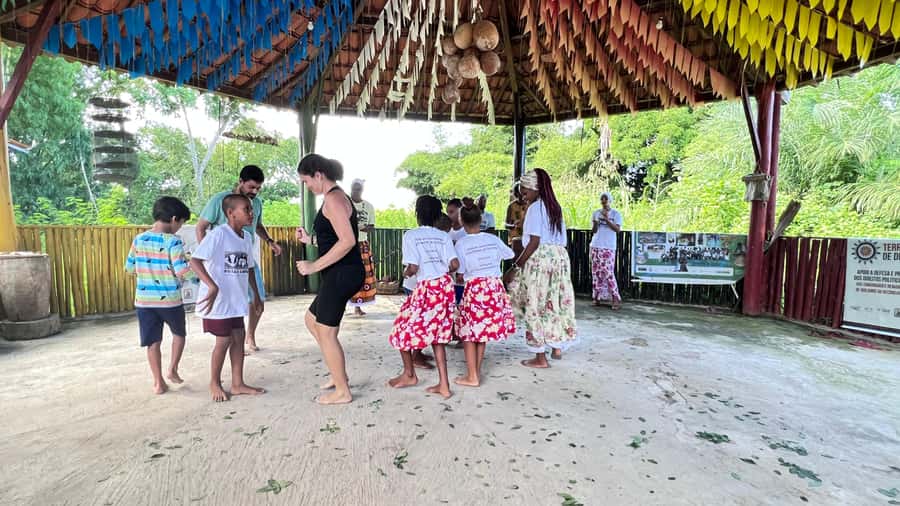
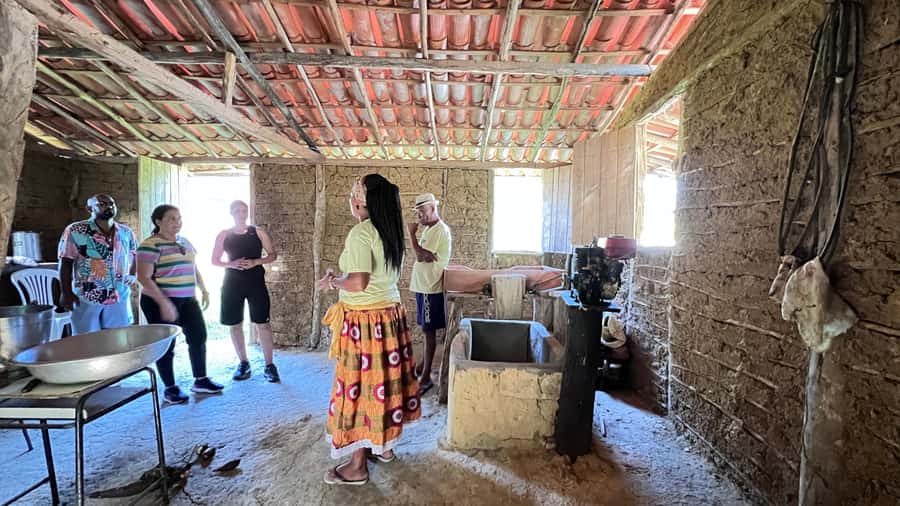
Manioc, also called cassava, is one of Brazil’s basic food crops. Its flour appears in many regional meals and is especially important in northeastern cooking. The tour gives you a chance to take part in the process of making it.
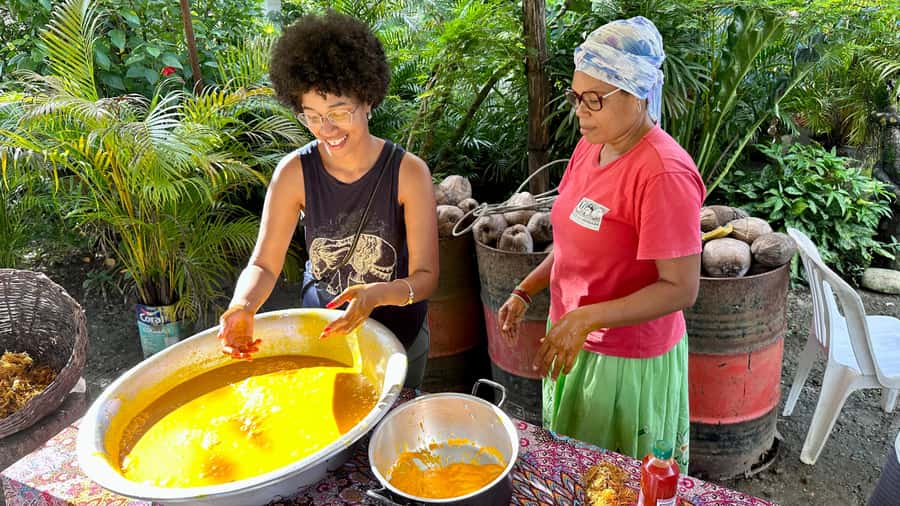
This is a good choice of activity because it links agriculture, labor, and food. You can better understand a local staple when you see that it comes from a chain of physical tasks rather than from a supermarket packet. The tour also includes a practical introduction to making palm oil.
The description does not list every stage of production or guarantee that you will complete the entire process from raw root to finished product. It says you will learn the process and put your hands to work. That wording suggests a demonstration with participation, not a full-day workshop.
For some people, this will be the highlight. You get a direct connection to local foodways and a chance to do something rather than only observe. For others, especially those expecting a long workshop, the activity may feel brief. The critical review specifically described the Quilombo portion as a few basic demonstrations, so the $170 price makes more sense if you value cultural contact and the full regional route, not just the flour-making alone.
Lunch and regional food in the community
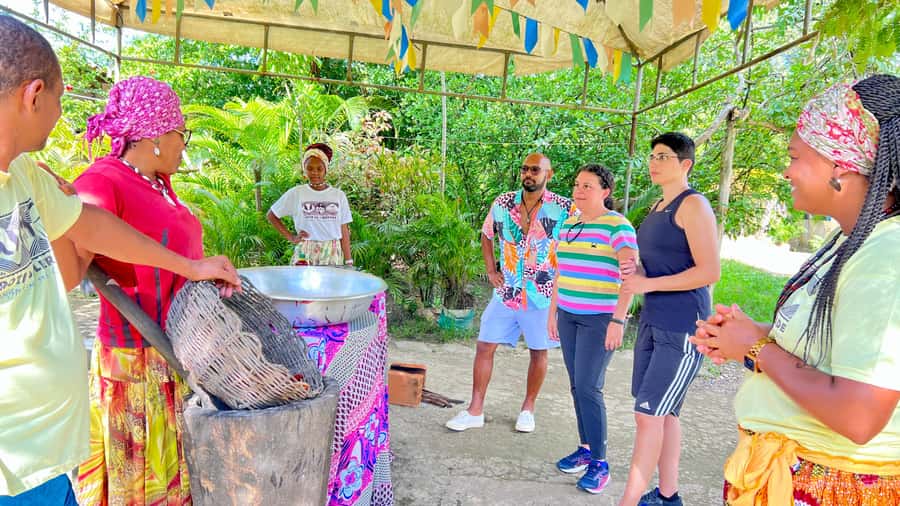
Lunch is included, and it is served as part of the extended Quilombo visit. Regional food is listed as one of the activities, so the meal is intended to be part of the cultural exchange rather than a routine stop at an unrelated restaurant.
That is a practical advantage. You do not need to search for a place to eat during a rural excursion, and food gives you another way to understand the area. The available information does not provide a menu, so you should not book this expecting specific dishes.
A vegetarian option is available if you request it when booking. Drinks are not included, so plan to pay separately for those. The tour’s smart-casual dress code is easy to follow, and comfortable clothing is sensible for a day that includes walking and hands-on activity.
The combined visit, lunch, free time, and practical work lasts about three and a half hours according to the schedule. That is a substantial portion of the day. It also means you should ask how much time will be devoted to each activity if the flour-making process is your main reason for booking.
Crossing the Paraguaçu River into Cachoeira
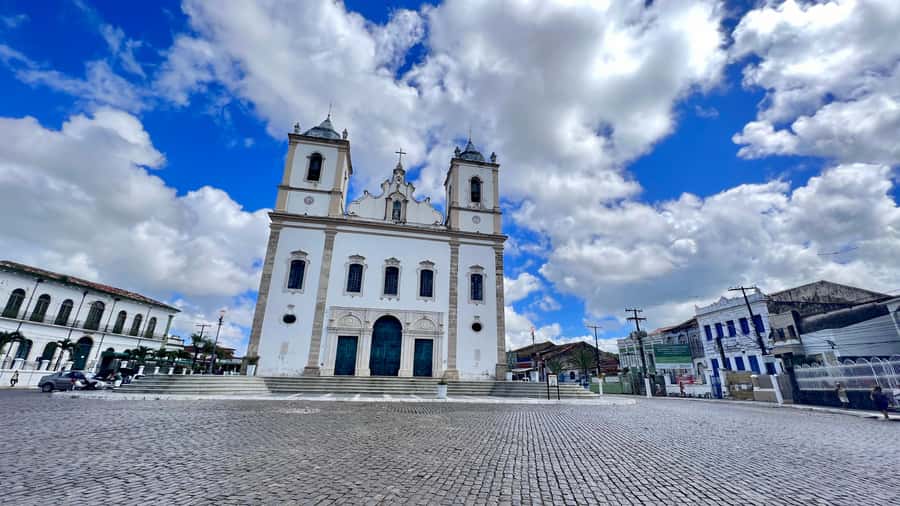
The afternoon moves to Cachoeira, described as the most important city in the Recôncavo region. This colonial city gives the trip a second style of heritage after the rural community visit.
The route crosses the Paraguaçu River on a bridge built by the English in 1830. That detail gives the crossing unusual historical weight. It was not just a convenient modern transfer. The bridge reflects the commercial links and engineering influence that shaped the region during the colonial and postcolonial period.
Cachoeira helps round out the day. Santo Amaro introduces plantation history, Quilombo Kaonge centers Afro-Brazilian community life, and Cachoeira brings you back to an urban colonial setting. The contrast makes the route more useful than a visit to only one town.
The final listed stop is the Dannemann cigar factory. The information supplied does not say how long you stay there or whether you receive a production tour. Think of it as a brief cultural or historical stop, not a guaranteed extended factory visit.
How the $170 price measures up
At $170 per person, this is not a bargain day trip. The price includes transportation, hotel pickup and drop-off, an accredited guide, lunch, and a small-group format. You are also covering the logistics of reaching several places outside Salvador in a single day.
That package can be worthwhile if you want a guide to explain the Recôncavo and arrange contact with Quilombo Kaonge. Independent transport between Santo Amaro, the community, Cachoeira, and Salvador would take planning, and the cultural connection may be difficult to arrange on your own.
The weak point is the amount of structured activity. A verified December 2025 review gave the guide three stars overall, praising the guide but feeling the Quilombo demonstrations were too limited for the cost. The reviewer also noted that this was the cheapest Quilombo tour they found. That makes the price easier to understand, but it does not remove the concern.
I would book this for the access and interpretation, not for a packed activity schedule. If you want a full workshop, many demonstrations, or a busy list of attractions, you may feel shortchanged. If you prefer a smaller outing built around conversation, food, and regional context, the value is stronger.
Small groups, languages, and comfort
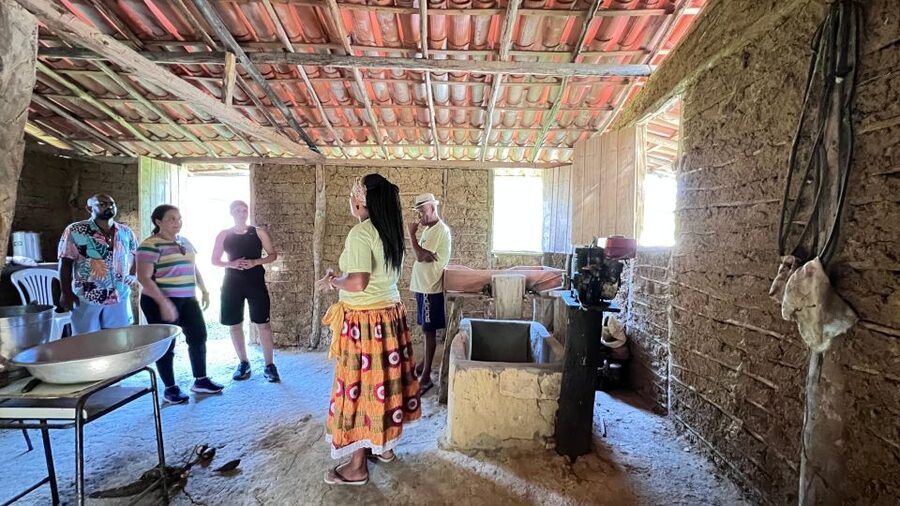
The tour is designed for a small group, which is a real advantage during the elder conversation and the practical work. A smaller party gives you more room to ask questions and makes it easier for the guide to keep the day personal.
There is conflicting group information. One part of the tour details says the limit is four participants, while the highlights refer to a maximum of six. Confirm the actual number before paying if group size is important to you.
English, Portuguese, and Spanish guiding is available. Hotel lobby pickup and drop-off are included, which removes the need to find a distant meeting point in Salvador. The tour is also listed as wheelchair accessible, though the information does not explain the surface conditions at the rural community or the bridge.
Cancellation is flexible: you can cancel up to 24 hours before departure for a full refund. You can also reserve and pay later, which helps if your Salvador schedule is still changing.
Who will enjoy this day trip
I would recommend this outing to you if you want:
- A guided introduction to the Bahia Recôncavo
- Direct contact with a Quilombola community
- A conversation with an elder
- Local food and a look at manioc flour production
- A small group rather than a large coach
- Several connected stops in one day
It suits people who are interested in culture, food, social history, and rural life. It is also useful for a first visit to Bahia when you want to move beyond Salvador’s central sights.
I would be more cautious if you need a highly active itinerary. The description promises participation, but one detailed rating found the demonstrations basic. You should also reconsider if your main goal is extensive time in Cachoeira, since the afternoon stops may be short and the route must still return to Salvador.
Should you book the Quilombo Heritage Daytrip?
Book it if you see the day as a guided cultural exchange, not as an attraction-packed excursion. The best elements are the small group, the Quilombo Kaonge visit, the chance to speak with a griô, the regional lunch, and the practical connection to manioc flour and palm oil.
Before committing to $170, confirm the group limit and ask how much hands-on time is planned at Quilombo Kaonge. That one question addresses the main concern raised by the available feedback.
My verdict: this is a worthwhile but not automatic choice. The guide can make the day, and Wilson received especially strong praise for his friendly, informative style. Choose it for access, context, and human contact. Skip it if you expect a long craft class or a full slate of demonstrations for the price.
FAQ
How long does the Quilombo Heritage Daytrip last?
The experience lasts eight hours, including transportation between Salvador, the Recôncavo stops, and the return to Salvador.
Is hotel pickup included?
Yes. Pickup and drop-off at your hotel lobby in Salvador are included.
What places does the tour visit?
The route includes Santo Amaro, Praça da Purificação, Quilombo Kaonge, Cachoeira, the Paraguaçu River bridge, and the Dannemann cigar factory.
Is lunch included?
Yes. Lunch is included, along with regional food during the Quilombo portion of the day.
Are drinks included with lunch?
No. Drinks are not included in the tour price.
Can I request vegetarian food?
Yes. A vegetarian option is available, but you should request it when booking.
What languages are available for the guide?
Guiding is available in English, Spanish, and Portuguese.
How far in advance can I cancel for a full refund?
You can cancel up to 24 hours before the activity for a full refund.
Just added in Salvador
- Mãe Tereza Ecological Park | A peaceful paradise, perfect for relaxing!★ 4.5 · 19 reviews
- Full Day Tour in Trancoso with Chocolate Factory★ 4.5 · 35 reviews
- Horse back riding and Eco tourism food and fun.★ 5.0 · 1 review
- Salvador: Schooner Cruise with Pickup and Itaparica Stop★ 3.8 · 5 reviews
- Salvador: Traditional Drumming and Percussion Workshop★ 4.4 · 10 reviews
- PROMO Salvador: Interactive Art and Culture Private Tour★ 5.0 · 2 reviews
- Salvador: 3-Hour Percussion Class★ 4.9 · 10 reviews
- Salvador: Cultural Treasure – Samba de Roda.★ 4.9 · 51 reviews
Salvador and Bahia Tours, compared.

Salvador City Tour – Discover Brazil’s First Capital En, It, Es
Read our review →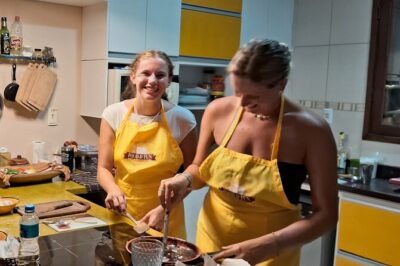
Cooking class in Salvador, an authentic dinning experience
Read our review →
Tour to the Frades Islands and Itaparica, from Salvador – Ba
Read our review →


Tour Praia do Forte and Guarajuba, Leaving Salvador-Bahia.
Read our review →
Transfer to Iberostar Selection Praia do Forte or Waves Bahia
Read our review →
Transfer Iberostar Waves Bahia / Praia do Forte – Private
Read our review →Browse the lists this tour appears in